






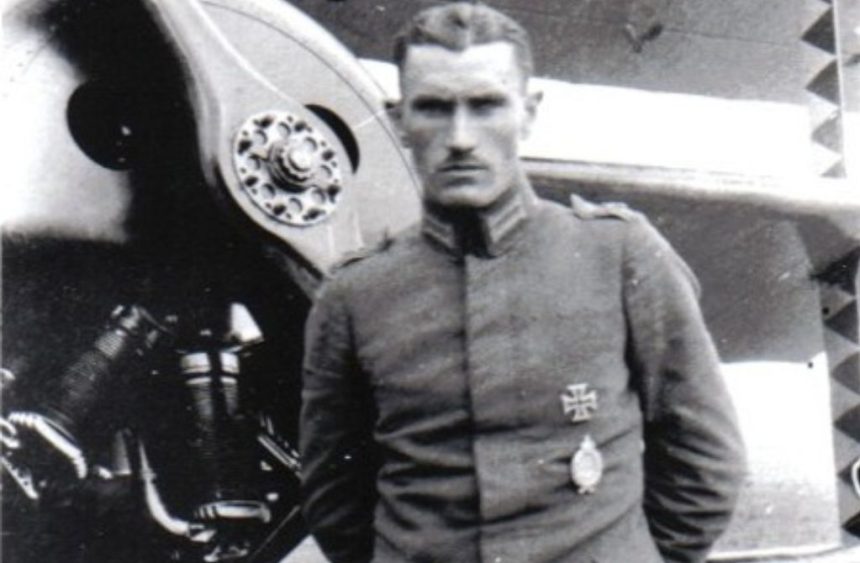

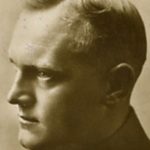
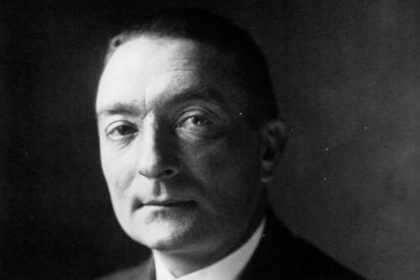
During WWI, a German pilot, Hermann Frommherz, born on August 10, 1891, in Baden, near the Swiss border, became an ace and, in WWII, helped his country take over Czechoslovakia. After completing his engineering studies in late 1911, he joined the Prussian Army. When WWI began, he was serving in the reserves but was called up in July 1914. He served in France with Regiment No. 14 and then moved to fighting in Russia. In February 1915, Frommherz earned the Second Class Iron Cross. On June 1, 1915, he transferred to aviation service. Frommherz began his aviation career as a two-seater pilot in the Tactical Bomber Squadron 20. Hermann Frommherz became a Leutnant on August 1, 1916. In December 1916, Kasta 20 moved to Romania, then continued to Macedonia and Thessaloniki, Greece.
Ace Journey of Hermann Frommherz
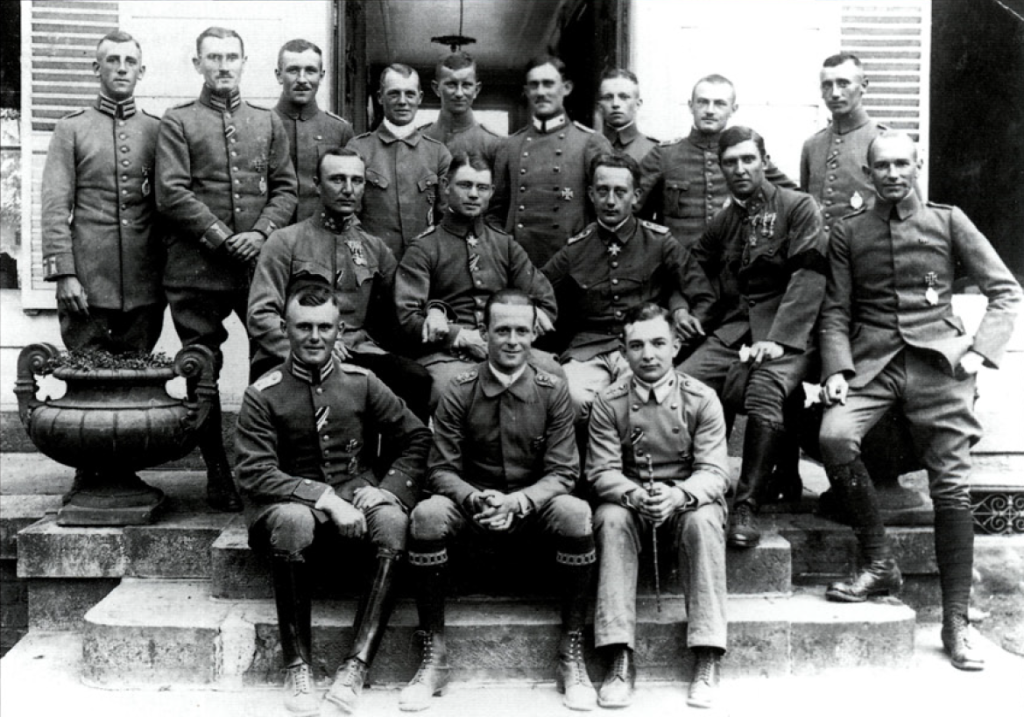
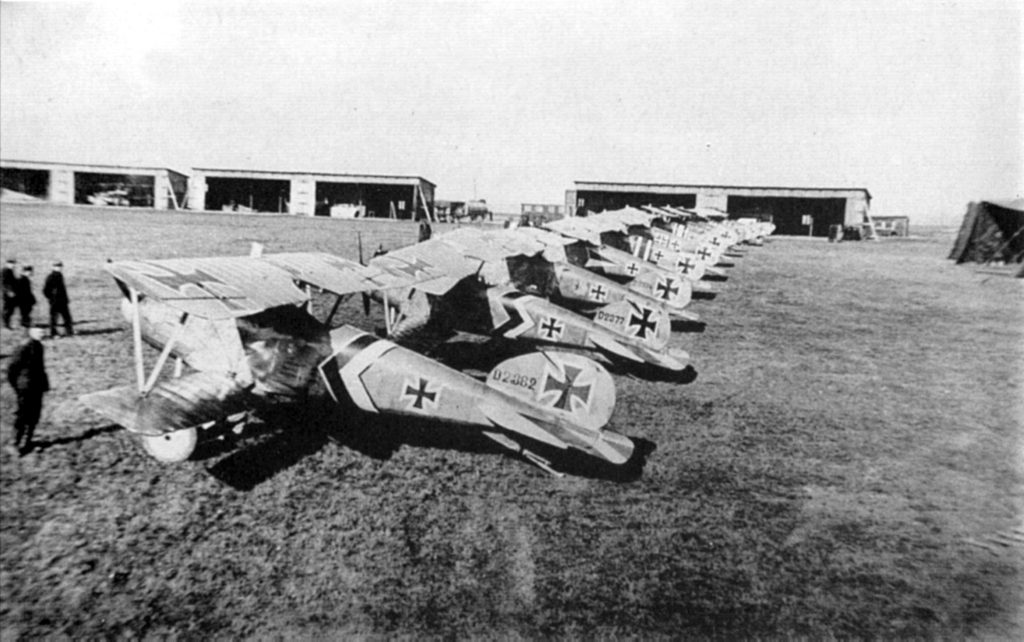
On March 3, 1917, Hermann Frommherz was transferred to Jagdstaffel 2, a fighter squadron, where he flew a light blue Albatros D.III, called “Blaue Maus.” He scored his first victory on April 11, 1917, when he shot down a SPAD VII from No. 23 Squadron RFC. His second victory came on April 14, after which he was injured in a crash. In October, after he had recovered, he started working as an instructor with FEA 3. On March 1, 1918, he returned to Jasta 2 to fly a Fokker Dr.I Triplane. He scored two victories in June 1918, bringing his personal score to four. On July 5, after shooting down a Nieuport 28, he officially became an ace. He scored five more victories in July, after which he was transferred to Jasta 27. In this unit, he scored six victories in August, 10 in September, four in October, and the final two in November, bringing his personal score to 32. In WWI, Hermann Frommherz was awarded the Knight’s Cross of the Military Karl-Friedrich Merit Order, the Military Order of St. Henry, Lübeck’s Hanseatic Cross, the Royal House Order of Hohenzollern, and both classes of the Iron Cross. Frommherz was nominated for the Pour le Mérite, commonly known as the Blue Max, for achieving 20 victories. However, the award was not approved because the Kaiser abdicated. Even though he did not officially receive the award, Frommherz wore the decoration after the war, as he met all the requirements for it.
Legacy and WWII
After the war, Hermann Frommherz worked in the German Police Aviation Service. He also flew mail for Deutsche Luftreederei, a forerunner of Deutsche Luft Hansa. In 1920, he returned to Baden and became the technical chief at the new airfield in Lorach. Starting in 1922, the German military operated a secret training site in Lipetsk, the Soviet Union. Frommherz became an instructor there in 1925. He also taught in China. From 1931 to 1932, he trained the pilots of Chiang Kai-shek’s new air force in fighter tactics. After that, Hermann Frommherz returned to Germany to join the new Luftwaffe, the German air force. From September 1938 until November 1, 1938, he served as the Commanding Officer of I Gruppe, Jagdgeschwader 134 with the rank of Oberstleutnant. After it became JG 142, he continued to lead the unit until January 1, 1939. He played a role in the German invasion and takeover of Czechoslovakia, known as Fall Grün. As a Major General, Frommherz commanded Jagdfliegerführer Deutsche Bucht from April 1 to September 30, 1942, succeeding Werner Junck. After the war, he went back to civic life in his hometown of Waldshut. He died of a heart attack on December 30, 1964. In the Aces series, Hermann Frommherz was among a few German military personnel who served in WWI and became an ace, later served in WWII as a leader, and survived both world wars. Read stories about more Aces HERE.






Give more on the Allied aces.