






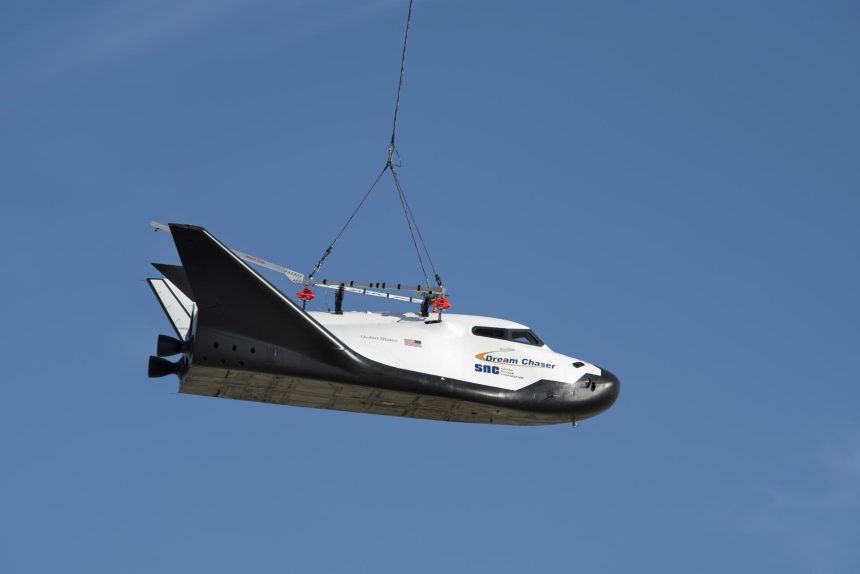

For a century, aerospace engineers have dreamed of spaceplanes that can travel between Earth and orbit. In the 2010s, NASA was actively pursuing the development of a reusable, autonomous spaceplane with Sierra Nevada Corporation (SNC). SNC was developing such a spaceplane for NASA, called the Dream Chaser. The Dream Chaser program originally began in the early 1980s. Between 1982 and 1984, half-scale versions of a Russian spacecraft called BOR-4 were flown into orbit, with recovery photographed by Australian Royal Air Force P-3 Orion aircraft. From 1983 to 1995, NASA Langley developed the HL-20 spacecraft, which was based on images of the Russian BOR-4. From 2005 to 2010, a company called SpaceDev, which was later acquired by SNC, converted the HL-20 into the Dream Chaser spacecraft. Between 2010 and 2014, SNC received several contracts from NASA to continue developing the Dream Chaser. By 2014-2015, the spacecraft was modified again into the Dream Chaser Cargo System, which was part of NASA’s Commercial Resupply Services 2 (CRS-2) program to resupply the International Space Station. In 2016, SNC was awarded a contract to resupply cargo to the International Space Station. In 2017, to test the Dream Chaser, NASA and SNC needed a lift aircraft capable of lifting a 19,800-pound spacecraft.
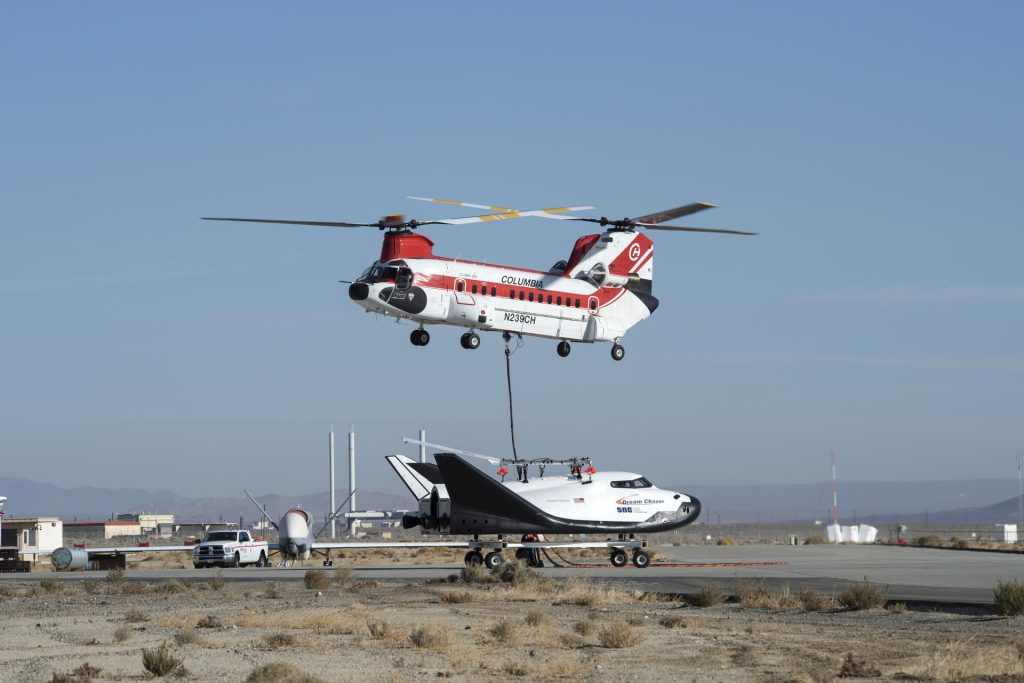
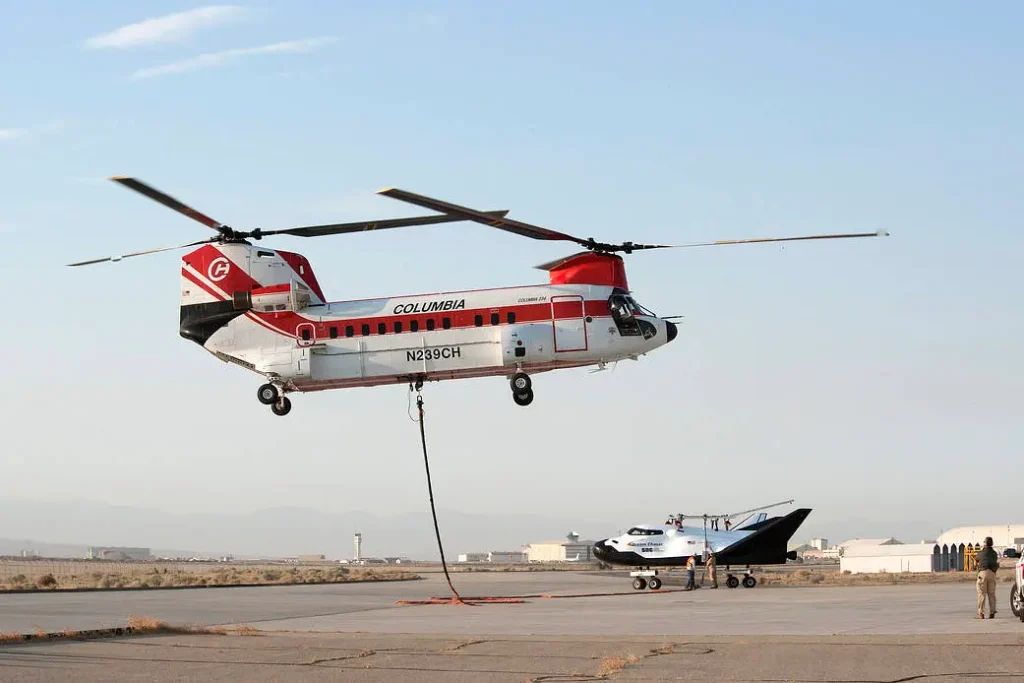
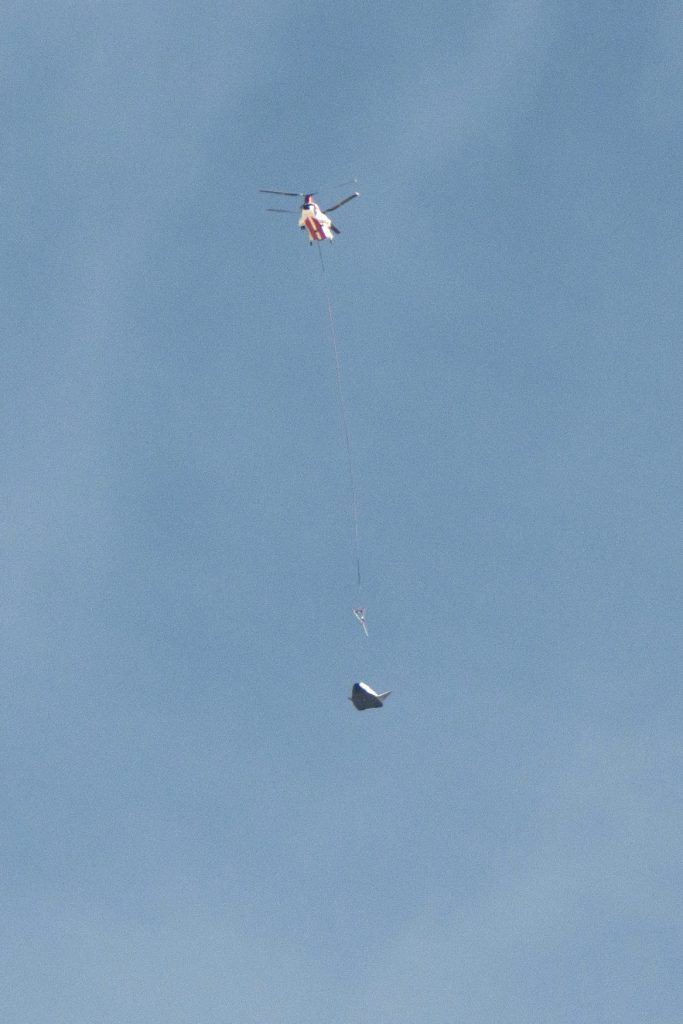
The duty to lift the spacecraft was given to the Boeing 234-UT Chinook, a civil heavy-lift helicopter derived from the military CH-47. The Dream Chaser was delivered to NASA’s Armstrong Flight Research Center in January 2017 and spent several months testing at the center to get ready for its flight tests. On August 30, 2017, Dream Chaser underwent a captive carry test, where the vehicle was lifted but not released, at NASA’s Armstrong Flight Research Center. The test was part of the spacecraft’s Phase Two flight tests to prepare it for space flight. A Columbia Helicopters Boeing 234-UT Chinook helicopter carried Dream Chaser over Edwards for about an hour. The goal was to reach an altitude and flight conditions similar to those the spacecraft will encounter before it is released for a free-flight test. The test gathered data to evaluate both individual systems and overall performance. On November 11, 2017, SNC’s Dream Chaser spacecraft completed a free-flight test at Armstrong. A Boeing 234-UT Chinook helicopter lifted the full-scale Dream Chaser test vehicle to an altitude of 12,400 feet. After being released from the Boeing 234-UT Chinook, the vehicle followed a planned flight path and landed autonomously. After the spacecraft was dropped, it reached a maximum speed of 330 mph and flew for about 60 seconds.
The landing speed of the Dream Chaser was 191 mph, and the vehicle touched down 1,250 feet down the runway, with a rollout distance of 4,200 feet. The test showed how well the vehicle performed during landing, and it helped predict how it would return from the International Space Station. The flight test supported the Dream Chaser project under NASA’s Commercial Crew Program and prepared the vehicle for the Commercial Resupply Services 2 program, which focuses on delivering cargo to the space station. The test also confirmed the vehicle’s aerodynamic features, flight software, and control system performance, and data from this test helped improve the design of the Dream Chaser. The approach and landing test was built on earlier experiments by adding program-specific inputs to the trajectory, allowing engineers to refine the vehicle’s aerodynamic characteristics further. For the first time, the test included orbital vehicle avionics and flight software, validating the orbital vehicle’s design. The test vehicle was originally developed under NASA’s Commercial Crew Integrated Capabilities Program. However, the Dream Chaser program is currently facing big delays. The initial estimates suggested that the Dream Chaser would fly in 2020-21, were later rescheduled to 2024-25, and are now again scheduled for a late-2026 flight. But in the Flight Test Files series, the Boeing 234-UT Chinook helicopter did its work perfectly by lifting the Dream Chaser. Read more Flight Test Files articles HERE.






I can never not see Farscape…