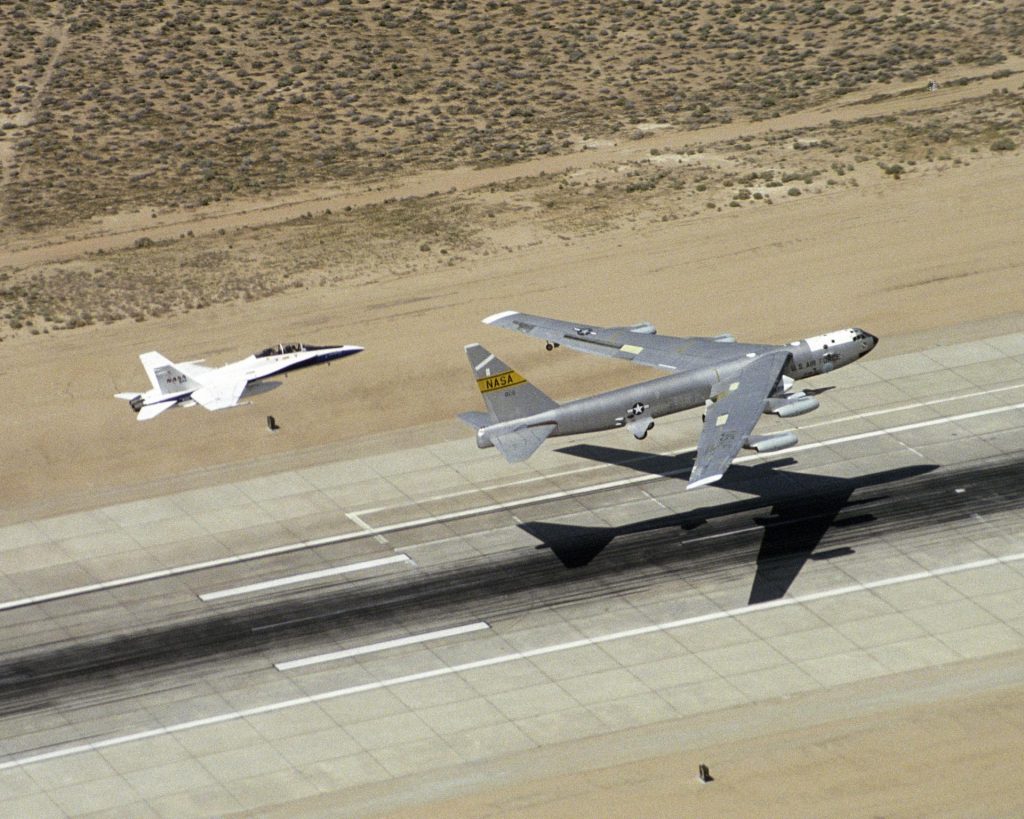
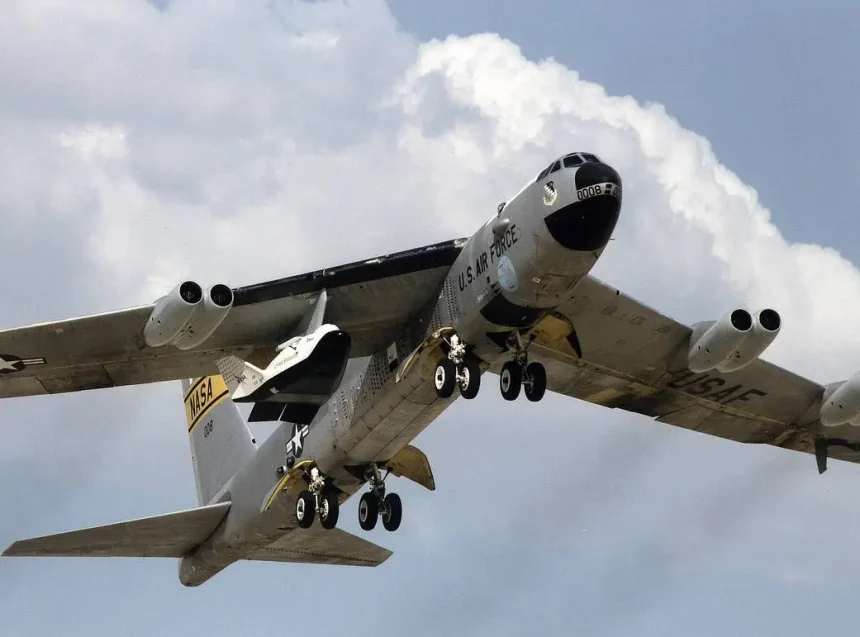

The Boeing B-52B, with tail number 008, was used by NASA as an airborne launch platform for almost 50 years. It was operated by the NASA Dryden Flight Research Center (now called NASA Armstrong Flight Research Center) in various flight research programs between the late 1950s and the early 2000s. The aircraft was originally built as an RB-52B and first flew from Boeing’s Seattle plant on June 11, 1955. It was the 10th B-52 made, and after serving as a test aircraft for the US Air Force, NASA used it for high-speed and high-altitude research programs. Early in its NASA service, the aircraft was modified to carry and release experimental vehicles. A pylon was added under the right wing between the fuselage and the inboard engine pod, allowing it to carry large external loads and release them safely in flight. One major change involved cutting a section of the right inboard wing flap to fit the vertical tail of the vehicles it carried. The aircraft also received instruments to record and transmit test and research data and video to the Dryden Mission Control Room or other receivers during research missions.
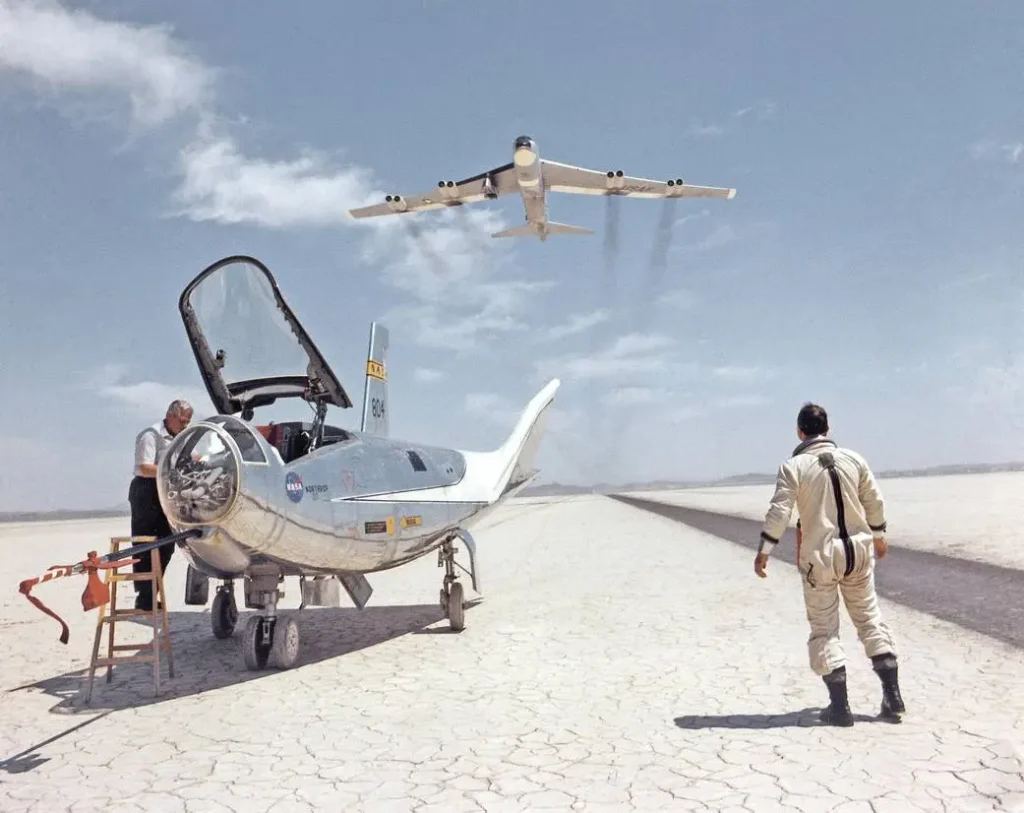
One of the Boeing B-52Bs’ initial missions was to act as a “mothership” to launch the North American X-15 midair. The B-52B was the launch aircraft on 106 of the X-15 flights. From 1959 to 1968, the X-15 program reached speeds of Mach 6.7 and altitudes of 354,200 feet. The information gathered helped future space programs, such as Mercury, Gemini, Apollo, and the space shuttle. Between 1966 and 1975, the Boeing B-52B launched 127 of the 144 wingless lifting body aircraft, which obtained lift from their shape instead of using traditional wings. The program showed that these vehicles could safely enter the atmosphere and land on a runway, and helped improve the design of future spacecraft. The B-52B also assisted in the development of the Space Shuttle program, and it tested parachute recovery systems for solid rocket boosters between 1977 and 1978, and again from 1983 to 1985.
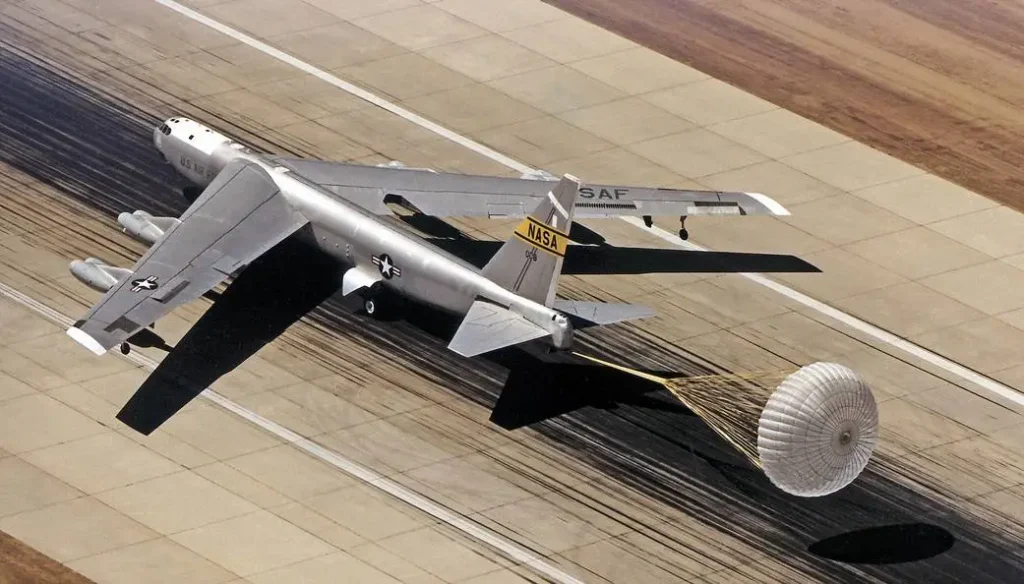
In the 1970s and 1980s, the Boeing B-52B was the launch aircraft for several remotely piloted aircraft flown by Dryden, including the Highly Maneuverable Aircraft Technology (HiMAT) research aircraft and the Drones for Aerodynamic and Structural Testing (DAST) project, which investigated aerodynamic loads alleviation. In 1990, the Boeing B-52B conducted eight tests of a drag chute deployment system, which aimed to shorten landing distance and reduce wear on shuttle parts. These tests were carried out at landing speeds ranging from 160 to 230 mph, and the drag chute system was first used on the Shuttle Endeavor in 1992. The B-52B also helped test the F-111 crew escape module parachute system from 1979 to 1992. In 1990, the B-52B launched the first Pegasus rocket, developed by Orbital Sciences with support from DARPA, to place small satellites into orbit. The first launch happened on April 5, 1990, off the coast of California, during which the B-52B carried the rocket to a high altitude before releasing it for ignition. Later, the aircraft supported the X-38 Crew Return Vehicle program. The first free flight of the X-38 occurred in 1998, and the Boeing B-52B continued to help the project until the X-38 project was canceled in 2001.
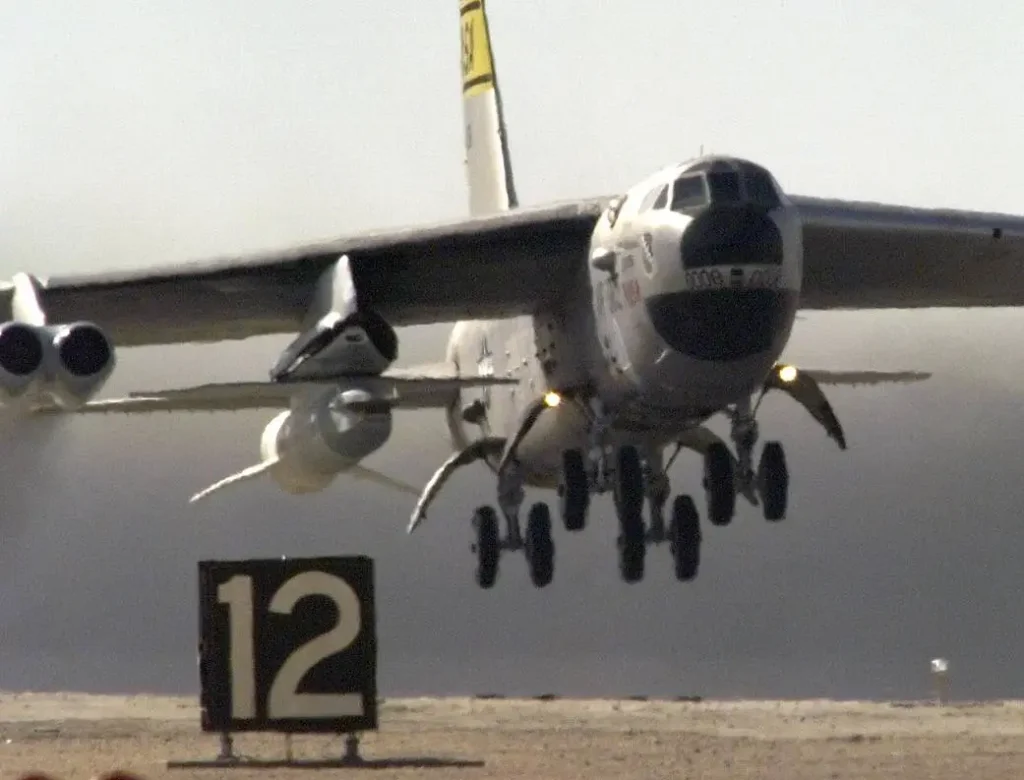
One of the B-52B’s final roles came in the Hyper-X program, which tested scramjet engines using the X-43A vehicle. The first flight of the X-43A in 2001 did not succeed. However, later flights in 2004 reached Mach 6.8 and 9.6, and it was the first time an air-breathing scramjet-powered aircraft had flown freely. The Boeing B-52B was powered by eight Pratt & Whitney J57 turbojet engines, each generating about 12,000 pounds of thrust with water injection. The aircraft was 156 feet long and 185 feet wide. The B-52B carried various payloads, including the 53,100-pound X-15, the 47,772-pound shuttle recovery system, and the 41,152-pound Pegasus rocket. To handle uneven payload weights, the crew moved fuel between the wings and adjusted for changes in roll during releases. NASA retired the Boeing B-52B on December 17, 2004, after nearly 50 years of service. By the time it was retired, it had flown 2,443.8 hours, which is fewer flight hours than most B-52s due to its primary use for research. In the Flight Test Files series, the Boeing B-52B stands out as an aircraft used to prove many concepts, from early hypersonic flight to support for scramjet testing. Read more Flight Test Files articles HERE.