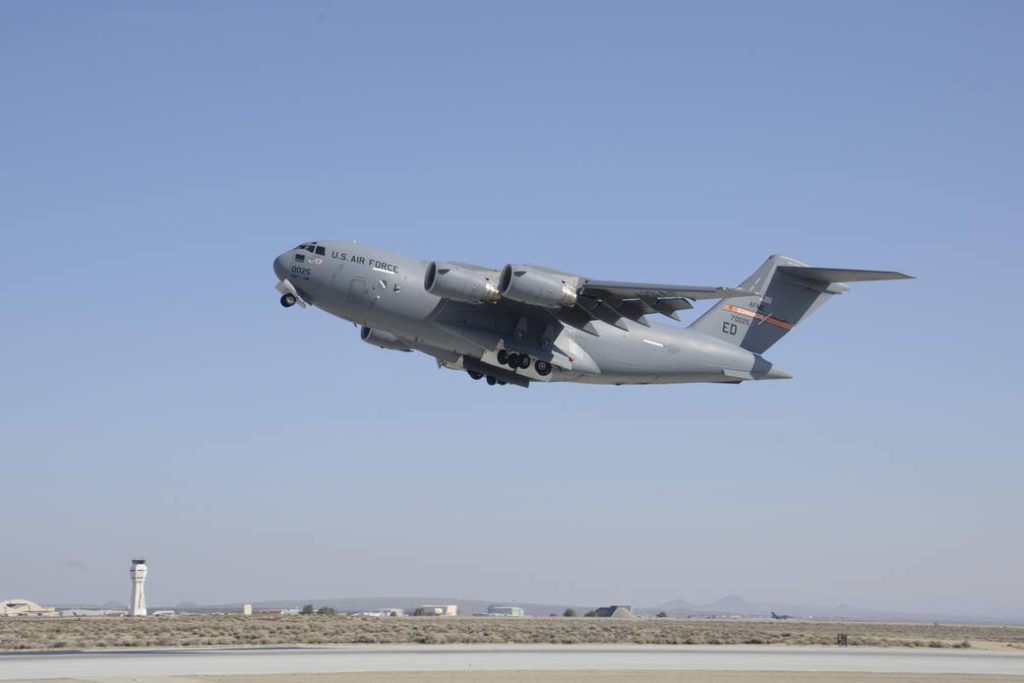
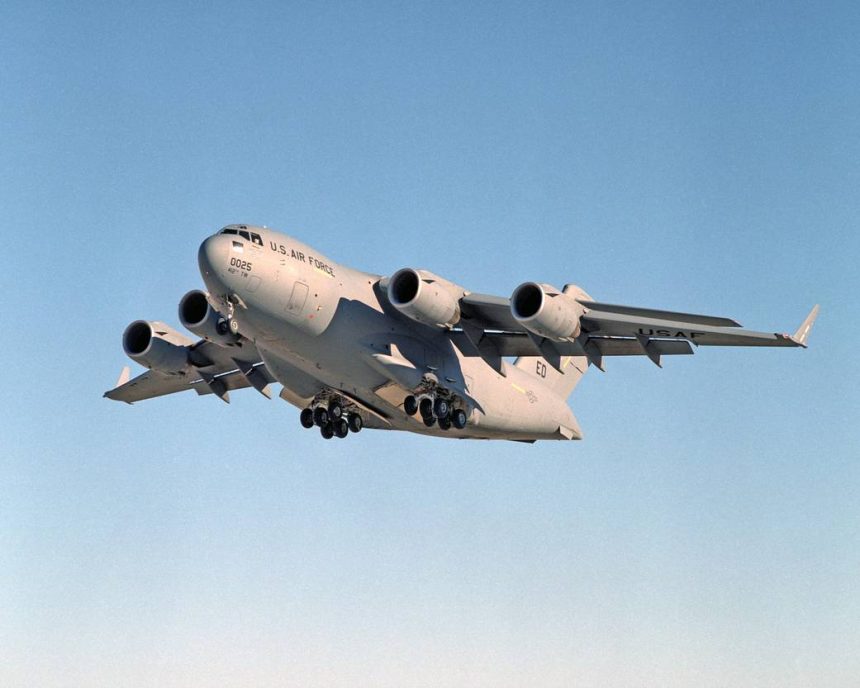

The C-17 Globemaster III is the “most flexible” cargo aircraft used by the US Air Force. The aircraft is capable of delivering all types of cargo and troops directly to the forward bases or even to the operating bases. It could perform missions such as airdrop, tactical airlift, evacuations, and so on. But the development of such a flexible aircraft was not possible without major NASA efforts. Four NASA centers helped develop the C-17, including the Ames Research Center in Mountain View, California; the Dryden Flight Research Center in Edwards, California; the Langley Research Center in Hampton, Virginia; and the Lewis Research Center in Cleveland, Ohio. The C-17 Globemaster III program shows how long it can take for aerospace technology to develop from ideas to usable aircraft. The US Department of Defense launched its Cargo-Experimental (C-X) program in 1979, and the Air Force selected McDonnell Douglas as the manufacturer of the envisioned C-17 in 1981. The company used technologies developed by NASA since the 1950s to complete the development of the first C-17 Globemaster III in 1991. An important part of the aircraft is a flap system developed by a team of researchers at NASA Langley Research Center in the mid-1950s. The system, called the “externally blown flap” or “powered-lift system,” enabled the airplane to make slow, steep approaches with heavy cargo loads. Pilots use a steep approach to land the aircraft accurately on short runways. The steep approach helps pilots land their aircraft accurately and enables them to land their aircraft exactly where they want on short runways. The exhaust from the engines, mounted on pods, flows over the flaps and is pushed down to boost wing lift. As a result, aircraft with this system can achieve about twice the lift compared to regular jet transport aircraft. Langley’s wind tunnels studied this concept in detail, including tests of flying models in the 30 x 60-foot Tunnel. The patented flap has been used on models of jet transports with both conventional and swept wings.
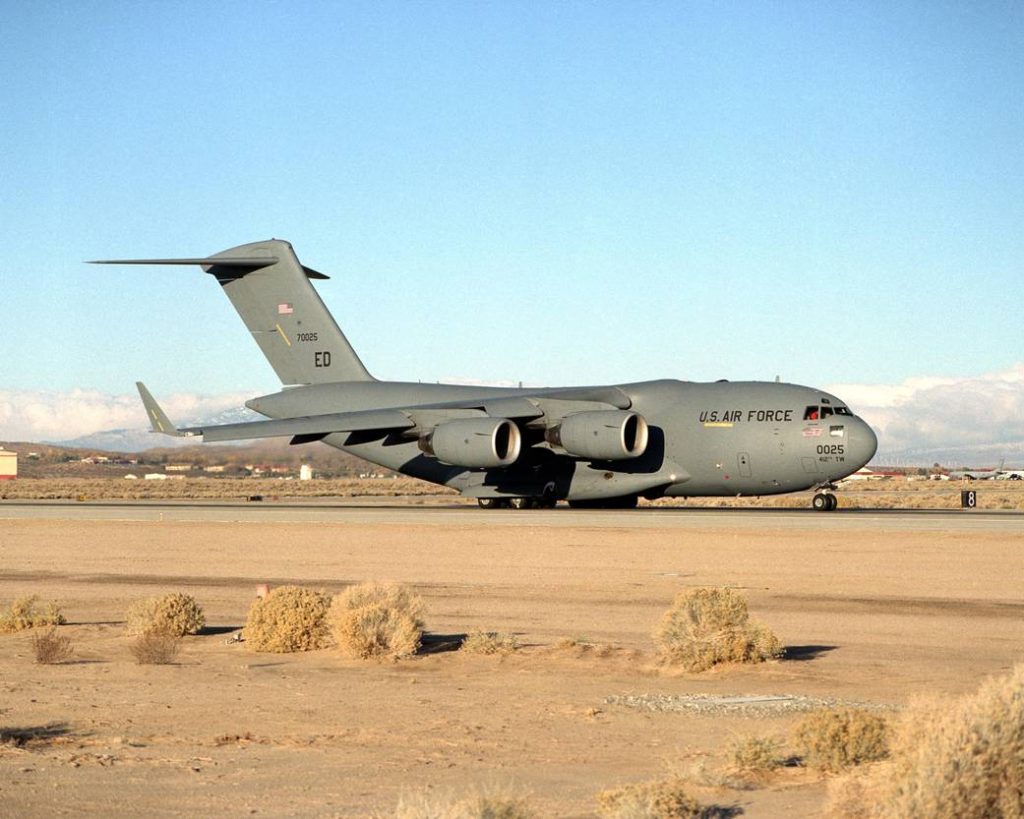
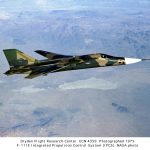
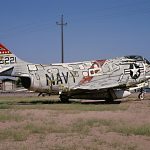
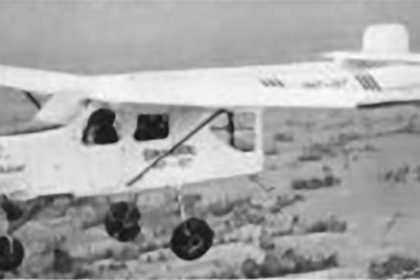
The Air Force required the C-17 Globemaster III to have Short Takeoff and Landing (STOL) capability. To develop this feature, researchers used flight simulators and the Augmentor Wing Research Aircraft at NASA Ames Research Center in Mountain View, California. During development, McDonnell Douglas ran simulations on the Vertical Motion Simulator to design the C-17’s flight control system and head-up display. Ames showed the Air Force and McDonnell Douglas how the Quiet Short Haul Research Aircraft (QSRA) works through flight demonstrations. The demonstrations highlighted the flight control system and head-up display features to help the C-17 Globemaster III land more precisely and effectively. The results of the flight demonstration helped improve the aircraft’s spoiler control system and the flight path display on the head-up display. Ames shared information with the Air Force and McDonnell Douglas on how to respond to wind shear and on control techniques tested in STOL simulations. The Air Force added new techniques to the C-17 Globemaster III operating procedures. Ames provided the Air Force with detailed information on the aircraft’s aerodynamic performance, stability and control, flying qualities, enhanced control and displays, and flight-test methods for powered-lift aircraft to prepare for the C-17 flight test program. Like other military transports, the C-17 Globemaster III uses a “supercritical” wing. These are advanced airfoil designs that enhance the cruising speed, range, and fuel efficiency of jet aircraft by producing weaker shock waves that create less drag and permit high efficiency. NASA developed these wings from Langley research in wind tunnels during the 1960s. NASA tested the concept in flight with an F-8A at NASA Dryden and later with an F-111 aircraft. In the mid-1970s, NASA Langley developed the concept of winglets through wind-tunnel research. Winglets are small, vertical surfaces at the tips of an aircraft’s wings that help the airplane fly more efficiently.
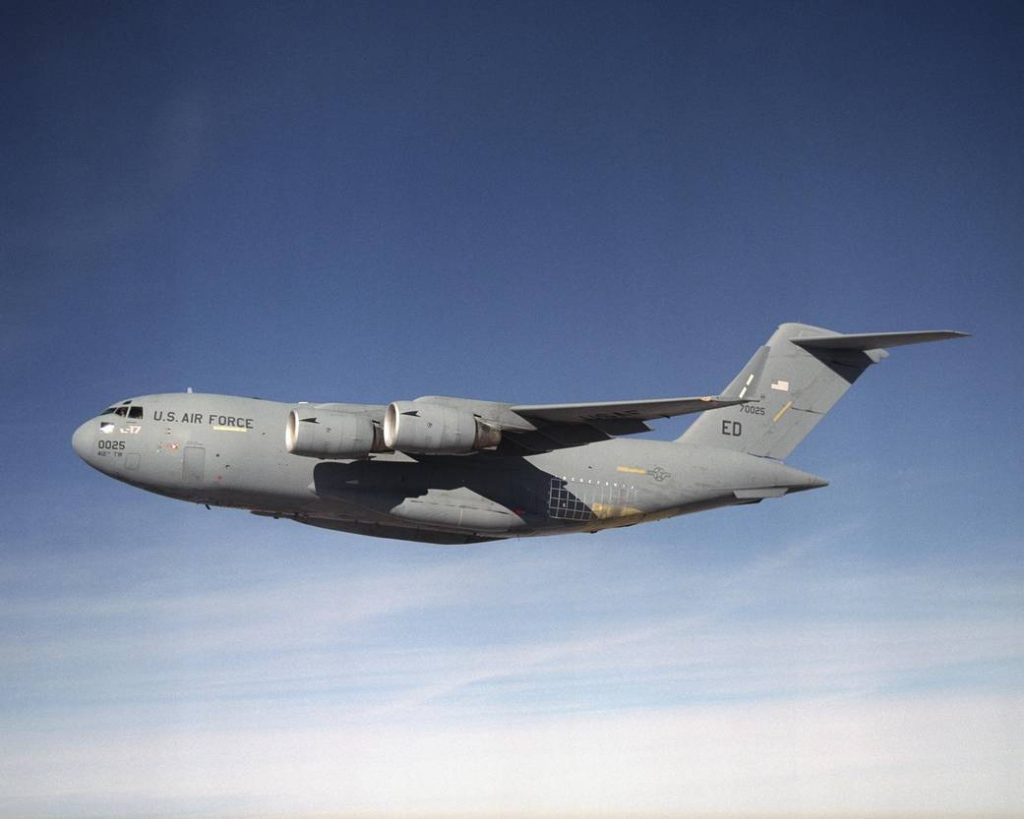
The winglets curve the flow at the wingtip to produce a forward force on the airplane, similar to the sail on a sailboat. The first flight demonstration of this concept was on a corporate Gates Model 28 Longhorn series Learjet. It was later tested on a larger DC-10 aircraft as part of NASA’s Aircraft Energy Efficiency (ACEE) Program. In 1979 and 1980, NASA flight-tested winglets on a KC-135A tanker borrowed from the Air Force at NASA Dryden. Eventually, winglets were used on the C-17 Globemaster III. NASA also contributed fly-by-wire flight-control technology to the C-17 Globemaster III, which is a lightweight alternative to hydraulic control systems. It originated from the F-8 digital fly-by-wire program that started at Dryden in the 1960s. In 1972, Dryden launched a flight research program to test this concept, showing it was feasible. In 1978, digital fly-by-wire technology was first used on a production aircraft, the F-18. Since then, it has been used in many other aircraft, including the C-17 Globemaster III. NASA Lewis and the Energy Efficient Engine Program contributed technologies to the F117-PW-100 (PW2037) engines on the C-17 Globemaster III. The technologies improved the performance and efficiency of the fan, compressor, and turbine components, resulting in overall superior fuel consumption for this engine. In addition, NASA Langley helped develop composite materials used in the C-17 aircraft, which contains 16,000 pounds of these materials. Many important control surfaces and secondary structural parts of the C-17 Globemaster III are made from composites. The DC-10 graphite-epoxy upper aft rudders directly supported C-17 Globemaster III applications. Since their introduction in 1976, these rudders have been in use for over 500,000 flight hours. One of these high-time rudders has flown for 75,000 hours. The C-17 Globemaster III’s control surfaces have a similar multi-rib design to the DC-10’s rudders.
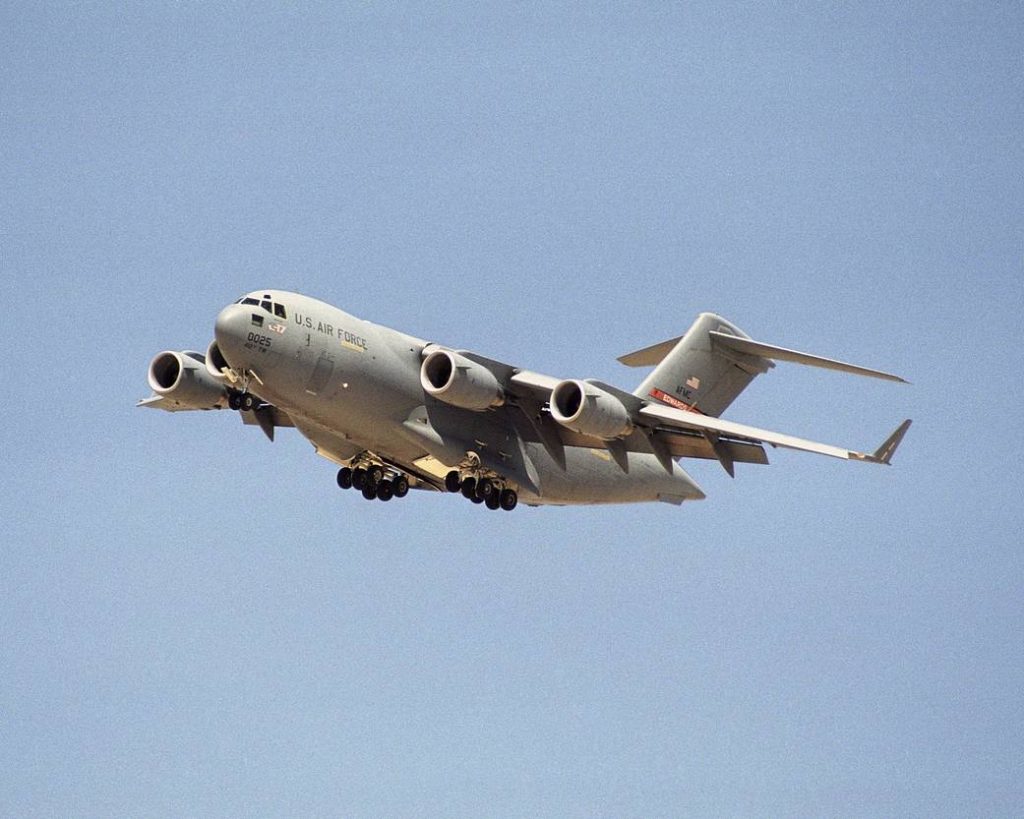
McDonnell Douglas received the Collier Trophy, the highest honor in US aviation, in 1994 for the C-17 Globemaster III design, and this was made possible by NASA technologies. In the Flight Test Files series, the C-17 Globemaster III is more a result of NASA’s technologies than of its own flight research. Though the aircraft was part of NASA’s Propulsion Health Management (PHM) portion of the Integrated Vehicle Health Management (IVHM) program and the noise mitigation study, the main story still lies in how NASA programs helped the US Air Force acquire its premier tactical and strategic airlifter, with a maximum payload capacity of 170,900 pounds. Read more Flight Test Files articles HERE.