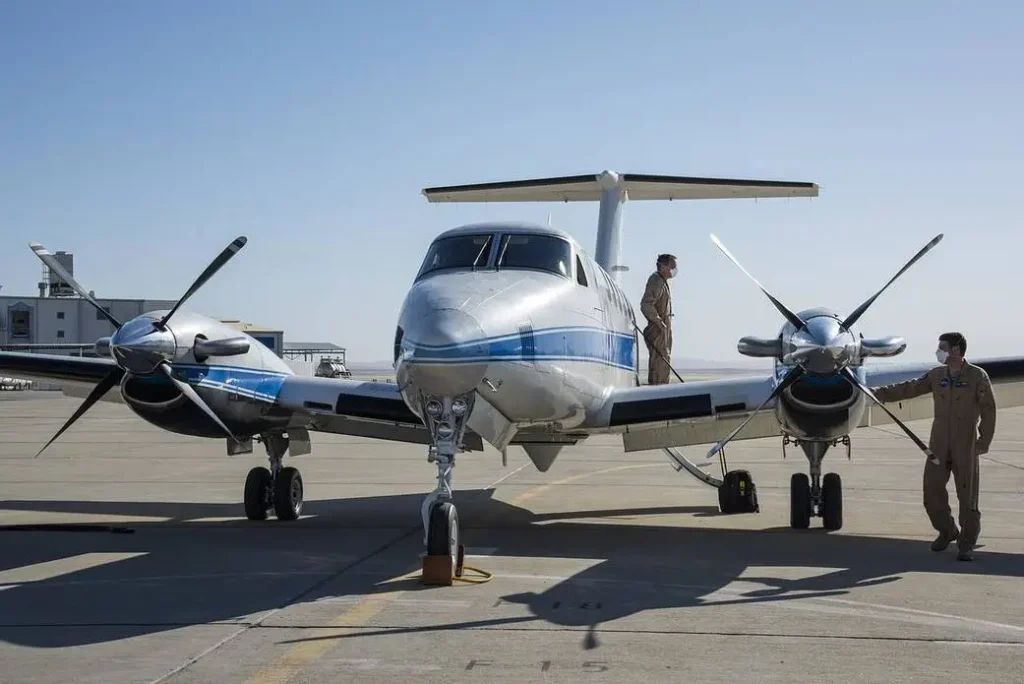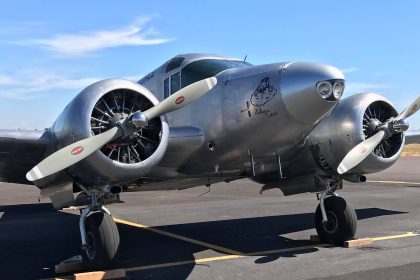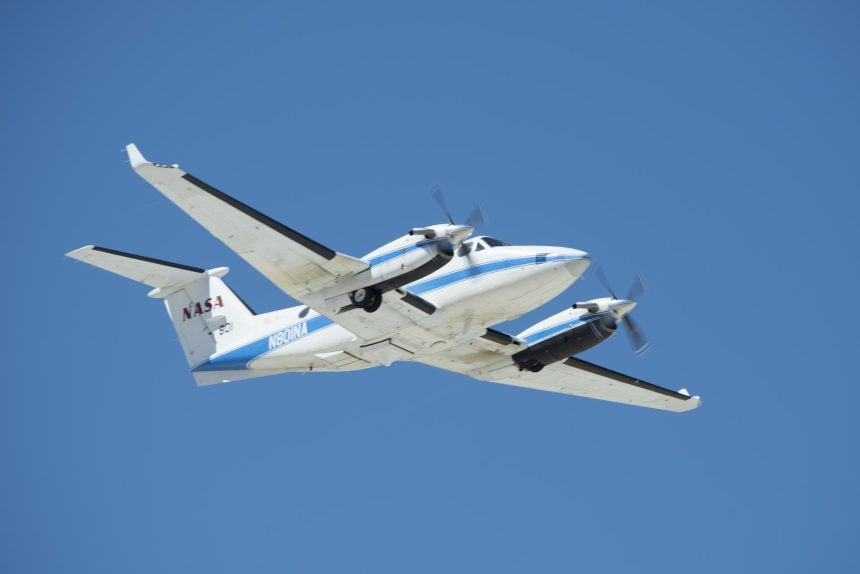

The Beechcraft B200 Super King Air, an aircraft with a T-tail design, was produced between 1974 and 2010 and used by the U.S. military as the C-12 Huron as a multi-utility plane, including transport, trainer, surveillance, and special mission roles. As a civilian aircraft, it was used for business travel and even cargo delivery. The King Air 200 was modeled after the earlier King Air 100, and its first prototype flew in October 1972. It received its airworthiness certificate in December 1973. The B200 Super King Air was an upgraded King Air 200 with more powerful engines to improve performance. In addition to its military and civilian roles, the Beechcraft B200 Super King Air was used by NASA for research. NASA acquired two Beechcraft B200 Super King Air aircraft, NASA Tail Number 7 in 1981 and NASA Tail Number 801 in 1983.
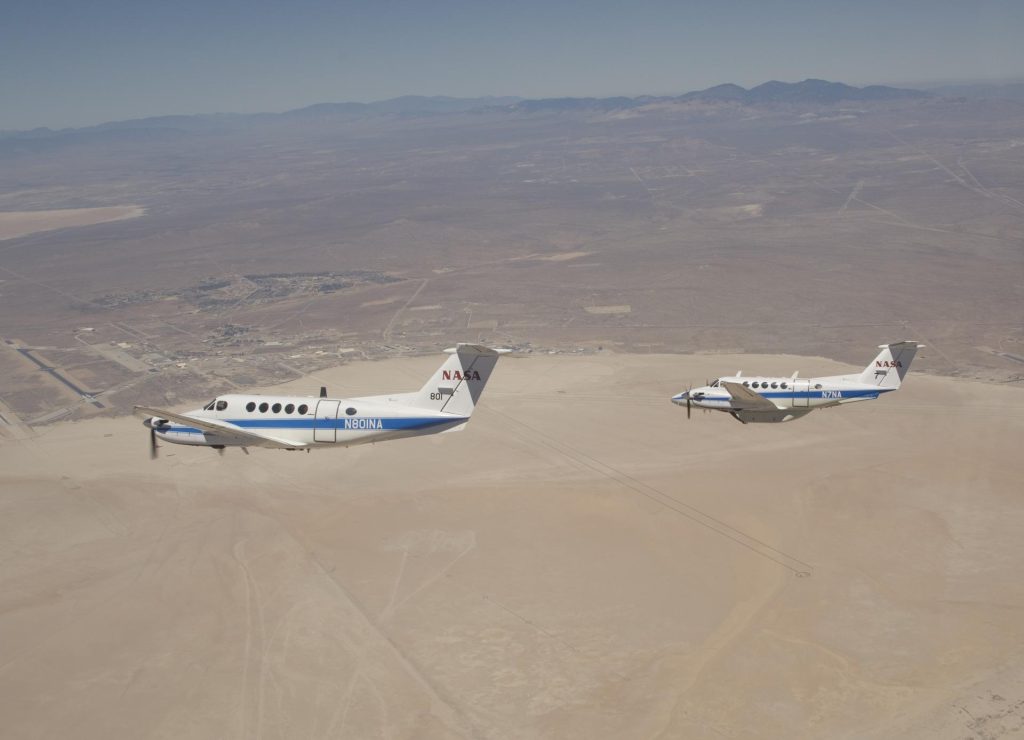
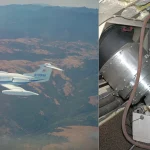
Of the two, NASA’s Armstrong Flight Research Center has been operating the Beechcraft B200 Super King Air, Tail number 801 (TN 801), to serve three roles: aeronautical research, pilot proficiency, and airborne science. To perform such roles, the TN 801 has special ports on the front and back that can hold radars, cameras, antennas, and other equipment. It also has racks inside for different tools and interchangeable antenna ports on top, which can be modified for various scientific experiments and needs. The Beechcraft B200 Super King Air TN 801 is 43.9 feet long, 15 feet high, with a wingspan of 57.11 feet and a maximum wing loading of 41.3 pounds per square foot. Its empty weight is 7,315 pounds, and its maximum takeoff weight is 13,420 pounds.
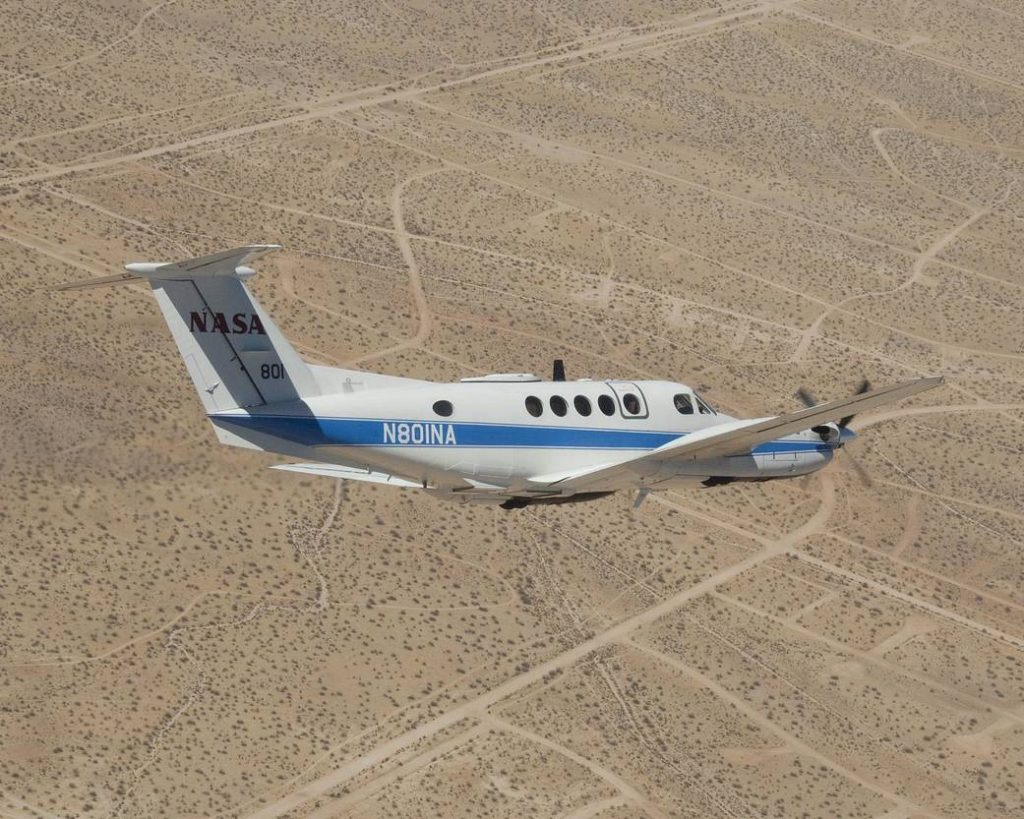
The Beechcraft B200 Super King Air TN 801 is powered by two United Aircraft of Canada PT6A-52 turboprop engines, producing a maximum of 850 shaft horsepower. The engines drive three-blade propellers that can be adjusted for speed and direction. The aircraft is flown by two pilots with full dual controls, including a Garmin G1000 for navigation. It can carry up to 11 passengers, depending on cabin configuration, with a space for up to 400 pounds of baggage in the rear compartment. The service ceiling is 28,000 feet, and the maximum speed of the aircraft at 15,000 feet altitude is 260 Knots Calibrated Airspeed (KCAS). Its cruise speed at an altitude of 25,000 feet is 313 mph. The range of the TN 801 is 1,053 to 2,075 statute miles at 27,000 feet with full fuel.
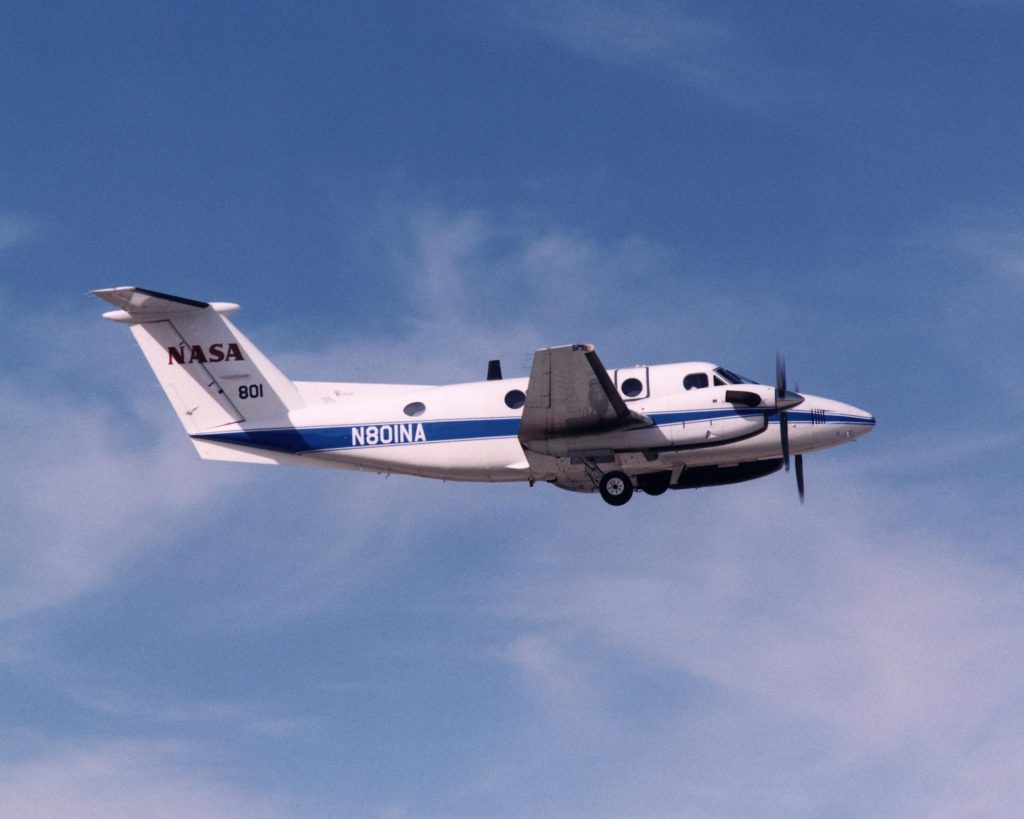
One of the major campaigns the Beechcraft B200 Super King Air TN 801 has been part of is the development of Signals of Opportunity Synthetic Aperture Radar (SoOpSAR). NASA Armstrong used its B200 TN 801 aircraft in Truckee, California, and Grand Junction, Colorado, to help support the SoOpSAR campaign for the Jet Propulsion Laboratory (JPL). The flights aimed to test the use of P-band signals to improve bi-static reflectivity with synthetic aperture radar (SAR) techniques. If this method works, it could help with studies on soil moisture in the root zone and snowpack. Another program that the Beechcraft B200 Super King Air TN 801 was a part of was the Sub-Mesoscale Ocean Dynamics Experiment (S-MODE). The Beechcraft B200 Super King Air aircraft supported NASA’s S-MODE field campaign at Moffett Field in Mountain View, California.
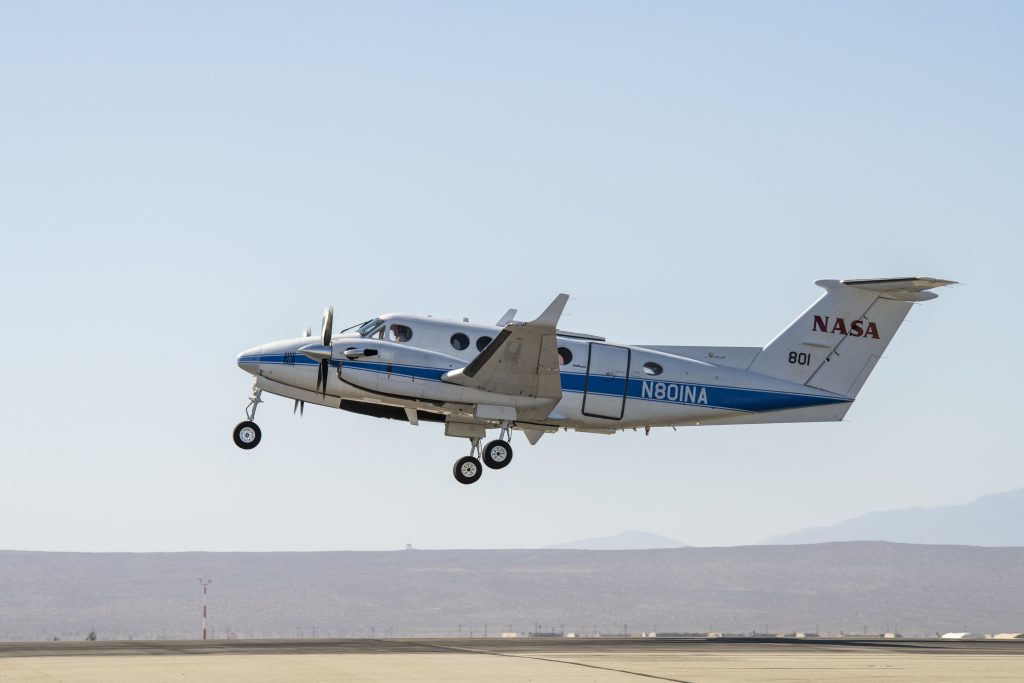
The S-MODE study used both on-site and remote sensing methods to provide a new view of the transition in upper-ocean circulation between large (mesoscale) and smaller (submesoscale) patterns to better understand how it shapes Earth’s climate. For this study, NASA equipped the B200 Super King Air with JPL’s DopplerScatt radar and the Multi-scale Observing System of the Ocean Surface (MOSES) camera system from the University of California, Los Angeles. Finally, the Beechcraft B200 Super King Air TN 801 has also been used to validate the Boundary Layer Data System (BLDS). The BLDS is a project developed by professors and students at California Polytechnic State University in San Luis Obispo, which studied the boundary layer of air over an airfoil during pilot proficiency flights. NASA Armstrong used its B200 Super King Air for this project to study airflow over a wing. The Beechcraft B200 Super King Air TN 801 has also been used as a pilot proficiency aircraft as part of NASA’s support aircraft fleet (SAF) to assist pilots in maintaining the proficiency requirements to fly. In the Flight Test Files series, the Beechcraft B200 Super King Air continues to provide NASA with valuable information and data across various programs. Read more Flight Test Files articles HERE.