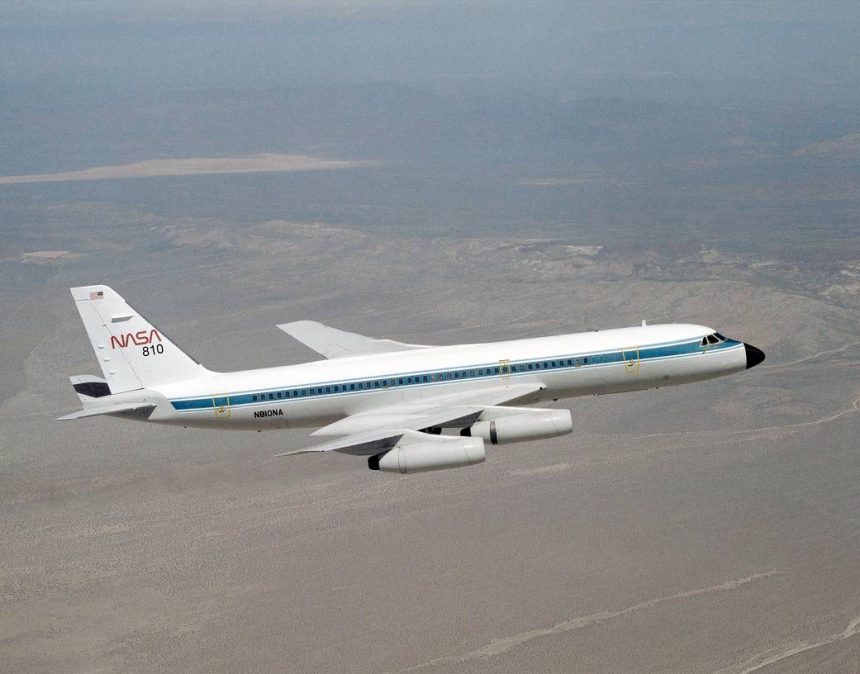

In the 1990s, NASA sought to test and improve the space shuttle landing gear and braking systems. As a result, it initiated a program in which the Convair CV-990 Coronado was used as a Landing Systems Research Aircraft (LSRA). The Convair CV-990 Coronado was developed by the Convair Division of General Dynamics Corp in 1962. American Airlines and Modern Air Transport used it for commercial passenger service until it was taken over for research in 1975, and it was used as an atmospheric research aircraft at the Ames Research Center, Moffett Field, California.
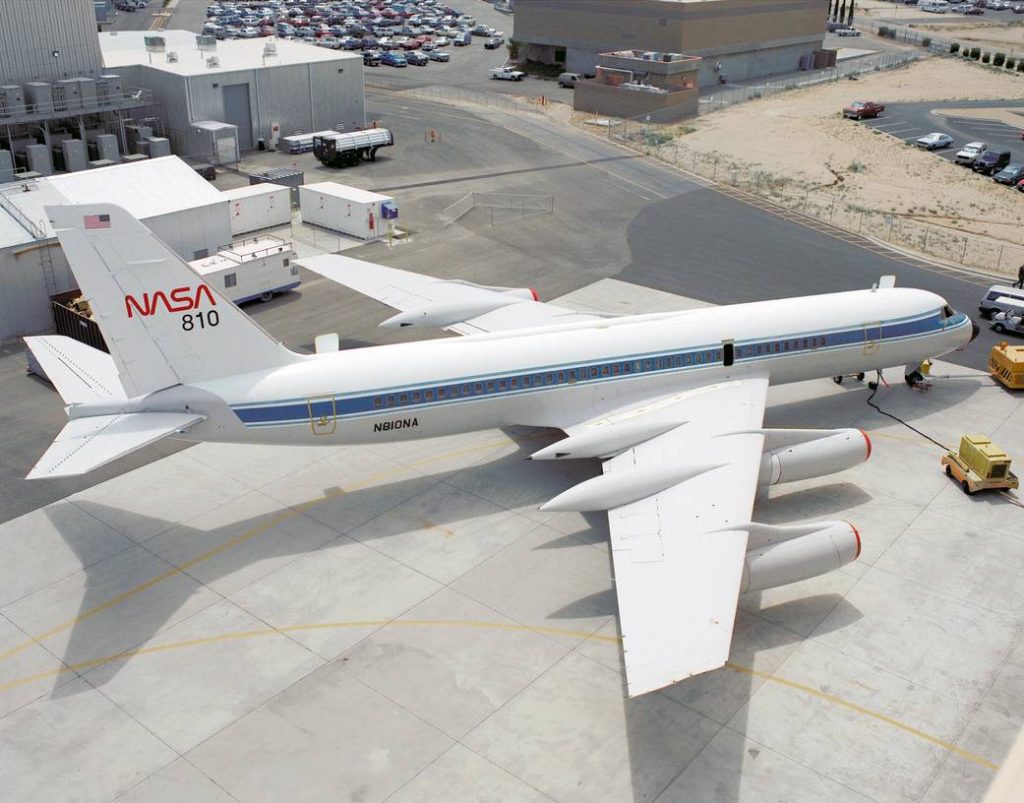
For the LSRA research at NASA Dryden Flight Research Center, now called the Armstrong Flight Research Center, in the 1990s, a landing gear retraction system was added to the lower fuselage area of the CV-990, located between the main landing gear. The CV-990’s ability to land was not affected by the test components that simulated a space shuttle landing gear unit. During tests, a high-pressure hydraulic system lowered the landing gear unit after the Convair CV-990 Coronado’s main landing gear touched the runway. The tests helped engineers evaluate and document how the space shuttle’s main and nose landing gear systems, wheel assemblies, tires, braking, and nose wheel steering performed.
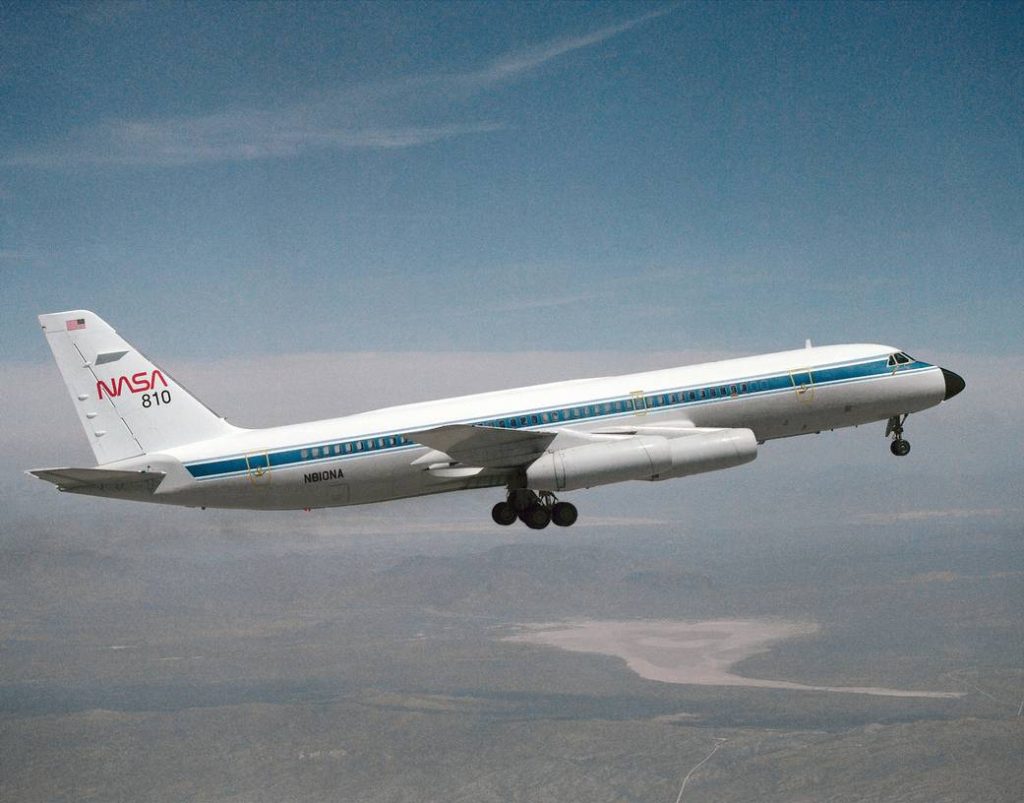
Once a landing test was completed, the load on the shuttle gear, which could be up to 150,000 pounds, was eased, and the landing roll continued on the Convair CV-990 Coronado’s landing gear. The Tire Assault Vehicle (TAV), built from a 1/16th-scale model of a German WWII tank, played an important role in the safety tests for the Convair CV-990 Coronado LSRA. It was essential to determine the extreme conditions shuttle tires could withstand during landing to ensure the shuttle’s and its crew’s safety. The Convair 990 could land many times to test the tires.
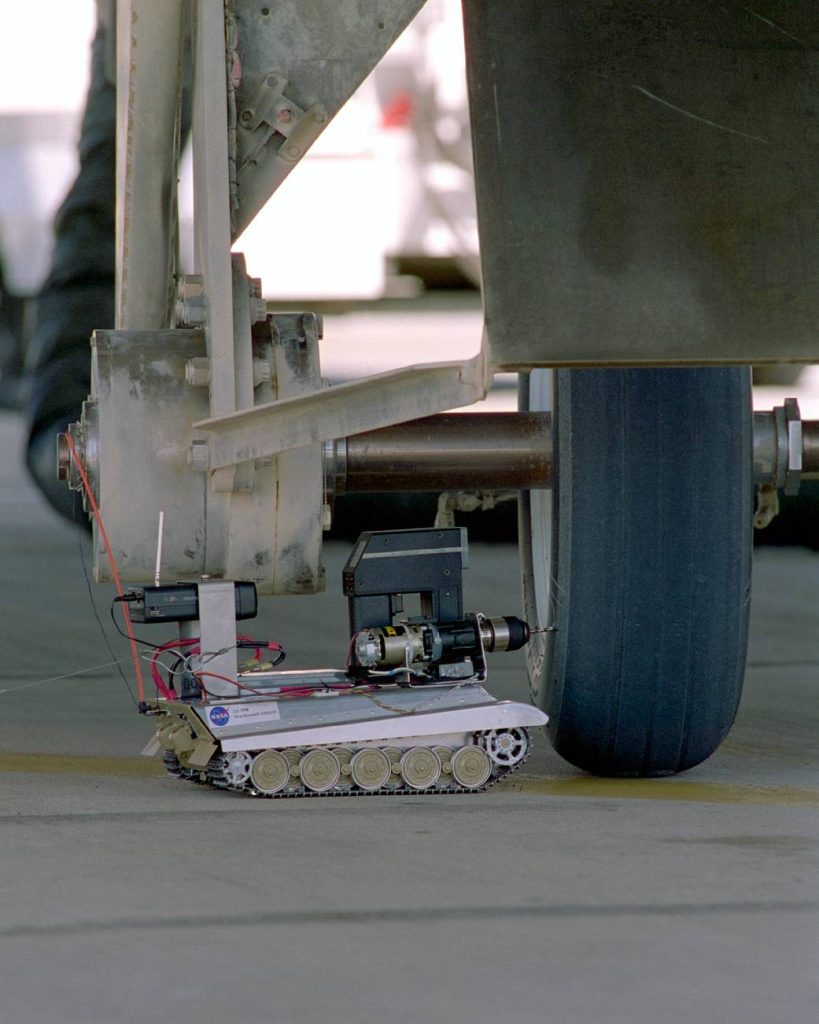
The TAV, modified from a kit into a radio-controlled machine with a video camera, was used to drill holes in test tires that were at risk of exploding. When a test tire exploded, it could release energy equivalent to two and one-half sticks of dynamite, which can cause injuries to anyone within 50 feet and hearing damage to people within 100 feet. The level of danger also depended on the cord wear of a test tire, temperature, and the internal pressure. Between 1993 and 1994, tests were conducted with the Convair CV-990 Coronado at the Kennedy Space Center and Edwards Air Force Base to study tire wear on the space shuttle. The tests were important for the space shuttle program as they allowed the landing limits for crosswinds to increase from 15 knots to 20 knots.
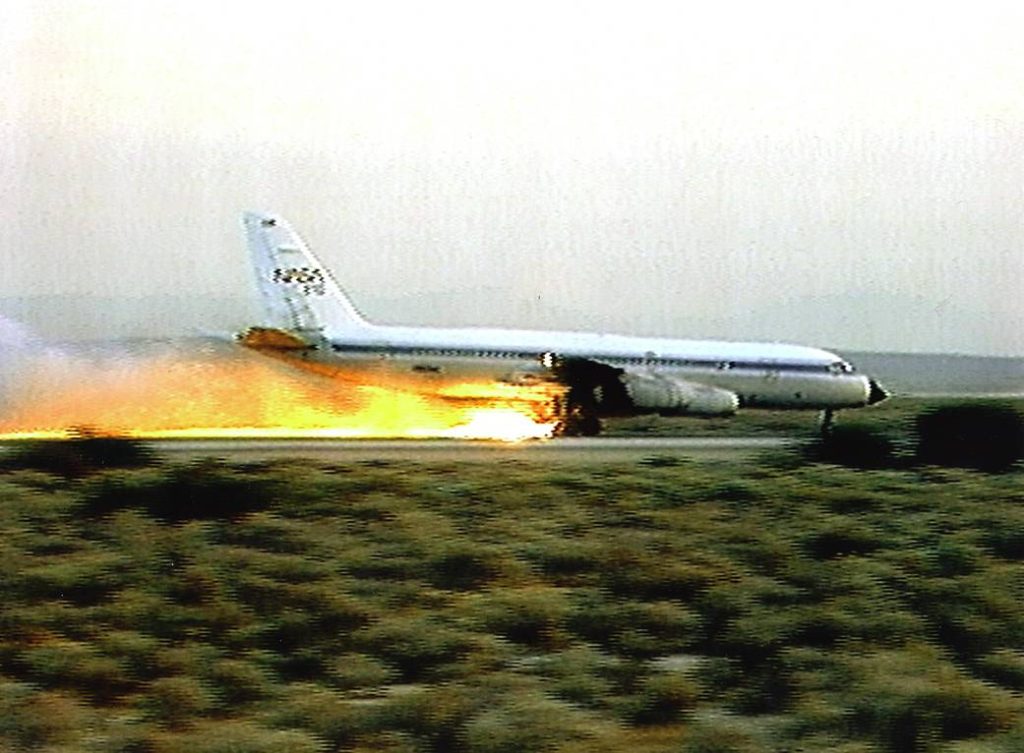
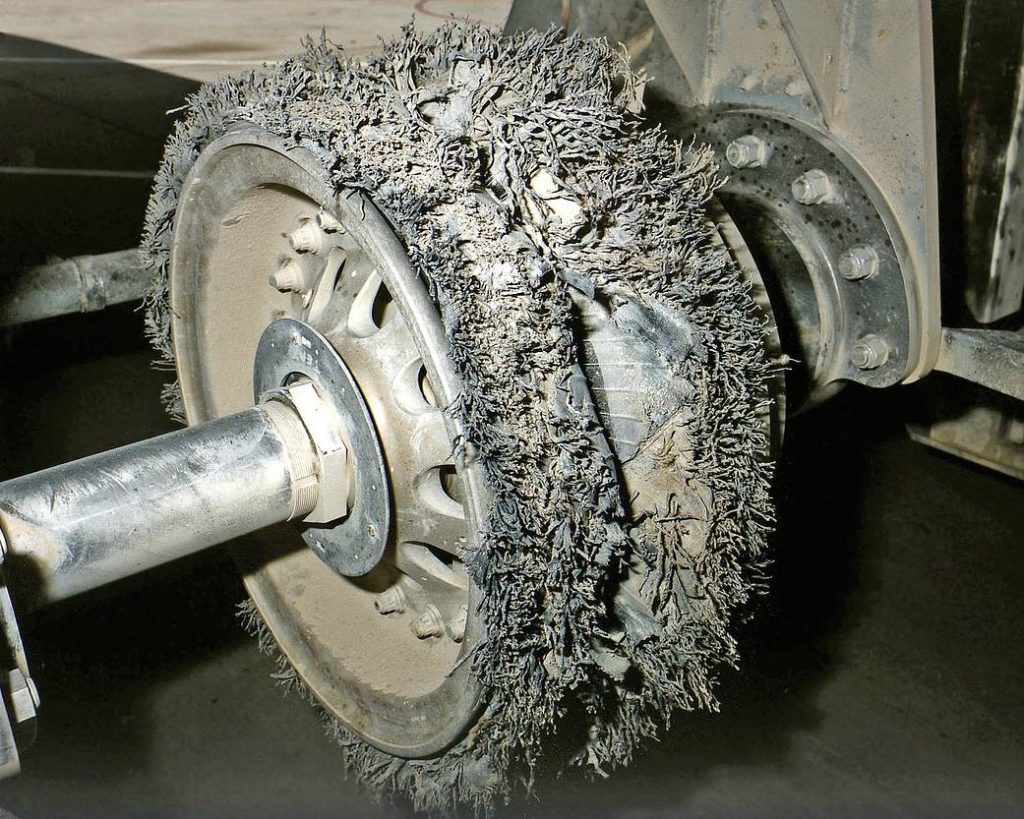
NASA’s Dryden Flight Research Center in Edwards, California, conducted 155 test missions for the space shuttle program. The tests provided valuable information on how long the shuttle’s tires last and helped improve the shuttle’s crosswind landing limits at the Kennedy Space Center. One of the last tests in August 1995 involved the Convair CV-990 Coronado LSRA, which resulted in a fire caused by friction-generated heat, aluminum particles, and rubber fragments, destroying the wheel. After successful tire-wear tests at Edwards and the Kennedy Space Center in Florida, a series of roll-on-rim tests identified how the shuttle wheels fail.
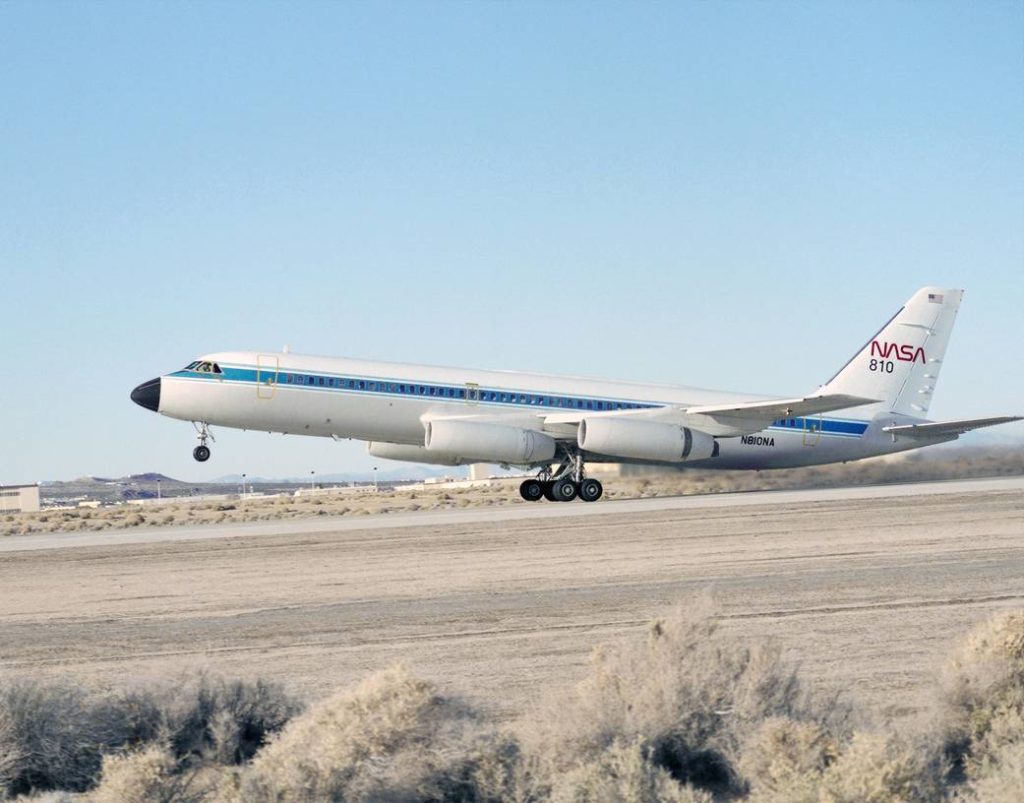
In a test, the aluminum wheel locked in place and was ground down to just four inches from the axle before the test ended. In the Flight Test Files series, the Convair CV-990 Coronado helped NASA conceptualize improvements in space shuttle and tire safety, despite being a challenging task for pilots, as described by Project Engineer Christopher J. Nagy. He said, “NASA pilots Gordon Fullerton and Terry Rager did a superb job of flying the aircraft in many difficult test situations, at speeds higher than the aircraft was intended to land, without once losing a single test flight.” Read more Flight Test Files articles HERE.