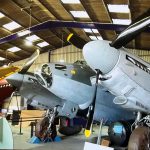

This former RAF fighter Station, in suburban Surrey, operated on the front line of southern England’s defense in the Battle of Britain. In 1940, Kenley’s airspace resounded with Hawker Hurricane and Supermarine Spitfire Merlin engines, as these iconic RAF warbirds scrambled to intercept approaching German Luftwaffe bomber streams. Pilots clambered into their fighter aircraft, warming up on Kenley airfield’s dispersal areas and perimeter taxiways. On 18 August 1940, the Luftwaffe bombed the airfield repeatedly, with deadly accuracy. On that day, pilots and ground crew alike took shelter nearby, in Kenley’s specially constructed E-shaped blast pens and airfield trenches. Today, Kenley is a tranquil place where military and civilian training gliders take off to soar over its two original configuration concrete runways. It remains highly atmospheric, with a powerful military aviation history. It is the best-preserved surviving Battle of Britain fighter airfield.
Strategic Site
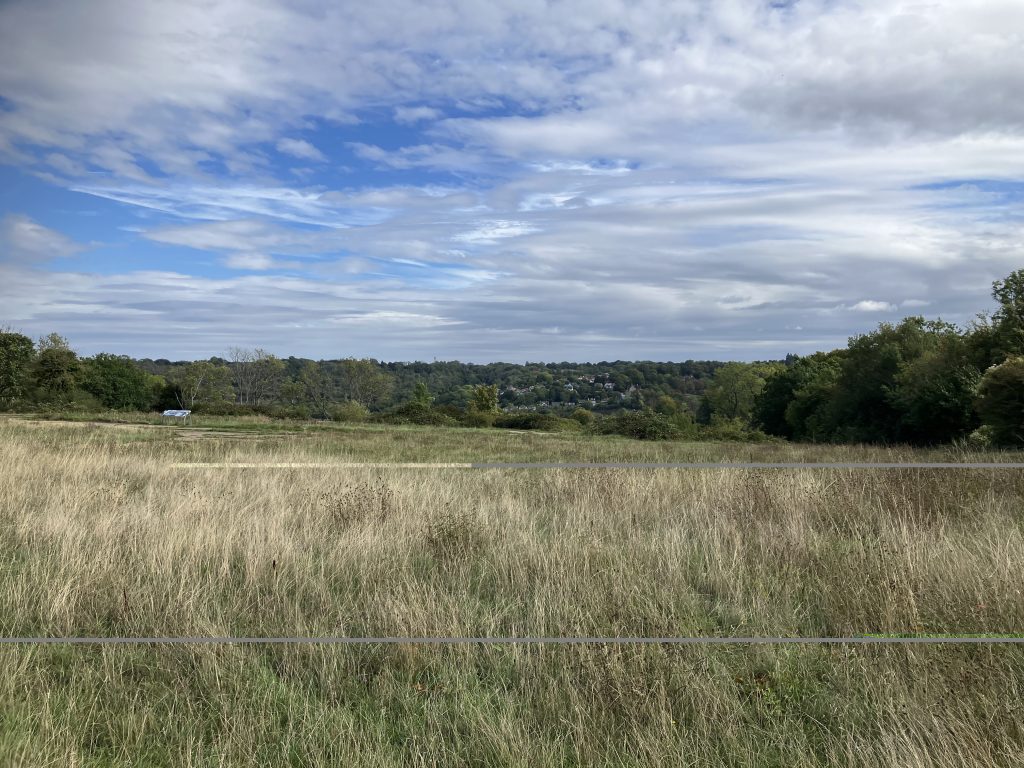
Royal Air Force (RAF) Station Kenley occupies a key strategic site in Surrey, 13 miles south of central London. It was, and remains, perfectly placed for air defense. The airfield sits on a high plateau of the North Downs, adjacent to Kenley Common, at an elevation of 525 feet. Its runways overlook the Caterham Valley, containing the railway line from Croydon and the towns of Kenley, Whyteleafe, Caterham and Coulsdon, to the west. Construction of the airfield began in 1939 and was completed in early May 1940, just in time for the onset of the Battle of Britain (the Luftwaffe’s aerial onslaught against southern England from 10 July to 31 October 1940). At the height of the Battle of Britain, squadrons of Hawker Hurricane Mk I and Mk IIs and Mk I Supermarine Spitfires rose from RAF Kenley en masse to intercept approaching waves of Luftwaffe twin-engine Dornier Do-17, Heinkel HE-111 and Junkers JU-88 medium bombers, Messerschmitt Bf-110 fighter-bombers and Bf-109E escort fighters.

No. 11 (Fighter) Group Sector Station
Kenley was a critical component of the RAF’s highly proficient “Dowding System,” an integrated air defense system devised and directed by Air Chief Marshal Hugh Dowding and Air Vice Marshal Keith Park. The system comprised a vital chain of 21 “Home Chain” radar (Radio Direction Finding or RDF) stations, supported by visual reporting from Royal Observer Corps posts, barrage balloons (with metal cables designed to deter low-flying aircraft), radio eavesdropping and a network of acoustic detectors. Aircraft intruder information from these sources was relayed to RAF Fighter Command HQ at Bentley Priory in North London, where its underground Filter and Operations Rooms identified and plotted enemy formations. Orders then passed through Group HQs to alert squadrons. RAF No.11 (Fighter) Group at RAF Uxbridge, London, was the pulsing nerve center of operations defending London and southeast England, directing fighters from airfields across the region. 11 Group controlled seven Sector Stations in Greater London, with others in Kent, Essex, and Sussex. They were RAF Kenley (Surrey), RAF Biggin Hill (Kent), RAF Tangmere (Sussex), RAF North Weald (Essex), RAF Debden (Essex), RAF Hornchurch (Essex) and RAF Northolt (Greater London). For its part, Kenley played a critical role during the Battle and was attacked and damaged several times.

Origins and Innovation
RAF Kenley’s origins lie in a Royal Flying Corps (RFC) airfield established on Kenley Common in 1917. Here, British biplane aircraft were given final checks before departure to the Western Front in France and Belgium. In April 1918, after the RFC became the Royal Air Force, Kenley became a permanent RAF Station. As war in Europe loomed again in 1939, major redevelopment took place, turning Kenley into a key fighter airfield, operating Hurricane Mk I and II, Mk I Spitfire and Bristol Blenheim light bombers. Construction of two hardened concrete runways and associated airfield buildings, taxiways, dispersal areas and 12 blast pens finished in April 1940. During 1939 and 1940, Britain’s Air Ministry had implemented innovative new airfield designs at RAF Kenley to protect both fighter aircraft and personnel. In particular, the designers recognized early on that ground crews and pilots were most vulnerable to enemy bombing while fighters were refueled and rearmed. At Kenley, 12 E-shaped fighter blast pens were constructed around the airfield perimeter. Concrete aircraft bays and blast walls were also built at intervals around the perimeter taxiways to shield parked fighter aircraft from bomb blast and low-level enemy strafing. The blast pens served as air raid shelters designed for the ground crews and pilots. These shelters were constructed from reinforced concrete with curved corrugated iron roofs and camouflaged with earth. They protected those inside from blast damage and bomb fragments, but not against direct hits. They featured heavy blast doors, wooden bench seating, chemical lavatories, and emergency escape hatches. The innovation was about to be tested, under fire.

Kenley in the Battle of Britain
The following RAF squadrons flew from Kenley during the Battle from July to September 1940: No 615 Squadron (Hurricanes), No 616 Squadron (Spitfires), No 253 Squadron (Hurricanes), No 66 Squadron (Spitfires) and No 501 Squadron (Hurricanes). In common with the other six No 11 (Fighter) Group Sector Stations, RAF Kenley’s operations (“Ops”) room controlled not only its own fighter aircraft but also those from satellite airfields. In Kenley’s case these included Croydon, Gatwick, Redhill and Shoreham-by-Sea. Kenley had its own sector of operations right down to Beachy Head on England’s south coast and was tasked with intercepting enemy raids approaching London from the south and south-east. From 12 August to 6 September 1940 the Luftwaffe concentrated on bombing RAF Fighter Group No 11’s airfields. In this phase of the Battle, the pressure was unrelenting. 53 attacks were made on RAF airfields, 32 on fighter airfields. The RAF’s airfields closest to the Kent and Sussex coastlines were first to enter the Luftwaffe’s bomb sights. These included Hawkinge, Lympne and Manston. On 15 August, German Bf 110 fighter-bombers mistook RAF Kenley for nearby RAF Croydon, bombing the latter’s grass airfield, wrecking buildings, killing 62 and injuring 172 others. Closer to London, the most serious raid subsequently occurred at RAF Biggin Hill (Kent) on 30 August, causing major bomb damage to the airfield and buildings, killing 39 and injuring 25.

RAF Kenley was not immune. On 18 August 1940—the so-called “Hardest Day” of the Battle of Britain, in which the RAF lost around 68 aircraft—RAF Kenley was hit by a highly effective, low-level (100 feet) attack by nine German Dornier Do-17 bombers. In this deadly raid, one RAF pilot and 11 ground staff were killed and 20 injured. That day, 23 of Kenley’s fighters had earlier been scrambled and were in action elsewhere over southern England. At Kenley, one of the attacking Do-17s was destroyed by an anti-aircraft parachute and cable (PAC) airfield defense system fired from the airfield. Based on a pre-war maritime rescue device, this (improvised) system fired a rocket with a parachute fitted on top, which deployed floating steel cables designed to ensnare an aircraft’s wing. The remaining Dorniers dropped 110 lb bombs and banked away after destroying three hangars and an equipment store. In the dispersal and taxiway areas, RAF personnel took refuge in the fighter blast pens. Bombs destroyed four Hurricanes and a Bristol Blenheim bomber, and four other Hurricanes were damaged in the open dispersal areas. All electricity supplies, phone lines and utilities were disrupted. The sector operations room was knocked out, the runways cratered, and contact with 11 Group was lost for around two hours. Even so, Kenley remained defiantly operational. Controllers soon relocated to an empty butcher’s premises in nearby Caterham High Street at 11 Godstone Road, where it was fully functional until November 1940. After the 18 August raid ended, RAF ground crews pegged out white flags on an improvised landing strip between the airfield bomb craters to guide the returning Hurricane and Spitfire pilots down. The same crews raced to repair the airfield damage. Later air intelligence reports confirmed that four of the attacking Dorniers had been shot down returning to their bases in France. Further raids on 26 and 30 August and on 1 September by Junkers JU-88 and Dornier Do-17 bombers caused additional damage to aircraft on the ground and airfield buildings at Kenley.

On 7 September 1940, the Luftwaffe changed strategy, switching attacks to central London and taking the pressure off the RAF’s airfields, including Kenley. It was a major tactical error. By October, the Luftwaffe had failed in its strategic objective to destroy the RAF on the ground and gain air supremacy. During the Battle of Britain, the RAF destroyed 1733 German aircraft for the loss of 915 of their own and 554 aircrew. Of these, some 33 aircrew flying from Kenley were killed in action. The RAF had held the Luftwaffe off over southern England in daylight, although night bombing (“The Blitz”) persisted until 11 May 1941. Air attacks on Britain continued, with varying degrees of lull and resumption, until early 1945.

During 1941, RAF Kenley further hosted Australian, New Zealand, Polish and Czech squadrons and from 1942-1944 Canadian, Belgian, and Free French formations flew sorties from the airfield. During and after the Allied invasion of Normandy, on D-Day, 6 June 1944, RAF Kenley dispatched fighter sweep sorties over occupied Europe. At war’s end in 1945, the advent of new RAF jet fighters, such as the Gloster Meteor and de Havilland Vampire, rendered Kenley’s short runways increasingly obsolete. Fighter operations ceased in 1959.

Kenley Preserved
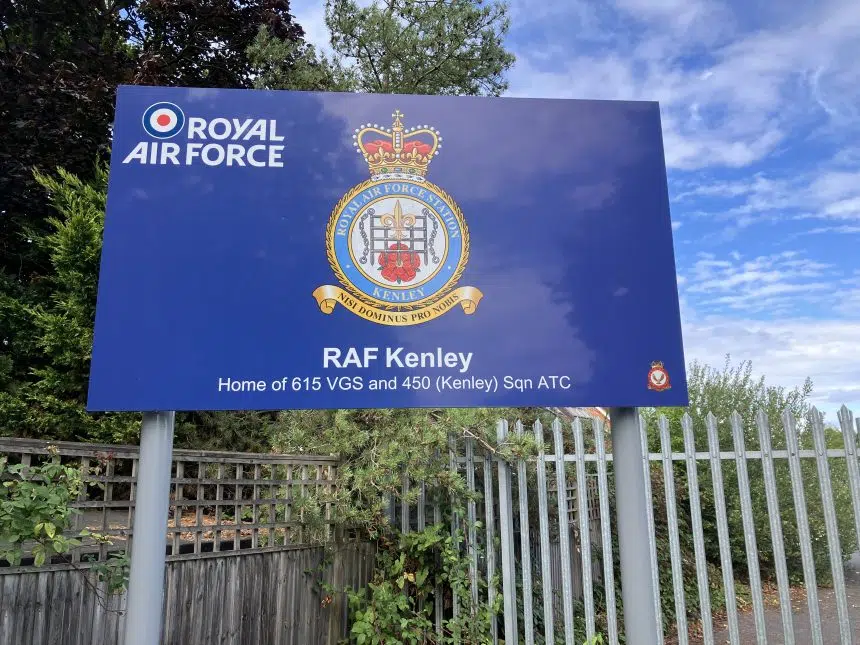
RAF Kenley is both a protected Scheduled Monument and an active military site. The RAF maintains a non-powered training role at Kenley, operating 615 Volunteer Gliding Squadron, instructing air cadets in graceful Grob Viking T1 gliders, launched by ground winch.
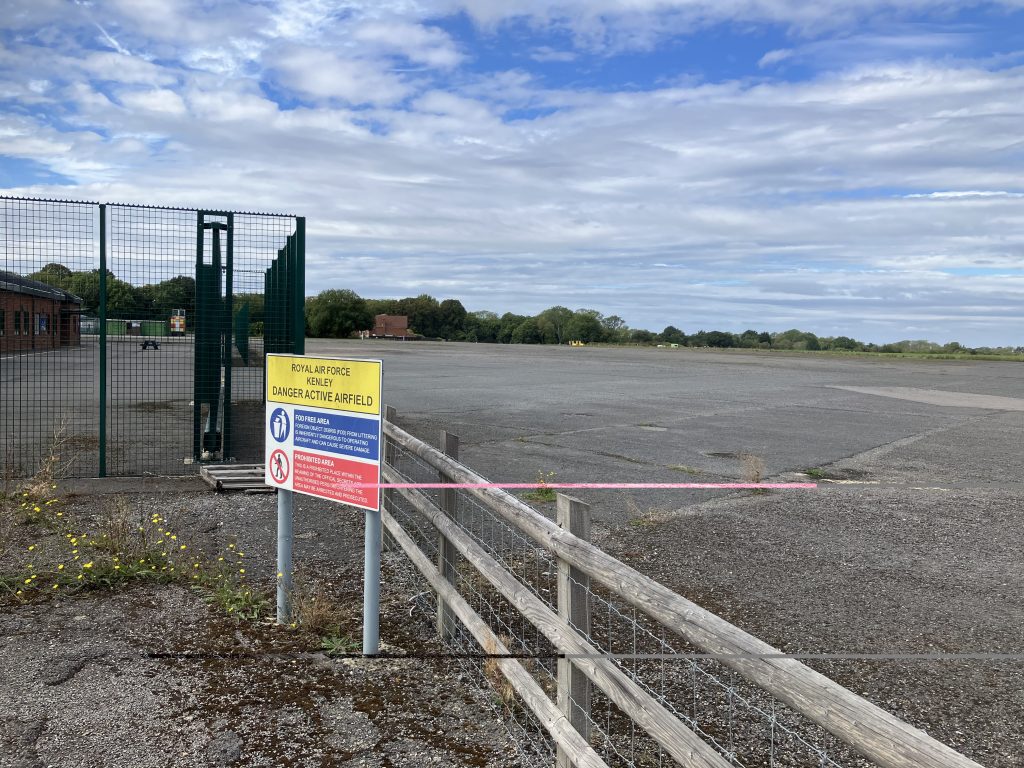
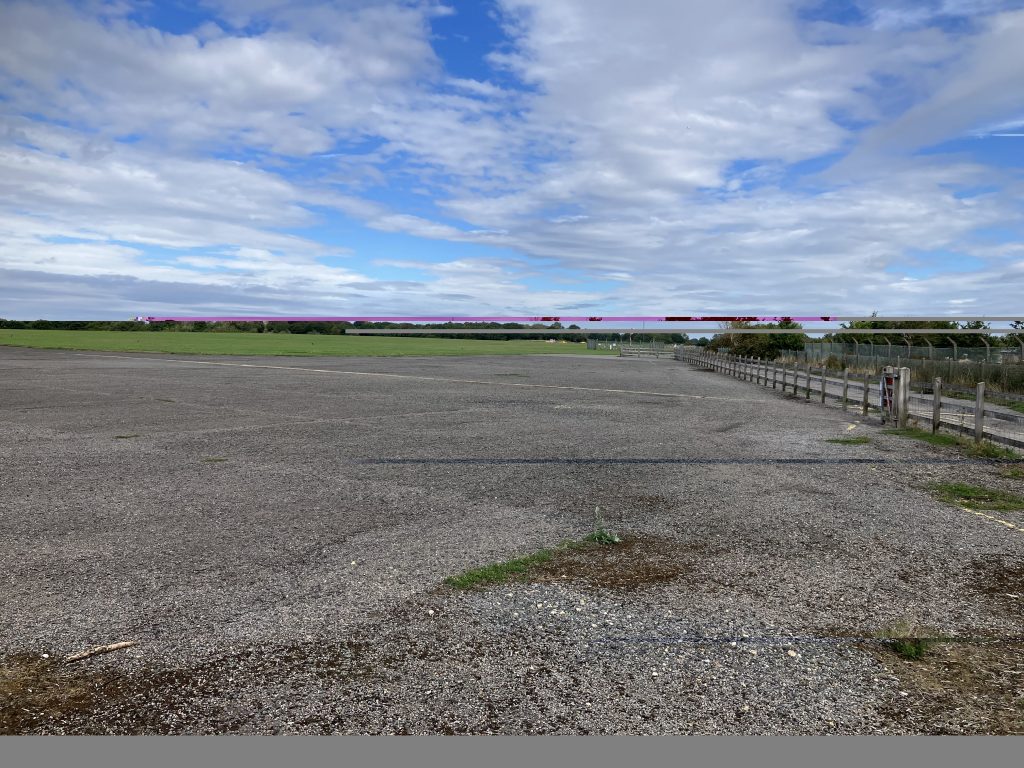
Kenley’s hangars and Control Tower have long been demolished. But its two hardened runways, the perimeter taxiways (now part of a walking, running and nature trail) and two of its historic 12 E-shaped fighter pens—including the air raid shelters—survive intact. Eight others are under restoration.
At Kenley, both fighter pen blast shelters are open to visitors each September as part of London’s Open House Festival. They are highly atmospheric places, with knowledgeable guides and are funded by the UK’s Heritage Fund, City of London Corporation. Historic England and Kenley Airfield Friends Group. On my visit last week, I entered one of the blast pens in a group, through the red brick entrances and original thick, decaying steel blast doors. I took in the confined space under the curving Nissen-hut-style corrugated iron ceiling. I tried to imagine what the former RAF personnel endured there and their fortitude during the visceral raids of 1940. To see the Kenley runways in their original configuration also brings the vanished roar of Spitfires and Hurricanes thrillingly back to life.
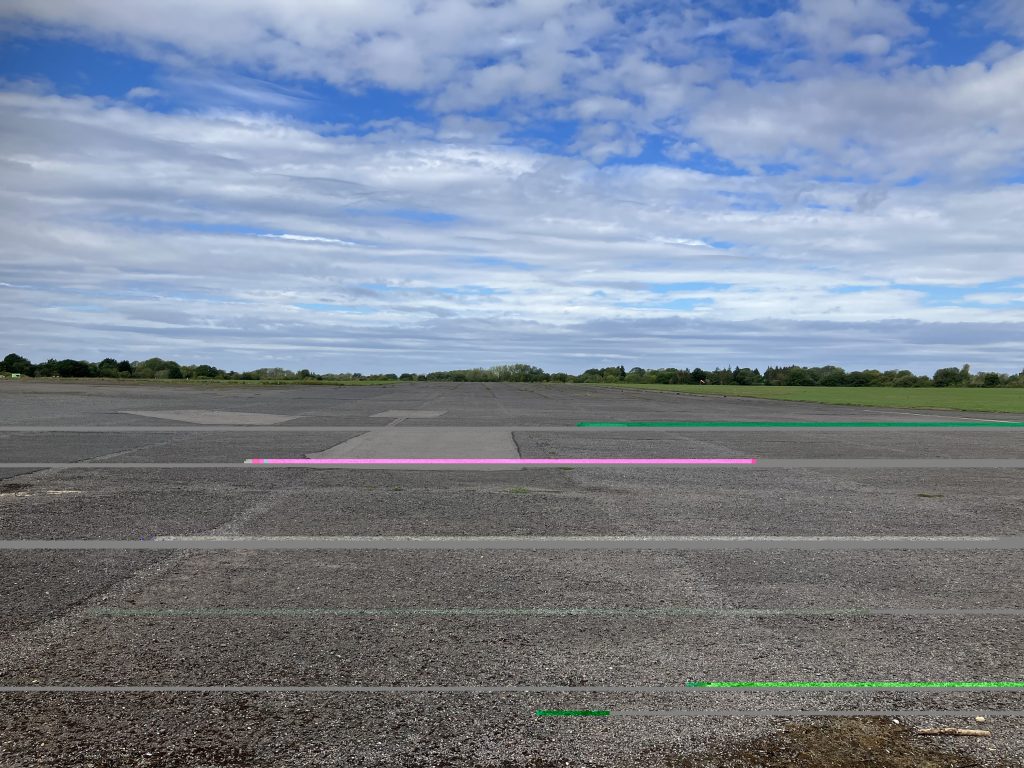
What makes RAF Kenley special is not just its proud history of flight operations and air defense engineering. Today, it remains the best-conserved surviving Battle of Britain fighter airfield, offering a remarkably preserved window into UK aviation heritage at a critical period in its national story. It reveals a wartime history of resilience and innovation. It offers vintage aviation enthusiasts visiting Surrey a fascinating and reflective experience.

Visitors can see the RAF Kenley blast pens in Surrey each September as part of London’s Open House Festival. More on the airfield’s history is available on the RAF Kenley Revival project at Kenley Revival | Sharing the history of a Battle of Britain airfield.