






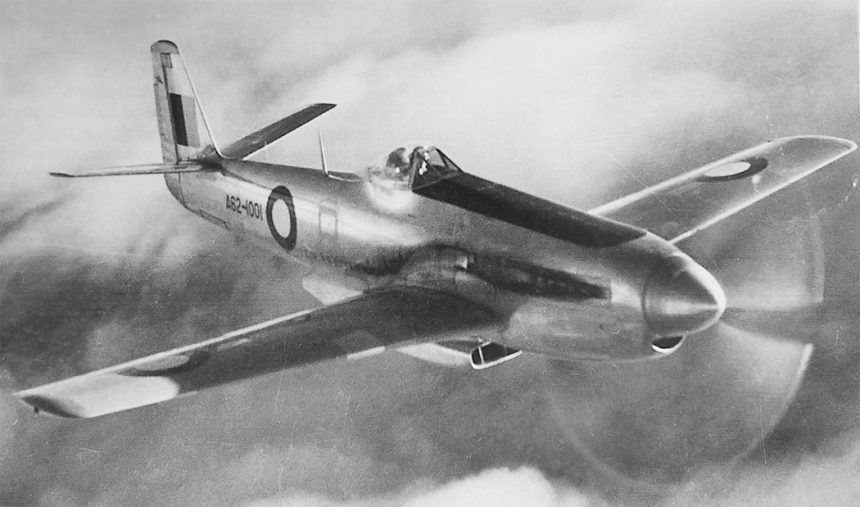

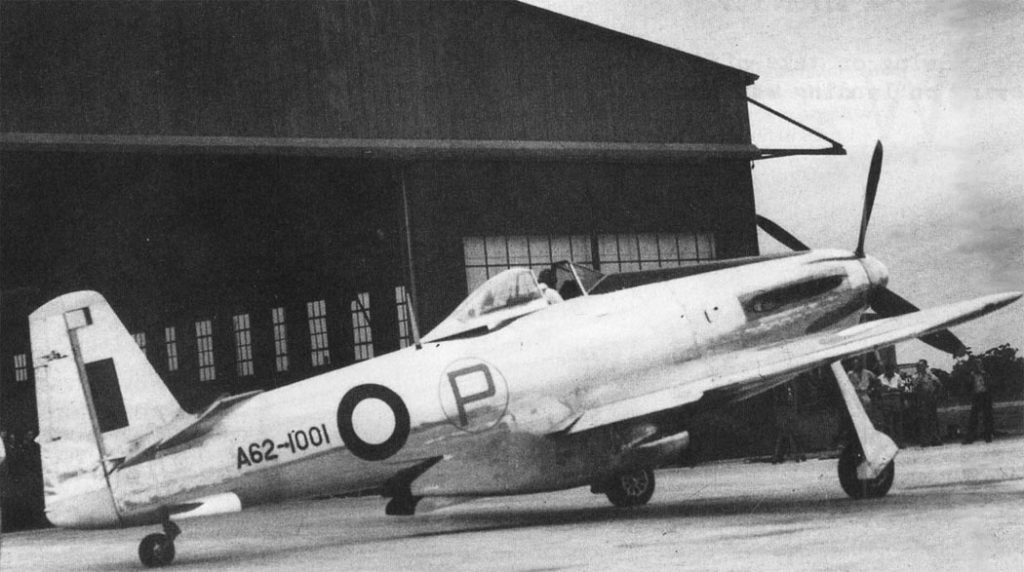
During the early 1940s, Australia’s Commonwealth Aircraft Corporation (CAC) developed the Boomerang fighters, which became the first combat aircraft designed and developed in Australia. However, the Boomerangs were not as capable as Japanese fighters of their time, such as the Mitsubishi A6M Zero. As a result, in 1943, CAC began designing a new full-scale interceptor and escort fighter, designated the CAC CA-15. In June 1943, the Australian government and the Royal Australian Air Force (RAAF) approved the design concept proposal and ordered CAC to develop its prototype. The design of the CAC CA-15 was influenced by contemporary fighter planes, especially the German Focke-Wulf Fw 190. To design the aircraft, the CAC designers used Allied intelligence reports on captured aircraft. While the CAC CA-15 looked somewhat similar to the North American P-51 Mustang, it was not a direct copy and was designed with different performance goals. Most of the CA-15’s development focused on using radial engines instead of the inline engines found in the Mustang. The development process slowed down when Wackett recommended that CAC build P-51s under license instead of developing a new plane. However, many believed the CA-15 could have the abilities needed to replace the P-51.
Design of CAC CA-15
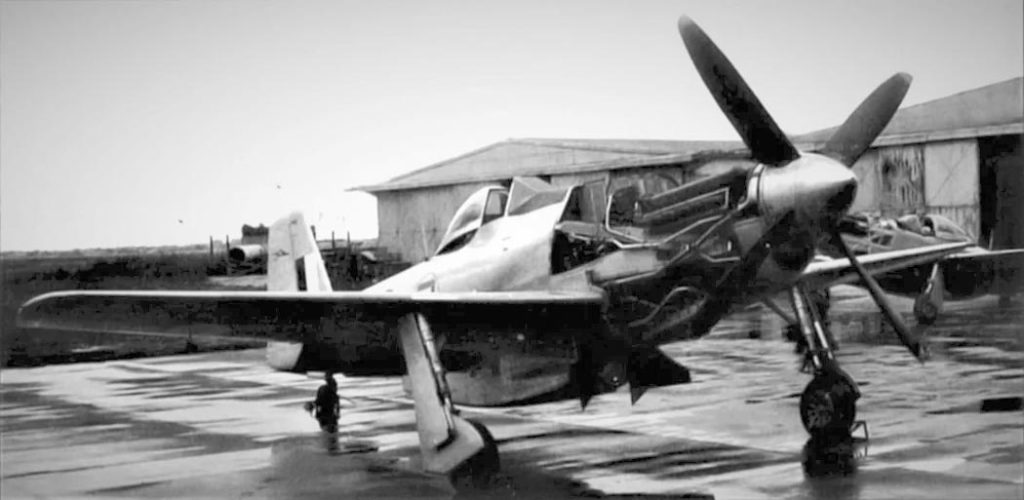
Initially, the designers of the CAC planned to use the Pratt & Whitney R-2800 engine with 2,300 horsepower and a turbocharger. However, this engine became unavailable, leading to delays in the development process. As a result, the company decided to power the CAC CA-15 with the Rolls-Royce Griffon 61 V-12 liquid-cooled piston engine, producing 2,035 horsepower with 18 pounds per square inch boost. The engine powered a 12.6-foot diameter four-bladed Rotol constant-speed propeller. With WWII ending, aircraft development further slowed, and the CAC could complete development in early 1946. With a single pilot, the aircraft was 36.7 feet long, 15.5 feet high, with a wingspan of 35.6 feet and a wing area of 254 square feet. The empty weight of the aircraft was 7,540 pounds, the gross weight was 9,500 pounds, and the maximum takeoff weight was 12,340 pounds. The aircraft could carry 260 US gallons of fuel in two wing tanks, plus 36 US gallons in a fuselage tank and two optional underwing 120 US gallon drop tanks. The maximum speed of the aircraft was 442 mph at 25,600 feet or 368 mph at sea level. The range of the aircraft was 1,150 miles on internal fuel, and the ferry range was 2,540 miles at an altitude of 5,000 feet.
The Cancellation
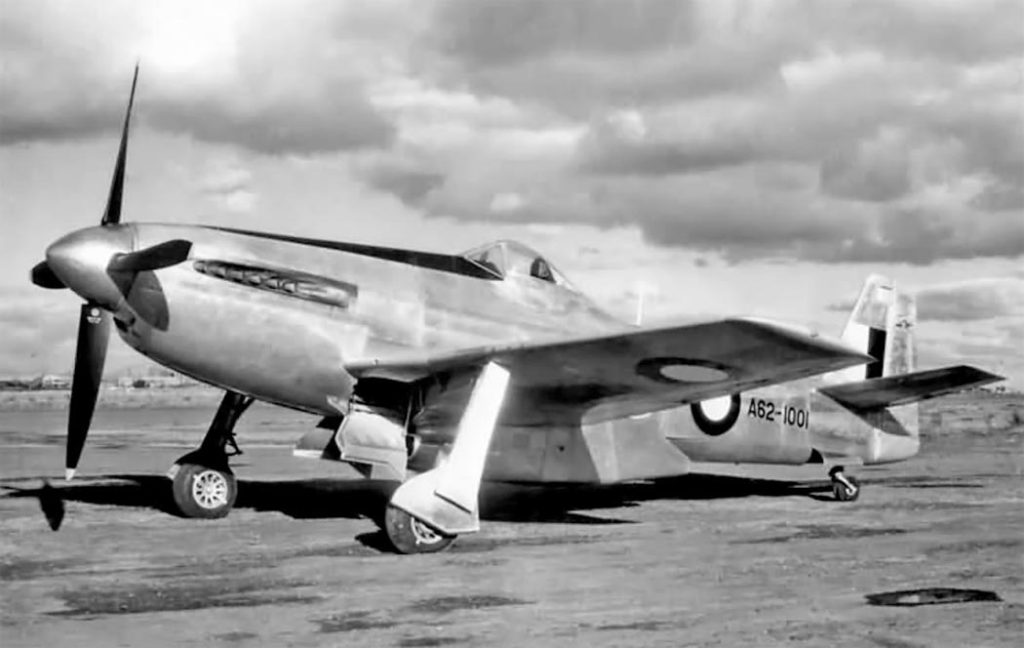
The CAC CA-15 could climb 4,900 feet per minute with a service ceiling of 34,000 feet. The aircraft could carry six .50-caliber machine guns and had provisions for 10 rockets and two 1,000-pound bombs. The first aircraft prototype, serial number A62-1001, flew for the first time on March 4, 1946. The aircraft reportedly reached a speed of 448 mph at an altitude of 26,400 feet during testing. However, test flights ended suddenly on December 10, 1946, when Flight Lieutenant J. A. L. Archer faced a hydraulic failure while approaching Point Cook. The problem was a leaking ground-test gauge, which forced him to circle and burn off fuel. The main landing gear was only halfway down and could not be fully retracted or lowered, but the tailwheel was down and locked. When he landed, the tailwheel hit the runway first, causing the aircraft to bounce and then dig in. The plane settled back onto the fuselage and skidded to a stop, suffering heavy damage. After repairs at CAC, the aircraft returned to flight testing in 1948. On May 25, 1948, Archer reached a speed of 502.2 mph over Melbourne after leveling out from a dive of 4,000 feet. However, by this point, the jet age had arrived, and jet aircraft proved to be the future of aviation, so no more CAC CA-15s were built, and the prototype was scrapped in 1950. In the Grounded Dreams series, the CAC CA-15 was a good aircraft with impressive speed, but due to various delays, it arrived too late. The CA-15 proved to be the last self-designed and developed fighter attempt by the CAC. Though the company later produced 112 CAC Sabre, a modified version of the North American F-86 Sabre. Read more Grounded Dreams articles HERE.





How about using the metric system as well, you have a great audience but America is the only country that uses imperial.