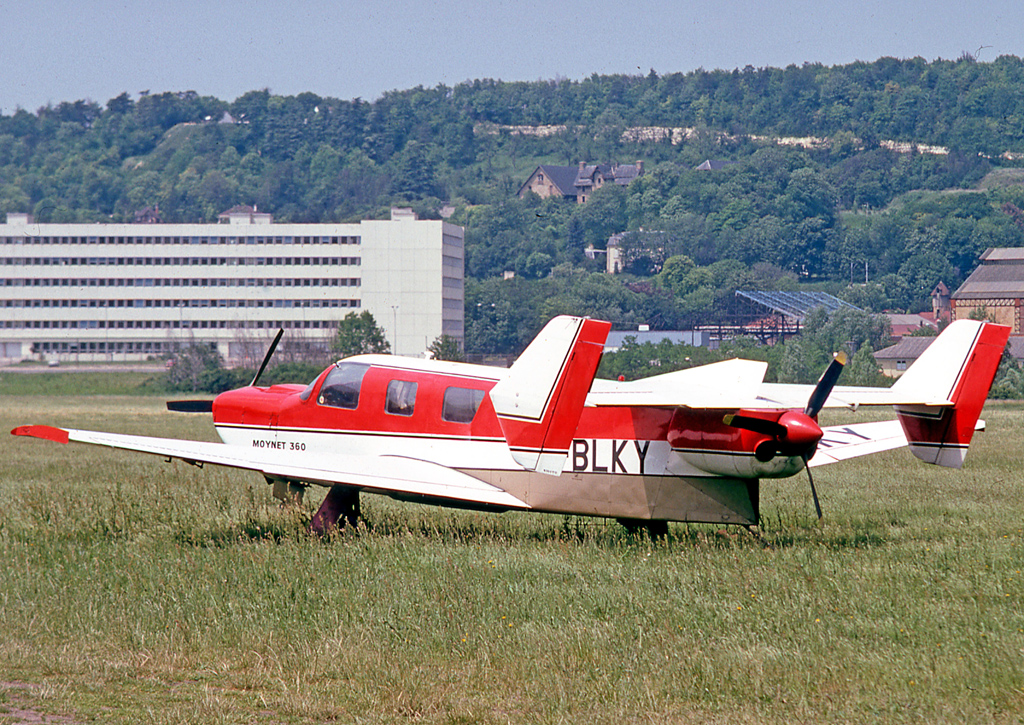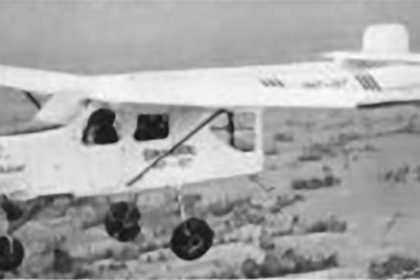
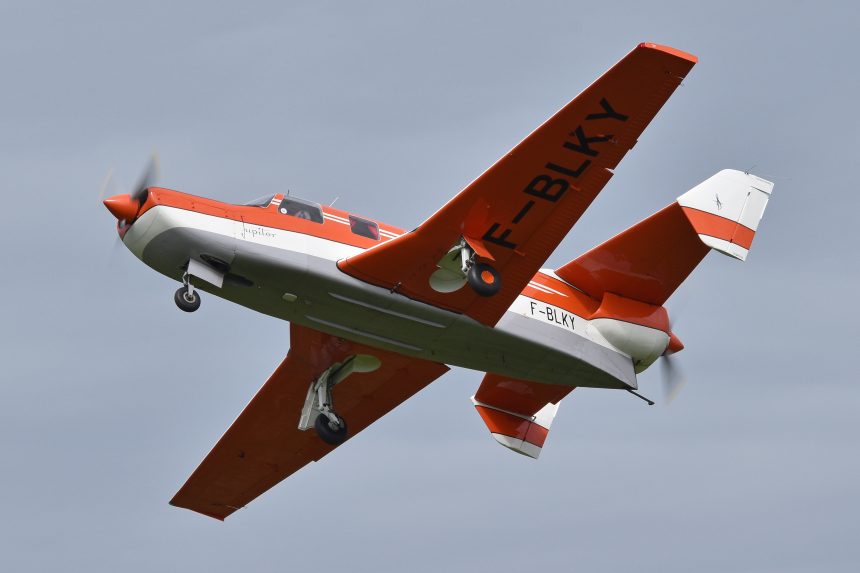


In the 1960s, the French aviation company Matra (Société des Engins Matra developed a civil transport aircraft, designated Moynet M 360 Jupiter. The aircraft had an unusual configuration compared to other aircraft of its time. During that time, civil aircraft had a push-pull engine setup, with engines placed at both the front and the back. Many of these aircraft were flying boats, with engines placed above the wing to avoid spray. Others had engines at either end of a pod-shaped fuselage, with a tail mounted on booms. The Moynet M 360 Jupiter had a different push-pull arrangement, with one engine at each end of a single fuselage, a similar setup to the Dornier Do 335 fighter. For light civil aircraft like the Moynet M 360 Jupiter, the idea was to achieve the performance of a twin-engine plane with the easier handling of a single-engine one. The Jupiter was a small executive aircraft with a capacity for four to seven passengers, depending on the engine. The designer of the aircraft was André Moynet, a member of the French National Assembly and former minister, and the first prototype flew on December 17, 1963. The wings had straight trailing edges, and the center section had a tapered leading edge that became less steep toward the tips. The aircraft used a two-spar, stressed-skin construction, with mass-balanced ailerons and slotted flaps. The main landing gear had two legs, each with a single wheel that retracts inward using an electric system. The first prototype, called 360-4 and registered as F-WLKE, was powered by two Lycoming IO-360-A1A engines, each producing 200 horsepower and driving two-bladed propellers. The aircraft had a carrying capacity of 4 to 5 passengers.
Design of Moynet M 360 Jupiter
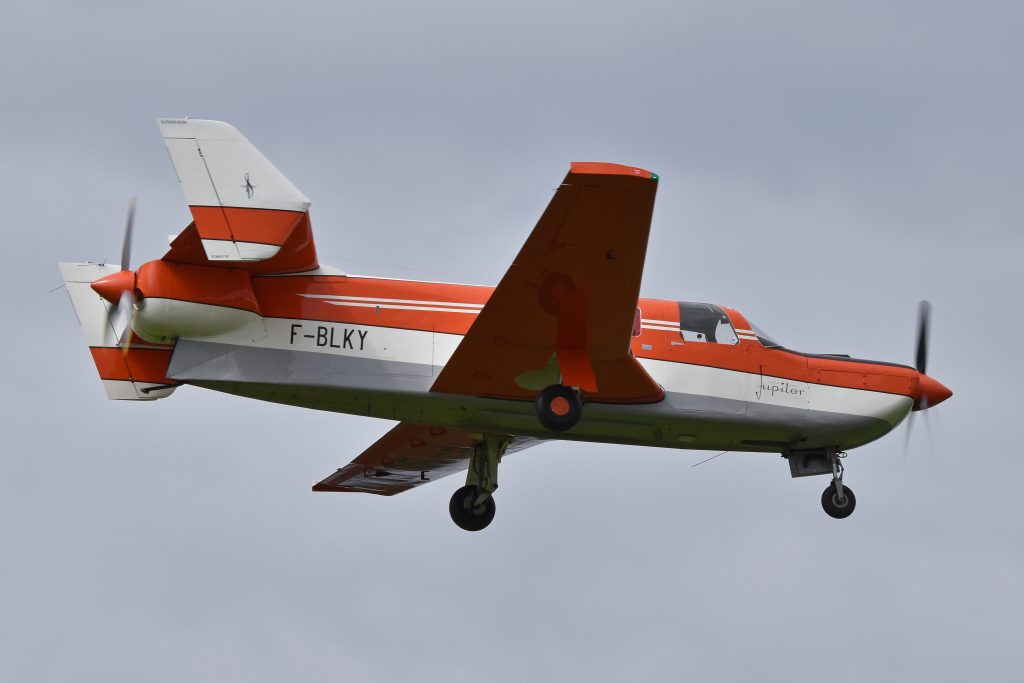
One Lycoming engine was fitted at the front of the aircraft, with the standard cabin located behind it, but the front seats were positioned further forward than usual to balance the weight of the second engine at the back. The aircraft had three large windows on each side, and because of the rear engine, the rear fuselage was short and boxy to accommodate the second Lycoming engine at the tail. The rear engine received air through rectangular intakes on the upper sides of the rear fuselage. The straight-edged horizontal stabilizer, also called the tailplane, was mounted above the engine on the fuselage. It had small endplate fins with balanced rudders, which extended above and below the stabilizer, and was equipped with arrow-shaped leading edges and straight, swept trailing edges. There was also a long, shallow strake at the rear fuselage. Viewed from below, the tailplane’s long span measured about 44% of the wingspan. The elevators covered most of the outer part of its trailing edge, keeping clear of the propeller’s airflow. A larger, more powerful second prototype of the Moynet M 360 Jupiter, designated 360-6, was also developed, which first flew in mid-1965. The aircraft was powered by two Lycoming IO-540 six-cylinder horizontally opposed air-cooled engines, each producing 290 horsepower. It also had a provision for Lycoming TIO-541 engines with 310 horsepower. The modified aircraft was equipped with three-bladed Hartzell constant-speed propellers. The second prototype was built in collaboration with the French state-owned aircraft manufacturer Sud-Aviation, and it is also sometimes called the Sud-Aviation M 360-6 Jupiter. The span of this modified aircraft was increased by 0.37 m (15 in) and the length by 0.64 m (25 in), increasing seating to 6 or 7 people.
The Cancellation
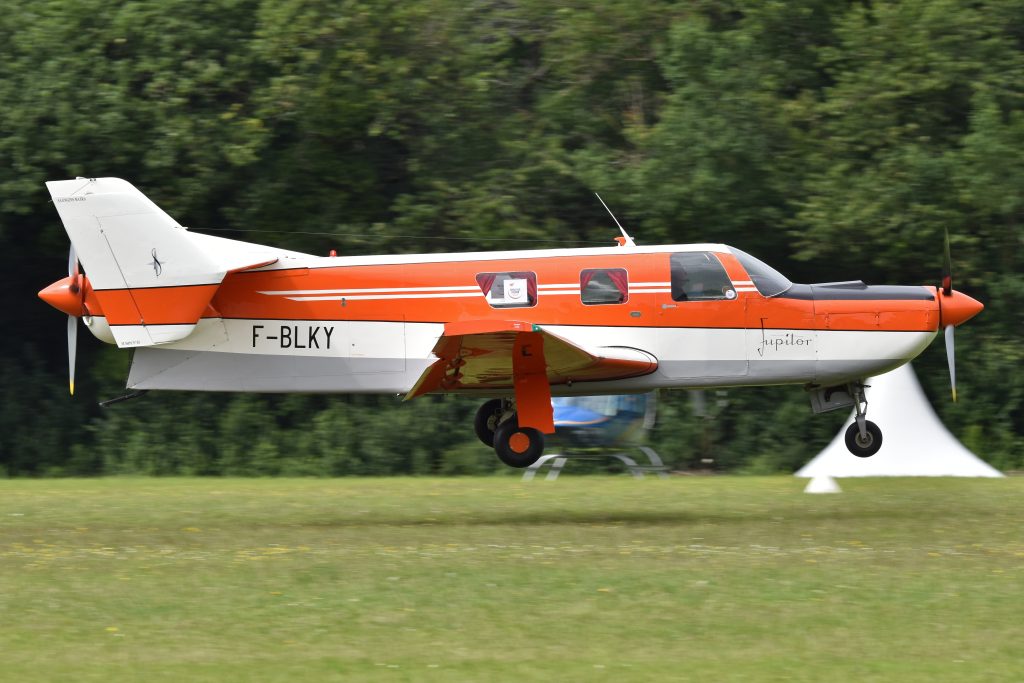
The 360-6 was 28.9 feet long, 8.1 feet high, with a wingspan of 37.8 feet and a wing area of 180 square feet. The empty weight of the aircraft was 2,950 pounds, and the gross weight was 5,269 pounds. Its maximum speed was 266 mph at sea level, and the cruise speed was 210 mph at 6,000 feet. The range of the aircraft was 1,280 miles at 15,000 feet, and it could climb 1,440 feet per minute. The aircraft cabin was soundproofed and air-conditioned, and passengers entered through a door on the right side of the forward fuselage. There was also baggage space behind the cabin with its own external door. The 360-6 was registered as F-WLKY. The aircraft performed well in tests, and the French government reportedly ordered some 360-6 aircraft. However, no production aircraft was built, and the Moynet M 360 Jupiter program ended with the construction of two prototypes. The Moynet M 360 Jupiter aircraft’s cancellation was not due to poor performance, but to a lack of sales and production issues. In addition to an order from the French government, the Moynet M 360 Jupiter couldn’t bring more sales. Moreover, Sud-Aviation couldn’t confirm the production timelines of the aircraft due to existing orders for the Caravelle jet and Rallye projects. Later, Sud-Aviation’s focus shifted to the Concorde project, and the funding was in favor of a fast jet, leading to the abandonment of the Moynet M 360 Jupiter. In the Grounded Dreams series, the M 360 Jupiter was not a bad aircraft, but its limited sales and lack of clear production timelines hurt it. Read more Grounded Dreams articles HERE.