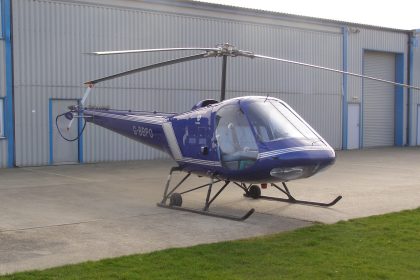


In the late 1950s, Lockheed initiated development of a rigid-rotor helicopter, designated the CL-475. The rigid rotor concept could improve the helicopter’s performance while reducing mechanical complexity and cost, making it more agile than a flapping rotor. The work on CL-475 inspired Lockheed to showcase it to the US Army for its replacement program for Bell OH-13 Sioux and Hiller OH-23 Raven helicopters. As part of it, Lockheed developed the Model 186, officially designated the Lockheed XH-51, and it won a joint Army-Navy program that tested the rigid rotor’s ability to fly at high speeds. The primary objective of the program was to attain level flight performance at a true airspeed of 200 knots (230 mph).
Design of Lockheed XH-51

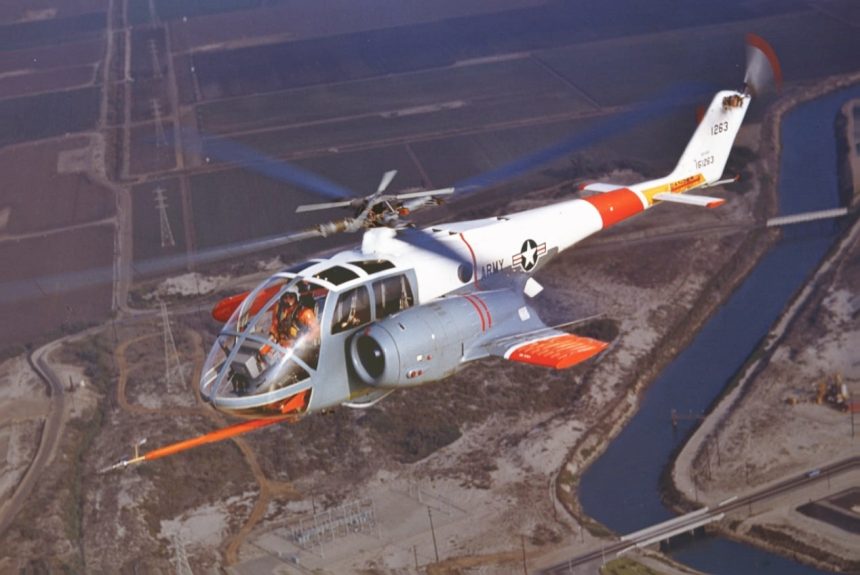
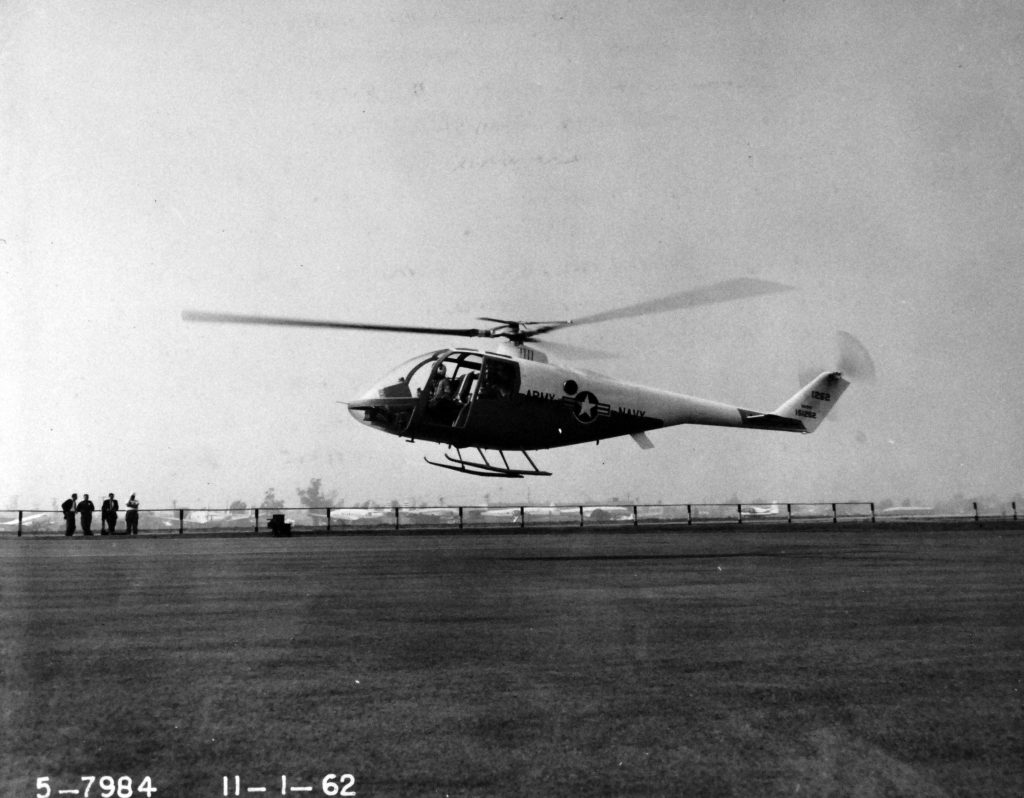
A contract was awarded to develop two prototypes of the four-seat, three-bladed Lockheed XH-51. The first prototype took off on its maiden flight on November 2, 1962. It was 40.9 feet long, 8.2 feet high, with a main rotor diameter of 35 feet and a main rotor area of 962 square feet. Its empty weight was 2,790 pounds with a maximum takeoff weight of 4,100 pounds. The Lockheed XH-51 could carry 80 US gallons of fuel, providing it with a range of 260 miles. It was powered by a Pratt & Whitney Canada PT6B-9 turboshaft engine, producing 500 shaft horsepower. During flight testing, the three-bladed, rigid-rotor helicopter showed instability at higher speeds. Moreover, the maximum speed achieved was 151 knots (174 mph), with a cruise speed of 140 knots (160 mph). To solve the problem, engineers fitted the Lockheed XH-51 with a four-bladed rotor system. In 1963, the Army’s Technology Research and Evaluation Command (TRECOM) approved Lockheed to turn the second prototype of the XH-51 aircraft into a compound helicopter. As a result, the second XH-51 helicopter prototype was modified to include wings with a span of 16.1 feet. It was powered by a Pratt & Whitney J60-2 turbojet engine, mounted on the left wing to improve performance, producing 2,900 pounds of thrust. The aircraft first flew in conventional helicopter mode on September 21, 1964, without using the turbojet. Its first flight as a compound helicopter took place on April 10, 1965. Later, on November 29, 1967, the Lockheed XH-51 Compound achieved a speed of 263 knots (303 mph) during a shallow descent. The fastest speed in level flight was 223 knots (257 mph).
The Cancellation
The flight tests showed a good performance and proved the rigid rotor concept. In addition, NASA ordered the five-seat, three-blade helicopter, designated XH-51N (NASA 531), as a test vehicle. Further, Lockheed built two test aircraft, the Lockheed Model 286, as a civilian aircraft. These aircraft had five seats, like the XH-51N, and used a four-bladed rotor system from the Lockheed XH-51. The FAA certified the Model 286 for civil use on June 30, 1966, but Lockheed could not sell any. Instead, the company used the aircraft as executive transport for several years. Eventually, the aircraft were sold to a collector and were destroyed in a fire in 1988. To fulfill the US Army’s need for an advanced attack helicopter, Lockheed developed the AH-56 Cheyenne helicopter, which had a rigid rotor and used a propeller mounted on the tail to push it forward. However, technical problems caused delays and eventually halted production. Rivalries among services and political issues made matters worse, leading to the complete cancellation of the Cheyenne in 1972. Though the helicopter was canceled, it proved the rigid rotor concept, and today many advanced helicopters, such as Sikorsky Raider X, S-97 Raider, Sikorsky Defiant X, and Airbus NGRC Concepts, use the rigid rotor. In the Grounded Dreams series, the Lockheed XH-51, despite being canceled, helped the aviation world reach where it is today. Read more Grounded Dreams articles HERE.