






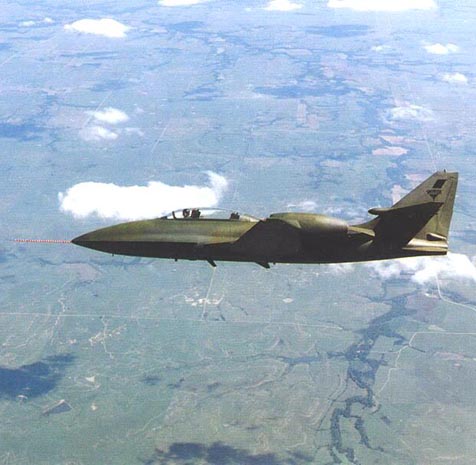


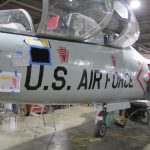
When the Lockheed T-33 Shooting Stars were nearing the end of their service life in the 1980s, about 6,500 of them were about to be rendered useless. But a group of former Lockheed employees, including T-33 designer Irvin Culver, formed a new company called Flight Concepts, later renamed Skyfox Corporation. The company aimed to modernize the old T-33s into a refurbished trainer, designated Skyfox, that could also be used for ground attacks, and replace the Cessna T-37 Tweet as the primary trainer of the U.S. Air Force. The company began work on the Skyfox in 1983 and acquired 30 surplus T-33s for modernization. As a refurbished aircraft, the Skyfox was expected to cost half as much as other trainers of the time, such as the Dornier Alpha Jet and BAE Hawk. The Skyfox was planned to keep 70% of the T-33 airframe. The main difference was the engines. The T-33 was equipped with a single Allison J33 turbojet engine, while the Skyfox had two Garrett TFE731-3A turbofan engines, each producing 3,700 pounds of thrust. The engine change created a large internal space for fuel storage and eliminated the need for the T-33’s wingtip tanks, but the mounts for optional auxiliary fuel tanks were still included. Other changes included inboard wing leading-edge extensions, replacing the tip tanks with winglets, and a new canopy with a one-piece windshield. The nose was redesigned to improve visibility from the cockpit and to fit with the T-33’s side intakes. New tail surfaces included a mid-set tailplane, while the original wings were kept, and the avionics were updated.
The Design
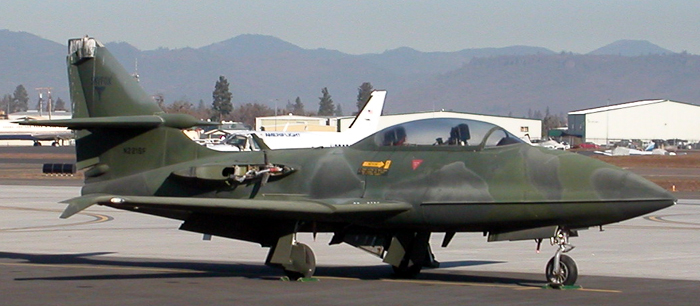
The first Skyfox flew on August 23, 1983. It was 46 feet long, 12.4 feet high, with a wingspan of 38.10 feet, and a wing area of 239 square feet. The empty weight was 10,284 pounds, the gross weight was 16,235 pounds, and the maximum takeoff weight was 20,000 pounds. The fuel capacity was 779 gallons. The Skyfox’s maximum speed was 581 mph at optimum altitude. It had a range of 2,260 miles, a ferry range of 3,391 miles, and a service ceiling of 50,000 feet. It also had provisions for 6,000 pounds of external payload, such as bombs and missiles. The Skyfox was designed to be built entirely from kits, which involved disassembling the T-33 airframe, inspecting its condition, and repairing it as needed. Then, the kits were installed, and the airframe was reassembled into the Skyfox configuration. In the tests, Skyfox performed well. It had lower operating and support costs than the T-33 and was competitive with the Hawk and Alpha Jet. The design included improvements to its structure, upgrades to avionics, electrical rewiring, and refurbishments of the airframe and systems, making it inexpensive to maintain, requiring fewer maintenance hours, and using fewer spare parts. The Skyfox’s two TFE731-3A turbofan engines weighed 17% less than the single J33-A-35 turbojet used in the T-33. The TFE731-3A engines produced 60% more thrust while using 45% less fuel, and had a tenfold increase in time between overhauls compared to the J33-A-35. The setup improved the Skyfox’s maneuverability, range, endurance, and payload. It also enhanced the aircraft’s safety when flying over water or rough terrain.
Cancellation of Boeing Skyfox
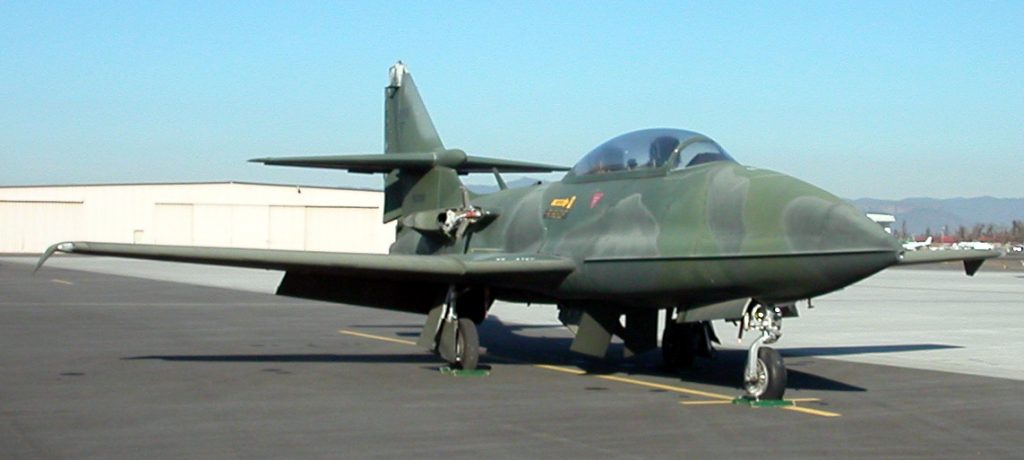
The Skyfox Corporation was aiming for the U.S. Air Force and Portugal, which had signed a letter of intent to purchase 20 conversion kits, as potential customers. However, the U.S. Air Force, which had initially shown interest in the project, later refused to buy it due to a lack of operational necessity. As a result, the Skyfox Corporation could not find any buyers for its aircraft, despite its price and capabilities. In 1986, Boeing Military Aircraft Company saw potential in the Skyfox and bought the marketing and production rights, redesignating Boeing Skyfox. Although Portugal signed a letter of intent for 20 conversion kits, no other countries showed interest. With no customers, Boeing canceled the project, and the prototype aircraft remained the only Skyfox ever built. For over 20 years, the Boeing Skyfox prototype sat on the flight line at Rogue Valley International-Medford Airport in Medford, Oregon, without engines or protective coverings. In 2021, someone acquired and restored the aircraft for static display. As of 2024, it is on display at the Palm Springs Air Museum in Palm Springs, California. The Boeing Skyfox was not a bad idea and was an ideal use of aircraft that were coming to the end of their service life. It was less expensive than the current such aircraft available at the time, and performed better than the last one, but still no one was interested in it. In the Grounded Dreams series, the Boeing Skyfox stands as a trainer that did nothing wrong, but still found no buyers. Read more Grounded Dreams articles HERE.
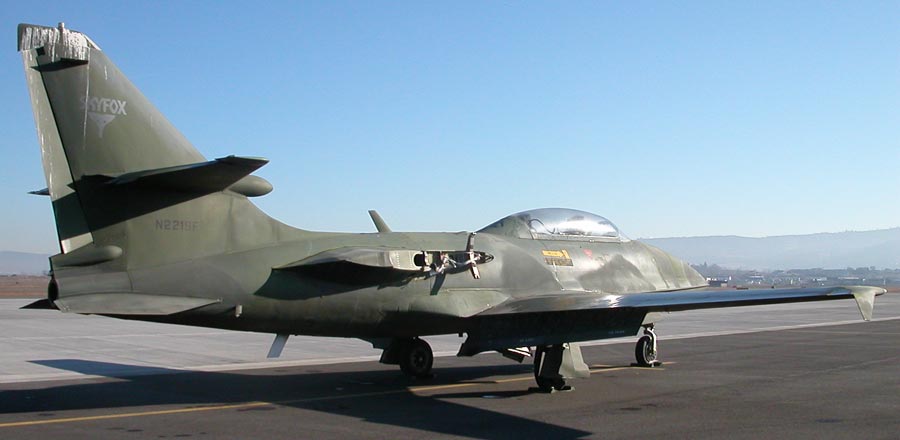



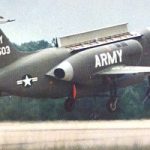


If I recall correctly, the Skyfox was used in the TV show “Airwolf”, from season 1, episode 3 “Daddy’s Gone a Hunt’n”.