

In the first quarter of the 20th century, helicopter development was limited, and the first vertical flight occurred in mid-1907, when a helicopter designed by the French aviation brothers Louis and Jacques Breguet flew to a height of 50 centimeters. The flight lasted just a minute, but it was a first step towards a new discovery in aviation. The first stable, controlled helicopter flight took place in 1922, when Professor George Botezat, who had moved from Russia to the United States, built a helicopter for the American military. The helicopter could lift a load to about 16.5 feet high and stay in the air for several minutes. During WWII, helicopter development got a push, with many countries involved in the war designing and building new helicopters. Germany developed the Flettner Fl 282 helicopter and built 24 units. The US and UK also developed several helicopter models. In Britain, the Cierva Autogiro Company was active in helicopter design. Founded in 1926, this company began designing autogyros, rotary-wing aircraft that generate lift from a free-rotating rotor. The company found success with the Cierva C.30, one of the most produced pre-war autogyros. The first flight of the C.30 was in 1933, and around 150 of these were built, with some manufactured under license in Germany and France.
Design of Cierva W.9
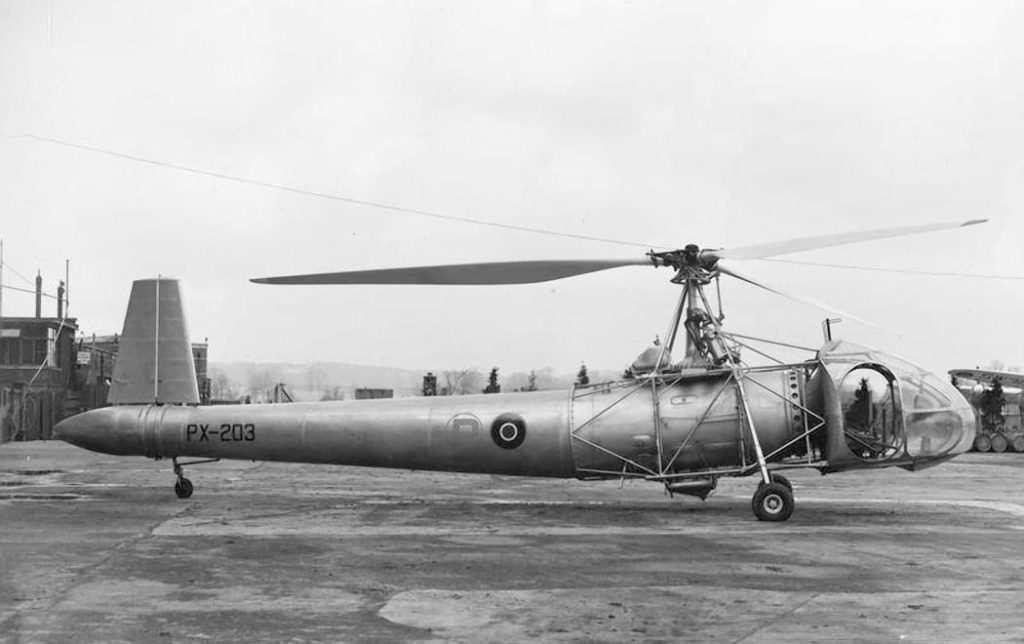
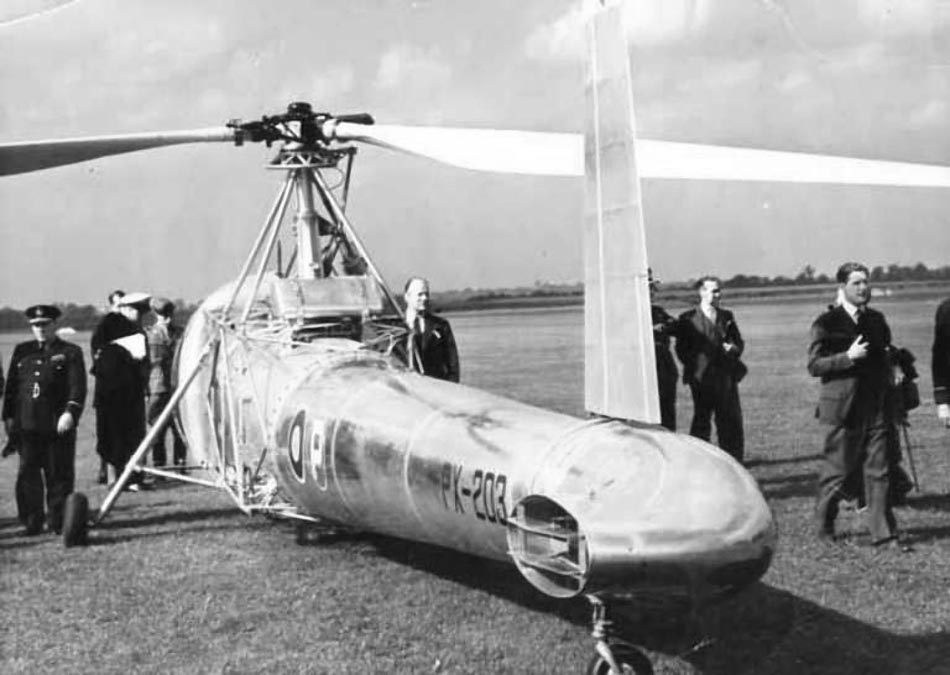
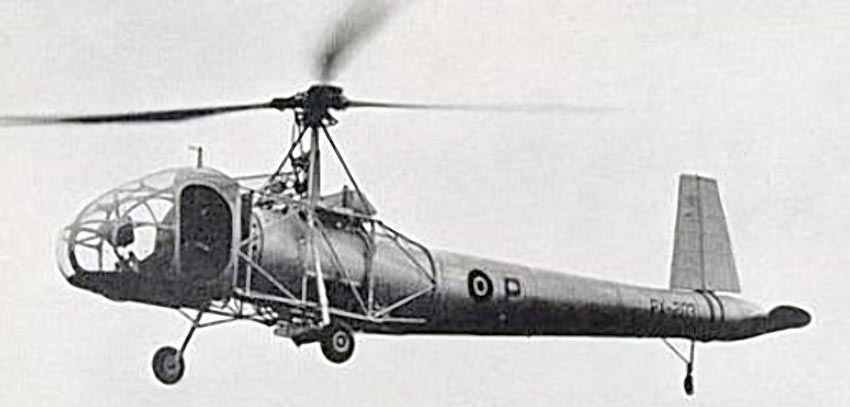
During WWII, the British Air Ministry reached out to the Cierva Autogiro Company to develop various helicopter models. In 1943, the company began developing a new experimental helicopter, the Cierva W.9, in accordance with the Air Ministry specification E.16/43. With the Cierva W.9, the engineers wanted to investigate whether a powered rotor with a tilting hub and automatic control of collective pitch, along with torque control using jet efflux, was safer and more efficient than the Sikorsky R-4 helicopter. The R-4 used manually controlled main rotor pitch and an anti-torque tail rotor system. As a result, an experimental light utility helicopter, the Cierva W.9, was developed with a large, glass cockpit at the front, a long, cone-shaped fuselage, and a horizontal stabilizer at the rear. The helicopter was 37 feet long and 10 feet high, with a rotor diameter of 36 feet and a rotor area of 1,017 square feet. It was powered by a de Havilland Gipsy Queen 31 piston engine, producing 205 horsepower. Its gross weight was 2,647 pounds, and it could carry a crew of two. A unique aspect of the Cierva W.9 helicopter was its tail-rotorless design. The engine powered only a three-bladed main rotor, so it had no traditional tail rotor. This design, known as NOTAR (No Tail Rotor), managed torque and controlled yaw without a tail rotor. The Cierva W.9 used a variable-pitch fan to cool the engine and direct air through special tunnels to nozzles in the tail boom. Such a design increased safety since the tail rotor can be a weak point. It also produced less noise in flight, making NOTAR helicopters among the quietest.
The Cancellation
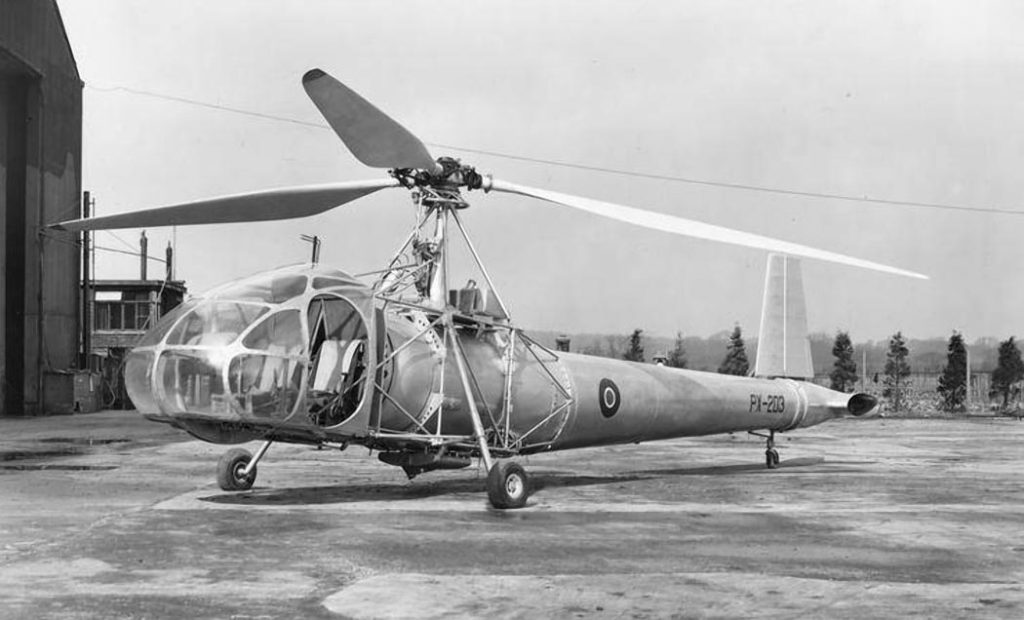
The Cierva W.9 project was completed at the end of 1944, but minor damage during ground testing delayed flight tests until early 1945. The first public demonstration of the Cierva W.9 took place at the Southampton Flypast on June 22, 1946, and it also appeared at the Radlett Air Show that same year. The helicopter’s flying career ended when it crashed during testing in late 1946. The helicopter was never repaired, and the project was canceled. Though the helicopter was canceled, Cierva did not abandon the idea of using the W.9 design. In its next helicopter, W.14, the company used the W.9’s rotor hub and blade design. The three-blade main rotor design from Cierva W.9 was used to build the W.14 prototype, and even some parts of the former’s rotor hub were used in the latter. Later, Saunders-Roe acquired Cierva Autogiro Company and W.14, with a new designation, Saunders-Roe Skeeter, entered production in the 1950s. The Cierva W.9 was canceled, but it left its legacy and proved that it was not a bad idea or design. In the Grounded Dreams series, the Cierva W.9 stands as the helicopter that helped the British Army Air Corps develop its first helicopter to enter service, the Skeeter. The Skeeter was also used by the German Army Aviation Corps and the German Navy, and later by the Portuguese Air Force, which received it from Germany. Read more Grounded Dreams articles HERE.