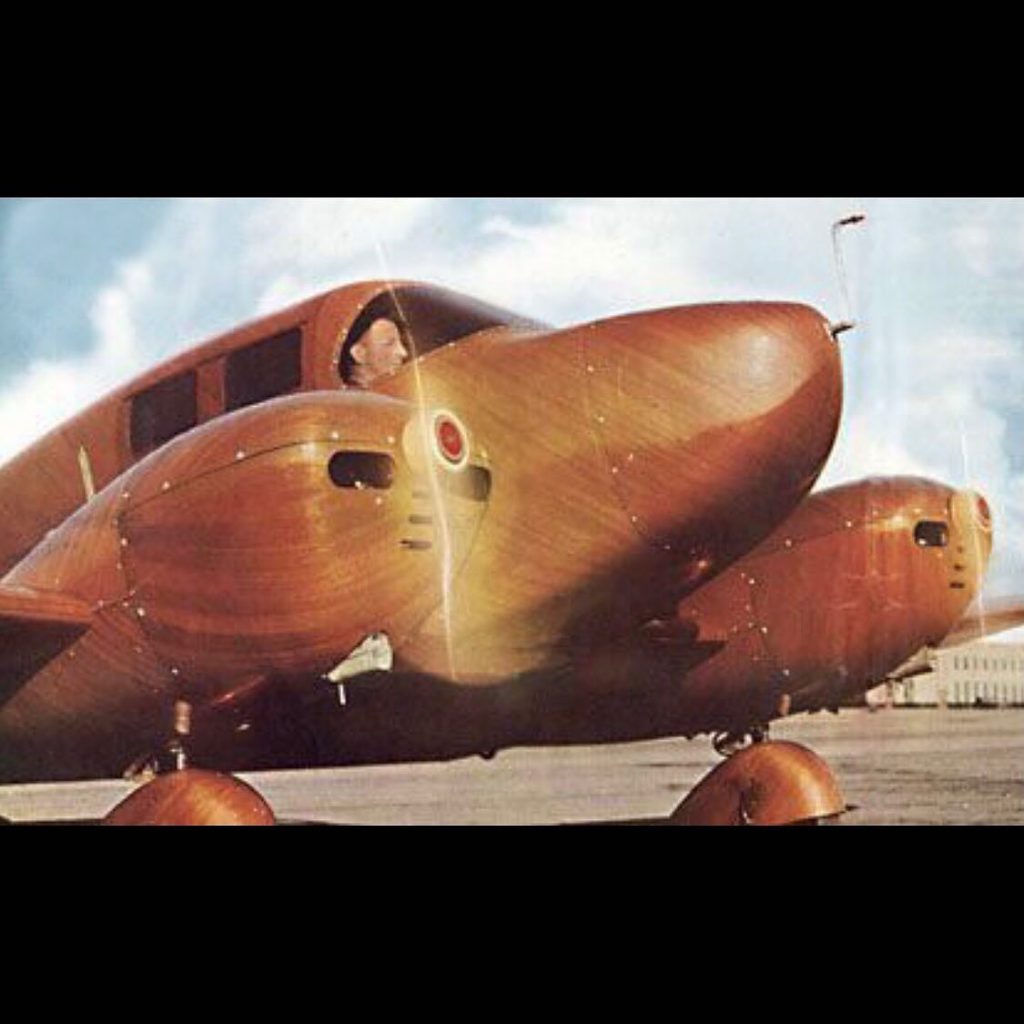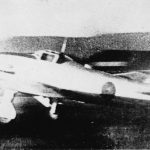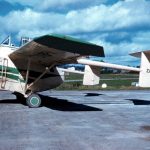
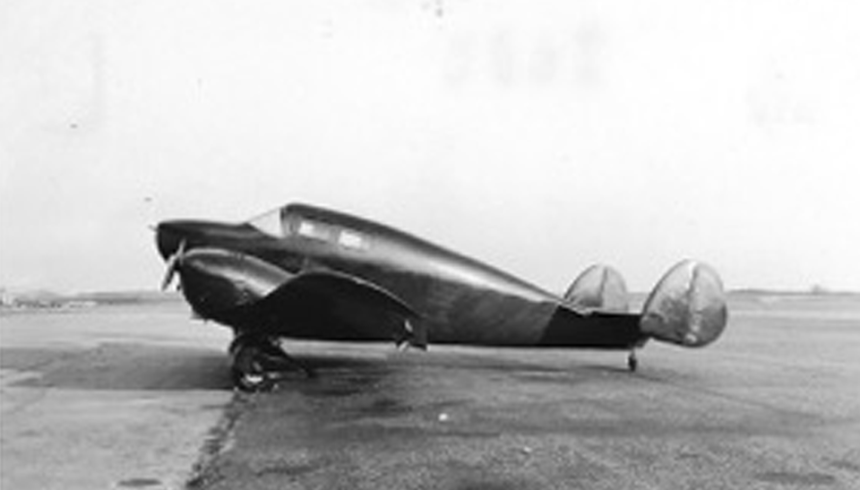


As World War II began, the US wanted to develop a twin-engine utility plane made from non-strategic materials. The decision was made to avoid any shortage of metal, which could halt the construction of military or civilian aircraft due to the war. As a result, Langley Twin, also known as Langley 2-4, was developed. The aircraft followed a conventional low-wing monoplane design with twin tails and tailwheel landing gear. However, its structures were made from layers of mahogany wood bent over molds and treated with vinyl and phenol resins to maintain their shape. The method almost completely avoided the use of metal in structural parts, including fasteners. For the first prototype, the engineers used two Franklin air-cooled engines, each producing 65 horsepower. In addition to a pilot, the plane could carry three passengers. The aircraft was 20.8 feet long, 7.2 feet high, with a wingspan of 35.2 feet and a wing area of 171.4 square feet. The empty weight of the aircraft was 1,565 pounds, and the gross weight was 2,550 pounds. With a fuel capacity of 40 gallons, its maximum speed was 140 mph and its cruise speed was 120 mph. The Langley Twin’s range was 400 miles, with a service ceiling of 14,000 feet and a rate of climb of 720 feet per minute. The airplane, designed by Martin Jensen with engineering led by former Navy pilot Arthur R. Draper, used a new construction method: fusing layers of mahogany with plastics under heat and air pressure.
Design of Langley Twin
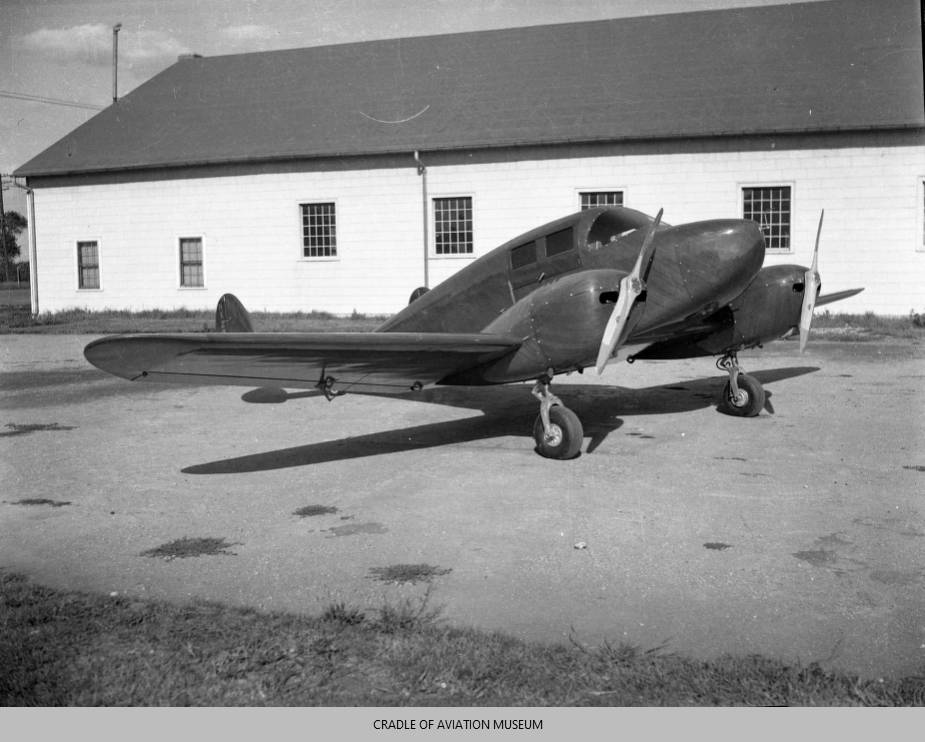
In the Langley process, the plywood sheets were formed differently than in most other aircraft, which were pre-made, bent, and attached to supports. Instead, thin strips of plastic-treated veneer were molded together to create the structure and the outer skin. The molded plywood parts of the Langley Twin consisted of multiple layers of veneer that were between 1/64 and 1/8 inch thick. These strips were shaped over a mold and glued together with a plastic mixture that reacts to heat and pressure. The fuselage, wings, control surfaces, and cowling were connected without using any nuts, bolts, or screws. Instead of complex dies, simple wooden molds were used to shape the parts, and dry veneer strips were layered onto them. The parts could be as large as half of a fuselage and were placed in a rubberized fabric sack, with each layer of veneer sealed so that the wood grains are at right angles. They were then heated in a pressure chamber for 60 minutes or less. The structure of Langley Twin was simple, easy to inspect, and inexpensive to maintain. Each engine cowling, wing tip, and fuselage nose could be removed as a single unit. The cowls and firewalls were moulded with asbestos lining, however, the plywood itself was flame-resistant. Plastic plywood could not corrode from acids, alkalis, saltwater, or fungus. The Langley product has been tested to withstand extreme temperatures from -40°F to 160°F without weakening. The first prototype flew in 1940 and had good short-takeoff and landing capabilities. It took off at 200 feet and landed at 46 mph, and the aircraft performed well in terms of speed and range as well. Following the impressive performance of the first prototype, a second prototype, powered by 90-horsepower Franklin 4-AC-199-F3 engines and aiming for a maximum speed of 165 mph with a cruise speed of 148 mph, was also built.
The Cancellation
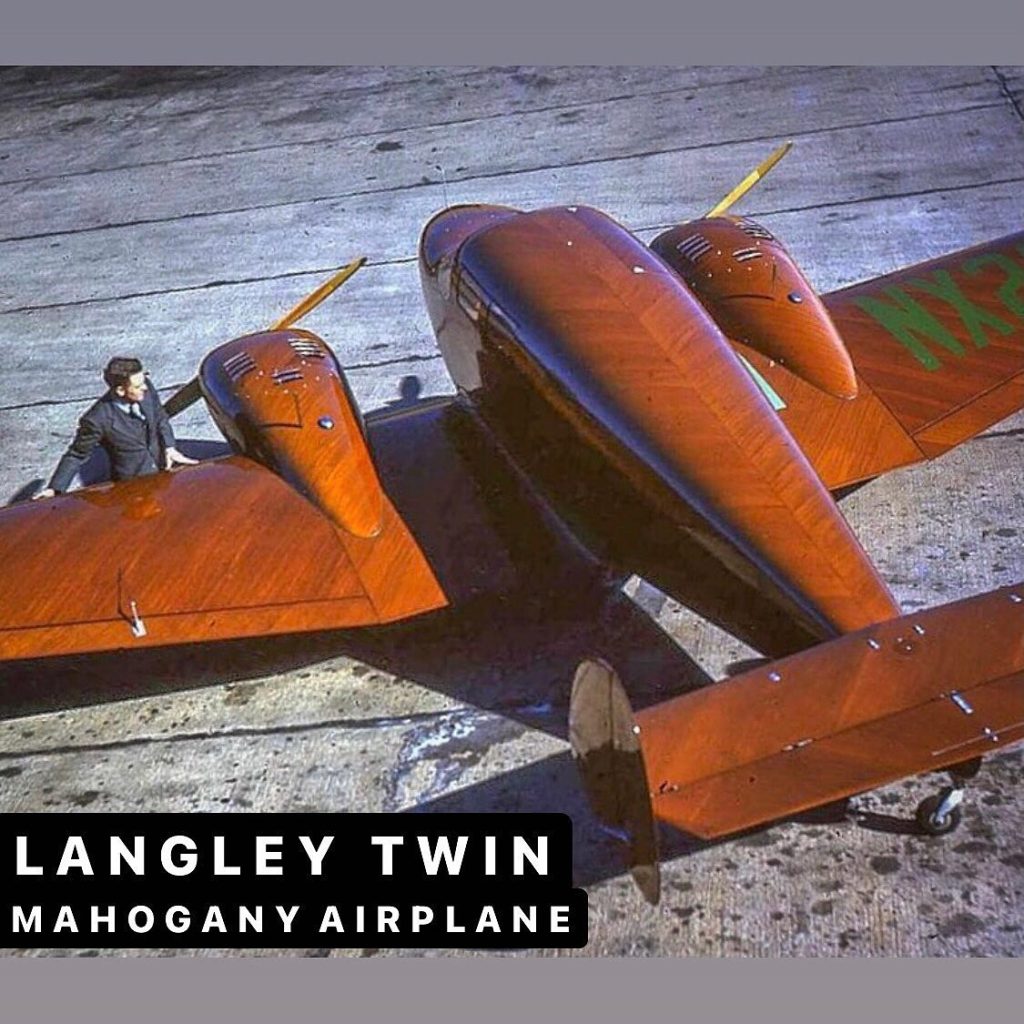
Upon completion, the US Navy purchased the second Langley Twin prototype for evaluation and designated it XNL-1. After testing, the Navy decided not to order the aircraft. Although it used new construction methods that produced smooth, aerodynamic surfaces resistant to corrosion, World War II turned out to be different from what military planners initially expected. The resins needed for production were in shorter supply compared to the metals required for building military aircraft. As a result, the Langley Twin program was cancelled. Eventually, the Navy’s XNL-1 was sold as surplus after the war. Following a crash landing in 1965, it was converted into a homebuilt aircraft named the Pierce Arrow. The Langley Twin was not a bad idea or design, but it had to be cancelled due to bad timing. In the Grounded Dreams series, the 90-horsepower Langley Twin with excellent flight characteristics was an ideal, cost-effective choice for multi-engine flight training. But the shortage of parts, for which the aircraft was developed in the first place, ended it. Read more Grounded Dreams articles HERE.