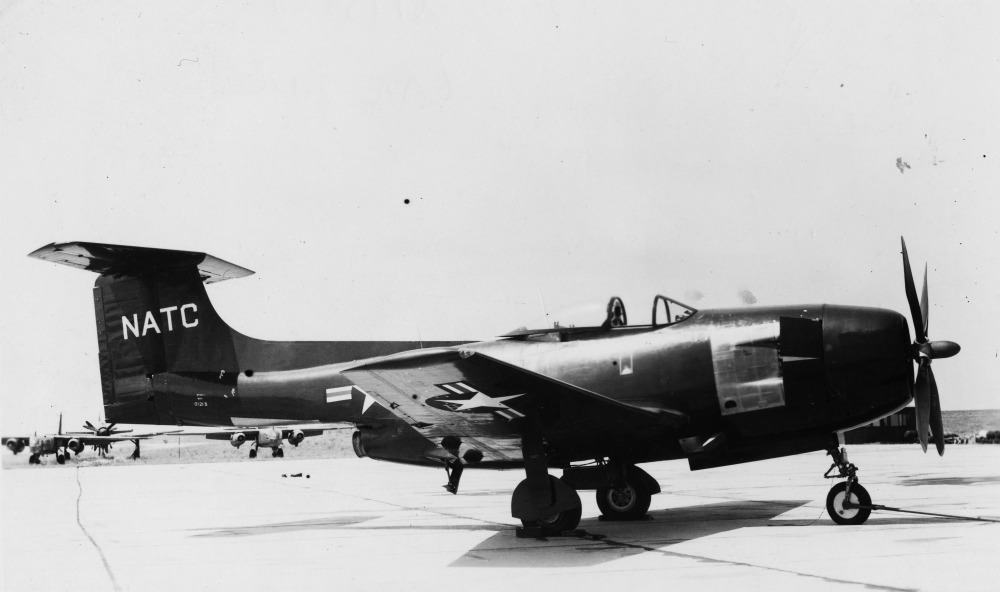
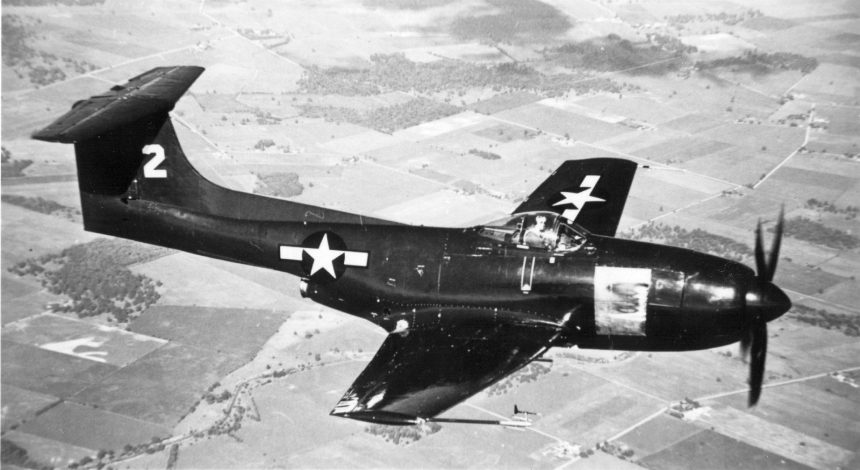


In the early 1940s, the US Navy wanted an aircraft with enough throttle to operate from aircraft carriers. In 1943, the service introduced the concept of mixed-propulsion fighter aircraft, combining piston and jet engines. During the early jet age, the engines had a slow throttle response, risking the aircraft’s takeoff after leaving the tip of an aircraft carrier. The solution the US Navy thought was to use a piston engine for cruising and use turbojet engines in combat. The service ordered two mixed-propulsion fighters, a small one, the Ryan FR Fireball, for escort carriers, and a larger one, the Curtiss XF15C, for long-range heavy aircraft carriers. In its proposal for the aircraft on February 1, 1944, Curtiss stated that the new mixed-propulsion aircraft would have a speed of 485 mph and a rate of climb of 4,890 feet per minute. Both capabilities were superior to those of any aircraft at the time, and Curtiss received an order on April 7 to develop three prototypes of the XF15C. The first prototype of the aircraft flew on February 28, 1945, without a jet engine. On May 3, it took its first flight with both engines. The XF15C was a single-seat, low-wing airplane with tricycle landing gear. It had a 2,100-horsepower R-2800-34W radial engine in the front and a 2,700 lbf J36 turbojet in the rear. The engines got air through ducts in each wing root, which made the wings thicker to fit the ducts and the retracting landing gear. Both engines used the same type of fuel to simplify the fuel system. The fuselage held two self-sealing fuel tanks, one with 165 US gallons and the other with 211 US gallons.
Design of Curtiss XF15C
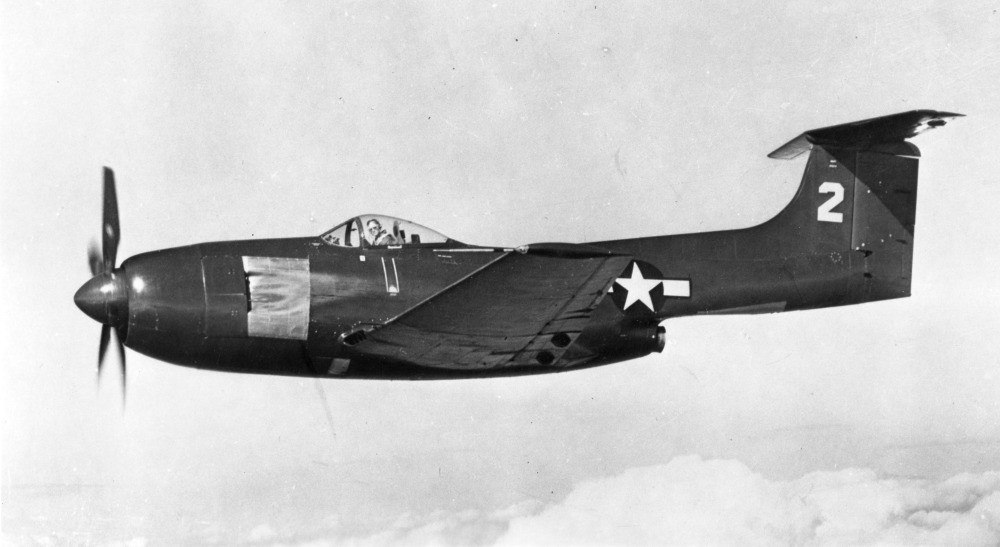
The cockpit was located just in front of the wing’s leading edge, and the pilot had a bubble canopy for good visibility. The XF15C also used a laminar-flow airfoil, similar to that of the Ryan Fireball. The two-spar wings could fold upwards for storage. The Curtiss aircraft was designed to carry four 20-millimeter autocannons, each with 200 rounds. These guns would have been placed in the center of the wing, just outside the jet engine air intakes. However, none of the three prototypes were fitted with guns. Each outer wing panel could carry four 5-inch rockets, and there were two hardpoints under the center section for 1,000-pound bombs. Only the right hardpoint was set up for a 150 US-gallon drop tank. The aircraft included an armor plate behind the pilot’s seat, and the front part of the canopy was made of bulletproof glass. The aircraft was 44 feet long, 20.5 feet wide with wings folded, 15.3 feet high with wings spread, and 17 feet with folded wings. The XF15C’s wingspan was 48 feet with a wing area of 400 square feet. The aircraft’s empty weight was 12,648 pounds, with a maximum takeoff weight of 18,698 pounds. The aircraft conducted several test flights to check its handling without the jet engine running. However, it crashed on May 8 during a landing approach, which resulted in the pilot’s death. Investigators later found that the XF15C had run out of fuel because the fuel gauge was stuck, making the low-fuel warning light hard to see. The second prototype flew for the first time on July 9, followed by a third prototype in November.
The Cancellation
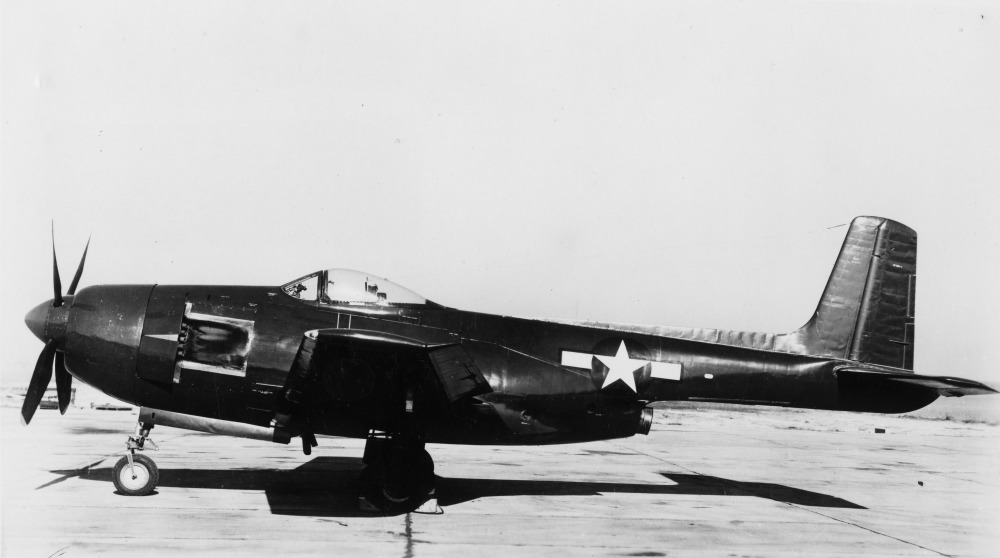
In June, a Curtiss engineer suggested adding a T-tail to improve the aircraft’s handling and aerodynamics. However, both aircraft were already built in the original design and ready for carrier operations. In October, the second prototype was sent to the Naval Air Test Center at Naval Air Station Patuxent River for a basic evaluation, which revealed problems with directional, altitude, and lateral stability. The aircraft returned to the factory in December for further testing. On January 18, 1946, the nose gear failed to lower during a flight, resulting in a crash landing that damaged the propeller and slightly damaged the lower fuselage. The aircraft could not be repaired until April 10. However, as jet engines evolved, the Navy lost interest in the mixed-power concept and cancelled further development and testing in October 1946. Only three prototypes of the XF15C were built. One crashed on May 8, and the second was scrapped in 1947. The third was kept for museum display and is still on display at the Hickory Aviation Museum in North Carolina. The XF15C was designed for a transitional era, when piston engines were in their final years, and jet engines were relatively new. The idea of mixed propulsion was not entirely flawed, but was, to some extent, challenging. In the Grounded Dreams series, the XF15C sought to merge two eras of aviation and, to some extent, succeeded, but was short-lived. Read more Grounded Dreams articles HERE.