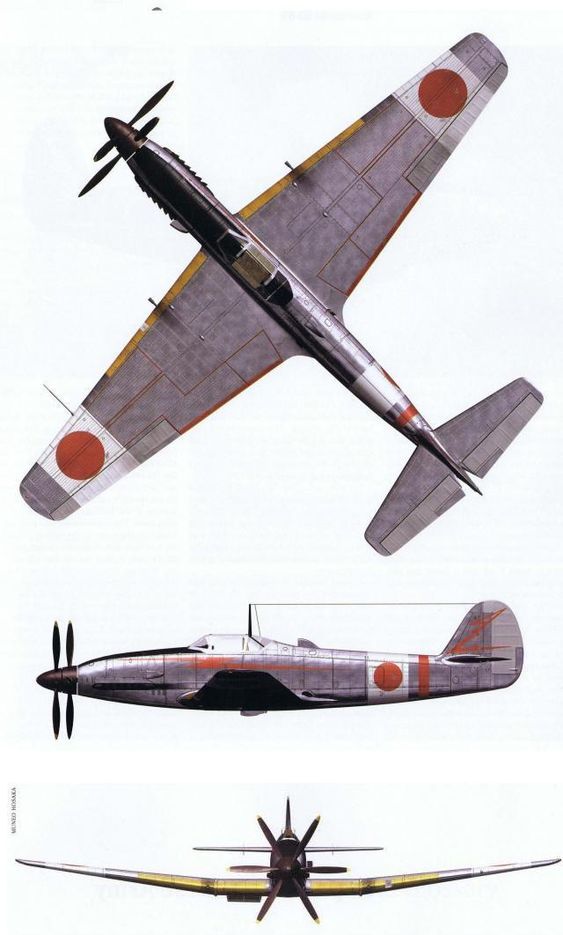
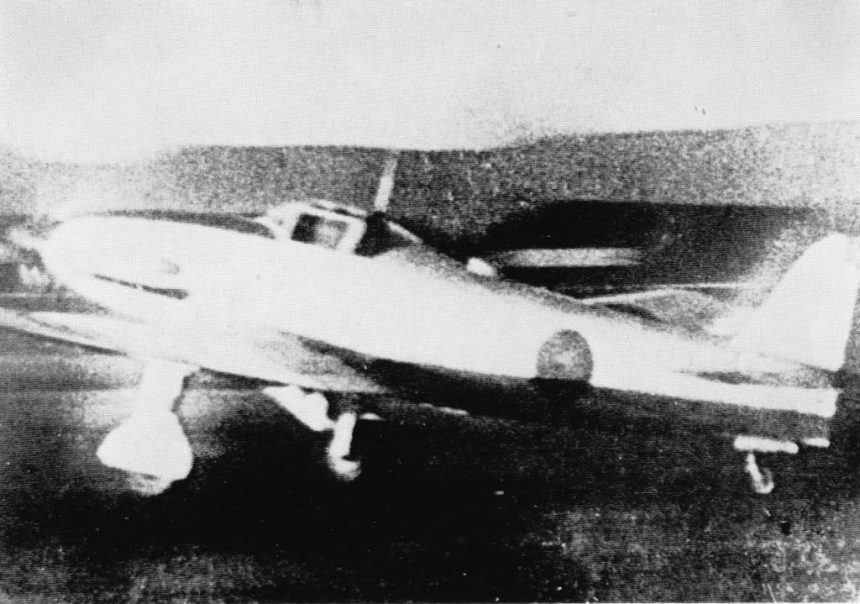


In the early years of World War II, the Japanese Army was unable to produce a reliable high-power, liquid-cooled engine of its own. To address this problem, it turned to Germany and licensed the Daimler-Benz DB 601 liquid-cooled, inverted V12 aircraft engine, which was built in Japan as the Kawasaki Ha-40. However, instead of designing a conventional fighter for the engine, the Japanese engineers created an aircraft with two engines mounted in tandem, one in front of the cockpit and one behind it. Together, the paired engines were designated Ha-201. The goal was to combine the power of two engines while keeping the frontal area close to that of a single-engine fighter. The development of an aircraft, later named the Kawasaki Ki-64, started in October 1940. In April 1941, the Japanese Army decided to treat this aircraft as an experimental model because the service was worried about its complex mechanisms. Instead, it chose to focus on improving the Kawasaki Ki-60. However, the Ki-60 also remained a prototype because the Ki-61 showed better performance. Overall, the Ki-60 failed to meet expectations compared with the Nakajima Ki-44. Despite these changes, one prototype of the Kawasaki Ki-64 was completed in December 1943. The Ki-64 was 36 feet long, 13.11 feet high, and had a wingspan of about 44 feet with a wing area of 301 square feet. The empty weight of the aircraft was about 8,900 pounds, while its gross weight is around 11,200 pounds. It was powered by two Ha-40 engines, which produced 2,200 horsepower under normal conditions and 2,350 horsepower during takeoff. The maximum speed it could reach was about 430 mph at an altitude of 16,404 feet. The aircraft could climb to 16,404 feet in just 5 minutes and had a maximum altitude of 39,370 feet with a range of about 621 miles. The Kawasaki Ki-64 was equipped with two 12.7 mm machine guns and two 20 mm cannons.
Design of Ki-64
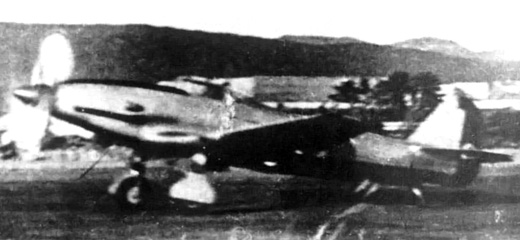
The Kawasaki Ki-64 had a unique cooling system that used vapor instead of traditional radiators. In this system, the coolant boiled inside the engine. The vapor then moved through panels built into the aircraft’s skin, mostly along the wings. As air flowed over the surface, it removed heat directly through the skin. The idea came from the German Heinkel He 100, and Japanese engineers used documentation provided by the Japanese Navy, which was using He 100 at the time, to develop their own system. The initial design placed cooling panels on the outer wing surfaces. During development, engineers found this was not enough. Additional panels were added to the flaps to increase the cooling area. The system covered about 258 square feet, split between the two wings, and a separate oil cooler was installed under the right inner wing. Testing on a modified Ki-61 showed that this type of cooling could increase speed by about 35 mph, confirming its aerodynamic advantage. The internal layout of the Kawasaki Ki-64 was dominated by its engines and cooling system. The rear engine drove a long shaft that passed beneath the pilot’s seat and between the pilot’s legs, connecting to the front of the aircraft. The propellers were contra-rotating, with each engine driving one propeller through a concentric shaft arrangement. The system was compact but left little space for fuel. Cooling during ground operation and climb was also a concern. To address this, engineers installed a large water tank. Some records list the capacity as 200 liters, while surviving diagrams show 345 liters. The reason for this discrepancy remains unclear. The Kawasaki Ki-64 used two three-bladed propellers in a contra-rotating arrangement. However, the development of the propeller pitch control system was incomplete. One propeller operated with fixed pitch, while the other had variable pitch. This mismatch caused problems during testing, including uneven rotation speeds.
Crash and Cancellation
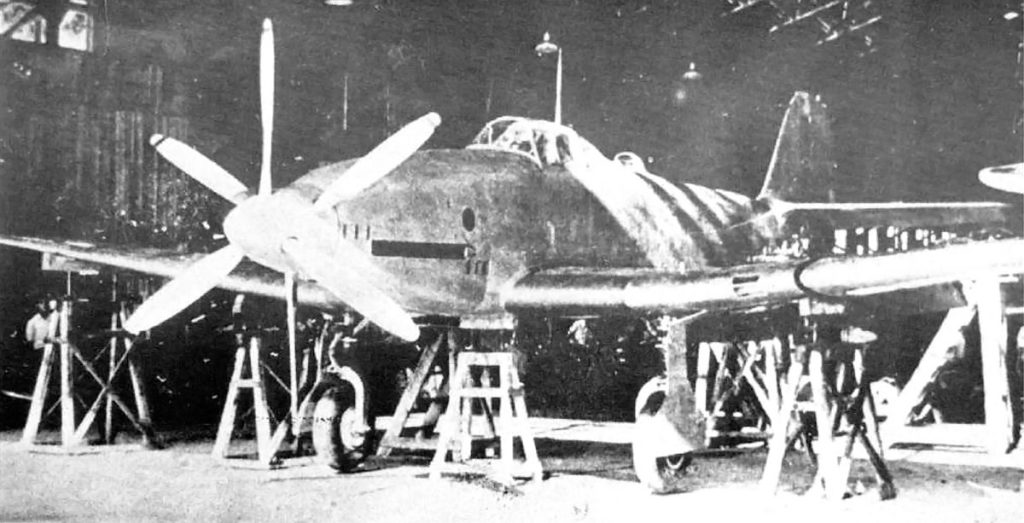
There are differing accounts of which propeller had variable pitch. A postwar US technical report stated that the forward propeller used a variable pitch system. An improved electric constant-speed system was under development, but it was not ready before flight testing began. The Kawasaki Ki-64 completed five test flights. During the fifth flight, a fire broke out in the rear engine. The pilot made an emergency landing, but the aircraft was damaged when one of the main landing gear units failed. The airframe was repaired and sent back to the factory. The engine was removed and sent for overhaul. However, Kawasaki’s facilities were already committed to producing existing engines, including the Ha-40 and Ha-140. The damaged engine was never repaired, and the Kawasaki Ki-64 never flew again. At the end of the war, the aircraft remained at Kawasaki’s Gifu plant in relatively good condition. US technical teams examined the design and showed particular interest in the cooling system. Reports recommended that the aircraft, or at least its cooling components, be shipped to the United States for further study. Some components were reportedly sent to Wright Field in Dayton, Ohio, but it is not clear whether the full system was ever evaluated there. In the Grounded Dreams series, the Kawasaki Ki-64 stands as an aircraft that was designed to be very fast by using a unique layout and a cooling system that reduced drag. Testing showed that the concept could work well, but engineers who were busy with wartime development couldn’t mature the concept. Moreover, the Kawasaki Ki-64’s changing priorities stopped further development. Read more Grounded Dreams articles HERE.