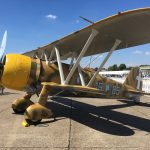
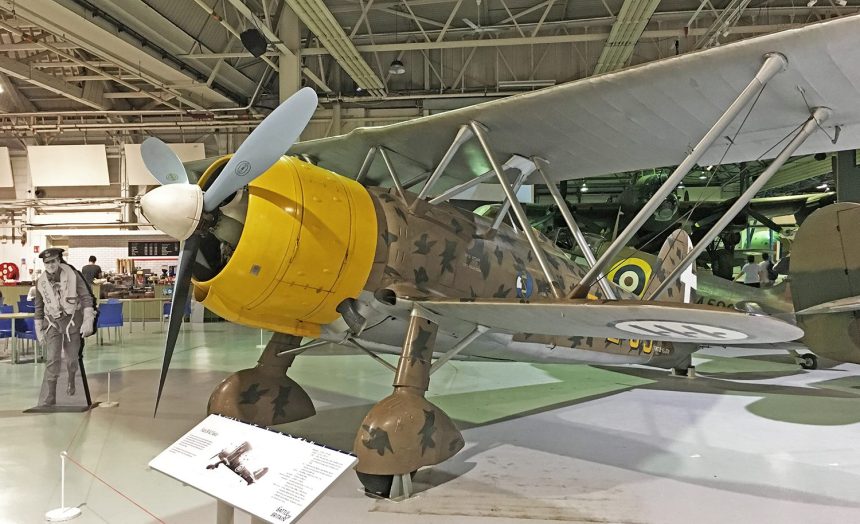

When most people are asked to imagine what a WWII fighter aircraft would look like, chances are that most will come up with a monoplane design, from the Supermarine Spitfire and Messerschmitt Bf 109 to the North American P-51 Mustang or Mitsubishi A6M Zero. Few, however, would imagine a biplane being considered a frontline WWII fighter, but that is exactly what the Fiat CR.42 Falco (Falcon) was. Built by Fiat Aviazione as a development of the preceding CR.32 fighter that saw extensive combat during the Spanish Civil War, the CR.42 Falco was of mixed construction techniques, with the fuselage made of a welded steel-tube framework and covered by sheet metal panels from the engine to the cockpit, and covered in doped fabric aft of the cockpit, and the wings (which were of a sesquiplane configuration; where the upper wing was wider than the lower wings) were made of steel and duralumin with fabric skin. This made the design easy for mass production in Italy. Though considered by some to be obsolete before its first flight on May 23, 1938, the design was initially adopted by the Regia Aeronautica in May 1939, but the type’s debut in combat would be with the 30 export models serving in the Belgian Air Force up to the German invasion starting on May 10, 1940. Belgian pilots flying the CR.42s fought valiantly despite being pitted against Bf 109s of the Luftwaffe and scored up to five aerial victories and six probable victories in combat before Belgium’s surrender in June 1940.
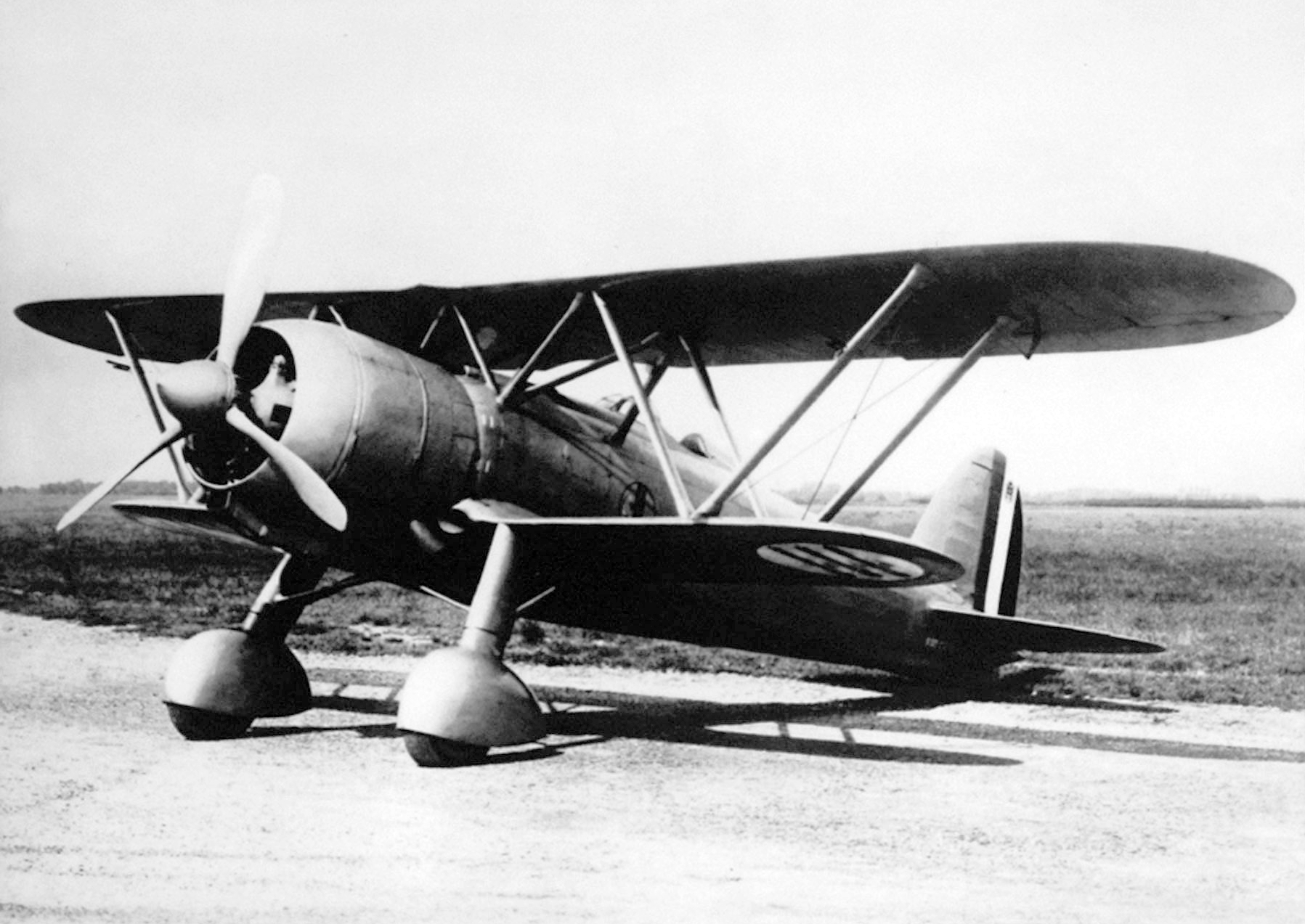
One month later, when Italy joined the war as a belligerent, the Regia Aeronautica’s CR.42s engaged briefly against the French before fighting against British fighters and bombers. In combat with the Regia Aeronautica, the CR.42 proved to be rugged and maneuverable in the hands of a capable pilot, and saw service throughout the Mediterranean, North African, East African, and Middle Eastern theaters of operation, from Malta to Iraq and from Greece to Libya and Ethiopia. Some would even serve in combat above Britain as part of the Corpo Aereo Italiano (CAI) from 1940 to 1941. While flying the Falco in Africa Orientale Italiana (A.O.I), Capitano Mario Visintini became the top biplane fighter ace of the Second World War (having achieved 16 kills) flying Fiat CR.42s over Eritrea. Additionally, Fiat CR.42s would see additional combat with pilots of the Royal Hungarian Air Force against Soviet fighters and bombers in Ukraine and with pilots of the Air Force of the Independent State of Croatia. By 1942, the Fiat C.42had largely been replaced by new monoplane fighters in the Regia Aeronautica, from the Fiat G.50 Freccia to the Macchi C.200 Saetta and C.202 Folgore. Nevertheless, these biplanes remained in service even into the latter half of WWII, from being flown by Luftwaffe crews on nighttime harassment raids and in sorties against partisan activities, to being used by the new Allied-aligned Italian Air Force in southern Italy as a training aircraft, with two-seat models of the type fulfilling this role.
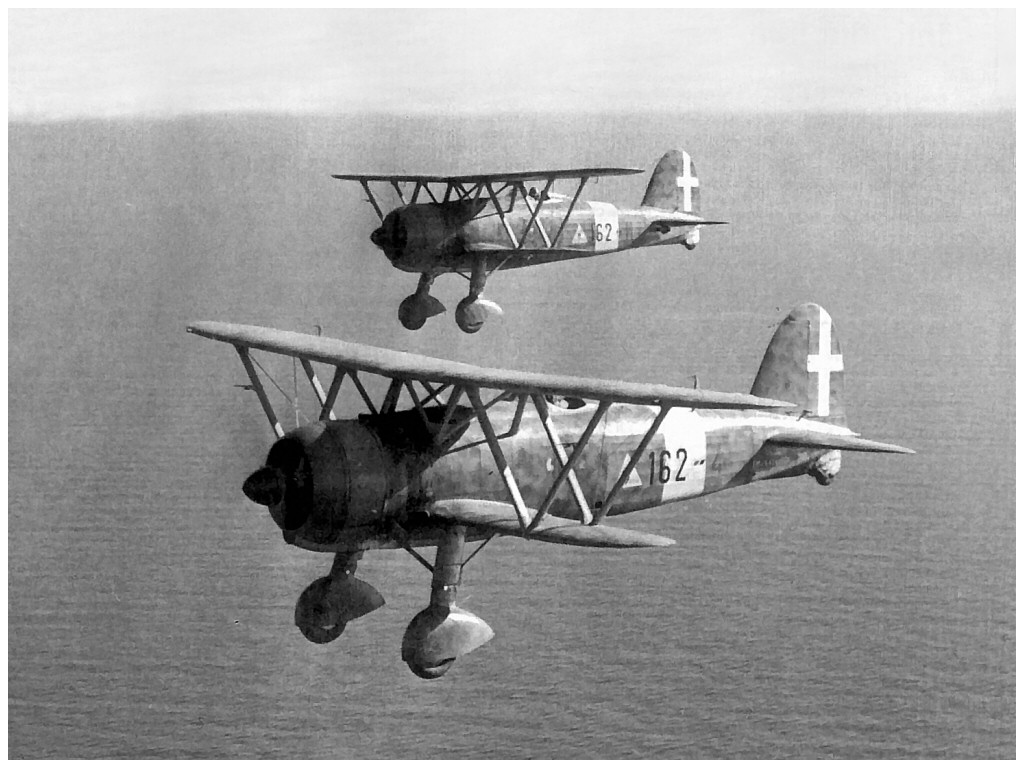
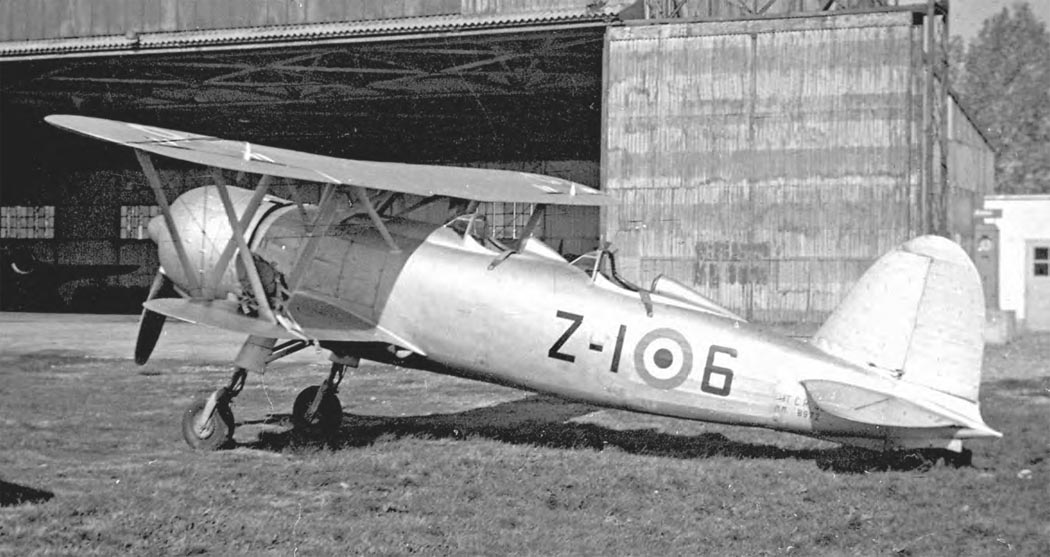
The largest operator of the CR.42 outside Italy would be Sweden. With the Soviet Union’s invasion of neighboring Finland in the Winter War (1939-1940), Swedish citizens engaged in fundraising drives to purchase equipment to support Finland in defending itself from the Soviets. In 1940, Swedish priest Isaac Béen led such a fundraiser that raised seven million kronor for the purchase of 12 CR.42s from Italy. Yet by the time the planes arrived in Gothenburg, Sweden, for assembly, the Winter War, as the Soviet invasion came to be known, had already ended in March 1940. Because of the ceasefire, the Swedish government would purchase the 12 aircraft and place a second order for 60 CR.42s on October 7, 1940, leading to a total of 72 CR.42s being exported to Sweden, which were redesignated as J 11s. Despite their good maneuverability, the J 11s in Swedish service suffered mechanical failures, but remained in service until they were retired in March 1945. By war’s end, some of the decommissioned J 11s were flown by the civilian contractor Svensk Flygtjänst AB as target tugs up to 1949, while the postwar version of the Italian Air Force, the Aeronautica Militare, used two-set variants of the design as flight trainers up to 1950. Over the span of the Fiat CR.42 Falco’s production run, over 1,800 examples were built, making it the most mass-produced Italian fighter of WWII. Yet today, only four examples have survived throughout Europe, and these are the stories of how these airplanes survived to the present day.
CR.42 MM5701
Located on the former grounds of the decommissioned Hendon Aerodrome in London, the Royal Air Force Museum London is one of the largest aviation museums in Europe, with displays going from the formation of the Royal Flying Corps in 1912 up to the modern RAF, both the RAF Museum London and the Royal Air Force Museum Midlands at RAF Cosford, Shropshire, also hold many aircraft that represent types that once fought against the RAF’s men and airplanes, and among these is Fiat CR.42 Falco, MM5701, which was the first of its kind to be captured intact by British forces before being used for evaluation flights.
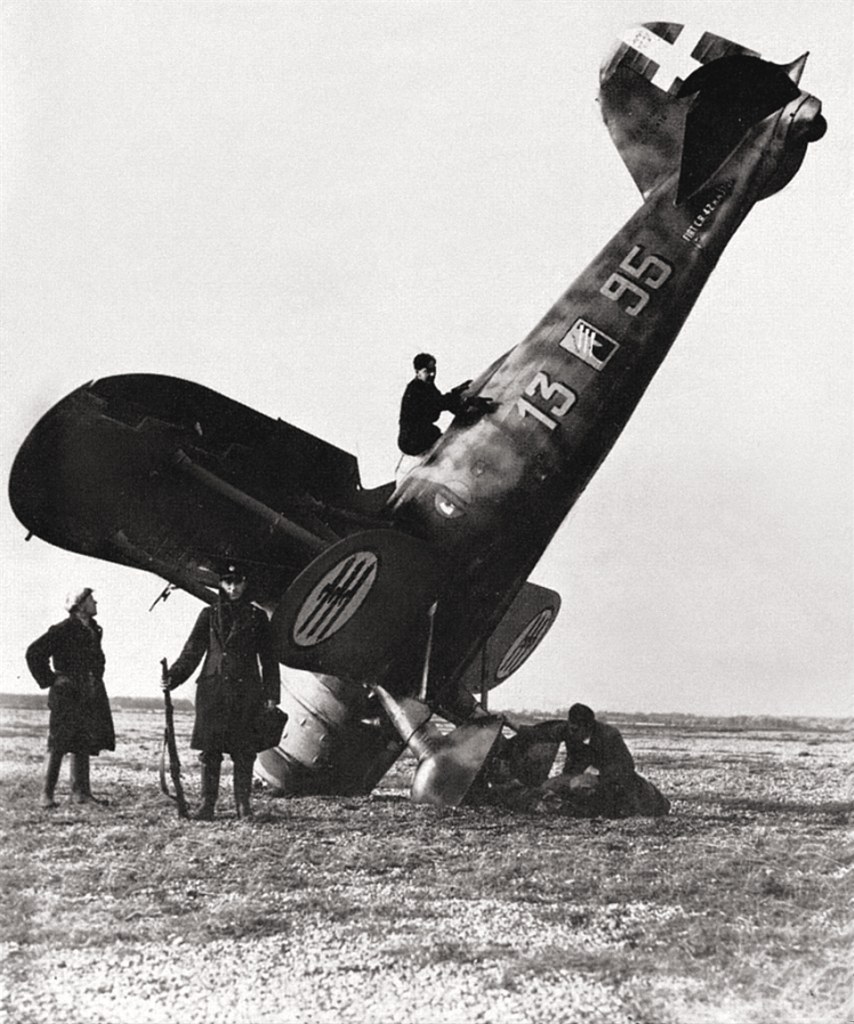
Built at the Fiat Aviazione factory at Lingotto (just outside of Turin) as construction number 326, the aircraft was accepted into the Regia Aeronautica as MM5701 and assigned to the 95 Squadriglia Caccia Terreste (Land Fighter Squadron) of the 18 Gruppo, 56 Stormo. With Italy having declared war against Britain and France on June 10, 1940, the 18 Gruppo was stationed at Novi Ligure Airfield, some 42 kilometers (24 miles) north of Genoa, and had engaged in brief skirmishes with French fighters over the Western Alps before France surrendered on June 22, 1940. With France neutralized but with Britain still at war, Italian dictator Benito Mussolini decided, as a show of force, to send a detachment of the Regia Aeronautica to fight alongside the German Luftwaffe in the Battle of Britain. This was despite the fact that much of the Regia Aeronautica’s inventory was filled with obsolete types and had limited resources; Mussolini banked on the propaganda value of the Italian people seeing their airmen fight directly against their enemies. On September 10, 1940, the Corpo Aereo Italiano (CAI; Italian Air Corps) was formed and dispatched to German-occupied Belgium, and would fly alongside the German aircraft of Luftflotte 2 (Air Fleet 2). On October 6, 1940, CR.42 MM5701 (fuselage code 13 – 95) made a ferry flight along with the other CR.42s of the 18 Gruppo from Novi Ligure to Ursel Airfield near the Belgian town of Maldegem, with the flight making refueling stops in Neubiberg and Frankfurt-am Main, and being held up from arriving in Ursel until the 19th of October due to bad weather.
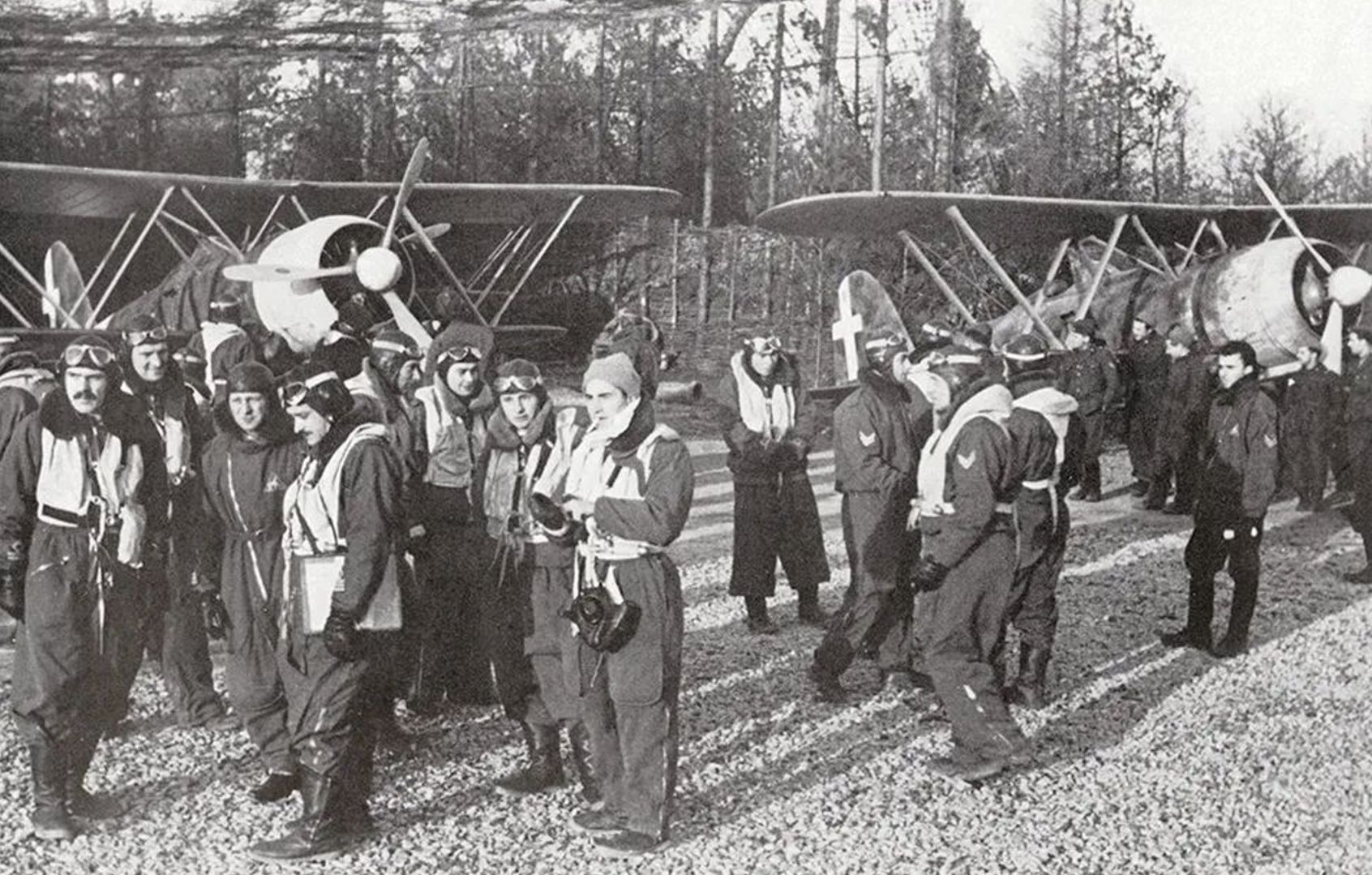
The CAI began combat operations on the night of October 24, 1940, with Fiat BR.20 bombers attacking Harwich and Felixstowe from their bases in Belgium. The CAI’s fighters, however, had similar fuel constraints as their German counterparts, with the Fiat CR.42 and Fiat G.50 Freccia fighters only being able to fly for as little as 10 minutes before being forced to turn back across the English Channel due to lack of fuel, being better suited for interceptor missions than for long-range escort missions. On November 11, 1940, the Corpo Aereo Italiano launched what would be its biggest raid on Britain. That day, a flight of 10 Fiat BR.20 “Cicogna” bombers and 40 Fiat CR.40 Falco fighters went against the British port of Harwich. Two squadrons of Hawker Hurricanes (No. 46 Squadron from RAF Digby and No. 257 Squadron from RAF Northolt) and one squadron of Supermarine Spitfires (No. 41 Squadron from RAF Catterick) intercepted the Italians. The Regia Aeronautica would acknowledge that three BR.20 bombers were lost during the raid, with a further three crashing on attempting to land in Belgium after suffering combat damage, while three CR.42s were also lost, with two being shot down within 15 minutes of each other. Despite two Hurricanes being damaged, the RAF reported no aircraft or crew losses during their defense of Harwich that day.
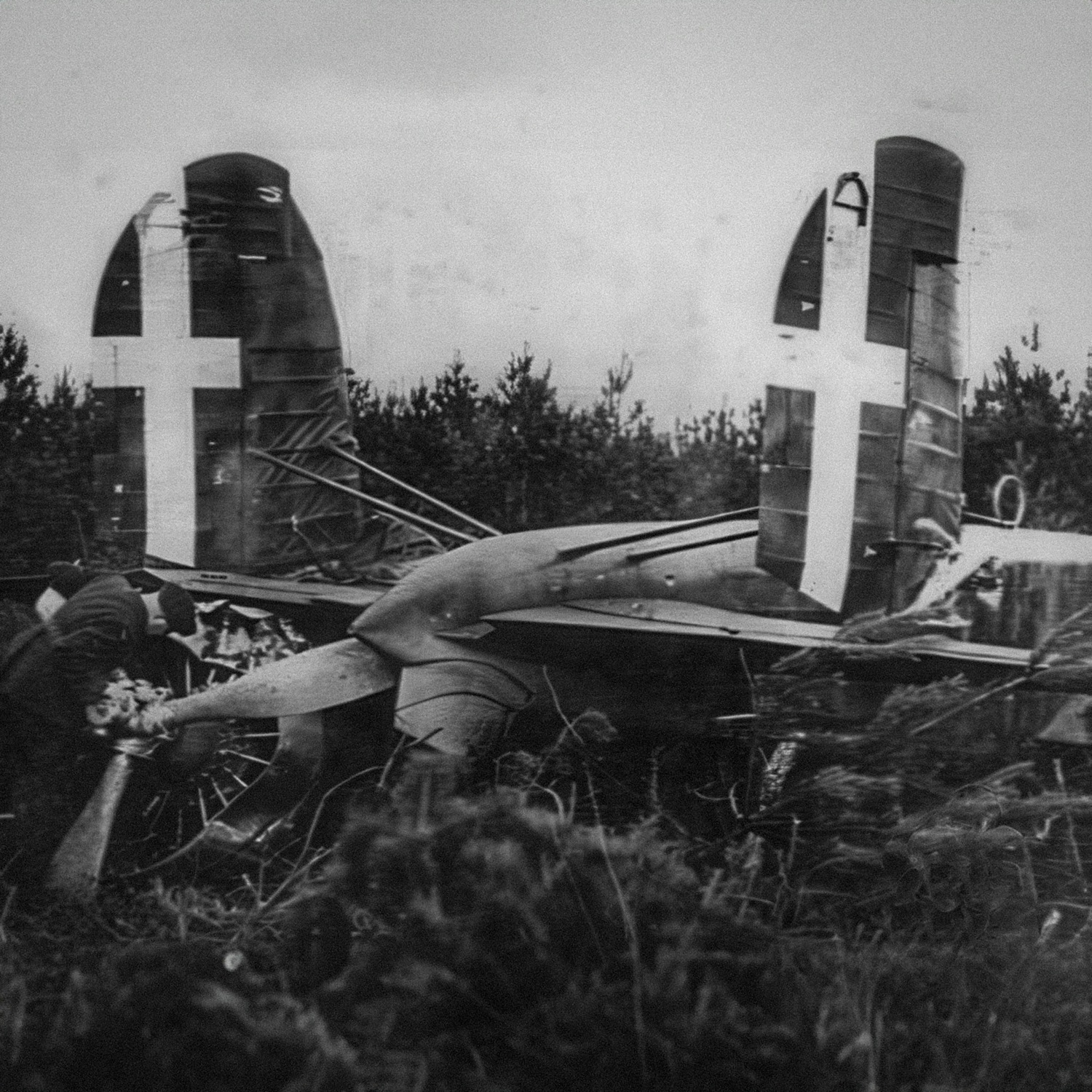
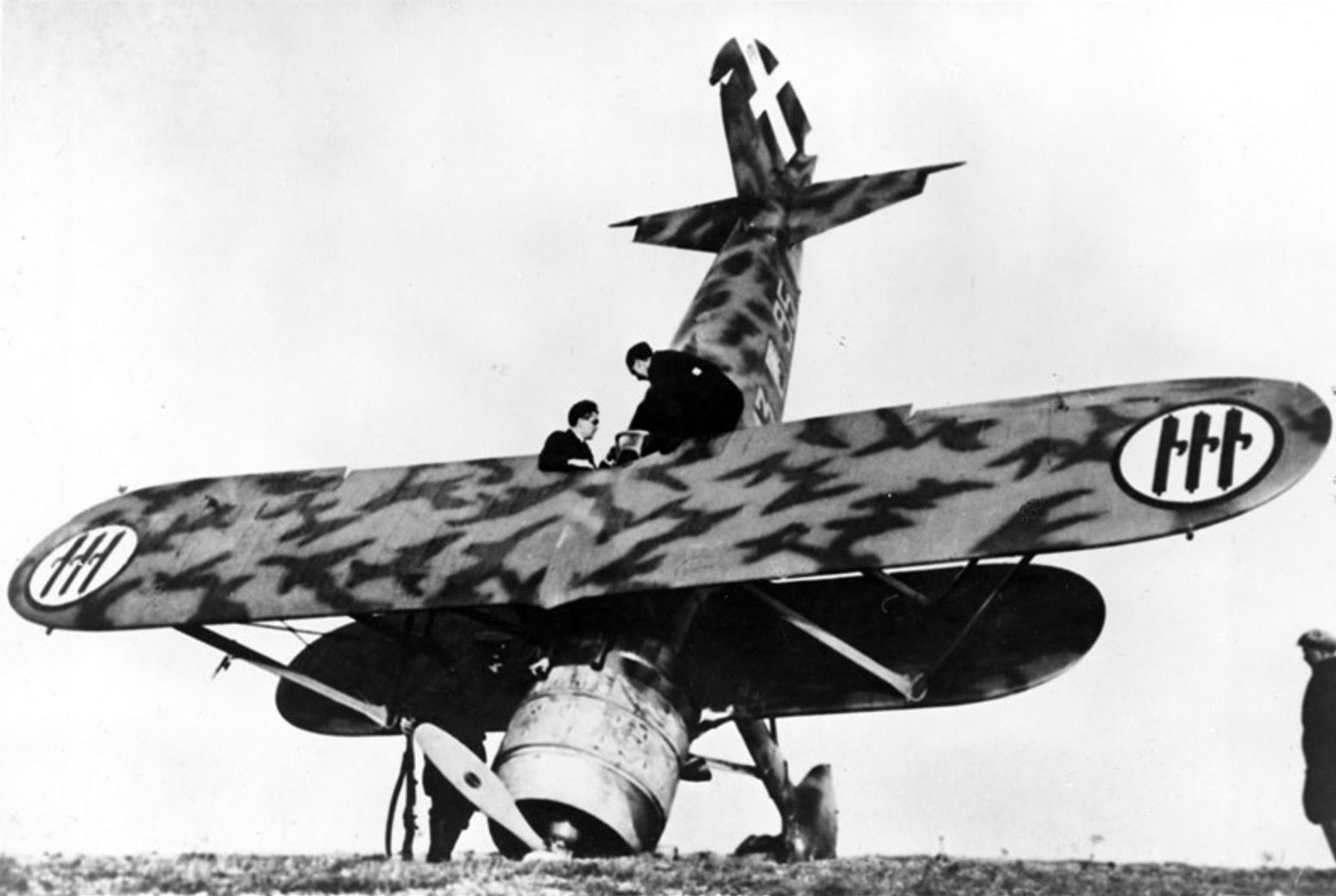
CR.42 MM5701 was among the three fighters that failed to return. The aircraft took off at 12:00 pm, with 23-year-old Sergente Pilota Pietro Salvadori at the controls, and climbed to 18,000 feet with the rest of the Italian formation. During the flight across the Channel, MM5701 suffered from a broken oil pipe that led to the aircraft’s Fiat A.74 radial engine overheating. With his airplane lagging behind the formation and unable to turn back across the Channel, Salvadori forced landed his CR.42 on the beach of Orfordness, Suffolk, at 1:45pm. While his initial touchdown was smooth, Salvadori’s Falco rolled through a patch of soft sand, forcing the plane’s propeller into the sand with the tail sticking up into the air. Salvadori then clambered down his upturned fighter onto the beach about ¼ mile north of the Orfordness Lighthouse, and was immediately captured by British Home Guard units and spent the remainder of the war as a POW in British custody. According to his interrogation records, Salvadori reported that he was glad to be out of the war, remarking that he did not like his officers, the Belgian weather, the Germans, or the German food. He and the aircraft were both featured in a British propaganda newsreel produced by British Pathe. After the war, Salvadori returned to the Italian Air Force but was tragically killed in an accident on April 7, 1953, while flying a Republic F-84G Thunderjet on a training mission.
As for CR.42 MM5701, the aircraft was transported 13 miles by road from Orfordness to RAF Martlesham Heath to be repaired and returned to airworthiness. On November 27, 1940, the aircraft was flown from Martlesham Heath to the Royal Aircraft Establishment (RAE) at Farnborough, escorted by a Hawker Hurricane as the Fiat was still wearing its Italian colors. On arriving at Farnborough, MM5701 was given RAF roundels, had its underside painted overall yellow to prevent friendly fire, and issued with RAF serial number BT474. The aircraft underwent a limited number of flights around Farnborough with Squadron Leader L.D. Wilson as a test pilot. On April 28, 1941, CR.42 BT474 was flown from Farnborough to the Air Fighting Development Unit (AFDU) at RAF Duxford by Wing Commander I.R. Campbell-Orde. The aircraft was sent to the AFDU in order to develop tactics through mock combat for RAF fighters to employ against the Fiat CR.42 in the Mediterranean and North African theaters, as the CR.42’s maneuverability could still prove effective in the hands of an expert pilot against an opponent that underestimate the biplane’s capabilities. During these mock combat trials, BT474 was flown against Hurricanes and Spitfires, as well as aircraft of the Royal Navy’s Fleet Air Arm, namely the Fairey Albacore, Fairey Fulmar, and Grumman Martlet (British F4F Wildcat). Among the British airmen to fly BT474 was the famous Royal Navy test pilot, Captain Eric “Winkle” Brown, who flew more aircraft types than any other pilot (487 models in total). He wrote of the CR.42’s performance as being “brilliantly maneuverable, an acrobatic gem, but under-gunned and very vulnerable to enemy fire.” Brown also reported that the CR.42 was “remarkably fast” for a biplane, and possessed “marginal stability, which is the mark of a good fighter.”
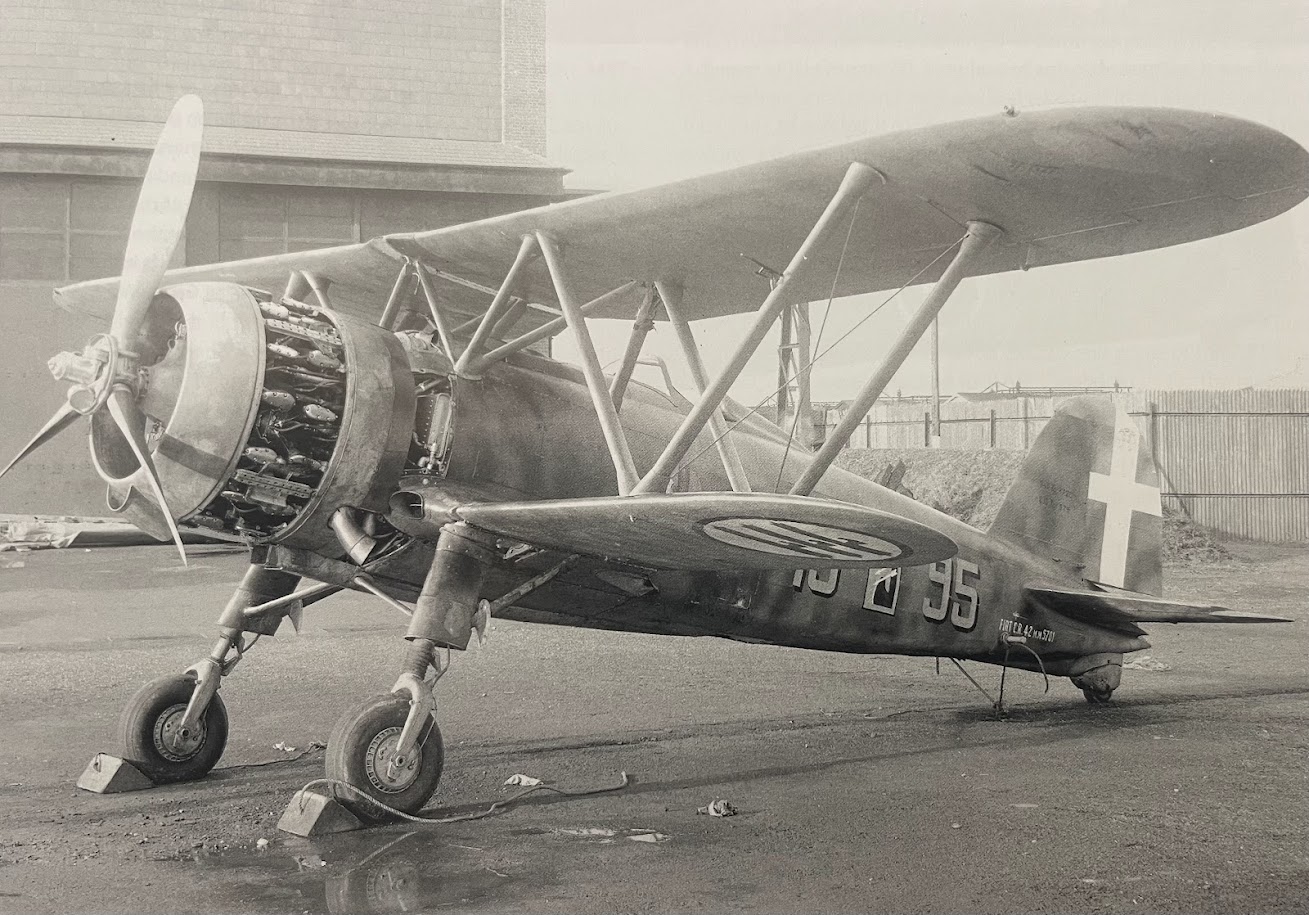
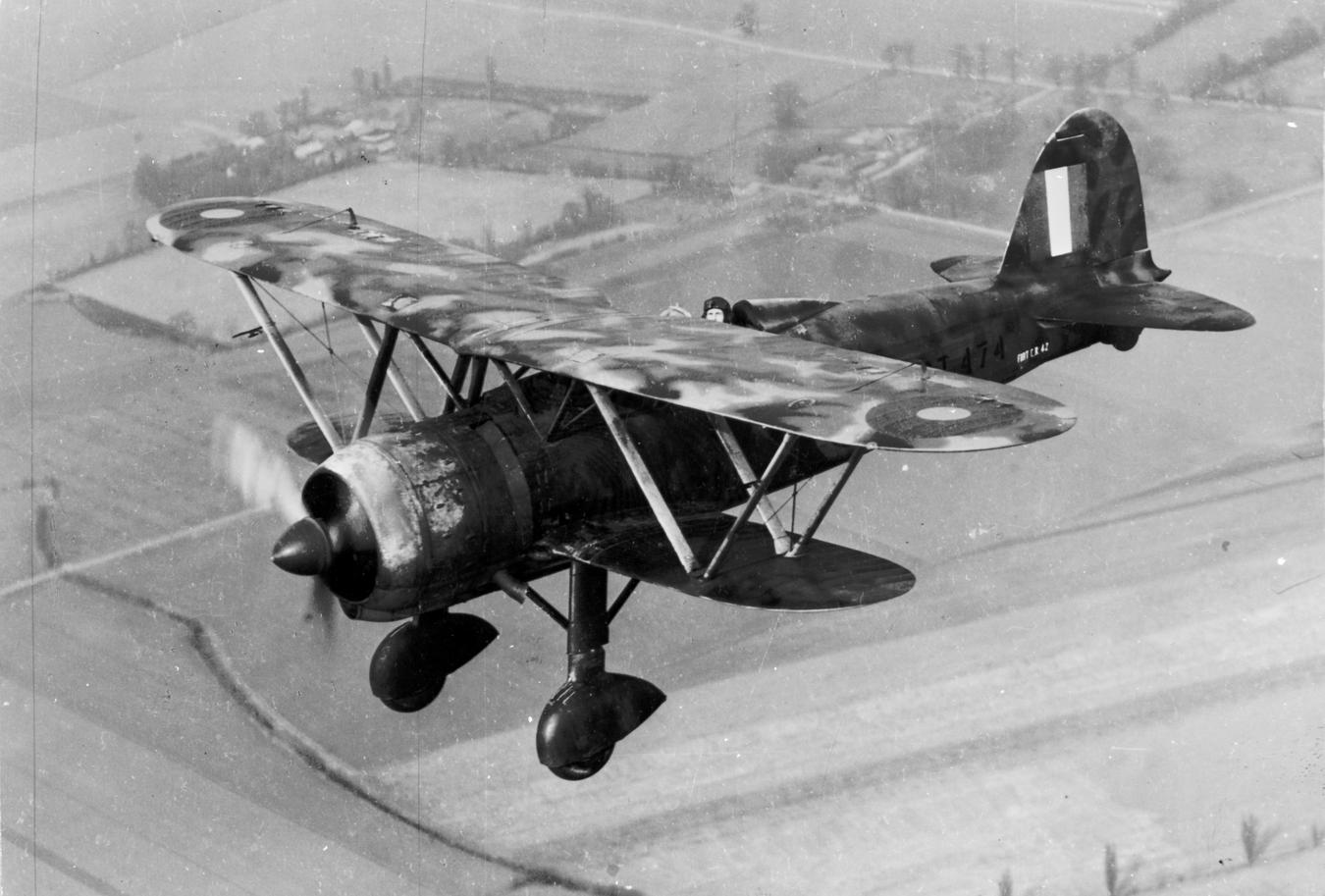
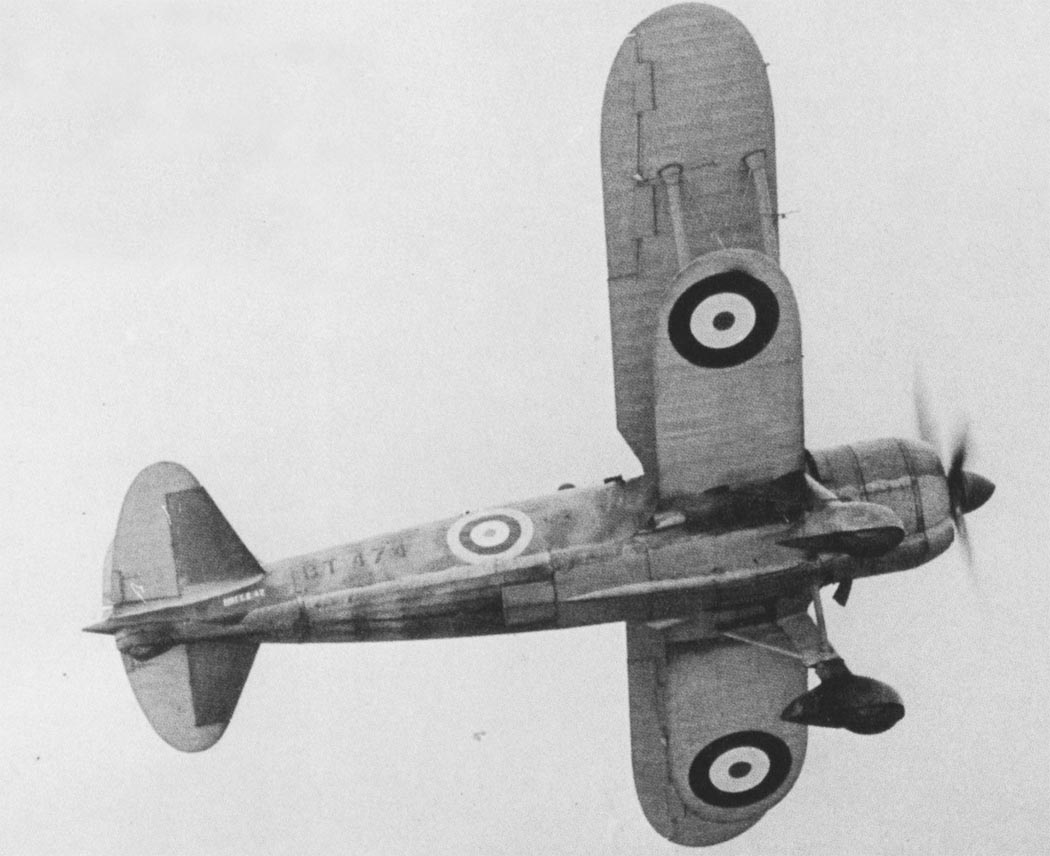
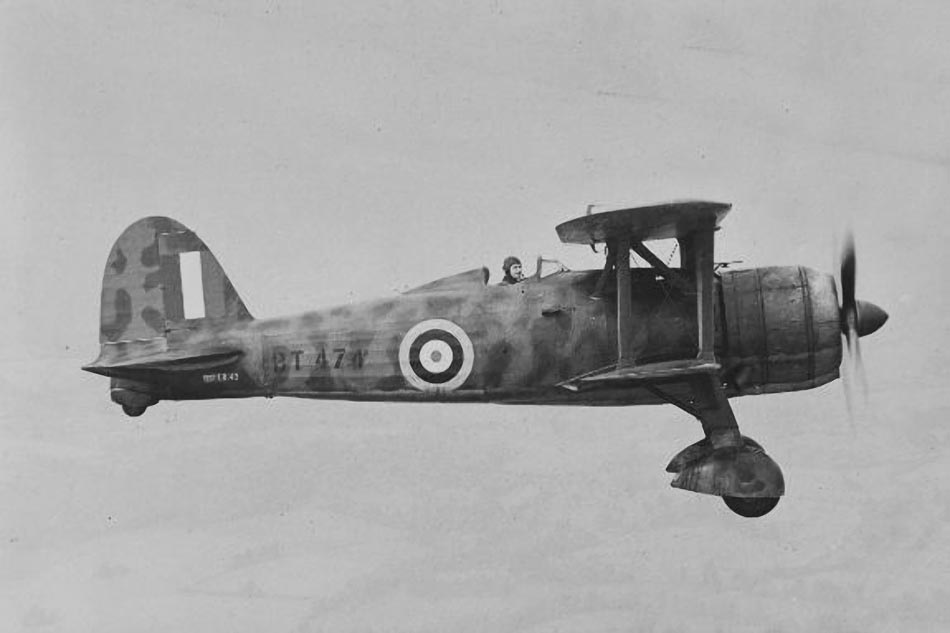
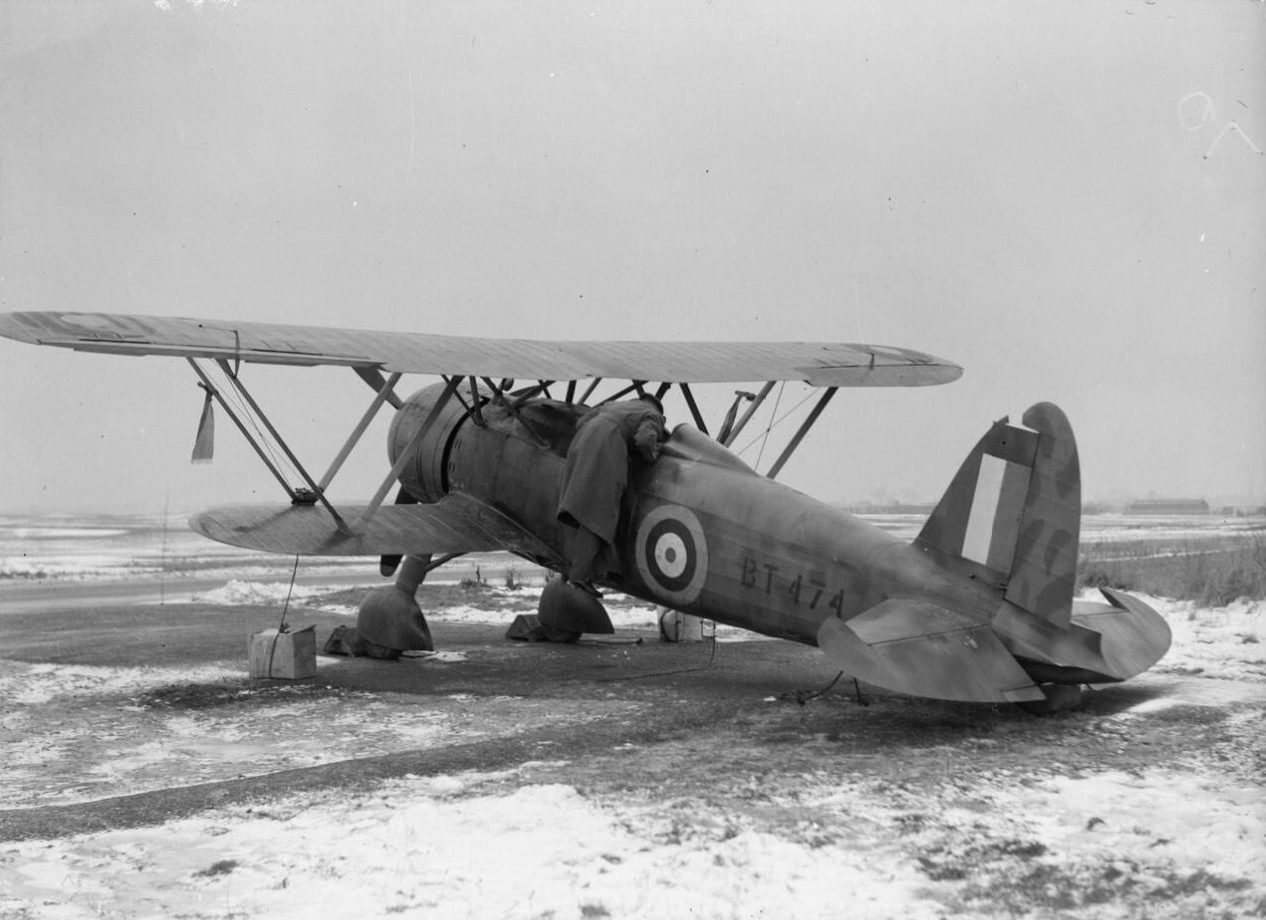
By October 1942, the flight trials of BT474 had concluded, as the Fiat CR.42 was phased out of frontline service with the Regia Aeronautica. However, because of the aircraft’s provenance as one of the first Italian aircraft brought down over England during the war, it was deemed valuable enough for preservation in a future museum. On January 9, 1943, RAF Duxford received a telegram calling for both CR.42 BT474 and a Messerschmitt Bf 109 E-3, Werknummer 4101 (RAF serial number DG200) of No. 1426 (Enemy Aircraft) Flight, to be set aside for preservation, with both aircraft being disassembled and placed inside wooden shipping crates. Initially placed in storage at No.16 Maintenance Unit (MU) Stafford Dispersal Site at RAF Stafford starting in August 1943, both the CR.42 and Bf 109 E-3 were sent to No. 52 MU Cardiff in November 1944, then to No. 76 MU Wroughton, Wiltshire in December 1944. It would be in Wroughton by war’s end and remained there until August 1946.
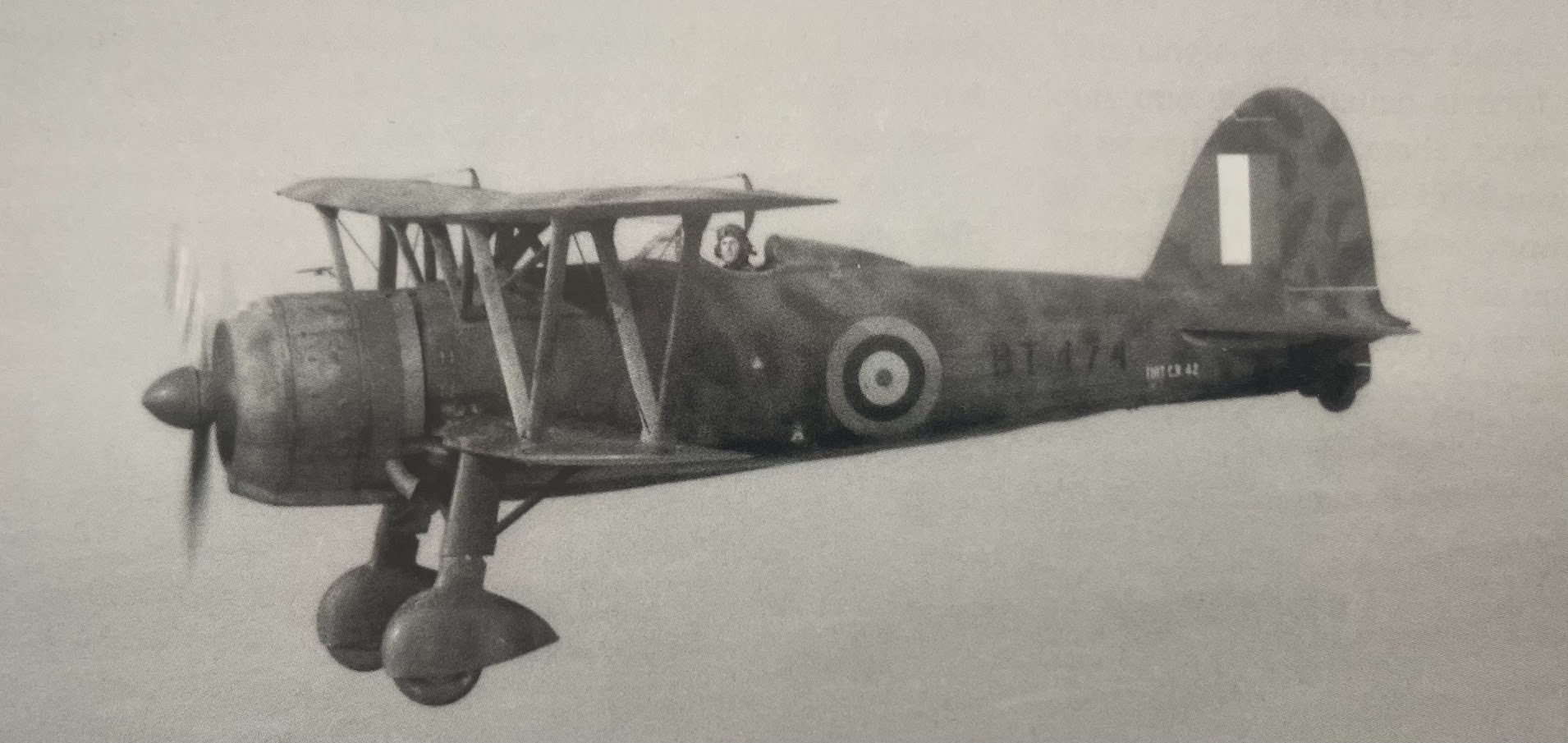
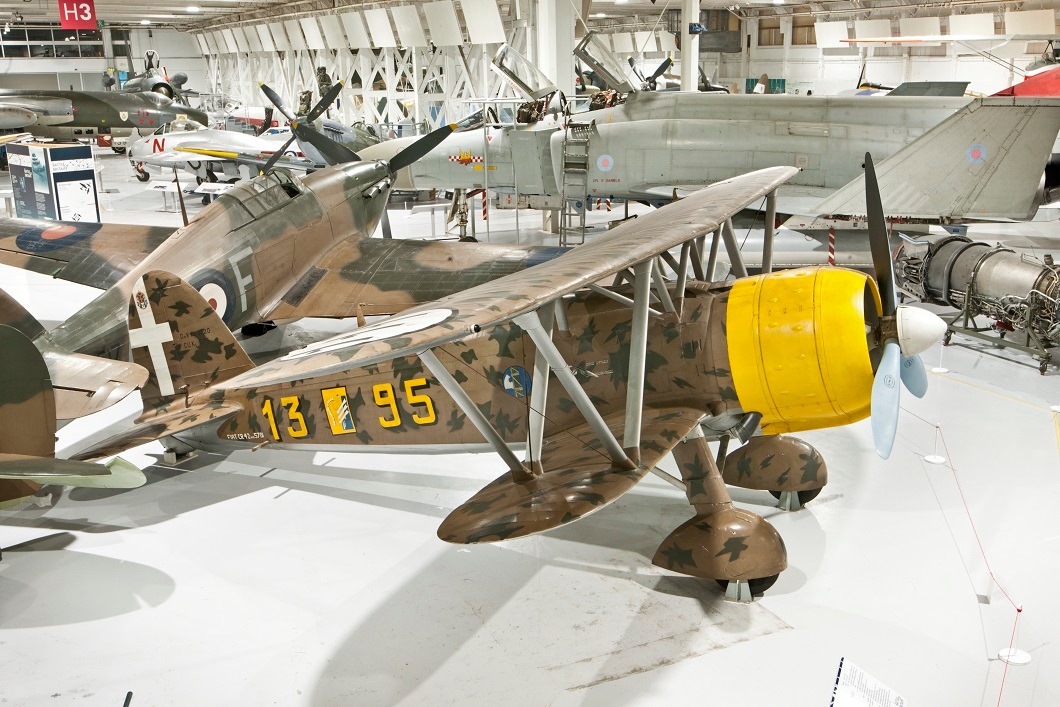
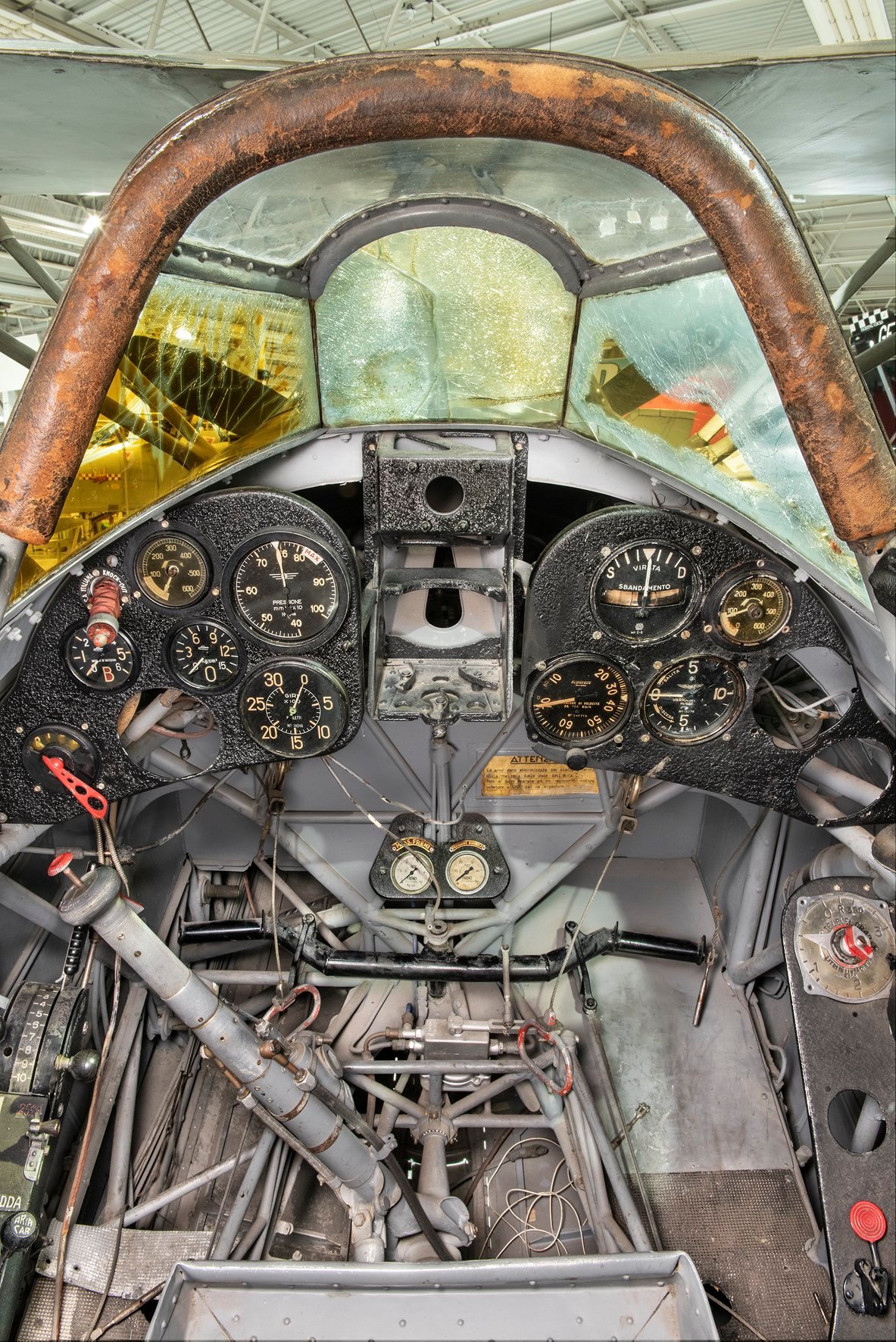
Over the next 20 years, CR.42 BT474 was sent to several RAF bases into storage, from RAF Stanmore Park from 1949 to 1955, No.15 MU Wroughton from 1955 to 1958, and RAF Fulbeck from 1958 to 1960. By June 1960, the aircraft was briefly assigned to No. 49 MU, RAF Colerne, for refurbishment alongside Junkers Ju 88 R-1 Werknummer 360043 (RAF s/n PJ876) and Kawasaki Ki-100 c/n 16336, but was soon sent to RAF Biggin Hill, where it received some restoration, but still retained its RAF serial number and yellow undersides. The aircraft made at least two public appearances in the mid to late 1960s, first at the RAF Biggin Hill Open House of September 1965, then at the RAF Chivenor Open Day held on August 23, 1969. Following a second Open Day at RAF Chivenor in February 1970, Fiat CR.42 MM5701 underwent restoration at RAF St Athan from January 1973 to mid 1974, with trainee painters and finishers of 94 entry, D Flight No. 2 School of Technical Training recovering the aircraft in new fabric and returning it back to its 95a Squadriglia, 18 Gruppo colors as MM5701 (fuselage code 13-95), and the aircraft made its post-restoration debut at the RAF St Athan’s Battle of Britain Open Day in September 1974. Now back in its Regia Aeronautica colors, MM5701 remained in storage at RAF St Athan until October 1978, when the CR.42 was placed on permanent display in the Battle of Britain Hall of the Royal Air Force Museum Hendon. Here, it can still be viewed on display today as the last intact CR.42 flown by the Regia Aeronautica during WWII. It also stands as a reminder of the little-known Italian air campaign against Britain, and it remains one of the most prominent displays of any surviving Italian aircraft of WWII.
J 11 Fv 2539 / MM5643
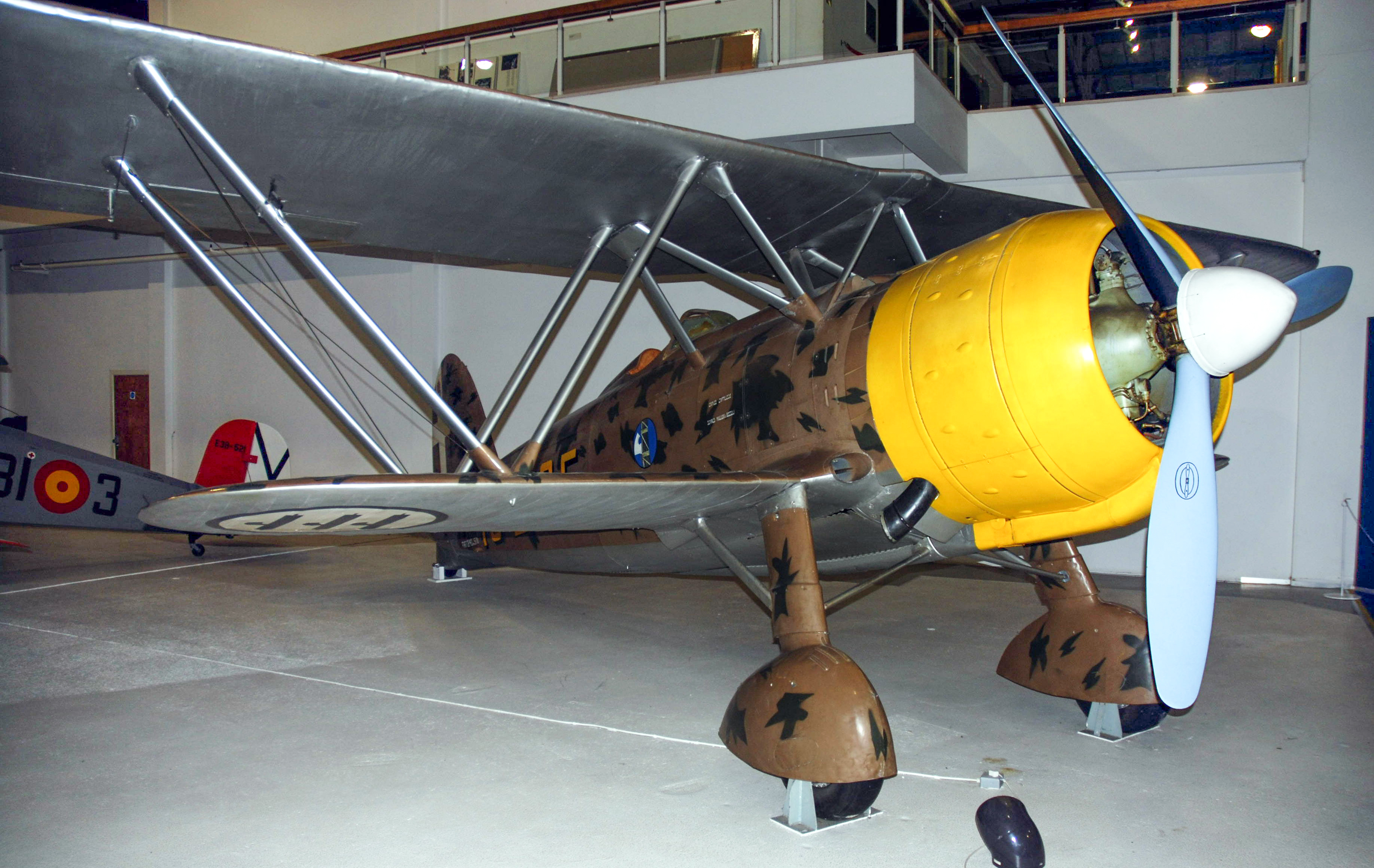
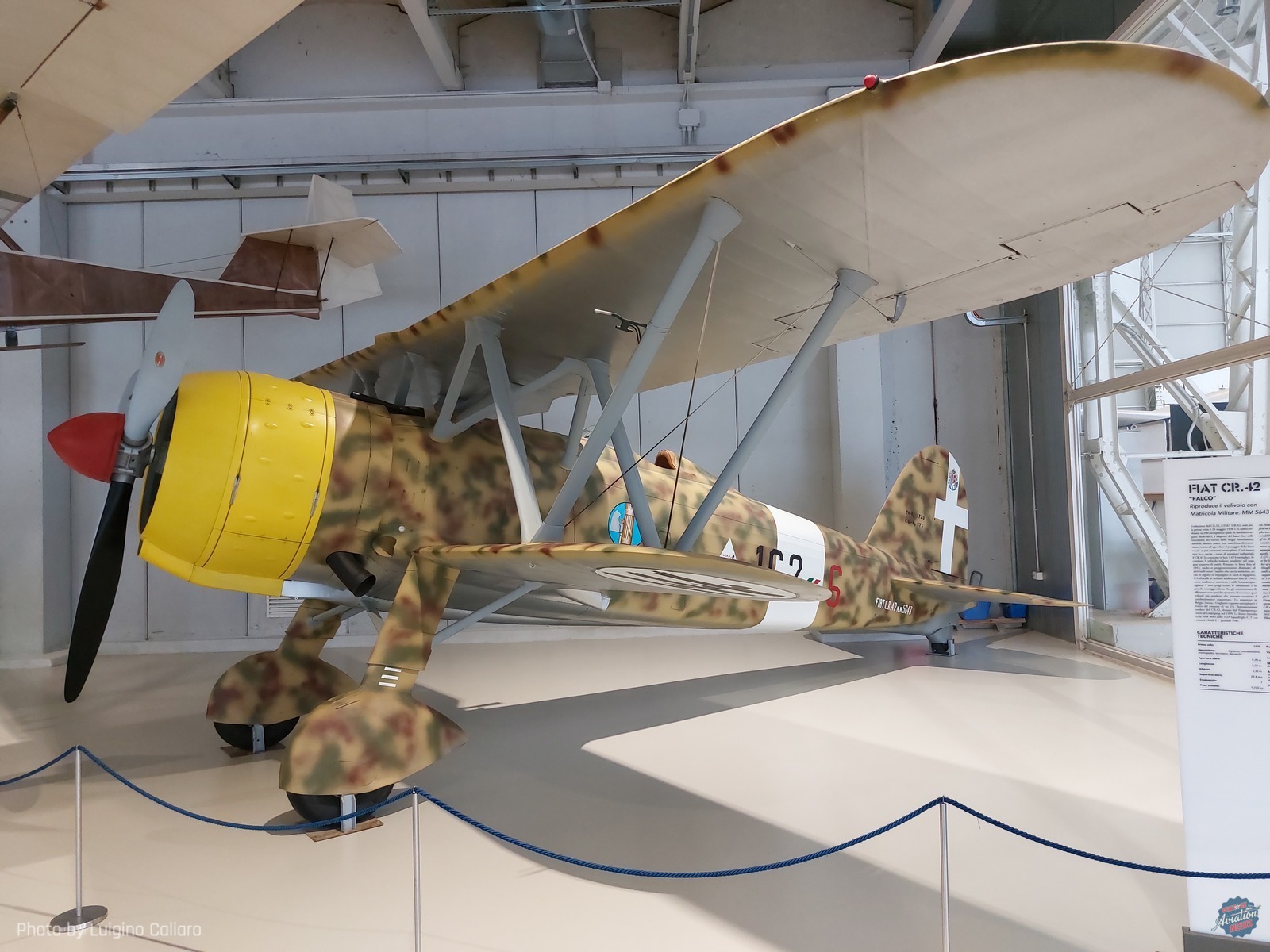
Situated some 30 kilometers (19 miles) northwest of Rome lies Lake Bracciano, which has seen settlements on its shores going as far back as 5700 BC and was a favorite setting for Roman villas. In the history of Italian aviation, Lake Bracciano became home to a seaplane base for the Regia Aeronautica and today serves as the home of the Museo Storico dell’Aeronautica Militare (Historical Museum of the Air Force) in Vigna di Valle, which we have highlighted HERE. Among the 1920s-1930s era planes displayed in the museum’s Velo Hangar is Fiat CR.42 MM4653, which is in fact a reconstructed airframe assembled from both original CR.42 components and from newly fabricated materials. Much of the basis for the reconstructed CR.42 at Vigna di Valle comes from the remains of a former Swedish Air Force Fiat J 11, Fv 2539. Built in 1940 as construction number 917, the aircraft was exported from Italy to Sweden and was among the last J 11s that were decommissioned from the Swedish Air Force in the spring of 1945. J 11 Fv 2539 was also among the J 11s that were purchased by Svensk Flygtjänst AB and used as target tugs under contract from the Swedish Air Force. While it was operated with Svensk Flygtjänst, Fv 2539 was issued the Swedish civilian registration SE-AOP on July 16, 1945. According to the Swedish aviation historian Håkan Gustavsson, SE-AOP crashed on takeoff near Torslanda, outside of Gothenburg, on September 18, 1946, with the aircraft being deregistered on October 30, 1946.
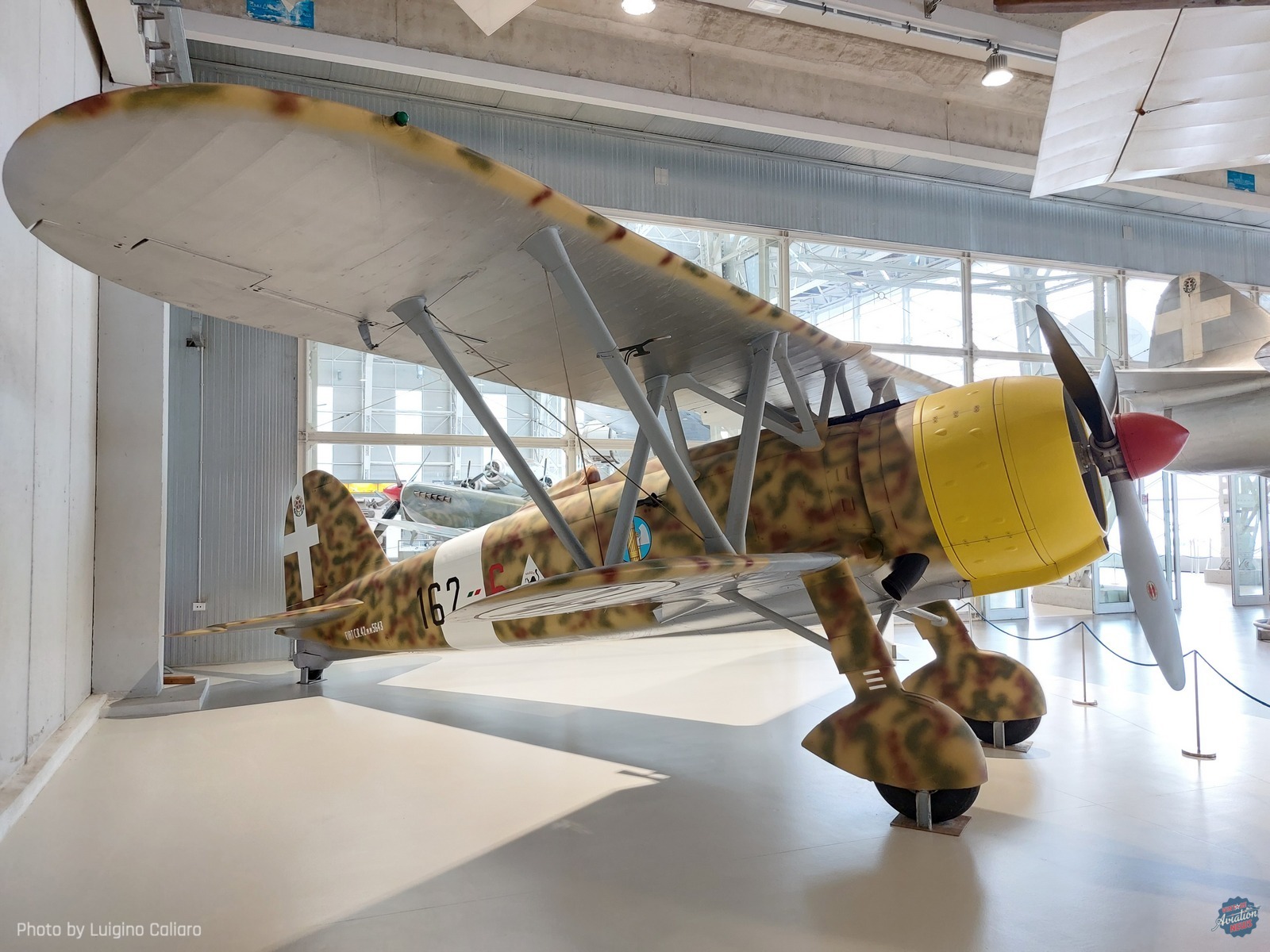
The wreckage of the aircraft would not be scrapped, however, and was eventually acquired by the Flygvapenmuseum (Swedish Air Force Museum) at Malmen Airbase near Linköping, with the wreckage of Fv 2539/SE-AOP consisting largely of the fuselage from the engine firewall to the pilot’s headrest, along with some damaged wing components. By the 1990s, the Museo Storico dell’Aeronautica Militare (commonly referred to as the Italian Air Force Museum) became interested in finding enough components to reconstruct a Fiat CR.42 Falco to display an example of the most widely produced Italian fighter of WWII in their museum. With the wrecks of several Fiat J 11s being documented in Sweden, the Flygvapenmuseum agreed to help, providing reference photos and materials of their own intact J 11, Fv 2543, and offering the wreckage of Fv 2539/SE-AOP to the Italian Air Force Museum to become the basis for the reconstruction efforts, which the museum gladly accepted, in exchange for assisting the Swedish Air Force Museum with the restoration of other Italian-built aircraft in its collection, such as the last remaining Macchi M.7 WWI-era flying boat fighter (see this article HERE).
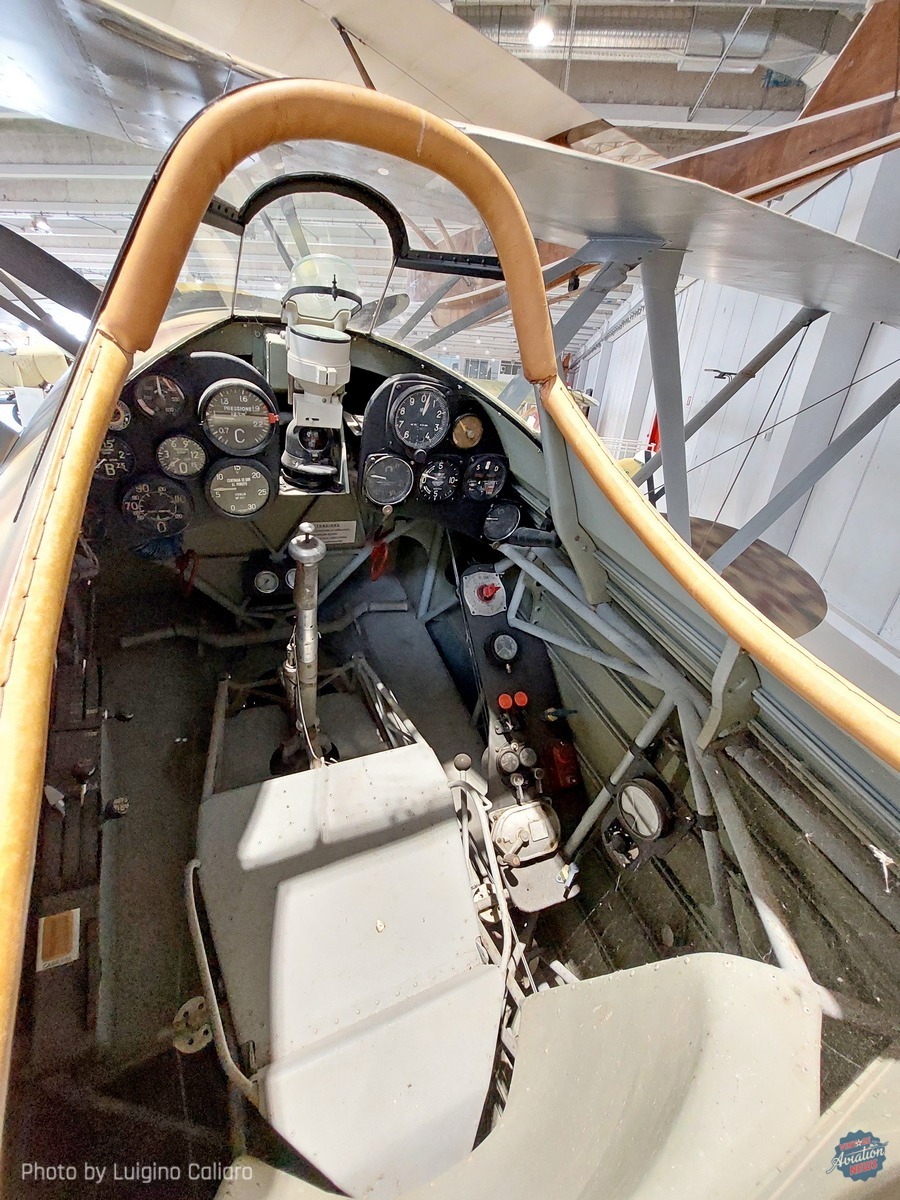
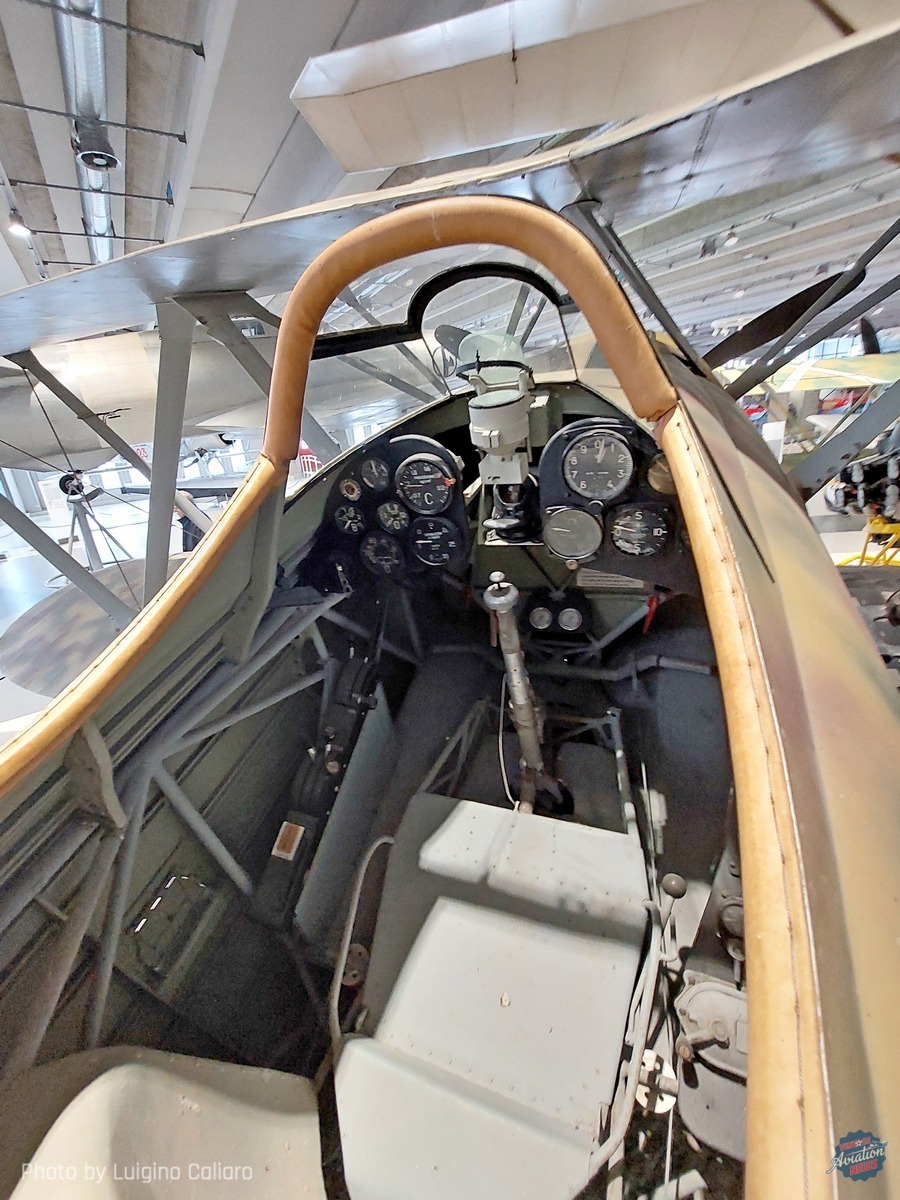
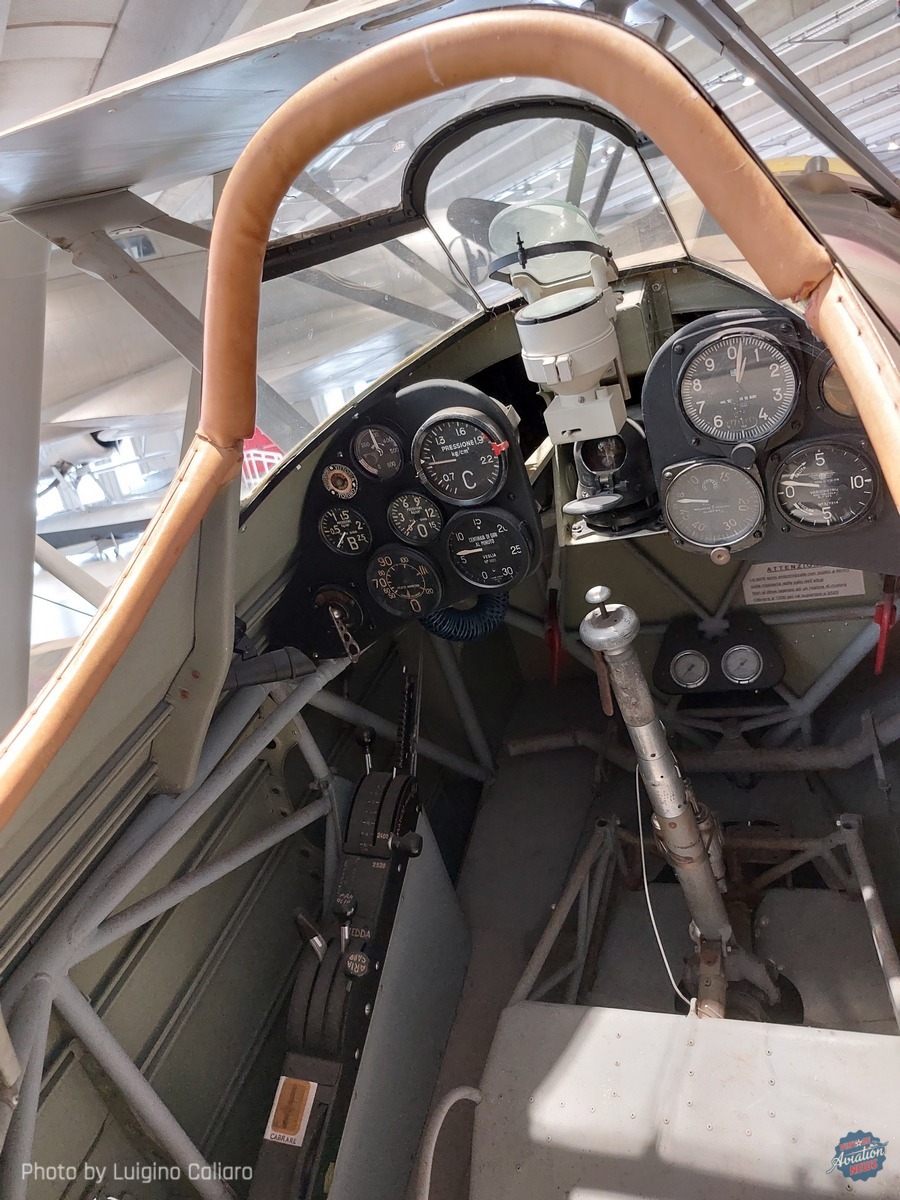
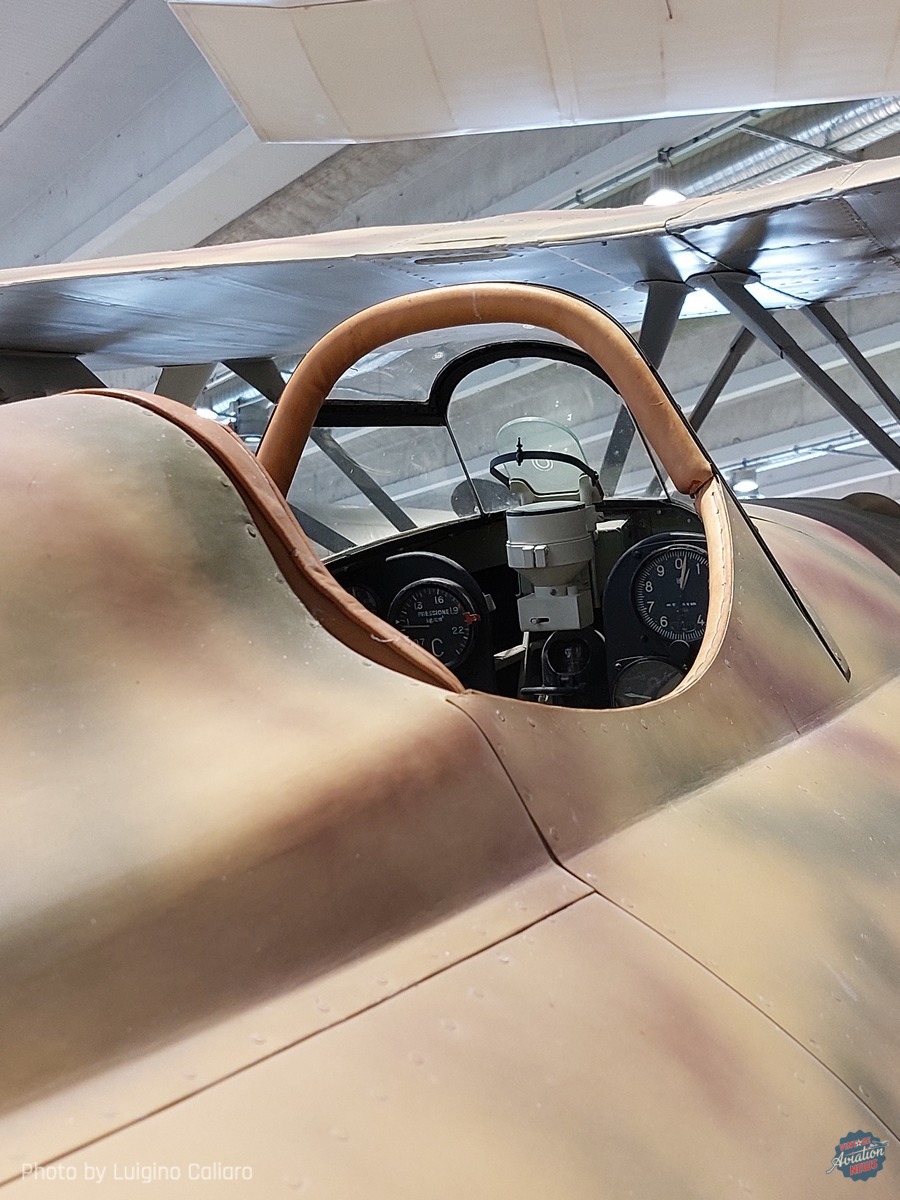
Besides acquiring Fv 2539/SE-AOP, the Museo Storico dell’Aeronautica Militare also tracked down further CR.42 pieces from around the world, with the Italian aviation magazine JP4 – Mensile di Aeronautica reporting that parts for the project were acquired from museums and collections in Germany, France, Belgium, Switzerland, Austria, the United Kingdom and even from the United States and South Africa. Additionally, parts from at least another crashed J 11 from Sweden were also used in the reconstruction, with Fiat providing original factory drawings, and the RAF Museum in London also sending reference material from CR.42 MM5701. The effort to reconstruct the CR.42 based on the remains of SE-AOP was carried out by the Associazione Restauro Aeronautico (AREA) at Varese, in collaboration with Gruppo Amici Velivoli Storici (GAVS (Group of Friends of Historic Aircraft)), which contributed both a Fiat A.74 engine recovered from a lake and a propeller to the project. Up to 60% of the airframe consisted of original parts, while other parts, such as the tail section, were rebuilt from scratch over the course of the nine-year project, which lasted from 1996 to 2005. (Restoration photos of the aircraft can be seen HERE)
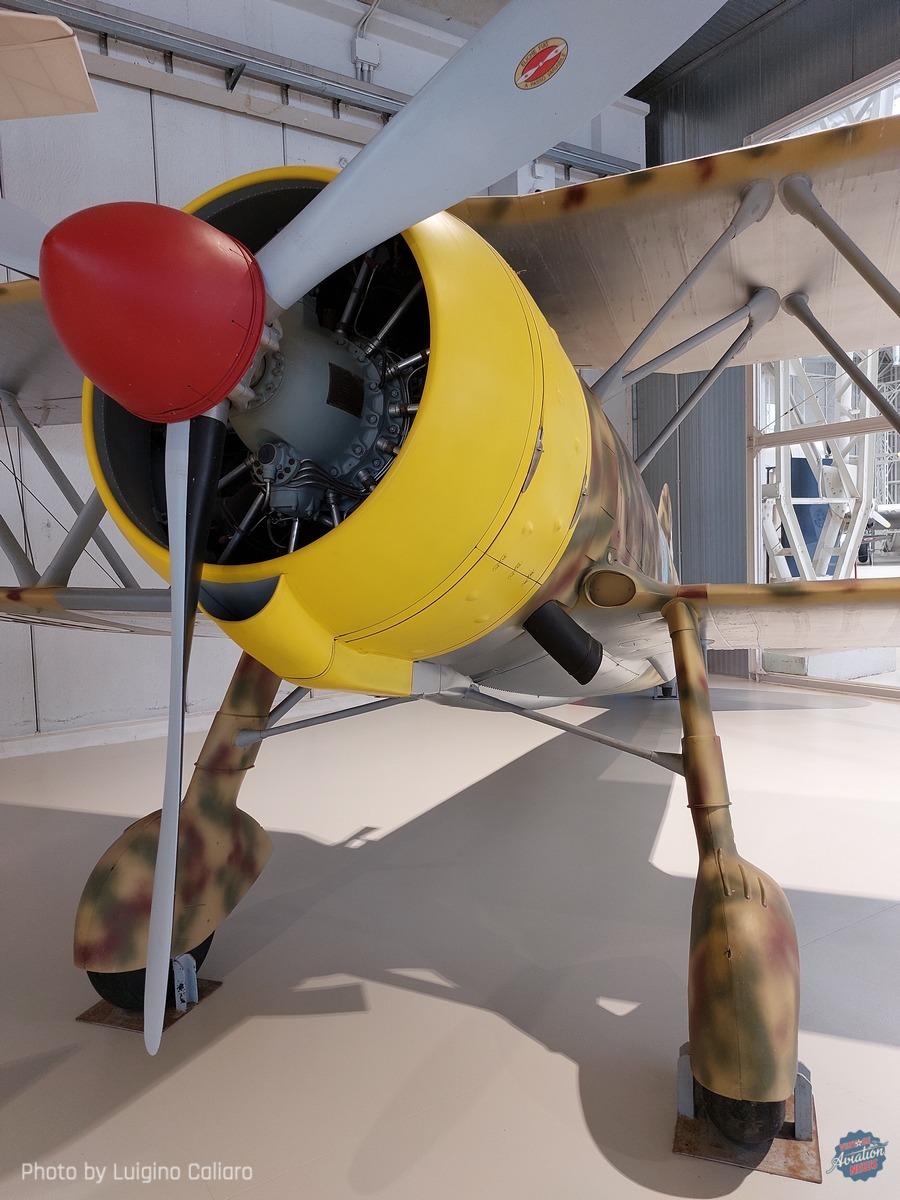
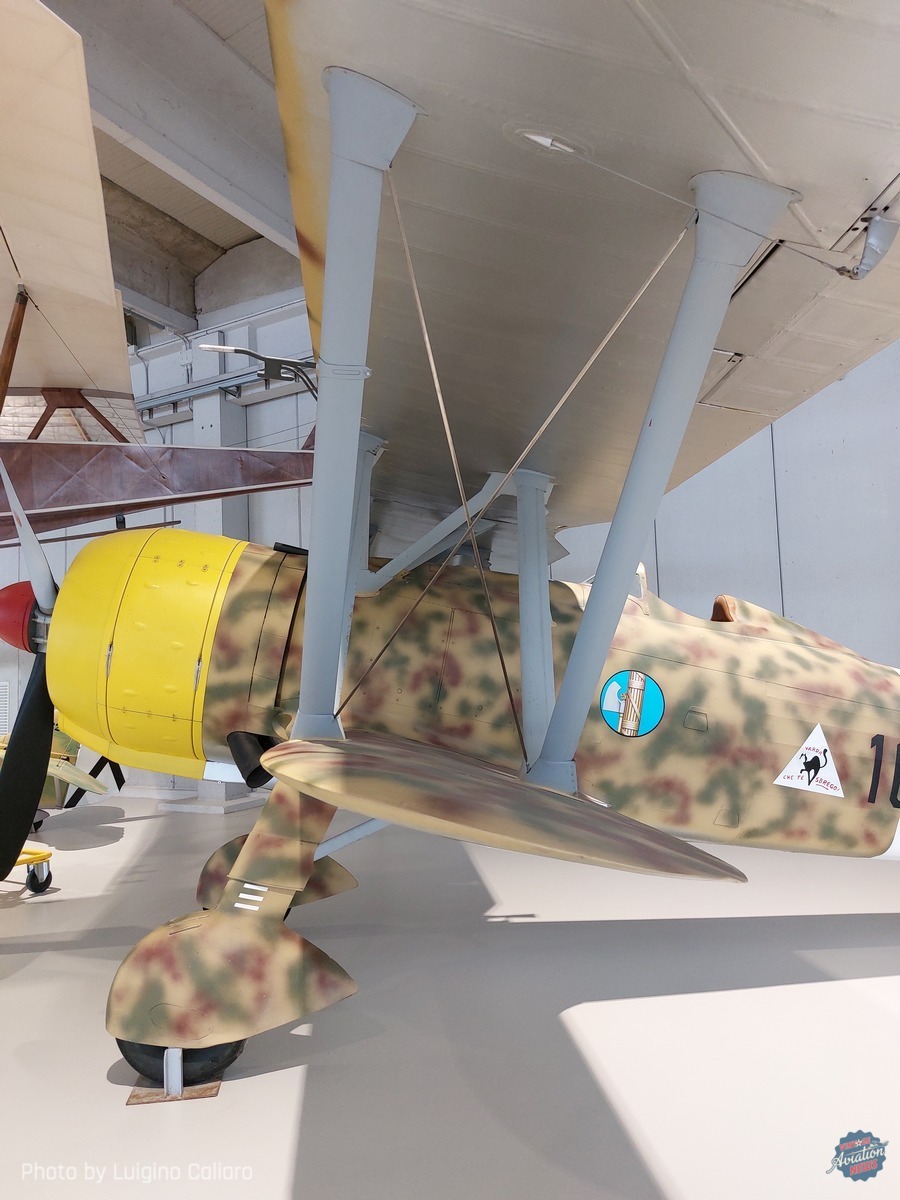
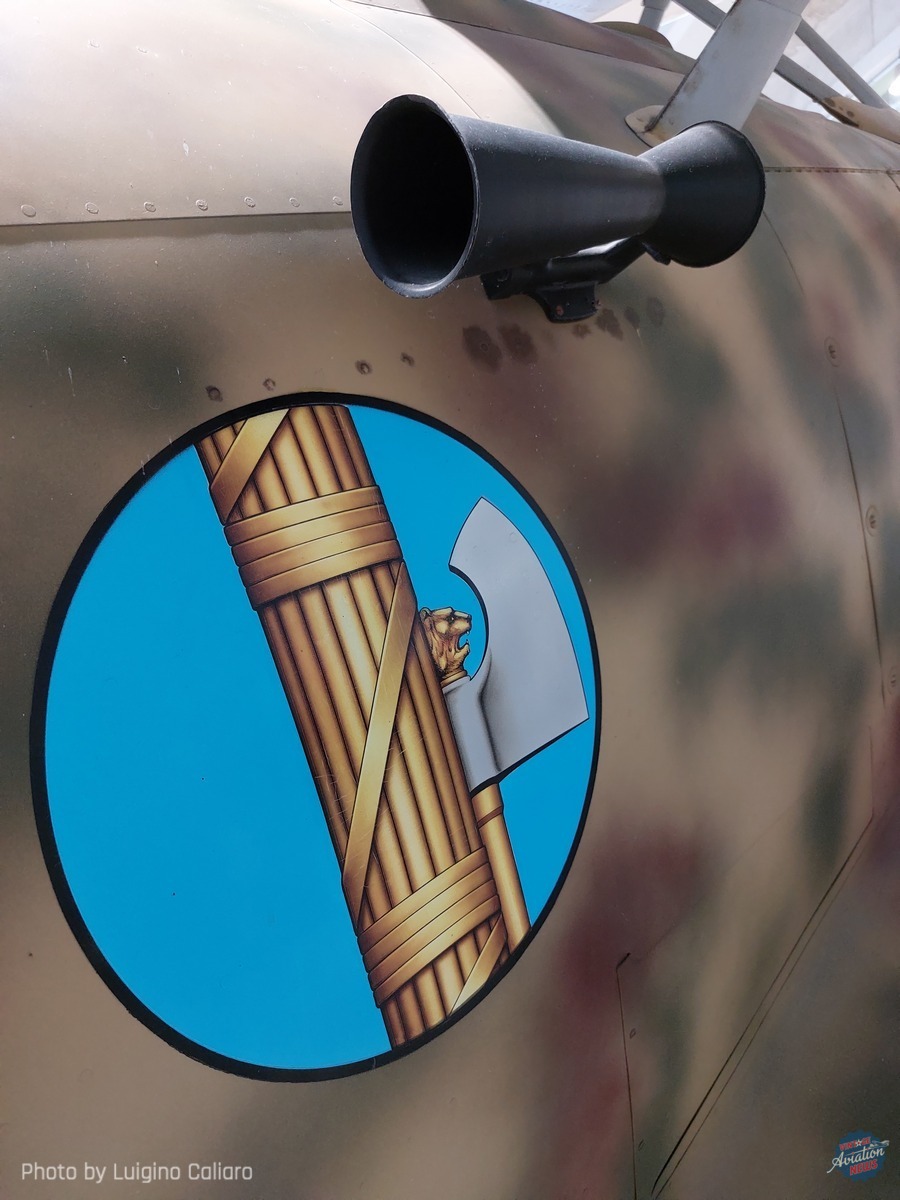
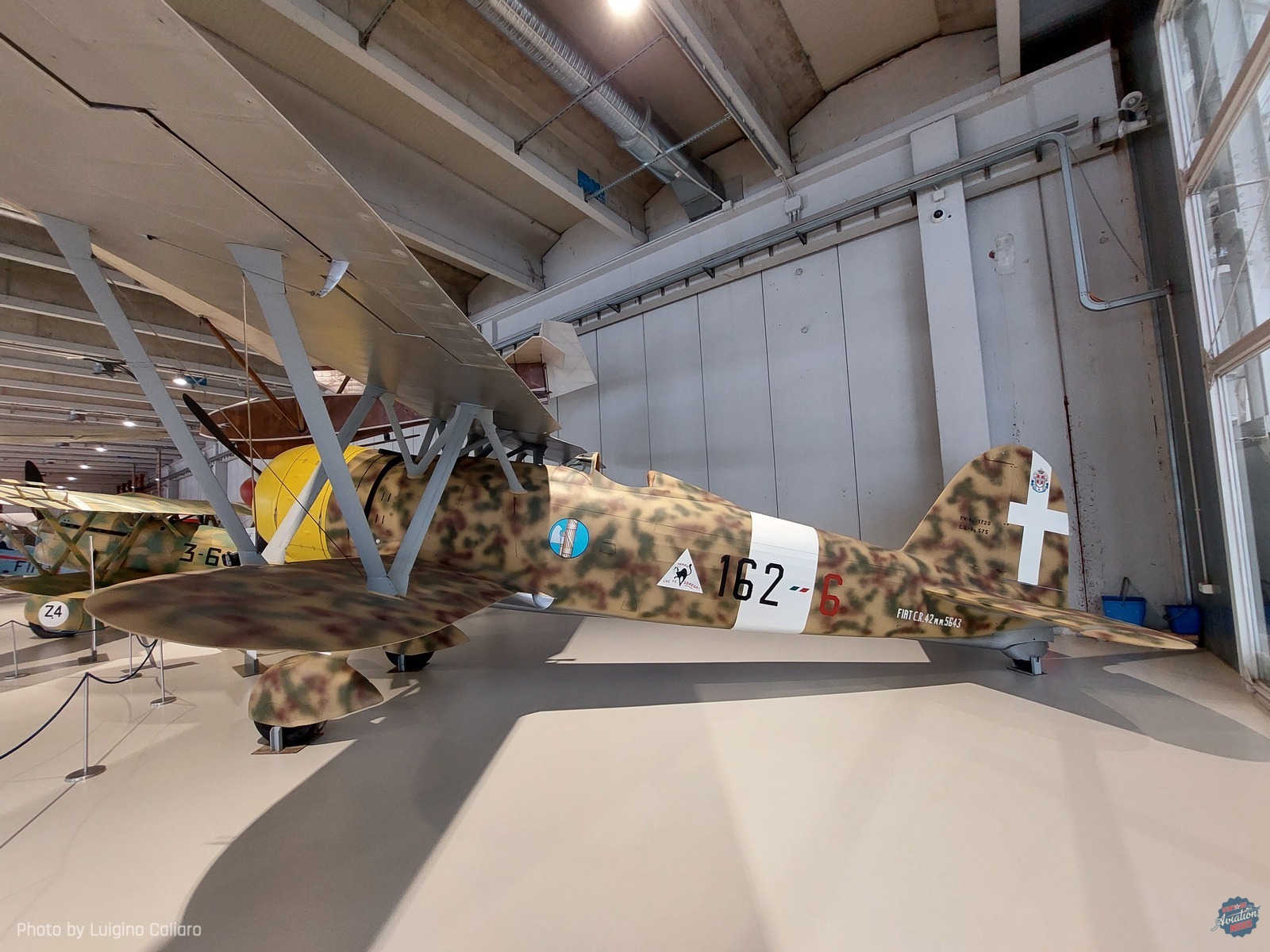
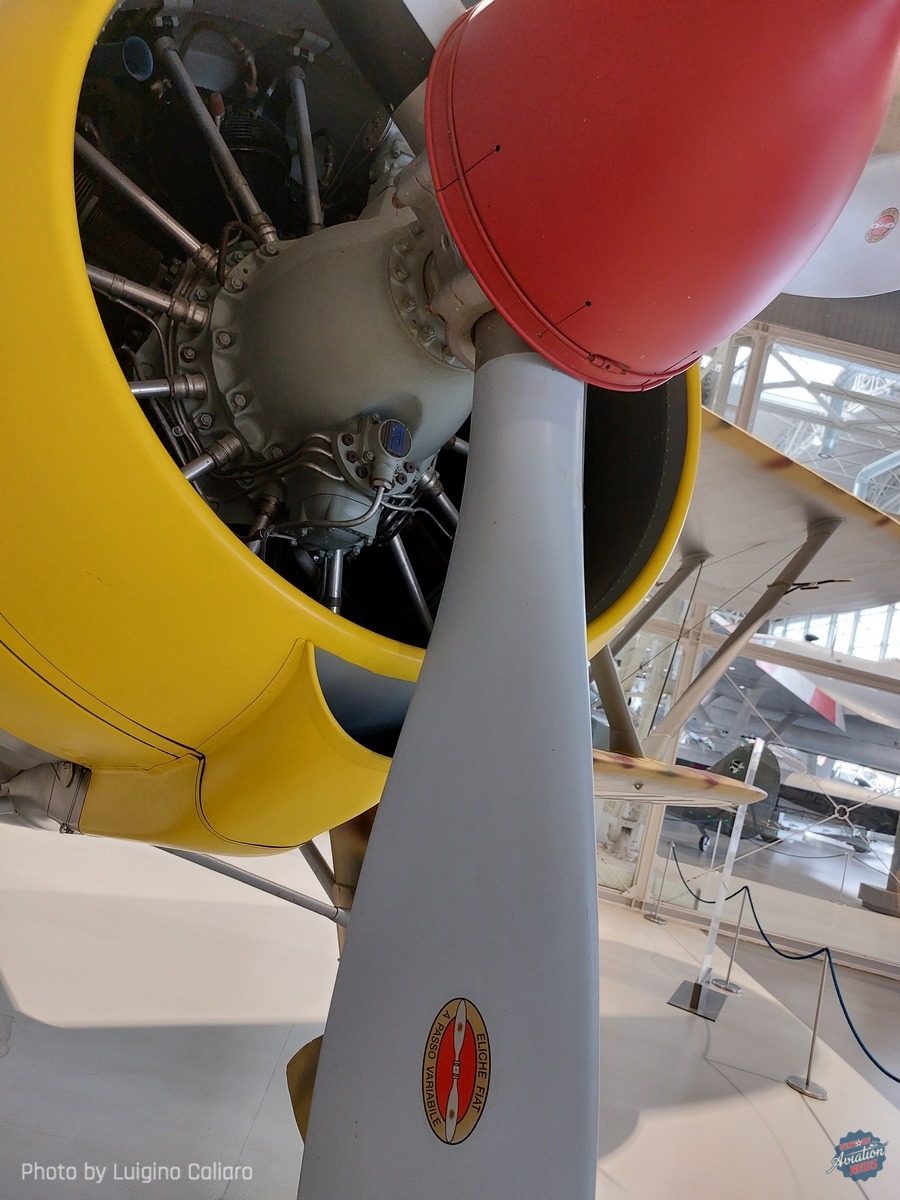
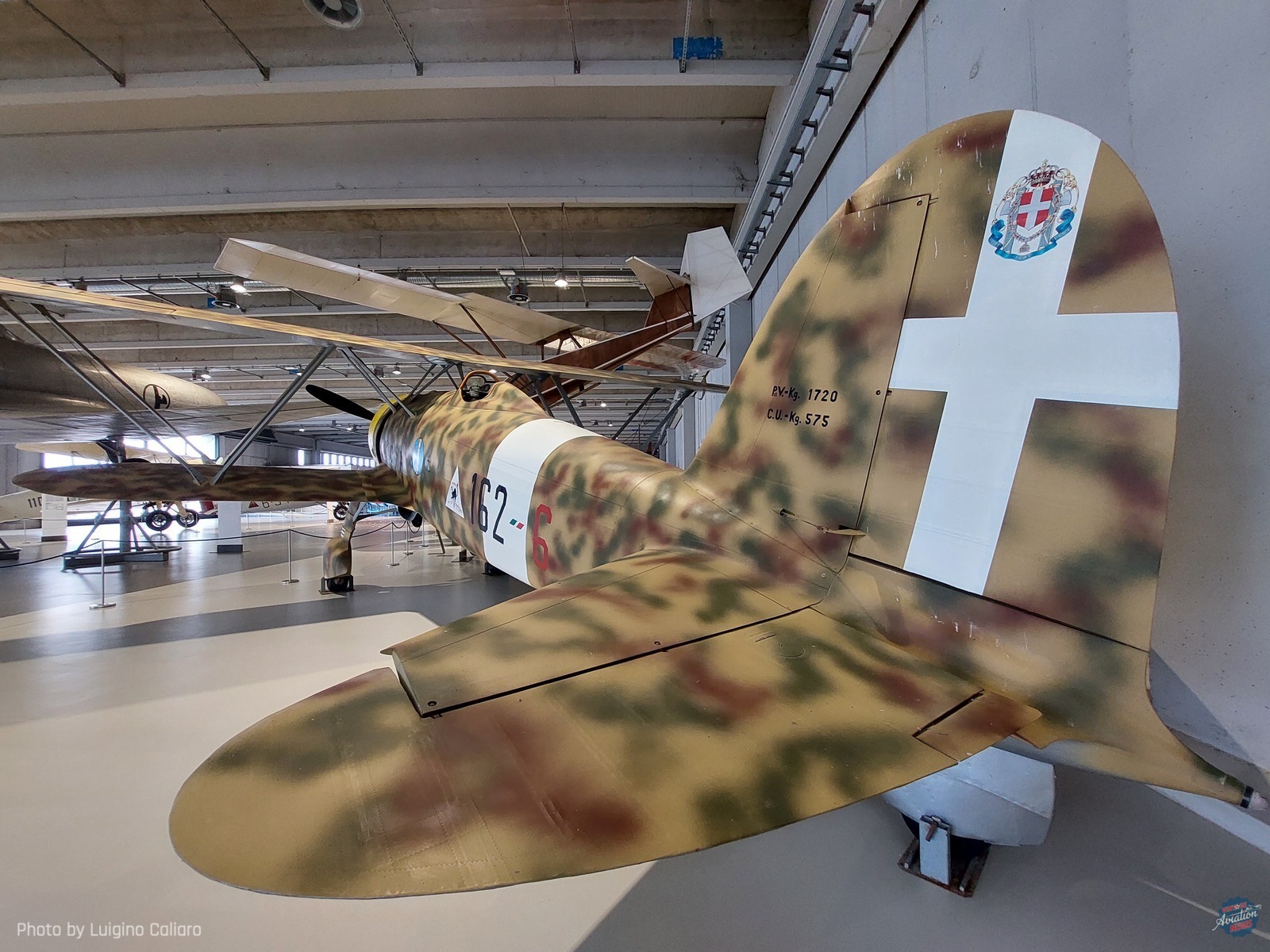
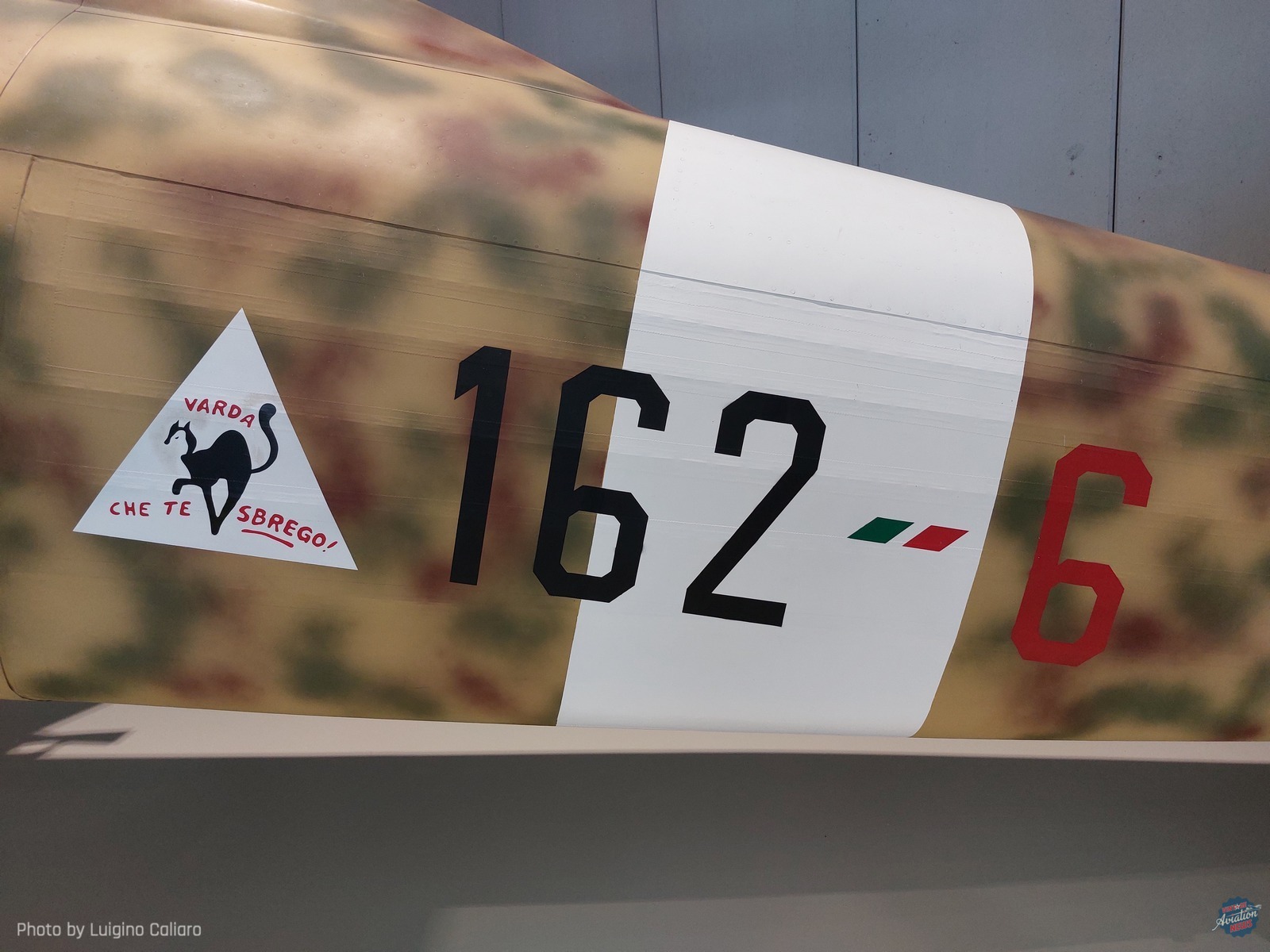
On May 12, 2005, the rebuilt CR.42 was unveiled at the Museo Storico dell’Aeronautica Militare. The aircraft was painted in the colors of CR.42 MM5643 (fuselage code 162-6), which had served in the 162a Squadriglia (162nd Land Fighter Squadron), 161° Gruppo Autonomo C.T. (161st Autonomous Fighter Group) based on the island of Rhodes in 1941. The squadron’s insignia, painted on the sides of the fuselage, features a black cat and the Venetian dialect phrase Varda, che te sbrego! (which can be translated to “Beware, I shall claw you!”). Today remains on display inside the museum’s Velo, placed alongside such aircraft as the Macchi MC.72 seaplane racer that has held the record for the fastest piston-engined seaplane since 1934, and a restored IMAM Ro. 37 reconnaissance aircraft recovered from Kabul, Afghanistan in 2006. With the dedication of the reconstructed Fv 2539, now MM5643, the Italian Air Force Museum can now prominently feature a representation of one of its most iconic aircraft of WWII for generations to come.
J 11 Fv 2542 (G-CBLS)
Among the worldwide warbird community, there is perhaps no more well-known bastion of flyable WWII aircraft in Europe than Duxford Aerodrome in Cambridgeshire, England. Originally established as a military airfield in WWI, Duxford was one of the most crucial airfields for RAF fighters during the Battle of Britain and later served as a base for American escort fighters of the USAAF’s VIII Fighter Command. Now, in addition to Imperial War Museum Duxford and the American Air Museum in Britain, Duxford is home to The Fighter Collection, which maintains over a dozen British and American aircraft of WWII in airworthy condition, but among the long-term restoration projects being prepared for flight is TFC’s Fiat CR.42 Falco, rebuilt from the remains of a Swedish Air Force Fiat J 11 that is ultimately set to become the world’s only airworthy example of the CR.42 design left in existence.
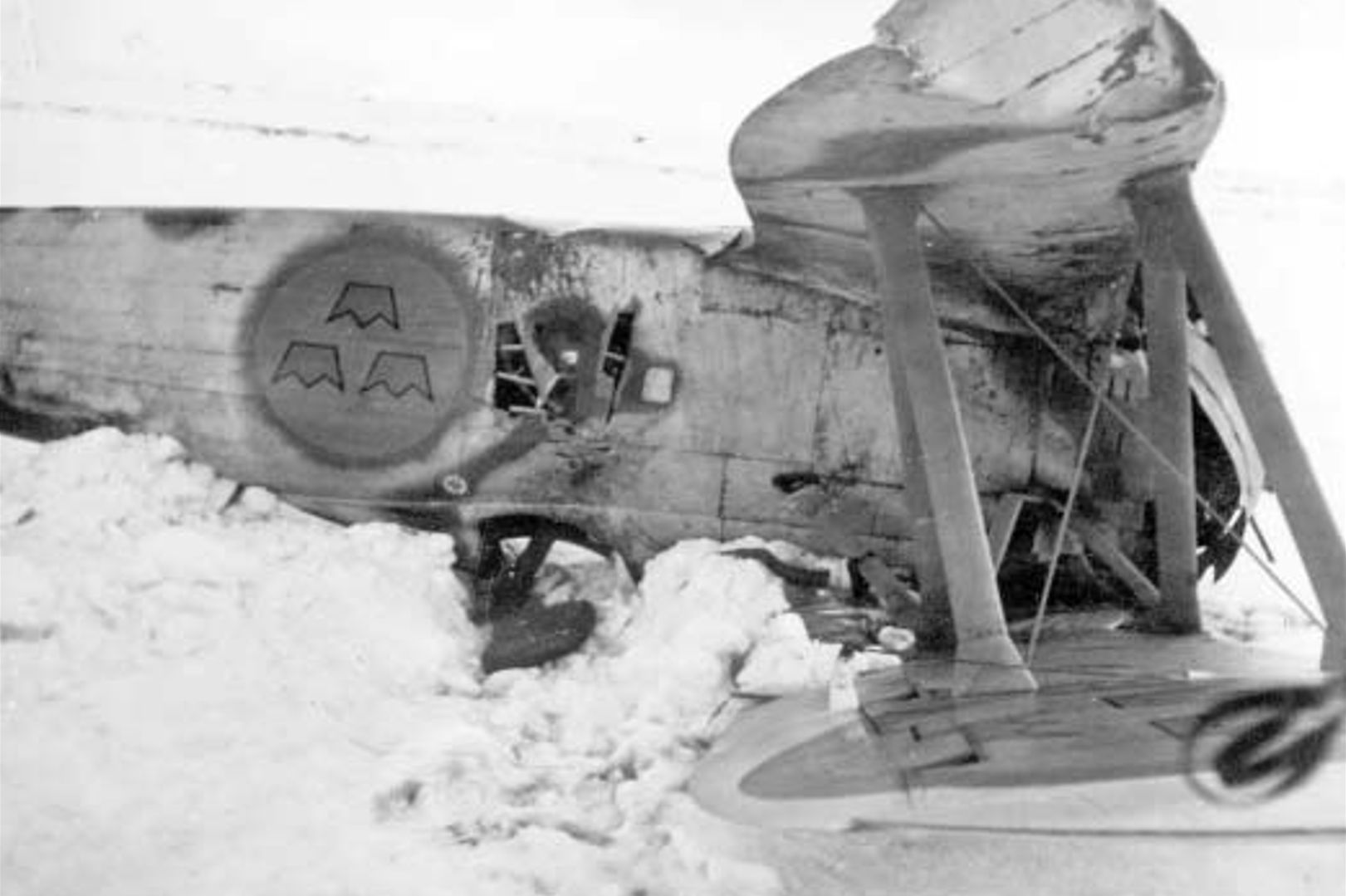
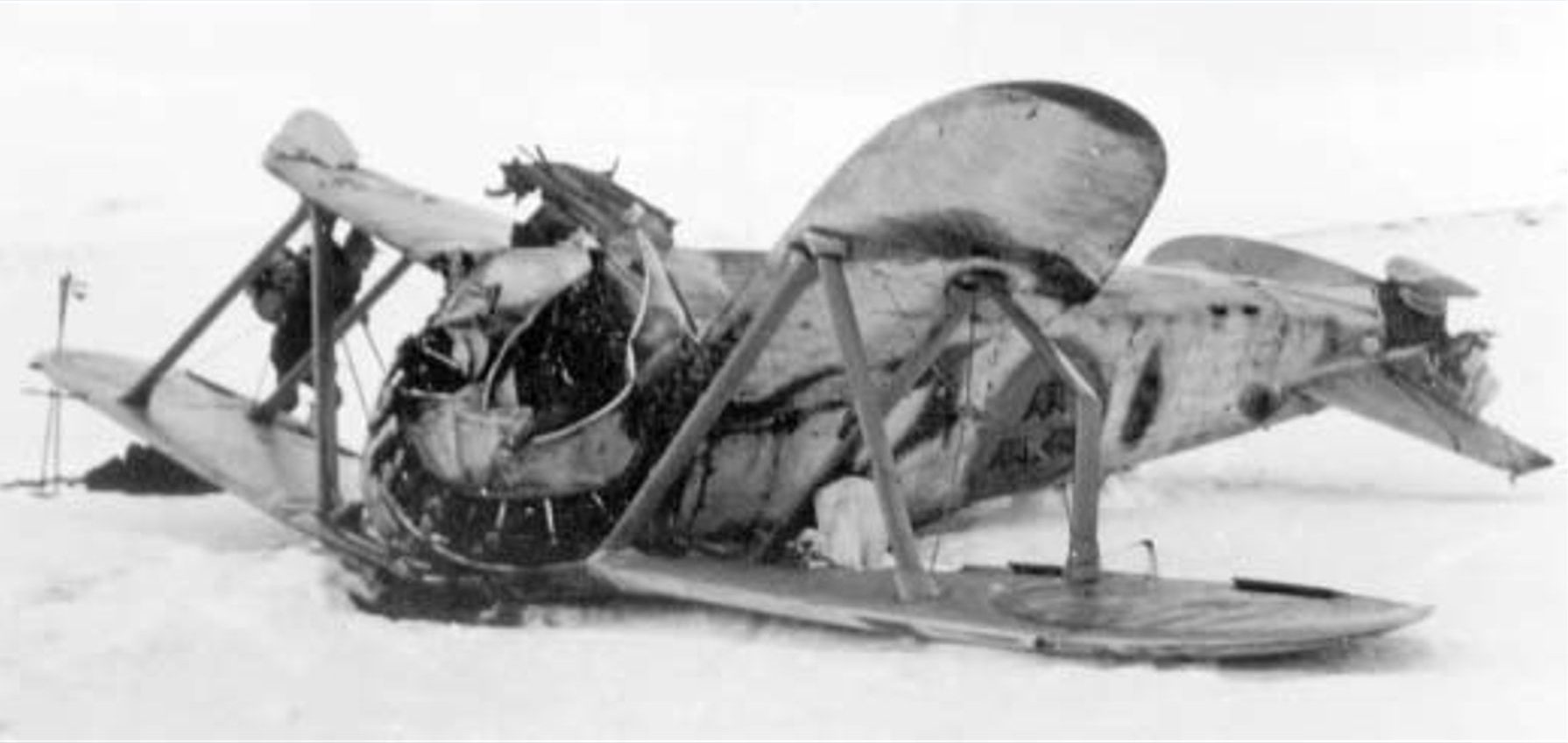
Built in Fiat Aviazione’s factory as construction number 920, the aircraft was adopted into the Swedish Air Force as Fv 2542 and was assigned to the Göta Air Wing (F 9), based at Säve Air Base, near Gothenburg, with the aircraft receiving the fuselage code F9-10. During the winter, the J 11s would be fitted with skis to operate from snowy airfields, especially when deployed from Gothenburg to the north and western regions of the country. In the early spring of 1942, a detachment of F 9’s J 11s was sent to conduct joint exercises with ground-based aircraft spotters in the Gällivare Municipality of Norrbotten County, Sweden’s largest and northernmost county. On the morning of April 13, 1942, Fv 2542, flown by conscript sergeant Bertil Klintman, took off from Kiruna Airfield as part of a flight of seven J 11s, with Fv 2542 occupying the No.4 position of the flight, which assembled in a V-shaped formation and maintained a ceiling of 1500 meters. During the mission, the flight continued 180 miles south to the mountainous region of Tarnatjakko, Västerbotten County. Flying in this region was especially challenging on this day, as bad weather prevented any use of the sun as a reference, and the overcast prevented the pilots from seeing the shadows of their airplanes on the ground below to help judge their altitude. While the flight maintained a height of between 10 and 15 meters above the ravines, Lt. Einar Theler, who had previously been one of several Swedish volunteer pilots to fly with the Fins during the Winter War as part of Flying Regiment 19, spotted a small cloud of snow ahead of him get kicked up from the ground, then a larger one. From his experience, he knew that a crash of one of the J 11s had just occurred, so he broke off from the exercise and circled over the site. Theler would radio back to Gällivare, requesting permission to land at the accident site, but was denied and ordered to fly back to Kiruna. There, he would deliver an oral report of the incident and would get permission to set out in a Hawker Hart light bomber with a ground crewman. On returning to Tarnatjakko, Theler and his companion would find that it was Bertil Klintman’s aircraft, Fv 2542, that had crashed. Sadly, Sergeant Klintman had been killed on impact and was still strapped into the cockpit seat of his overturned, crumpled fighter. An investigation would determine that due to the low visibility, Klintman had flown into the terrain, with the accident site containing two impact points. Impressions in the snow marked that both skis and the propeller on the aircraft struck the snow at the first site, then the aircraft made contact at the second site at a 45-degree angle, propeller first. The Fiat A.74 was then twisted and forced into the fuselage, the engine cowlings were torn off and thrown clear of the aircraft, and the aircraft itself flipped onto its back. While Klintman’s body was recovered from the aircraft, Fv 2542 itself was abandoned at the crash site and would remain there for 41 years until the wreckage was airlifted by helicopter in 1983 and was placed in storage by the Swedish Air Force Museum at Malmen Air Base.
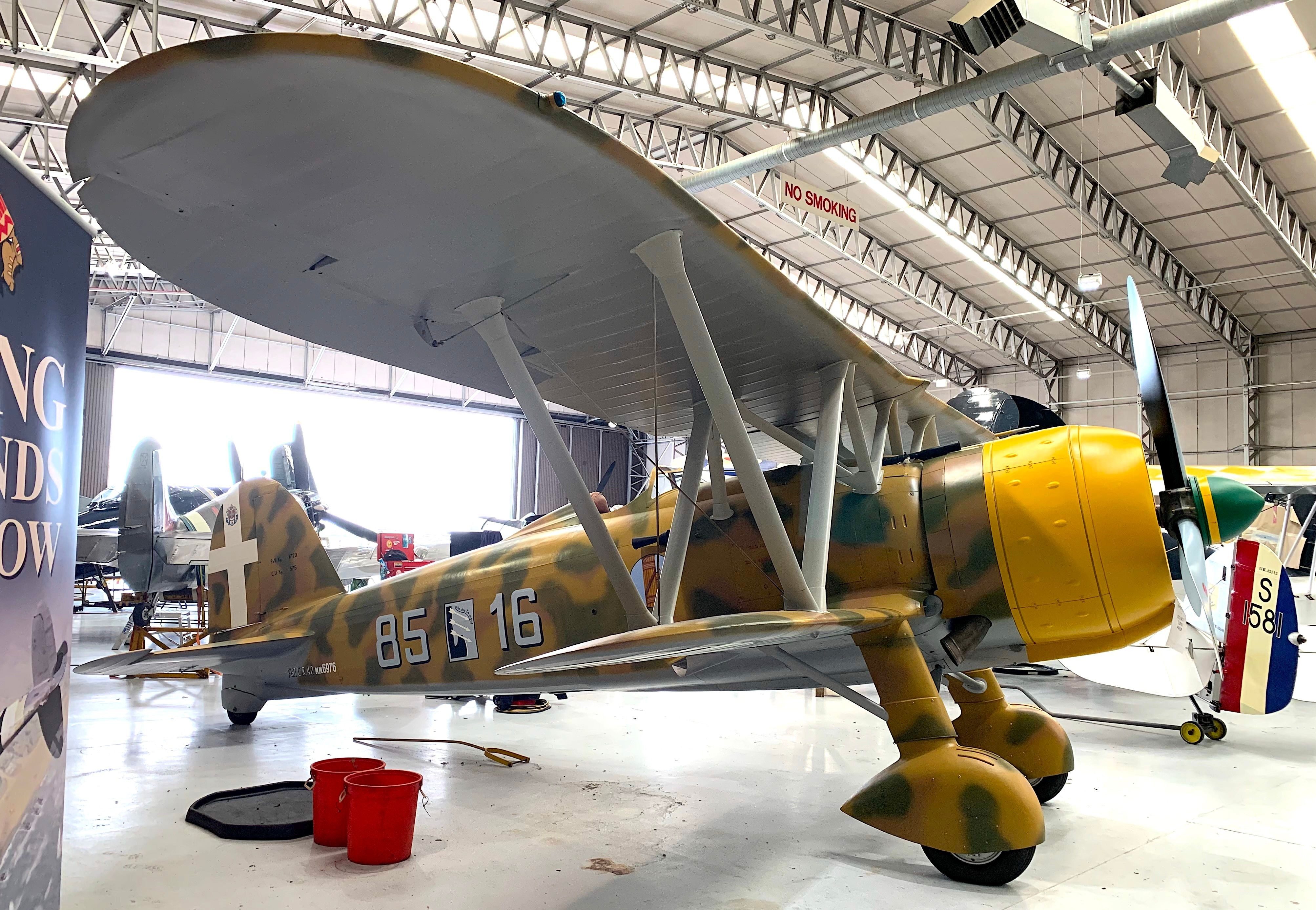
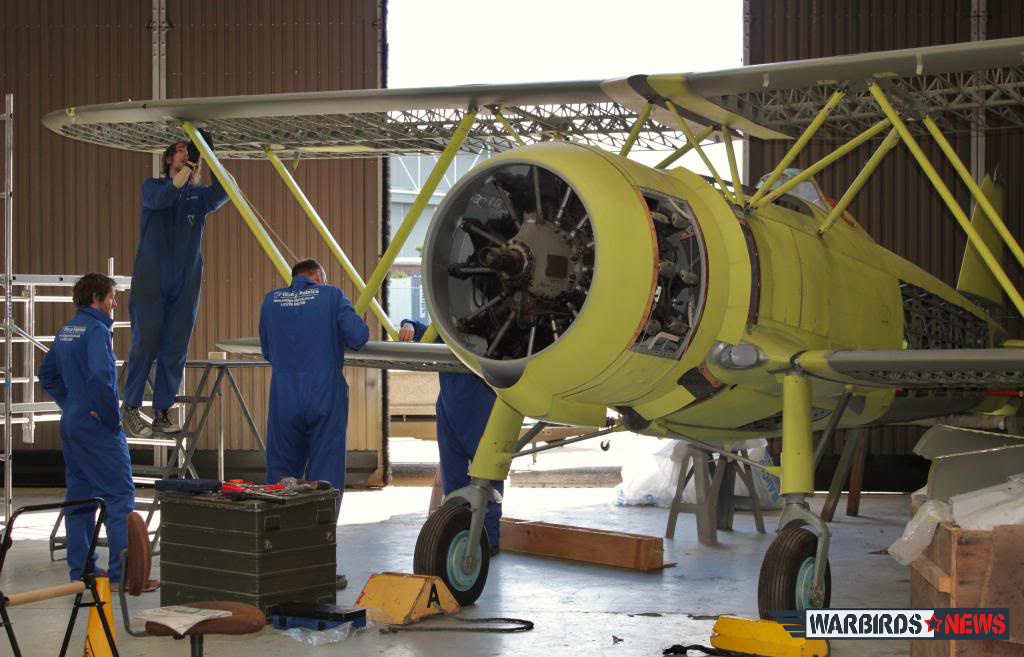
In 1995, the wreckage of Fiat J 11 Fv 2542 was purchased by The Fighter Collection at Duxford Aerodrome, but with the Italian Air Force Museum using the remains of Fv 2539 and other components to have a complete CR.42 for static display, a deal was made with the Associazione Restauro Aeronauticon and the Gruppo Amici Velivoli Storici to rebuild Fv 2542’s wreckage and use material from the aircraft to reconstruct Fv 2539 for the Italian Air Force Museum. For eight years from 1996 to 2004, Fv 2542 took shape at Varese, but with Fv 2539/MM5643 set to be unveiled at Vigna di Valle, it was agreed to ship the partially restored aircraft back to Duxford to continue the aircraft’s restoration to flight status. In the meantime, four Fiat A.74 engines were overhauled for the project by Vintage Engine Technology Ltd. (Vintech) at Little Gransden Airfield. In 2010, the aircraft was now standing on its own landing gear, with a Fiat engine installed, and by 2012, the reconstructed wings were fitted on the aircraft. That same year, Fv 2542 (now registered with the Civil Aviation Authority (CAA) as G-CBLS) was sent from Duxford to Vintage Fabrics at Audley End Airfield in Essex in 2012 with the goal of installing the electrical and control systems, as well as applying doped fabric to the wings and rear fuselage.
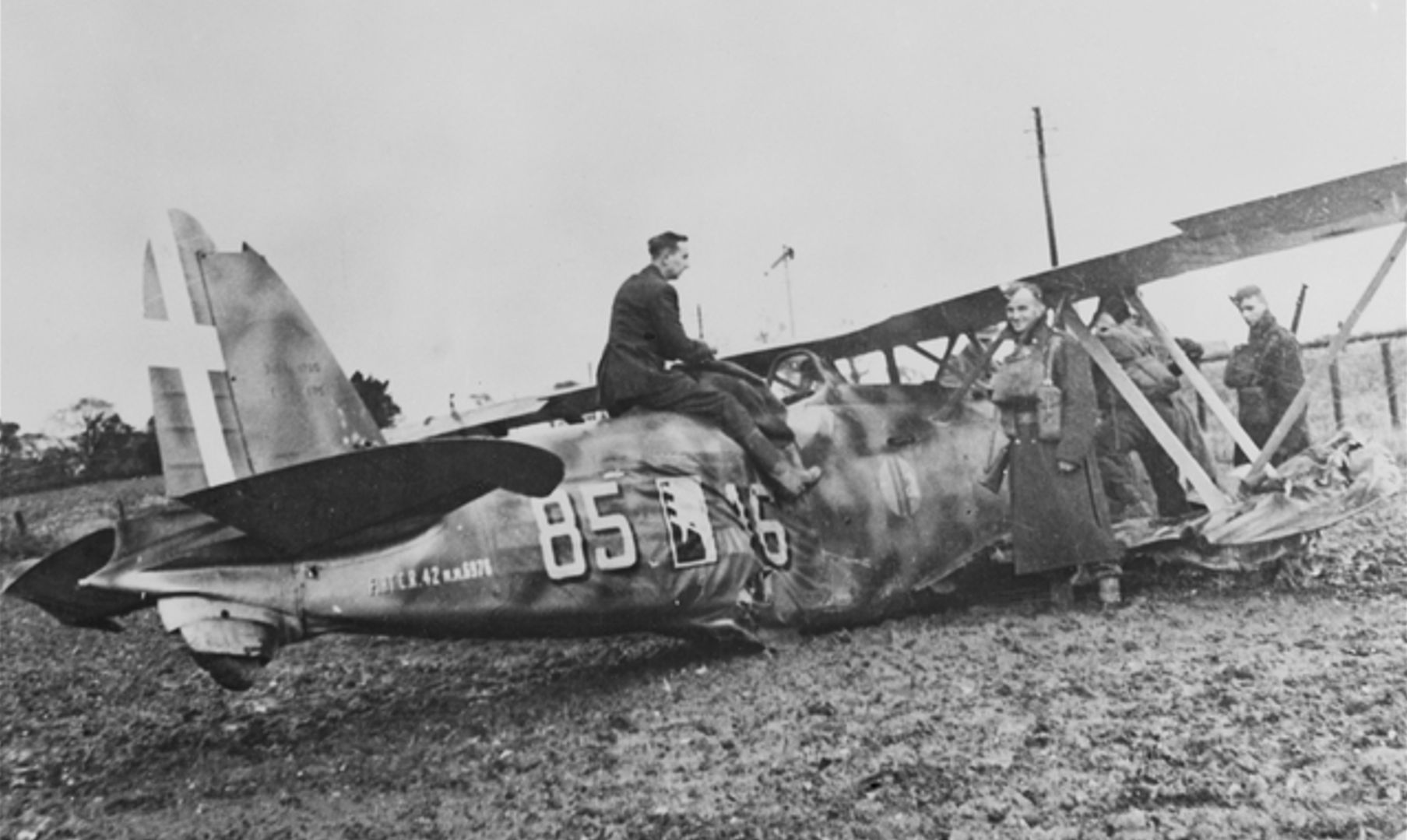
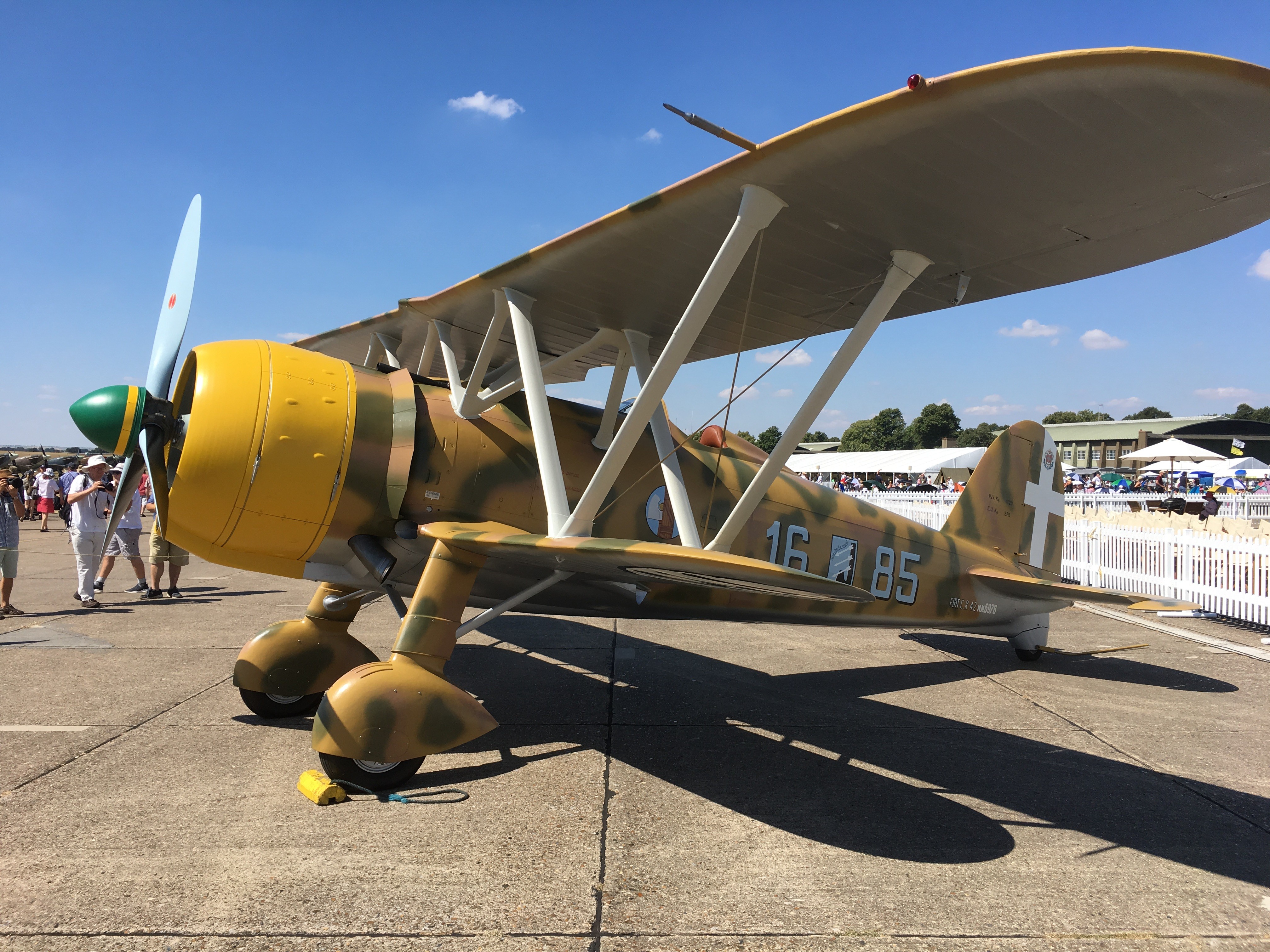
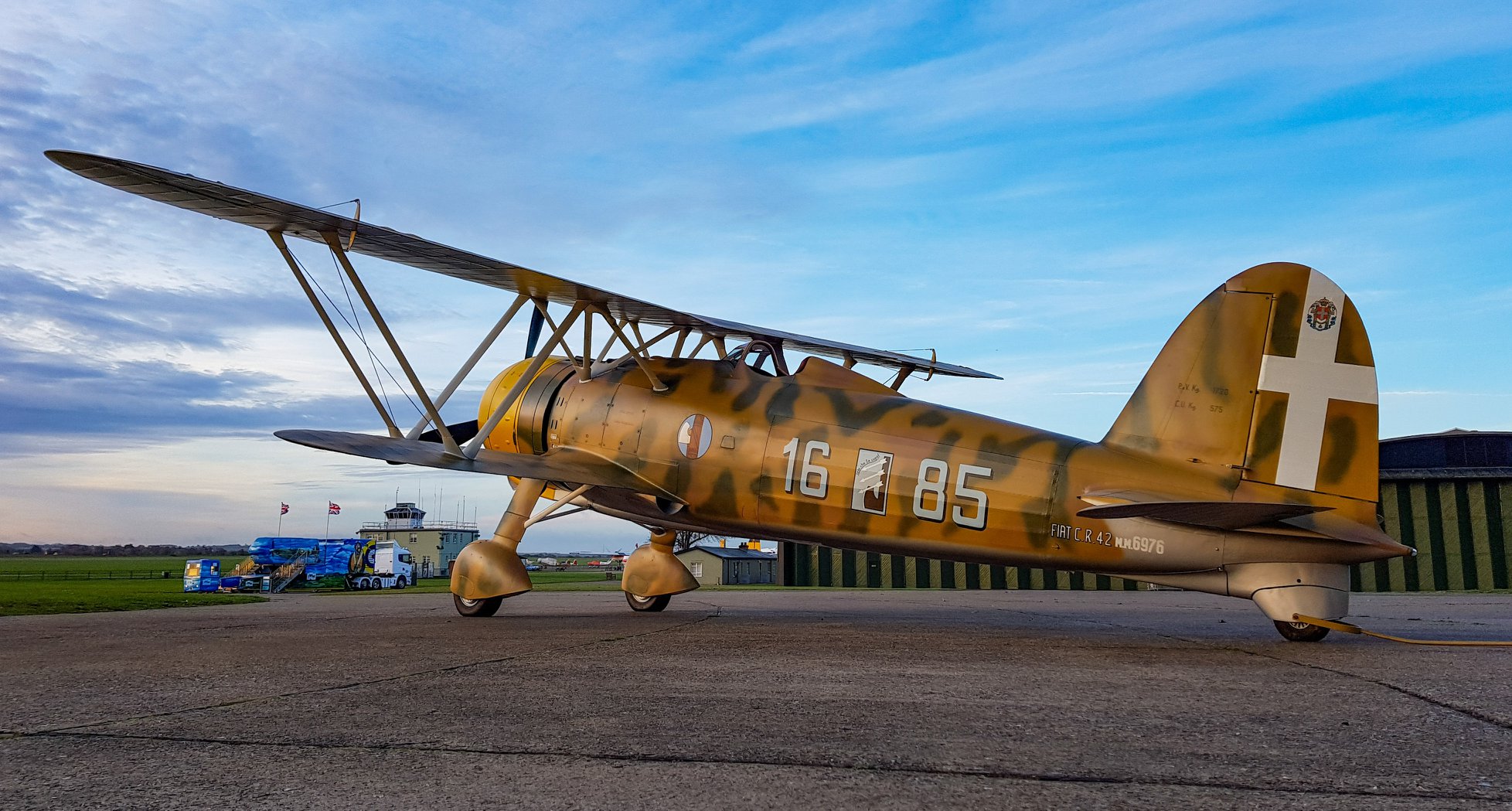
During the course of the restoration, it was decided to have the aircraft painted in the markings of Fiat CR.42 MM6976 of the 85ª Squadriglia, 18o Gruppo, 56o Stormo. Like MM5701, the original MM6976 was part of the Corpo Aerea Italiano and was another of the three CR.42s lost in action over England during the Italian raid on Harwich on November 11, 1940. The pilot, Sergente Antonio Lazzari, got into a dogfight with three Hawker Hurricanes, damaging one in its tail and forcing its pilot to break off. Though Lazzari was able to outmaneuver and evade the two remaining Hurricanes, he had lost his bearings, and his variable pitch propeller began to malfunction, forcing him to make an emergency landing. As lined up on a field between Corton and Lowestoft, Lazzari’s Falco struck a railway embankment, tearing off the landing gear, and the plane skidded through a muddy beet field on the opposite site of the embankment. Lazzari was uninjured but was promptly captured by a farmer named Bob Wright, who was also a captain in the Home Guard. CR.42 MM6976 was shipped to Farnborough but was never repaired and later scrapped, while Lazzari spent the remainder of the war as a POW. In the summer of 2018, G-CBLS was returned to Duxford in time for being placed on static display at the Flying Legends airshow at Duxford. Over the years, the restoration has progressed slowly. This is due to several factors at play, from being required to meet strict guidelines of airworthiness standards with the Civil Aviation Authority, to verifying the quality of the materials used, to establishing the legitimacy of the manuals, documentation, and drawings, and adhering to modern safety regulations. Any modifications to comply with modern regulations also have to be vetted with the CAA, and TFC is required to specify where modern materials have been added to the aircraft in reference to the original drawings.
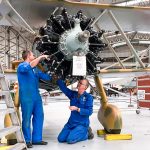
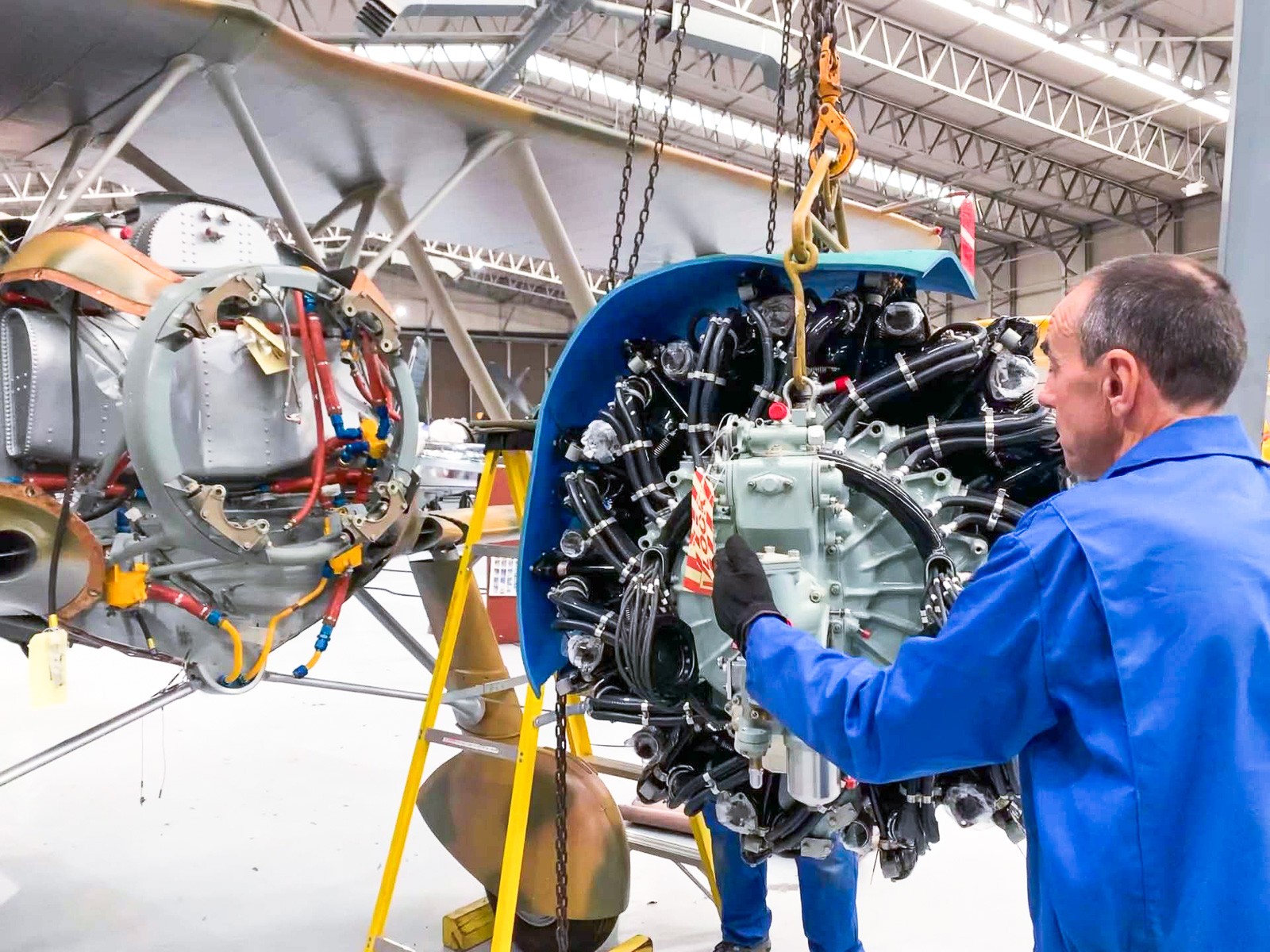
At this point, the Fiat CR.42 Falco is an entirely unique aircraft, which requires extensive research and cooperation to find or reproduce parts for the example at The Fighter Collection, despite looking externally intact. In addition to their continued work with GAVS on translating original Fiat drawings, TFC has worked with Swedish pilot and aircraft builder Mikael Carlson and the Swedish Air Force Museum to take measurements of components inside the museum’s own J 11 for Carlson to replicate for TFC. Other parts include a pressure reducer and filter for the main undercarriage, a new fuel hand pump and barrel for the fuel vent cap, an oil tank, a radiator, pneumatic injectors, gaskets, and blower controls. In 2021, the Fiat A.74 engine was temporarily dismounted from the aircraft for TFC engineers to fit out the Fiat’s fuel systems and plumbing without risking damage to surrounding components inside the aircraft, as the engine accessory bay has been likened to working on a Formula 1 race car. Peter Rushen from The Fighter Collection said it best in 2014 with regards to the restoration of G-CBLS: “It is almost impossible to predict when the CR.42 will be completed – we are scouring the world for parts for Spitfires, Hurricanes and other warbirds, but the CR.42 is unique and we are having to manufacture from new many of the components we need. For this reason, we regard it as a long-term project and will not be drawn to speculate on a completion date.”
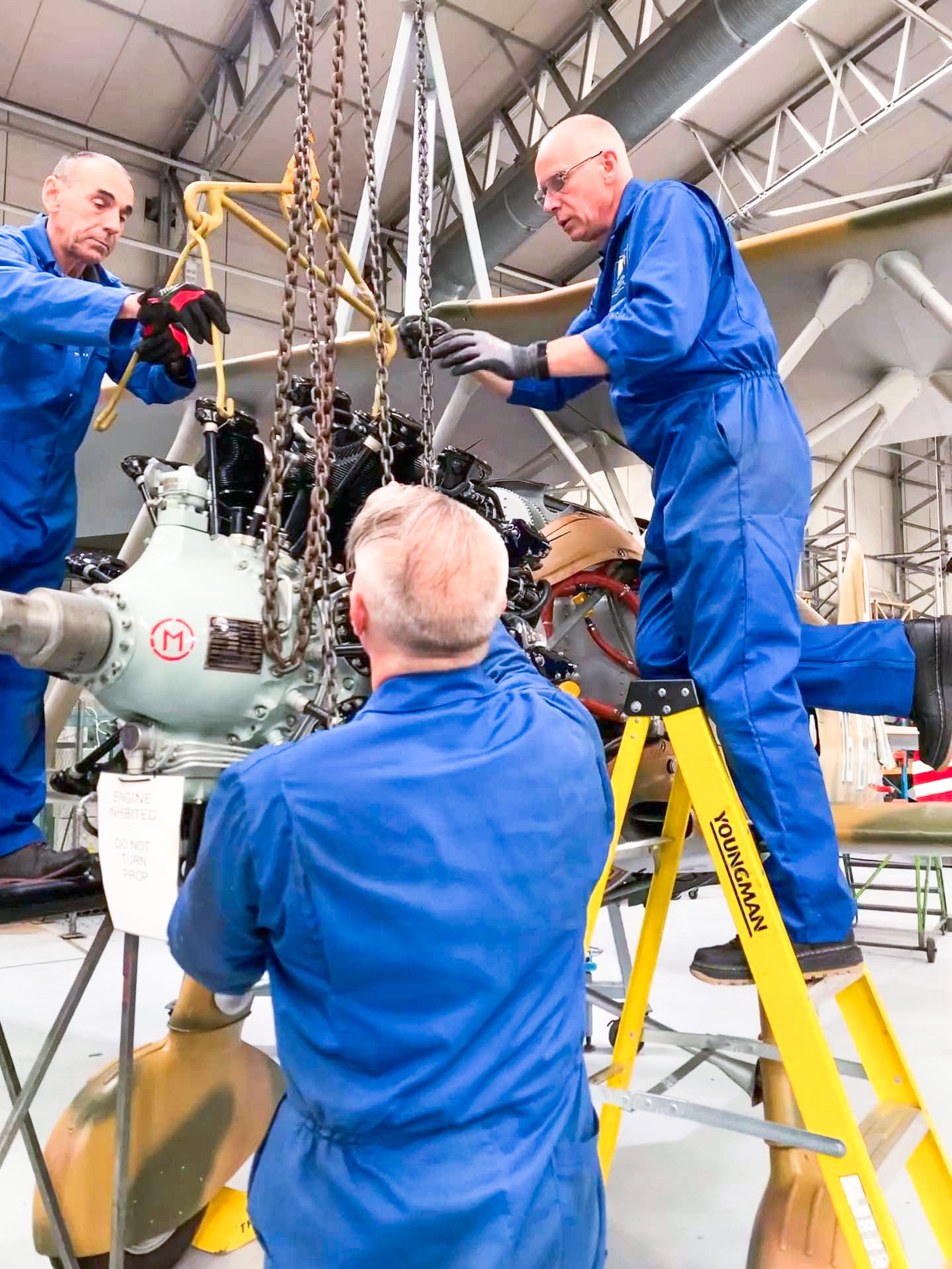
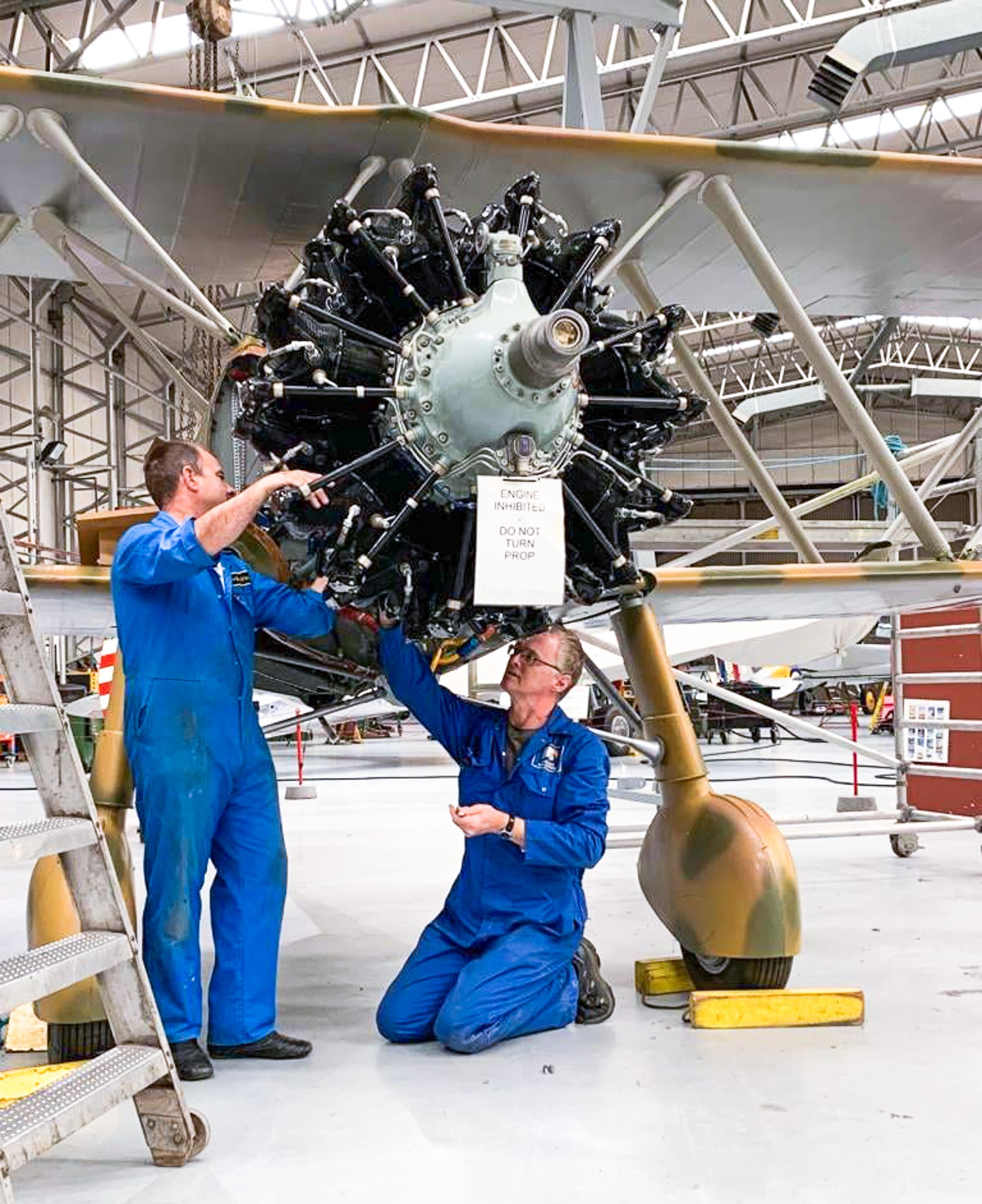
Despite the long wait, warbird enthusiasts around the world remain eager to see the first flight of the world’s latest airworthy Fiat CR.42 Falco, and though the project still has a long way to go, it is still a testament to the international community of aviation enthusiasts who have worked so hard to see the aircraft fly again, especially since The Fighter Collection also maintains a Gloster Gladiator biplane fighter, which represents an analogous type to the Falco in being the last biplane fighters to see combat, and indeed, dogfights between Gladiators and CR.42s over the Mediterranean and North Africa represented some of the last biplane vs. biplane engagements in aerial combat, which will make it fitting that TFC’s Gladiator and Falco will one day fly together in peace.
J 11 Fv 2543
Located at Malmen Airbase near the Swedish city of Linköping, the Swedish Air Force Museum (Flygvapenmuseum) contains one of the most extensive aerospace collections in Scandinavia. Within its halls are numerous fighters, bombers, transports, trainers, gliders, and other aircraft that span the history of Swedish military aviation from the 1910s to the present day. Given Sweden’s status of neutrality during WWII, the Flygvapenmuseum displays aircraft that originated from both Allied and Axis nations that were flown by the Flygvapnet (Swedish Air Force) to enforce Sweden’s neutrality. Among these is Fiat J 11 Fv 2543, the most intact example of a Swedish Air Force CR.42, and one which not only served Sweden well, but has been used as a reference in the restoration of the examples displayed at Vigna di Valle and under restoration to airworthiness at Duxford.
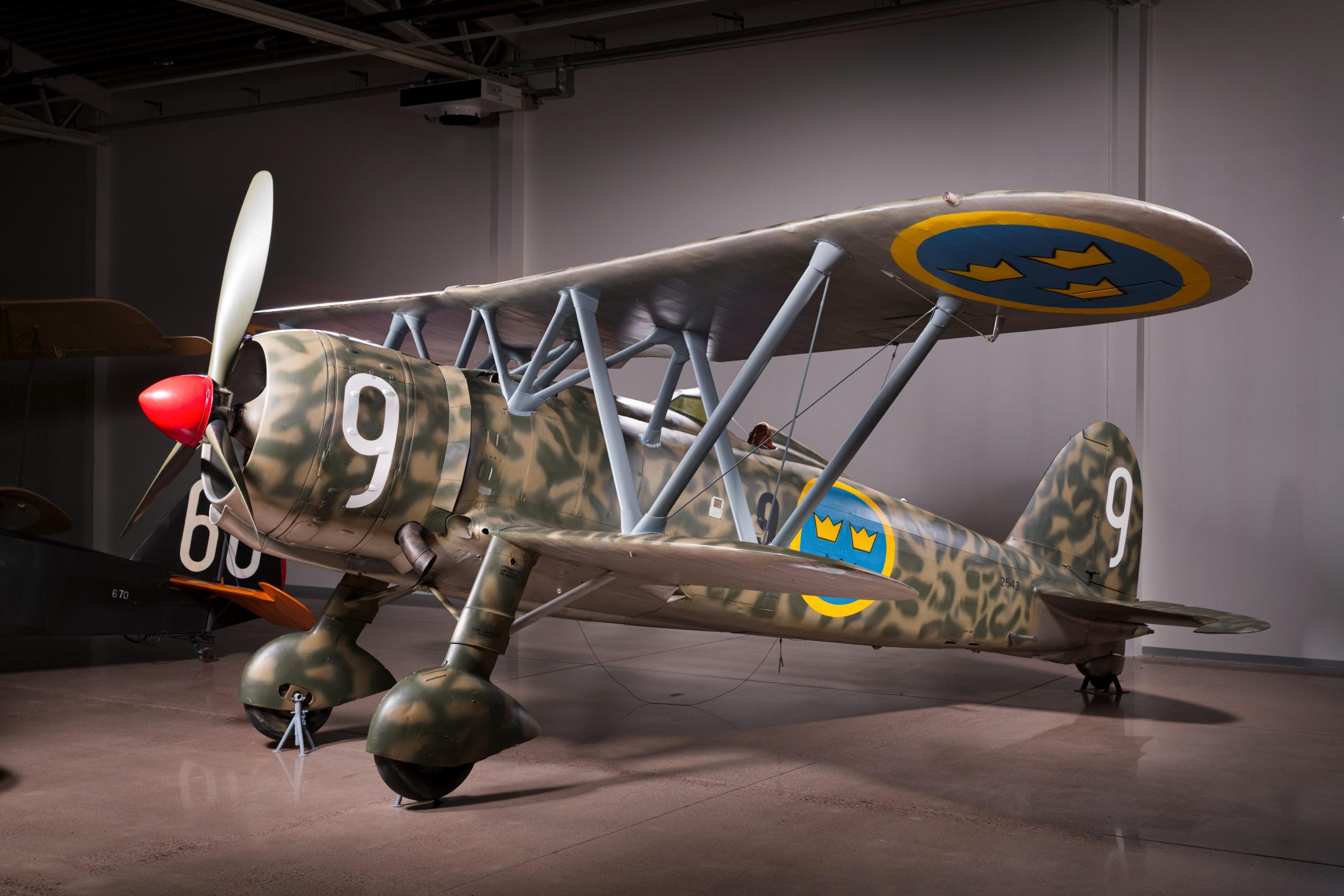
Manufactured in Italy as construction number 921 as part of the export order for Sweden, the aircraft was accepted into the Swedish Air Force as Fv 2543 on May 20, 1941, and assigned to the Göta Air Wing (F 9) at Säve Air Base. Throughout the course of its service life, the aircraft flew on training exercises, patrolled the borders, and went through several unit numbers within the wing. From May 1941 to March 1942, the aircraft flew as fuselage code F 9 – 11, then as F 9 – 21 from March to August 1942, as F 9 – 19 from August 1942 to March 1943, then finally as F 9 – 9 for the rest of its operational service. On March 14, 1945, J 11 Fv 2543 was officially decommissioned from the Swedish Air Force. While all of the other surviving Fiat J 11s were eventually scrapped, Fv 2543 was placed into storage at Malmen Airbase by the commander of the Östgöta Wing (F 3), Colonel Hugo Beckhammar, who along with his predecessor, Colonel Gösta von Porat, recognized the need to preserve Sweden’s military aviation history, and oversaw the establishment of a growing aircraft collection kept inside the base. During the 1960s and 1970s, J 11 Fv 2543, along with other aircraft in this collection, was exhibited to the public at open house events held at Malmen, but it was not until March 8, 1984, that the Swedish Air Force Museum (the Flygvapenmuseum) was officially opened.
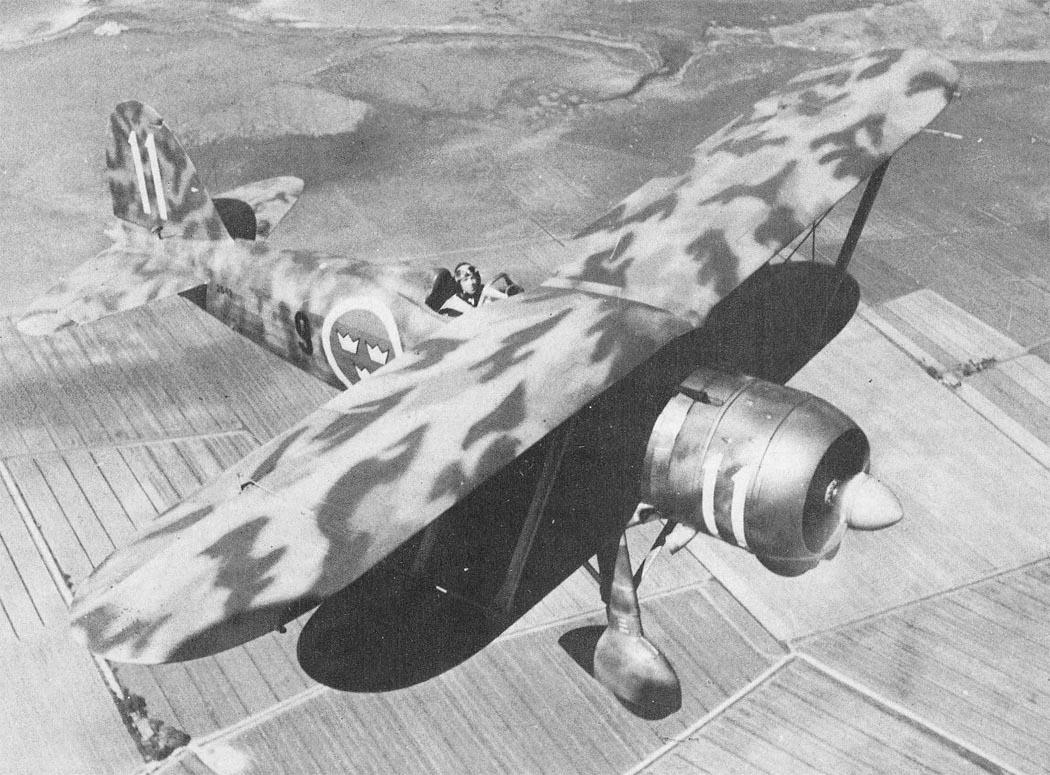
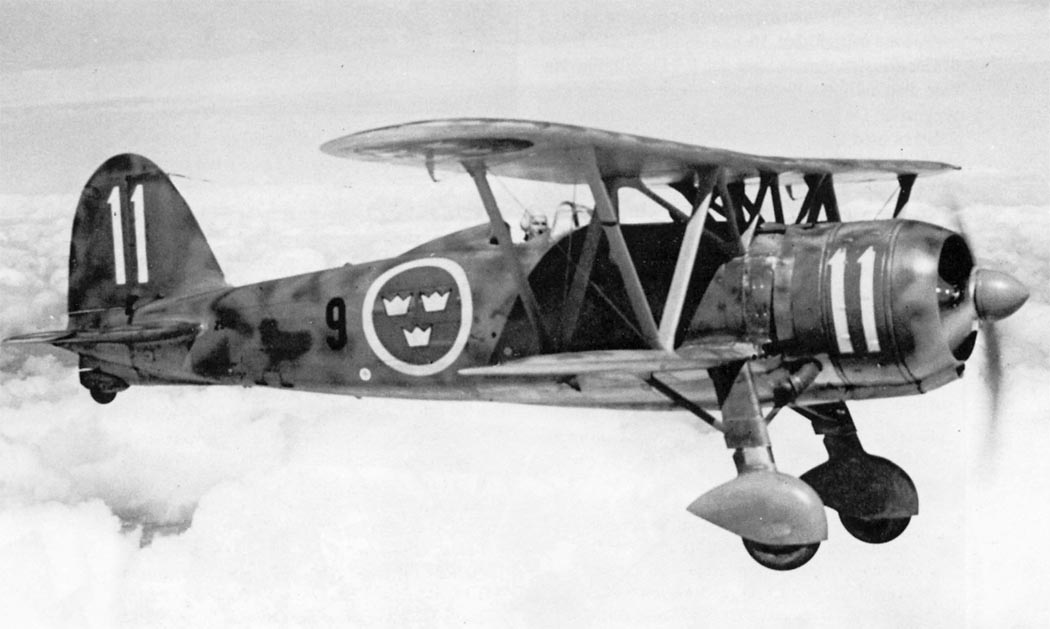
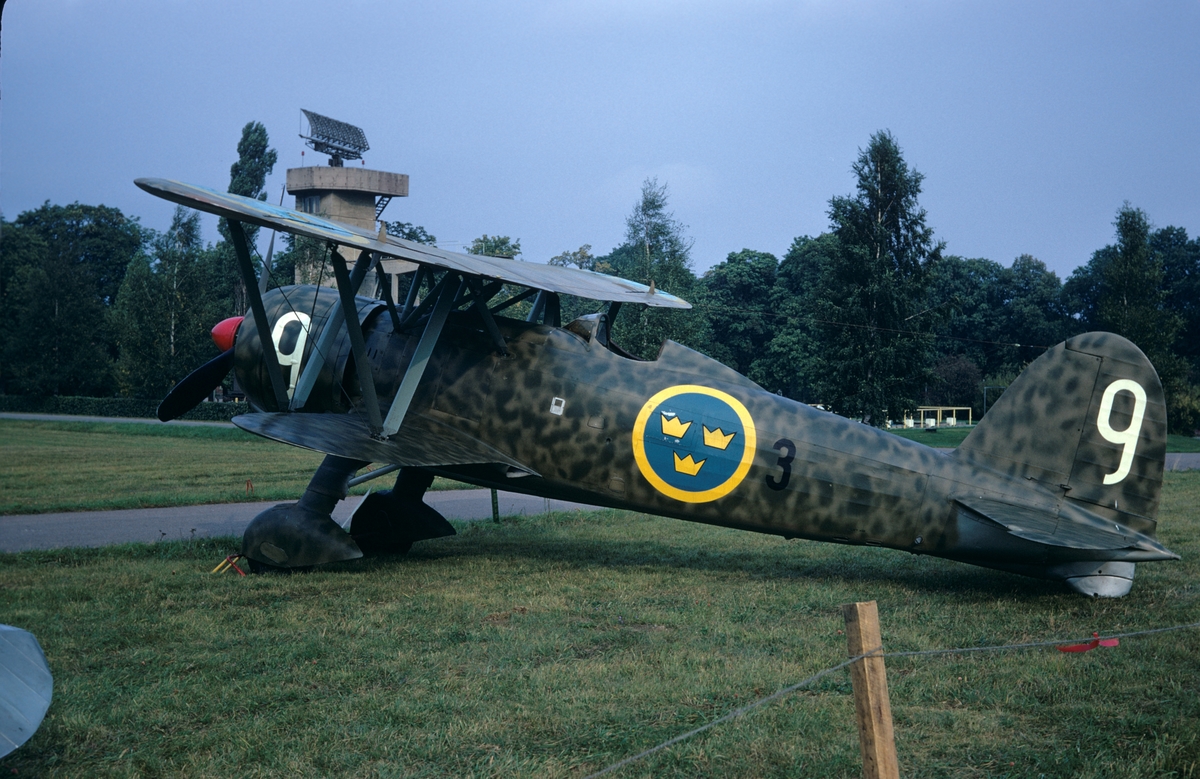
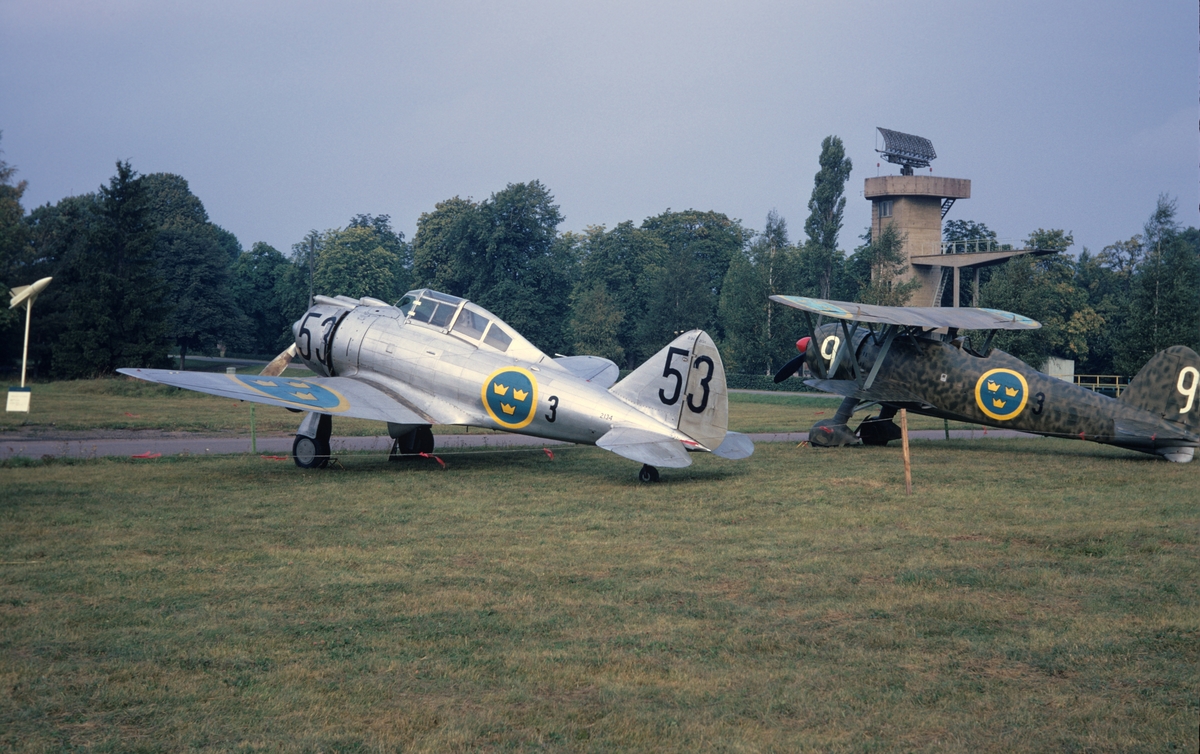
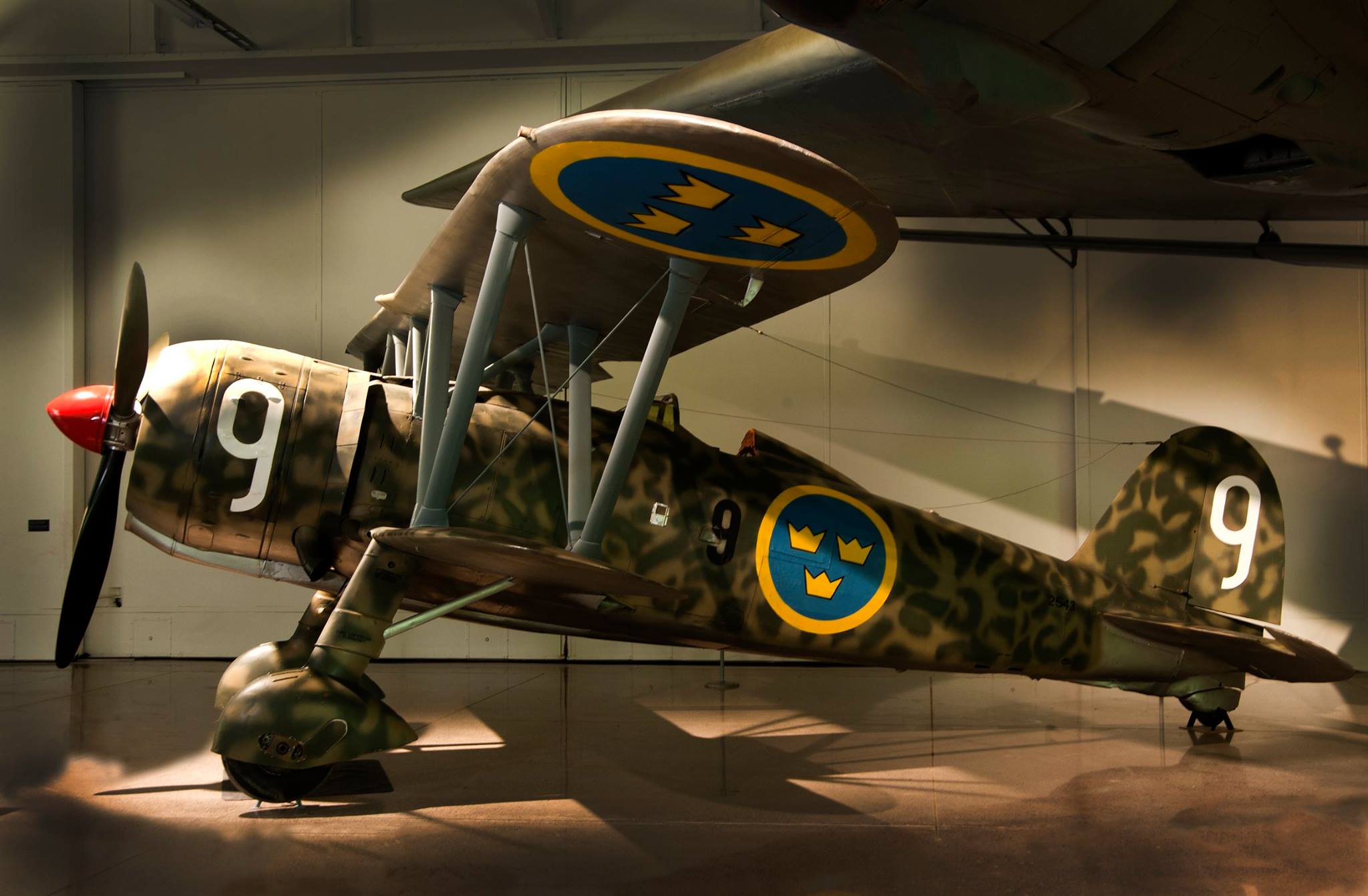
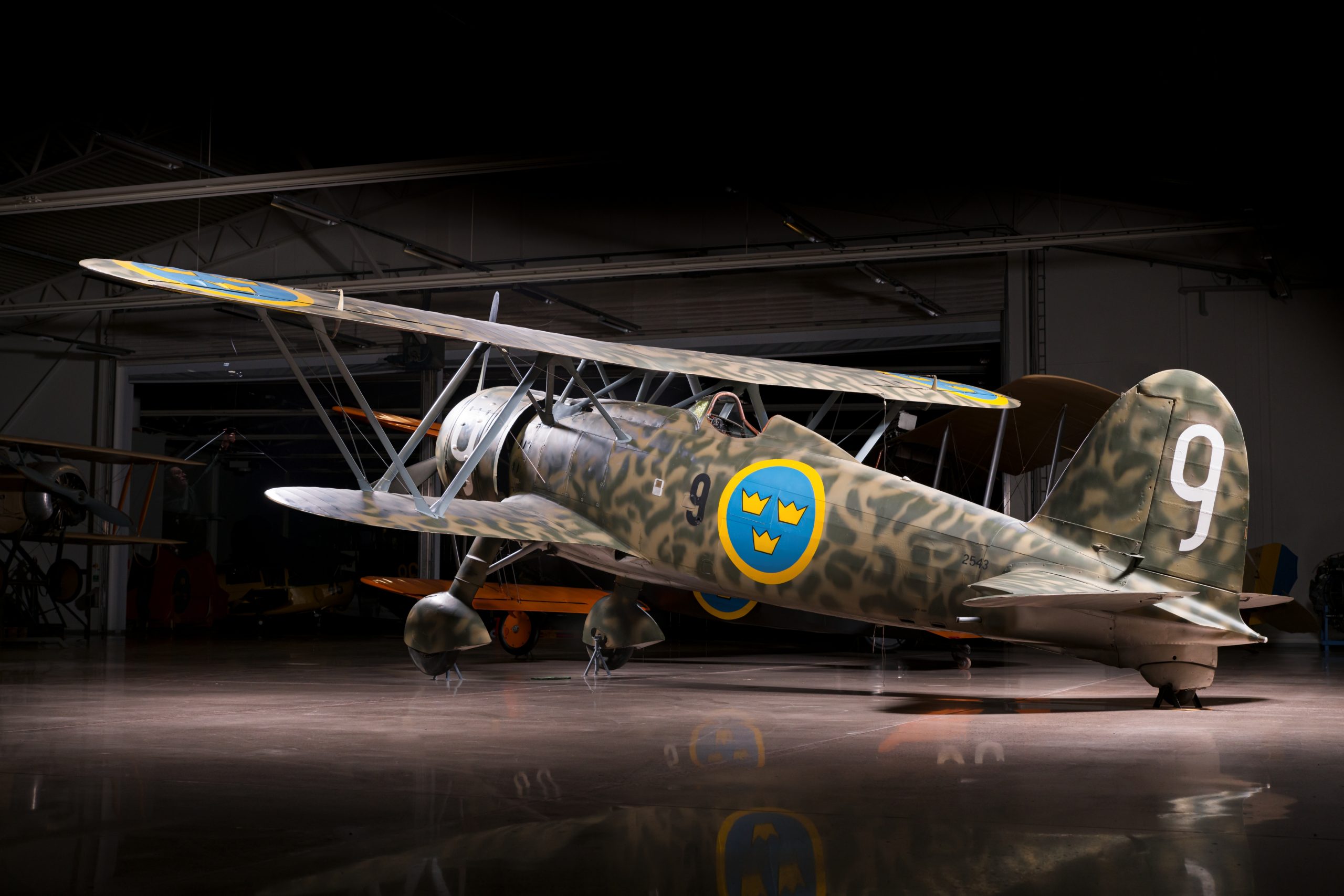
Today, Fiat J 11 Fv 2543 remains on display at the Flygvapenmuseum, alongside other aircraft flown by the Swedish Air Force throughout its history. Though the aircraft itself remains on static display, Fiat J 11 Fv 2543 has been actively used in the restorations of two other Fiat J 11s restored as CR.42s in Italy and England respectively, with the Flygvapenmuseum providing exclusive access to the aircraft for the reconstructions of Fv 2539/SE-AOP (now on display at the Italian Air Force Museum in Vigna di Valle) and Fv 2542/G-CBLS at The Fighter Collection in Duxford, England. As such, the aircraft has had an outsized impact on the preservation of other examples of Italy’s las biplane fighter preserved throughout Europe, far beyond its relatively brief and quiet service maintaining Sweden’s neutrality during the Second World War.
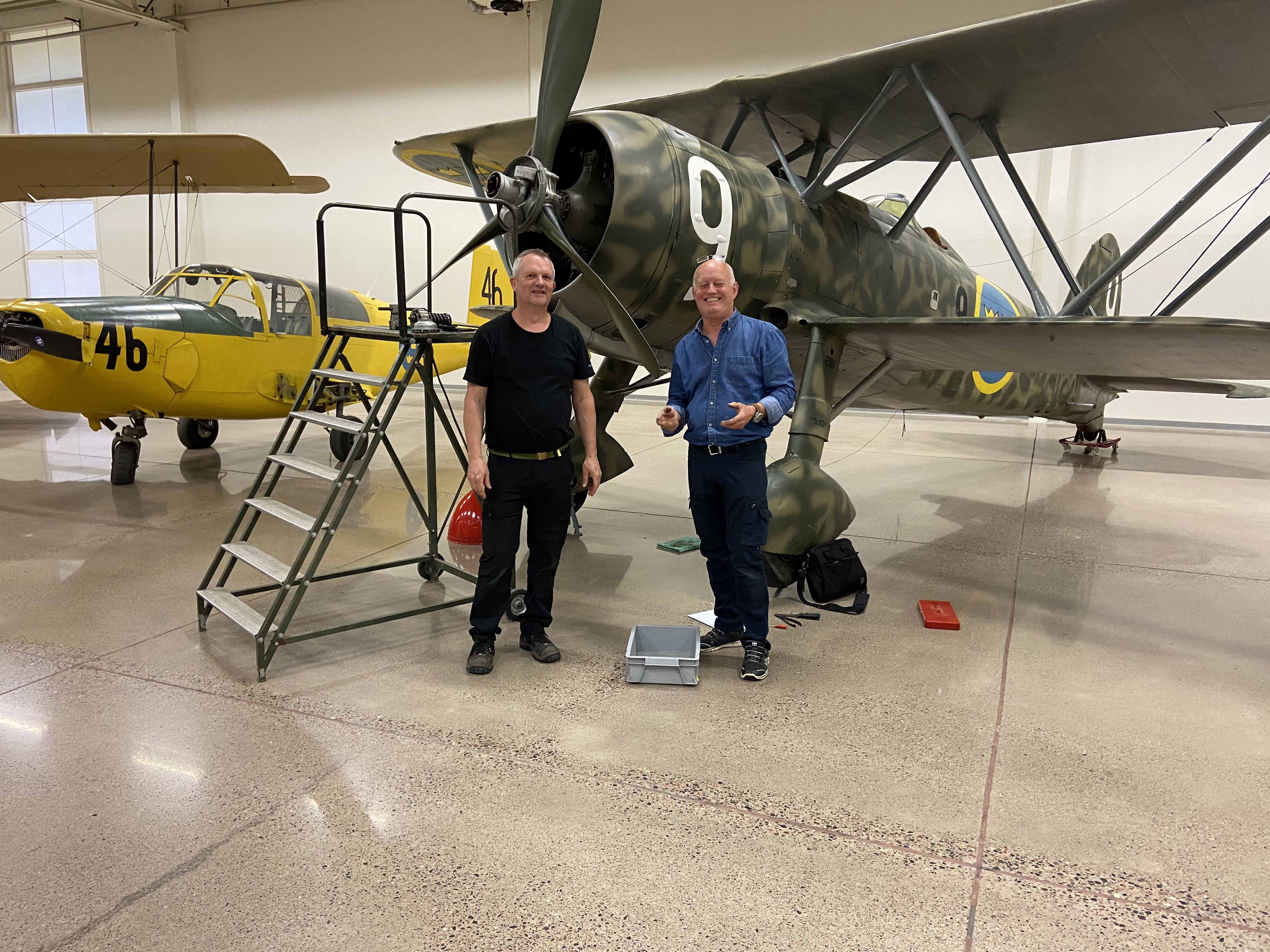
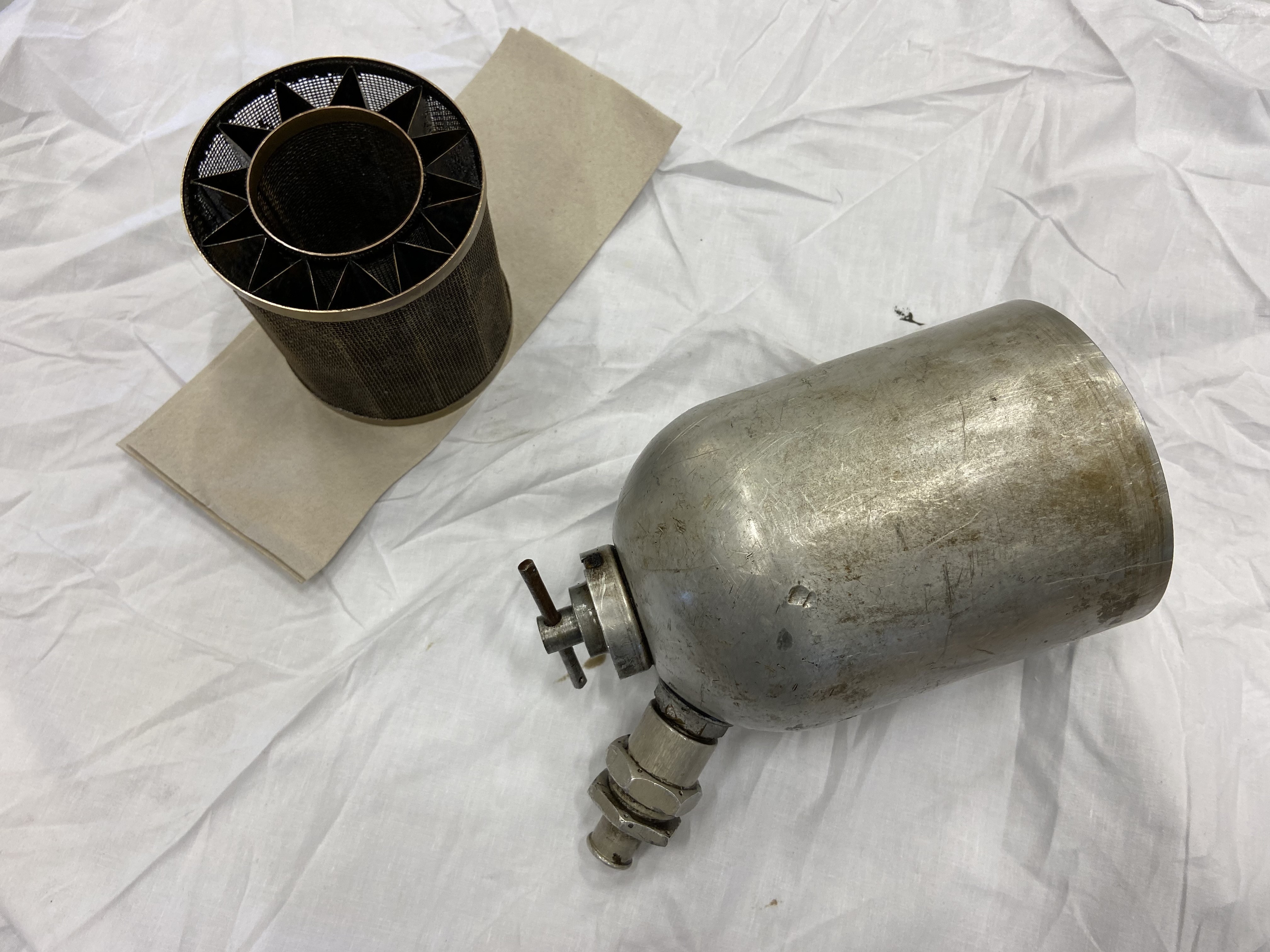
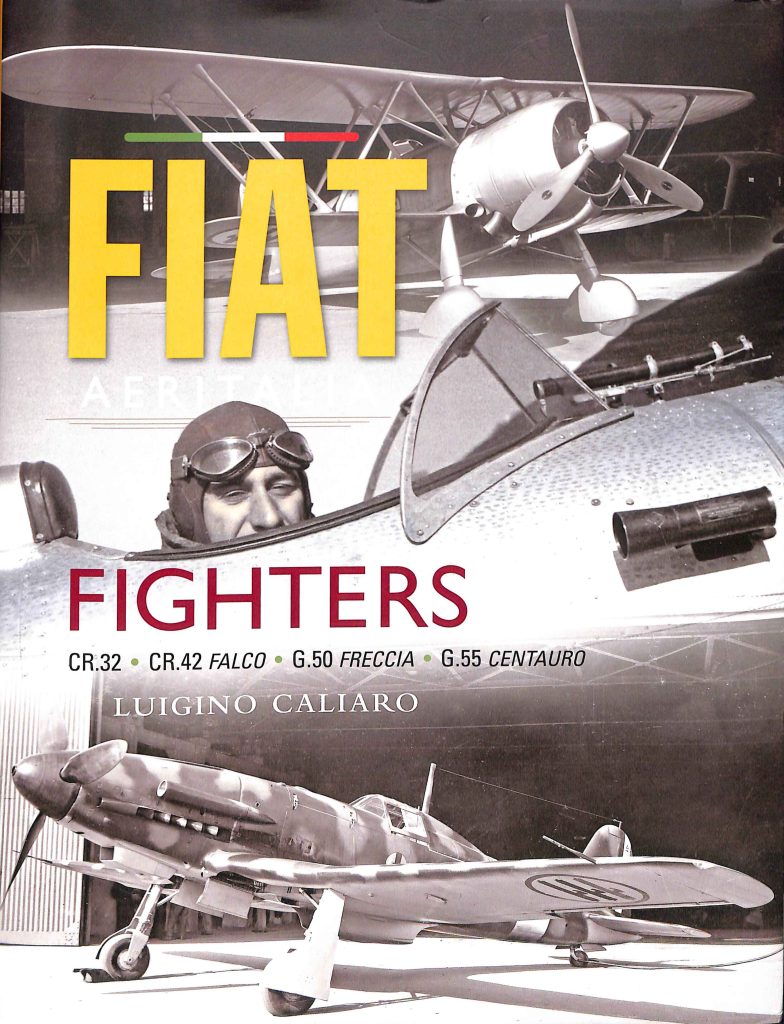
The Fiat CR.42 Falco may have the status of being the last Italian biplane fighter, and though it was arguably obsolete before its combat debut, the CR.42 proved to be more than a stopgap solution, as it remained in service in at least some capacity from the beginning to the end of WWII. Its maneuverability earned it respect from those who flew it, and its adversaries learned not to underestimate it. While time would indeed catch up to it, the CR.42 remains an incredible aircraft with many admirers today and a rare sight for any aviation enthusiast. To learn more about the CR.42, you can buy Luigino Caliaro’s excellent book ” FIAT Fighters” on Amazon at the following link [HERE].