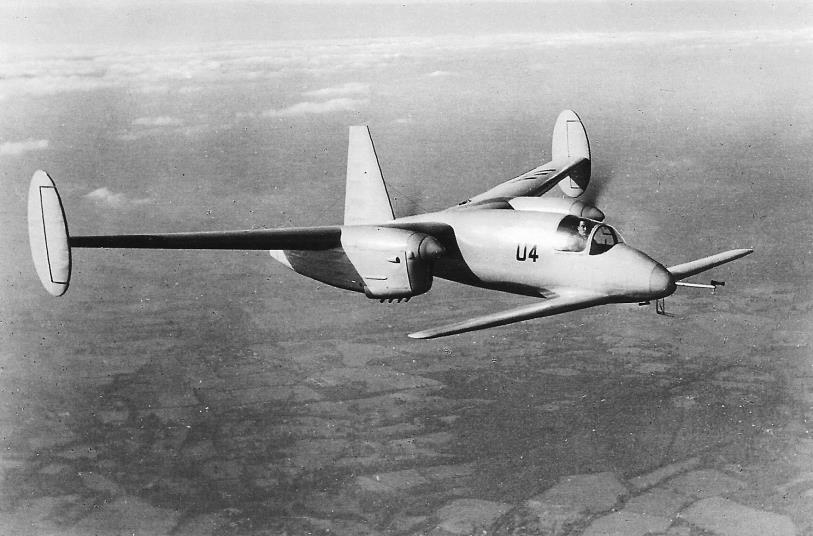
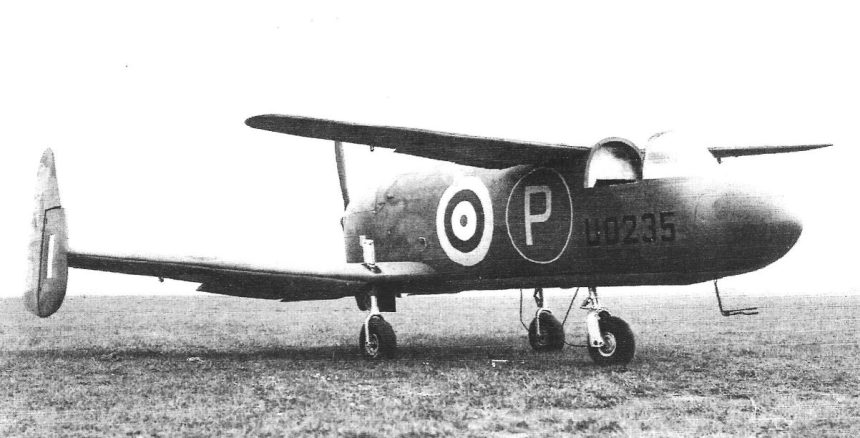


On this day in aviation history, 84 years ago (May 1, 1942), the Miles M.35 Libellula took flight for the first time. The Libellula, named after a type of dragonfly, was a twin-wing research aircraft. The M.35 was designed and built by British aviation manufacturer Miles Aircraft as a research aircraft, a precursor to a proposed carrier-based Naval fighter. At the time, fighter aircraft that had been used by the Navy were prone to landing accidents due to poor forward visibility. Miles set out to solve this issue, and also to simplify the complications faced by carrier-based aircraft’s folding wings. Miles Aircraft was known for its unorthodox solutions to common aviation-related problems. For the M.25, the company drew inspiration from an earlier Westland-Delanne design. Westland had developed a tandem-wing Lysander, which featured a second wing with tip rudders (in place of a standard vertical stabilizer and tailplane setup). The Miles design team became wise to the fact that this type of wing setup would allow the aircraft to fit on aircraft carrier elevators without the need for folding wings. Furthermore, the pilot could be seated at the nose of the M.35, providing significantly better visibility on approach and landing.
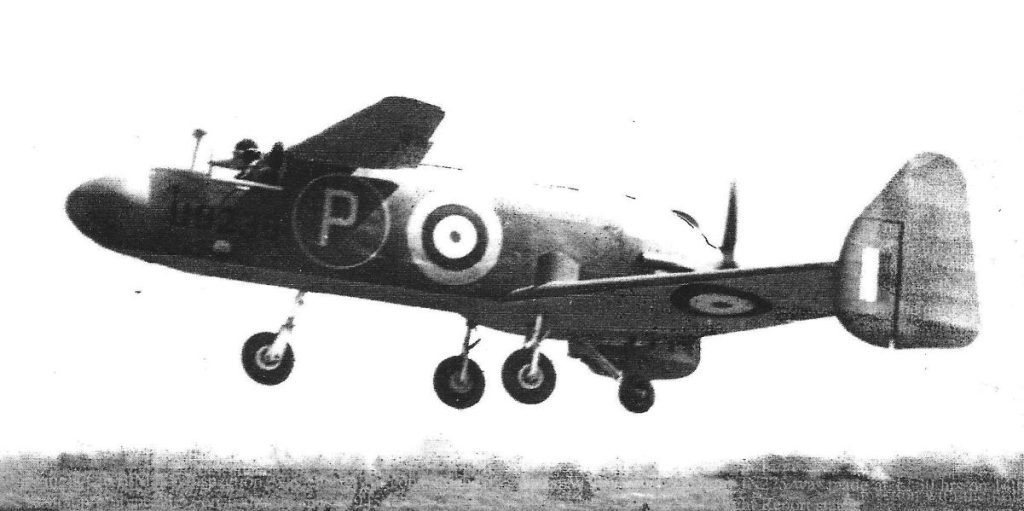
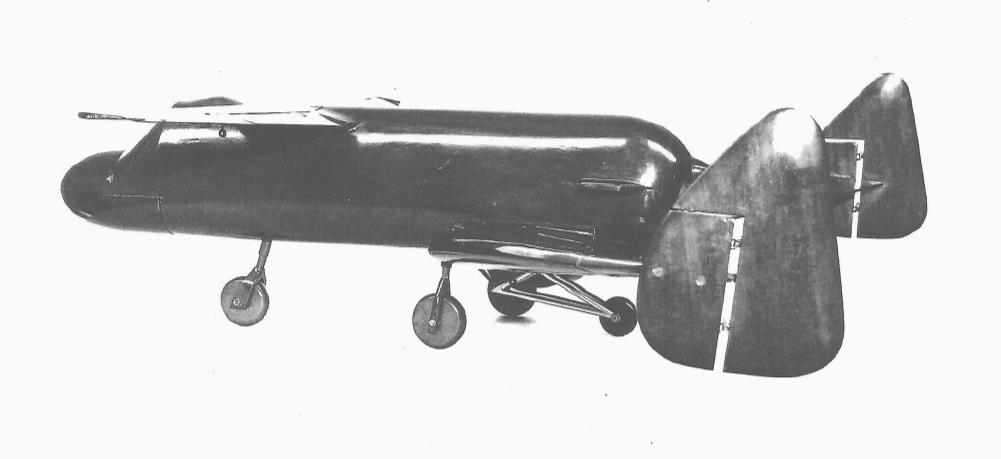
The M.35 design would hypothetically not only benefit from better carrier-fit and pilot visibility, but the aircraft could also be lighter, more maneuverable, and have less drag. Miles found the M.35 concept to be aerodynamically feasible, and a prototype was built. The resulting Libellula was a small aircraft, built of wood. The M.35 had a high-set front wing, a low-set rear wing, fixed tricycle landing gear, and a pusher-style propeller (engine mounted in the rear of the fuselage). A 130-horsepower de Havilland Gipsy Major 4-cylinder inverted in-line air-cooled engine powered the aircraft.
Flight testing revealed the M.35 to be reluctant at take-off, though some “hacks” with the throttle upon rotation speed seemed to help get the aircraft off the ground. The premier flight on May 1, 1942, was not successful, owing to a poor CG. Once this weight-and-balance issue was corrected, the Libellula proved to have positive handling characteristics. Miles submitted a proposal for a naval fighter based on the M.35’s arrangement to the Admiralty and the Ministry of Aircraft Production. Ultimately, the proposal was rejected. Despite this defeat, Miles continued to develop the concept. In July of 1942, to meet the requirements of specification B.11/41, Miles developed the M.39B Libellula bomber concept using the same design principles as on the M.35.