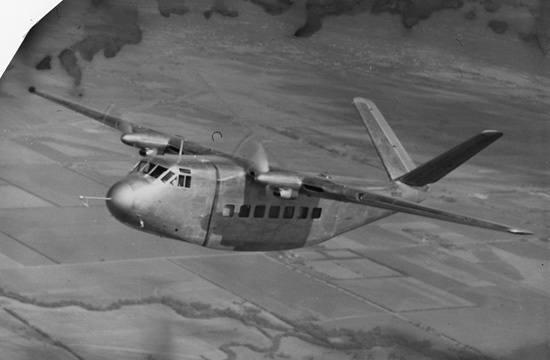
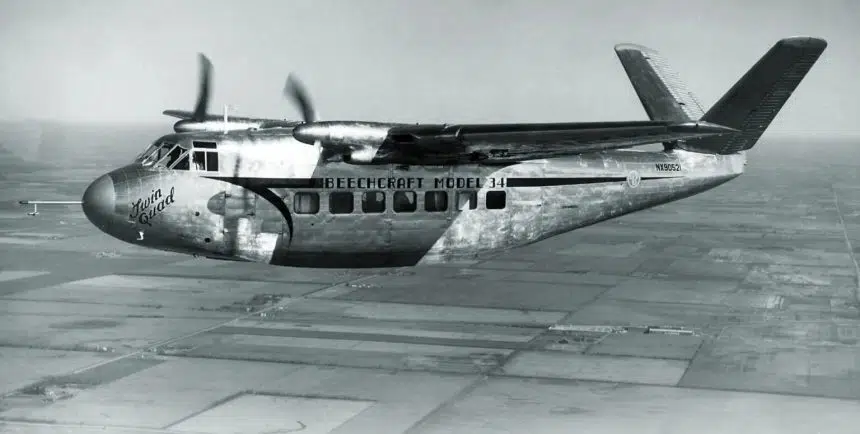


On this day in aviation history, 79 years ago (October 1, 1947), the first flight of the Beechcraft Model 34 Twin-Quad took place. Beech Chief Test Pilot Vern L. Carstens was at the controls of the prototype as it departed Wichita, Kansas. Although outwardly resembling a conventional twin-engine transport, the Model 34 featured an innovative powerplant arrangement that paired four piston engines into two nacelles, each driving a single propeller. The unique configuration was intended to combine the reliability of four engines with the efficiency of a twin. Development of the Model 34 began shortly after WWII, as Beechcraft sought to capitalize on the anticipated growth of regional airline travel. Designed as an all-metal, high-wing commuter aircraft capable of carrying up to 20 passengers, it also featured the company’s distinctive V-tail. While the Twin-Quad concept showed promise during flight testing, its mechanical complexity and changing market conditions worked against it. The availability of thousands of inexpensive surplus Douglas DC-3s made it difficult for a new commuter aircraft to compete.
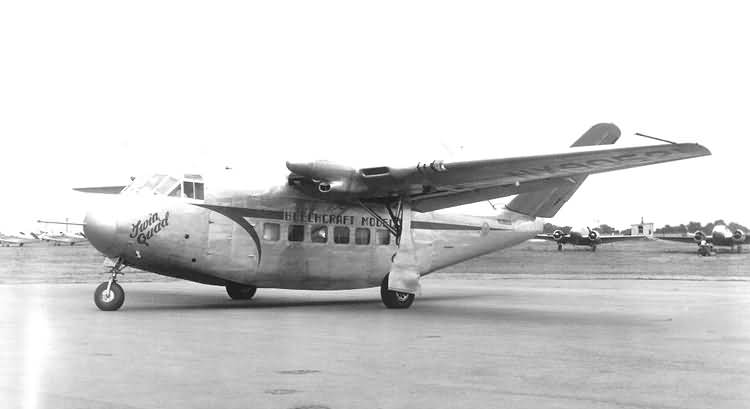
The program came to an abrupt end on January 17, 1949, when an electrical fire caused all four engines to shut down during a test flight. The prototype crashed shortly after takeoff, destroying the only completed aircraft and claiming the life of the co-pilot. With no production orders secured, Beechcraft cancelled the program, leaving the Model 34 as one of the company’s most fascinating experimental designs. No complete examples survive today. The Beechcraft Model 34 measured 58 feet 10 inches in length with a 70-foot wingspan and was powered by four 340-horsepower Lycoming GSO-580 engines, arranged in two paired nacelles. The aircraft could cruise at 200 mph, had a range of nearly 1,000 nautical miles, and a service ceiling of 22,500 feet. Designed for two crew members and up to 20 passengers, the Twin-Quad remains one of the most innovative commuter aircraft concepts of the postwar era.