(Image credit: VAN)
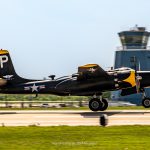
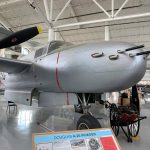
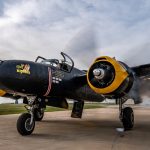
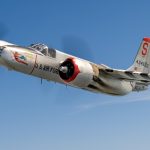
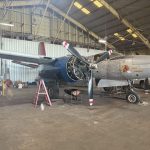
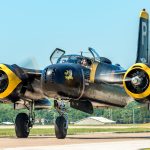
On this day in aviation history, 83 years ago (July 10, 1942), the Douglas A-26 Invader made its first flight. This American-built, twin-engine aircraft was designed to serve as both a light bomber and a ground attack platform. The A-26 saw action during World War II, the Korean War, and even into the Vietnam War in various upgraded forms. Often confused with the B-26 Marauder—another twin-engine bomber used during WWII—the A-26 was later re-designated as the B-26 by the U.S. Army Air Forces after the Martin-built Marauder was retired from service.
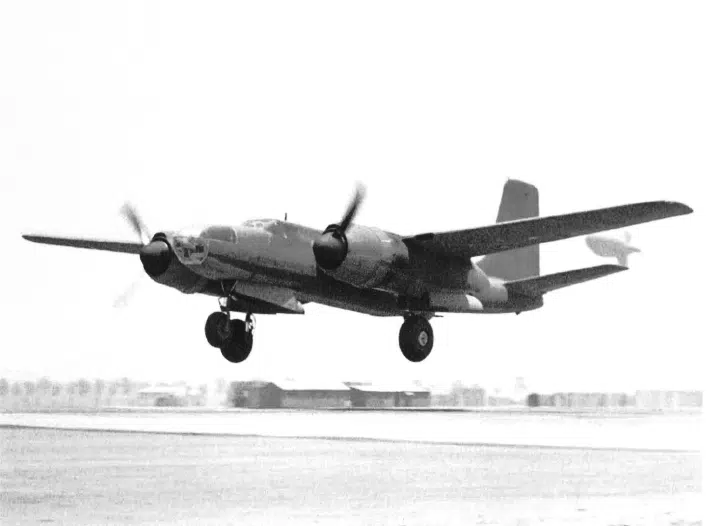
The Invader officially entered service in 1944, relatively late in the Second World War. While early operational use revealed some challenges as pilots adapted to the aircraft’s flight characteristics, the A-26 quickly proved to be highly effective. As the B-26, it went on to serve in Korea, conducting medium bombing and ground-attack missions to disrupt North Korean supply lines. Although the aircraft was retired in 1958, it was later recalled for service during the Vietnam War. Extensively modified, this new version—designated the B-26K Counter Invader—was equipped for ground-attack missions along the Ho Chi Minh Trail. Enhancements included reinforced wings, upgraded engines, reversible propellers, and wingtip fuel tanks.
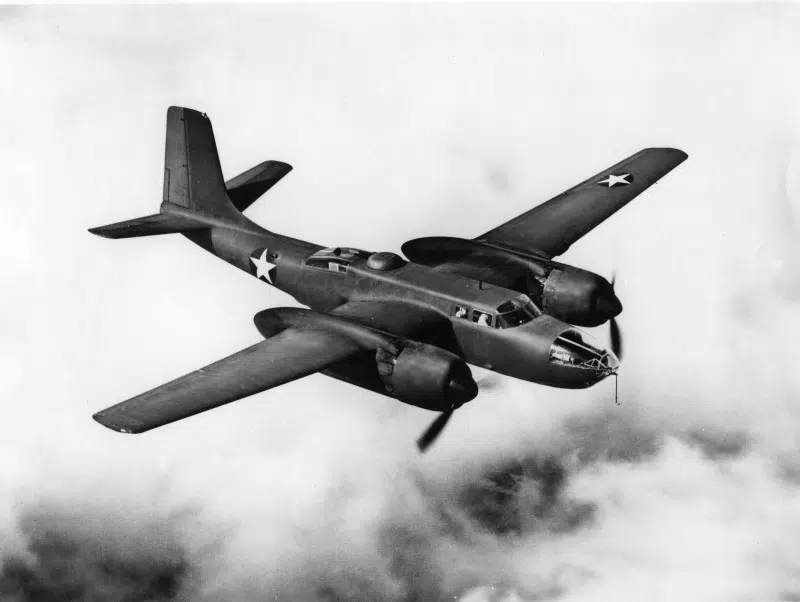
The A-26B variant was powered by two Pratt & Whitney R-2800 Double Wasp 18-cylinder radial engines, each producing 2,000 horsepower. With a crew of three, the Invader could reach a top speed of 359 mph, had a range of 1,400 nautical miles, and operated at a service ceiling of 28,500 feet. The “gun nose” versions were particularly formidable, mounting six or eight forward-firing .50 caliber M2 Browning machine guns. The “glass nose” version featured a bombardier’s position with two machine guns mounted alongside. Additional armament could include up to eight more .50 caliber guns in the wings or in underwing pods, and up to ten 5-inch HVAR rockets. The internal bomb bay could carry 4,000 pounds of ordnance, with another 2,000 pounds on underwing hardpoints—making the Invader a fearsome and versatile combat aircraft.
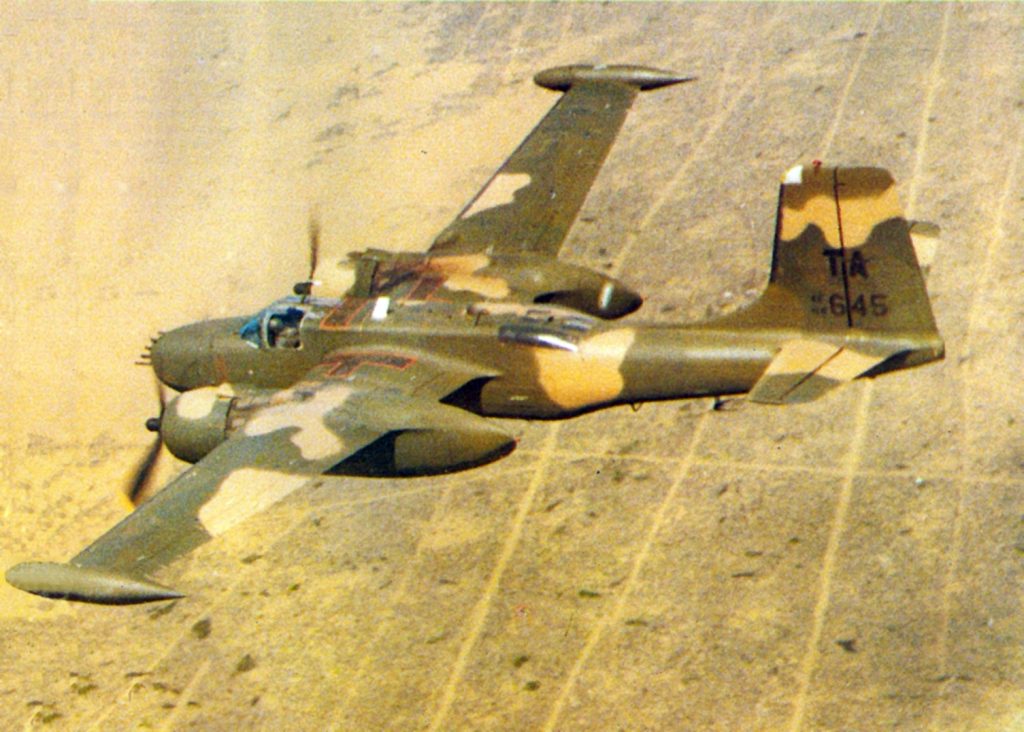
After its military service, many A-26/B-26 airframes were modified for civilian use, particularly as high-performance executive transports. Companies like On Mark Engineering converted former bombers into sleek business aircraft capable of high speed and ample passenger capacity—an appealing combination in the postwar aviation market. Of the 2,503 A-26 variants produced, a number remain airworthy today. Whether flying in the skies above airshows or preserved in aviation museums, the Invader’s legacy lives on. You just might spot one near you.