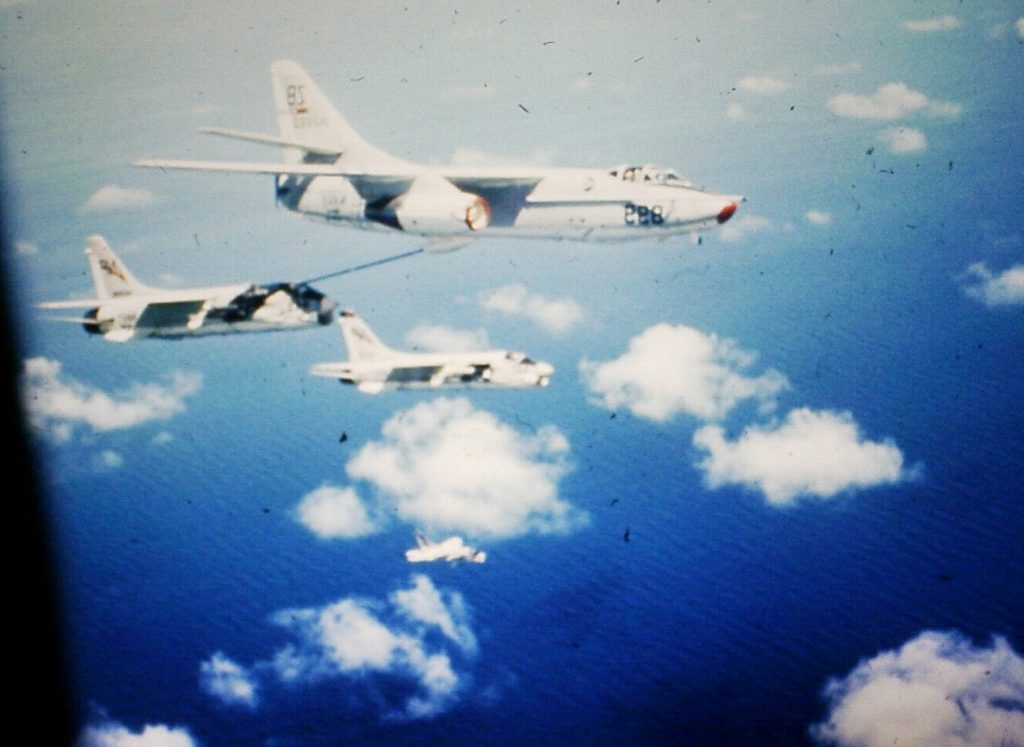
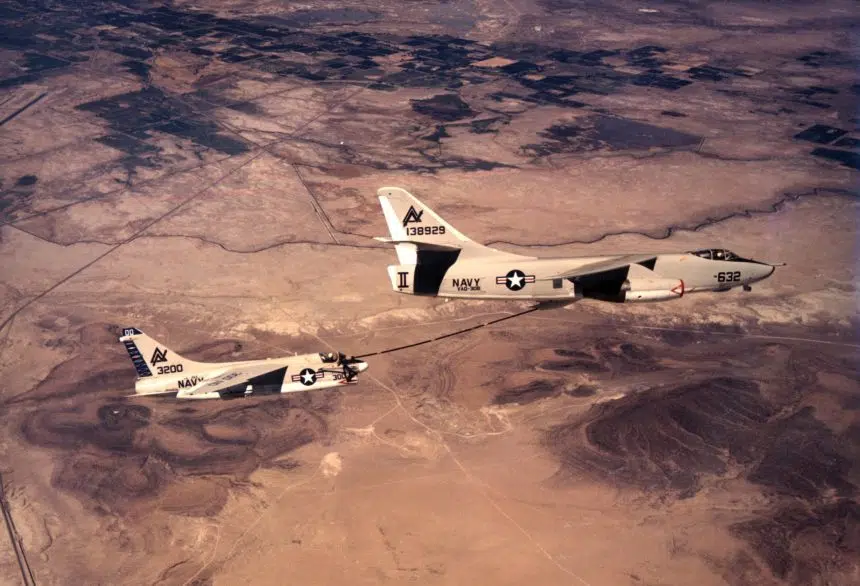

Tactical Aerial Refueling Squadron 308 (VAK-308), nicknamed Griffins, was a United States Navy Reserve unit located at Naval Air Station Alameda, California. It was established on May 2, 1970, as Tactical Electronic Warfare Squadron 308 (VAQ-308). It was part of a larger effort to improve the combat readiness of reserve forces. The squadron flew the KA-3B Skywarrior and provided electronic warfare, aerial refueling, pathfinding, and carrier support to the Atlantic and Pacific Fleets. On October 1, 1979, it was renamed Tactical Aerial Refueling Squadron 308 and became one of the Navy’s main units for tactical aerial refueling. The VAQ-308 was created as the first squadron of Carrier Air Group 30. It included both civilian Naval Reservists and active-duty personnel. On November 10, 1970, a VAQ-308 KA-3B made the first successful landing for Carrier Air Group 30. The landing took place on the USS Ticonderoga (CVS-14), about 100 miles southwest of San Clemente Island. Despite difficult conditions, including low clouds and 14-foot waves, the Skywarrior landed safely. The event proved that reserve aircrews could handle the demanding qualifications required for naval operations, day or night.

Tactical Aerial Refueling Squadron 308 is important because it was the first A-3 Skywarrior squadron assigned to the Naval Air Reserve and the first heavy-attack unit in the reserve force. It joined VAQ-208 to set a new standard by carrying out combat-support missions in Southeast Asia during the Vietnam War. The unit used civilian reservists who stayed in their regular jobs while taking brief leaves for military duties. The squadron did more than support carrier operations in the Pacific; it also backed peacetime activities and emergency deployments. The Navy relied more on its reserve forces for specialized aviation support. During the Indo-Pakistani War of 1971, Tactical Aerial Refueling Squadron 308 supported operations in the Indian Ocean as tensions rose in South Asia. In 1973, the squadron also participated in the Yom Kippur War, helping move US aircraft toward Israel and demonstrating how a Naval Air Reserve squadron from the US West Coast could support operations far from the Pacific. The squadron also supported efforts during the Turkish invasion of Cyprus, further demonstrating its role in overseas operations.

Through these deployments, Tactical Aerial Refueling Squadron 308 gave the Navy a backup capability to work alongside active-duty forces without being a full-time unit. The KA-3B’s role changed over time, leading to a new squadron name. On October 1, 1979, VAQ-308 officially became Tactical Aerial Refueling Squadron 308 to adopt the role of an aerial refueling unit. VAK-308 and its sister squadron, VAK-208, were the only US Navy units with aerial refueling as their main mission under this new name. The aircraft was originally built as a heavy attack bomber, but its fuel capacity, range, and payload made it important for supporting other naval aircraft. Tactical Aerial Refueling Squadron 308 thus continued to use the Skywarrior in a way that was different from its original purpose of nuclear strikes. After nearly twenty years of reserve operations, VAK-308 was disbanded at NAS Alameda on September 30, 1988.