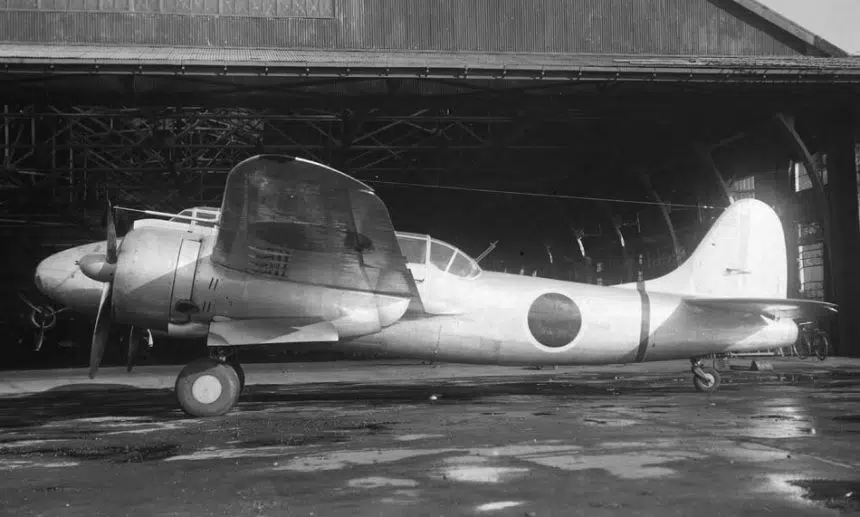

In September 1941, Kawasaki Aircraft started designing the Kawasaki Ki-66 to meet the Japanese Army’s requirements for a new dive bomber. After the German Stukas performed well in Poland and France, the Japanese Army wanted a similar bomber. The service specified that the new aircraft should have two engines and be armed with two forward-firing 12.7mm machine guns and one rear-firing 7.7mm machine gun. The bomber needed to carry 661 pounds of bombs as a norm or up to 1,102 pounds in overload situations. Kawasaki designer Takeo Doi began work on a new aircraft in October. The aircraft used two Nakajima Ha-115 engines, each producing 1,130 horsepower, and included a movable ventral gun. It was a two-seater, with a pilot and a radio operator/gunner. Because of this setup, only one of the two rear-firing guns could be used at a time.
Design of Kawasaki Ki-66
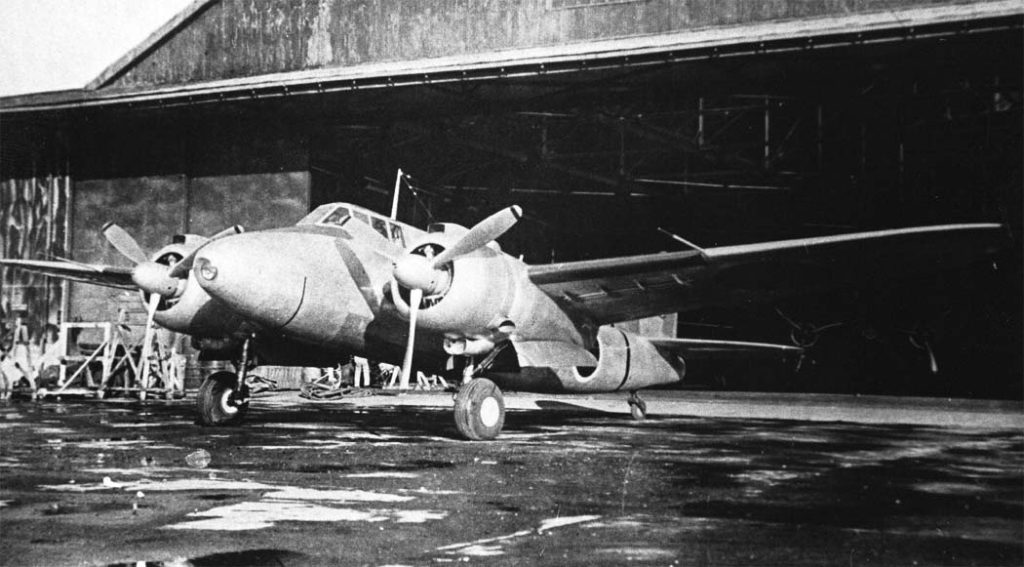
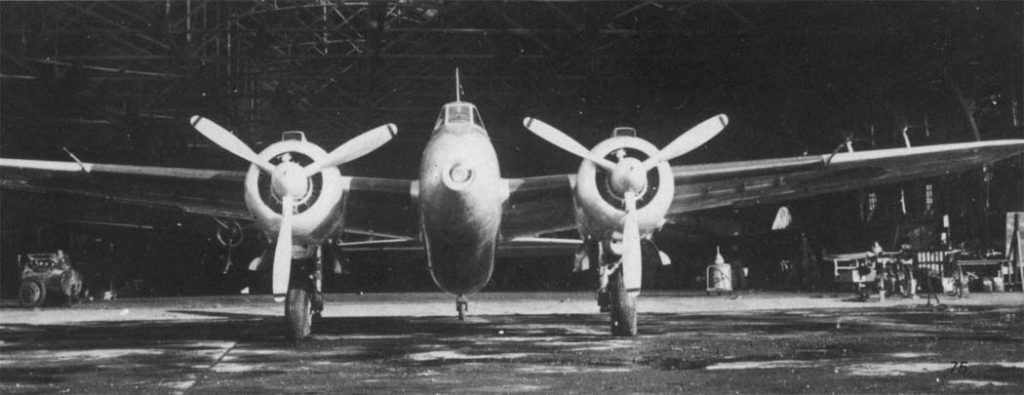
The Kawasaki Ki-66 resembled the more successful Kawasaki Ki-45 Toryu heavy fighter and the Kawasaki Ki-48 light bomber. All three were mid-wing, twin-engine monoplanes with a single vertical tail. They shared long cockpits, with glass sections at the front and back. The Ki-66 was larger than the Ki-45 but smaller than the Ki-48. Its fuselage was smoother than the Ki-45 and less bulky than the Ki-48. Unlike the Ki-48, which had a glass nose, the Kawasaki Ki-66 featured a solid nose that housed the fixed forward-firing guns. The first of six prototypes was finished in October 1942, and the last one was completed in April 1943. Flight testing started in February 1943. The aircraft performed well overall, but it was only about 25 mph faster than the Ki-48 light bomber. Because of this, the Army ordered the development of the Ki-66-II, an upgraded version focused on increasing speed.
The Cancellation
The Ki-66-II was meant to use the Ha-315 engine, which produced 1,360 horsepower, and reach a maximum speed of 373 mph. However, Kawasaki Aircraft couldn’t develop it in time. Around the same period, a version of the Ki-48 twin-engine light bomber was completed with dive brakes, allowing it to do some dive bombing. It led some in the Army to believe the Ki-48 was good enough for dive bombing, and the Kawasaki Ki-66 was canceled. In total, the Japanese built six aircraft. Two additional dive-bomber versions were proposed but not built. The Ki-66-Ic would have a more powerful 2,100hp Nakajima Ha-39 engine, and the Ki-66-Id would have a 1,900hp Nakajima Ha-45 engine. A heavy fighter version, the Ki-66-II, was also designed but never built. Read more Grounded Dreams articles HERE.