






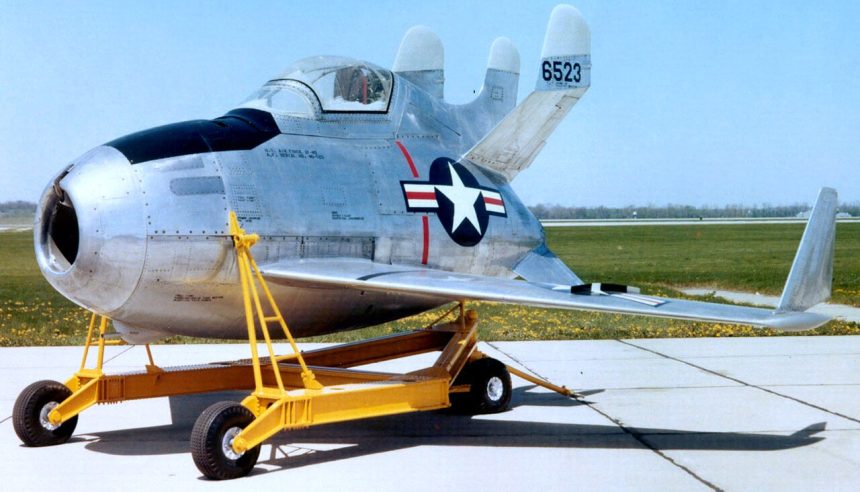


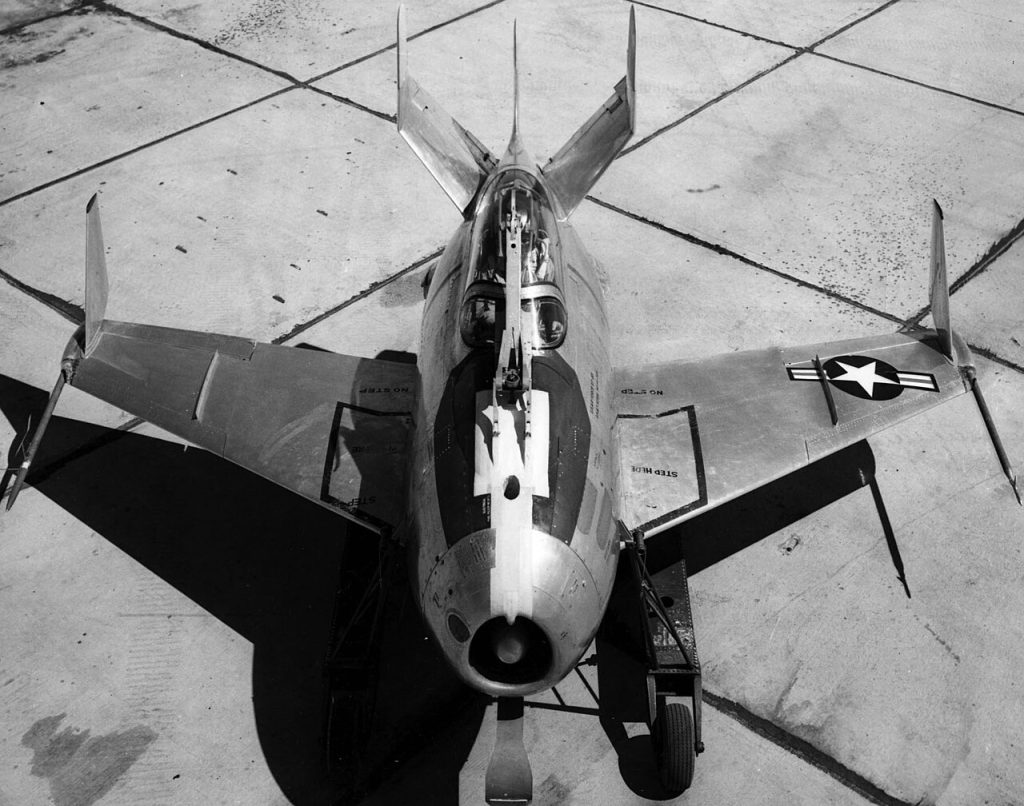
On this day in aviation history, 78 years ago (August 23, 1948), the McDonnell XF-85 Goblin took flight for the first time. McDonnell test pilot Edwin Foresman Schoch was at the controls of the unusual parasite fighter, which was released at 20,000 feet from a specially modified EB-29B Superfortress. The diminutive jet was designed to be carried inside the bomb bay of the massive Convair B-36 and provide fighter protection during long-range bombing missions.
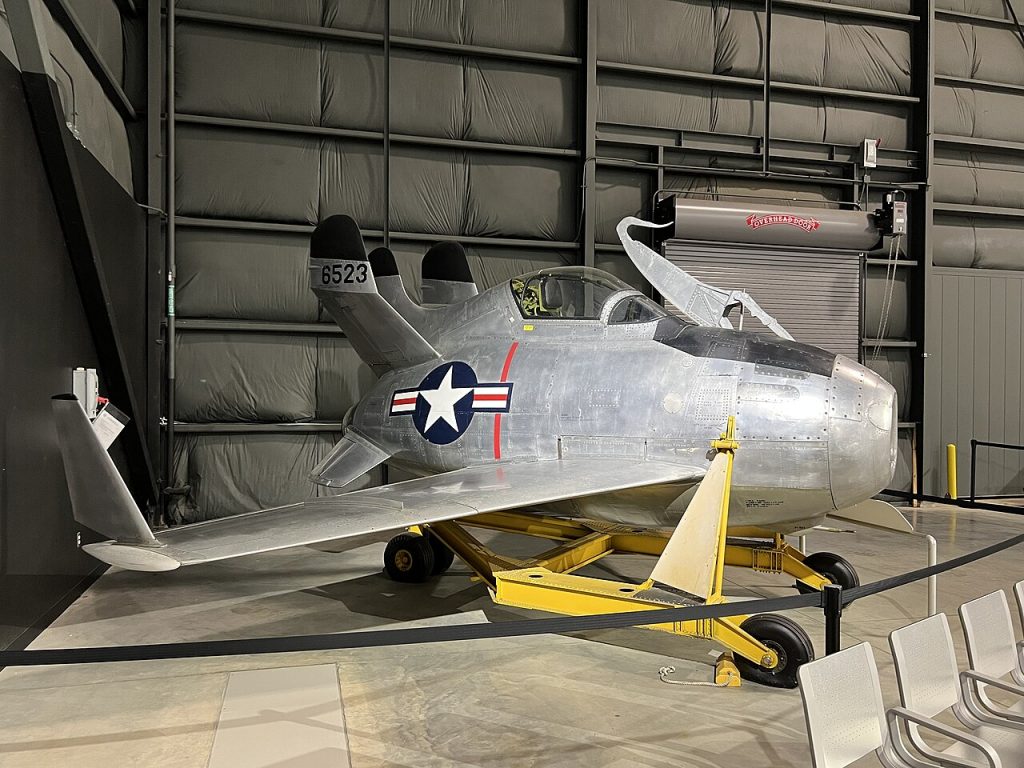
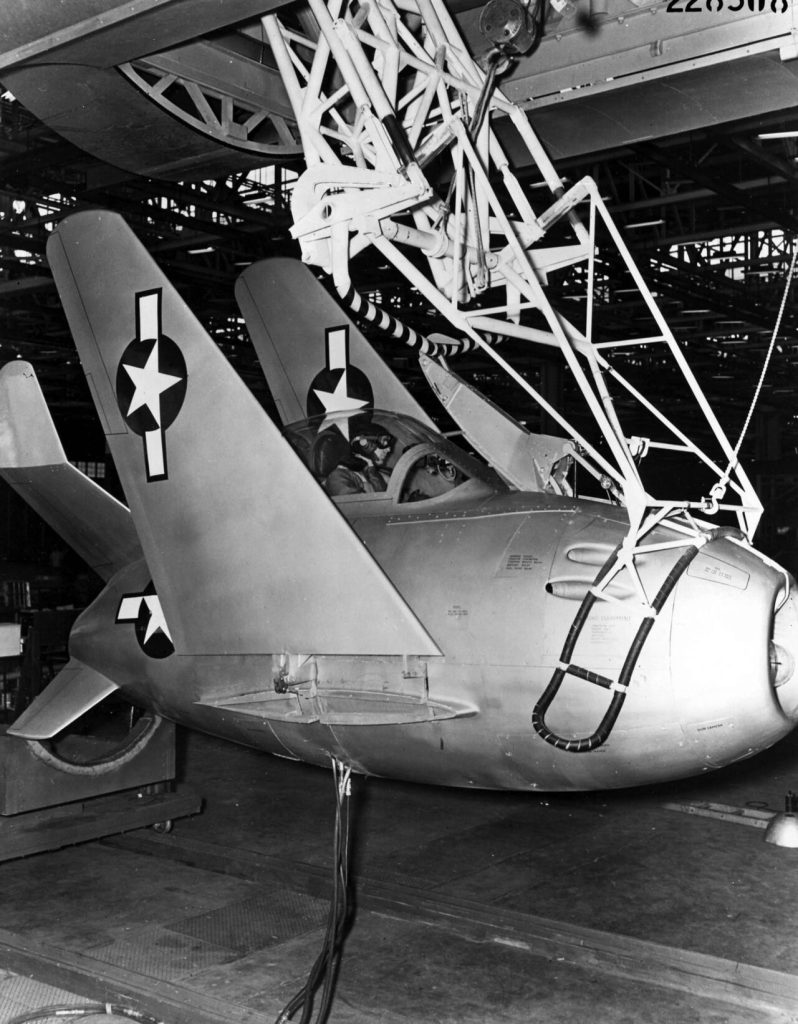
Development of the XF-85 grew from the problem of providing fighter escorts with enough range to accompany the next generation of American strategic bombers. Rather than requiring an escort fighter to fly the entire mission, the Goblin would ride inside the bomber and be released when enemy fighters appeared. Once the engagement was over, the XF-85 would return to the bomber and attach itself to a retractable trapeze using a hook above its cockpit.
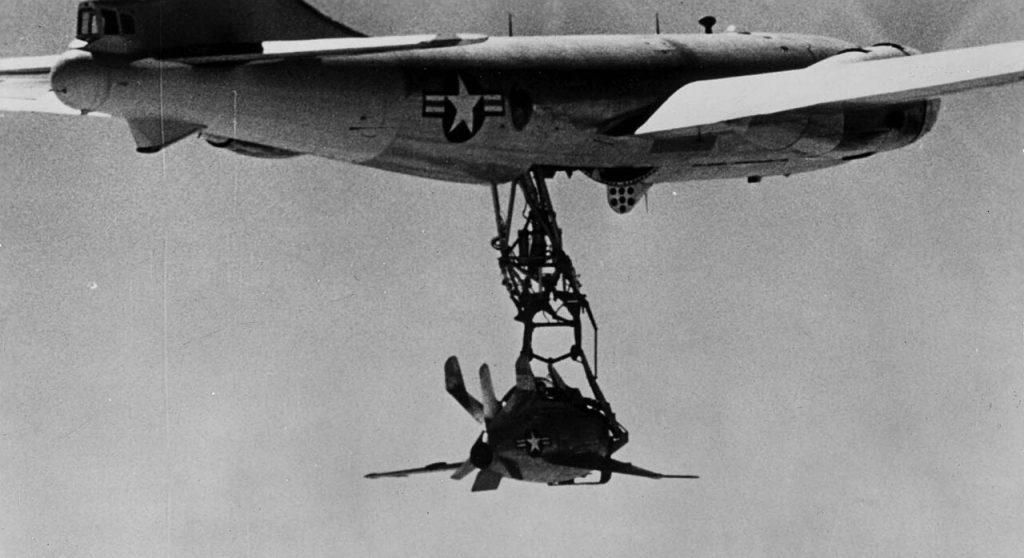
Schoch’s first 10-minute free flight demonstrated that the Goblin was controllable, but recovery proved extremely difficult. Turbulence beneath the EB-29 repeatedly interfered with docking, and Schoch eventually struck the trapeze, shattering the canopy and forcing him to make a skid landing at Muroc. Similar difficulties continued throughout testing. Only three of seven free flights ended with successful hookups, and the Air Force cancelled the program in 1949. Both XF-85 prototypes survive today in museums.
The XF-85 measured just 14 feet 10 inches in length with a wingspan of 21 feet 1 inch. Power came from a single Westinghouse XJ34-WE-22 turbojet producing 3,000 pounds of thrust. Its estimated maximum speed was 650 mph, with a service ceiling of 48,000 feet and a climb rate of 12,500 feet per minute. Planned armament consisted of four .50-caliber machine guns mounted in the nose.











Resembles the German ME -163 Komet.