








(Image credit: VAN)
On this day in aviation history, 88 years ago (October 16, 1937), the Short S.25 Sunderland flew for the first time. Developed by Short Brothers for the Royal Air Force, the S.25 was a long-range flying boat designed for maritime patrol and bomber duties. The aircraft was named after the port city of Sunderland in North East England. The Sunderland was developed alongside the civilian S.23 Empire, sharing many design features, but with enhancements tailored to military operations, including a more aerodynamic hull and armament. The S.25 originated from British Air Ministry Specification R.2/33, which called for a dual-role patrol-reconnaissance flying boat capable of extended-range operations. Its design emphasized durability, range, and the ability to deliver offensive and defensive firepower in maritime environments.
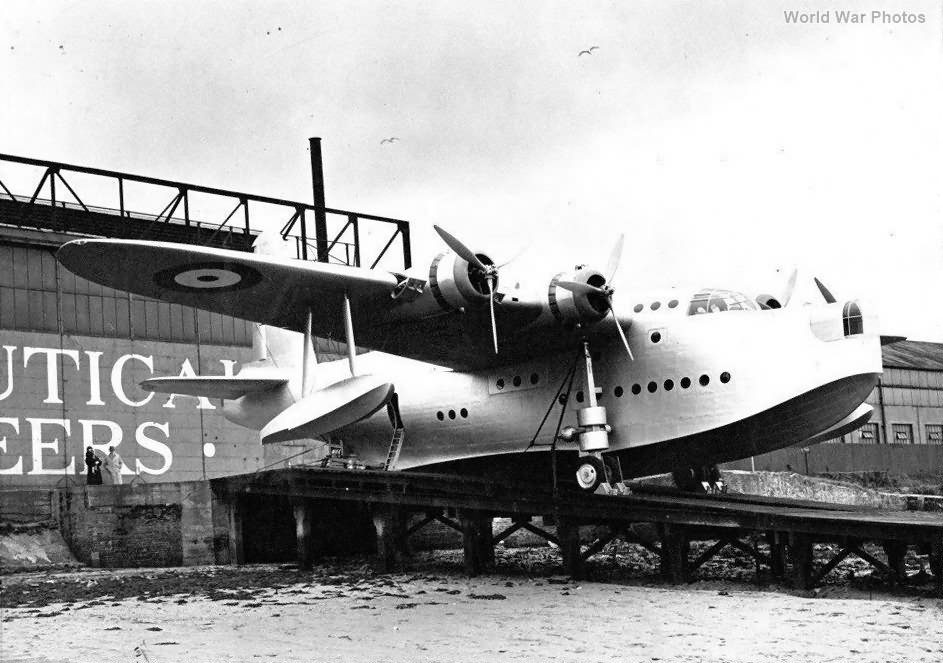
The Sunderland typically carried a crew of nine to eleven: pilot, co-pilot, navigator, radio operator, flight engineer, bombardier, and three to five gunners. Four Bristol Pegasus XVIII 9-cylinder radial engines, each producing 1,065 horsepower, powered the aircraft. The Sunderland had a maximum speed of 210 mph, a cruising speed of 178 mph, a range of 1,550 nautical miles, and an endurance of up to 13 hours. The service ceiling reached 17,200 feet. Defensive armament included up to twelve .303-inch Browning machine guns in various turrets, with forward-firing guns later upgraded to twin .50-caliber weapons. The aircraft could carry up to 2,000 pounds of bombs, mines, or depth charges internally or underwing.
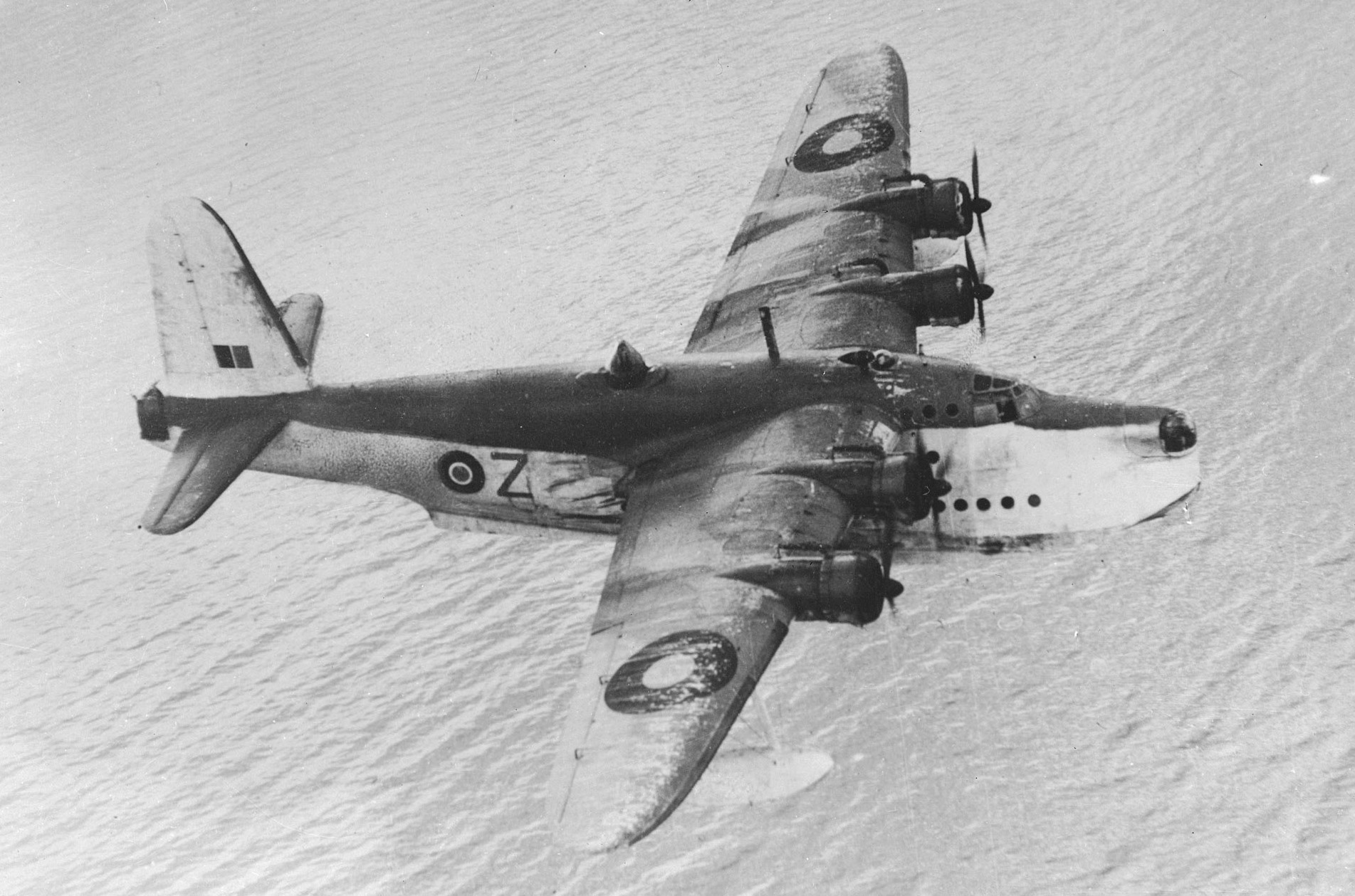
During World War II, the Sunderland earned a reputation as one of the most aggressive and effective flying boats. It was heavily employed during the Battle of the Atlantic, where Royal Australian Air Force Sunderlands—such as those of No. 10 Squadron—achieved the type’s first unassisted U-boat kill. The aircraft also saw action in the Mediterranean Theater, performing patrol and reconnaissance missions, as well as logistical support operations. Between 1938 and 1946, Short Brothers built 749 Sunderlands. Only a few survive today. One notable example is ML814, preserved at Kermit Weeks’ Fantasy of Flight museum. Originally a Mark III, this aircraft was later converted to a Mark V and used as a passenger hauler. ML814 holds the distinction of being the last four-engine passenger flying boat to cross a major ocean. While it has not flown since 1996, it remains an important and historic exhibit at the museum.


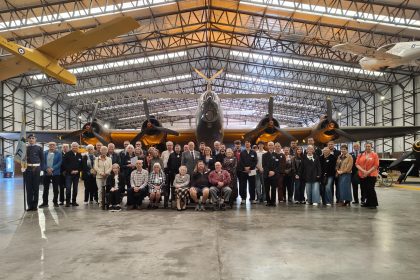






Kermit’s Sunderland is a former Royal New Zealand Air Force airframe that was kept as a spare. My father (a Wireless Operator / Gunner) was part of the crew on-board when it was towed from the RNZAF base at Hobson Bay in Auckland over to the civilian engineers where it was converted to a passenger aircraft. He was the only one who brought a novel to read so was tearing out sections as he completed them and passing them to another crew member who would read them and pass them along 🙂
We got my father and one of his former captains onboard the RNZAF Sunderland at the Museum of Transport And Technology (MOTAT) in Auckland many years ago. We went through the full interior with stories being told about every station. They had a lot of fun and you can find a video of it on YouTube by searching for “Sunderland Veterans Rolling Back The Years”
Wow! What a unique and cool story, Grant. Thanks for sharing this! I will find that video and view it right away. I can only imagine what this beast must have been like to fly on.