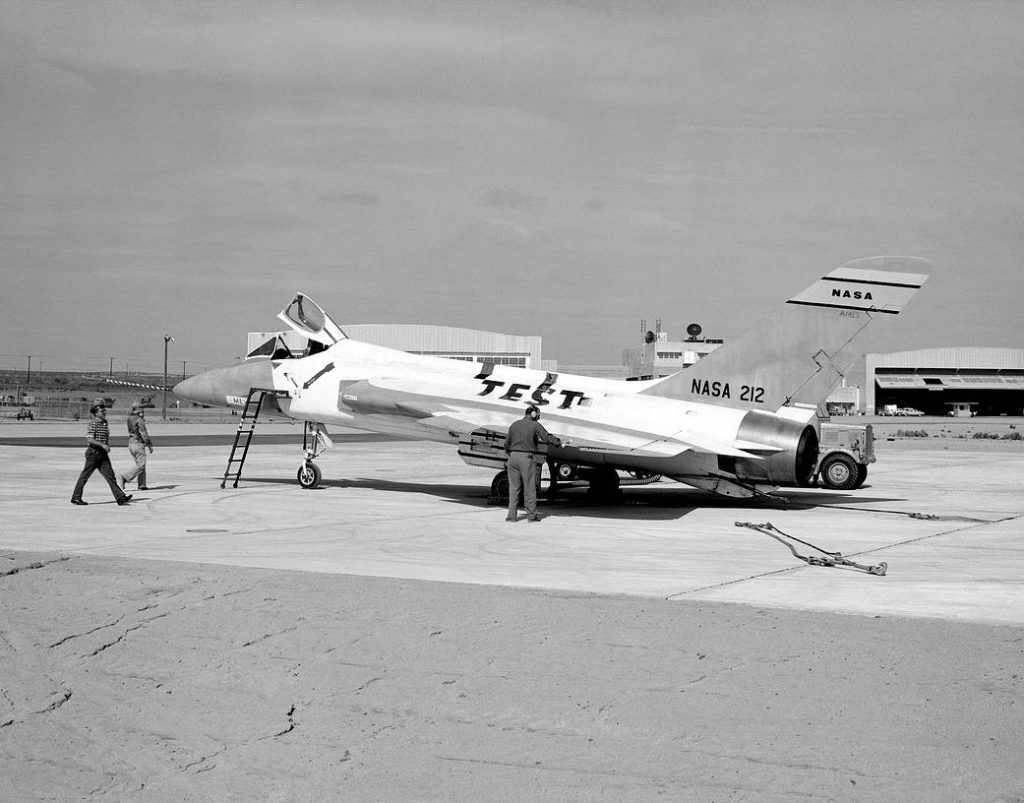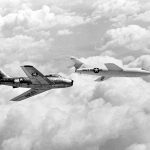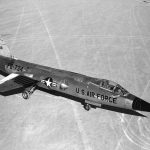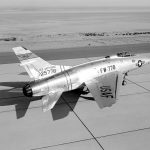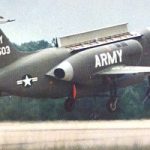
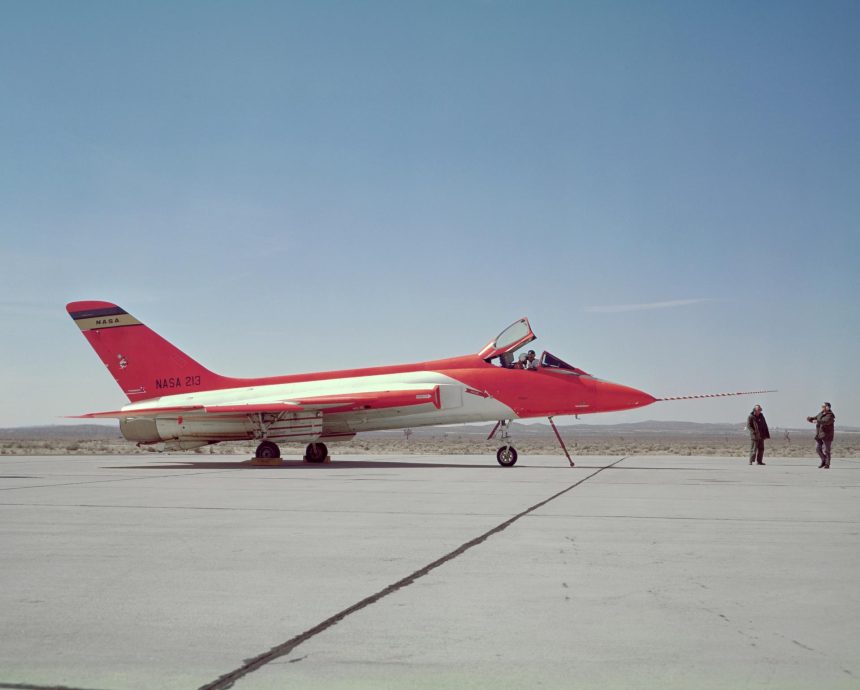

In the early 1950s, the US Navy wanted to introduce an all-weather fighter-interceptor capable of flying at supersonic speeds. At the time, Douglas Aircraft Company, which had already developed the F4D Skyray for the Navy, made modifications to turn it into an all-weather variant. Initially, it was designated F4D-2N because it used the same airframe as the F4D. But as it underwent further modifications, the aircraft became an entirely different plane and was redesignated the F5D-1 Skylancer. The F4D was fitted with a Westinghouse J40 engine generating 7,300 pounds of thrust, but for the F5D-1, this power was insufficient. Therefore, the engine was replaced with a more capable Pratt & Whitney J57, which produced 10,200 pounds of thrust. Though both aircraft shared the same tailless delta-wing planform, the F5D-1 featured an 8-foot-longer fuselage, thinner wings, and a redesigned cockpit. The performance of F4D was capable of just over Mach 1, while the F5D was designed to exceed Mach 1.5. Douglas built four F5D-1 Skylancers, one of which first flew on April 21, 1956. The aircraft flew well and showed strong results; however, in later testing, one of the F5D-1s crashed. Moreover, the Navy found it too similar to the Vought F-8 Crusader and opted for that instead, leading to the cancellation of the program.
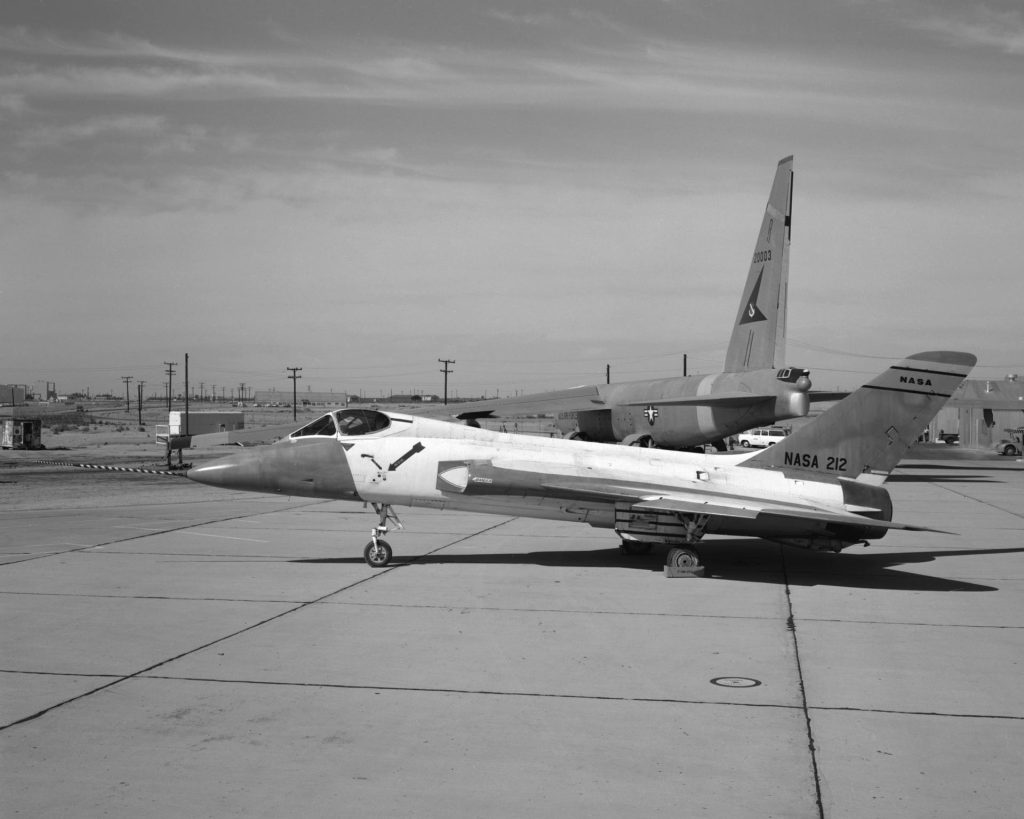
Although the aircraft could never fly on the battlefield, NASA chose it as a research aircraft, and it was flown by none other than Neil Armstrong. In 1961, NASA’s Flight Research Center acquired two F5D-1 Skylancers and named them NASA 708 and NASA 802. At the time, the U.S. Air Force, along with Boeing Aircraft, was developing a manned, delta-winged spaceplane capable of orbital flight, reconnaissance, and precision bombing, known as the X-20 Dyna-Soar (Dynamic Soarer). It was designed to be launched into orbit by a Titan III rocket and to land like an airplane. Featuring a Sänger-like boost-glider design, its general configuration was that of a hypersonic slender delta, a flat-bottom glider using radiative cooling. However, at the time, rockets were unreliable, and engineers were concerned about the safety of the pilot and spacecraft in the event of a booster explosion on the launch pad. The F5D-1 Skylancer followed a similar wing design to Dyna-Soar and, most importantly, was equipped with landing gear that could fully extend and lock safely in place at speeds over 300 knots (345 mph). Armstrong was tasked to use the aircraft to study the X-20’s abort procedures.
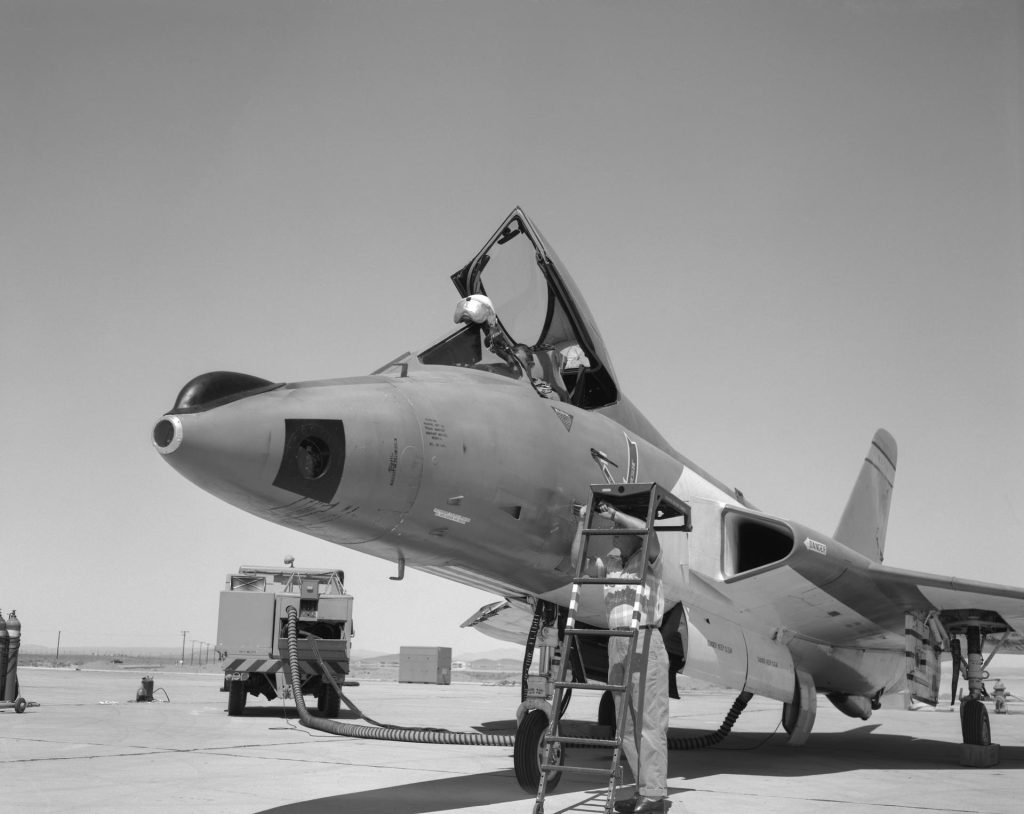
At NASA’s Ames Research Center in California, Neil Armstrong had the chance to check out the F5D-1 Skylancer. The plane was suited for simulating Dyna-Soar landings, and changes to the throttle reduced the lift-to-drag (L/D) ratio by lowering idle thrust from 500 pounds to just under 200 pounds. In July 1961, Armstrong conducted several gliding approaches to determine how L/D varied with speed. By October, he created an effective emergency abort maneuver for the X-20. He simulated a launch and escape by speeding up to about 1,000 feet above ground, then pulling up sharply to 7,000 feet. While in a vertical attitude, he cut the throttle to idle and extended the speed brakes. As his speed decreased to 260 knots, Armstrong pulled back on the control stick until the aircraft went inverted, then extended the landing gear. He then rolled the plane upright, pushed the nose over, accelerated to approach speed, and landed at Rogers Dry Lake. Armstrong repeated the maneuver numerous times, using different speeds and altitudes to simulate a variety of launch escape scenarios, and four other NASA and Air Force pilots took turns evaluating his technique.
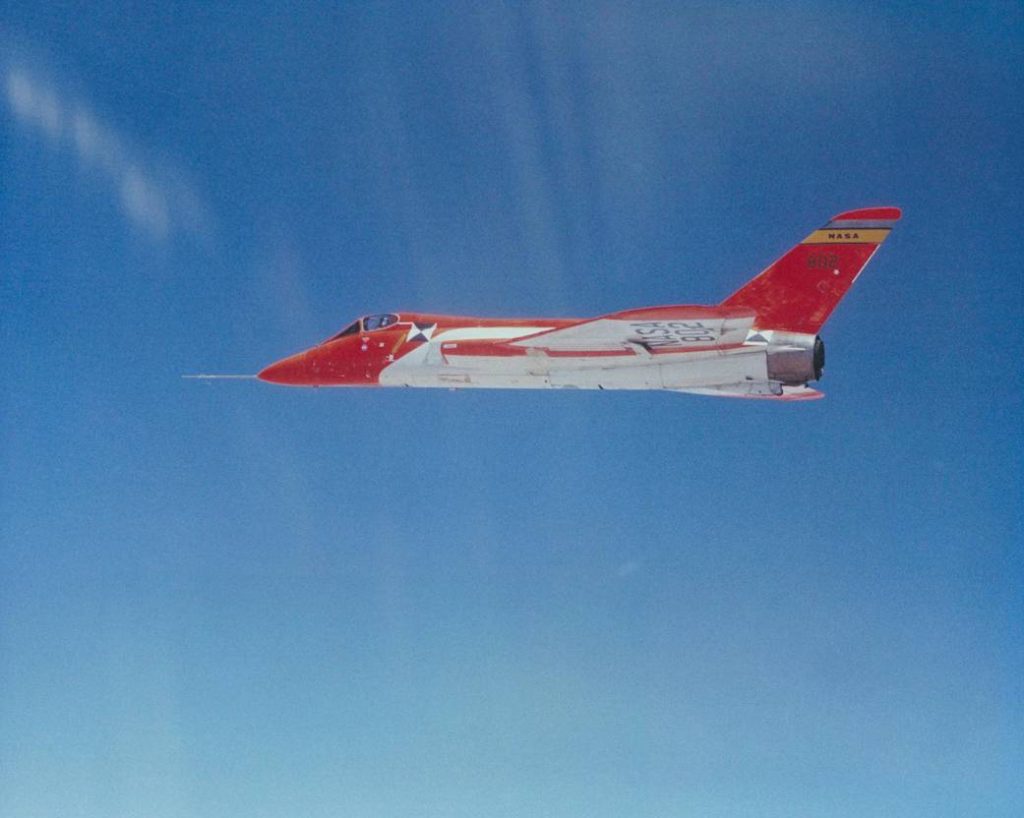
During most tests, the F5D-1 Skylancer’s canopy had an amber Plexiglas mask that reduced the pilot’s visibility to a level similar to that of the X-20 cockpit. While wearing a blue visor, the pilot could only see through the mask’s cutouts, but with the visor raised, the amber transparency provided nearly complete visibility. On October 3, 1961, Armstrong demonstrated the simulated X-20 launch escape maneuver for Vice President Lyndon B. Johnson, who visited Edwards Air Force Base on a special tour. The future seemed bright for the orbital space plane. However, Secretary of Defense Robert McNamara questioned the project’s funding due to changes in requirements and the belief that the cheaper Gemini capsule was a better choice. Ultimately, in December 1963, McNamara canceled the Dyna-Soar program, and so did the need for the F5D-1. After this, the F5D-1 (708) went to Ames Research Center to be equipped with an ogee wing for studies on the Concorde Supersonic Transport wing. The F5D-1 (802) remained at NASA’s Flight Research Center and participated in various tests. It was used as a flight simulator for the M2-F2 and a chase plane for the lifting bodies until 1970. In May 1970, the Douglas F5D-1 Skylancer (NASA 802) was retired and donated to the Neil A. Armstrong Museum in Wapakoneta, Ohio, where it rests next to the light plane that Armstrong learned to fly. In the Flight Test Files series, the F5D-1 stands out as an aircraft that solved a problem and paved the way for a bright future in aviation. Read more Flight Test Files articles HERE.