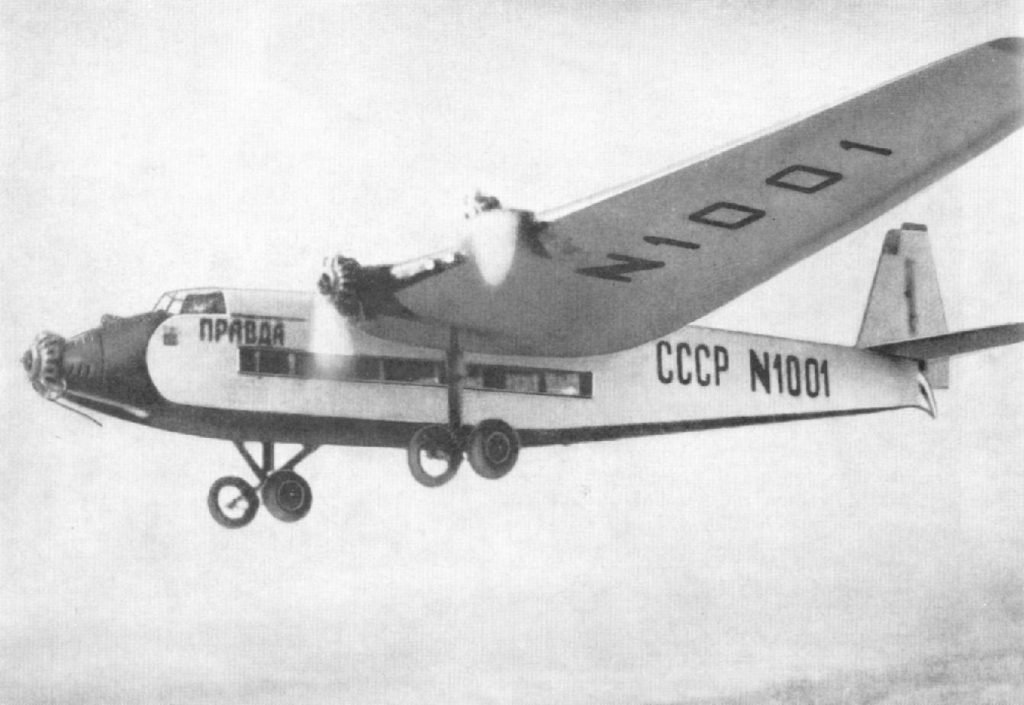
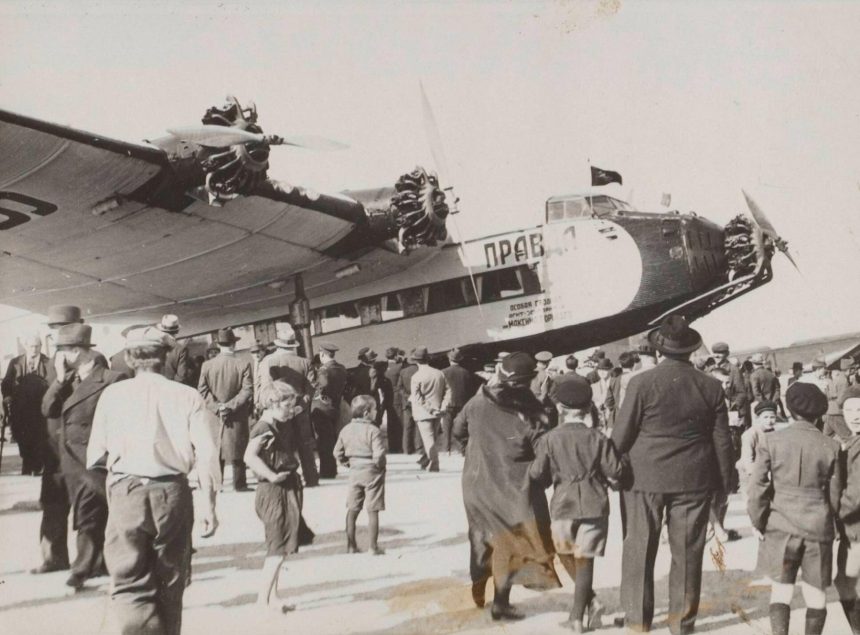


On this day in aviation history, 95 years ago (August 14, 1931), the first flight of the Tupolev ANT-14 Pravda took place. Translating to Truth in English, the Pravda was a Soviet-built transport aircraft that was initially developed as an airliner. The ANT-14 is cited as the first Russian aircraft to be constructed entirely of metal, via a corrosion-resistant-steel structure. Tupolev developed the ANT-14 from their earlier ANT-9 airliner design, nearly doubling the wingspan and utilizing five 480-horsepower Gnome-Rhône Jupiter 9AKX radial engines for power. A crew of three flew the ANT-14, which had capacity for 36 passengers. The Pravda could cruise along at a lumbering 121 mph, with a maximum airspeed of 147 mph. Tupolev’s large transport had a maximum gross weight of 37,800 pounds, while empty weight was 23,480 lbs. A range of 559 miles and a service ceiling of 13,845 feet were attainable for the ANT-14. Tupolev equipped the ANT-14 with fixed landing gear.
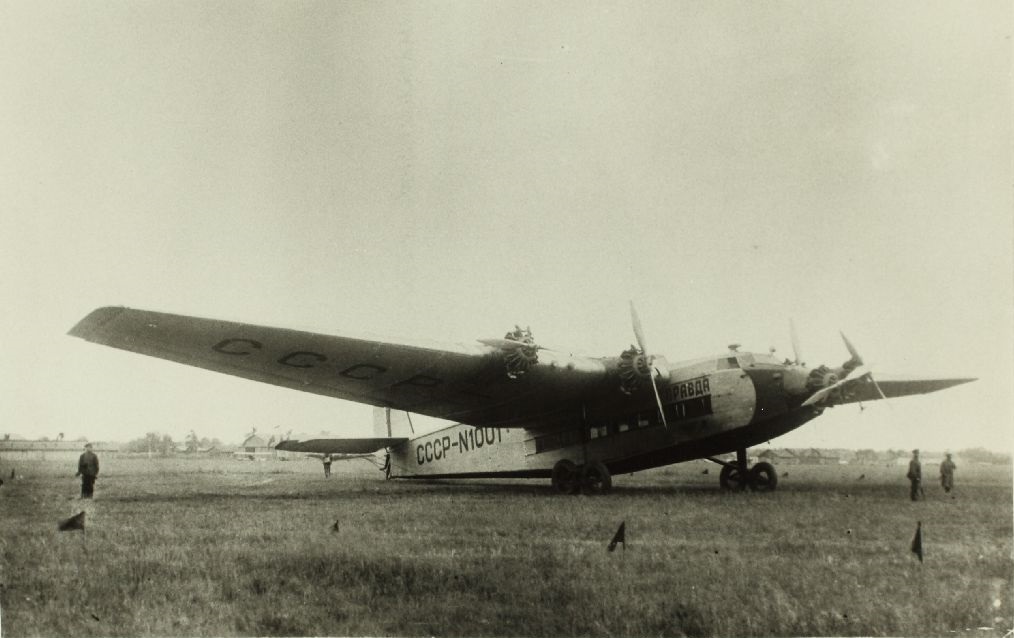
Following the Pravda‘s first flight in 1931, Aeroflot began to test the transport in 1932. Flight testing found no negative traits for the ANT-14, aside from the size of the aircraft being simply more than Aeroflot needed at the time. As a result, no further airframes beyond the initial prototype were manufactured. On March 17, 1933, the Soviet Union established Maxim Gorky, an aerial propaganda squadron. The name Pravda came from a popular Soviet newspaper of the period. The ANT-14 mostly flew scenic flights over Moscow, Kharkov, and Leningrad. By the time the Pravda was grounded in 1941, the transport had flown over 40,000 passengers.