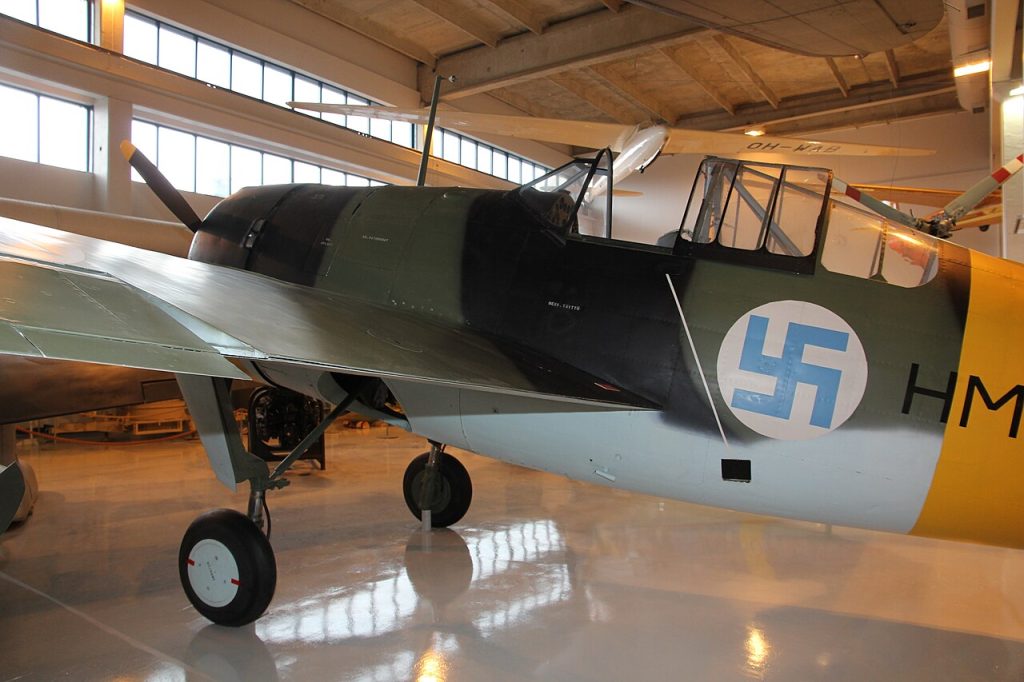
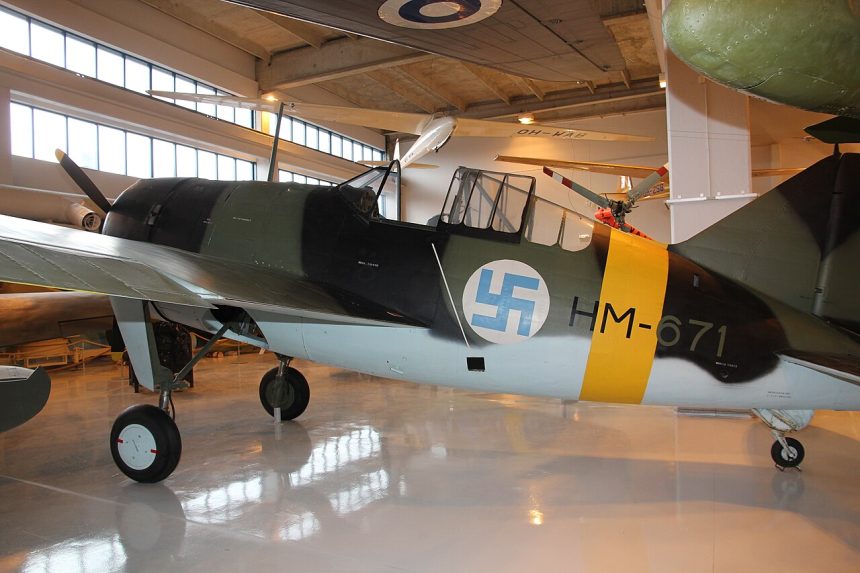


On this day in aviation history, 82 years ago (August 8, 1944), the VL Humu prototype took flight for the first time. Finnish for Whirlwind, the Humu was a single-seat fighter designed by Valtion Lentokonetehdas (State Aircraft Factory). VL designed the Humu based on the American Brewster F2A Buffalo, of which the Finnish Air Force had previously acquired 44 airframes. The B-239 variants of the Buffalo found success in the hands of the Finns during the Continuation War. In 1942, aircraft shortages prompted the Finnish government to copy-build the fighter.
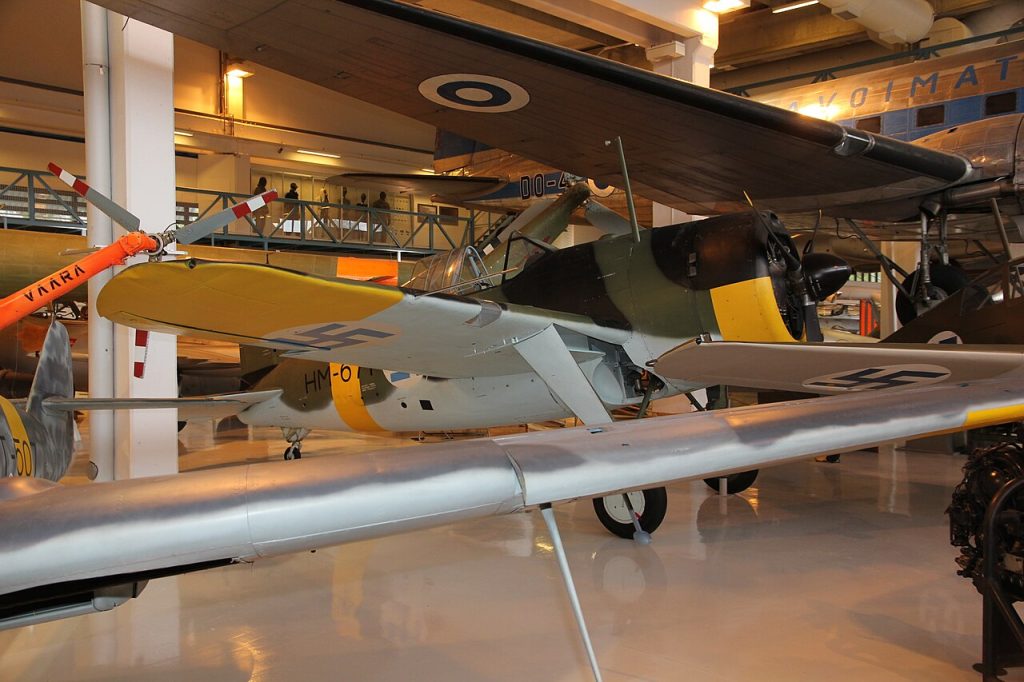
VL’s chief designer, Martti Vainio, along with his designers, Torsti Verkkola and Arvo Ylinen, was tasked with developing the Finnish-built Buffalo. Material shortages forced the designers’ hands, and the Humu was built largely of wood as a result. The frame of the aircraft was steel and matched the overall shape of the American-built variant. VL used a captured Soviet 930-horsepower Shvetsov M-63 9-cylinder radial engine to power the Humu. This engine was tested on a B-239 Buffalo prior to installation on the new fighter prototype. The wooden wing added 250 kilograms of weight, leading to the shifting of the fuel tanks to the fuselage, which adversely affected CG and performance.
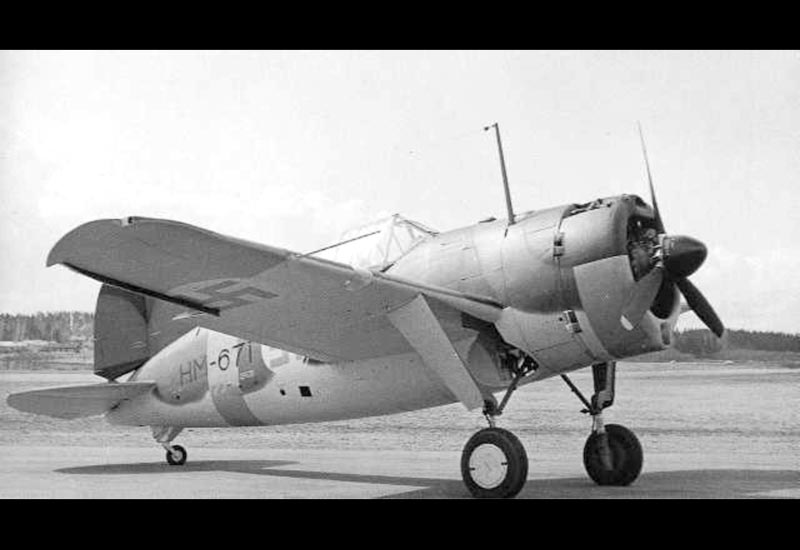
The VL Humu was capable of attaining a maximum airspeed of 270 mph, and the fighter could climb at a rate of 2,000 feet per minute. The Finnish Buffalo copy had a range of 670 nautical miles and a service ceiling of 26,000 feet. VL armed the Humu with two 12.7 mm LKk/42 machine guns. Flight testing of the Humu totalled 19 hours and 50 minutes. The increased weight of the fighter from the use of wood and the underpowered engine revealed the Humu to be unable to compete against the enemy’s aircraft. As the Continuation War began to ebb in 1944, the need for more fighters was lessened, and the Humu project was discontinued. The sole example of the Humu built, HM-671, survives today and is on display at the Central Finland Aviation Museum in Jyväskylä.