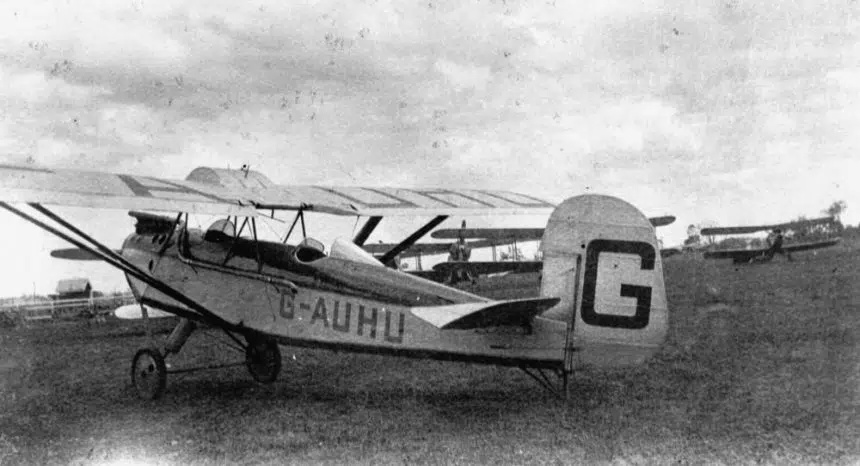

On this day in aviation history, 102 years ago (September 22, 1924), the Westland Widgeon took flight for the first time. Developed by Britain’s Westland Aircraft Works, the small single-engine monoplane was designed for the Air Ministry’s 1924 light aircraft competition, which sought economical aircraft suitable for private flying. The original Widgeon was a parasol-wing monoplane of wooden construction, powered by a small Blackburne Thrush three-cylinder radial engine. Its wings could be folded for easier storage, an attractive feature for private owners operating from small airfields. The prototype was completed in time for the Air Ministry trials at Lympne Aerodrome, making its first flight only days before the competition began.

The original aircraft proved underpowered during the Lympne trials and failed to win a prize, but Westland saw enough potential to continue development. The prototype was subsequently rebuilt with a more powerful engine, while the redesigned Widgeon II appeared in 1926. Later Widgeons were offered with several different engines, and the type enjoyed limited success with private owners. Only a small number were constructed before production ended. The original Widgeon measured approximately 21 feet in length with a wingspan of 36 feet 4 inches and was powered by a Blackburne Thrush radial engine producing about 35 horsepower. Later Widgeon III aircraft were fitted with more powerful engines, including the 85-horsepower Armstrong Siddeley Genet II, giving substantially improved performance. The Widgeon remained a lightweight two-seat aircraft intended primarily for economical private and sporting flying.