






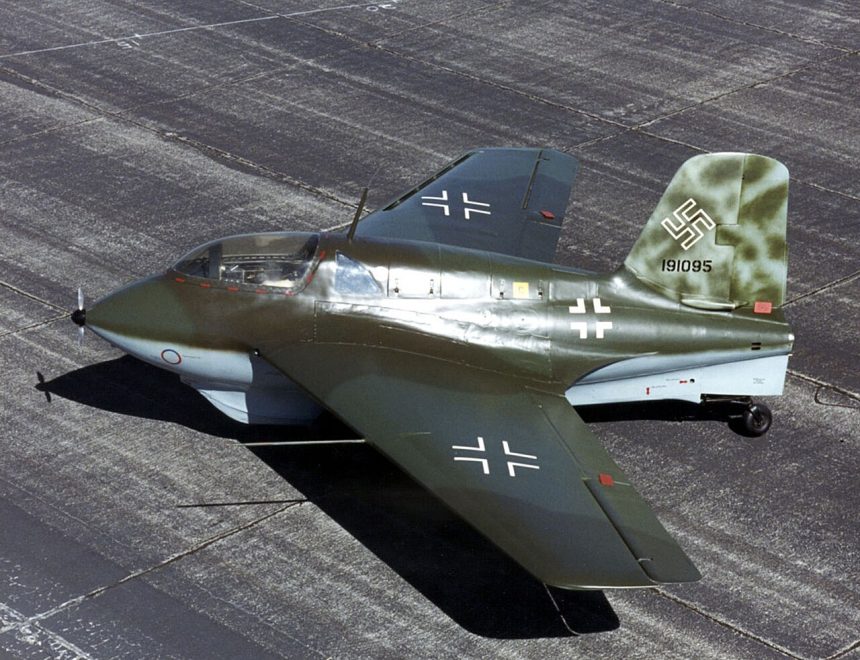


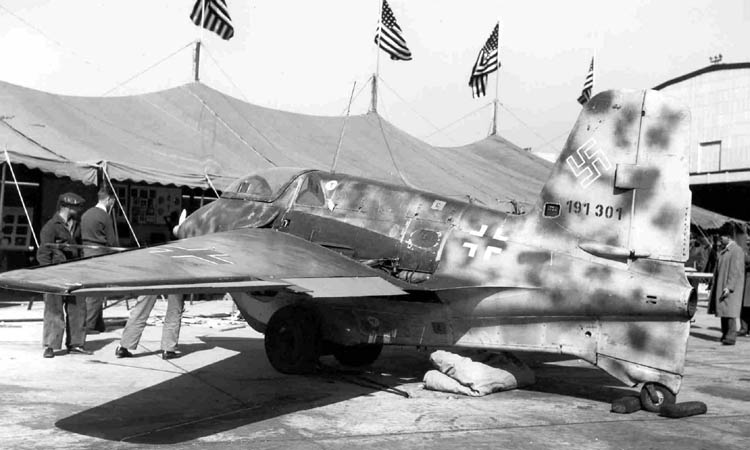
On this day in aviation history, 82 years ago (August 16, 1944), the German Messerschmitt Me 163 Komet rocket-powered interceptor was used against Allied bombers for the first time. Aircraft of Jagdgeschwader 400 intercepted United States Army Air Forces B-17 Flying Fortresses, bringing one of the most technologically unusual fighters of WWII into direct combat with the Allied strategic bombing campaign.
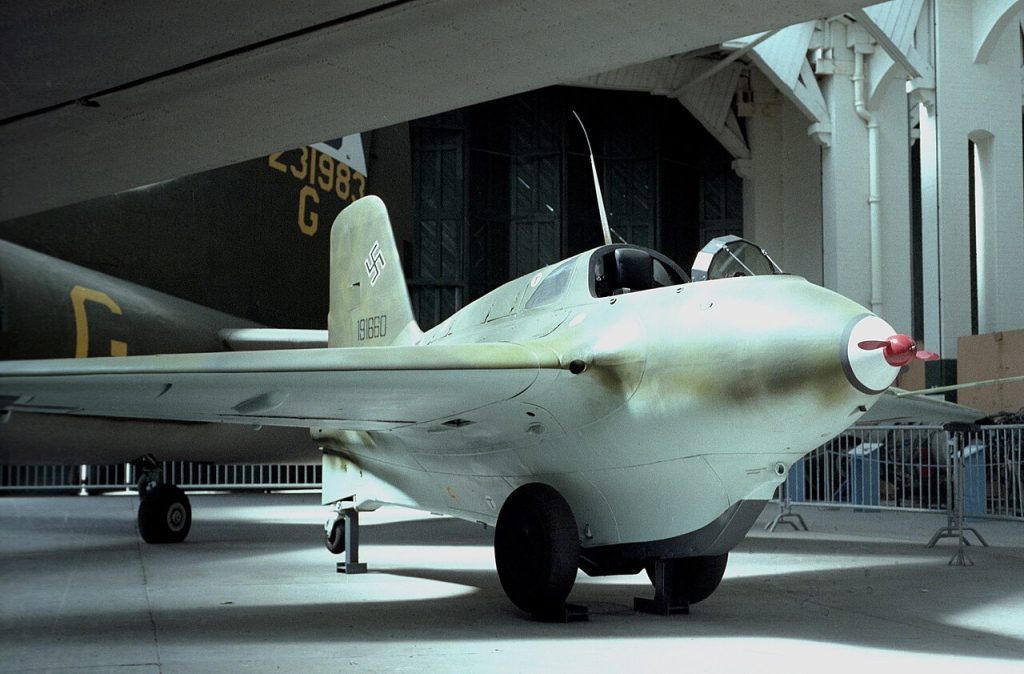
Development of the Me 163 began with the work of German aircraft designer Alexander Lippisch, who experimented extensively with tailless aircraft before developing the rocket-powered interceptor. The Komet was designed to climb rapidly to the altitude of incoming Allied bomber formations, make high-speed firing passes, and then glide back to its airfield after exhausting its limited supply of rocket propellant. Its performance was extraordinary for the period, but came at the cost of extremely short endurance and hazardous handling characteristics.
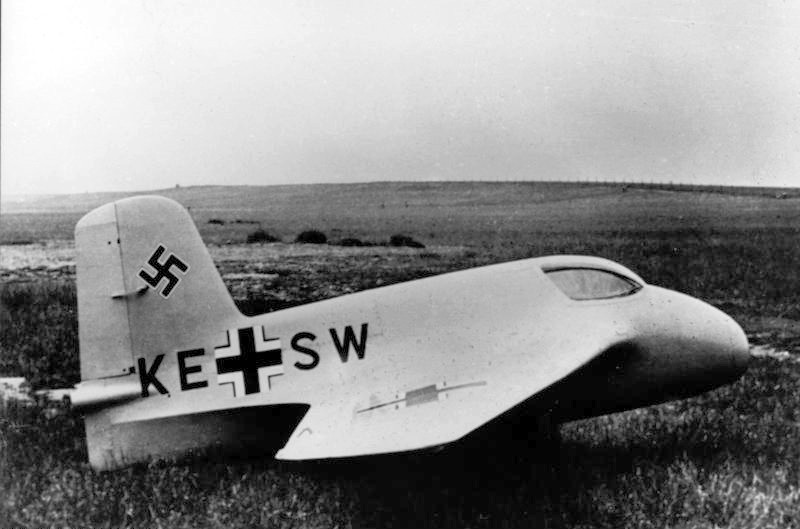
The Me 163’s August 16 interception demonstrated both the potential and limitations of the design. Its tremendous speed made the Komet difficult for Allied aircraft to intercept, but also gave its pilots very little time to aim and fire at the comparatively slow-moving bombers. Once its fuel was exhausted, the Komet became a glider and was vulnerable to Allied fighters during its return to base. Ultimately, the Me 163 achieved only a handful of victories and had little effect on the Allied bombing campaign, despite being the only rocket-powered fighter aircraft to see operational service.
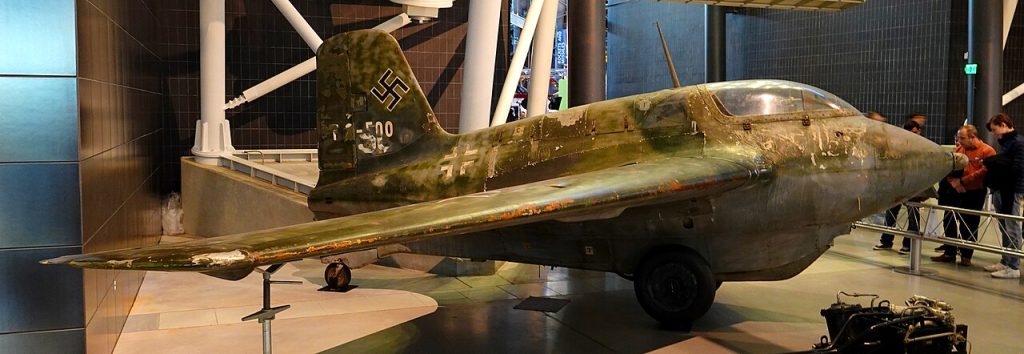
The Me 163B-1a was powered by a Walter HWK 109-509A-2 rocket engine producing approximately 3,800 pounds of thrust. It could reach a maximum speed of around 560 mph and climb to nearly 40,000 feet in approximately three and a half minutes, but carried enough fuel for only about eight minutes of powered flight. Armament consisted of two 30 mm MK 108 cannons with 60 rounds per gun. Approximately 370 Me 163s were constructed during WWII, with several examples surviving in museums today.








There was the RM-1, a 1917 project for a rocket-powered interceptor proposed by French engineer Marcel Riffard. The plane featured a 150 mm torpedo in the nose, which was also rocket-propelled. At the time of WW1…
More pilots of the 163 died in take off accidents than in combat. The fuel was so caustic it could dissolve a man
The various books I’ve read over the years covering the Me163 among other WWII combat aircraft, suggest that the number of Viermots, as the German pilots named the USAAF four engined bombers – B17 and B24, shot down by the Me163 totalled between only 9 and19. As ever, verifying the figures is difficult, but there was certainly a very small return from the time and effort and diversion of engineering talent put into developing the Me163.
According to the pilots who flew the ME163, the handling characteristics were exceptional.
I could see that the effectivness of the plane as a fighter was limited to timing the fueling and takeoff so as to get to altitude when the bombers where in that area. Too soon or too late and fuel would be exhausted before being in range to shoot. A plane could not be left pre fueled. If corrosion started and the2 chemicals came in contact with each other, the plane would explode. Fueling the plane was a lengthy dangerous event.