








The Bugatti 100P record plane: Created by Ettore Bugatti and Louis de Monge, by Jaap Horst, reviewed by Joe May
Jaap Horst (Bugatti Aircraft Association) has written a masterful work of this prescient aircraft design, once years ahead of its time in the late 1930s—Ettore Bugatti’s SciFi-esque 100P. Tandem 450 hp power plants, counter-rotating propellers, automatic flaps and landing gear, air intakes faired into the empennage, and a fuselage design which looks more like a marksman’s long-range bullet than any aircraft of its day. Alas, it never flew—another project first interrupted, then overtaken, by the events of World War II. Miraculously, it survived the war hidden under the noses of the occupying forces until it was finally welcomed home at the EAA Museum in Oshkosh.

But there is an intriguing story that lies between Bugatti’s initial design of the 100P and the 100P’s display in Oshkosh. Jaap Horst is the expert to know it and to tell it. Not only a Bugatti enthusiast, especially the 100P, from a young age, he is also an engineer gifted with the ability to relate history interestingly as well as engineering in plain speak. Did the 100P inspire him to study engineering, or did his latent engineering talent seize on the 100P (chicken or the egg conundrum)?
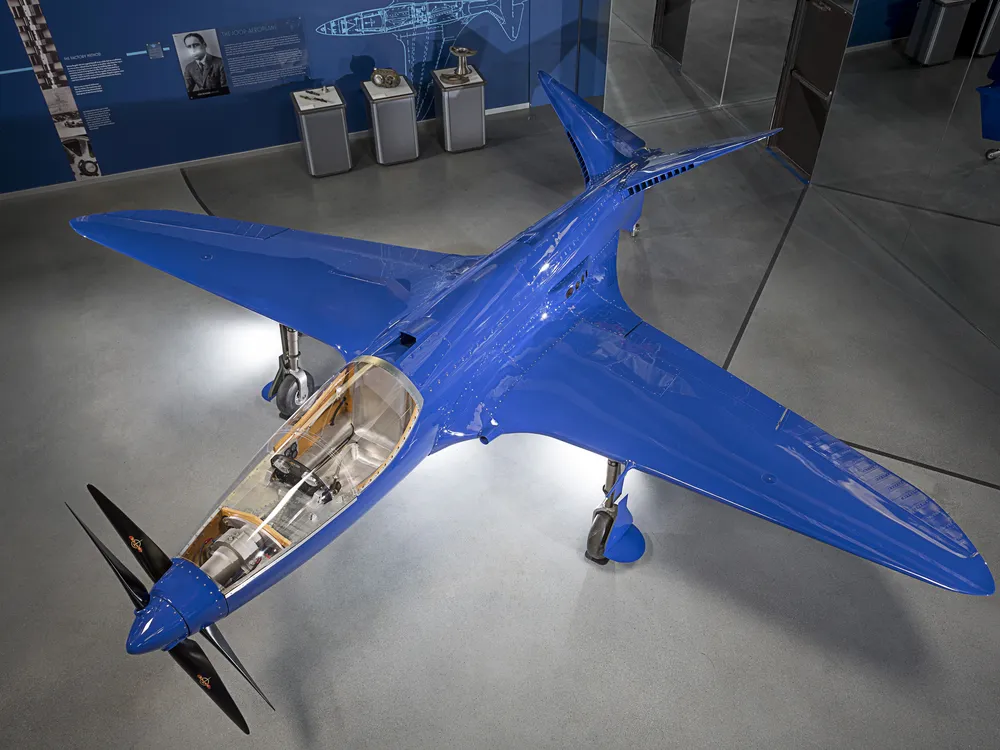
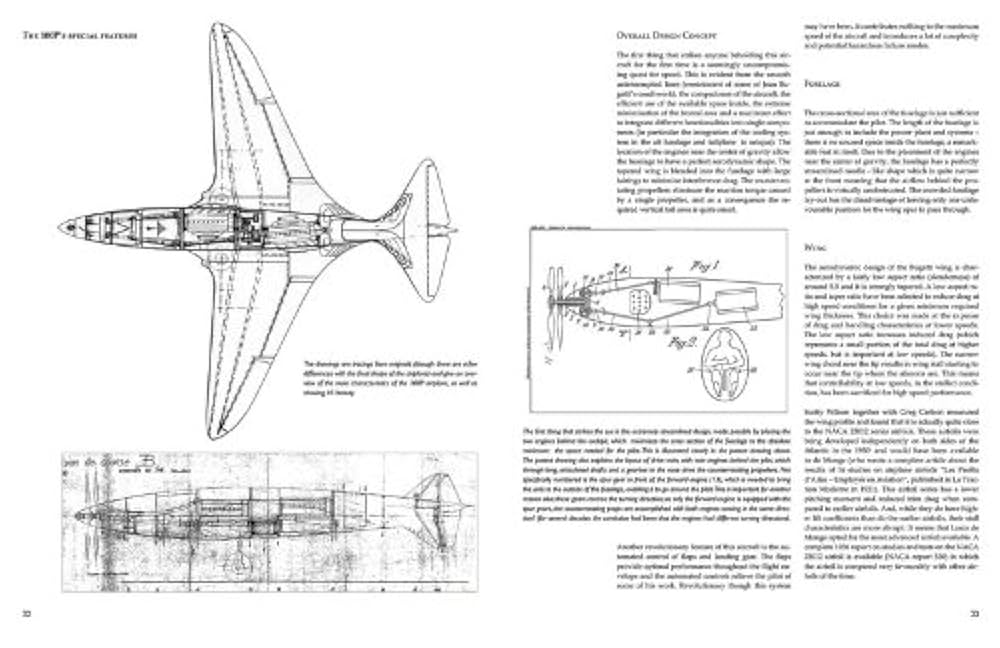
Between the Bugatti blue dyed book covers lie over 400 photos (many custom) and drawings, which Horst presents while smoothly telling this amazing story of design and the effort to bring this novel design to life. The 100P both inspires and is inspired. Speed is the singular aim with the 100P, and everything done was to promote speed. Horst artfully explains the aerodynamic decisions with their pros and cons (there are always pros and cons in aeronautical designs, always compromises) with no pithy adages or high-mindedness. Jaap Horst follows Einstein’s wise saying, if one cannot explain it to one’s grandmother, then one does not really know the subject. We learn why the wing tips were swept forward and how this was both required and detrimental. Horst illustrates no less than five paradigm-altering advancements introduced by the 100P for aviation’s future designs.
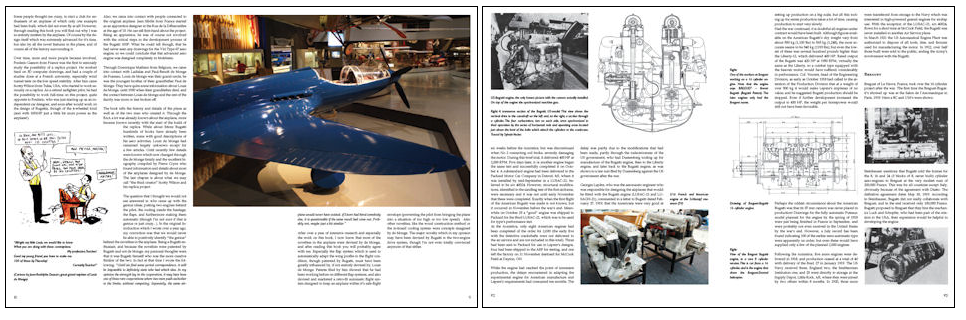
Readers will be fascinated by the back story of designs by Ettore Bugatti and equally forward-thinking Louis de Monge—as well as their efforts to place the 100P on paper, then to lift it from the engineering sheets to the hangar. Readers will be educated and come to understand aeronautical design to a much greater degree since Horst has this uncommon ability to naturally teach, as well as the 100P’s sole reason for creation—to capture speed records in France’s honor. The twin engines, counter-rotating propellers, and capsule-shaped fuselage owe everything to the quest for speed. Horst also relates his deep aeronautical understanding by casually explaining many not-so-obvious details, and the why of those details, such as:
- The box spar narrows through the fuselage
- The cardboard “protection” from the multiple drive shafts and universal joints
- The laminated wood construction
- The high-performance Bugatti engines
- air flowing through the fuselage—an engineering challenge requiring surmounting cooling issues so the engines could breathe properly
- The future of the 100P as an interceptor with the coming of war, or not
The book ends with the beginning of the incredible story of Scott “Scotty” Wilson (retired U.S. Air Force fighter pilot/commercial jet pilot/certified aviation mechanic) researching and building an outwardly appearing replica 100P though utilizing modern fiberglass and carbon fiber reinforced pre-manufactured sandwiched wood instead of the original wood lay-up construction, as well as a pair of Suzuki Hayabusa motorcycle engines in lieu of the original Bugatti high performance T50B engines (resulting in half the original horsepower for about the same weight). The photos and engineering solutions presented are marvelously colorful, large, and in high resolution. This book is extraordinary for its completeness as well as readability regarding the 100P’s singular place in aviation history. It is also exceptionally well produced in glossy white stock. The paradigms set by this Bugatti design carry forward today. Though the 100P never fle,w it inspires fiction writers to no end. This book belongs in any library or on any coffee table as the Bugatti 100P satisfies both the art and engineering sensibilities.
| Hardcover
Publisher: Violaero Year published: 2015 11.5” x 9” Index none Bibliography ✔︎ Notes none Photos (hundreds) Cost: available only on the used market ISBN 978-90-8616-123-2 |
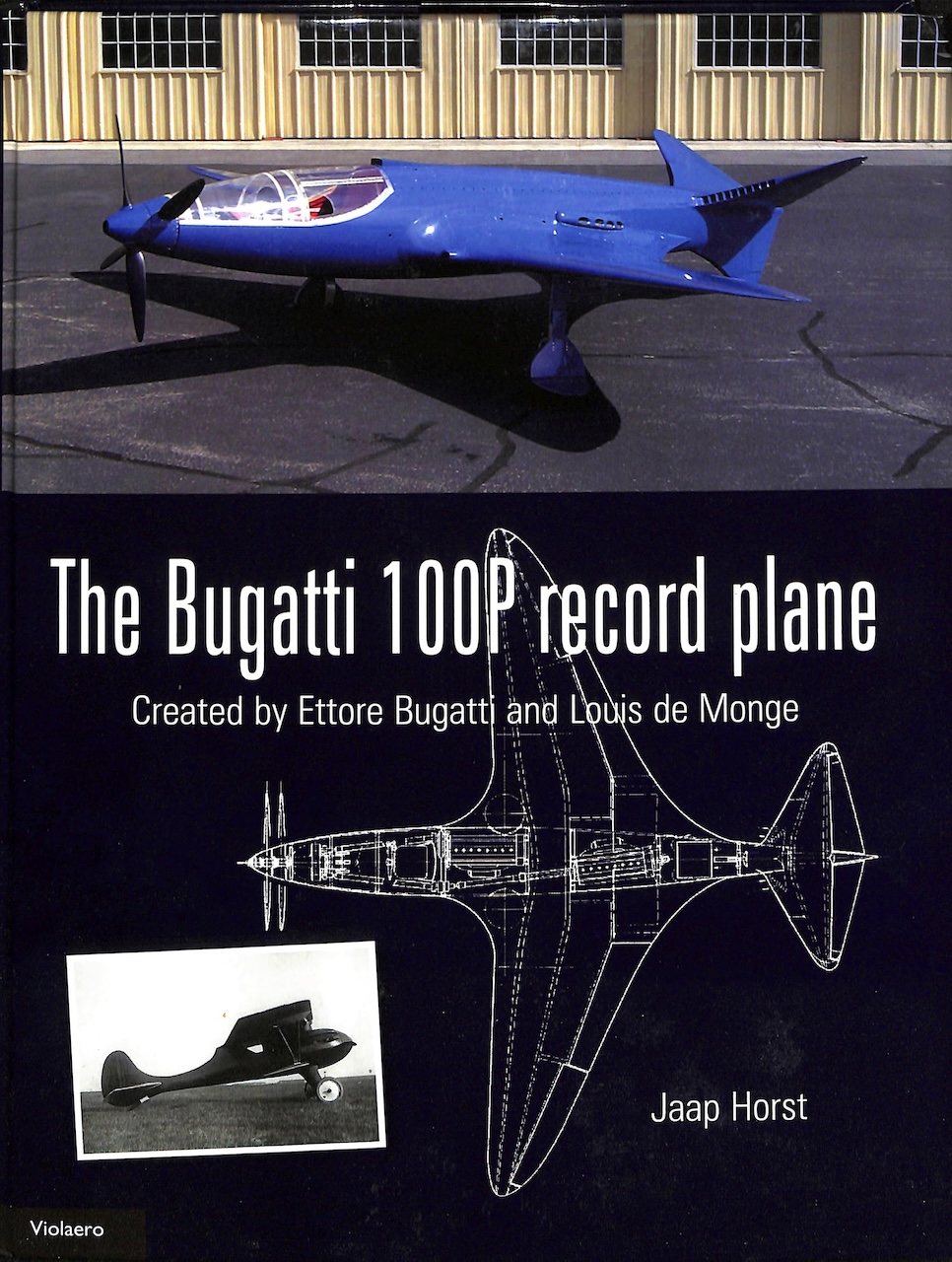















That book has long been out of print, a completely rewritten book is about to be released.
See: https://bugattipage.com/bugatti-de-monge-100p-record-plane.htm