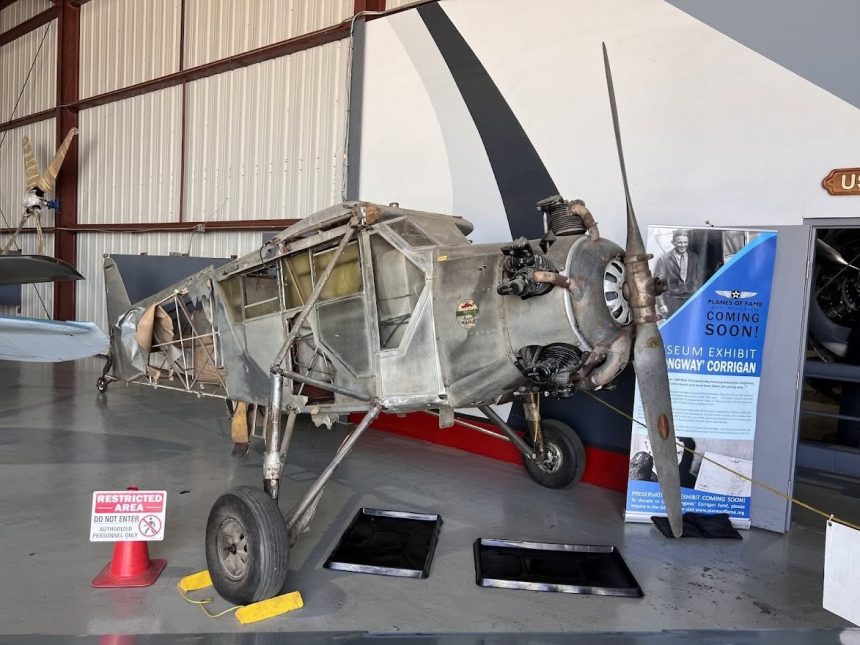

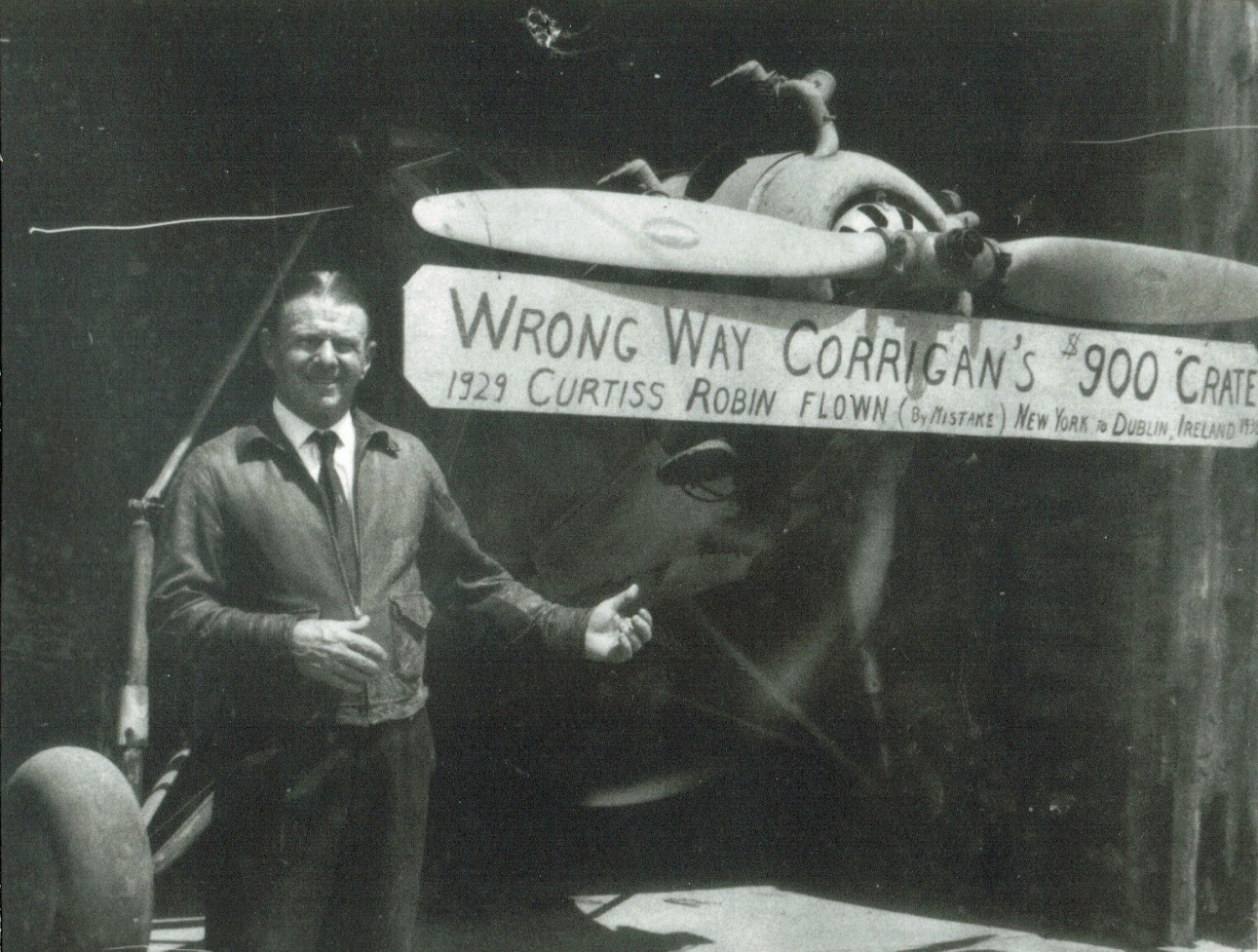
In October 2019, a moving truck arrived at the Planes of Fame Air Museum in Chino, California, carrying a relic of aviation history. Since then, the contents of that truck have been on display at the museum, a nearly 100-year-old Curtiss Robin made of wooden longerons, sheet metal panels, and aging, tattered fabric. Though its ragged condition stands as a sharp contrast to the gleaming warbirds of World War II that surround it, this aircraft was once the pride and joy of one of America’s most colorful aviation heroes, a man who landed in Ireland while claiming he had intended to fly home to California from New York, and for a brief moment, became a legend in his own lifetime before fading into obscurity, and taking his beloved Robin away from the public view. This is the story of Douglas “Wrong Way” Corrigan.
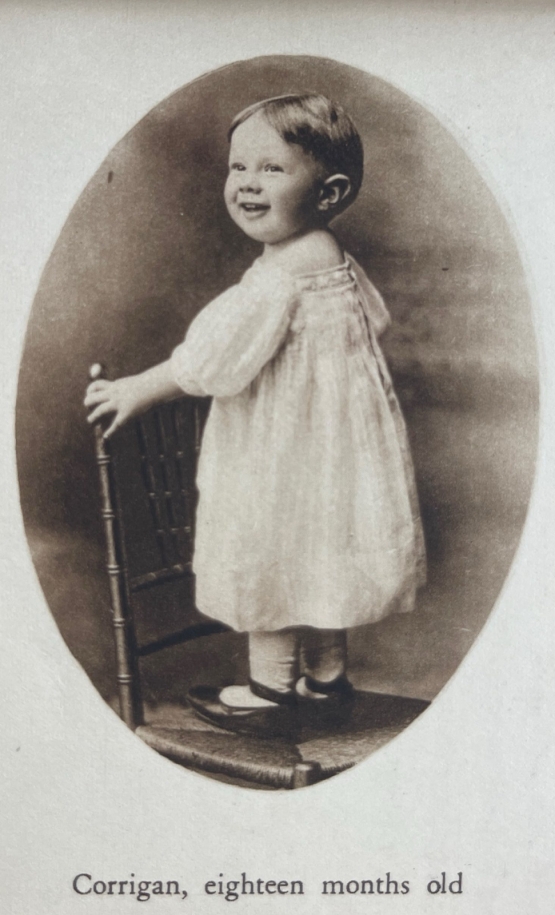
If there’s one thing that Americans tend to love in the story of a hero, it’s that of one who came from humble beginnings and worked his way up before seizing the moment that would make them a part of the history books. As far as aviation figures are concerned, Douglas Corrigan fits that bill perfectly. Born as Clyde Groce Corrigan in Galveston, Texas, on January 22, 1907, he was the oldest of three children to Clyde Sinclair Corrigan, a civil engineer from California, and Evelyn Groce Nelson, a schoolteacher from Pennsylvania. His parents had met each other at the Alamo in San Antonio after they had both moved to Texas on their own and were married in 1905. After Clyde was born, they welcomed a second son, Harry, and a daughter, Evelyn, in 1908 and 1911, respectively. When he was 15 months old, young Clyde took first place in a baby contest held in Galveston, with Corrigan reflecting later, “I must have been better looking than now.”
The elder Clyde moved the family a few times during the younger Clyde’s early childhood, going from Galveston to Aransas Pass (just outside Corpus Christi), then settled into a middle-class home in San Antonio in 1913. In addition to his income as an engineer, Corrigan’s father loved to tinker with all kinds of inventions that found no commercial success. He also bought several property lots near their San Antonio home and hired carpenters to build houses on them, then turned around and bought a candy shop called “The Palace of Sweets”, directly across the street from the Alamo. Young Clyde and Harry went to the store with their father every chance they got and were occasionally chased out of the bakery for sampling the cakes and candies. The family then moved into a new house near Brackenridge Park, where young Clyde delighted in visiting the park’s zoo and going to the swimming pool with other children. However, when business encountered a slump, Clyde Corrigan left the family rather than face his mounting debts, leaving Evelyn to care for the children as a single mother in a rental house after her husband’s assets were seized, and later, Clyde Corrigan would divorce Evelyn.
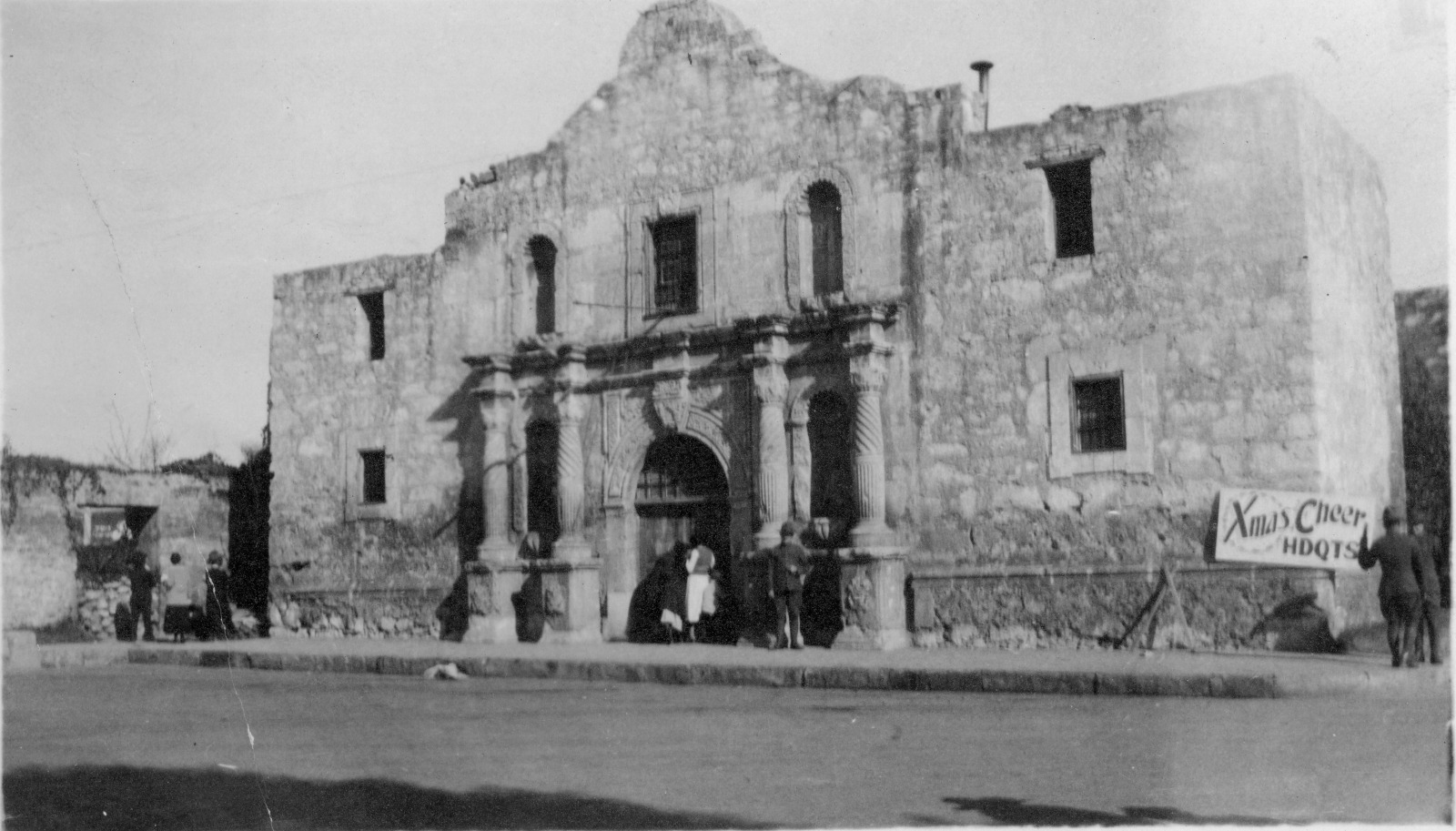
In order to help make ends meet, young Clyde would sell newspapers after school, with his mother helping catch up on his homework after dark. During World War I, San Antonio was filled with thousands of soldiers from across the country undergoing training before heading off on troopships to France. Corrigan remembered scenes of soldiers going into town and singing songs like “It’s a Long Way to Tipperary” and witnessed training airplanes fly over San Antonio out of airfields such as Kelly Field and Brooks Field. During the war, Corrigan’s favorite actor, Douglas Fairbanks, was on tour in San Antonio, and young Corrigan managed to sell Fairbanks a newspaper. Not long after this encounter, Clyde Corrigan changed his name to Douglas. By the end of World War I in November 1918, Corrigan’s mother decided to look for new opportunities and a new place to live, and in July 1919, she moved the family to Los Angeles. On arriving in Los Angeles, Douglas Corrigan and his siblings resumed their education. In school, Corrigan would later write, “In my studies I was fair in arithmetic, poor in geography and poor in English. It was in history that I made the best marks. Caesar and Alexander and Napoleon were great men, but Lincoln was my favorite.” In the summer of 1920, when Douglas was 13, he took a job at the Woolacott Cannery in downtown Los Angeles, washing bottles for strawberry jam. But around this time, Corrigan’s mother was in ill health, and took Douglas, Harry, and Evelyn to Kentucky to visit her sister. Around this time, Douglas and Harry would reunite with their father, who had since remarried, and the brothers moved with their father to New York, while their mother returned to Pennsylvania to improve her health.
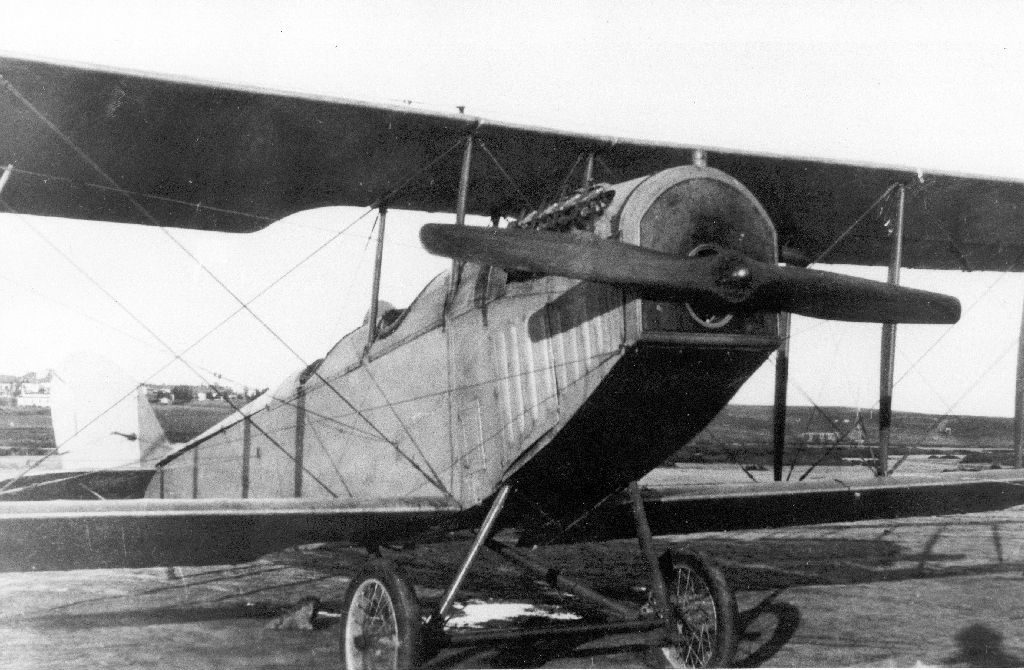
In the summer of 1921, Corrigan’s mother, Evelyn, was well enough to take the children back to Los Angeles, where Douglas worked more summer jobs between school, but tragedy struck the Corrigan children when their mother, Evelyn, died in October 1922. While their sister, 11-year-old Evelyn, went to live with an aunt and uncle in Vallejo, California, the Corrigan brothers would live on their own in Los Angeles at just 15 and 14, respectively. Douglas soon left school and became the breadwinner for his brother, but being 5 ‘5 and 110 lbs., Douglas was not what employers had in mind for labor-intensive jobs that did not require formal schooling yet he found a new job on a sanding machine at a lumberyard before getting a job driving a truck to housing development projects on behalf of an investment company, which earned enough money for Douglas and Harry to live off canned food in a room with a kitchenette, but Douglas soon adapted to live on two, then just one meal a day. Corrigan’s ambition at this time, meanwhile, was to take correspondence courses to become an architect. In October 1925, Corrigan’s attention had turned skywards. Until then, 18-year-old Douglas had never seen an airplane up close until he saw a new airfield while driving his truck with a contractor named Goff who had once served as an aircraft gunner on British Royal Navy flying boats during WWI. Curious about this place, Corrigan made his first visit to the airfield on a Sunday (his day off from work), and saw WWI surplus training biplanes taking off and landing, namely a single Curtiss JN-4D “Jenny” and some Standard J-1s being used for a few flights that day. The Standards, though, had been converted into small airliners by the Ryan Airline Company of San Diego, and were fitted with 180hp Hispano-Suiza V8 engines and an enclosed cabin for four passengers while the pilot sat in an open cockpit in the rear on the flights to and from San Diego. Corrigan would later describe the airfield as such: “The field was just a place where the brush had been cleared away and there was a small shed over on one side where they had a spare motor they worked on, and out by the road was a small one-room office with a porch on the front. There was no hangar so they just put a canvas over the motor and tied the wings down to stakes at night so the planes wouldn’t blow over if a strong wind came up.”
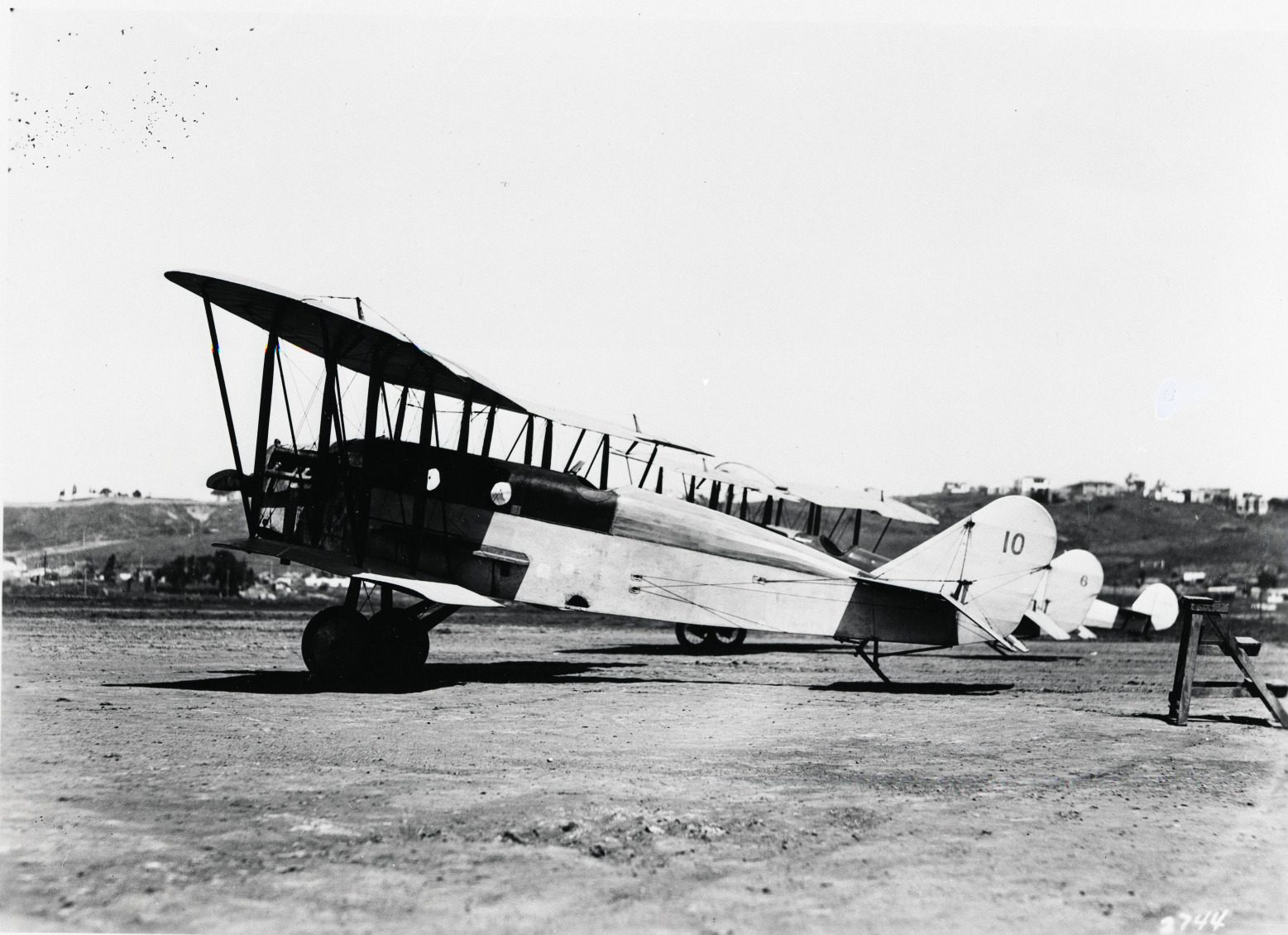
The next week, Corrigan saved up two and a half dollars and set out for the airfield. He talked to the manager and asked him all about the airplanes, but even when the manager answered Corrigan’s questions, the young man would later recall: “After I had heard all the answers I didn’t know any more than I did before.” He then walked up to a pilot talking to a mechanic and another man, with Corrigan saying “…they were talking [in] a language I couldn’t understand. They were looking up and saying something about the ceiling-and here they were outdoors at the time, where there wasn’t even a roof overhead-much less a ceiling.” At the end of the day, Corrigan would ask the pilot, “How about taking me up?” The pilot did not respond to this initial request, so Corrigan took out his money, held it in front of the pilot, and said, “I’d like to buy an airplane ride”. Before he knew it, Douglas Corrigan put on a leather helmet and goggles and climbed into the cockpit of the Curtiss Jenny on the field before taking his first flight. It would be an experience that he would never forget. “I looked around and was surprised that it was possible to see so many things in just a short distance. We made a wide turn and headed toward the center of Los Angeles, which showed up very plain through the whirling propeller. Looking to the left, I saw the Hollywood hills and the houses in between, especially those on West Adams Street where the ground was higher and the houses larger.” The flight also flew out within view of the Pacific Ocean, with the water gleaming in the setting sun. After ten minutes, Corrigan’s first flight came to a close, and though his ears were still ringing after the engine was shut off, there was no looking back for Douglas Corrigan. He was determined to learn how to fly.
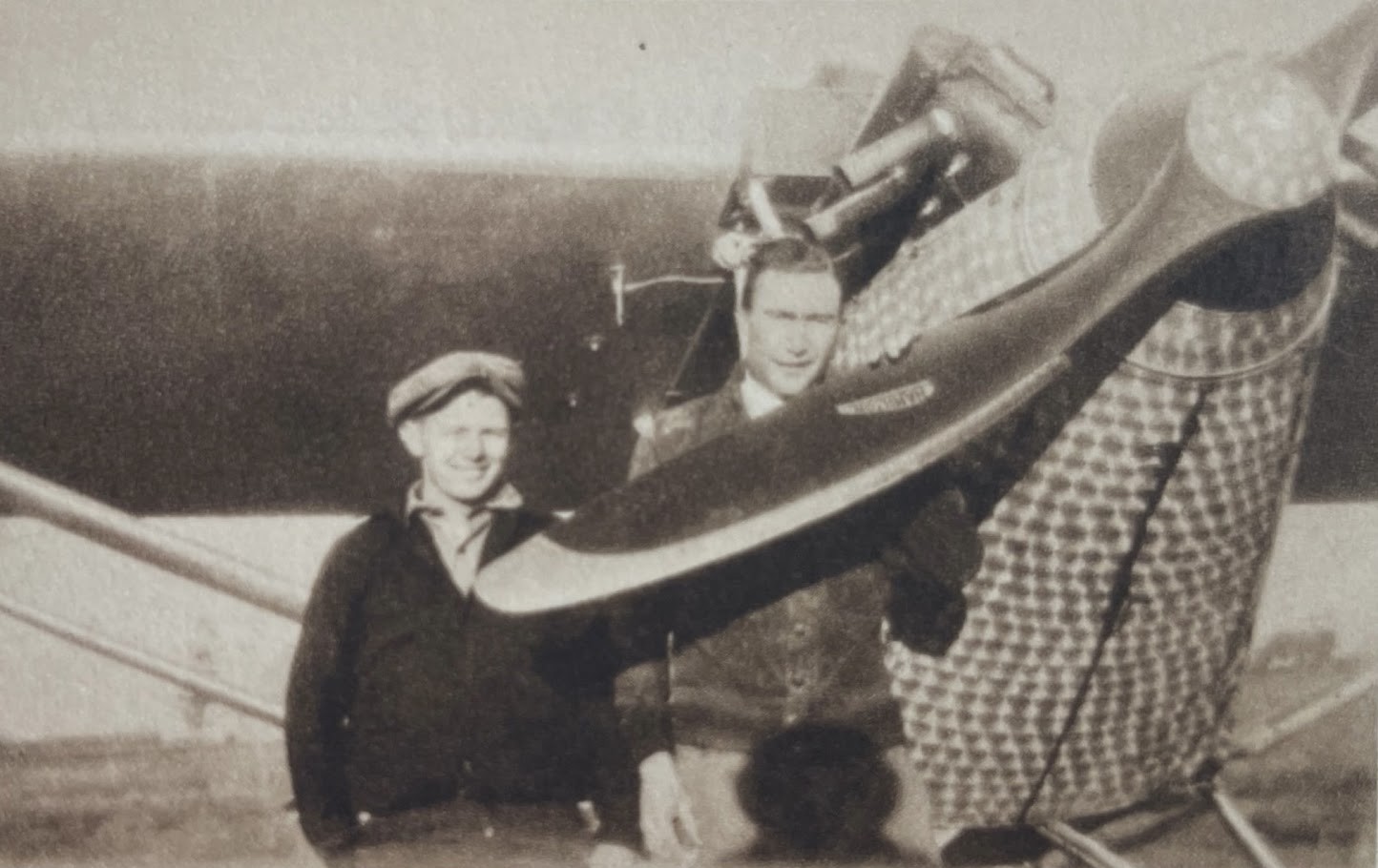
On October 25, 1925, returned to the airfield with five dollars and asked the manager, one Jesse Bennett “J.B.” Alexander, how much it would cost to learn to fly, to which Alexander told Corrigan it would be twenty dollars an hour, with the shortest lesson being fifteen minutes. After this, Corrigan began his first lesson with a pilot named George W. Allen, who would use hand signals to instruct Corrigan. After fifteen minutes in the air, Allen instructed Corrigan to take his hands and feet off the controls, and he would land the plane. However, Allen put the Curtiss Jenny into a tailspin, but Corrigan thought the airplane was out of control. Nevertheless, Allen landed the plane, and Corrigan recalled that the other pilots at the airfield were disappointed that he wasn’t sick from the spin. From then on, Corrigan returned every Sunday to the airfield for more 15-minute lessons, only sticking to the ground when the weather was bad, or the engine wasn’t working. When he wasn’t taking flight lessons, Corrigan began assisting the mechanic Donald “Shorty” Rossiter in repairing the aircraft engines and learning from him how to repair airplanes as well. Given Corrigan’s lack of knowledge with aviation terminology, Shorty often pulled pranks on him, from telling him aircraft dope would put holes in his cotton pants to making him look for propeller wash.
As Corrigan continued his flight lessons in 1926, the Ryan Airline Company began to replace their old modified Standard cabin biplanes with the brand-new Ryan M-1 monoplane, which took over the San Diego – Los Angeles routes. As such, the Ryan Airline Company’s founders, T. Claude Ryan and Benjamin F. “Frank” Mahoney, called George Allen down to work in San Diego, leaving fellow Ryan Airline pilot J.J. “Red” Harrigan to complete Corrigan’s instruction work. On March 25, 1926, Harrigan took Corrigan on three instruction flights in the Curtiss Jenny before telling him, “Now, go up and do everything just like you’ve been doing this morning, only be sure to land way down the field, so as not to get close to the crowd around the new ship.” For a moment, Corrigan thought he was kidding, but Harrigan kept away from Corrigan, so Douglas Corrigan made his first solo flight after just four and a half hours’ worth of instruction flights. Looking back on this moment, Corrigan would say it was “…the biggest day of my life. … From now on I was a pilot, not just a student.” For the remainder of 1926, Corrigan would continue to work with the investment company building houses in Los Angeles while getting more experience with airplanes as a pilot and a mechanic. The Ryan Airline Company would cease operations that year, but the Ryan Aeronautical Company in San Diego began building new mailplanes for a new company, Pacific Air Transport (PAT), which would fly an airmail/passenger route from Seattle to Los Angeles. Corrigan’s friend “Shorty” Rossiter would work for PAT, but his death in a flying accident in November 1926 would make Corrigan put off flying for a few weeks. In January 1927, though, Douglas Corrigan decided to leave his job in Los Angeles and find work in San Diego with Ryan Aeronautical while putting his brother Harry through high school in Los Angeles.
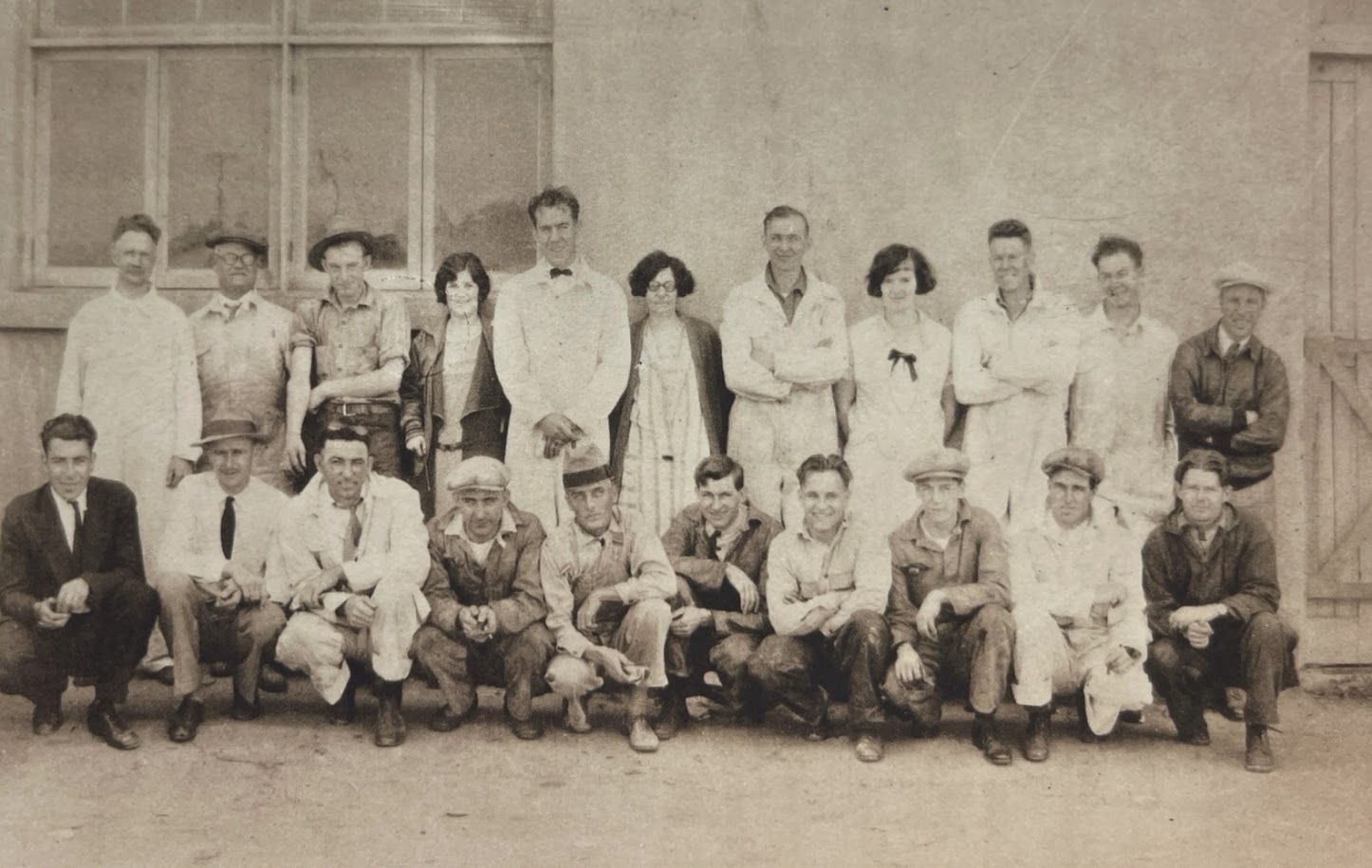
On February 2, 1927, Douglas Corrigan took everything he owned on a motorcycle and drove to San Diego. He soon got a job working for Claude Ryan, who established an airfield at Dutch Flats (now under the Midway District of San Diego, about one mile from the current San Diego International Airport). Corrigan worked as both an airplane mechanic and as a flight instructor, and later that month, a tall and slim airmail pilot arrived from St. Louis, Missouri seeking to have an airplane built for him capable of flying nonstop from New York to Paris. His name was Charles A. Lindbergh, and he was trying to win the coveted Orteig Prize, worth $25,000.
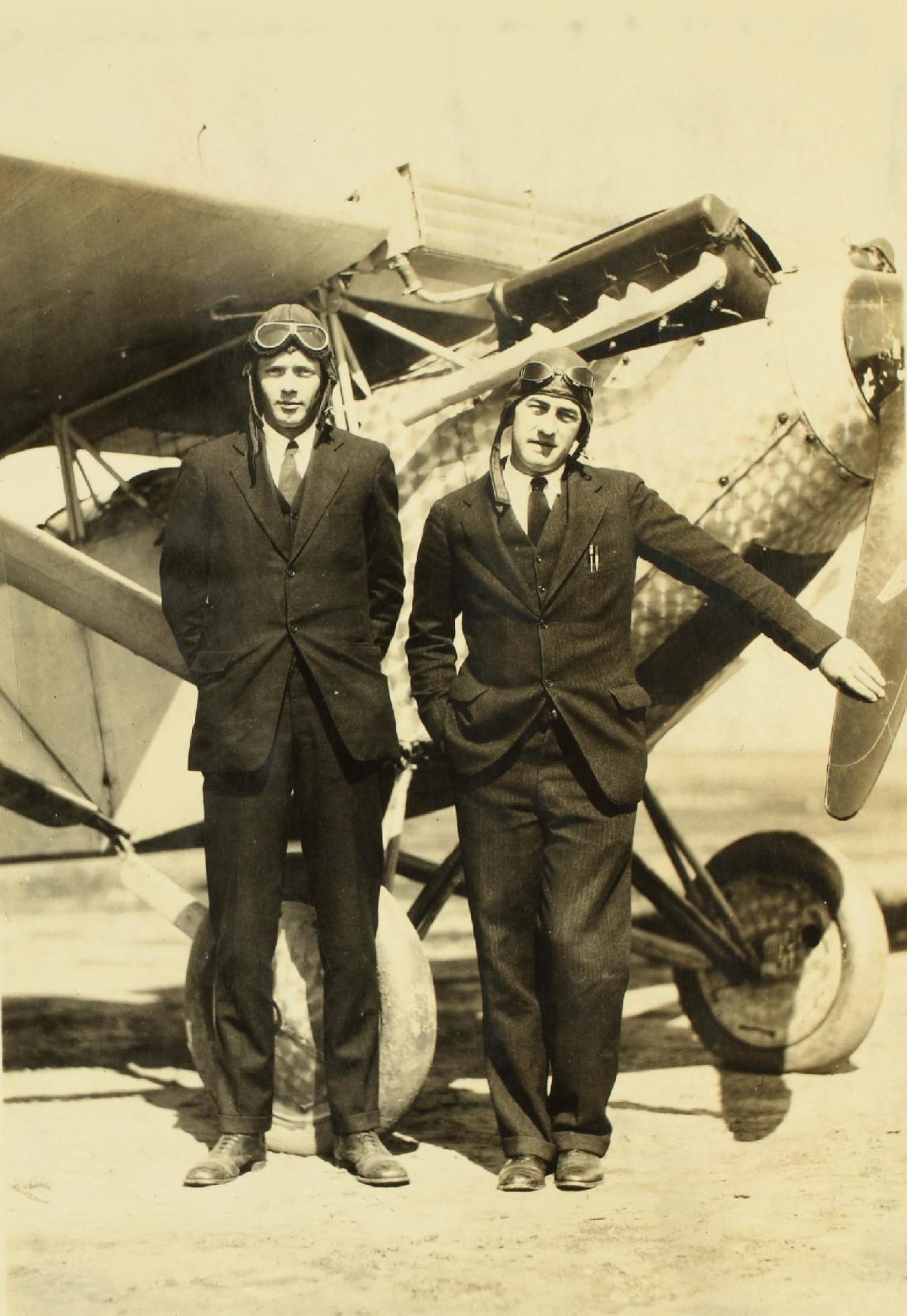
Initially, Corrigan was not impressed with Lindbergh, and when fellow mechanic John van der Linde asked Corrigan to start the Hispano-Suiza engine of a Ryan M-1 monoplane for Lindbergh and Benjamin F. Mahoney, and told him of Lindbergh’s intent to fly to Paris, Corrigan replied “Gosh, he looks like a farmer, do you suppose he can fly?” van der Linde replied, “Well, I guess we’ll find out soon.” The two mechanics pulled the M-1’s propeller, and Lindbergh and Mahoney took off and flew over San Diego. Corrigan would later remember that flight, saying “… he came down over the field about 200 feet above the ground, headed up-wind, and did nine consecutive loops, with a wingover at the end, after which he brought the plane in and made a good landing. John said, ‘Well, I guess he can fly all right.’ I agreed he could. That had been the most perfect low altitude stunting we had ever seen.” Following this flight, Lindbergh worked with designer Donald A. Hall, who drew up a design based on the Ryan M-2 mailplane, but the new airplane, the biggest the small Ryan firm had built up to that point, would have to be ready to fly in 60 days or less. Ryan’s employees would work around the clock on what would be formally named the Ryan NYP, but better known to history as The Spirit of St. Louis. Douglas Corrigan was one of the mechanics who constructed the Spirit of St. Louis, from making wing ribs and assembling the 46-foot wing to installing the fuel tanks and gas lines and sewing and doping fabric on the frame. Corrigan also helped to install the instrument panel and periscope for looking out the side of the aircraft.
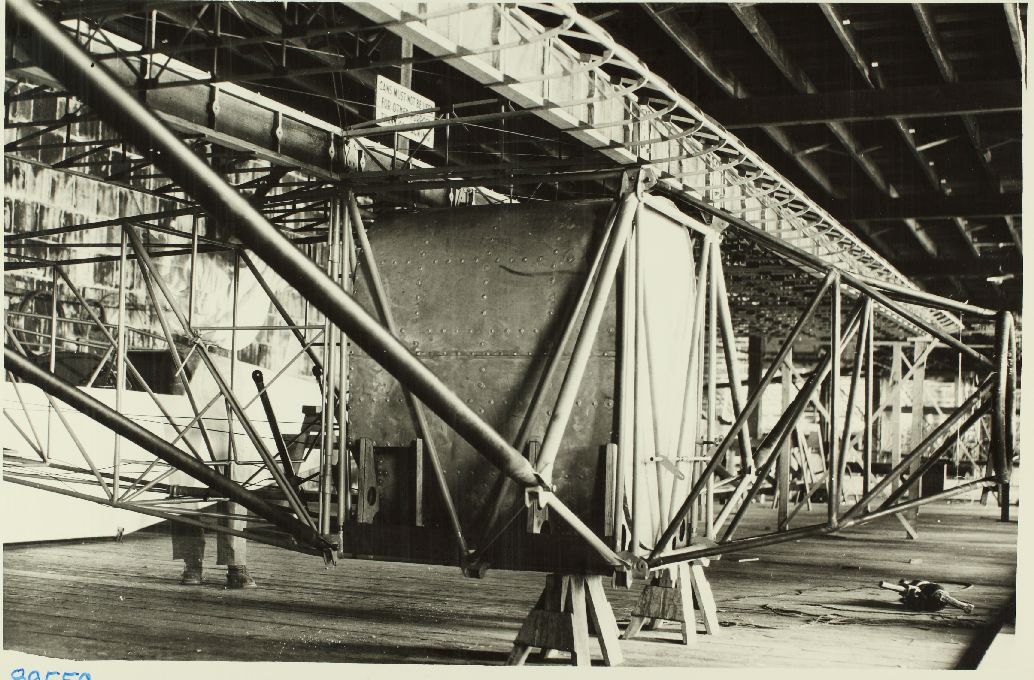
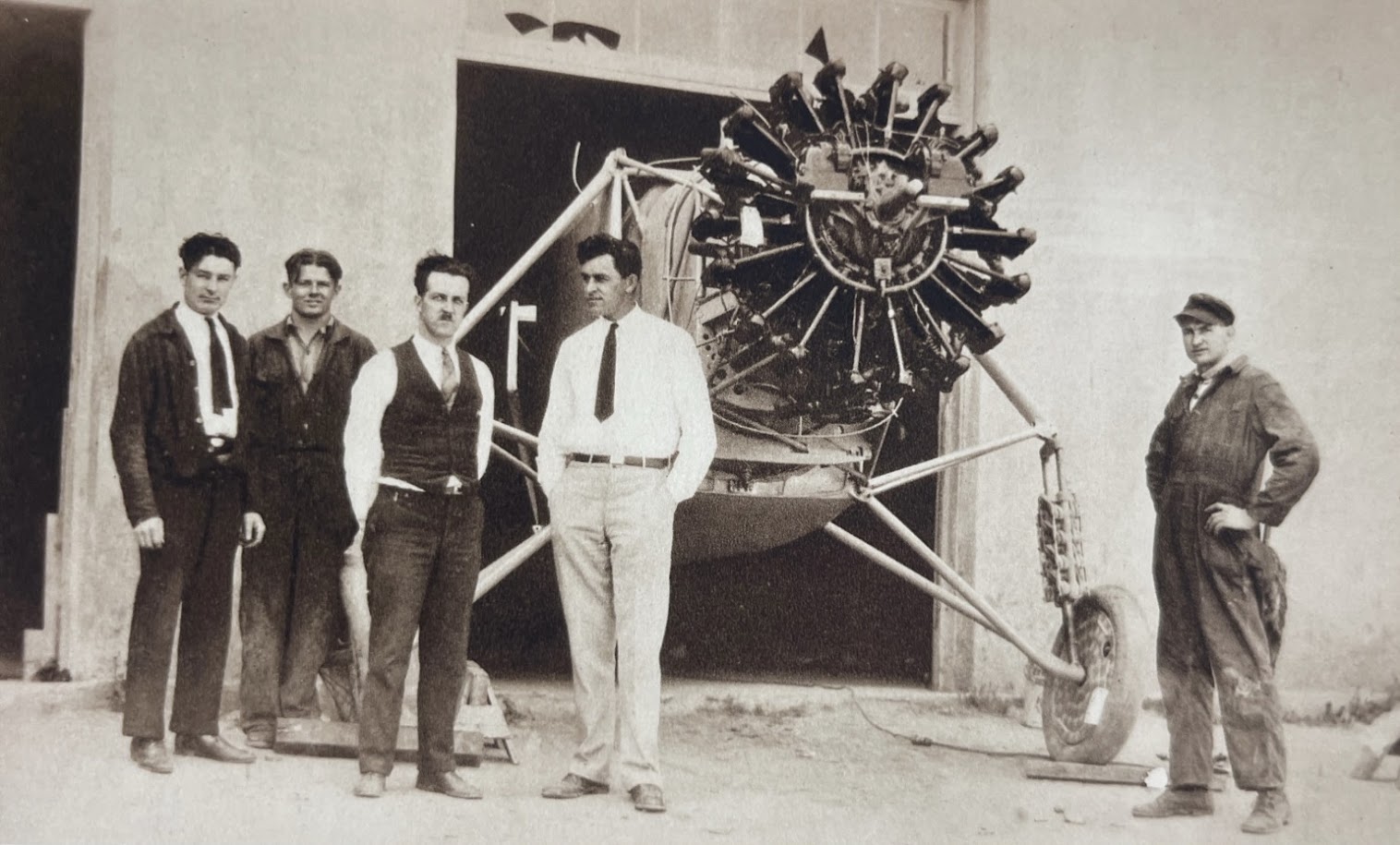
There were times when Corrigan and his fellow employees would work until midnight, then start work at 8:00 AM the next morning, and at one point, they worked until 3 in the morning to sew the fabric to the NYP in order for it to be doped the next day. Nevertheless, the crew was highly motivated, and Lindbergh was ever present on the factory floor, showing the mechanics exactly how he wanted the aircraft to be outfitted down to the minute details. Additionally, Ryan Aeronautical’s thirty-five employees, from mechanics to office workers, wanted to get the plane faster as soon as possible to beat the competition, which was highly favored to win over the upstart Lindbergh. By April 1927, the airplane was ready to be moved from the factory on Juniper Street to Dutch Flats Airport. The wing, which was built as a singular unit, had to be guided through an upstairs window onto a railroad freight car, then lowered to the ground with a crane. Later, one side of the landing gear had to be removed just for the fuselage to be rolled out. Once the fuselage and wings were brought to Dutch Flats, Corrigan was one of the men who pulled the fuselage under the wing that was suspended above, then he put the bolts in the wing fittings.
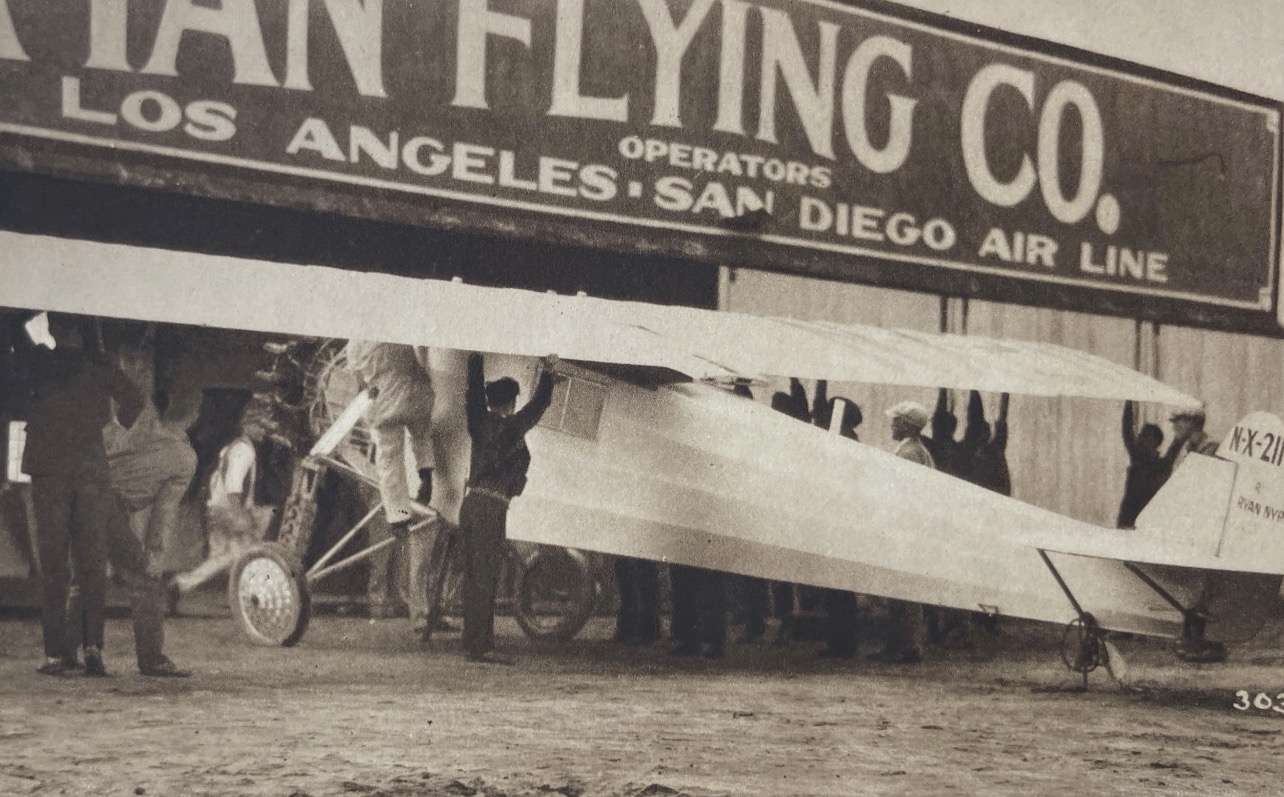
On April 28, 1927, Charles Lindbergh took the Spirit of St. Louis (registered NX211) for its maiden flight. For the next two weeks, Lindbergh put the Spirit through its paces, and during one of these flights, the NYP had a terrible flutter in the rear fuselage, the result, as it turned out, of a jam in the universal joint of the earth-indicator compass driveshaft. Corrigan, being the smallest mechanic on the aircraft, was tasked with crawling through the fuselage and removing the compass generator. It was discovered that the bearing had castor oil in it for a year, resulting in the Spirit of St. Louis getting a new earth-indicator compass. On May 10, 1927, Lindbergh left San Diego in the Spirit of St. Louis, landing in St. Louis, Missouri, before proceeding to Long Island, New York on May 12, and on the morning of May 20, 1927, he took off from Roosevelt Field and landed at Paris’ Le Bourget Airport on the night of May 21 after 33 hours and 30 minutes. The mood in San Diego was ecstatic on hearing the news, and Ryan Aeronautical expanded greatly, going from 20 mechanics and assembly workers to 120. Corrigan would receive training to become a welder at the Ryan factory, and for a few weeks during the summer, his brother Harry came down from Los Angeles to work in the aircraft factory as well. Douglas Corrigan was now interested in saving enough money to buy his own airplane, making the occasional Sunday flight and helping aerial photographer Harold A. “Jimmy” Erickson to develop photos.
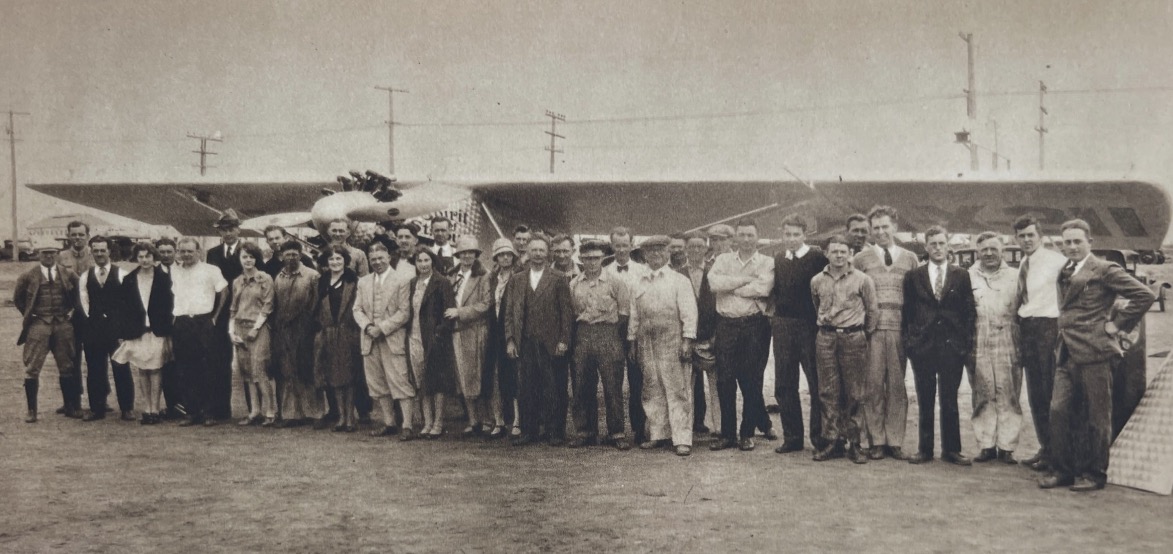
In December 1927, with the US Department of Commerce now issuing licenses for pilots and mechanics, Corrigan was issued an Airplane and Engine Mechanics’ license number 1718. All the while, Corrigan continued to work as a welder but still dreamed of going out on his own with his own airplane. In October 1928, it was announced that Ryan would move the factory to Lambert Airport in St. Louis and offered workers like Corrigan the chance to move to Missouri with the company. However, Corrigan was one of dozens who decided to stay in San Diego and find new work closer to home, with Corrigan picking up a job with a new flying school, the San Diego Air Service, and later with the Airtech School of Aviation at the new Lindbergh Field (now San Diego International Airport).
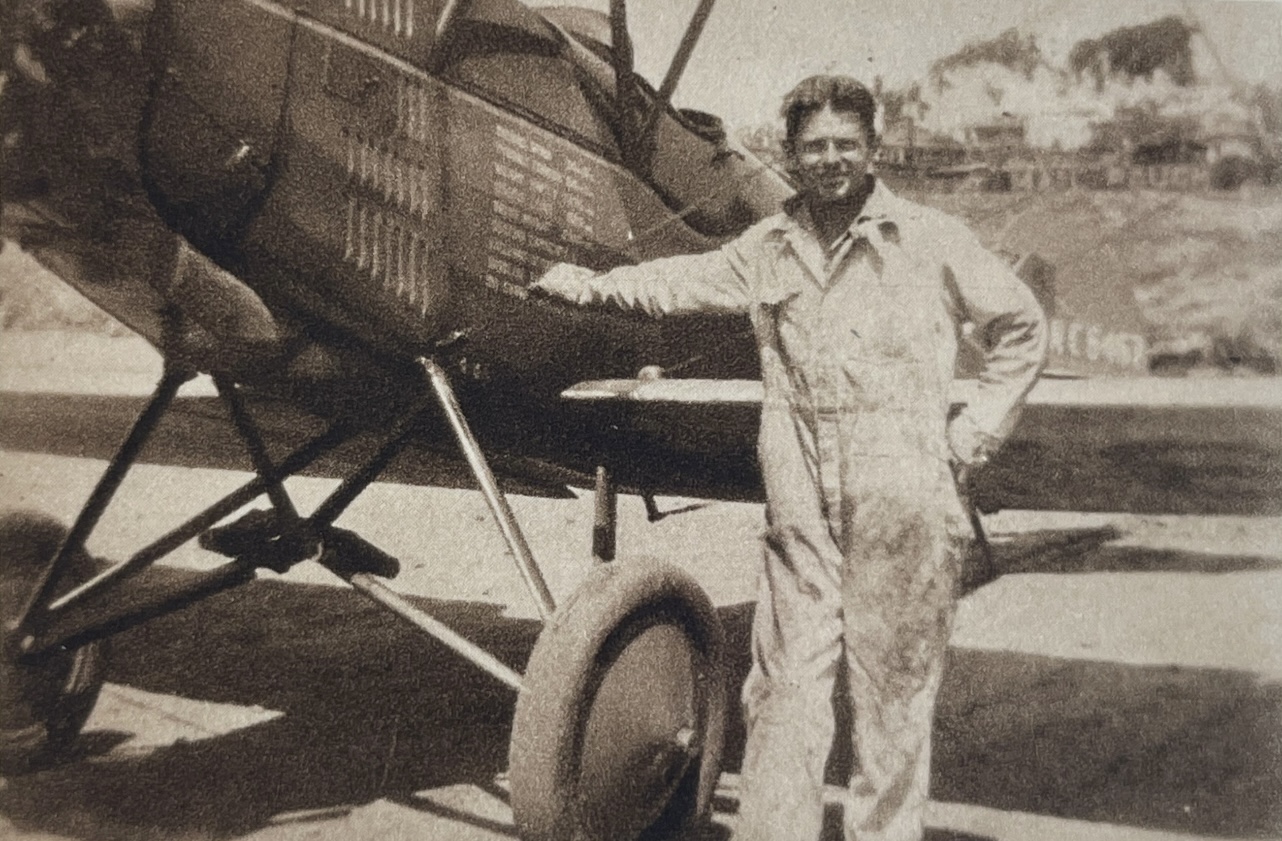
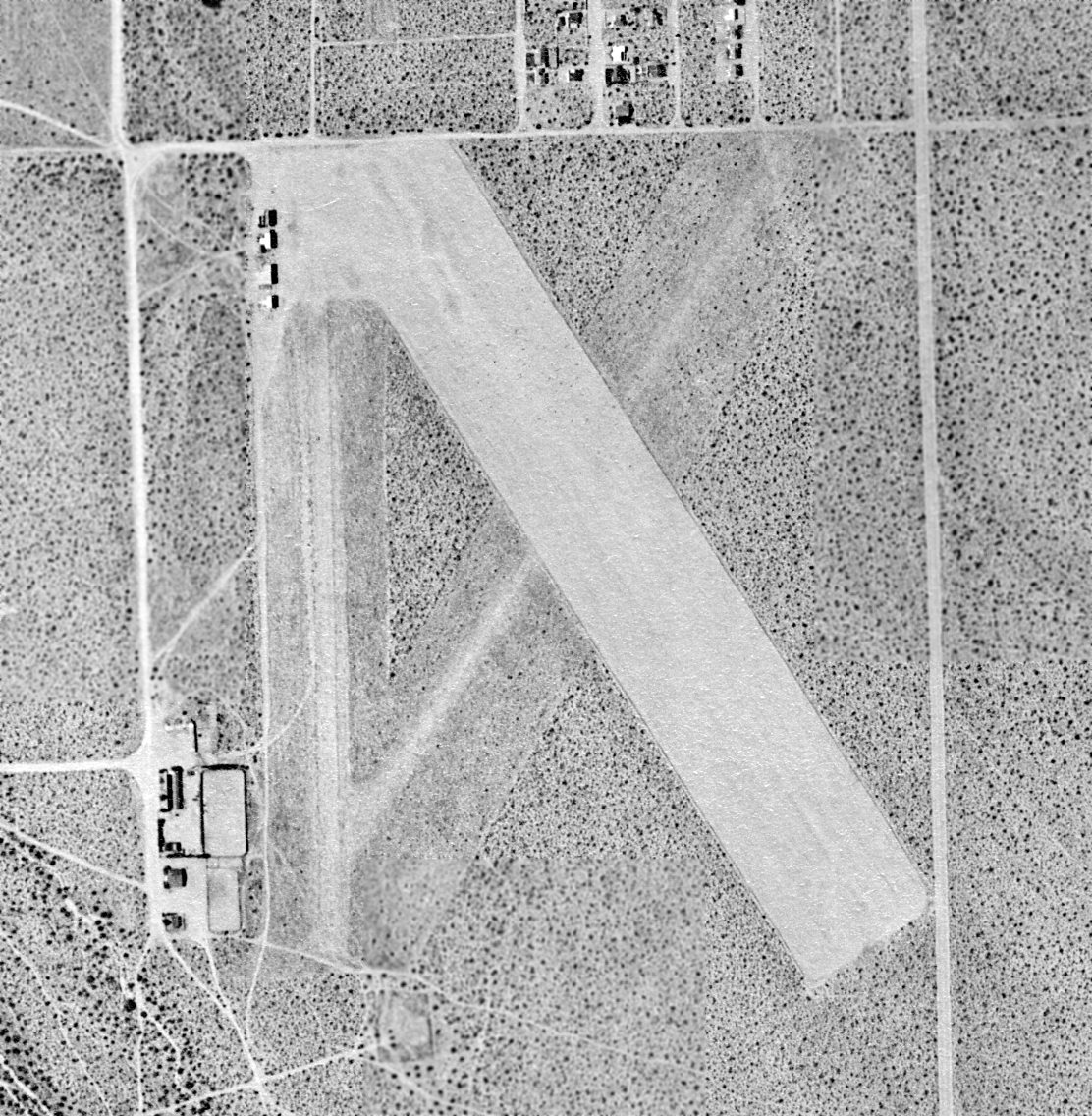
During his time as a mechanic, Corrigan worked on Travel Airs, Monocoupes, and Ryan Broughams, and used his lunch hours as his opportunity to fly the airplanes when they weren’t being used for instructing student pilots. On more than one occasion, he was threatened with disciplinary action for performing low-altitude stunts, from performing chandelles just off the ground to buzzing a rowboat and a large flock of ducks on the Sweetwater Reservoir, only to find out afterward he had buzzed the Game Warden! Corrigan would simply fly out of visual range of the airfields to continue his stunts, but also experienced flying at night in Travel Air biplanes, going up to 10,000 feet and seeing the lights of Los Angeles from San Diego. By October 1929, he had earned an official transport pilot’s certificate in time to be sent to Palm Springs to become assistant pilot and chief mechanic for Airtech’s new branch there and helped level the runway for the original Palm Springs Airport near the El Mirador Hotel.
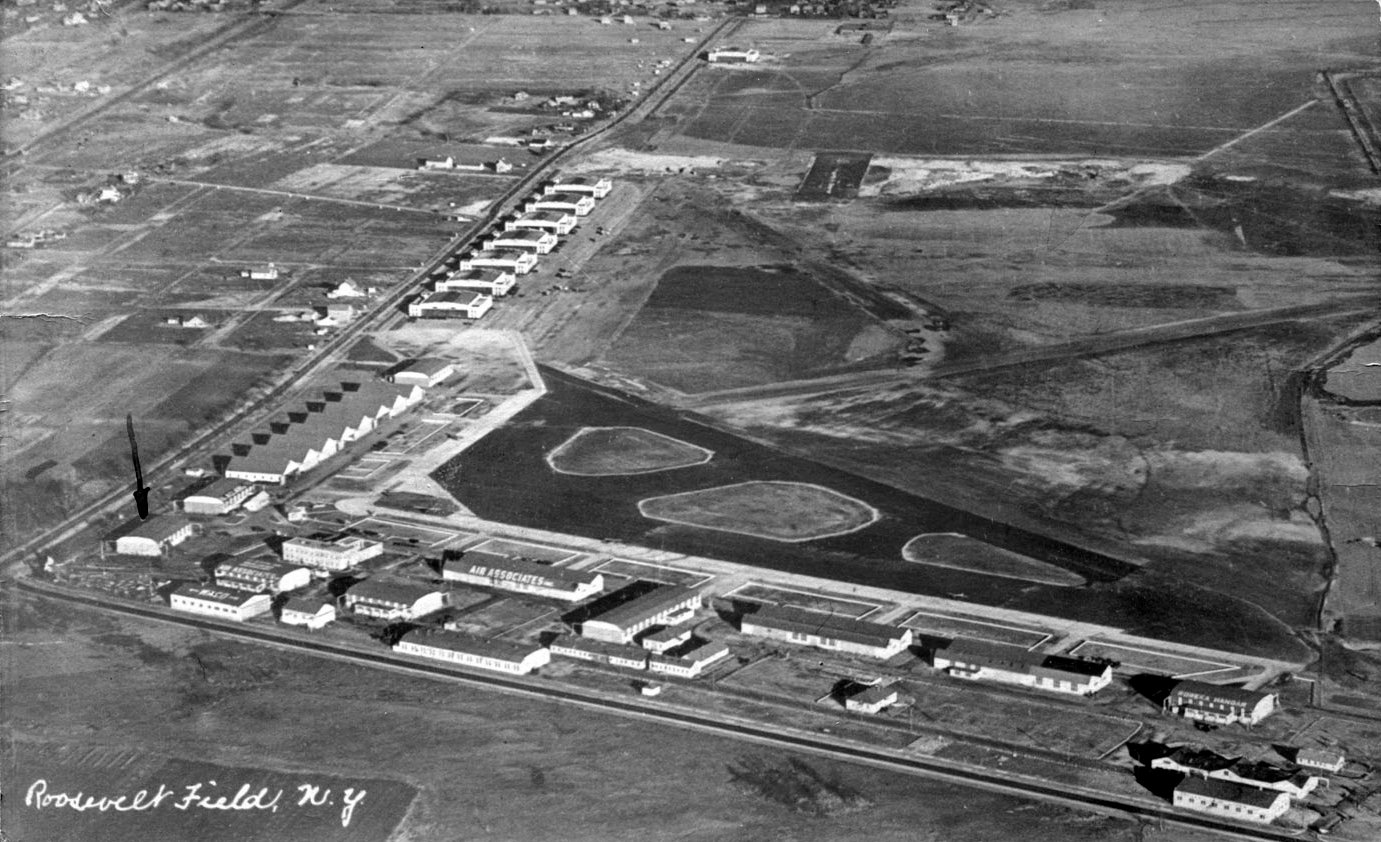
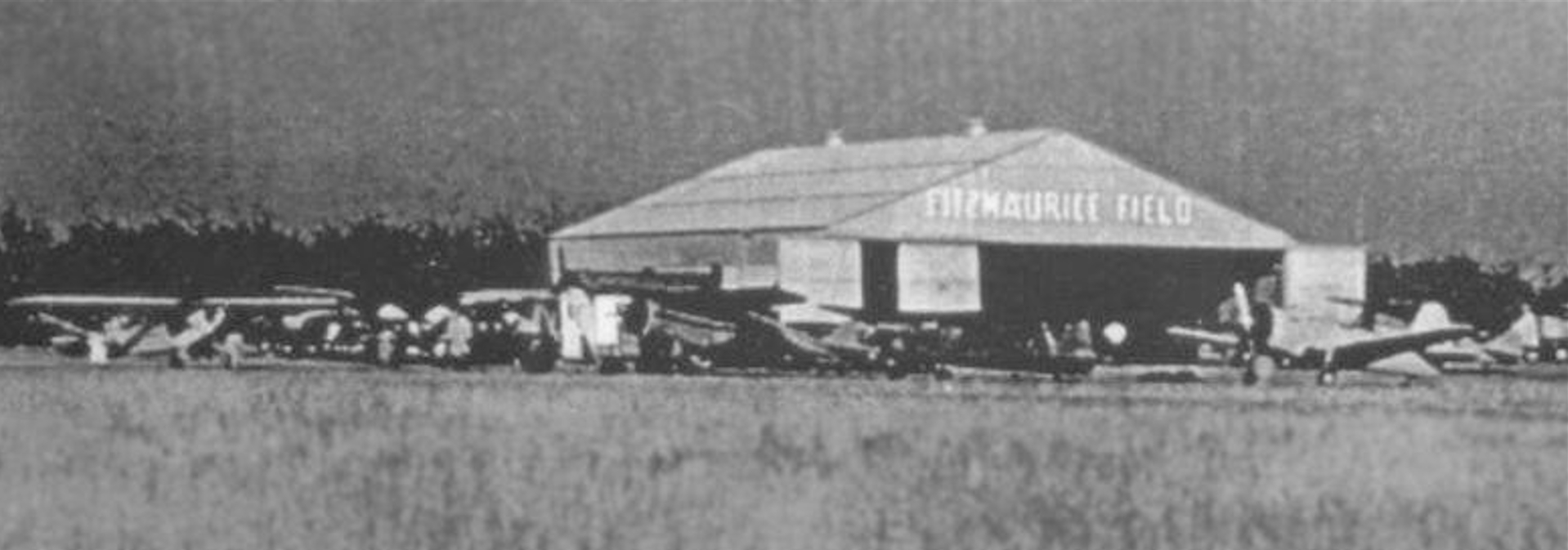
In 1930, Douglas Corrigan came back to New York to settle his father’s estate after his father’s death while working as a switchman for the New York Central Railroad. Despite being told by a lawyer he could get a settlement from the company, nothing ever came of it, and soon Corrigan found a job as an aircraft mechanic at Roosevelt Field, the same airfield where Lindbergh had flown to Paris. There Corrigan got the chance to see and work on several historic airplanes, from Al Williams’ Curtiss Hawk “Gulfhawk” to the Breese-Wilde Model 5 “Aloha” that had won second place in the Dole Air Race from California to Hawaii in 1927, Ruth Nichols’ Lockheed Vega, and more. Later on, Corrigan and another pilot, Steve Reich, would barnstorm across the U.S. East Coast from Long Island to the Outer Banks in two airplanes owned by Reich: a Stearman biplane with a Wright J-5 Whirlwind radial engine and a Curtiss Robin fitted with a 90 hp Curtiss OX-5 V8. By September 1931, they would take over the operations of Fitzmaurice Field in Massapequa Park, Long Island, named for Irish aviator James Fitzmaurice, who had flown alongside German aristocrat Ehrenfried Günther Freiherr von Hünefeld and pilot Hermann Köhl on the first east-to-west crossing of the Atlantic Ocean from Ireland to Canada on April 12-13, 1928, in the Junkers W 33 monoplane named “Bremen”.
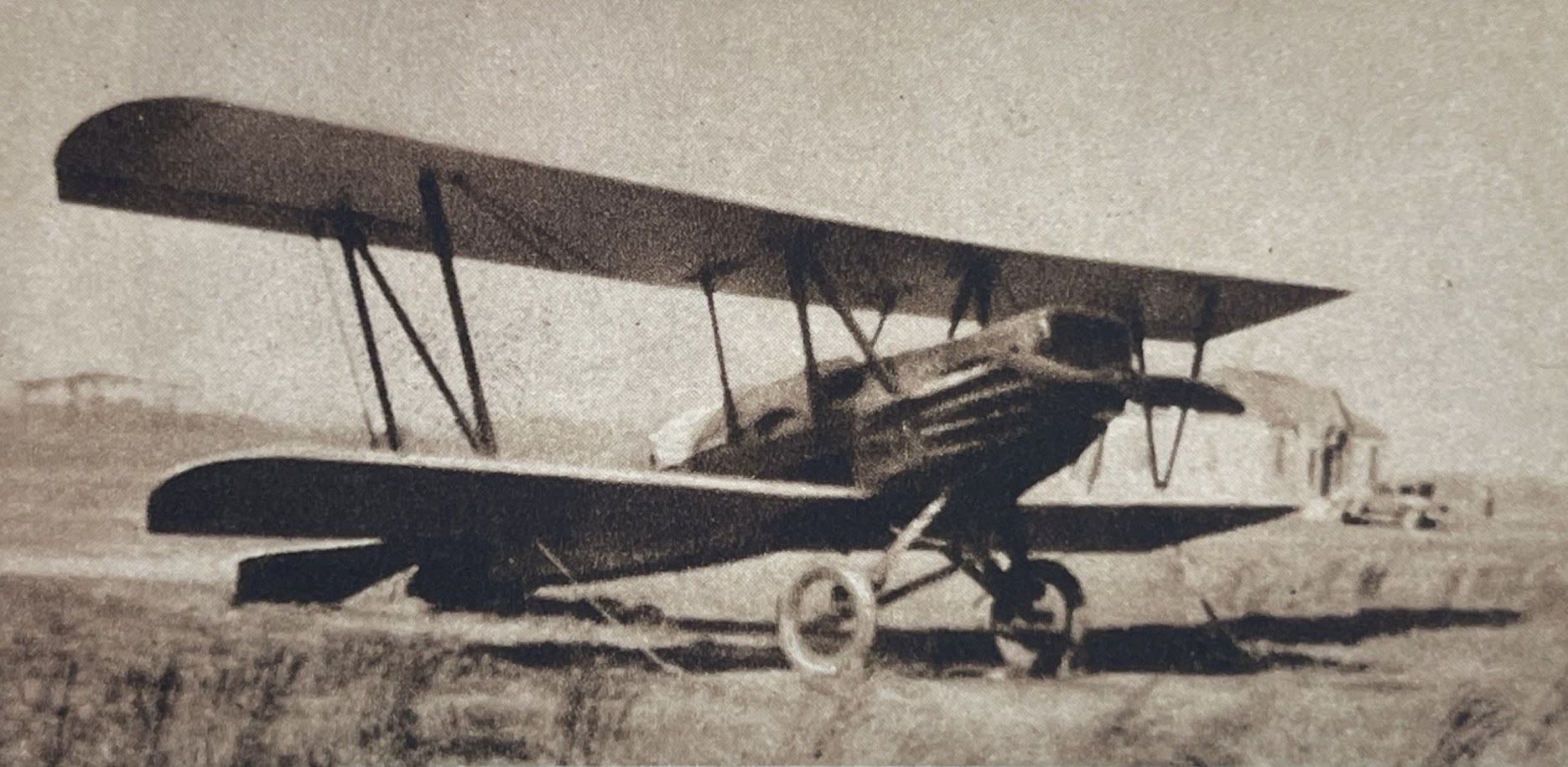
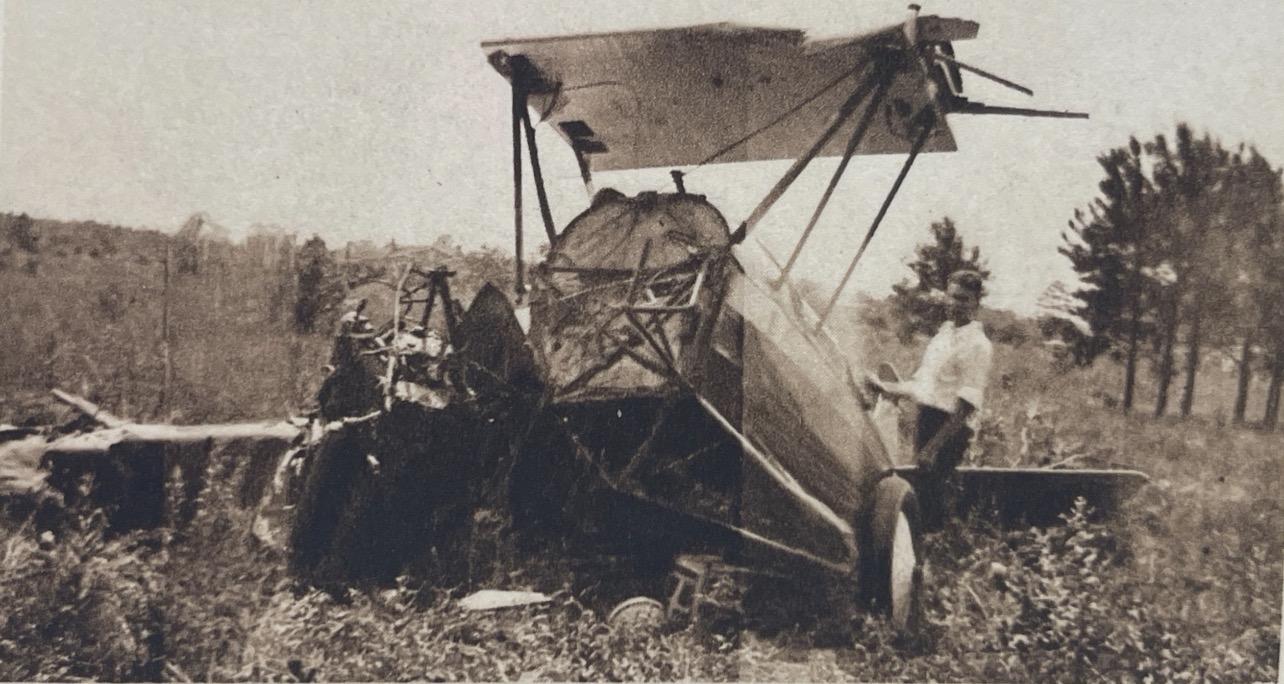
When Douglas’ Harry earned his degree in aeronautical engineering from the University of California, Los Angeles, thanks in part to the money Douglas was sending him, the brothers began flying together on weekends through Maryland, Virginia, and North Carolina as barnstormers in a Hispano-Suiza-powered Alexander Eaglerock biplane Douglas bought as a wreck for $250 and had spent $800 fixing up. By June 1933, they flew down to Kitty Hawk, North Carolina, where the Wright Brothers had made their first flights in 1903, just thirty years prior. Unfortunately for them, while they were returning home to Long Island, they encountered a thunderstorm near Norfolk, Virginia, with lightning flashing around them and a passenger named Corbus in the tandem open cockpits while they were flying just 400 ft off the ground to maintain visual flying. Though they hoped to land at the airfield in Norfolk, the engine on the Corrigan’s Eaglerock suddenly shot out a flash of yellow flame and stopped completely. Below was a thick forest, so Douglas swung the plane to a small patch with the least number of trees and entered a sideslip at 50 ft. Then at 15 ft off the ground, the left wing struck a tree, and as the plane spun around, its engine and right wing struck more trees before the Eaglerock hit the ground tail first, coming to rest in the opposite direction of where it was flying.
Fearing fire, the three men ran from the shattered biplane, but fortunately, what they feared was smoke from a fire in the engine was steam from the broken radiator. The airplane was a total loss, but the Corrigan brothers and Corbus walked away from the crash, with Harry suffering a broken wrist. The next week, Corrigan was flying passengers in a Pitcairn biplane with a Wright J-5, he stalled at 10 ft above a field, bending all the center section wing struts, which made the wings fall to the ground. Understandably, the Corrigan brothers decided to pack up and return to California, but since neither of them had a car, they decided to buy a new airplane and fly it home, but not before Douglas continued barnstorming in upstate New York while Harry’s wrist healed.
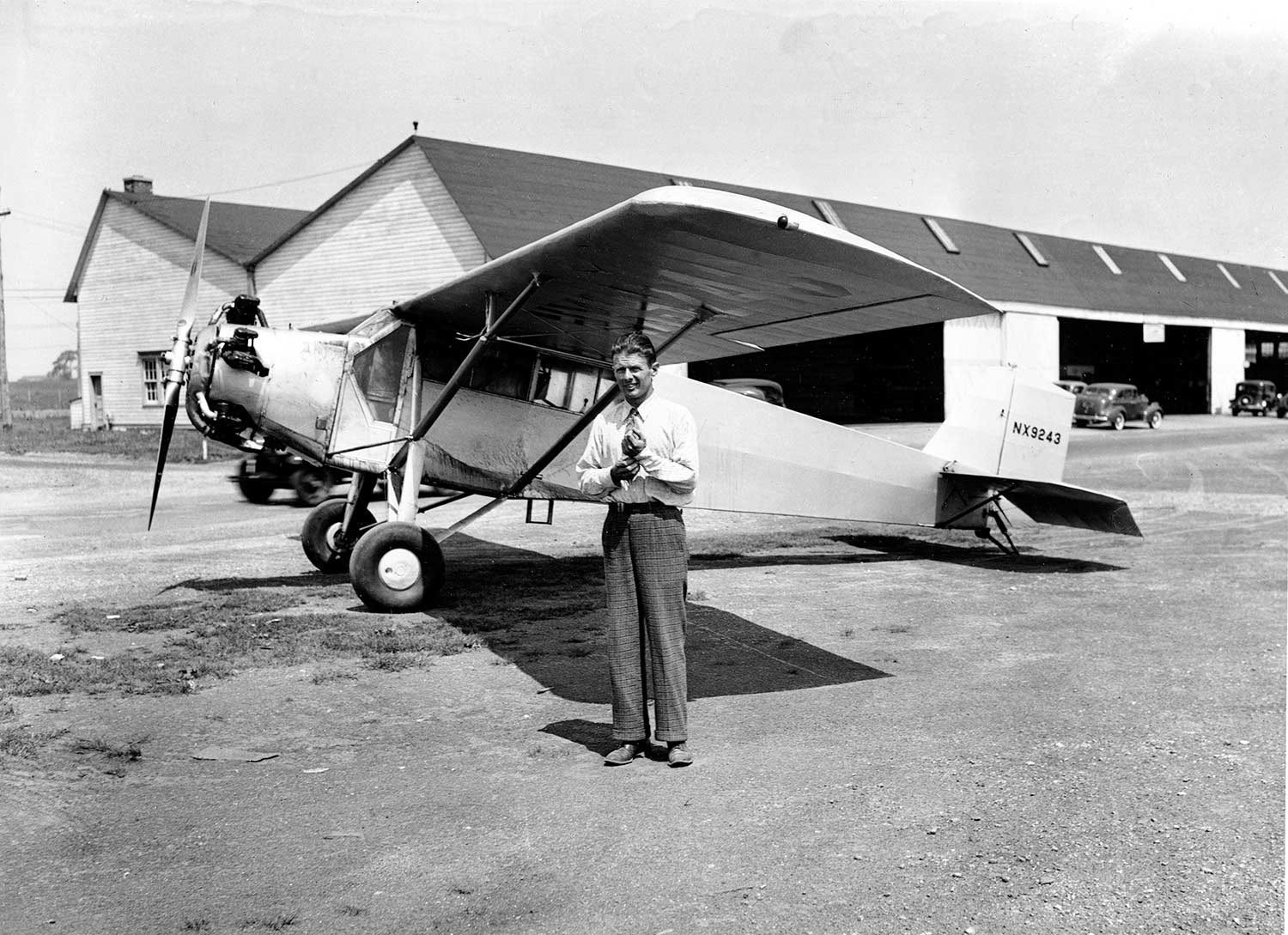
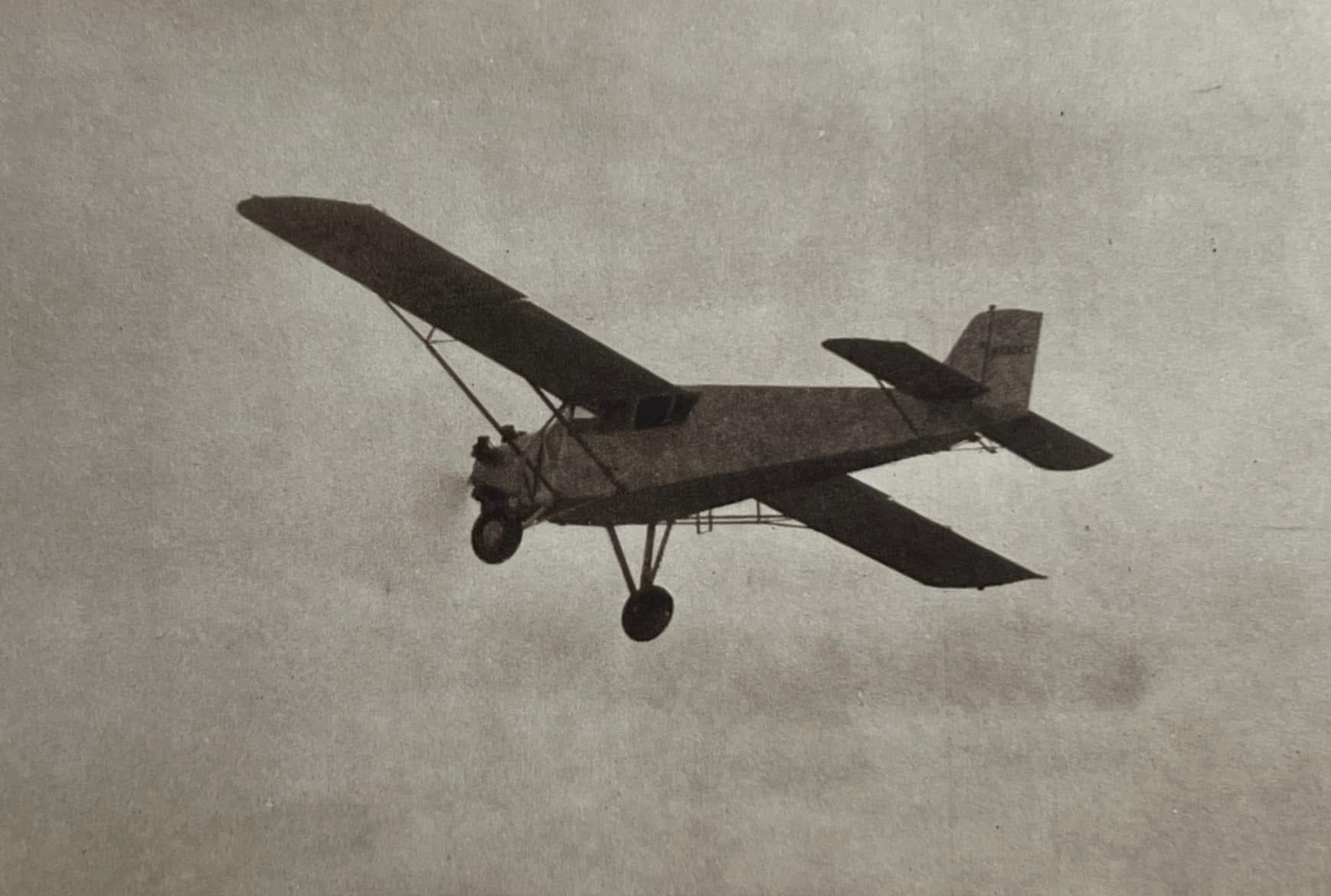
In September 1933, a pilot named Frank Cordova told Douglas and Harry he was selling a 1929 Curtiss Robin B powered by an OX-5 V8 engine. The two brothers looked it over, test-flew it, and decided to buy this Robin, construction number 305, registration NC9243, for $325. Together, it took the Corrigan brothers eighteen days to fly their new old airplane back to California, packed with all their belongings, all the while selling rides to passengers to help pay for fuel, sleeping in the plane or just under it when they found an empty field to land in. When Douglas and Harry came back to Los Angeles, Douglas put the Curtiss Robin in a rented hangar at Dycer Airport (later Gardena Valley Airport).
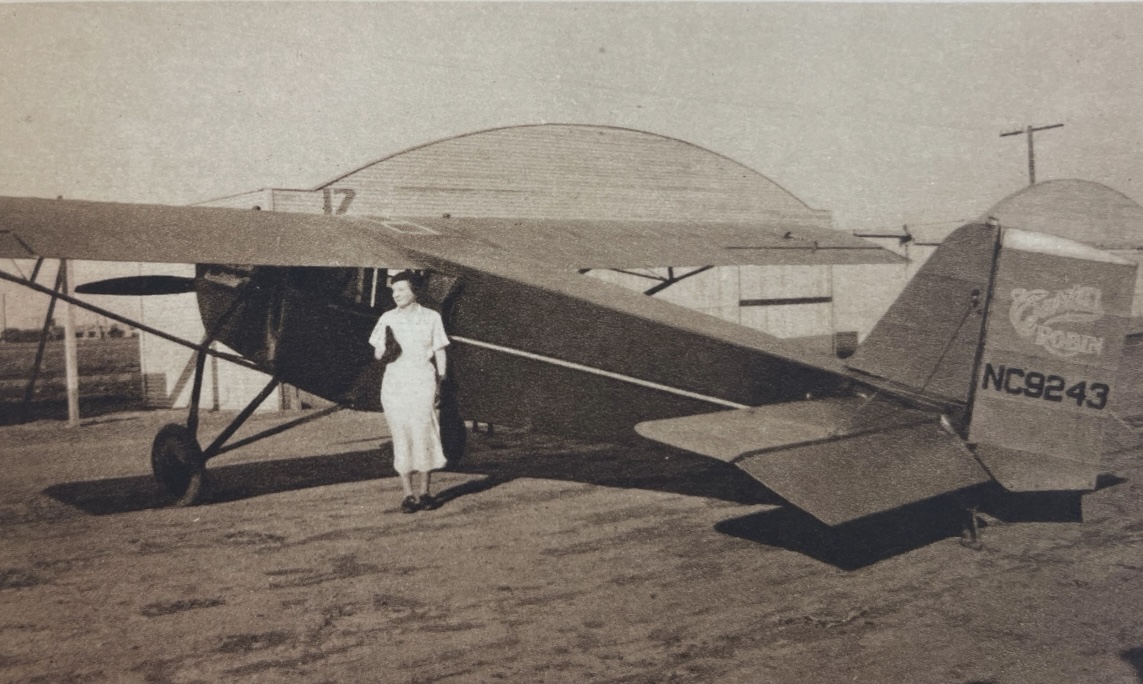
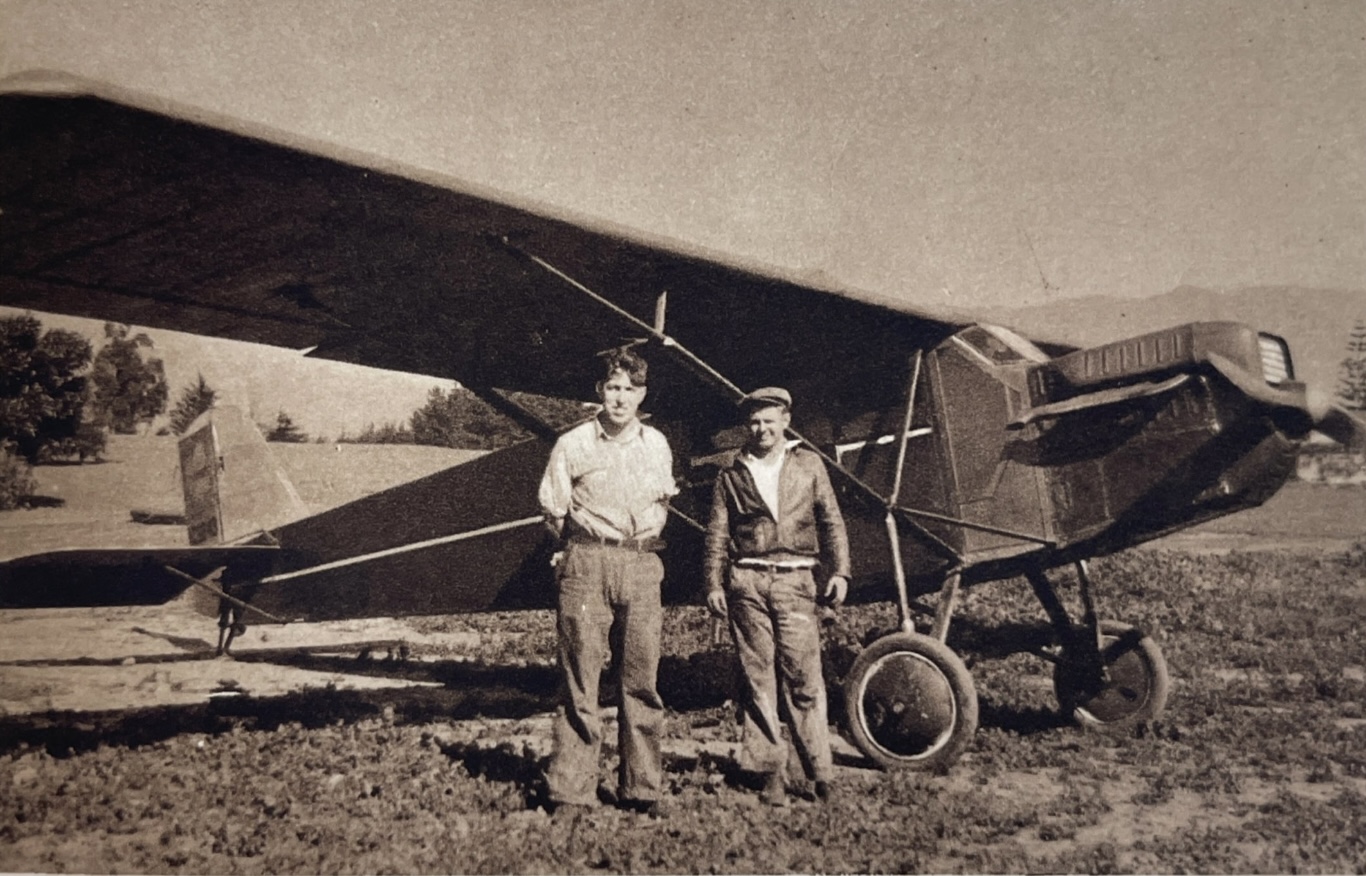
After working four months at the Carpinteria Airport near Santa Barbara in 1934, Douglas Corrigan got a job working night shifts in both the Douglas Aircraft factory in Santa Monica and the Northrop Corporation in El Segundo. Corrigan would sleep in his hangar with his Robin, often flying it for local morning flights. Harry, meanwhile, got a job in Douglas Aircraft’s engineering department before the brothers then moved back to San Diego in 1935, with Harry getting a job with Consolidated Aircraft and Douglas finding work as an airplane mechanic. By October 1935, Douglas decided he was going to install a new motor and extra fuel tanks to carry an additional 225 gallons in Robin NC9243 (compared to the 50-gallon capacity of a stock Curtiss Robin), ostensibly to fly nonstop from Newfoundland to Ireland. After Lindbergh’s transatlantic flight, Corrigan dreamed of making his own transatlantic flight, this time with the goal of landing in Ireland in honor of his Irish ancestry. When Corrigan sought permission to make the necessary modifications to his airplane, the chief inspector in Los Angeles for the Department of Commerce’s Bureau of Air Commerce told Corrigan he needed approval from the Bureau’s engineering department for the added fuel tanks to be authorized. The engineering department turned Corrigan’s request down, but the inspector approved Corrigan’s request to replace the Curtiss OX-5 90hp V8 with another engine. The new engine Corrigan would install on NC9243 was a used Wright R-540 Whirlwind (also called a Wright J-6-5), a five-cylinder radial engine with an output of 165hp. This engine had been purchased by Corrigan from one Felix Blum at Roosevelt Field and had been built in May 1929 with the serial number 11197, though Corrigan also used parts from engine R-540 to get this engine operational. Corrigan also fitted NC9243 with a new set of wheels, new ribs for the horizontal stabilizer, and gave the whole plane a new fabric covering. Yet Douglas was determined to increase his Curtiss Robin’s fuel capacity, with authorization or without. To do this, he constructed new fuel and oil tanks himself, though he was occasionally helped by his brother Harry on some nights.
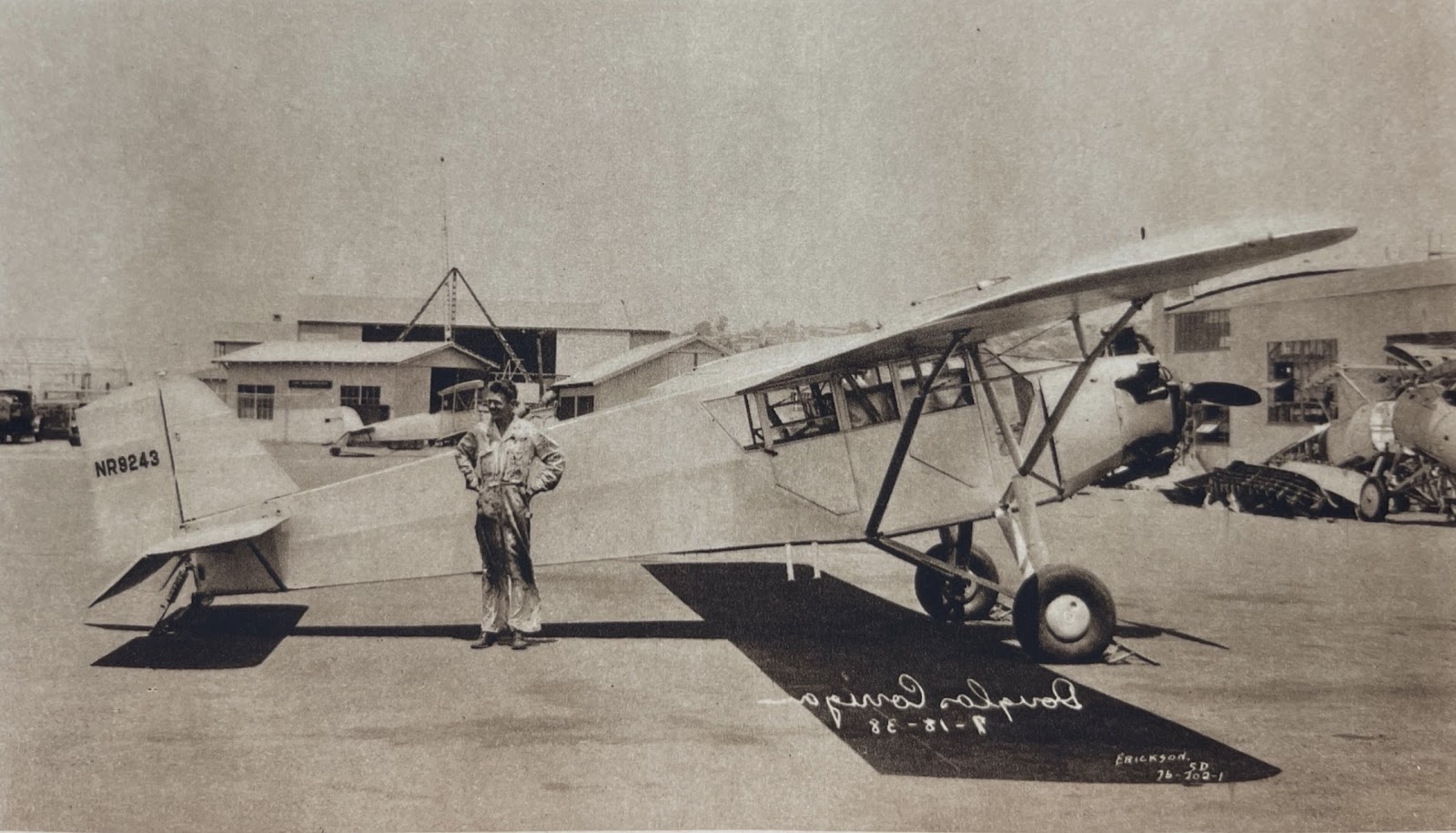
By August 1936, the new fuel tanks were installed, and Corrigan was licensed to fly his Robin on cross-country flights under the Restricted category, which changed his Curtiss Robin’s registration from NC9243 to NR9243, and the engine swap turned the aircraft from a Robin B to a Robin J-1. The first of these flights would be when Corrigan flew from Lindbergh Field to St. Louis with an overnight stop at a radio station near El Morro, New Mexico. Though Corrigan sought to fly nonstop from St. Louis to New York, engine trouble forced him to make landings at Schoen Field, Indianapolis, Pittsburgh, and a pasture near Newark before arriving at Roosevelt Field.
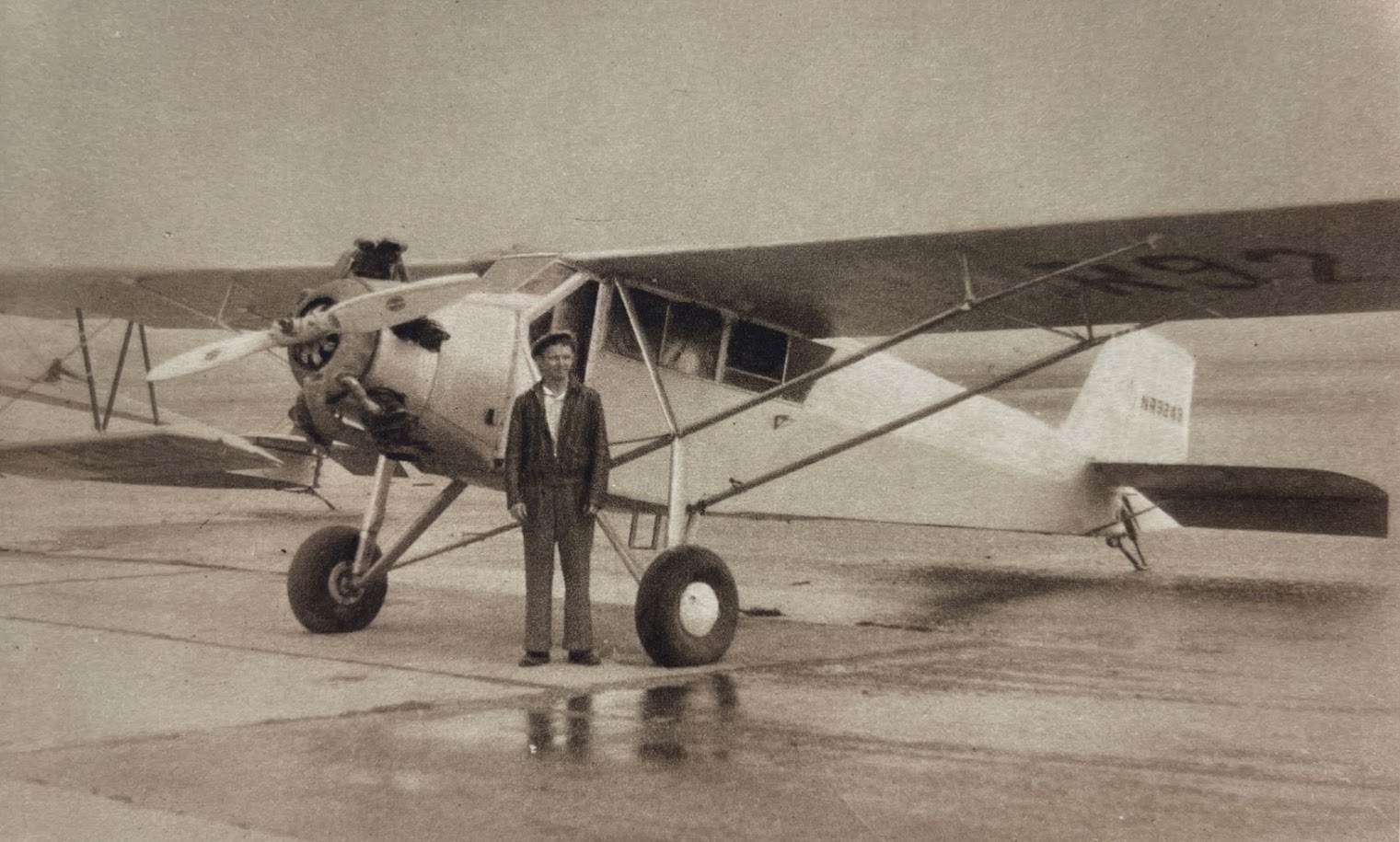
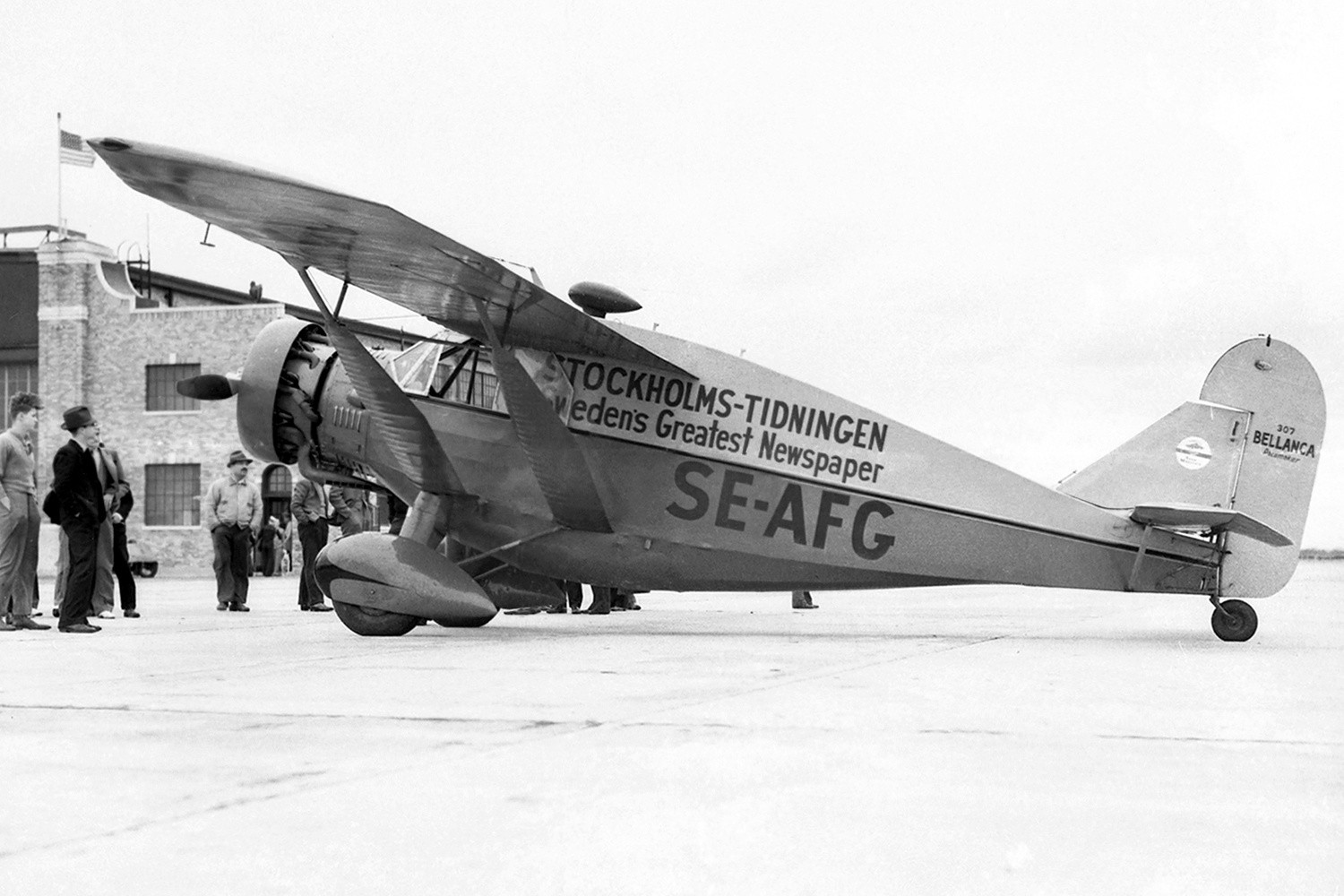
When Corrigan asked the inspector at Roosevelt Field about flying to Newfoundland and Ireland, he was referred to aviation officials in Washington, D.C., who refused to grant him permission to fly to Newfoundland until after he acquired an instrument flying rating, installed more fuel tanks, and secured a radio operator’s certificate, despite Corrigan’s Robin having no radio installed. Corrigan was also told to delay flying to Newfoundland until 1937, as the window for the best weather across the North Atlantic was soon closing for 1936, but it would be the result of another attempt at a transatlantic crossing that would ultimately persuade Corrigan to delay his own attempt. On October 6, 1936, the Swedish aviator Kurt Björkvall departed from Floyd Bennett Field, Brooklyn, in a Bellanca CH-400 (registration SE-AFG), bound for Stockholm, but was forced down into the Atlantic about 100 kilometers off the coast of Ireland due to bad weather, propeller icing issues, and engine overheating before Björkvall was rescued by the French trawler Imbrim. Shortly after Björkvall’s rescue, Corrigan decided to fly home to California, but also to test the range of his new fuel tanks by flying nonstop from New York to San Antonio, Texas, by way of Jacksonville, Florida, equivalent to the distance from Newfoundland to Ireland.
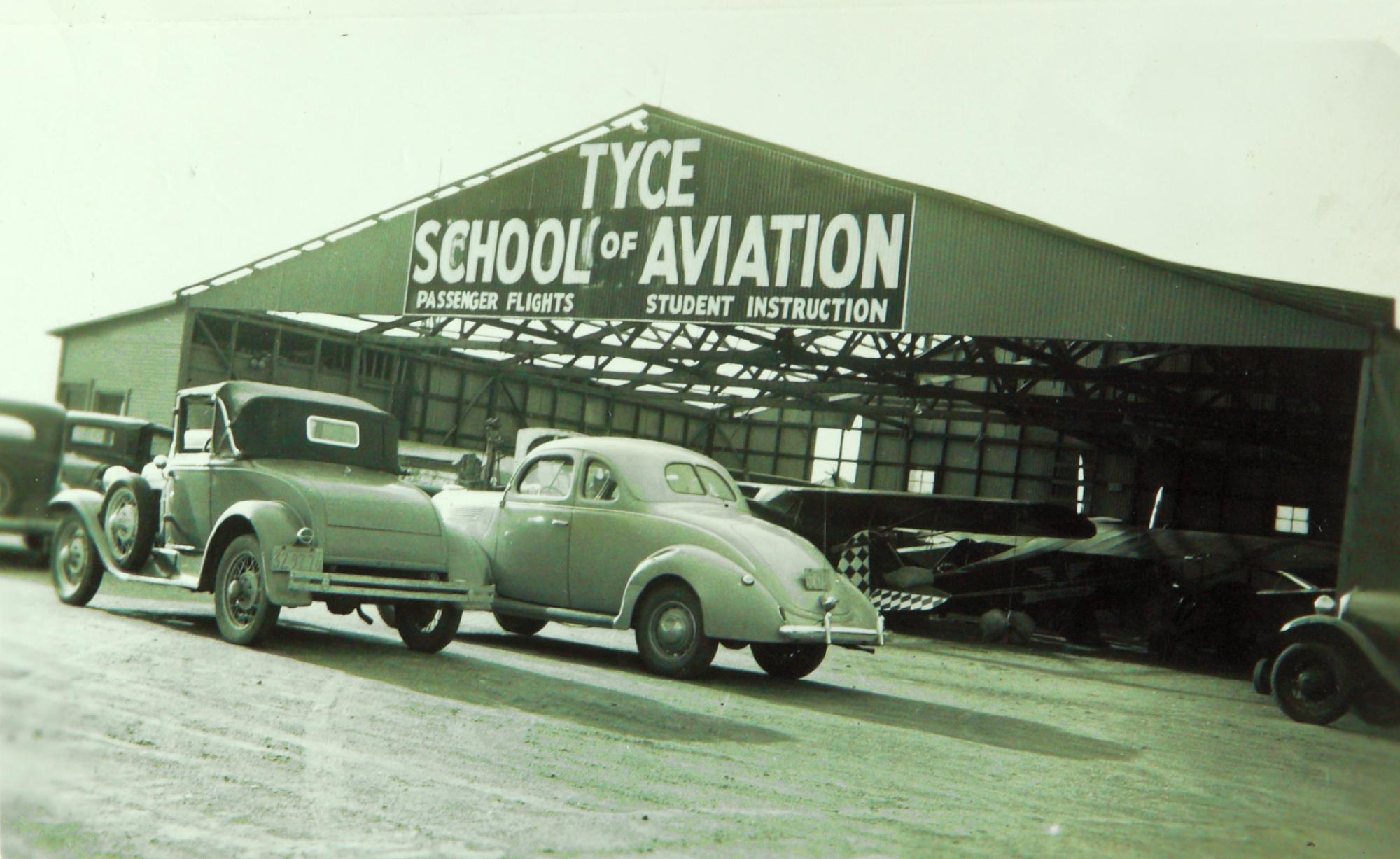
On the afternoon of October 28, 1936, Douglas Corrigan took off from Floyd Bennett Field in NR9243 and landed at San Antonio’s Stinson Field (now Stinson Municipal Airport) after 19 hours and 1,900 miles of nonstop solo flying down the Atlantic coast before turning west over Jacksonville, then flew through night and fog over the Gulf coast from Florida to Texas. While flying between New Orleans and Galveston, Corrigan had at times flown just 50 feet off the water, and his wheels almost touched the beach on more than one occasion. His arrival at Stinson Field also marked the first time he had returned to San Antonio since 1919. After staying with a family who had been his childhood neighbors, Corrigan set out for California, planning to land at Chula Vista Airport (which later closed during WWII), but though he made it to California nonstop, but headwinds, night, and fog forced him to land at Palm Springs to wait for the morning light, after which he would head to Los Angeles to visit his sister before returning to Chula Vista Airport, where he helped instruct pilots for the airport’s owner, Roland “Rolly” Tyce, and kept his Curtiss Robin in Tyce’s hangar. It was at Chula Vista Airport (also known as Tyce’s Airport) that during the summer of 1937, Corrigan fitted two more gasoline tanks, bringing his capacity from 225 gallons to 324 gallons, and added a 5-gallon reserve oil tank to his Curtiss Robin.
Corrigan was now confident he could fly from New York to London and sent an application to the federal aviation authorities for permission to fly the Atlantic. However, on July 2, 1937, Amelia Earhart and her navigator Fred Noonan disappeared during the Pacific leg of their attempted aerial circumnavigation of the globe, and the U.S. government was in no mood to allow any more private pilots to fly across the oceans, and what’s more, Corrigan’s new modifications meant his airplane no longer had a valid license to fly. Nevertheless, Corrigan flew his now unlicensed Robin in August 1937 from California to Maine, doing so by “landing in small out-of-the-way places after dark, and going on again early the next morning”. He had heard of two towns in Maine with long runways (Calais and Brownville), but on arriving in Calais, he saw no airfield there, landing instead in a field outside the town. The locals told him that though they had started building an airport two years before, construction had come to a halt. He then tried heading to the airport in Brownville, but the dirt airstrip had a big ditch in the middle of the runway caused by a rainstorm a few months prior to his arrival, prompting his return to California, avoiding big airports along the way. Two months later, though, in October 1937, Corrigan again flew across the country without a license for his Robin, this time with the goal of returning to Floyd Bennett Field. After overhauling his Wright engine, Corrigan gave his Robin the name “Sunshine”, saying later, “I had always considered my plane as my little ray of sunshine”. Flying cross-country without a license meant he would have no access to weather reports provided by any airfields, so he would risk the weather from California to New York. This disregard for forecasts would ensure that Corrigan had to make multiple landings on his journey east, being forced to land in Arizona on the first day, then New Mexico on the second day, and then two landings in Texas, landing at Lampasas on the third day and at Mexia on the fourth. The fifth day would see Corrigan forced to land at Arkadelphia, Arkansas, then on the sixth day he got lost and landed on a hillside near Ezel, Kentucky. On the seventh day, he made two landings in West Virginia (Buckhannon and Elkins), then reached Baltimore on the eighth, and finally landed at Fitzmaurice Field, New York, where he would wait for the rain to clear up and head down to Baltimore to visit his brother Harry, who was now working with the Glenn Martin Company there.
During their reunion, both brothers agreed the window for crossing the North Atlantic had once again closed, and since Corrigan’s Sunshine had no carburetor heating system, it posed a serious chance of icing over the Atlantic. Harry would suggest, however, that Douglas could land at Floyd Bennett Field long enough to get enough fuel to fly nonstop to California before being reported to the authorities for flying an unlicensed airplane, and so the next day Douglas Corrigan hopped from Fitzmaurice Field to Floyd Bennett Field, took on 290 gallons of fuel, and took off for California before he was stopped, though a crowd had gathered to see him fuel up and take off.
Flying through the night over the South, the predawn hours over Mississippi would see ice begin forming over the carburetor, with Corrigan pulling the throttle back and forth to break the ice off the carburetor. Westerly headwinds slowed his progress through the second day over Texas, but running low on fuel after 29 hours and 2,100 miles in the air, Corrigan landed in a small field near El Paso, Texas, and loaded 70 gallons of automotive-grade gasoline into Sunshine’s fuel tanks. After taking off, Corrigan kept low to the ground over New Mexico and Arizona, but was forced to land in the desert sagebrush near the Harquahala Mountains west of Phoenix after his engine overheated. With the engine refusing to start again in the heat, stranded 20 miles from the nearest house with no water and having eaten nothing in three days, Corrigan was forced to spend the night in the desert with his airplane and wait for the next morning for the engine to cool down sufficiently to restart. Despite his weakened condition, Corrigan was able to start the engine and take off from the desert. On arriving over Los Angeles at noon, Corrigan found the whole city blanketed by fog, so he flew up the San Fernando Valley and landed at Adams Airport in North Hollywood, near today’s Hollywood-Burbank Airport (then Union Air Terminal). Two days after arriving at Adams Airport, an inspector saw Corrigan’s Curtiss Robin and banned it from flying. Corrigan, who was now broke from his two cross-country trips, simply had his “little ray of sunshine” stored at the airport and spent the next six months at the Northrop factory in El Segundo as a fuel tank welder, and maintaining his flying hours with other airplanes in Los Angeles and Chula Vista, even getting some instrument flying experience out of Glendale’s Grand Central Air Terminal.
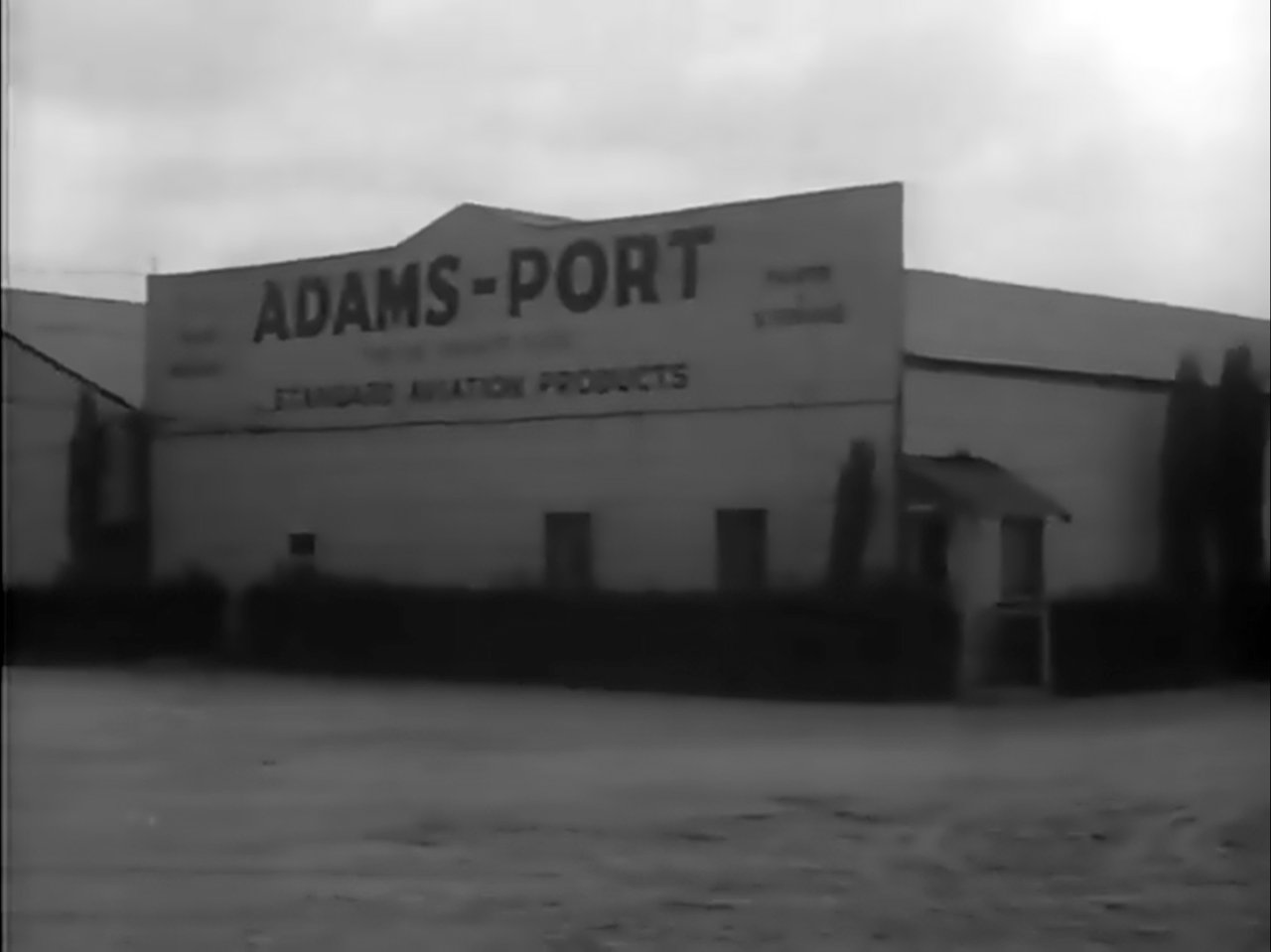
In 1938, Corrigan once again overhauled the Wright J-6-5 engine on his Robin and requested permission to make a nonstop flight to New York and a nonstop from New York to Los Angeles. Soon, he was granted permission to make the transcontinental flight, so long as he could get an experimental license for his airplane approved. Fortunately, the inspectors approved the request, and in June 1938, Curtiss Robin NR9243 became NX9243. After making some test flights, Corrigan determined that Sunshine’s optimal speed for the best gas consumption rate was 85mph. Corrigan then cleaned the gasoline lines, strainers, and oil screens, filled the plane with fresh oil, prepared food and water for himself, and waited for clear weather across the North American continent. Finally, on July 7, 1938, the weather reports out of Burbank were favorable, so he put 100 gallons of gasoline at Adams Airport before flying down to Long Beach Airport and taking on an additional 145 gallons of fuel. At both airports, he told the airport management offices he was flying to El Paso, Texas, to prevent anyone else from knowing he had enough fuel to fly across the country, and to prevent anyone from saying the flight was a failure for not reaching New York.
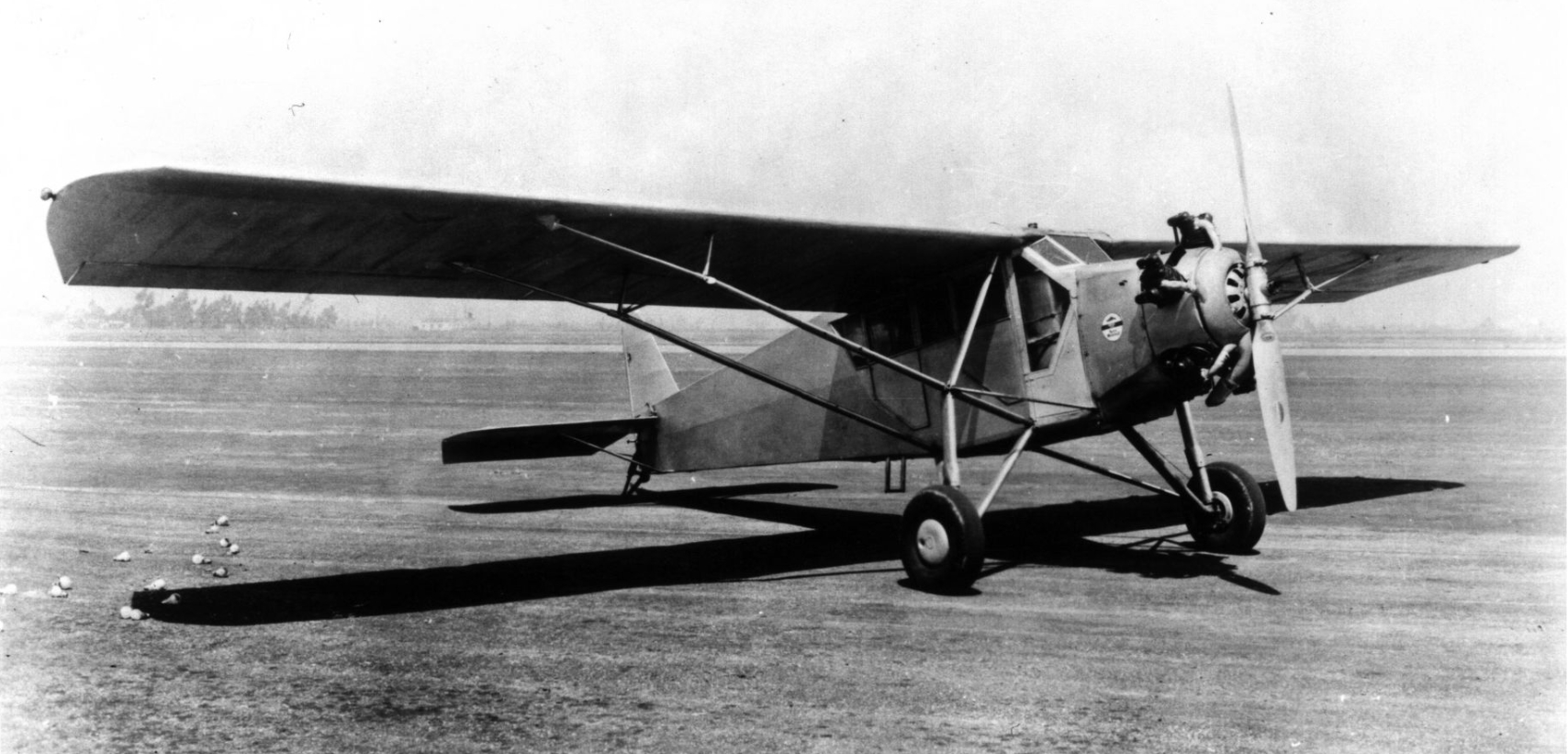
Just before noon on July 8, 1938, Douglas Corrigan took off in his Curtiss Robin from Long Beach Airport with 252 gallons of fuel and 18 gallons of oil in his tanks. Three hours after takeoff, he was over Phoenix, and two hours later, he was over Lordsburg, New Mexico. The overloaded wings bent up and down with the gusts of air, but they still held together. Flying over a dust storm between Deming and Las Cruces, New Mexico, he then proceeded through rain squalls and lightning north of El Paso before finding clear night skies on the path to Fort Worth. Morning came over Memphis, Tennessee, with Corrigan still steady on his course. On encountering rain clouds in the Cumberland Mountains, Corrigan twisted and weaved through the valleys, skirting just 100 feet off the trees and hills before using full power to get above the clouds, using his compass to guide after he was no longer able to see the ground through the clouds before finding a hole big enough to see the ground and return to following the land through the rain. During this time, Corrigan was not sure of his exact route other than his predetermined compass heading, but having flown for over 20 hours nonstop, he opened the windows to stick his head out in the slipstream to keep himself awake. Around this time, the main fuel tank also sprang a leak, and the open windows helped him lean away from the fumes. Despite this, he knew he had to make it to New York nonstop in order to get permission to fly nonstop back to California, and fortunately for Corrigan, he soon found his bearings before reaching Philadelphia, where he would take advantage of a tailwind to push his Robin Sunshine further east. Finally, he arrived at Roosevelt Field, New York, on sundown of July 9, with just four gallons of gasoline left in his fuel tanks. At Roosevelt Field, Corrigan met with his old flying partner Steve Reich, and they pushed NX9243 into Reich’s hangar. The journey from Long Beach to Roosevelt Field had taken 27 hours.
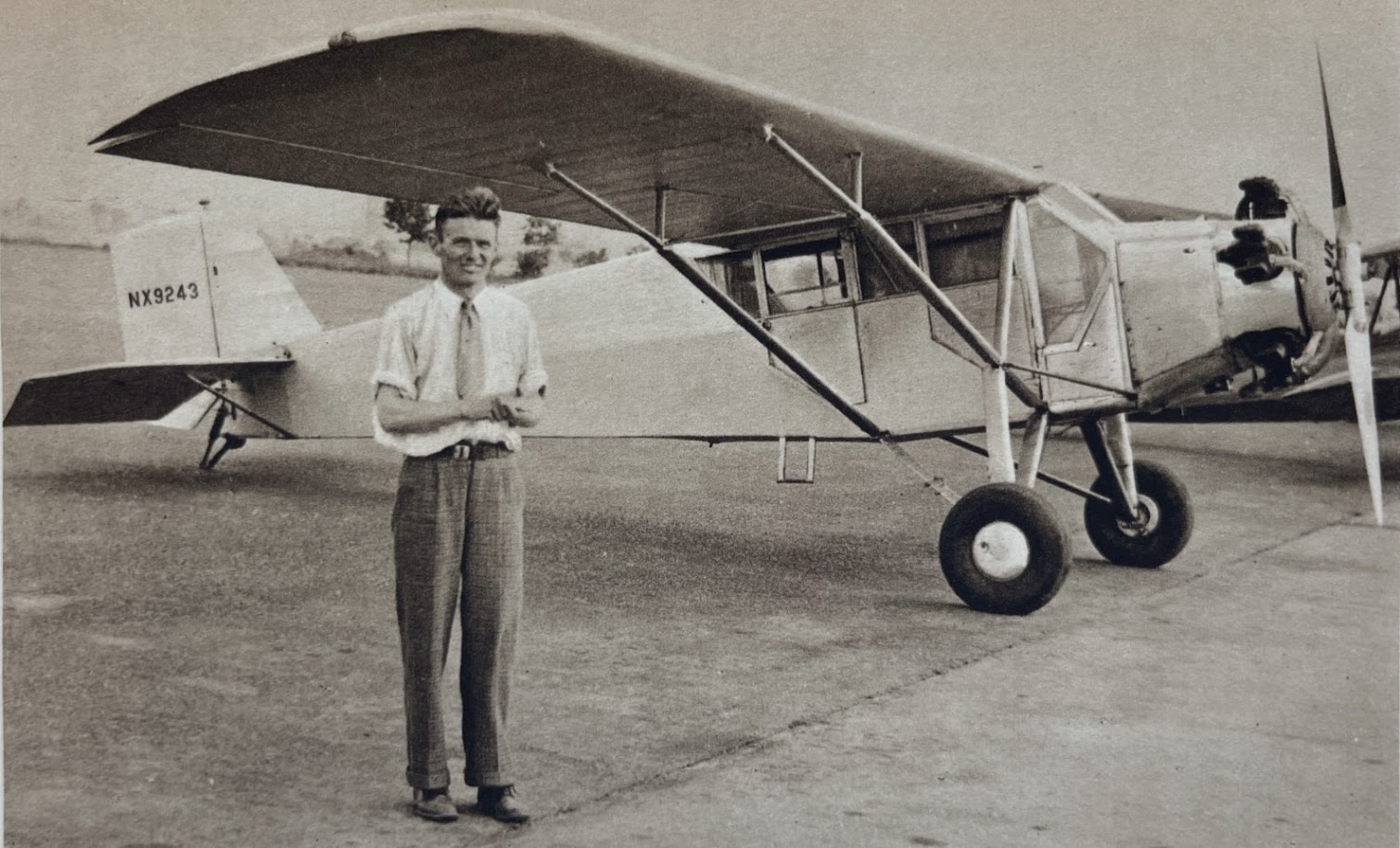
However, the press took little heed of Corrigan’s flight, as the famed aviator and filmmaker Howard Hughes was preparing to launch a round-the-world flight out of Floyd Bennett Field to break the seven-day crossing record set by Wiley Post in 1933. Corrigan, though, was glad that the attention was on Hughes and not him. Nevertheless, people came out to Roosevelt Field to see Douglas Corrigan and his Robin as they spent a week at Roosevelt Field, where he replaced a badly worn exhaust valve rocker arm on one cylinder, added some air scoops on the engine cowling for better cooling, and put a patch on the wing near the gas tank filler cap. Ruth Nichols recognized him for his work on her plane years prior and offered him her parachute, which he politely declined since he had no room for it in his cabin. He still had two gallons of oil from the flight from California and added two and a half gallons. As for the fuel tank leak, he figured that if he were to head back to California in a week’s time, fixing the leak would take too much time.
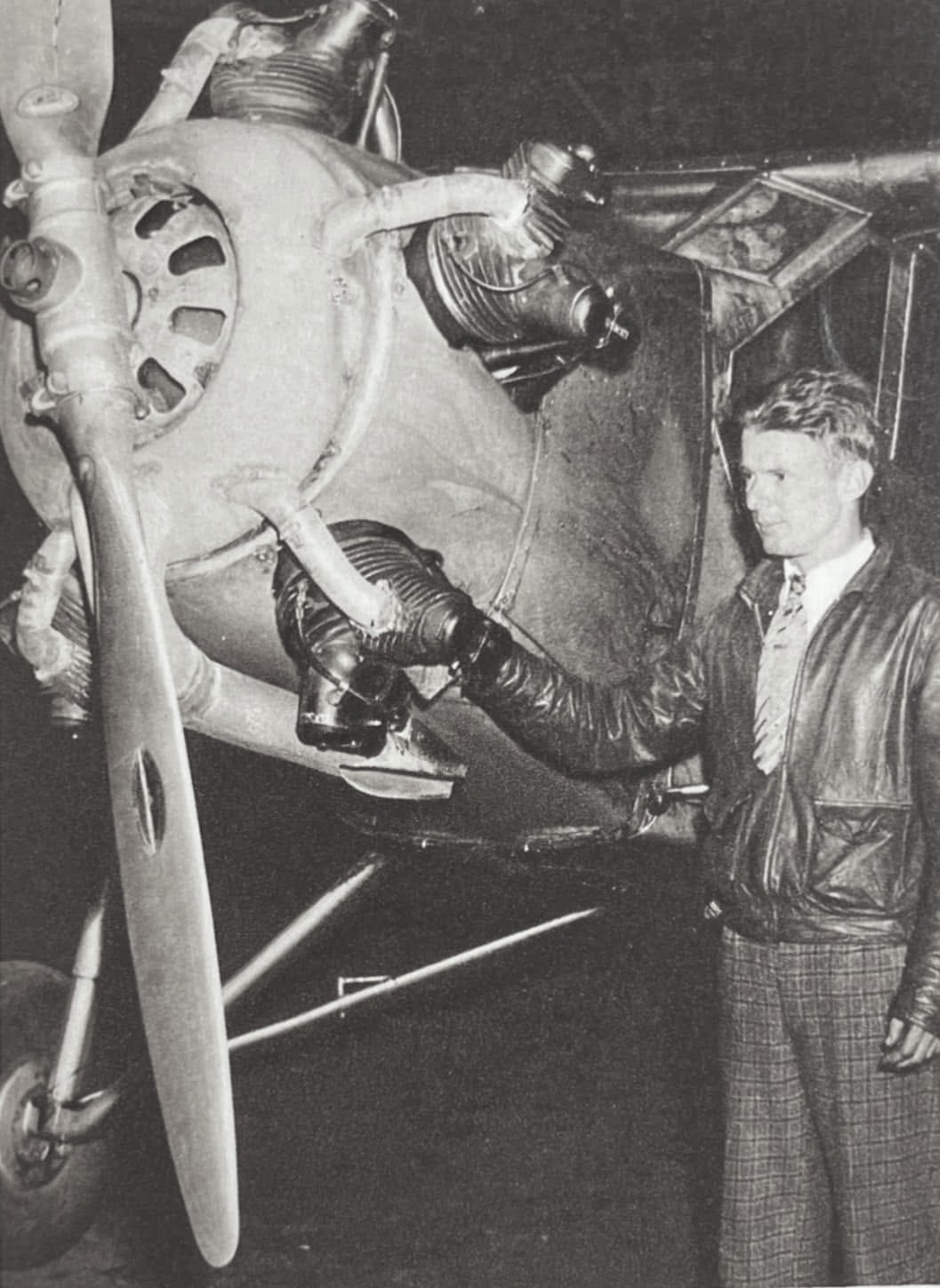
Corrigan was invited for two interviews during his week at Roosevelt Field, though, with the first being for the general-interest magazine Liberty, with Corrigan being interviewed at the Fifth Avenue address of the magazine’s publisher, Bernarr Macfadden, who in addition to being a bodybuilder and fitness advocate, was also a private pilot as well, with Macfadden asking Corrigan about his advice for long-range flying and offering him a job to install extra fuel tanks into his Stinson monoplane. Corrigan’s second interview would be with NBC’s Vox Pop radio show, with the radio interview being made at the Hotel McAlpin. Finally, after reading the weather reports made at Mitchel Field, Long Island, Douglas Corrigan took Robin NX9243 on a repositioning flight from Roosevelt Field to Floyd Bennett Field on July 16, 1938. Corrigan told everyone he would use the long runways at Floyd Bennett to fly nonstop back to California. His only provisions besides the clothes on his back were two boxes of fig bars, two chocolate bars, and a quart of water, along with a Great Circle Map of the United States with his course to California by way of Memphis and El Paso marked out. On landing at Floyd Bennett Field, Corrigan had his Curtiss Robin brought to the Hoey Air Service hangar for the plane to undergo some final maintenance. Though Corrigan intended to take off shortly after midnight, Kenneth P. Behr, the airport manager, telephoned Corrigan and told him he couldn’t fly until morning and needed to know if he had a special license to fly the plane. Corrigan replied he indeed had a special license to fly his airplane and invited Behr to call the inspector who gave the approval for that license.
At 4:00 AM on July 17, 1938, Behr told Corrigan to get ready to take off at the crack of dawn. After pulling NX9243 from the hangar, fueling up and starting the engine, Corrigan asked: “Which way shall I take off?” Behr replied, “Any direction you want, except don’t head towards the buildings on the west side of the field.” Corrigan recounted that “There wasn’t much wind blowing and the long runway ran east and west, so I said, ‘I’ll take off east,’ and got in the plane. Just before I taxied out Mr. Behr came over and said, ‘I won’t say good-by, I’ll say bon voyage.’ I closed the cabin door and noticed there was a fire truck and an ambulance following me as I started the takeoff. It was still pretty dark, but I could clearly see the edge of the concrete runway out of the side window, so there was no trouble in holding the plane straight.” Weighed down by fuel, Corrigan’s wheels rolled down the runway for 3,000 feet before his Curtiss Robin “Sunshine” finally left the ground, and Corrigan was still only 50 feet off the ground when he passed the eastern end of the airfield. With the Sunshine being sluggish to climb with the load of fuel onboard, Corrigan decided to fly a few miles further east before turning west. Little would the world know that the next place where Corrigan would land was not to be California, but instead he would land both in the history books and in Ireland.
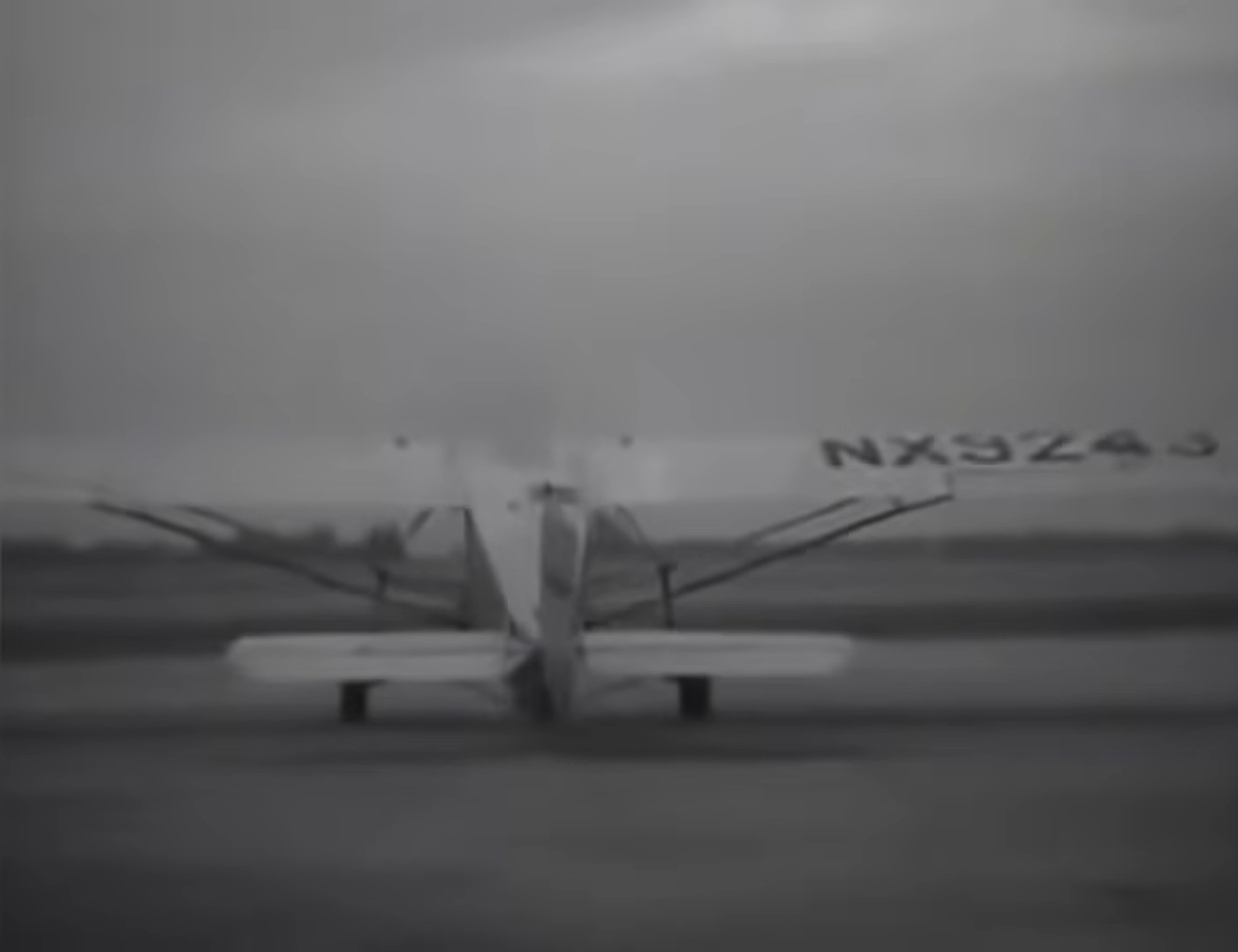
As Douglas Corrigan flew further east while slowly gaining altitude, he began to enter a fogbank. Inside the cockpit of NX9243, Corrigan had two compasses, one above the instrument panel, and another on the floor. According to Corrigan, the liquid in the top compass had begun leaking the night before the flight, and he said he failed to notice the leak until after he was in the air, forcing him to rely on his floor compass with parallel lines to display his westerly heading, with Corrigan claiming to have turned his Robin Sunshine until the parallel lines matched his pre-planned course. Corrigan would write that as he flew through the fog, he could see trees through holes in the fog below him, but two hours out of Brooklyn, he passed over a city he presumed to be Baltimore, but in reality, he was passing over Boston. Shortly afterward, Corrigan claimed the clouds below him became solid, and he was unable to see the terrain as he continued his gradual ascent. Eight hours into the flight, Corrigan said his altimeter read 4,000 feet. Ten hours out of New York, Corrigan felt his feet getting colder, and when he looked down, he saw that the fuel leak he neglected to repair had grown worse, with fuel running down his shoes. Yet Corrigan would later write: “This didn’t worry me because I figured I would be past the clouds in a few hours and I could land anywhere if the gas ran out. At fifteen hours out of New York I was just above the cloud level with the altimeter showing 6000 ft., and now it got dark.”
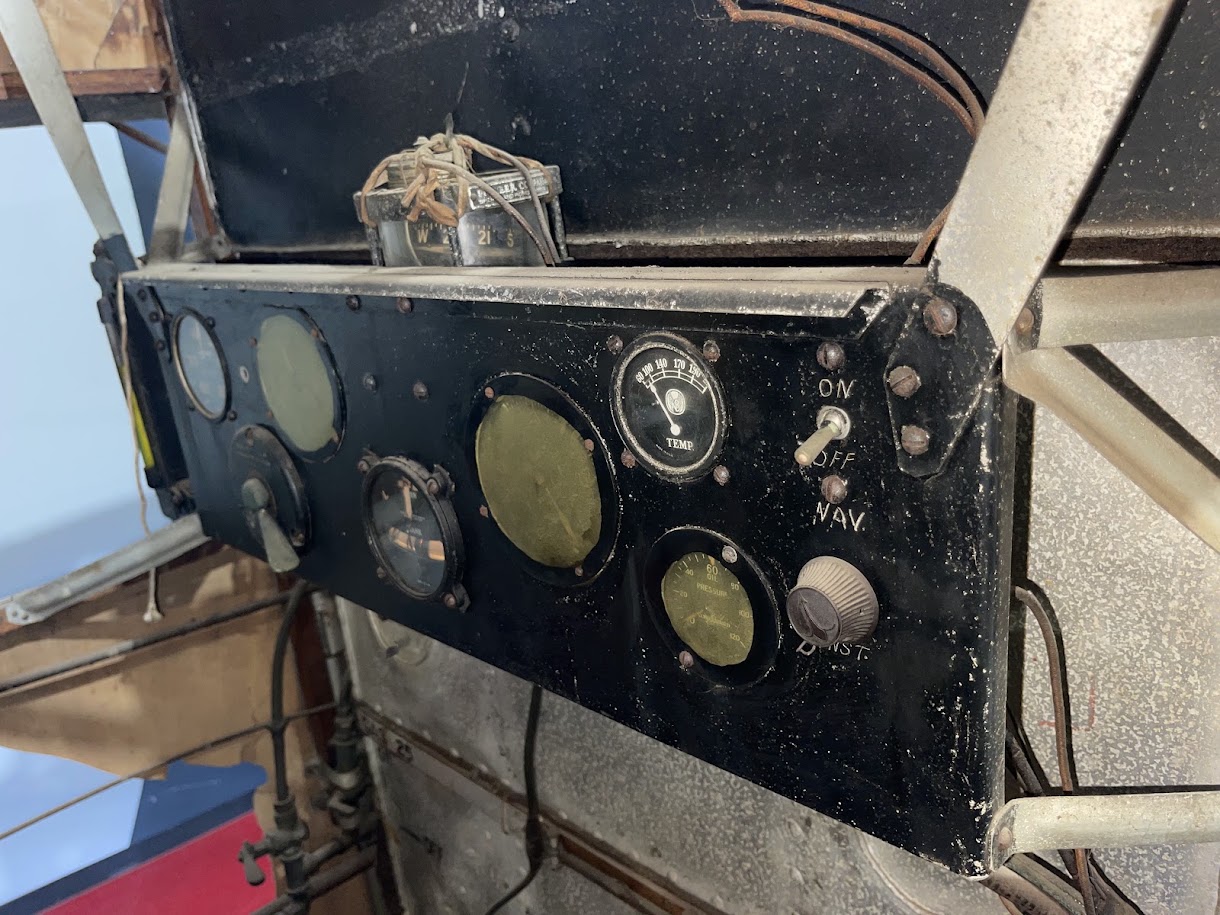
As night fell upon the lone pilot, Corrigan stated that with clouds above and below him, it was impossible to distinguish where the horizon lay, so he trusted that his turn indicator and his altimeter had not failed him, and he continued to keep NX9243 on an even keel. But with every moment the plane kept flying, the fuel leak became worse and worse, with Corrigan noting “…when I pointed the flashlight down under the floor boards I noticed there was gasoline an inch deep in the bottom of the plane.” Corrigan worried that if the fuel leaked out of the left-hand front corner of the cockpit, the fuel could drip onto the hot exhaust pipe, causing a midair explosion. To prevent this outcome, Corrigan picked up a screwdriver and punctured a hole in the fabric bottom on the right side of the cockpit, allowing the leaking fuel to drain away from the exhaust pipe. Reflecting on his flight, Corrigan said, “I had intended to run the engine slowly, as that gives more miles to the gallon, but when I discovered the gasoline tank leak I reasoned, ‘If I run the motor slow the gasoline will have more time to leak out, so I’ll run the motor fast and use the gasoline up before it leaks out.’ Therefore I ran the motor at 1900 rpm all the way when it should have been turning only 1600.”
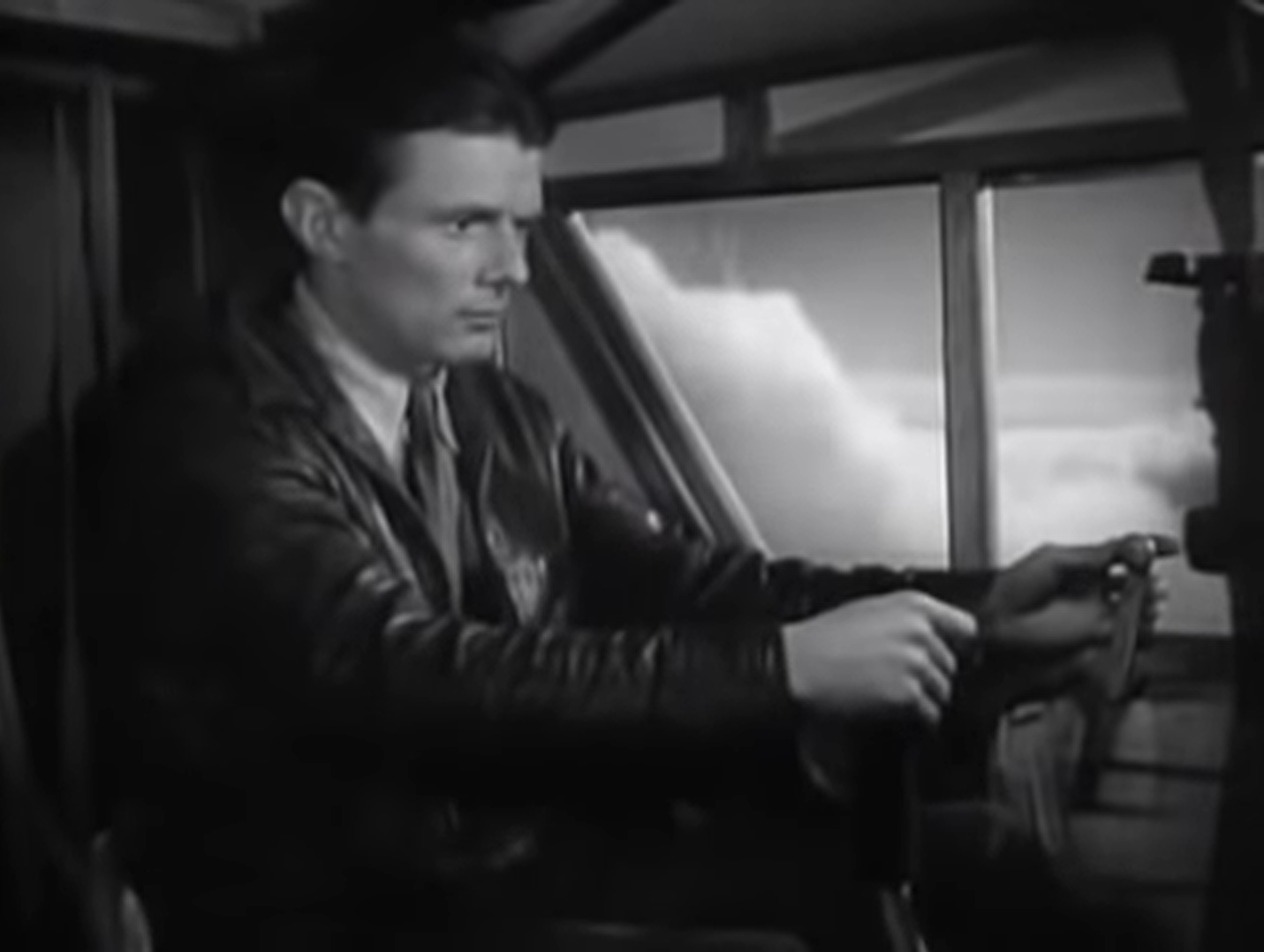
The morning of July 18 found both Corrigan and his Curtiss Robin plodding through the air at 8,000 feet with clouds below them, and later in the flight, more clouds, this time with a ceiling of 15,000 feet. Having no oxygen system, Corrigan knew he couldn’t fly that high, so he continued flying blind through clouds and rain for another two hours, relying on his instruments and hoping to sight land. With the threat of icing being ever present, Corrigan decided to descend through the clouds, expecting to see mountains appear through the clouds at any moment. At 3,500 feet and below, though, he saw nothing but open ocean, with a light fog on the surface of the water, with Corrigan writing “This was strange, as I had only been flying twenty-six hours and shouldn’t have come to the Pacific Ocean yet, so I started to figure out just what had happened. I looked down at the compass, and now that there was more light I noticed I had been following the wrong end of the magnetic needle on the whole flight. As the opposite of west is east, I realized that I was over the Atlantic Ocean somewhere. But where! Not knowing just where, I flew on straight ahead, hoping to strike land some place if the gas held out long enough.”
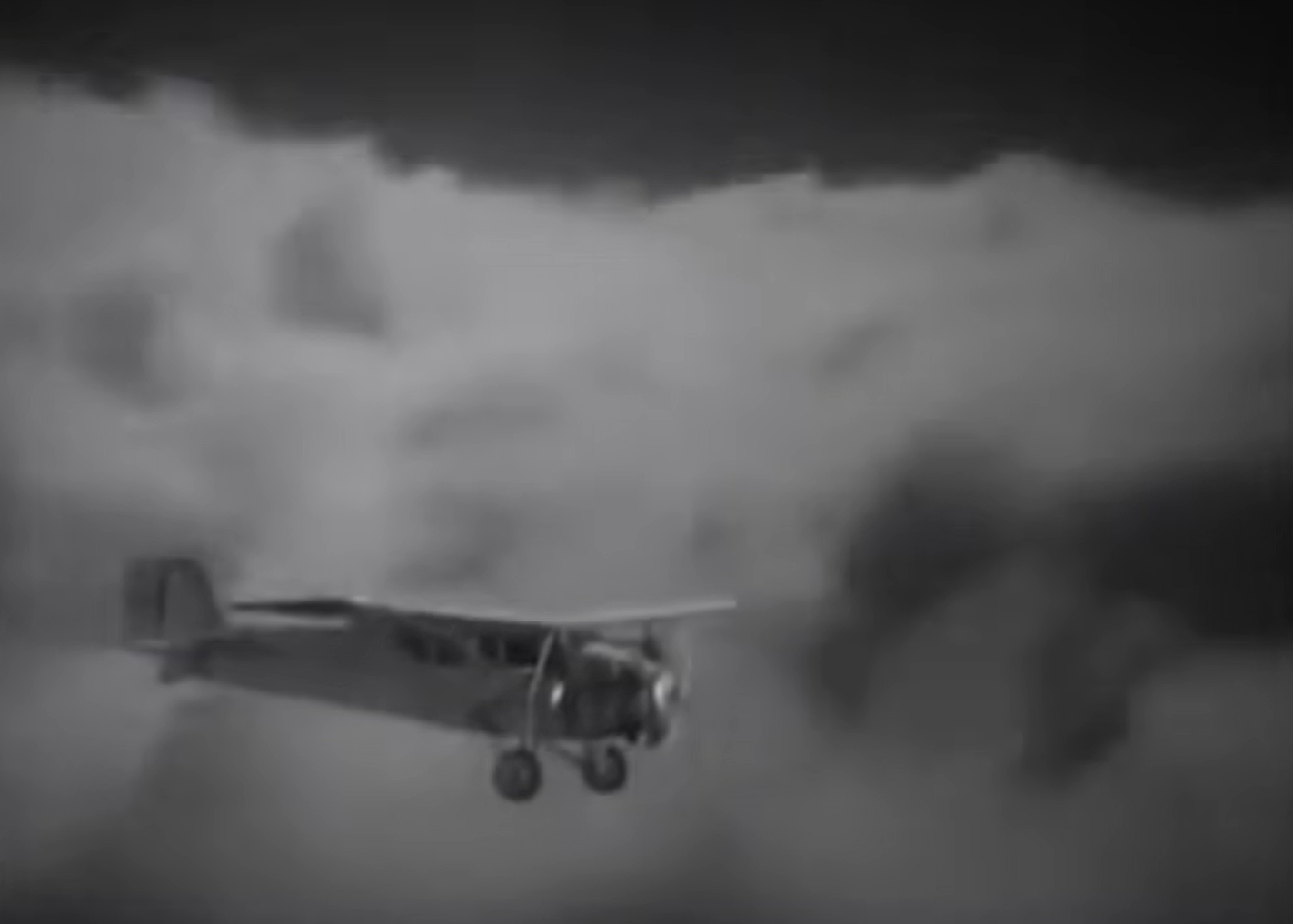
Luckily for Corrigan, just a few minutes after descending from the clouds, he spotted a fishing boat, so he came down to wave-top level to get a closer look, but no one came up from the boat’s deck to see him. Corrigan thought the crew of the boat was either asleep or eating below deck in the galley, and figured that if he was seeing fishing boats, then land would not be far away. Remembering that by Monday afternoon he hadn’t eaten anything since Saturday morning, he opened one of the boxes of fig bars and ate the fig bars within before deciding to eat one of the chocolate bars when all of a sudden “I had taken two bites of a chocolate bar when I noticed some nice green hills ahead of the plane, so from here on I concentrated on trying to find out just where I was.” On reaching this mysterious coast, Corrigan found no towns, so he decided to proceed inland. 45 minutes after making landfall, Corrigan sighted another coastline up ahead of him. It was then, he claimed, that he realized he was over Ireland, considering, he said, “…it is about that far across in some places.” Then off to his right, a city emerged on the horizon, and Corrigan turned in its direction. However, Corrigan saw that this city had no airport, so he continued flying south down the Irish Sea coast. 35 minutes later, an Irish Army Air Corps fighter aircraft (possibly one of Ireland’s four Gloster Gladiators) flew briefly alongside Corrigan’s Robin before pulling in front of him and disappearing. A few minutes later, another city appeared spread out before Douglas Corrigan, this time with a large grass airfield to the right of NX9243, with the name “Baldonnel” marked in the center of the grass (today, this airport is also known as Casement Aerodrome). Corrigan would later write: “Having studied the map of Ireland two years before, I knew this was Dublin. I circled around twice to make sure of the wind direction and to see that there were no obstructions on the field before I landed.”
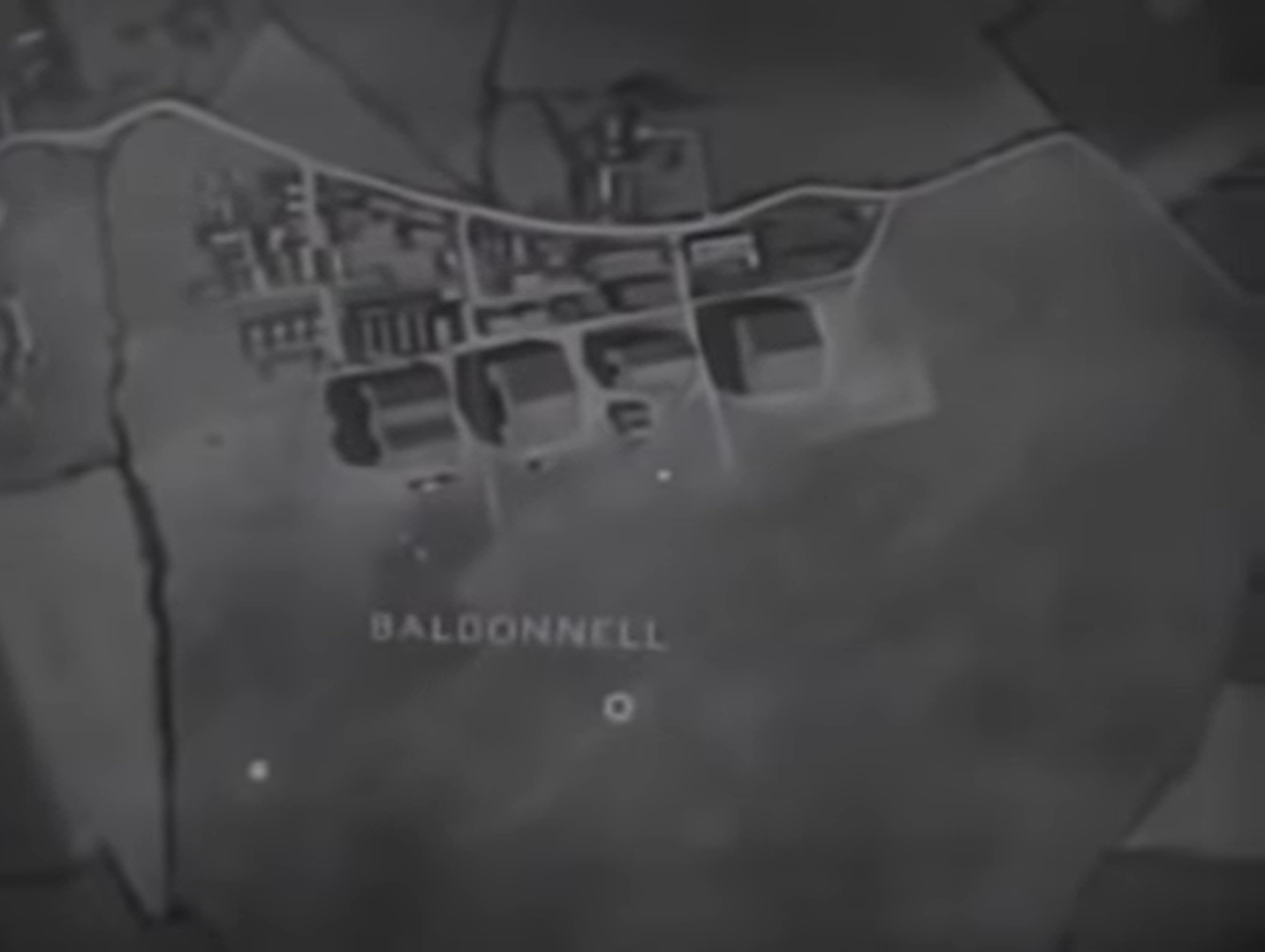
On landing at Baldonnel at 2:25 PM, 28 hours after leaving New York, Corrigan kept the engine of his Robin Sunshine running while he walked out and met an Irish Army officer walking out from the airport field office. “Is this the right field to land at?” Corrigan asked. “Yes, this is the correct field, all right”, came the reply. Then Corrigan asked, “Should I shut the motor off here or taxi up to the hangar?” The officer responded, “It’s all right to shut it off. The lads’ll pull the plane to the hangar.” Corrigan told him “My name’s Corrigan. I left New York yesterday morning headed for California, but I got mixed up in the clouds and must have flown the wrong way.” To Corrigan’s surprise, the Irish officer replied: “Yes, we know”. Unbeknownst to Douglas Corrigan, an alert was made across the Atlantic Ocean for ships and planes to be on the lookout for an American aircraft with the registration number NX9243. The Irish officer also told Corrigan “...just a few minutes ago we got a phone call from Belfast saying a plane with American markings had flown over and was headed down the coast.”
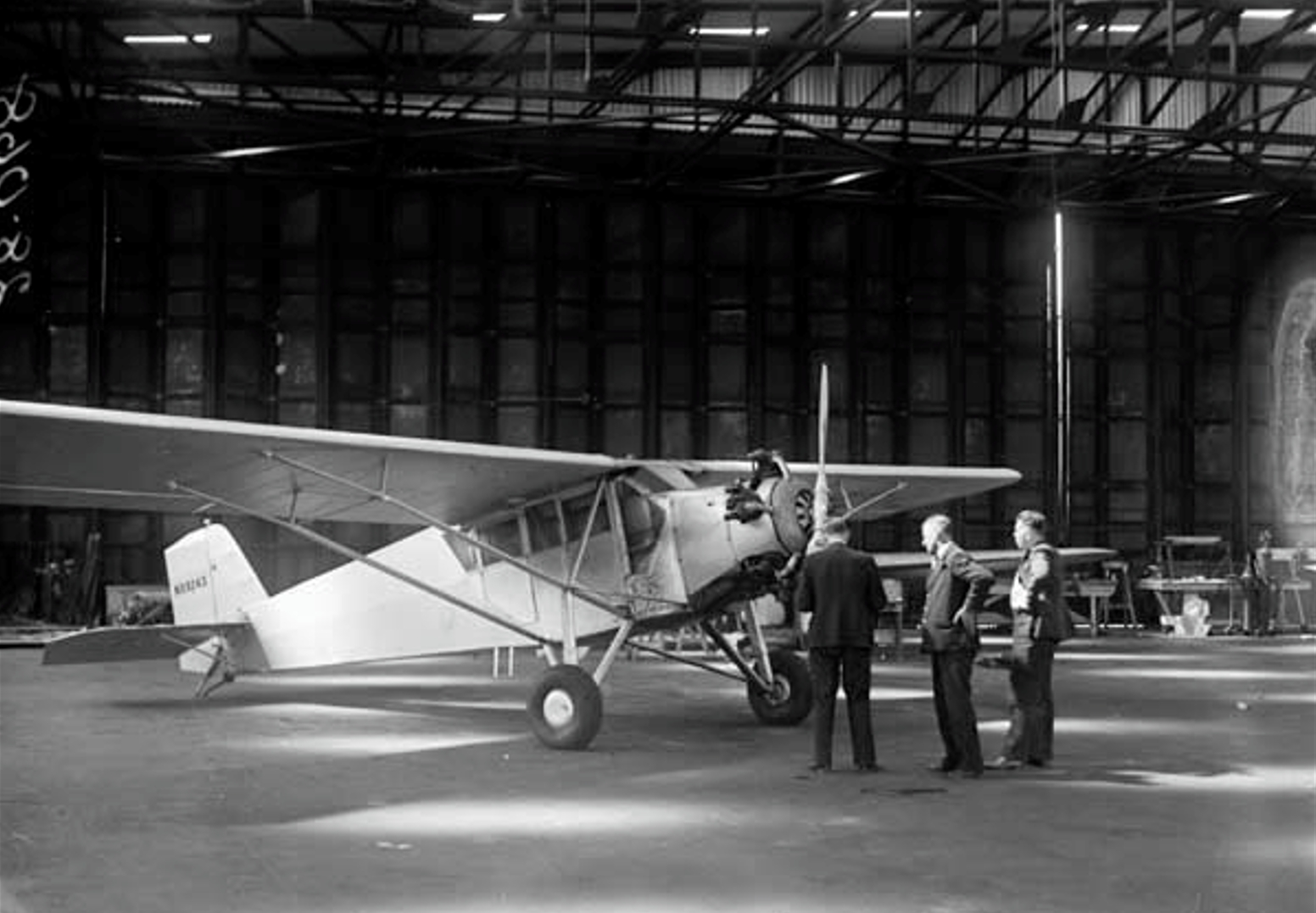
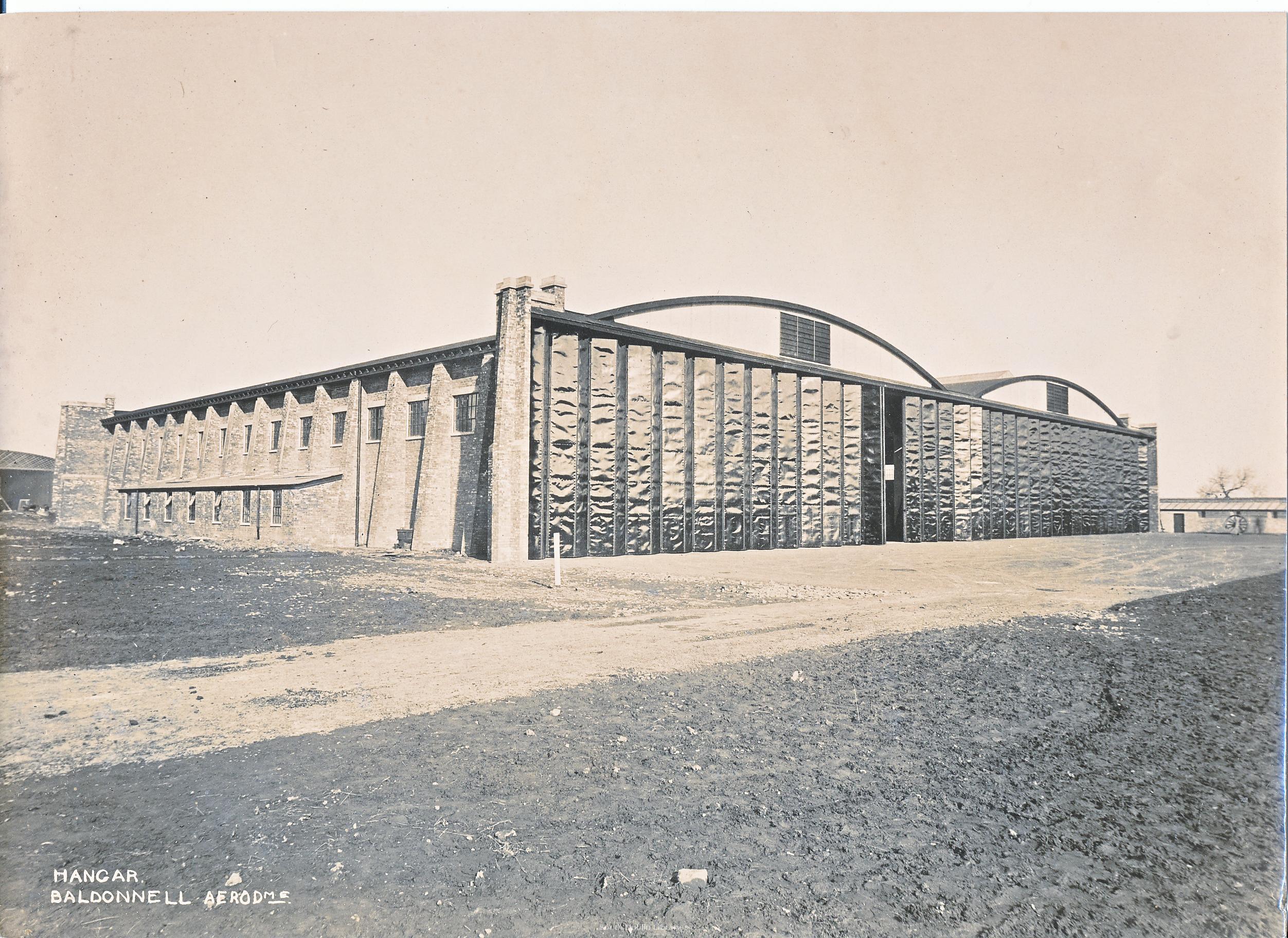
Just then, a uniformed customs officer walked up to Corrigan and asked, “Is this the first place you’ve landed?” After Corrigan replied yes, the customs officer asked, “You’re sure you didn’t land any place up north?” Corrigan replied, “No, this is the only place I’ve landed since leaving New York.” “That makes it easier for us then”, said the officer. Corrigan was then brought to the field office, where he signed Baldonnel’s airport register and was shown a newspaper article titled “Unknown Pilot Disappears Over Atlantic”. When Douglas Corrigan landed in Ireland, he had no passport or clearance papers, which came as no surprise to the customs official. While the two officers began to call the American Envoy to Ireland and the Government building in Dublin, Corrigan was shown maps of Ireland and England to point out where he entered Irish airspace on the northwest shoreline before proceeding to Belfast and then to Dublin before he was guided to the barracks for some tea. By then, Corrigan’s Robin had been pushed into one of Baldonnel’s brick and iron hangars, originally built by the British Royal Flying Corps during the First World War.
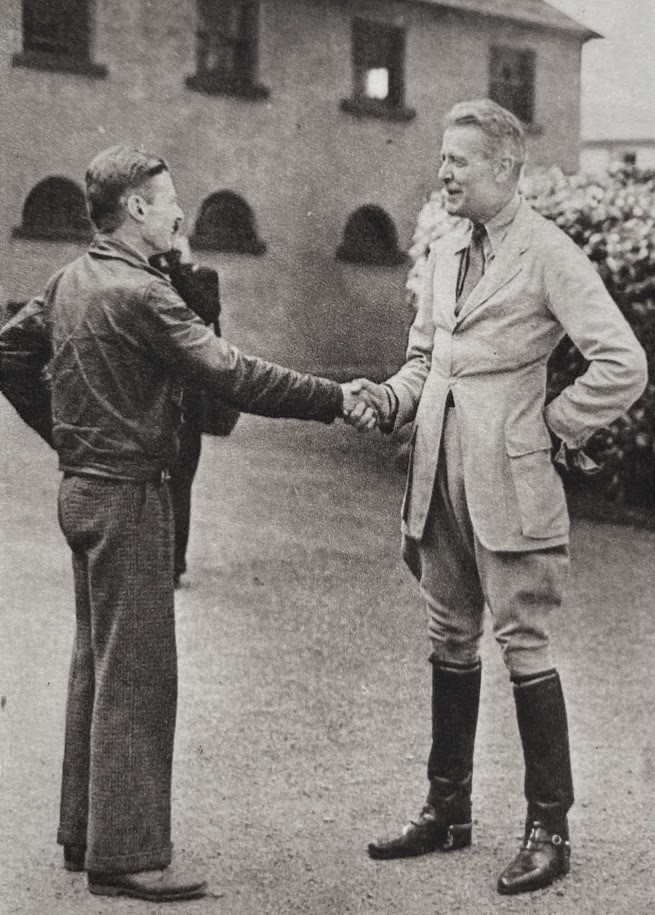
After three hours at Baldonnel, Douglas Corrigan was driven by car to the American Legation at Deerfield Residence in Phoenix Park, Dublin, where he was received by Minister Plenipotentiary to the Irish Free State John Cudahy, who had been out horseback riding at the time of Corrigan’s arrival, and stated “Well, well, you seem to have arrived unexpectedly. What caused the trouble, hey? Tell me about it.” After Corrigan told his story, Cudahy responded, “It was hazy when you took off, was it? Well, your story seems a little hazy too-now come on and tell me the real story.” Corrigan replied, “I’ve just told you a real story. I don’t know any other one.” Still skeptical of Corrigan’s account, Cudahy asked Corrigan if he was sticking to his story. Corrigan responded, “That’s my story, but I sure am ashamed of that navigation.”
Within hours of Corrigan’s arrival, news reporters, photographers, and newsreel cameramen descended on Dublin, with at least one reporter offering $500 for an exclusive story. Corrigan declined the exclusive offers, preferring to tell all his story, while cablegrams came into the American Legation from both sides of the Atlantic, and soon Douglas received the nickname “Wrong Way Corrigan”. The next day, Douglas Corrigan and Minister Cudahy went to the Government Buildings, where they met with John Leydon, Secretary of the Department of Industry and Commerce, and Joseph Walshe, Secretary of the Department of External Affairs, before Corrigan was introduced to Éamon de Valera, the Prime Minister (Taoiseach) of Ireland. After Corrigan retold the story of his accidental flight to Ireland, John Cudahy asked “What is this young man going to do about shipping his plane back home?”, which prompted de Valera to ask Walshe and Leydon, “Will it be necessary to fill out any extra papers because he came in without permission?” The two officials answered, “We will probably have to make a special ruling in this case.” “All right,” de Valera said, “as he came into this country without papers of any kind, why, we’ll just let him go back without any papers.” Corrigan was stunned, meekly replying “Gee, Mr. De Valera, thanks a lot, and I’m sorry to have caused you so much bother.” de Valera replied, “That’s all right, we’re glad to help you because the flight helped to put Ireland on the map again.”
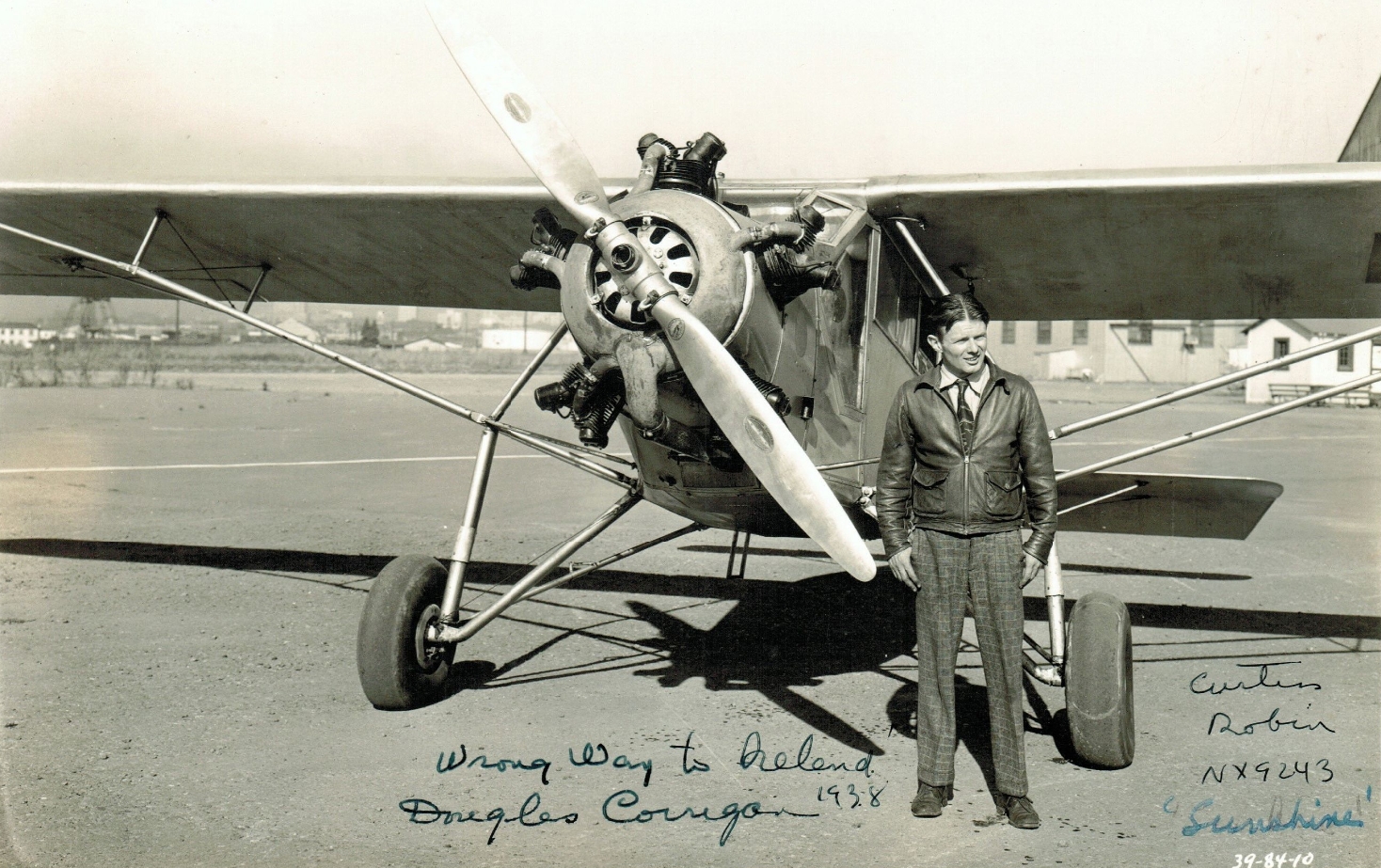
Following this meeting, Corrigan was overwhelmed with cablegrams for him, ranging from business offers, letters of congratulations from figures such as Henry Ford, Howard Hughes, Steve Reich, and Ruth Nichols, along with sums of money for appearances at everything from theaters and nightclubs to circuses and stores. Some even offered to buy his airplane. Corrigan, however, was more concerned about how he would get his Curtiss Robin back to America. Ultimately, it was decided on July 21 that NX9243 would be disassembled at Baldonnel by Irish Army Air Corps personnel and loaded onto an American steamer bound for New York. Just before Corrigan’s Robin was to be disassembled, the President of Ireland, Douglas Hyde, wished to meet Corrigan and to see his airplane that day. Corrigan and President Hyde watched as Corrigan’s Sunshine was carefully disassembled, with the wings being placed on a trailer and the fuselage and landing gear towed behind an Irish Army truck down to the docks, and the plane was loaded into the cargo hold of the American merchant vessel SS Lehigh. Corrigan tied the ropes holding the parts together, and went aboard the Lehigh to see where it was placed. The whole process of disassembling and stowing the Robin took just six hours. Corrigan offered to pay for all the work, but it was politely declined, but told the payment was unnecessary.
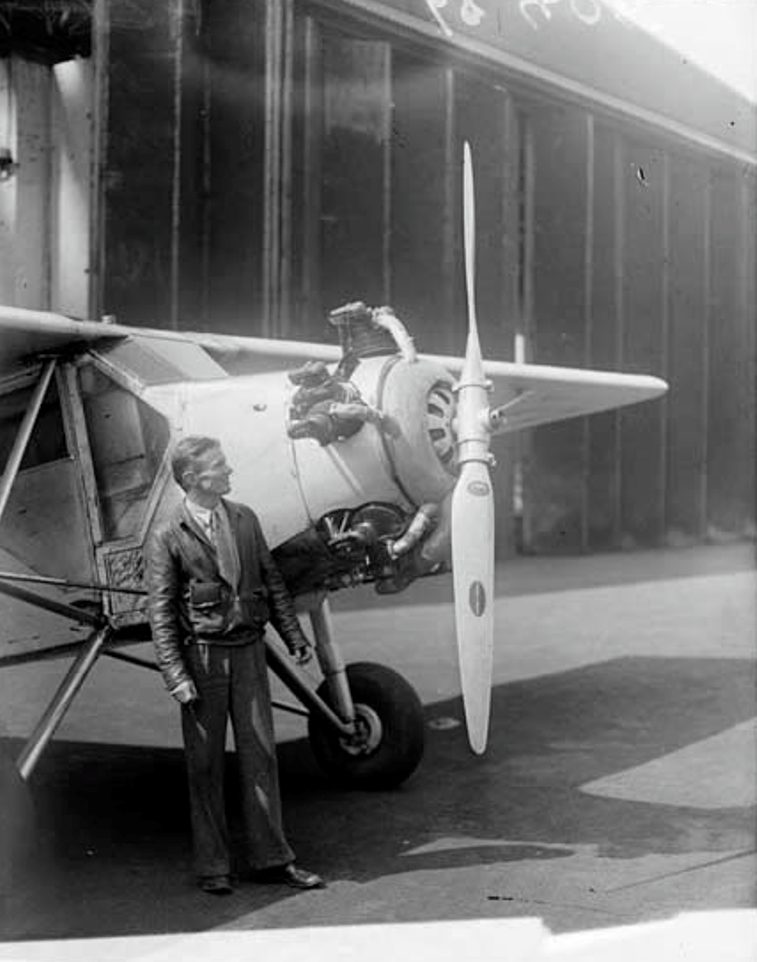
On seeing Corrigan’s Robin Sunshine, American journalist H.R. Knickerbocker described the condition of Sunshine as follows: “You may say that Corrigan’s flight could not be compared to Lindbergh’s in its sensational appeal as the first solo flight across the ocean. Yes, but in another way the obscure little Irishman’s flight was the more audacious of the two. Lindbergh had a plane specially constructed, the finest money could buy. He had lavish financial backing, friends to help him at every turn. Corrigan had nothing but his own ambition, courage, and ability. His plane, a nine-year-old Curtiss Robin, was the most wretched-looking jalopy. As I looked over it at the Dublin airdrome, I really marveled that anyone should have been rash enough even to go in the air with it, much less try to fly the Atlantic. He built it, or rebuilt it, practically as a boy would build a scooter out of a soapbox and a pair of old roller skates. It looked it. The nose of the engine hood was a mass of patches soldered by Corrigan himself into a crazy-quilt design. The door behind which Corrigan crouched for twenty-eight hours was fastened together with a piece of baling wire. The reserve gasoline tanks put together by Corrigan left him so little room that he had to sit hunched forward with his knees cramped, and not enough window space to see the ground when landing.” For Douglas Corrigan, July 22 was an important day, as it was his sister Evelyn’s birthday, so he sent a cablegram to her in Los Angeles. After private audiences with distinguished officials, such as the Irish Army Chief of Staff and the Italian consul to Ireland, Corrigan expressed his desire to go to London to see both the London Bridge and to see the Wright Flyer, which was then on display in the London Science Museum in South Kensington. U.S. Envoy John Cudahy then made arrangements for the young pilot to be hosted at the American consulate in London, where Joseph Kennedy Sr., father of future president John F. Kennedy, was serving as the U.S. ambassador. On July 25, 1938, Corrigan flew as a passenger from Ireland to England aboard “a four-engine De Havilland plane of the Irish Airlines” (almost certainly a de Havilland DH.86 Express flown by Aer Lingus).
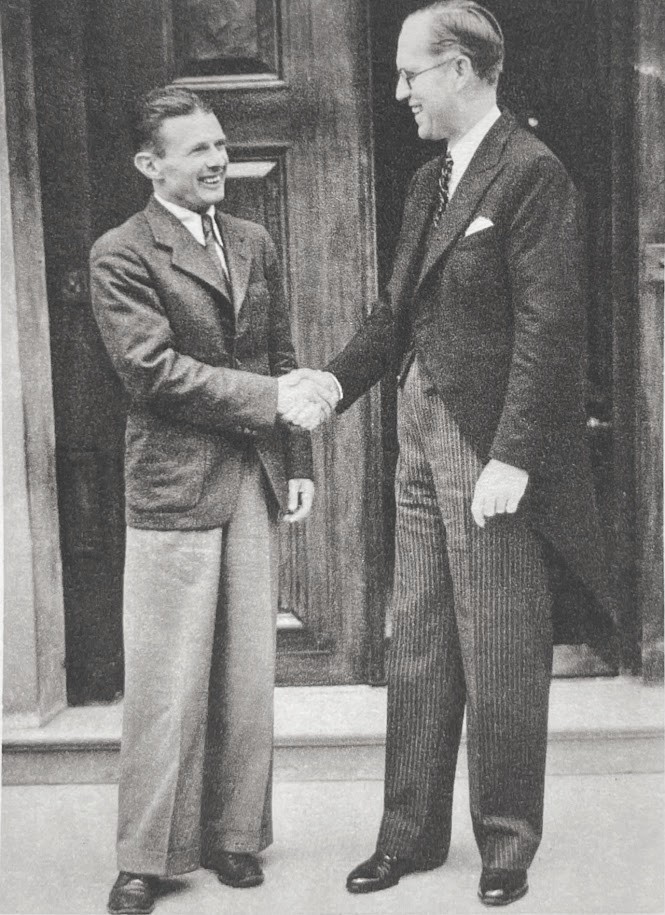
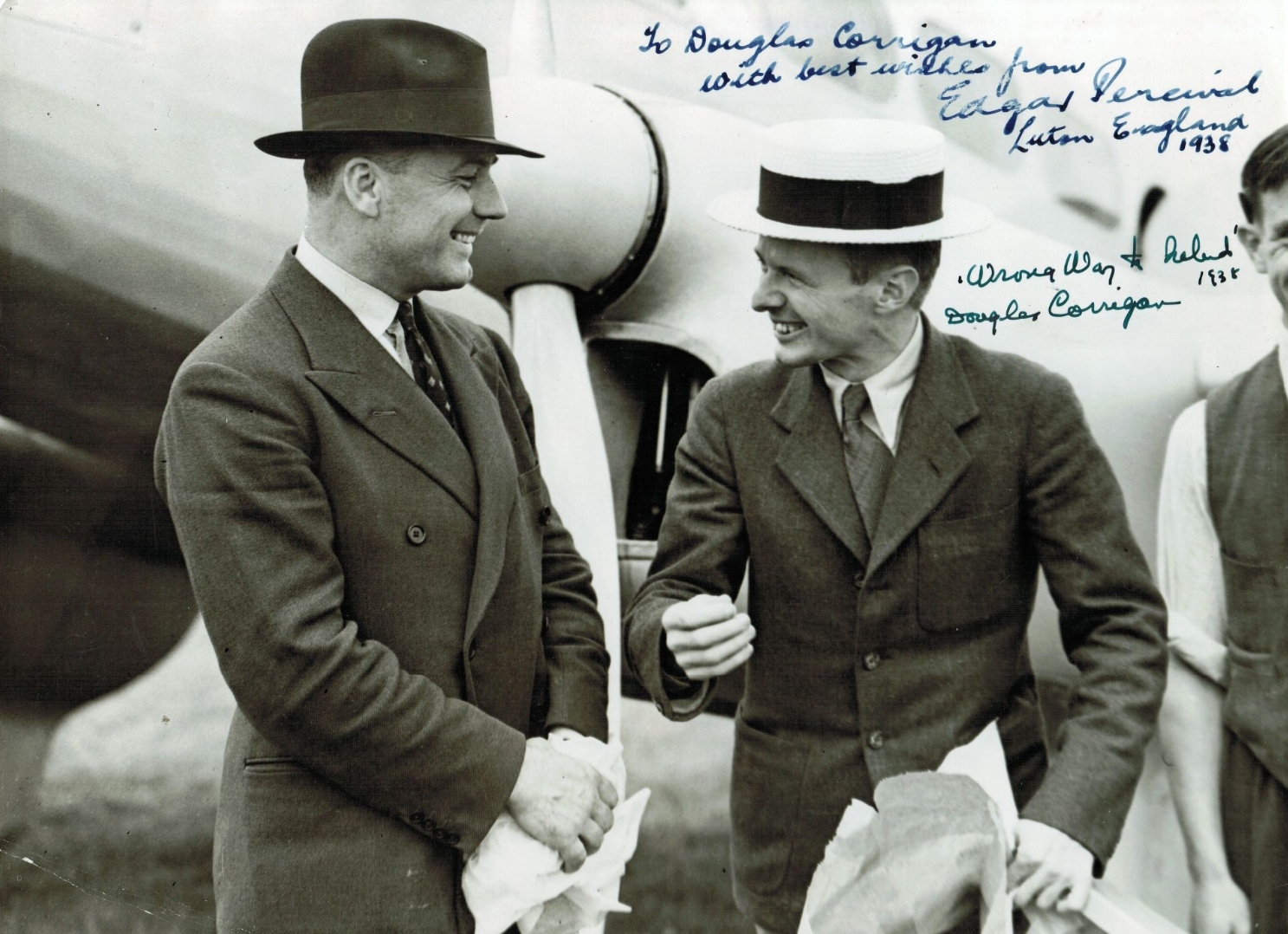
On landing in London, Corrigan met reporters and answered questions before being met by Ambassador Kennedy’s secretary, Edward Moore, who drove Corrigan to meet Ambassador Kennedy and two of his daughters for lunch (Corrigan never met the future president John F. Kennedy, who was then on vacation in France with the rest of the family) before Moore and Corrigan went off to visit Westminster Abbey, the Tower of London, and the London Bridge. While in London, Corrigan also met with Colonel Martin F. Scanlon, the U.S. Air Attaché in England, who then took Corrigan on a tour of the de Havilland Aircraft factory in Hatfield before being flown to by Edgar Percival to see the Percival Aircraft Company’s factory at Luton Airport. Following this, Corrigan made a midnight radio broadcast for the BBC, the first of eight radio broadcasts he would do in England.
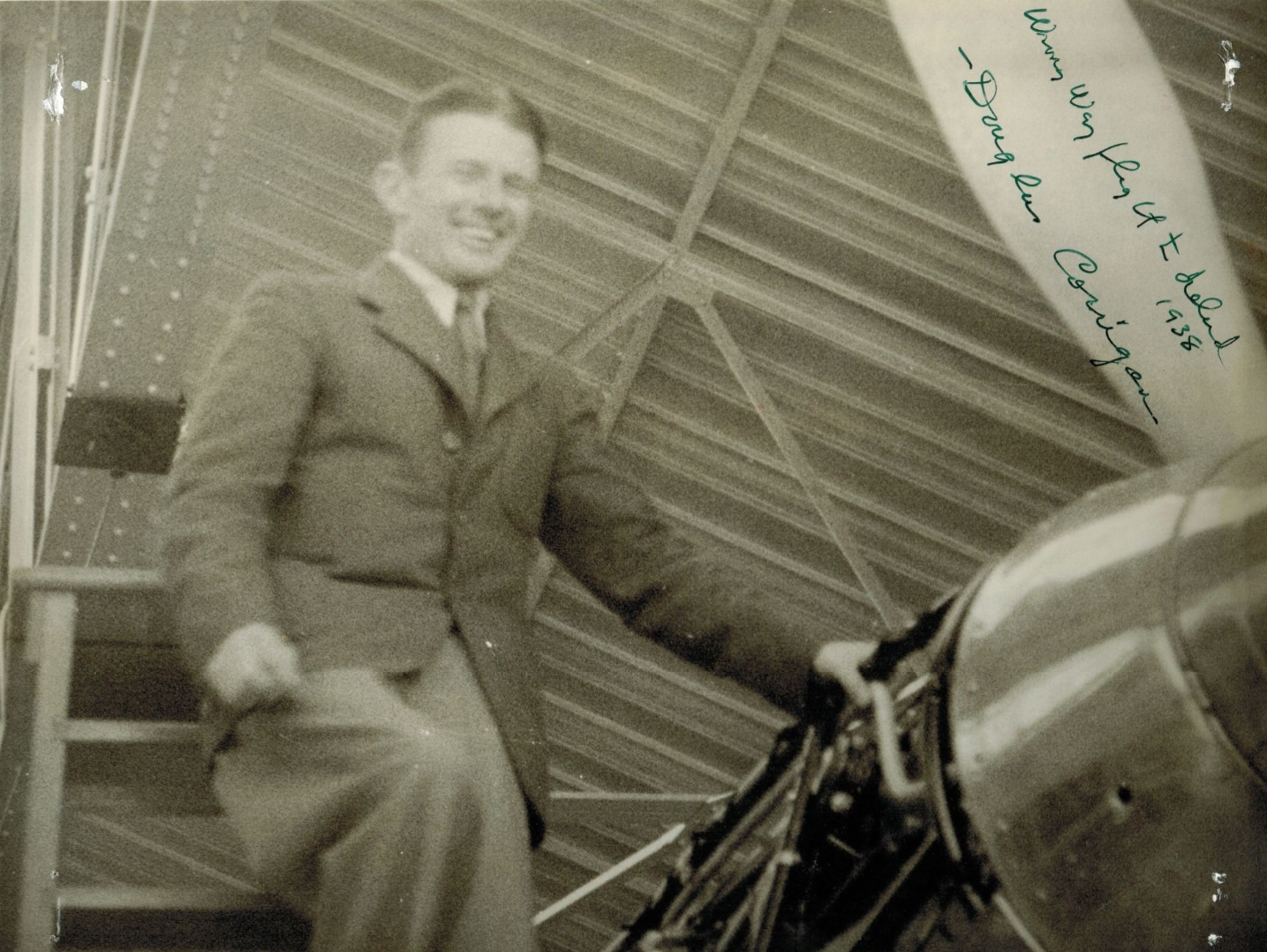
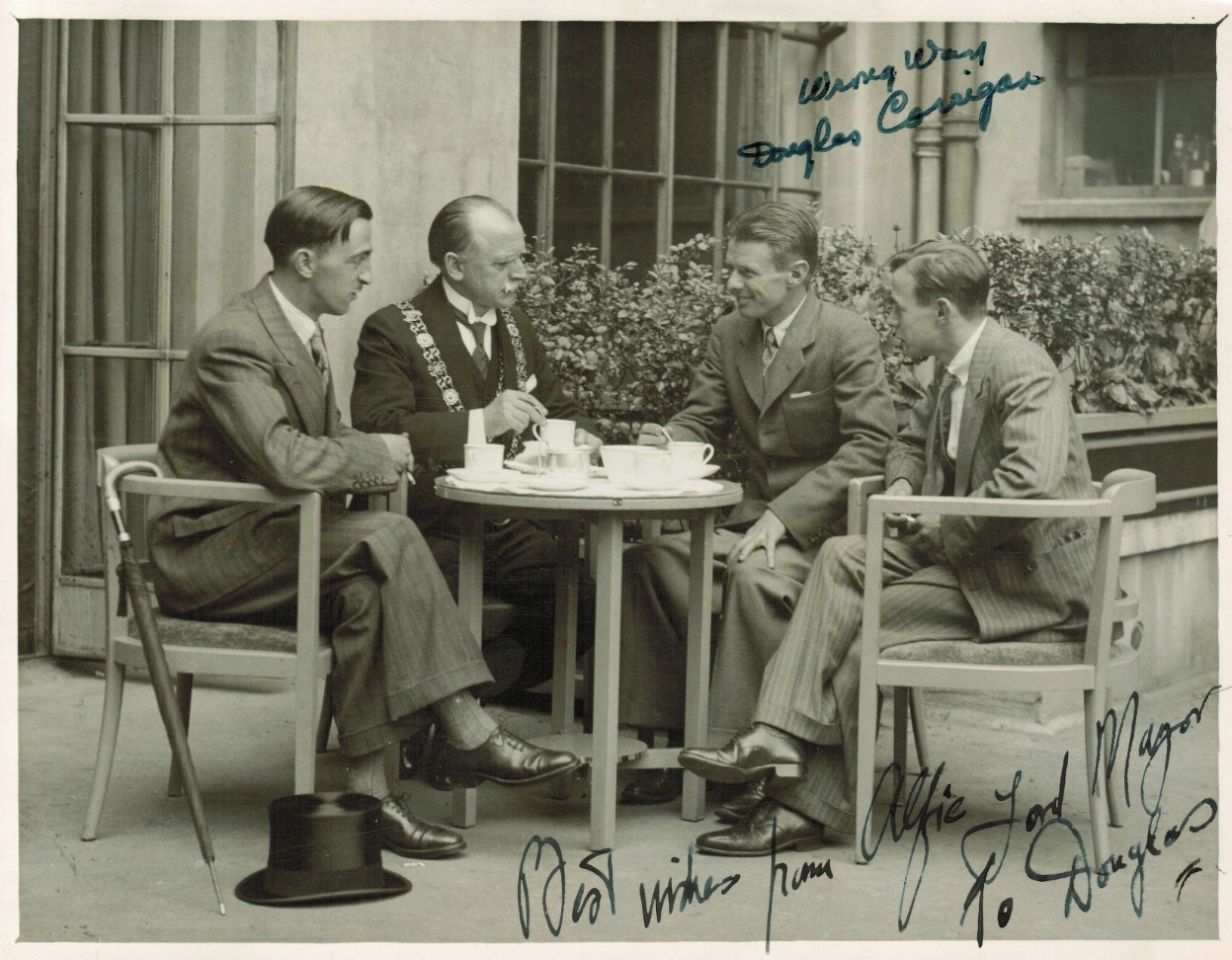
On July 28, Corrigan also had the opportunity to visit the Science Museum, where the original 1903 Wright Flyer flown at Kitty Hawk, North Carolina, was on display. At the time, the Wright Flyer was in London because of a dispute between Orville Wright and the Smithsonian Institution over who built the first flyable airplane. Corrigan was privileged to be allowed to climb a stepladder and actually touch the Wright Flyer as it hung suspended from the ceiling. It was also at the Science Museum that Corrigan saw the converted Vickers Vimy bomber used by British aviators John Alcock and Arthur Whitten Brown to complete the first nonstop flight across the Atlantic Ocean between St. John’s, Newfoundland and Clifden, Ireland on July 14-15, 1919, almost exactly 19 years before Corrigan’s flight. Later that day, Corrigan was flown back to Dublin aboard an Aer Lingus de Havilland Express. During the flight, Corrigan was offered a few minutes at the controls and said of the experience: “Although it was a large four-engined machine it handled as easily as any small plane.” On landing in Dublin, Corrigan was introduced to Alfred “Alfie” Byrne, the Lord Mayor of Dublin, who placed his gold mayoral chains on the shoulders of the young American pilot in a public ceremony. When Douglas Corrigan was to depart Dublin, Byrne presented him with an engraved four-handled silver cup. Then he was brought on a train from Dublin to the seaport of Cobh, where he was driven to the docks to board the SS Manhattan of United States Lines, bound for New York.
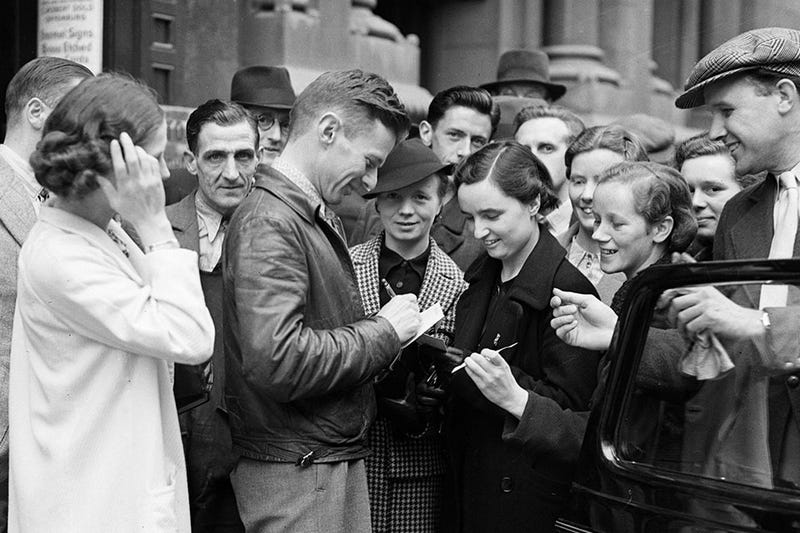
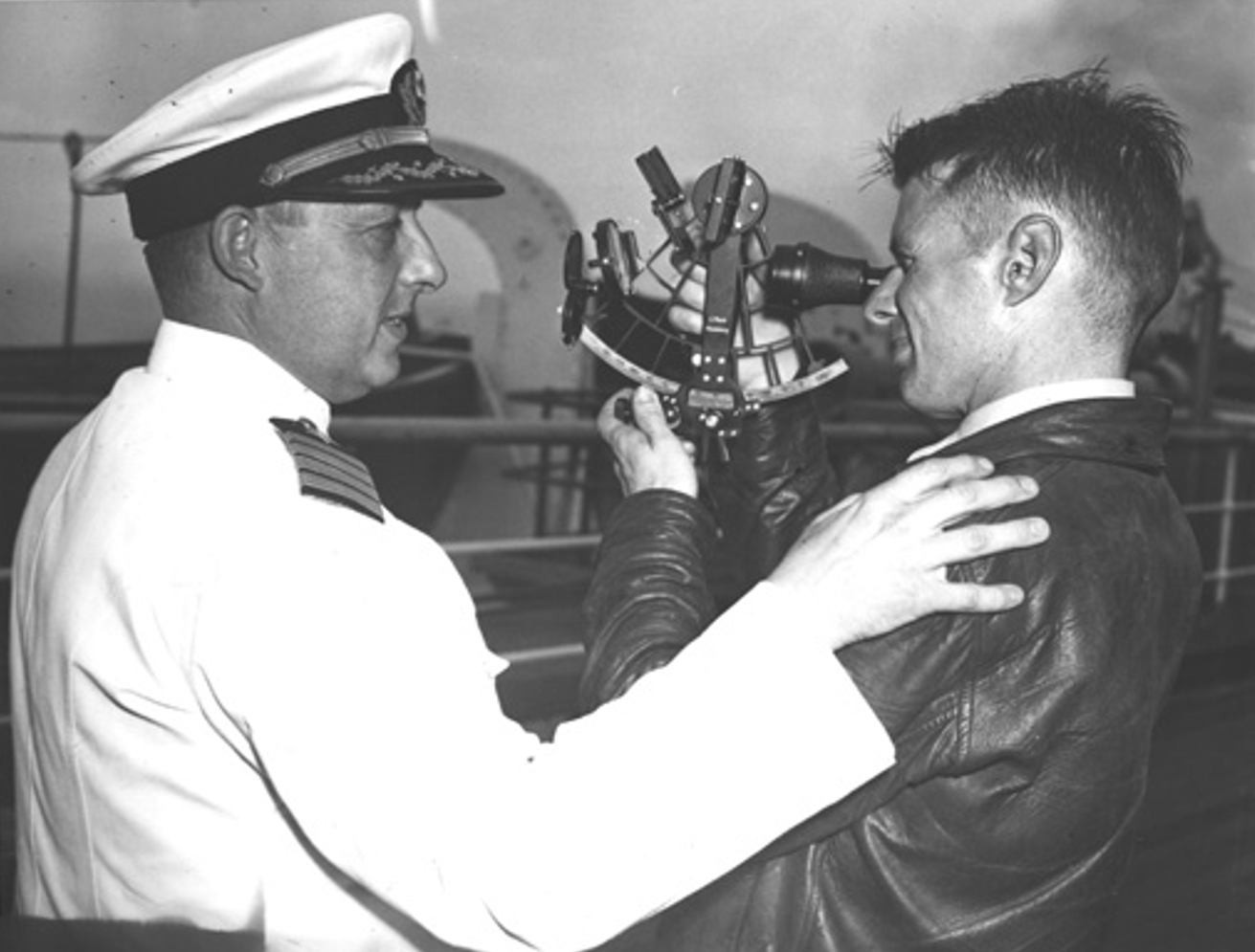
When Douglas Corrigan boarded the SS Manhattan, he met with the ship’s captain, Edward A. Richmond, and the ship’s purser, Clarence P. Gehrig, who handed Corrigan a cablegram from J. Monroe Johnson, the Assistant Secretary of Commerce, who also presided over the Bureau of Air Commerce. The cablegram was around 300 words long, listing all the regulations he violated, and ended with the sentence “Your pilot’s license, number 4674, is hereby suspended until August 4.” The Manhattan was due to arrive in New York on August 4. In the meantime, Corrigan spent the voyage across the Atlantic signing autographs to both fellow passengers and the ship’s crew and posed for just as many photographs.
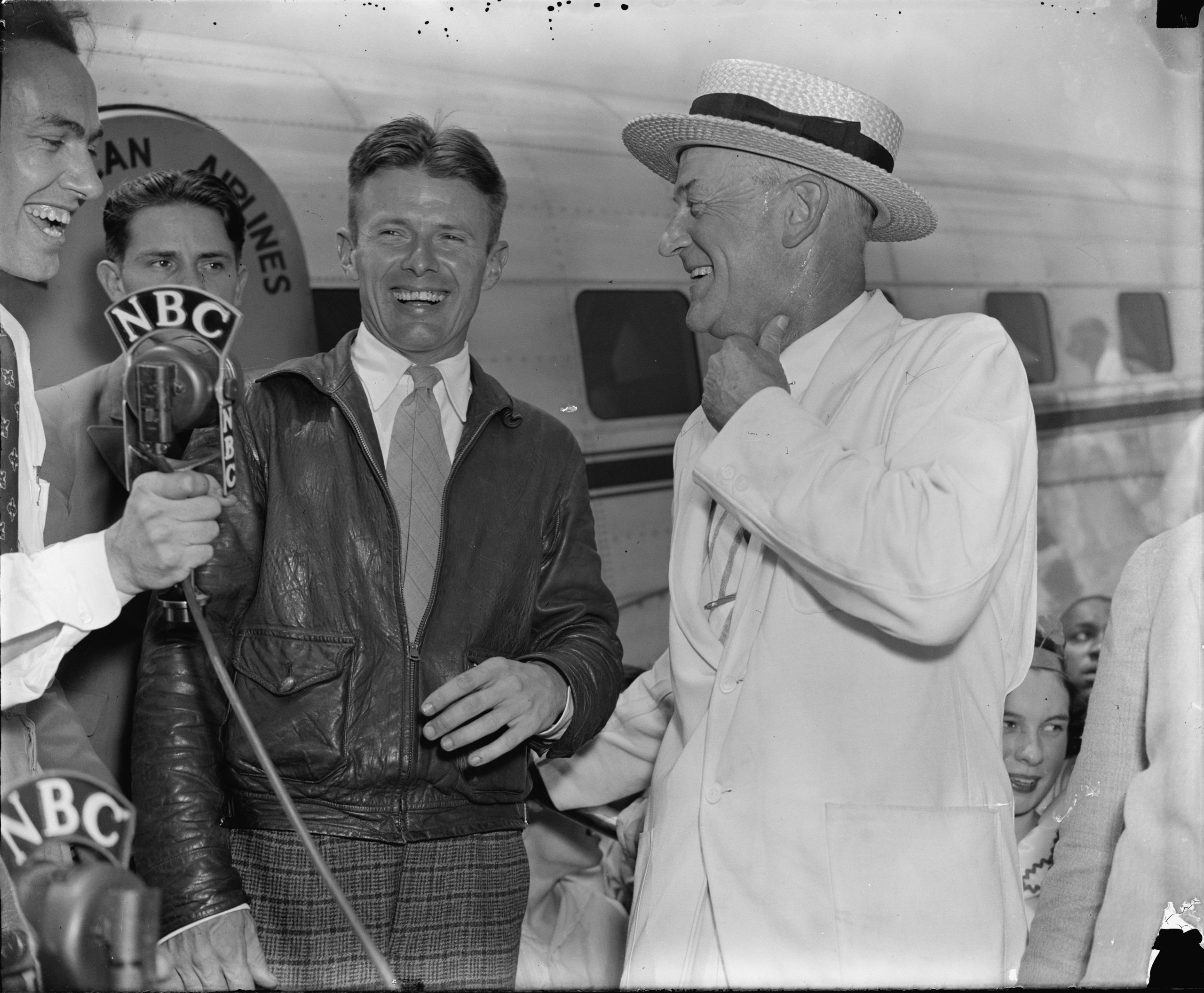
When the SS Manhattan arrived in New York Harbor on August 4, 1938, it was the beginning of a tumultuous parade for “Wrong Way” Corrigan, with the ship’s whistles blowing, planes full of photographers and cameramen flew overhead, fireboats shooting streams of water into the air, and passenger ferries flanked the SS Manhattan as the ship steamed past the Statue of Liberty. After docking at the United States Lines’ pier, Corrigan was given a ticker-tape parade up Broadway to City Hall, then after an official luncheon at The Advertising Club of New York, he was driven to Floyd Bennett Field and presented with the first of many compasses that would be given to him on his national tour. Another celebration for him was held that evening at Yankee Stadium, and a dinner was hosted for him by the Irish Societies of New York (Link to a newsreel of Corrigan’s return to New York HERE).
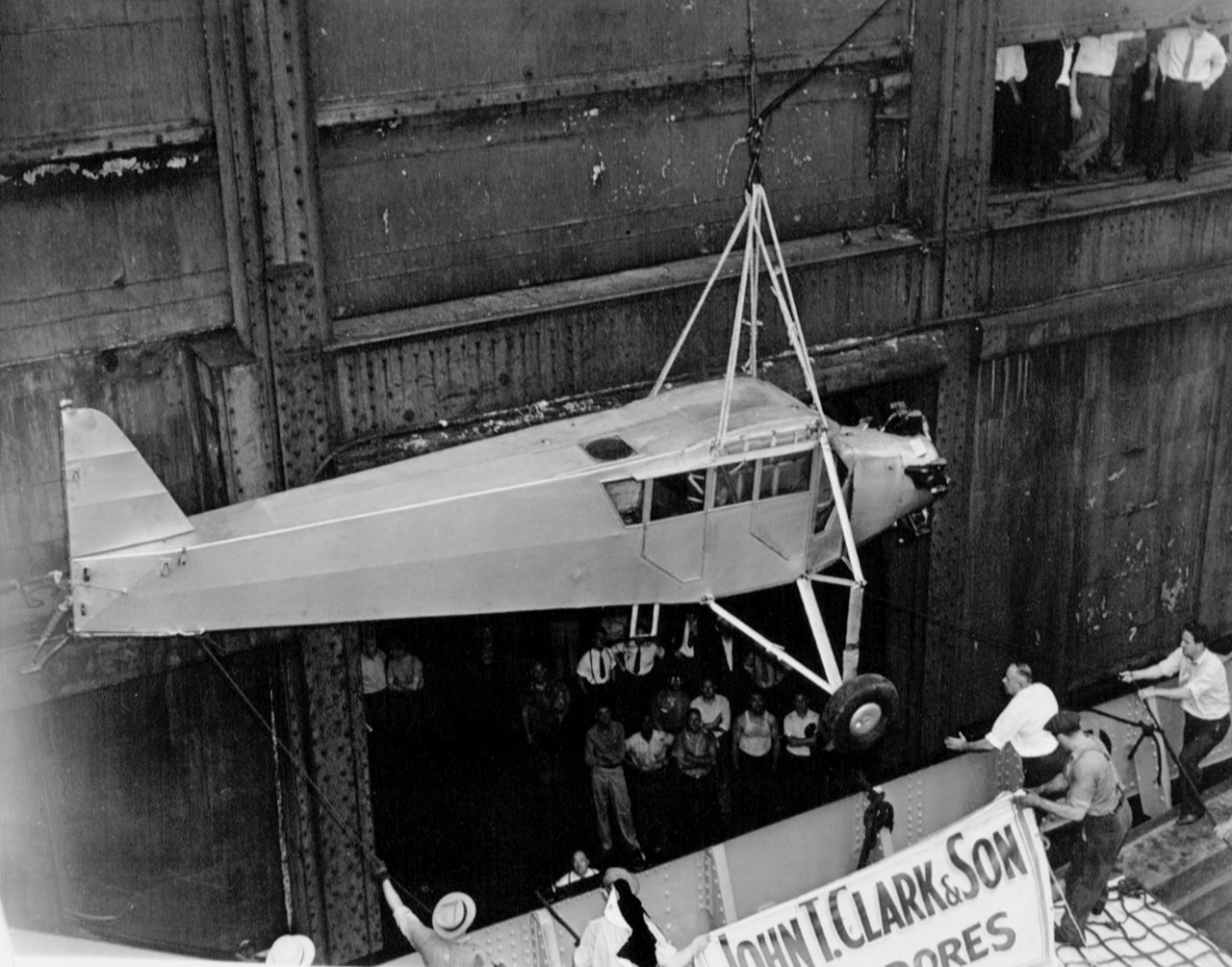
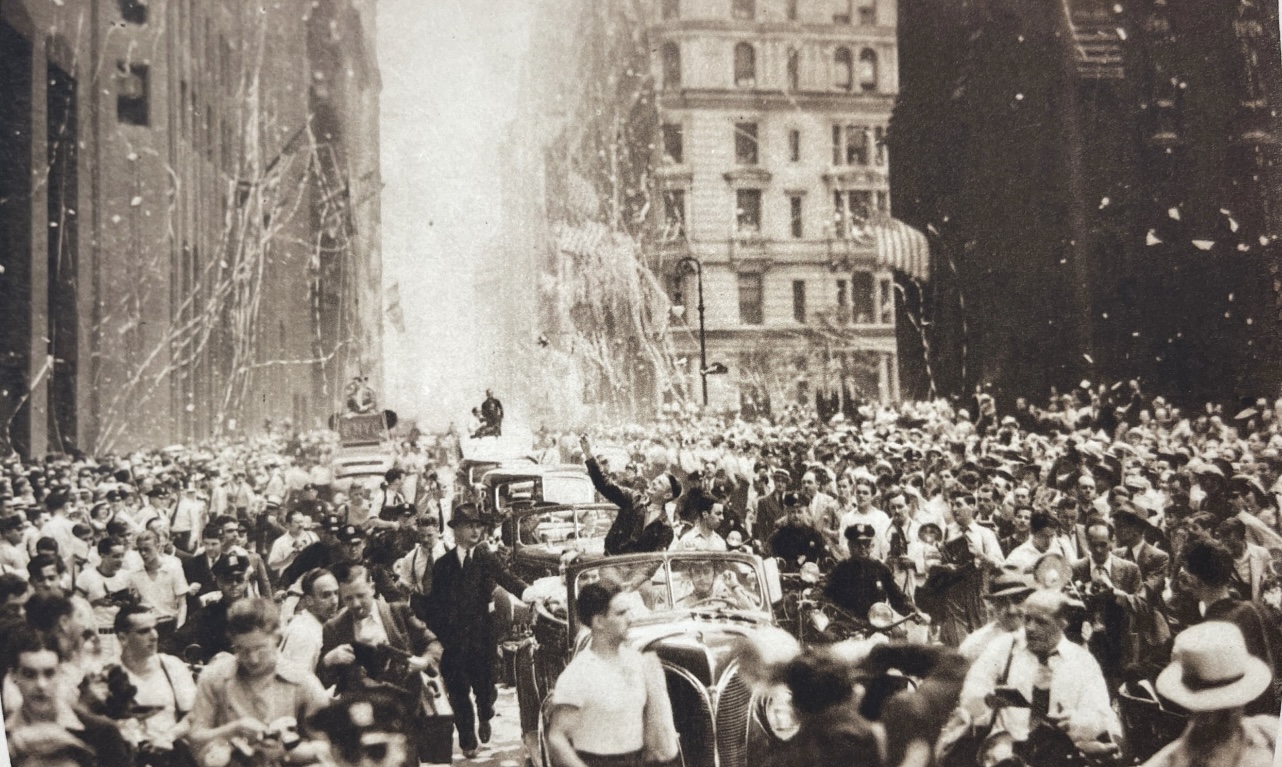
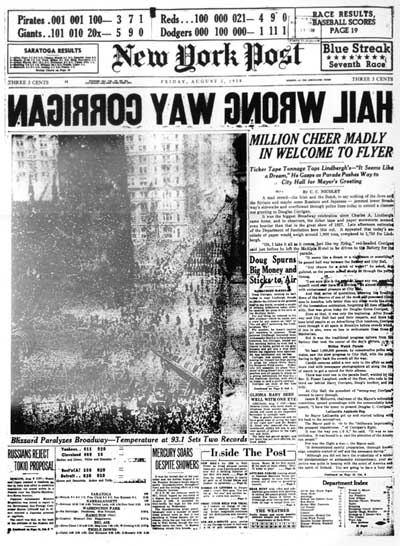
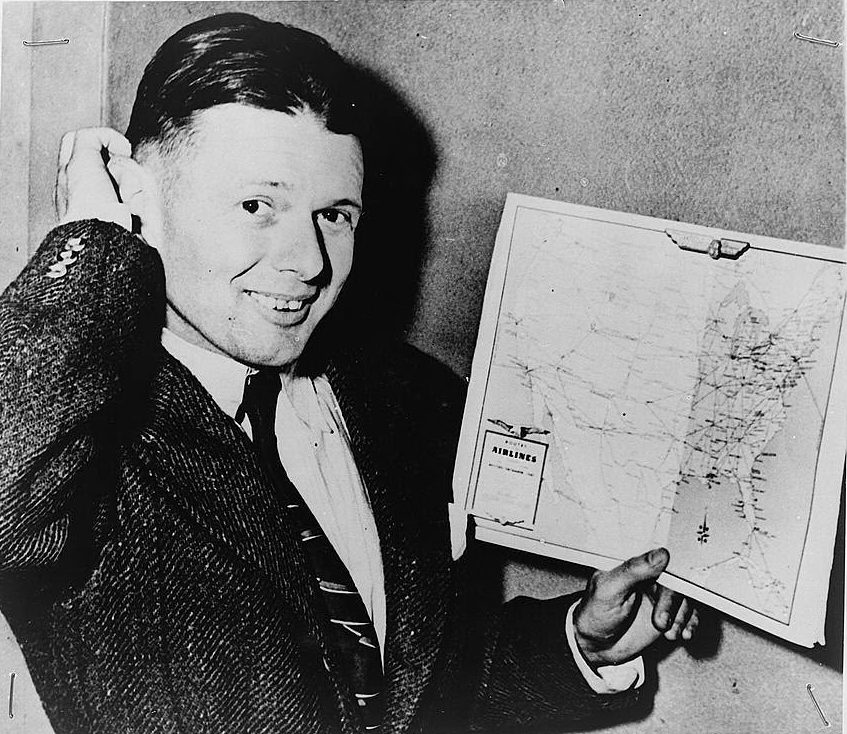
Soon Corrigan would cross the country, where he was the toast of the town. In the midst of the Great Depression and the fear of a new World War on the horizon, “Wrong Way” Corrigan was seen as a hard-working hero and a personification of the American Dream. However, since his Curtiss Robin was still aboard the slow cargo ship Lehigh, Corrigan was flown by American Airlines to Boston, Newark, Baltimore, and Washington, D.C., before returning to New York to oversee the reassembly of his Robin Sunshine at Roosevelt Field. Once his plane was flightworthy again, Corrigan continued his tour at the controls of the very airplane he had flown across the Atlantic, making stops in cities throughout New York, Michigan, Ohio, Indiana, Illinois, Wisconsin, Minnesota, Missouri, Tennessee, Louisiana, Texas, Alabama, Georgia, North Carolina, Virginia, Washington, D.C., Maryland, New Jersey, Pennsylvania, Kentucky, Oklahoma, Arizona, and California. At every stop, he was at the center of parades, gave speeches, and was the guest of honor at formal luncheons and dinners hosted by local politicians and civic organizations. He even got an audience with President Franklin D. Roosevelt at the White House.
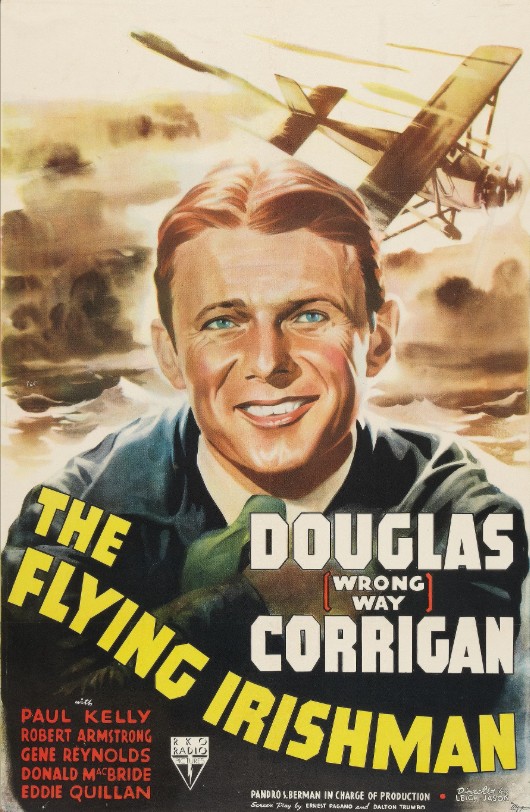
In addition to the flying tour, Douglas “Wrong Way” Corrigan published his autobiography That’s My Story in 1938 with the publishing firm E.P. Dutton and Co. and signed a contract with RKO Pictures to star as himself in a 91-minute film released in April 1939 titled The Flying Irishman. Filming was done in November and December of 1938, with flying shots featuring the actual Curtiss Robin filmed at both Van Nuys and Culver City. The movie itself was partially true, as some scenes were invented to further dramatize the story. Corrigan was paid $75,000 (worth $1,782,569 in 2026) to appear in the film, making more money in one movie than he ever would have if he worked 30 years as an aircraft mechanic. In addition to his movie and book deals, Corrigan made more money endorsing flying schools and aviation maintenance courses, and several “wrong way” products, such as a wristwatch that ran backward.
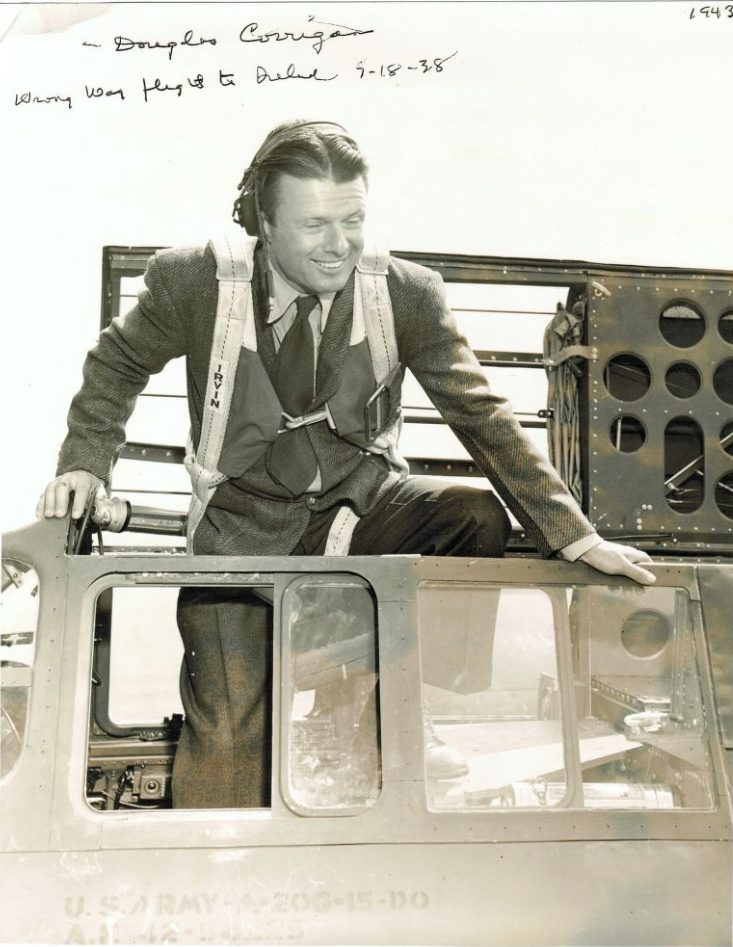
In 1939, Douglas Corrigan married Elizabeth Marvin, sister of his childhood friend Wilmark, and during World War II, Douglas Corrigan did his part as a civilian contractor pilot for Douglas Aircraft, flying new airplanes from the factories to Modification Centers as part of the Ferry Command of the US Army Air Force’s Air Transport Command (ATC), as well as to air bases from which military pilots would then fly these aircraft overseas into combat.
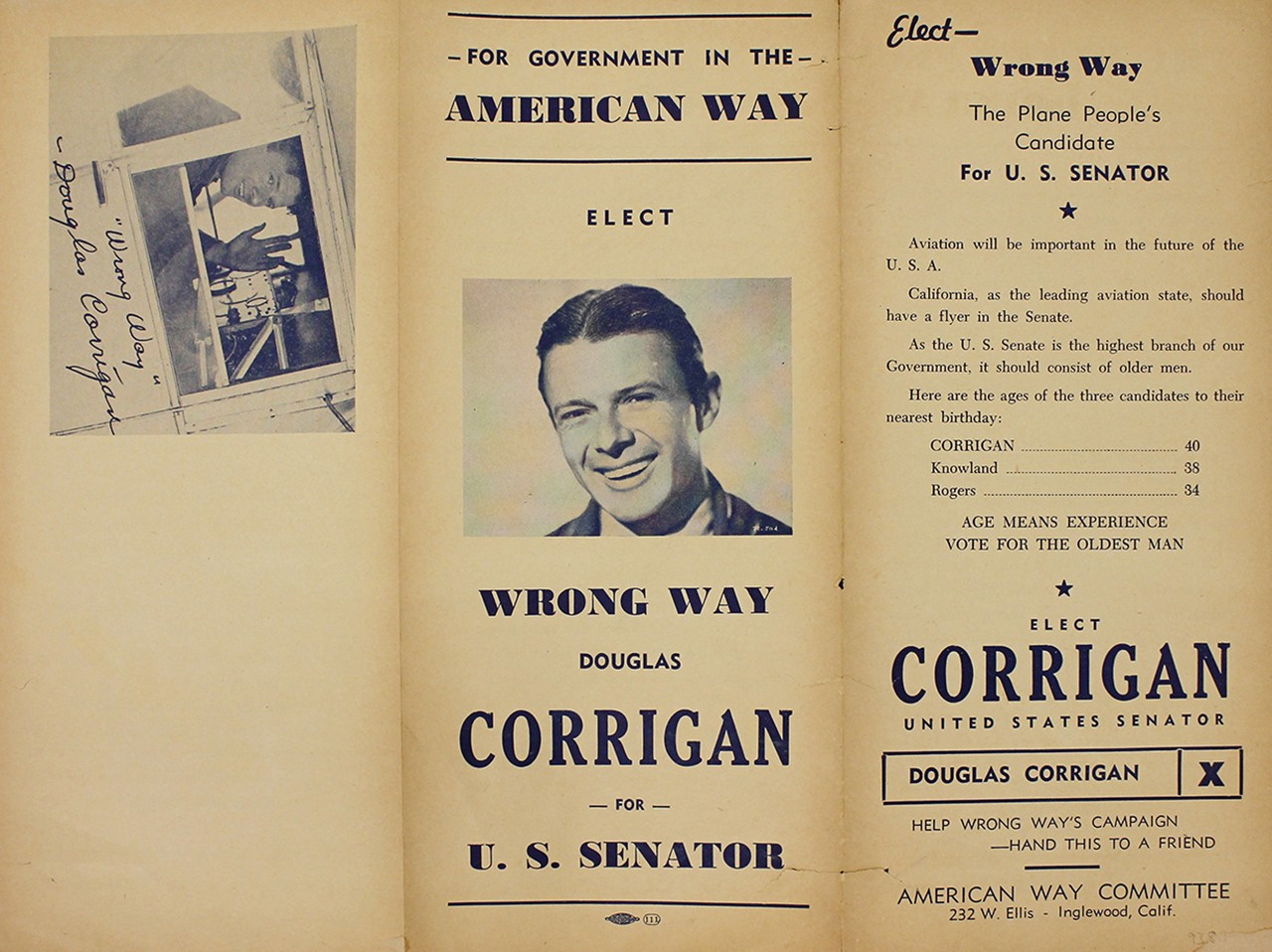
After the war, Corrigan tried his hand at politics and ran in the 1946 Senate Election in California on the Prohibition Party ticket. In addition to favoring the prohibition of alcohol, Corrigan ran on collective bargaining, fiscal conservatism, and providing more benefits for veterans under the slogan “Soak the drunks with higher taxes”. However, Corrigan only won 1.64% of the vote, with Republican incumbent William Knowland maintaining his Senate seat with 54.10% of the vote, and Democratic challenger Will Rogers, Jr. winning 44.22% of the vote. Corrigan never ran for another election, and in 1950, he and Elizabeth bought an 18-acre orange grove in Santa Ana, California, despite no experience in the field, but kept his groves thriving simply by copying what his neighbors were doing. But the quiet life of an orange grower suited Wrong Way Corrigan well, and he and Elizabeth would raise three sons (Douglas Jr, Harry, and Roy). Corrigan mostly retired from flying and put his beloved Curtiss Robin Sunshine in storage in his garage.
Corrigan’s flight in 1938 still ensured that the unassuming pilot remained in the popular culture of the time, from being referenced by The Three Stooges in the 1938 short “Flat Foot Stooges,” to appearing as a guest on the television game show To Tell the Truth in 1957 (link to his game show appearance at 16:50 HERE) and even inspiring the character “Wrong Way Feldman” on one of the first episodes of Gilligan’s Island. Corrigan also attended events in honor of old pilots like himself and even brought his Robin out on static display for certain occasions, such as displaying it at the Los Angeles Memorial Sports Arena in April 1960. Yet Wrong Way Corrigan’s life still had some tragedy. In 1966, Elizabeth passed away, and Corrigan sold most of his orange ranch to real estate developers, keeping the house and garage. Six years later, in 1972, his 22-year-old son Roy, having become a pilot himself, was killed in a plane crash on Catalina Island. The loss of his son devastated Wrong Way Corrigan, but although he largely kept to himself, “Wrong Way” Corrigan still made the occasional public appearance, especially since he was now among the last living famous pilots of the 1920s and 1930s, the era some were now calling “The Golden Age of Aviation”.
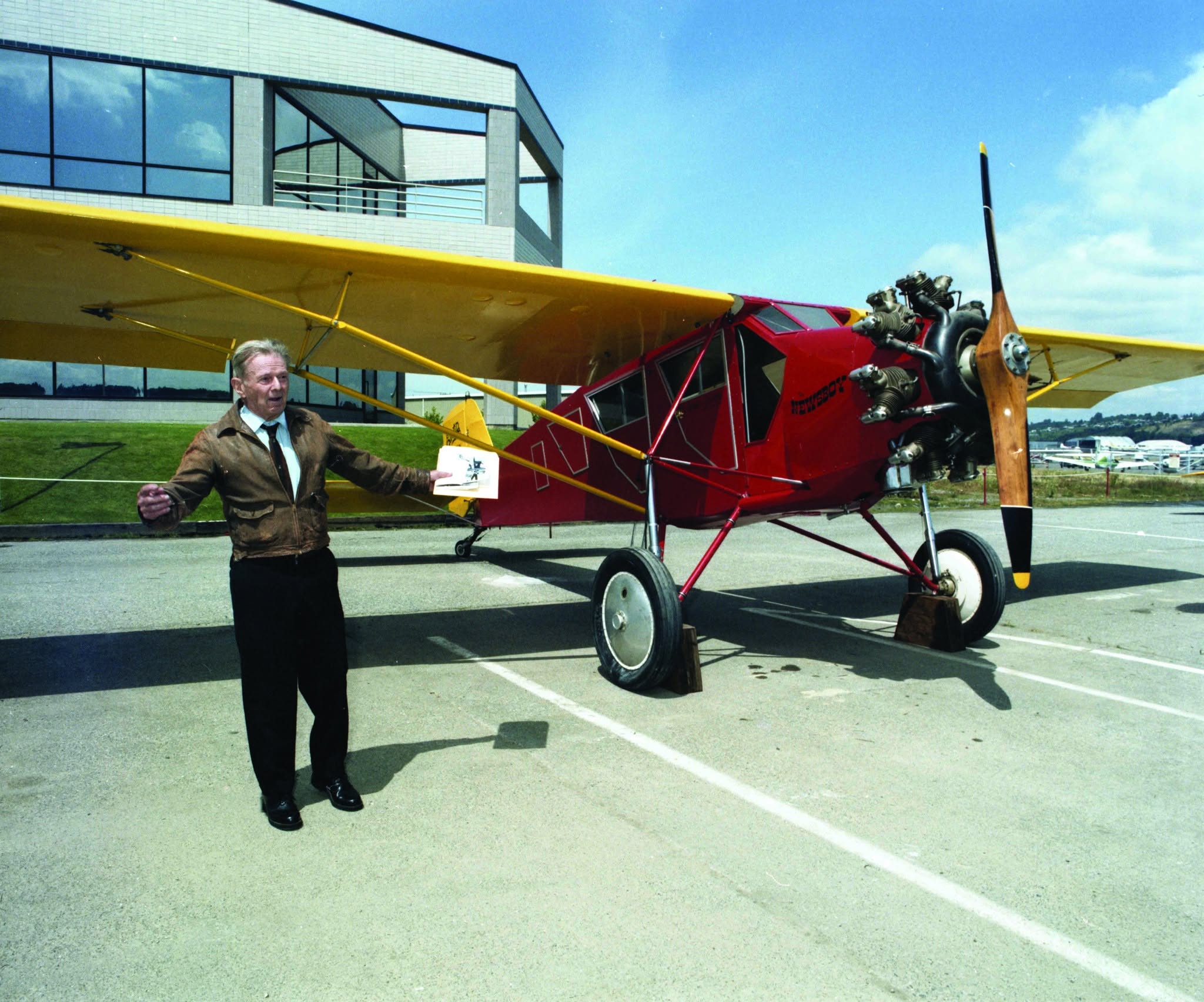
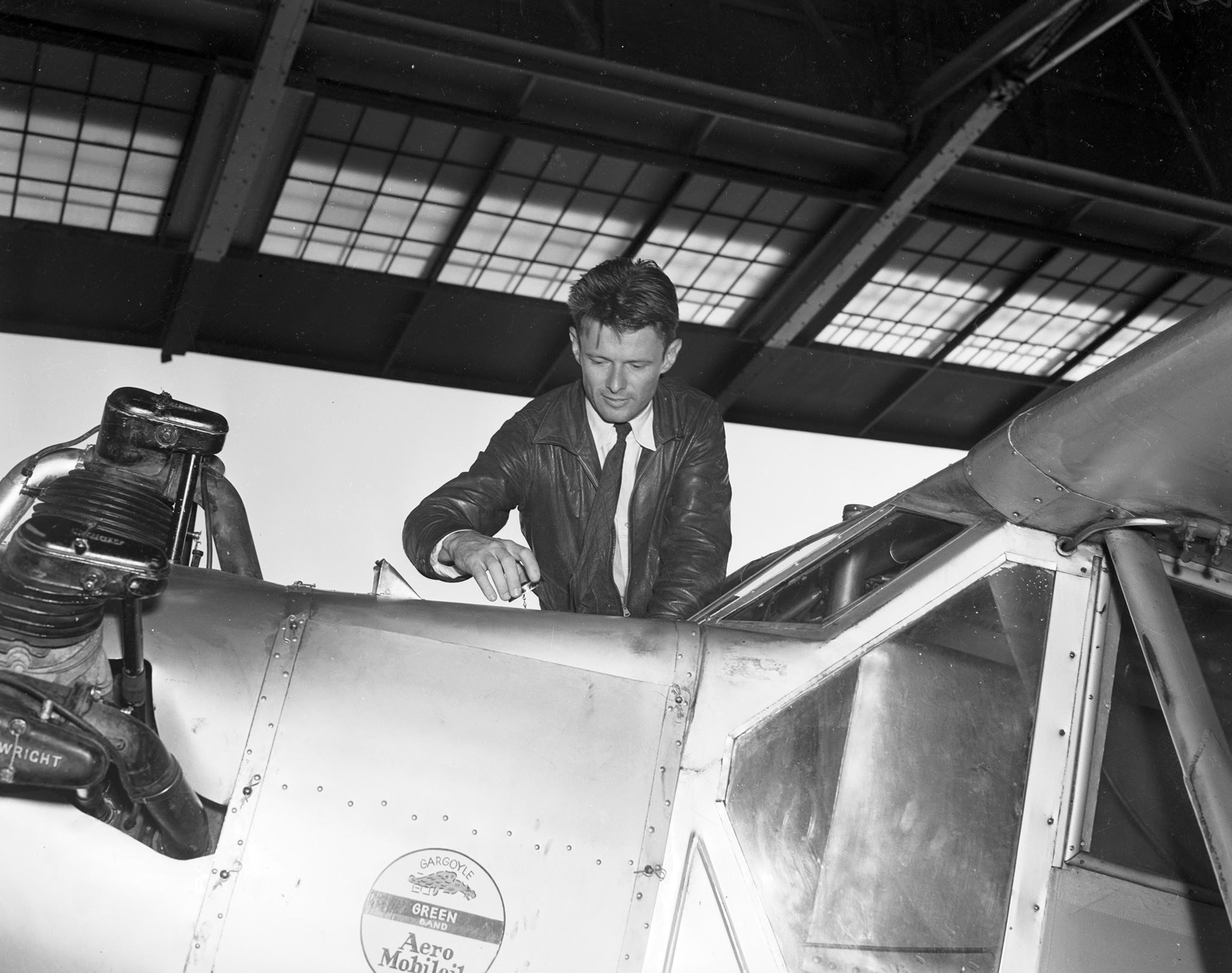
In 1988, the Southern California Historical Aviation Foundation, organizers of the Hawthorne Air Faire at Hawthorne Airport, were creating a show around the theme “Dreamers and Pioneers” to be held from August 27-28. With 81-year-old Douglas Corrigan still living, the foundation’s members managed to convince Corrigan not only to appear at the show but also to give permission to bring his Curtiss Robin NX9243 to the Air Faire as well, where it was not only reassembled, but its old Wright J-6-5 Whirlwind was even coaxed back to life, starting up for the first time in nearly 50 years. Wearing the same leather jacket he wore on his famous flight 50 years earlier, Corrigan’s eyes lit with joy as he sat in the cockpit of his old Sunshine. However, for fear that he would fly again, the fragile airplane was firmly tied to concrete blocks on the flight apron at Hawthorne, but Corrigan did go up in a vintage de Havilland DH.87B Hornet Moth cabin biplane (N74EC/ZS-AOA). (News footage of Corrigan’s appearance can be found HERE). Despite hinting at possibly donating his Curtiss Robin to the San Diego Air and Space Museum, no deal from any aviation museum came through after the event, and Corrigan’s Robin went back into the garage.
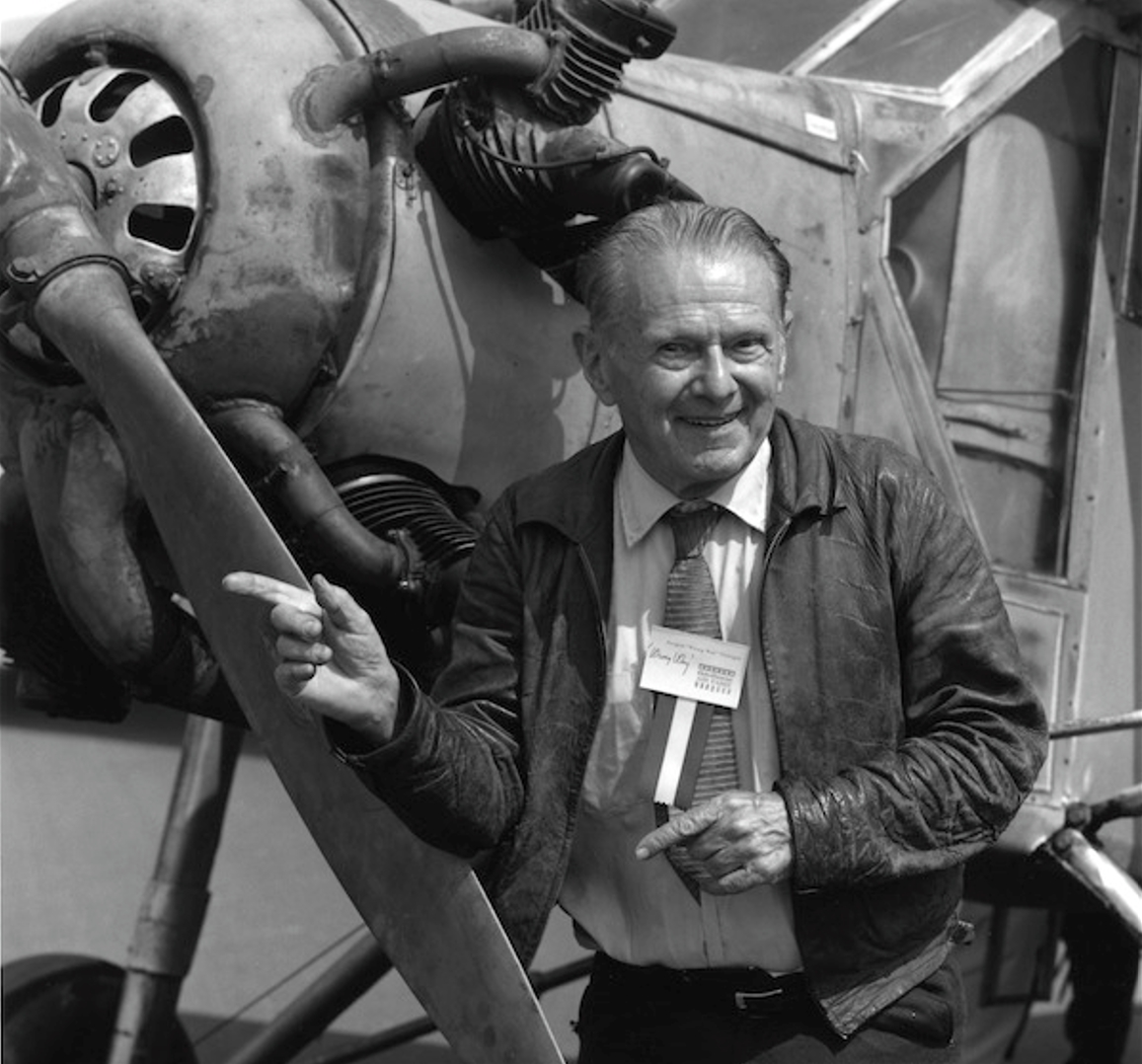
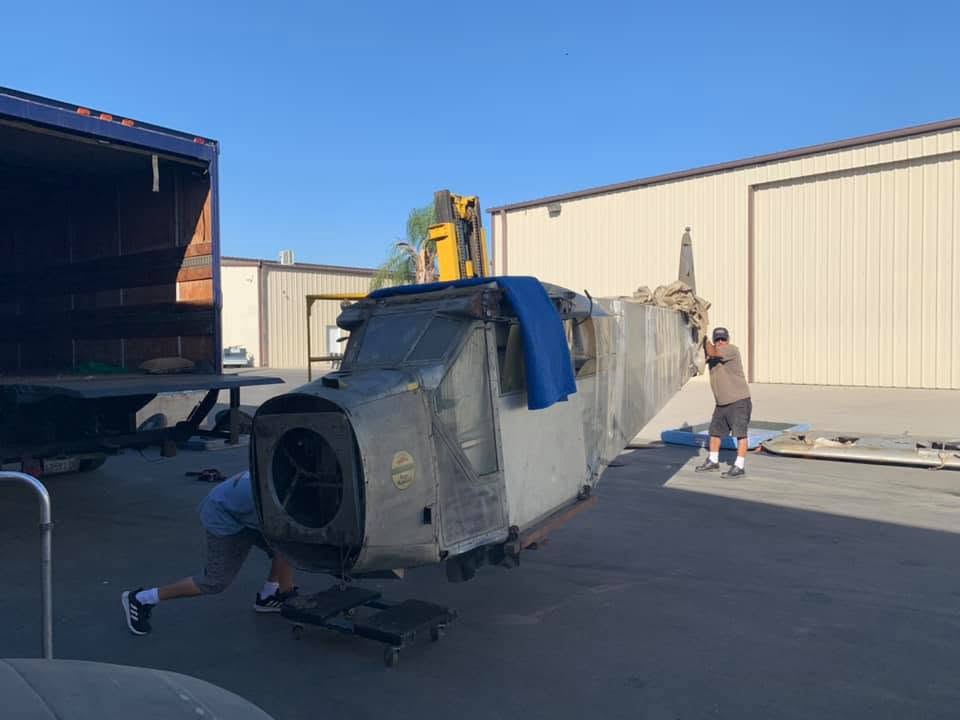
On December 9, 1995, Douglas “Wrong Way” Corrigan, one of the last living legends of the Golden Age of Aviation, died in Santa Ana, California at the age of 88, and was buried at Fairhaven Memorial Park in Santa Ana. To his dying day, Corrigan never contradicted his lifelong statement that he had flown to Ireland by mistake and always insisted he had flown the wrong way to California and was lucky enough to land in one piece. Yet Corrigan’s famous Curtiss Robin remained in the garage inherited by his family, and it would be 23 years before Sunshine saw the light of day again. In February 2018, local news station KABC TV sent a reporter to an ordinary-looking house on a quiet suburban street in Santa Ana. Then the homeowner, Harry Corrigan, opened the door to the home’s garage to unveil a disassembled airplane, his father’s 1929 Curtiss Robin. The wings, horizontal stabilizers, and rudder were covered in clear plastic wrapping, propped against the wall of the garage, with the fuselage sitting next to the wings, and the engine on a homemade dolly on wheels. Elsewhere in the garage, spare parts for the plane lay nearby (Link to this report HERE). Harry Corrigan had decided to find a new home for his father’s airplane, but for the moment, a moving truck was rented to deliver the Curtiss Robin to a storage facility just so it would no longer be in the garage as Corrigan began searching for a suitable museum to display his father’s plane.
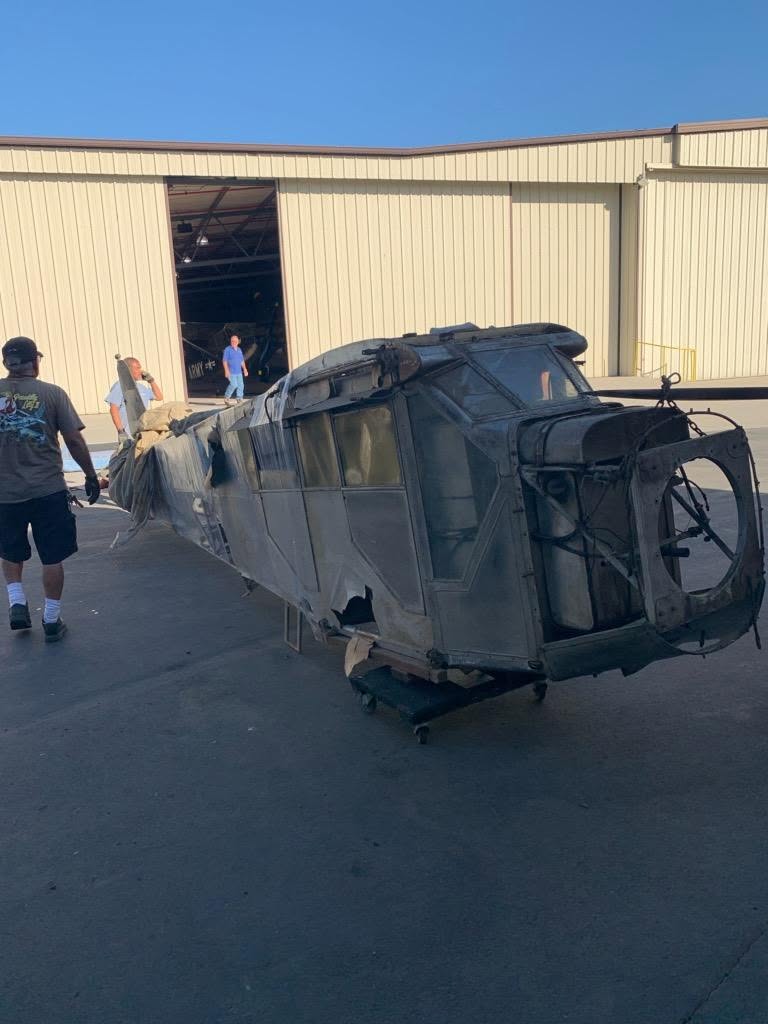
In 2019, retired North American Aviation engineer Chuck Lowry put Harry Corrigan in touch with the Planes of Fame Air Museum in Chino, California. Impressed with the museum, Corrigan donated his father’s Curtiss Robin to the Planes of Fame, with the aircraft arriving there in October 2019. In addition to the airplane itself, Harry Corrigan donated the original Curtiss OX-5 V8 engine that came with NX9243 at the Curtiss plant in St. Louis in 1929, along with spare propellers, both wooden and metal. After arriving at Chino Airport, Planes of Fame staff reattached the landing gear and installed Wright R-540/J-6-5 Whirlwind engine before putting the unrestored, disassembled aircraft on display in its original condition.
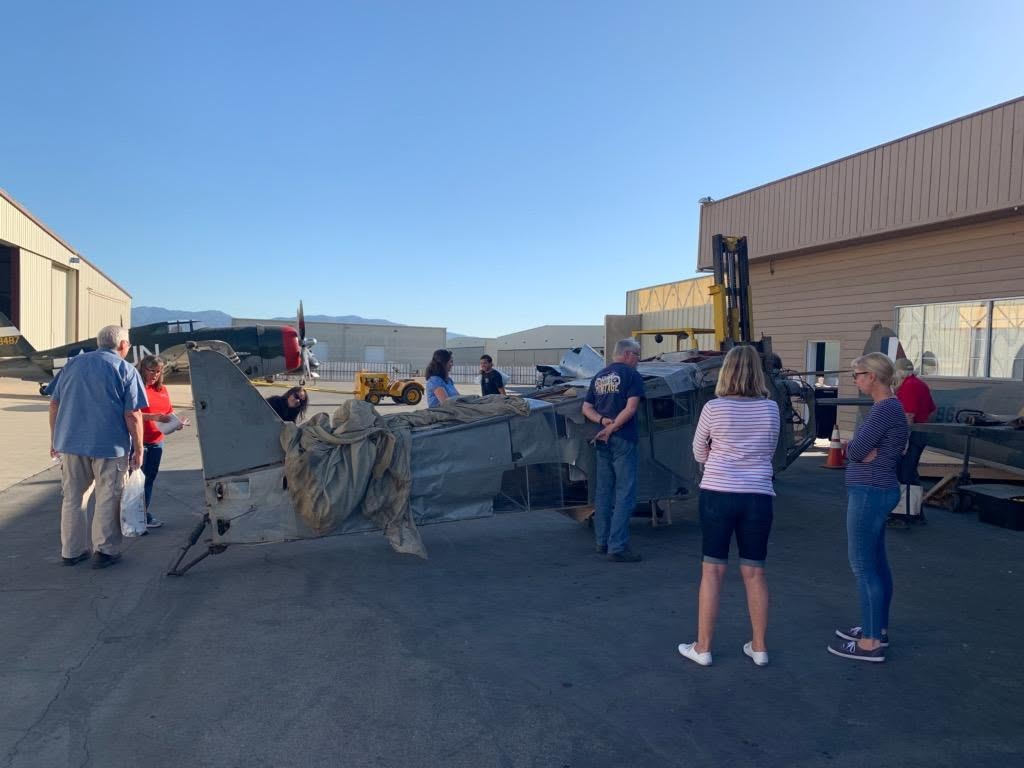
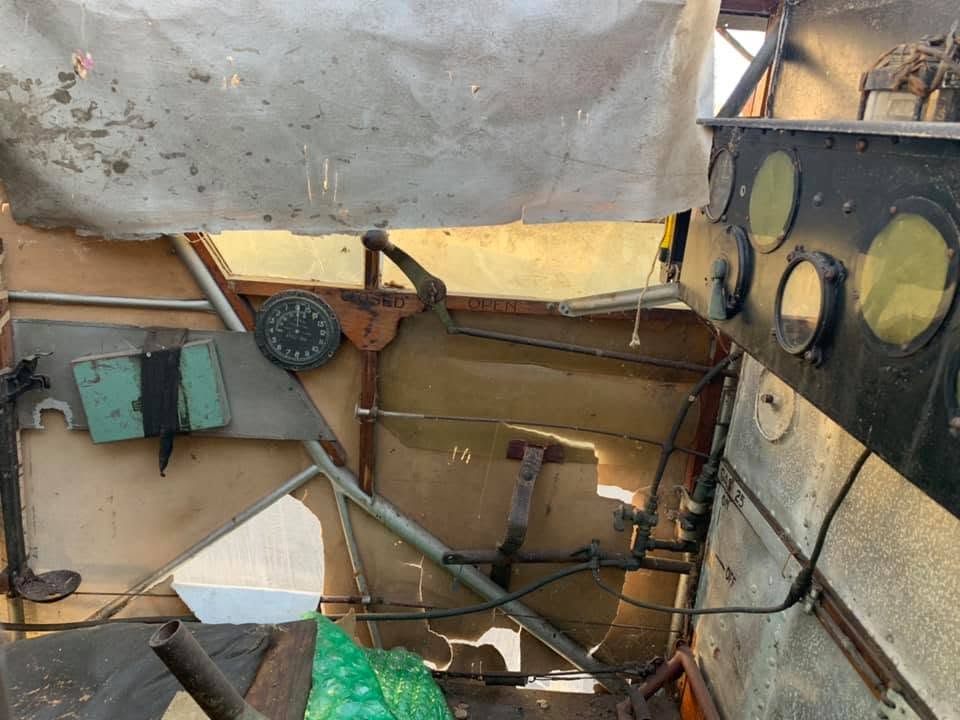
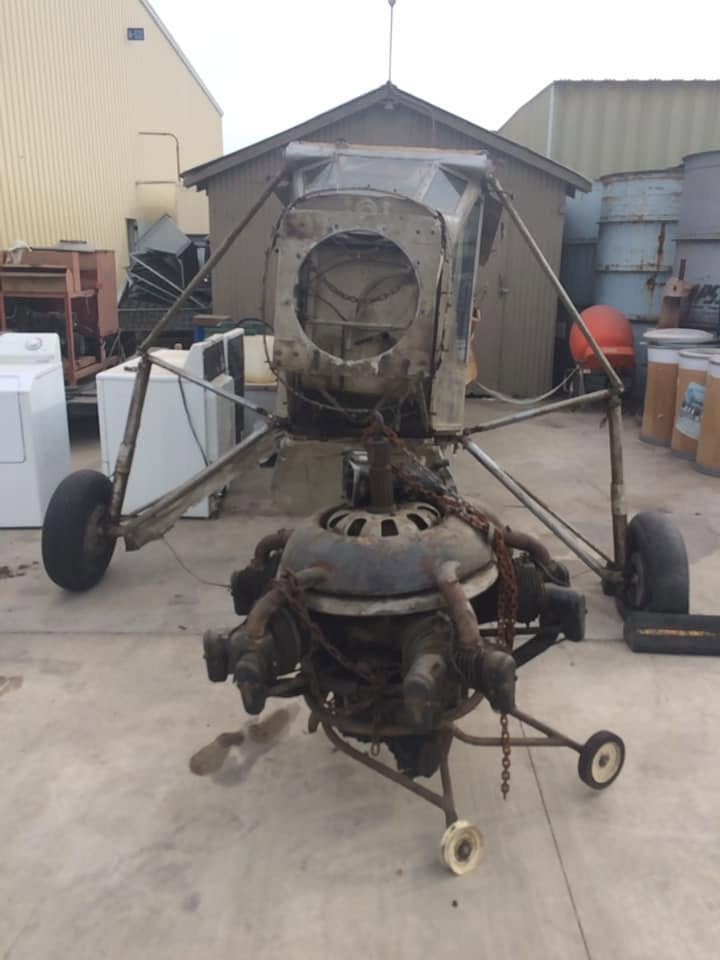
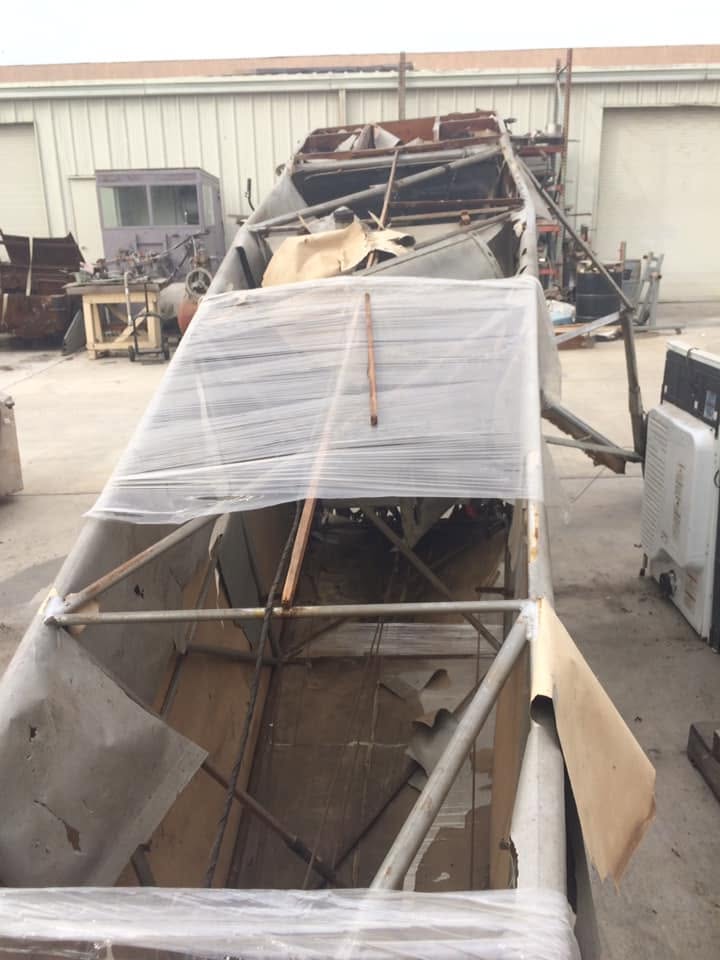
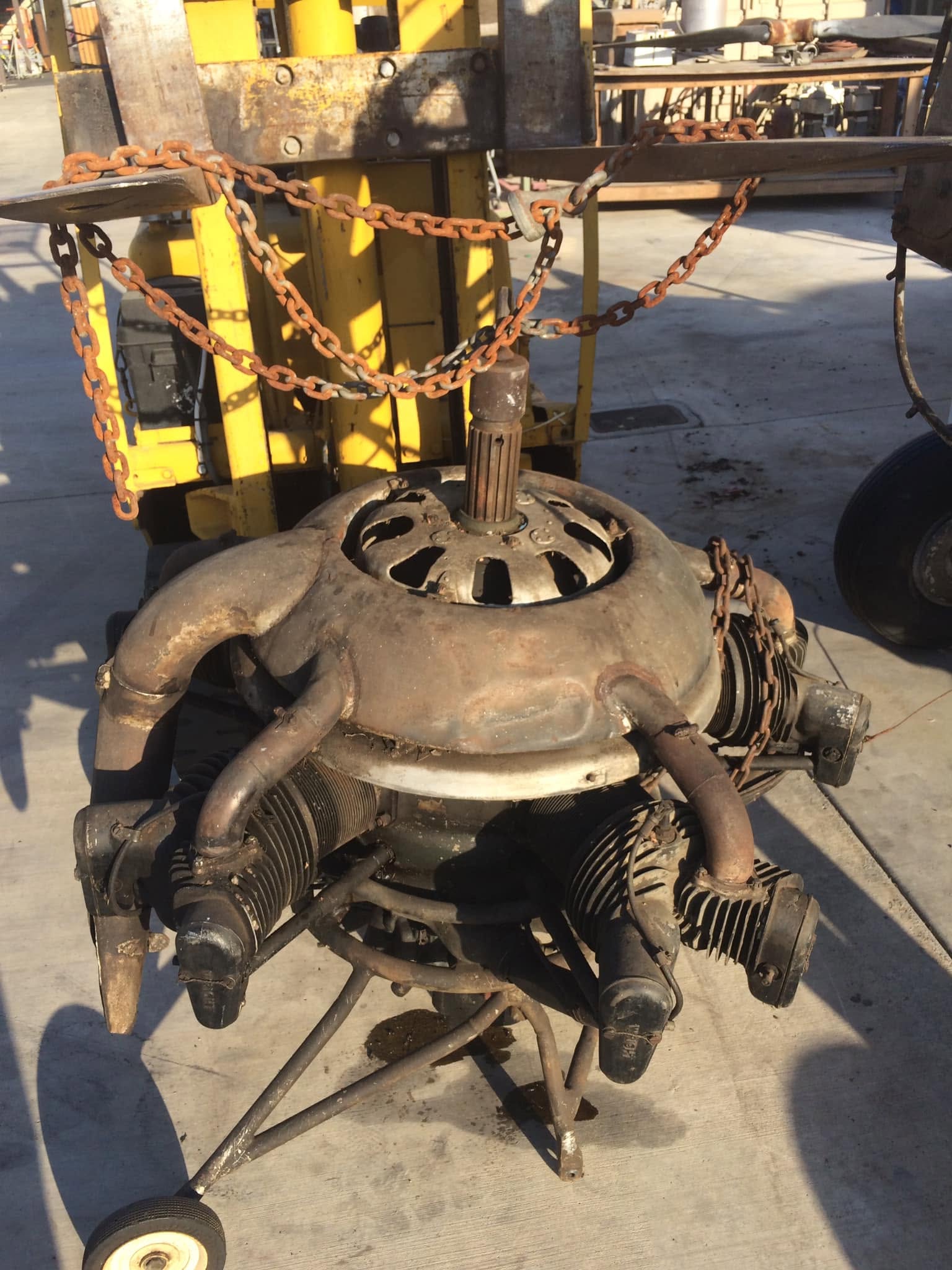
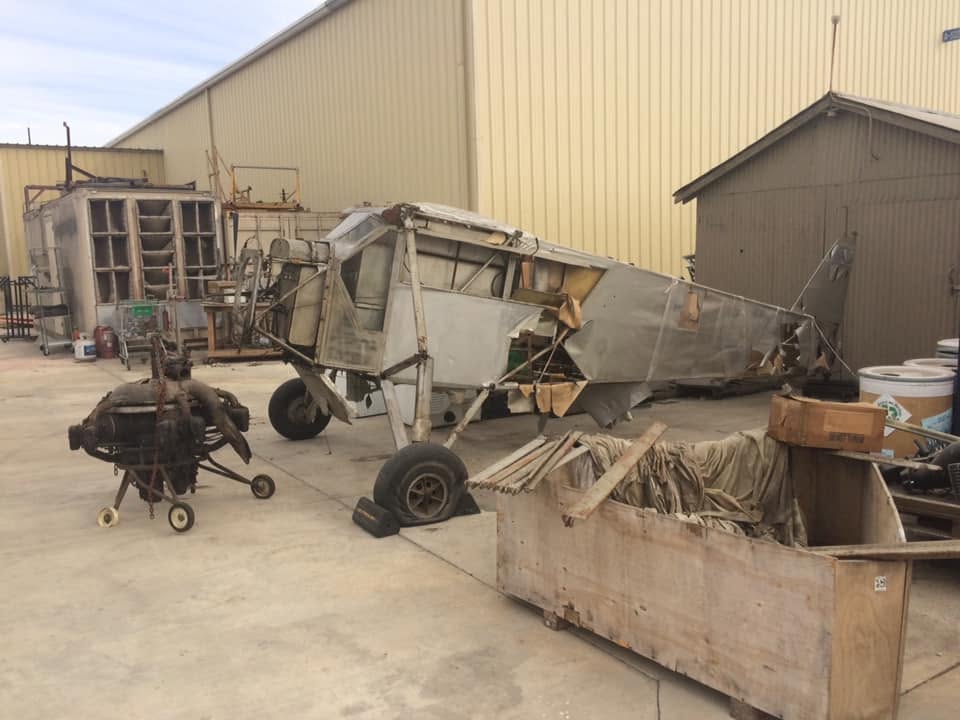
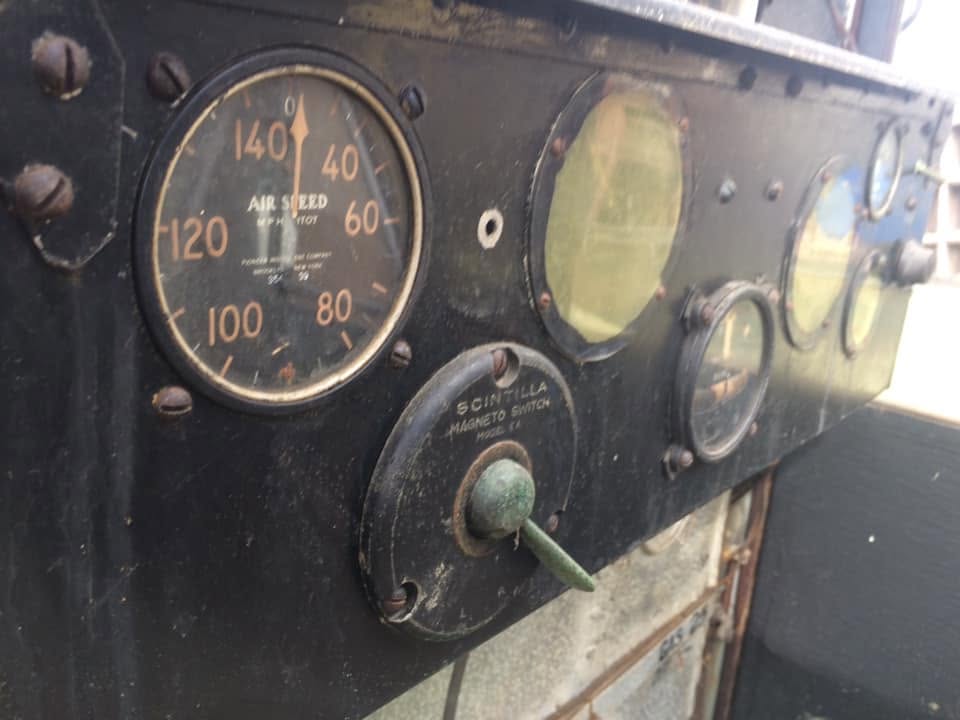
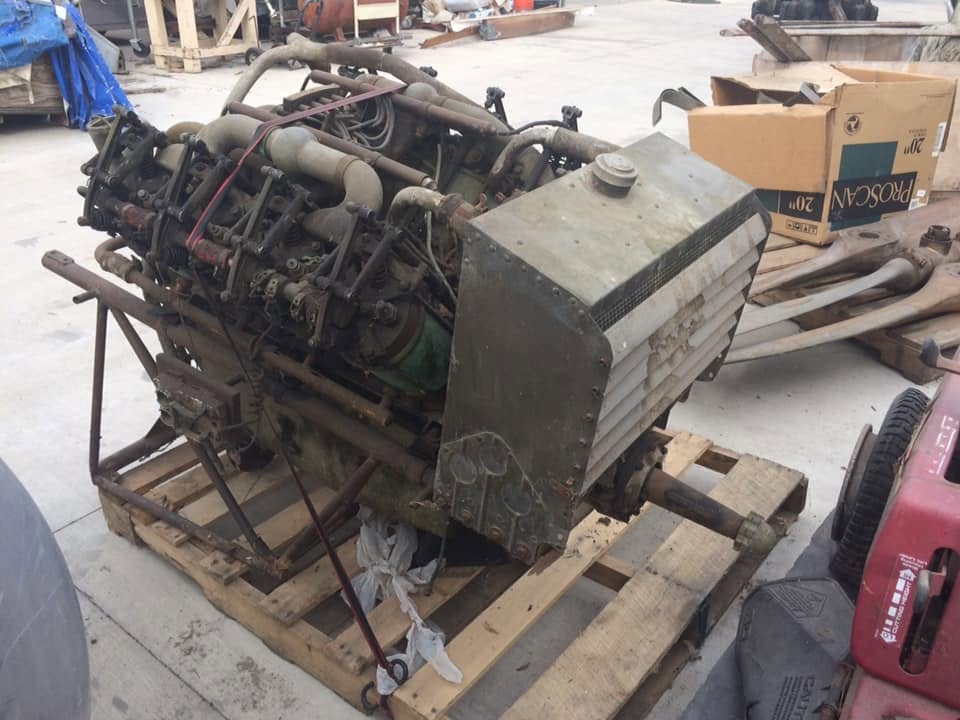
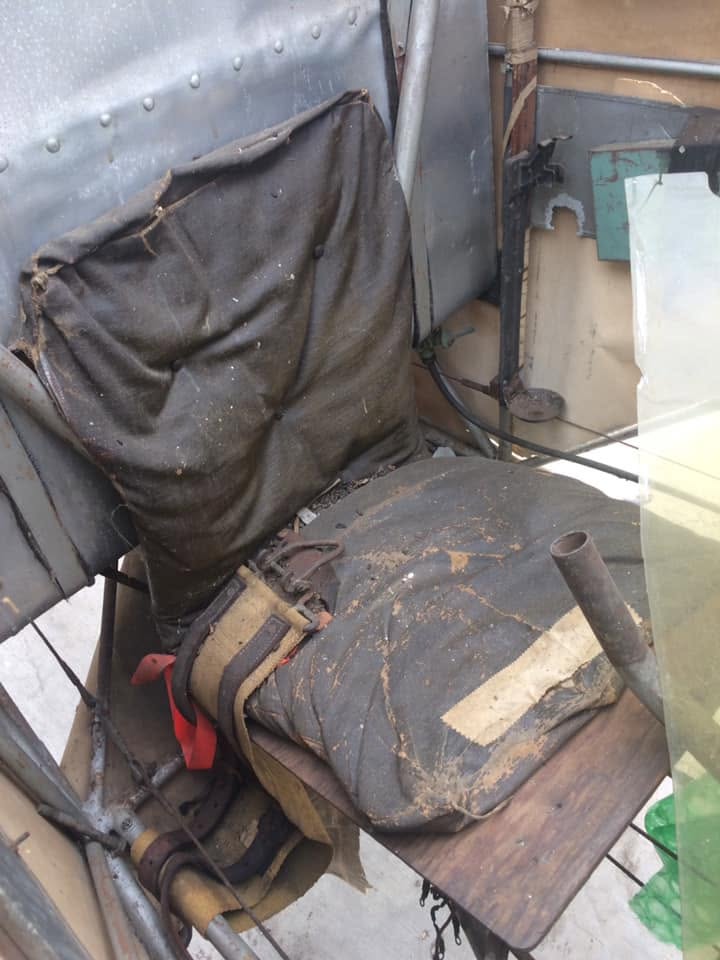
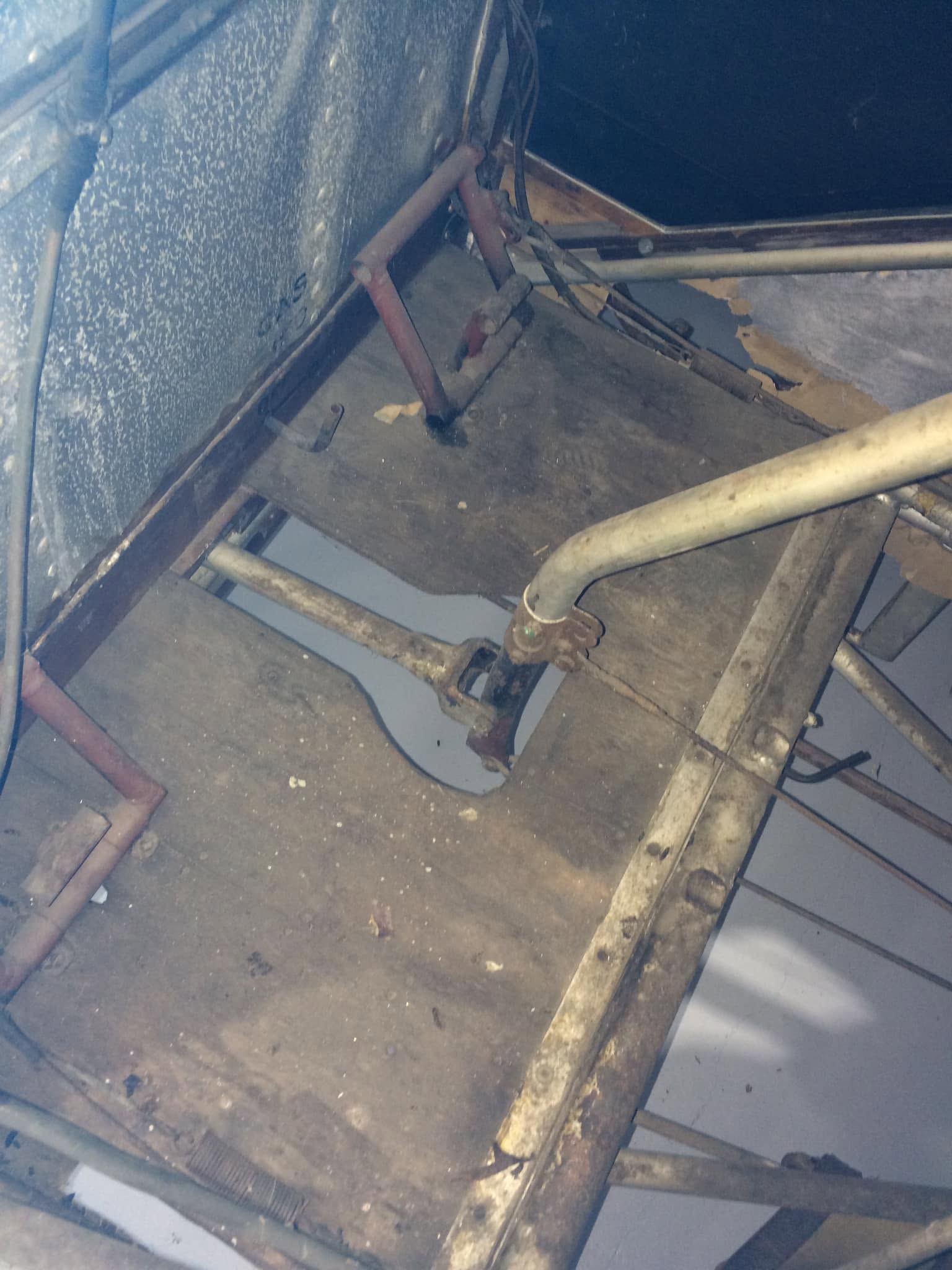
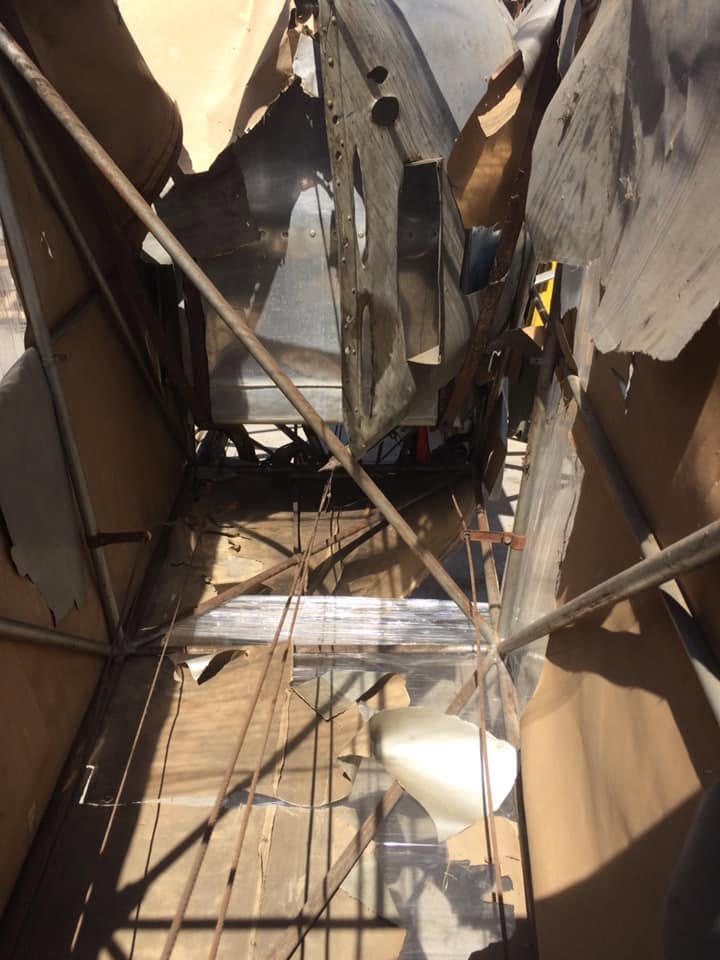
Today, the fuselage of Wrong Way Corrigan’s Curtiss Robin remains on display in the Planes of Fame’s Robert and Josie Pond Hangar, standing in stark contrast to the museum’s WWII warbirds, from P-51 Mustangs to the Republic P-47 Thunderbolt and Vought F4U Corsair. The wings are in this same hangar, too, but as of writing, they can be spotted by the attentive visitor sitting behind the museum’s equally rare Seversky AT-12 Guardsman. The Planes of Fame has publicly stated “The long-term plan is to eventually restore the entire airplane to static display condition.” Exactly to what extent the aircraft will be restored is a question that has been debated within the museum, but many seek to keep the aircraft in as-original condition as possible, with the wings and horizontal stabilizers being reattached to make the aircraft displayable as a single unit.
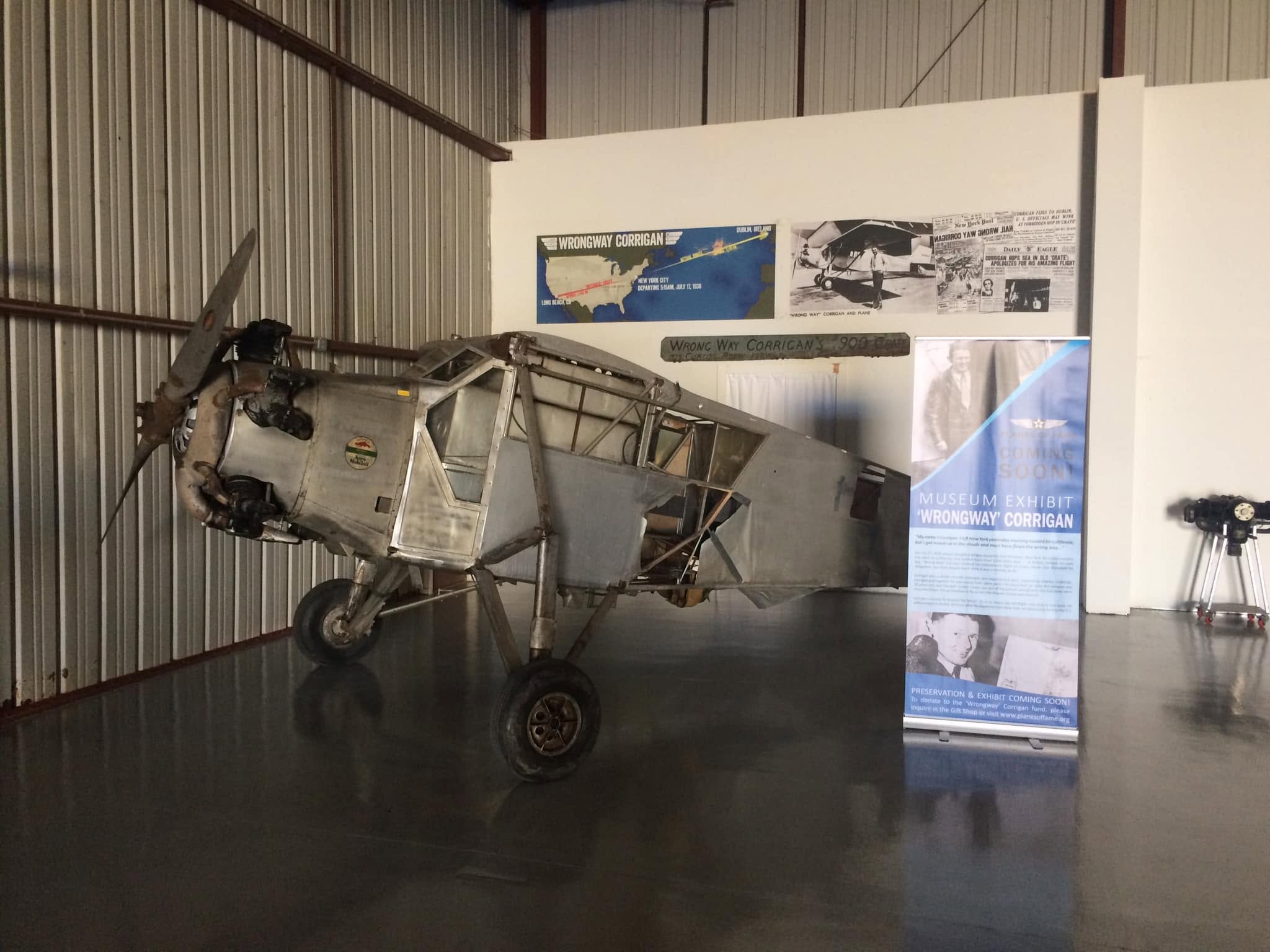
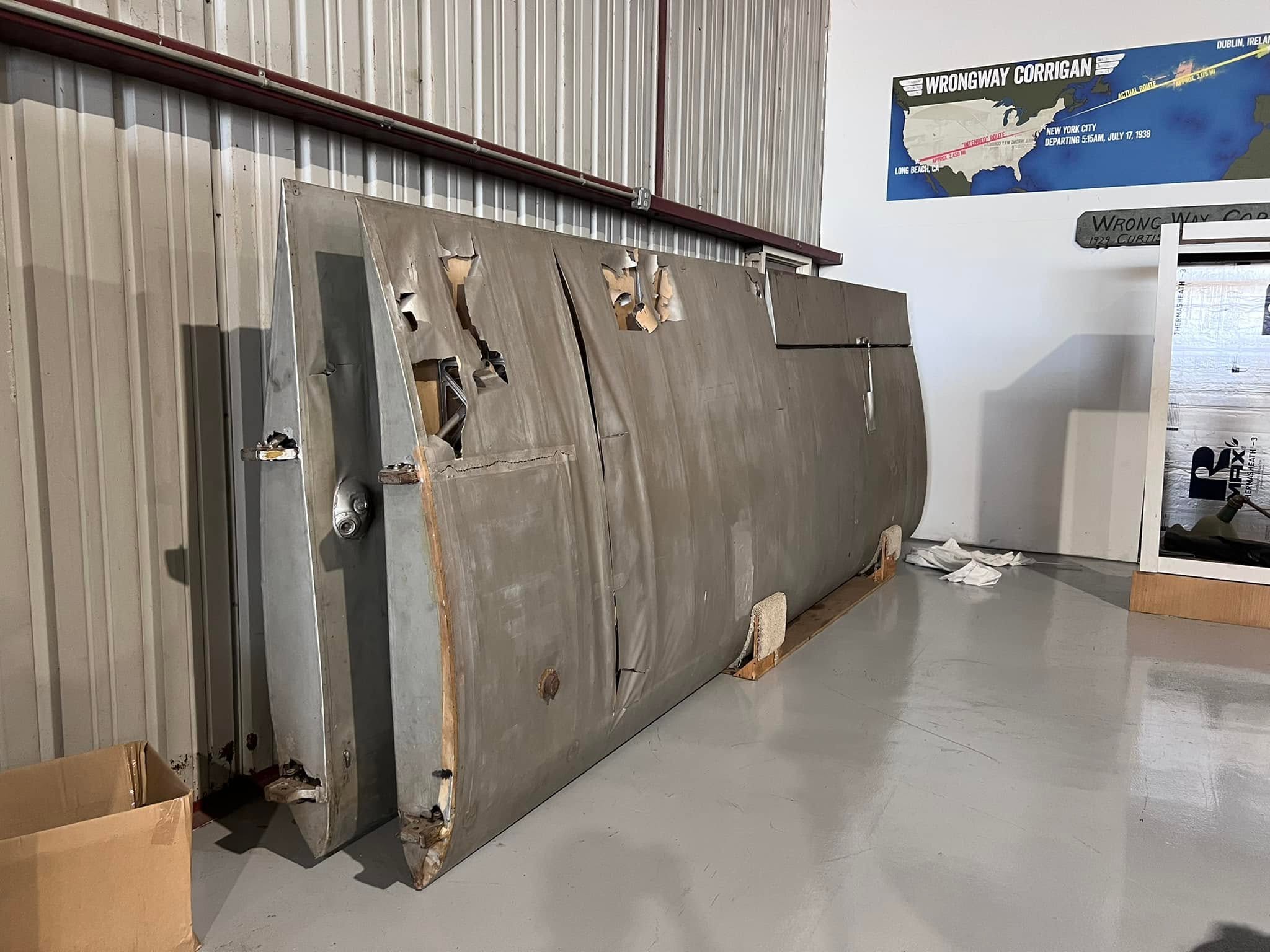
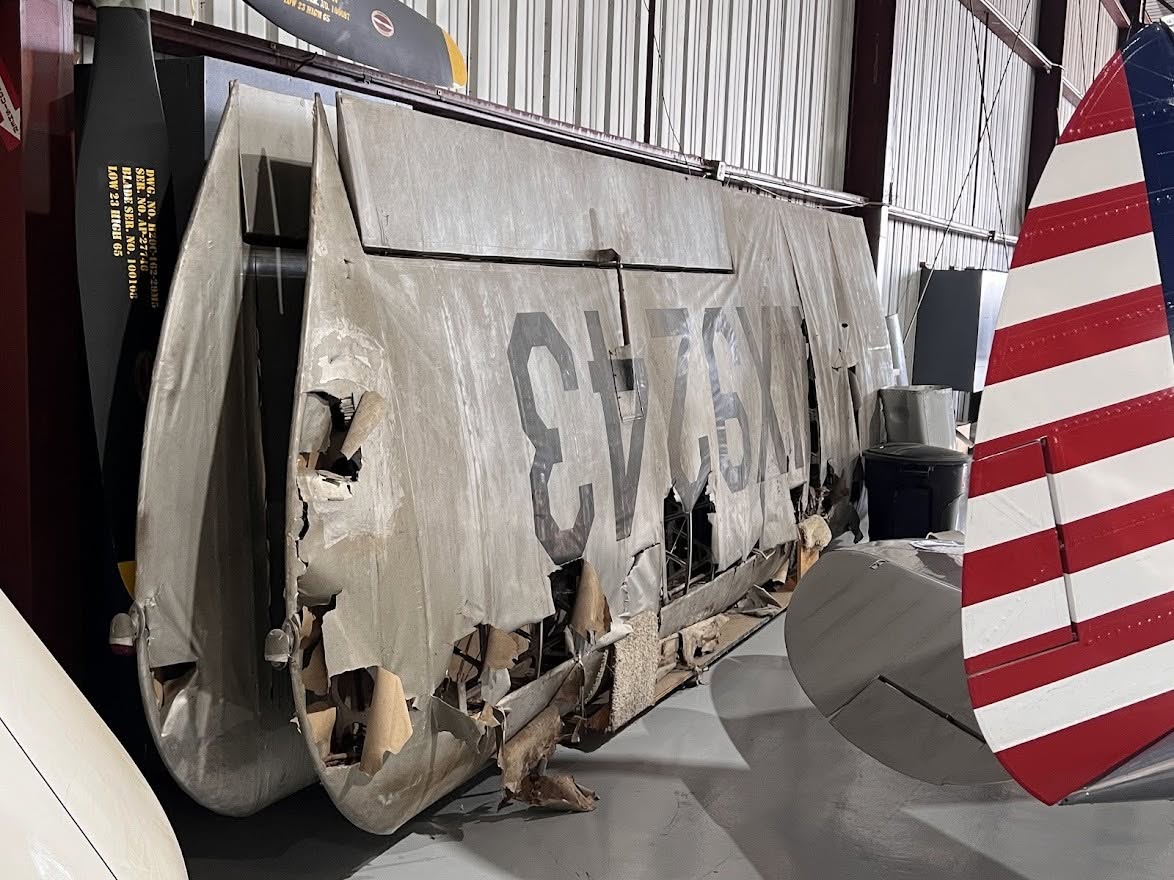
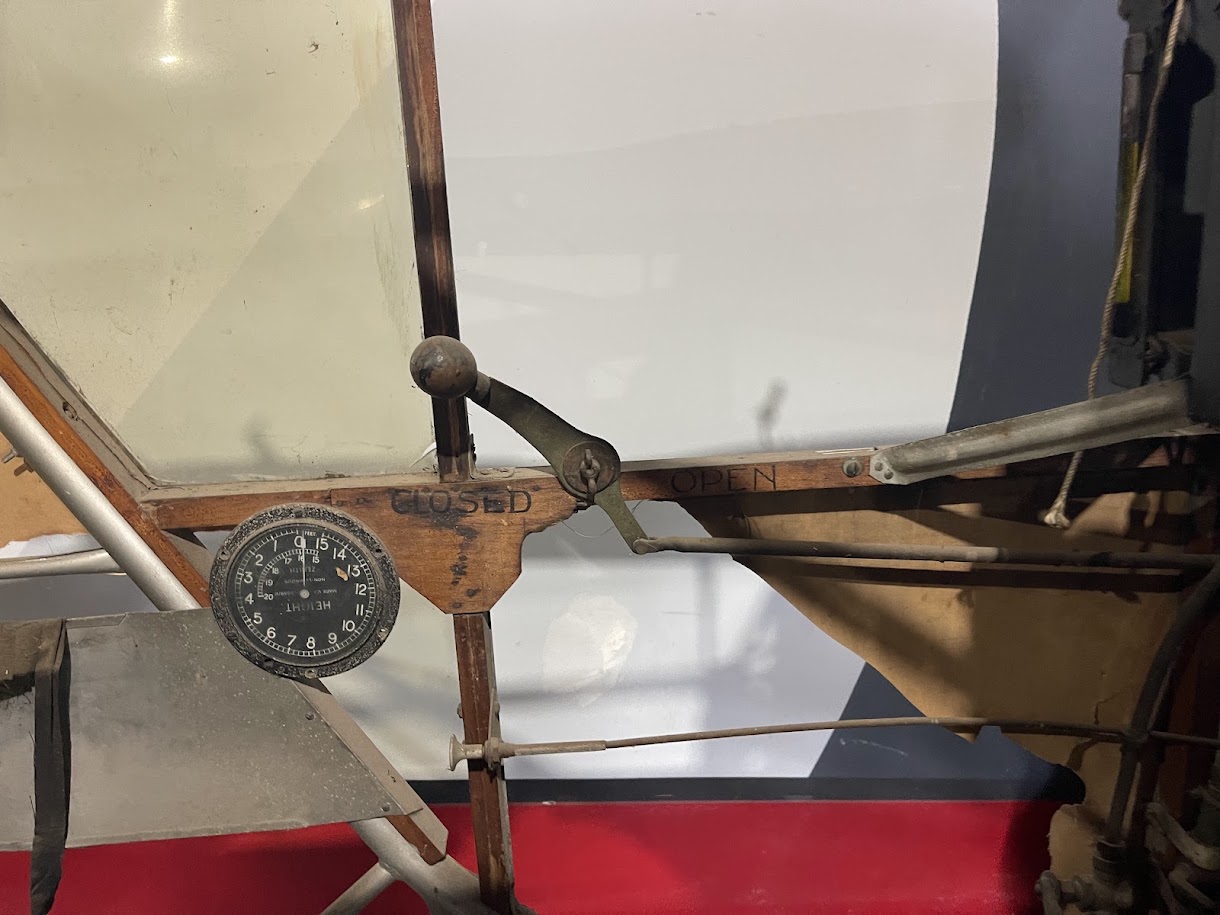
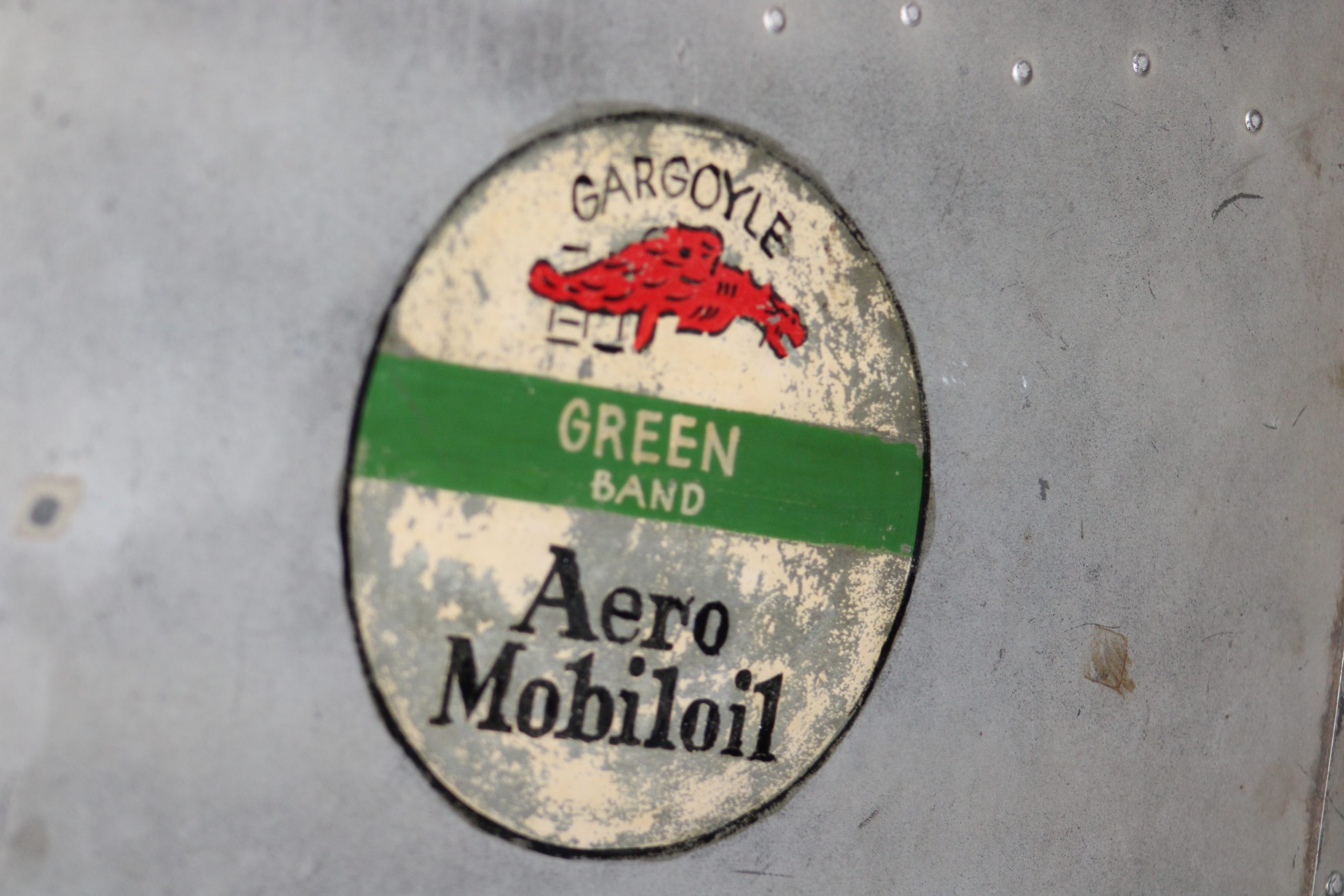
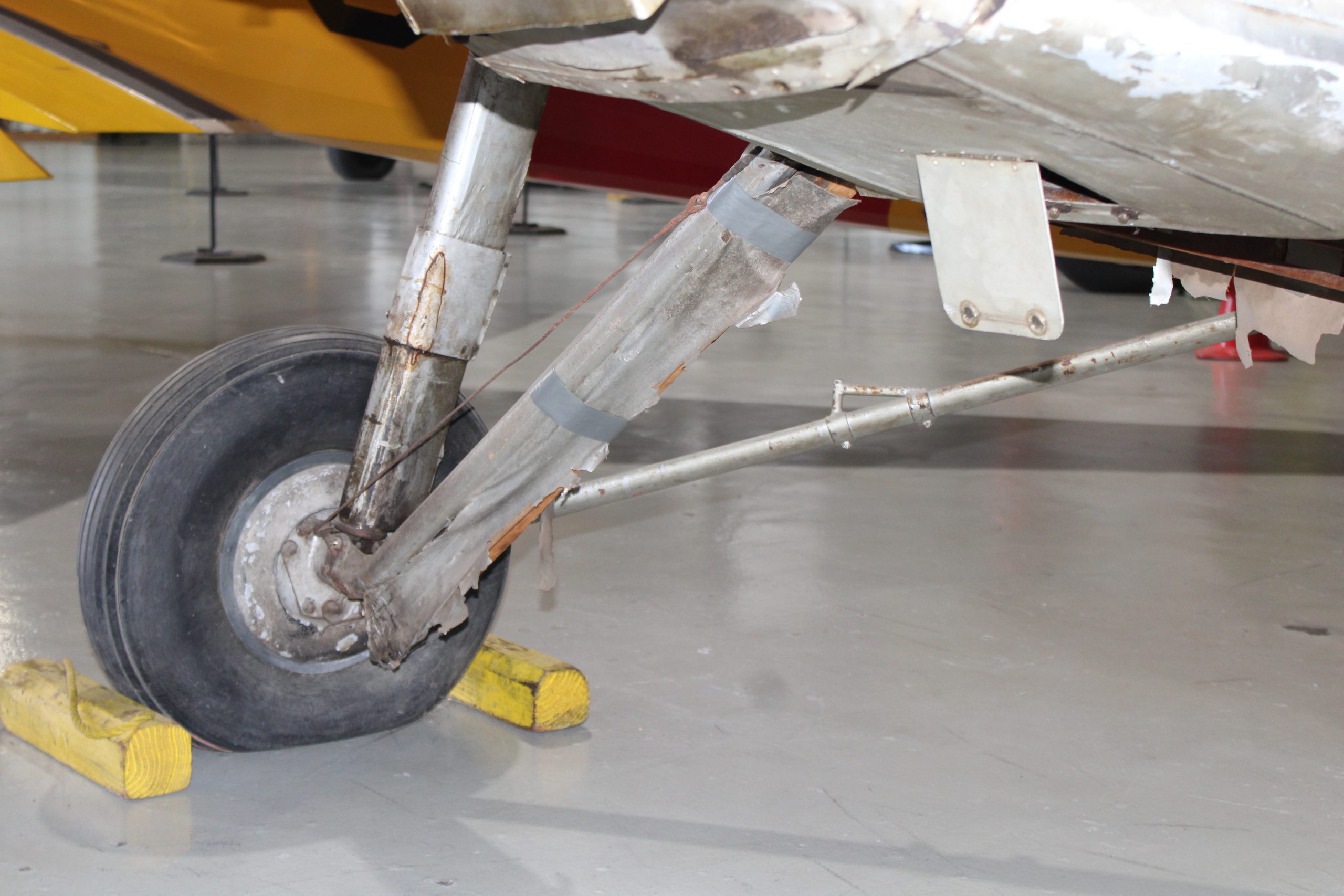
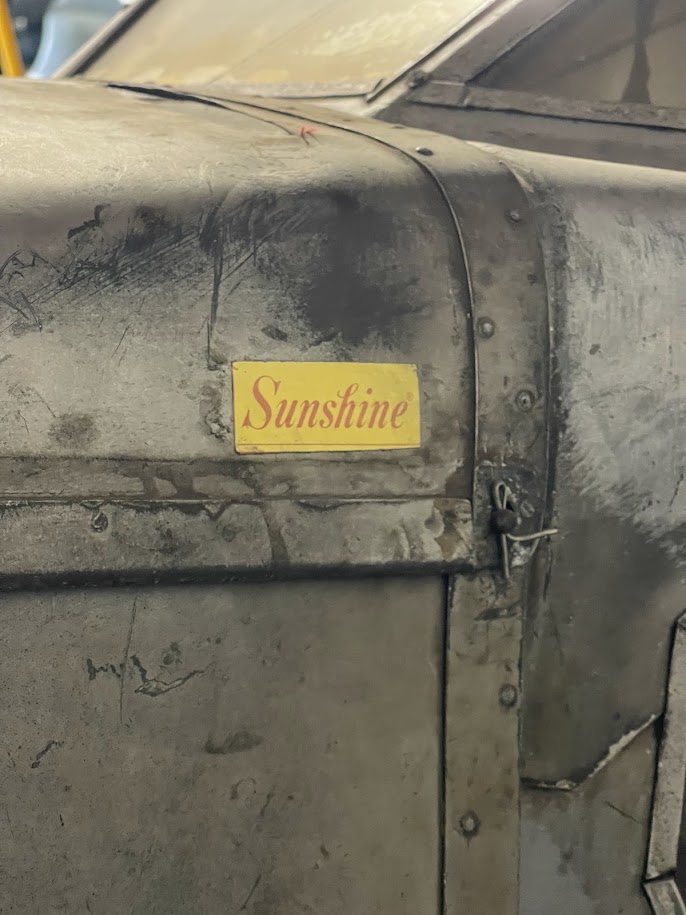
However, with the Planes of Fame’s staff focused both on opening another location on the California Central Coast in Santa Maria, and maintaining its world-famous fleet of airworthy WWII warbirds, Wrong Way Corrigan’s Sunshine has remained largely untouched. Perhaps soon the airplane will be reassembled at some point, but regardless its condition, it remains a lasting monument to the courage and ambition of a small, skinny man from Texas who wouldn’t let anyone get in the way of his life’s biggest dream, and whether or not people believe Corrigan truly did fly to Ireland by mistake, or intentionally defied a government that denied him multiple times to make a daring flight, the name Douglas “Wrong Way” Corrigan lives on in the history of aviation, and now the airplane he called his “little ray of sunshine” will live on too. For more information about Planes of Fame Air Museum, visit www.planesoffame.org.