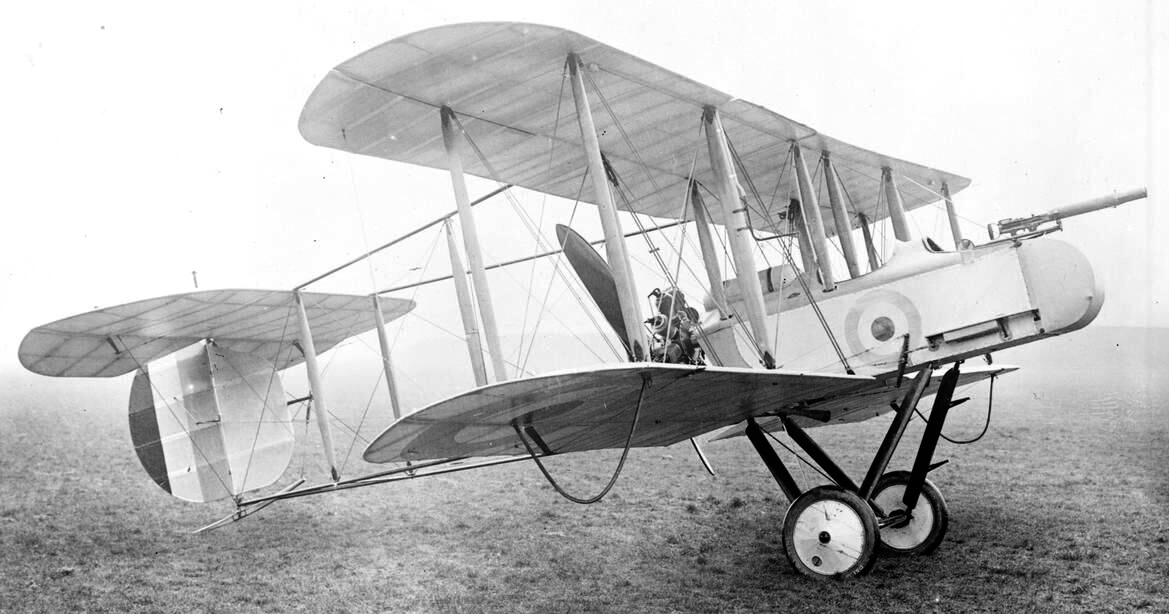
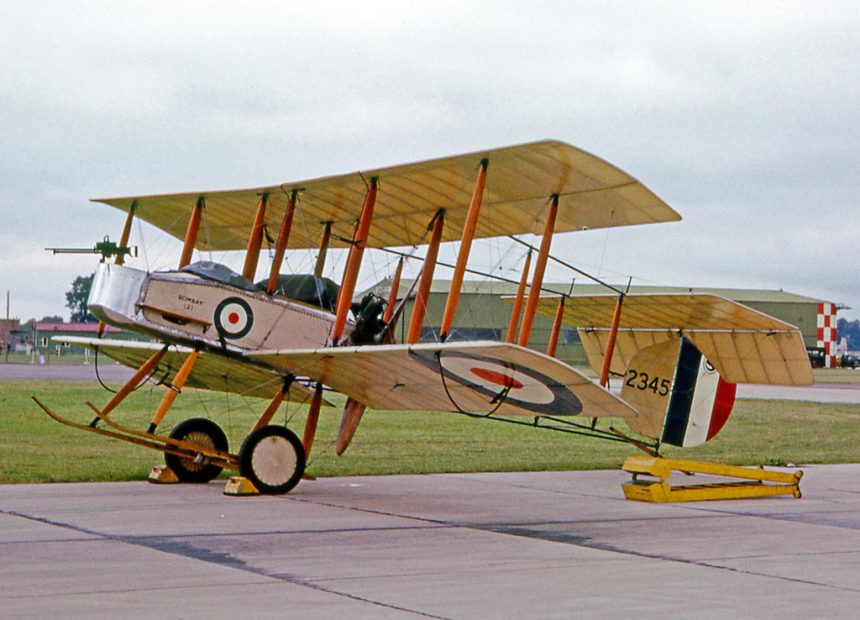

On this day in aviation history, 112 years ago (July 17, 1914), the Vickers F.B.5 Gunbus took flight for the first time. Short for “Fighting Biplane 5,” the F.B.5 was a British pusher-style fighter from WWI. The Gunbus was the first purpose-built aircraft for air-to-air combat to be flown in service, the first operational fighter. Development of a fighter aircraft began at Vickers in 1912, when experiments began which explored the feasibility of such a machine. Vickers rolled out the E.F.B.1 Destroyer in 1913, but this prototype was lost on its first flight. This example served as an entry point for Vickers to push the envelope and expand their research on pusher-style fighting planes. Eventually, the F.B.5 was created, which featured a 100-horsepower Gnome Monosoupape 9-cylinder rotary engine. The design was streamlined, simplified over previous attempts at a functional fighter.
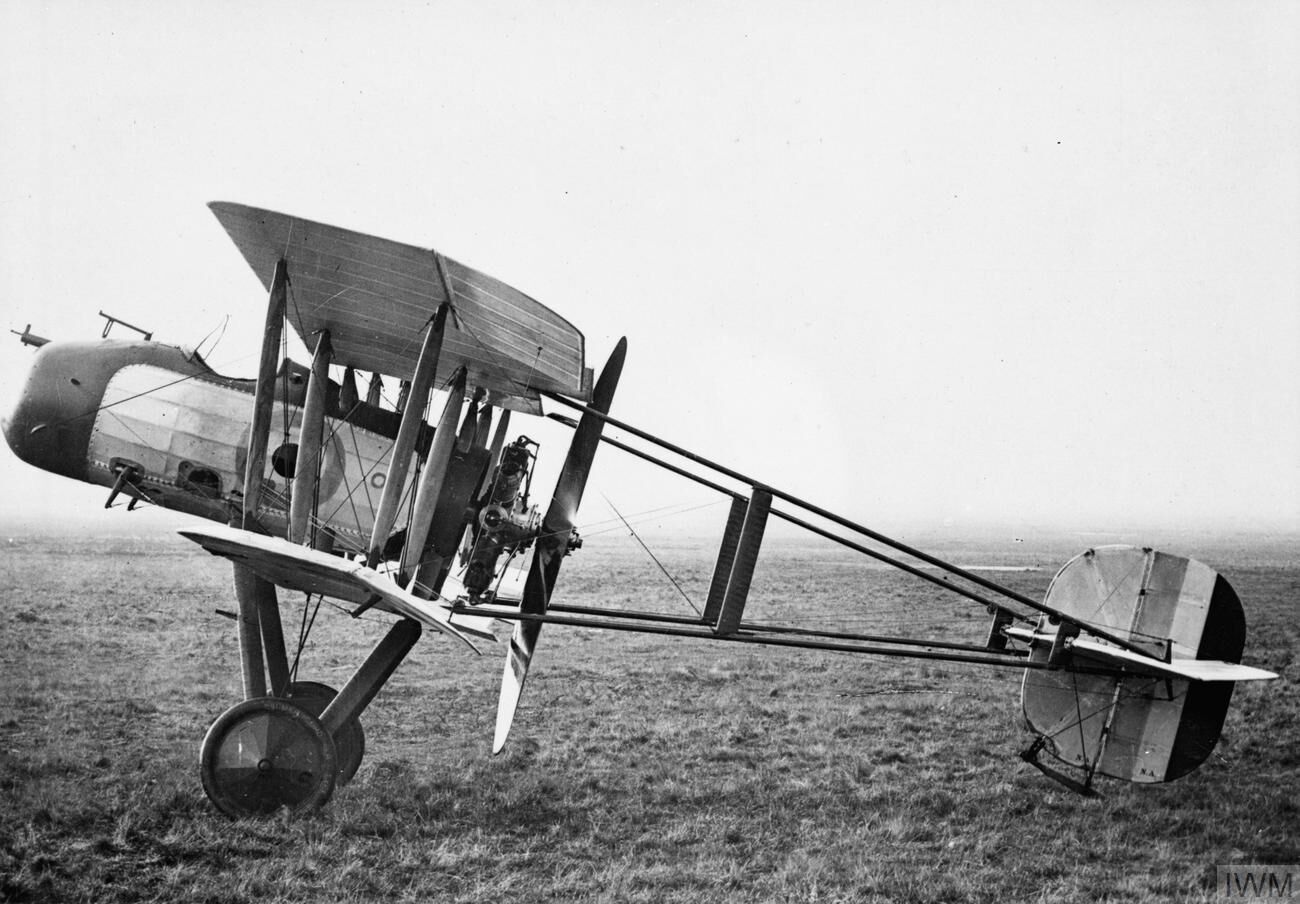
Royal Flying Corps (RFC) No. 5 Squadron was the first unit to take delivery of the F.B.5 in November of 1914. The Gunbus saw its first combat action a month later, on Christmas Day. Second Lieutenants M. R. Chidson and D. C. W. Sanders were flying F.B.5 No. 664 and sprang on a German Taube monoplane. By firing incendiary bullets from a carbine, after their Lewis gun had jammed, the crew were able to down the enemy aircraft. The F.B.5’s role would expand to the Western Front, but by 1915, the aircraft began to be outranked by the Fokker Eindecker. The Vickers F.B.5 had a maximum airspeed of 70 mph and an endurance of 4 and a half hours (equating to a range of 220 nautical miles). The Gunbus had a service ceiling of 9,000 feet, and the aircraft could reach an altitude of 5,000 feet in 16 minutes. A single 0.303 Lewis gun, installed in the observer’s cockpit, provided the F.B.5 with a means of armament. Vickers built 207 F.B.5s and 119 F.B.9 variants during WWI.