





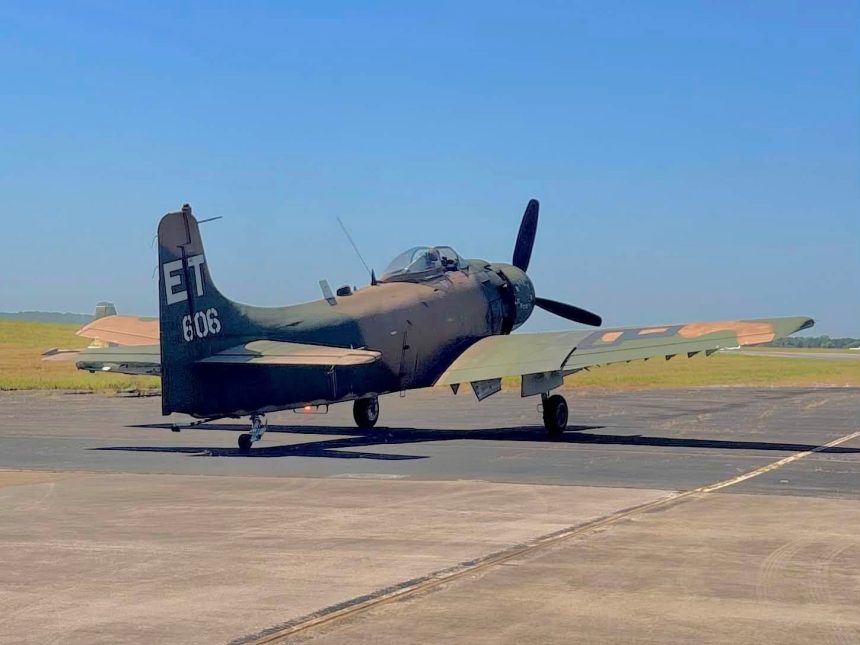

On August 12th, the Cavanaugh Flight Museum announced that its historic Douglas AD-6/A-1H Skyraider, Bureau Number 139606, had returned to the air for the first time in six years. The combat veteran, which served aboard five U.S. Navy aircraft carriers and later flew missions over Vietnam, completed a series of successful shakedown flights following an extensive mechanical overhaul. The milestone followed six years of work by the museum’s maintenance team and the installation of a newly rebuilt Wright R-3350 radial engine prepared by Anderson Aeromotive. Cavanaugh Flight Museum Chief Pilot Tony Wood and pilot Ben Wilson took turns conducting the initial shakedown flights. Museum mechanics Duane Oester and Jonathan Christof devoted many hours to preparing the aircraft and ensuring it was ready for its long-awaited return to flight. The museum plans to operate the Skyraider alongside its second example at airshows around the country, displaying the aircraft both on the ground and in the air. The return is particularly significant because Bureau Number 139606 is one of only a small number of surviving A-1H Skyraiders and possesses an extensive operational history spanning service with the U.S. Navy, U.S. Air Force, and South Vietnamese Air Force.
From the Flight Decks of the U.S. Navy
Designed by Ed Heinemann and his team at the Douglas Aircraft Company, the Skyraider emerged as faster, swept-wing jet aircraft were beginning to dominate military aviation. Nevertheless, the large, piston-powered attack aircraft filled an important role for the U.S. Navy, Marine Corps, and Air Force. Developed in response to a U.S. Navy requirement for a single-seat, carrier-based, long-range dive bomber and torpedo attack aircraft, the Skyraider prototype made its first flight on March 18th, 1945. The first production AD-1 was delivered in December 1946 and entered service with Navy Attack Squadron 19A. Powered by the Wright R-3350 radial engine, the Skyraider combined long range, excellent low-speed handling, and an impressive weapons capacity. Its large straight wing incorporated seven external stations on each side, allowing the aircraft to carry a wide variety of bombs, rockets, fuel tanks, and other stores. Douglas built 3,180 Skyraiders in seven principal variants. The AD-6 was an improved version of the single-seat AD-4, incorporating updated avionics, strengthened bomb racks, and a long ventral airbrake similar to that fitted to the AD-5. A total of 713 AD-6s were produced. In 1962, the type was redesignated A-1H under the standardized Department of Defense aircraft designation system.
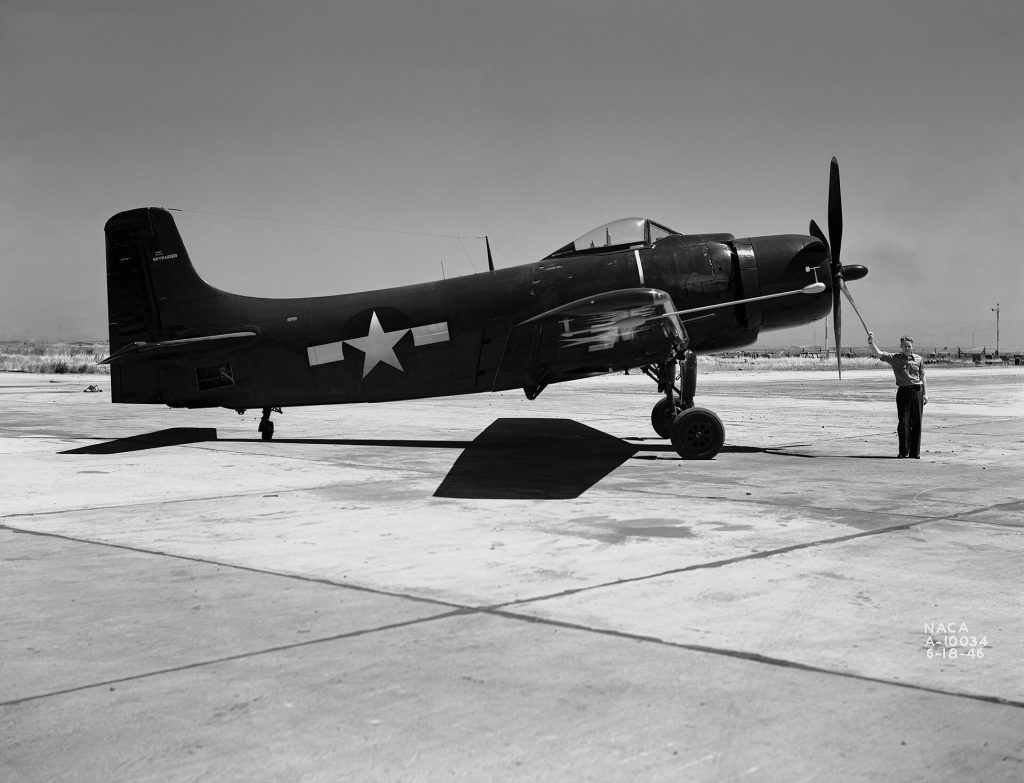
Cavanaugh’s aircraft was accepted by the U.S. Navy on August 29th, 1955. Its first assignment was with Attack Squadron 215 at Naval Air Station Moffett Field, California. The squadron subsequently deployed aboard the aircraft carrier USS Bon Homme Richard. Following an overhaul at Naval Air Station Alameda, California, the Skyraider joined VA-145 at Naval Air Station Miramar and deployed aboard USS Ranger in January 1959. Later assignments included service with VA-122 and VA-165, the latter taking the aircraft aboard USS Oriskany and USS Coral Sea during Western Pacific deployments. In January 1966, Bureau Number 139606 was assigned to VA-176 and deployed aboard USS Intrepid. Its final Navy assignment was with VA-122 at Naval Air Station Lemoore. In August 1967, the aircraft was transferred to Davis-Monthan Air Force Base, bringing its U.S. Navy career to an end.
(Image credit: Cavanaugh Flight Museum)
Combat Service in Southeast Asia
The Skyraider subsequently transferred to the U.S. Air Force and served with the 6th Special Operations Squadron from bases at Pleiku and Da Nang, South Vietnam. Aircraft of the unit operated under the call sign “Spad” and supported special operations and personnel-recovery missions. During this period, 139606 was flown by Lieutenant Colonel Dan Wiley, a veteran pilot whose career had included flying P-38 Lightnings and P-51 Mustangs during WWII. Wiley later worked as a test pilot and contributed to several advanced aviation programs, including the X-15. The Skyraider now carries the name Wiley Coyote in his honor and is painted in the colors and markings it wore with the 6th Special Operations Squadron in 1968. The aircraft was transferred to the South Vietnamese Air Force in 1970, serving with the 518th Fighter Squadron of the 23rd Tactical Wing at Bien Hoa Air Base. Following the fall of Saigon in 1975, it was among the last Skyraiders flown out of South Vietnam, with pilot Roger Youngblood taking the aircraft to Thailand.
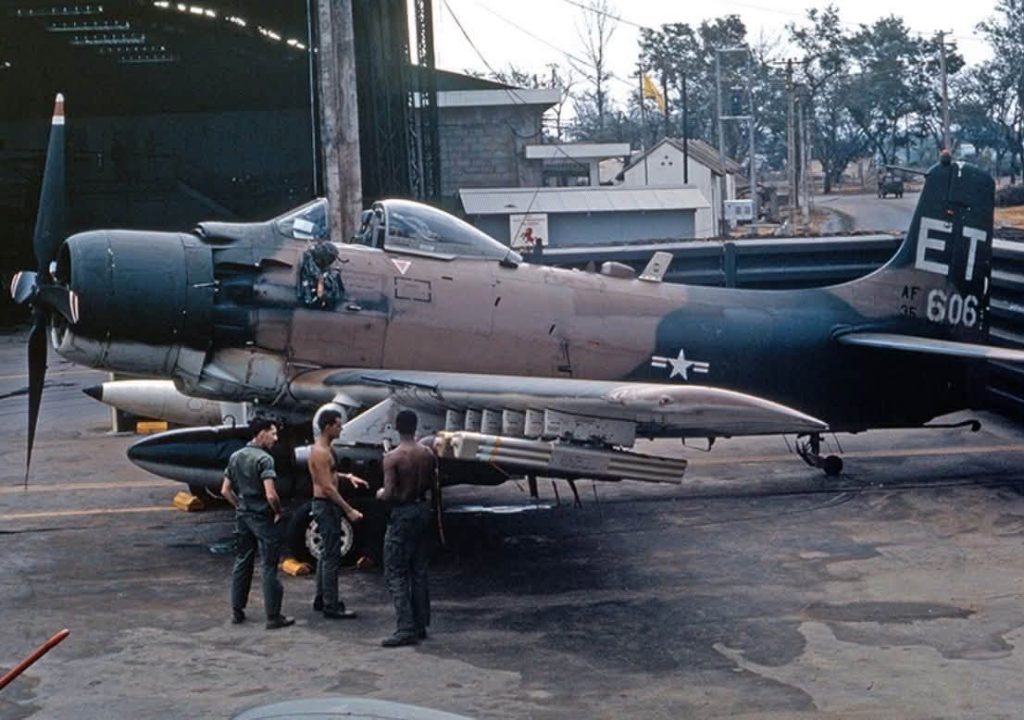
(Image credit: Cavanaugh Flight Museum)
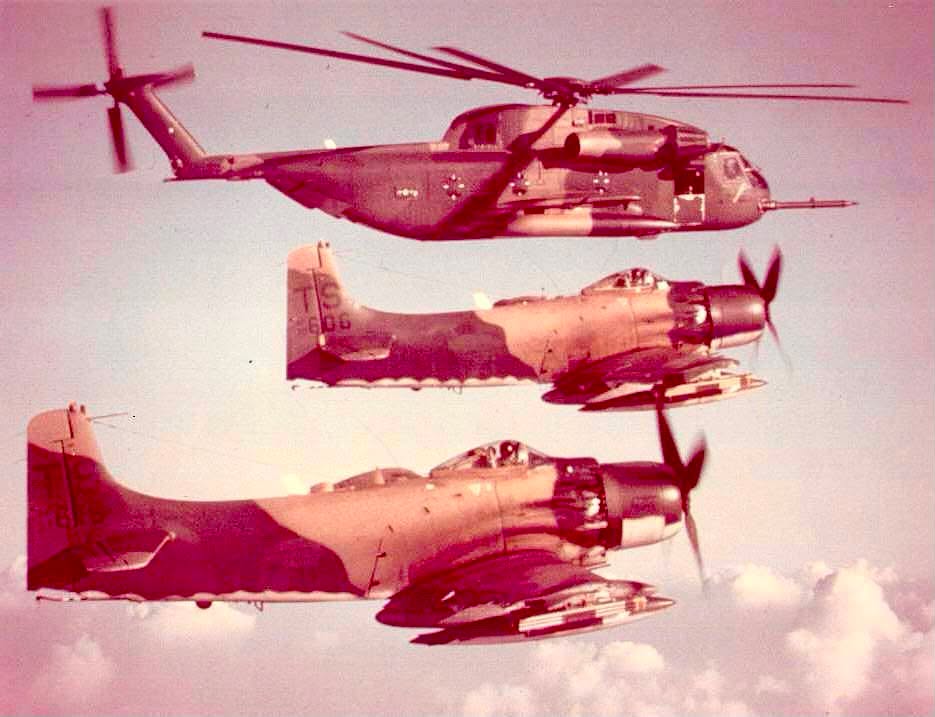
The Skyraider’s continued use during the Vietnam War demonstrated the enduring value of Heinemann’s design. Although much slower than contemporary jets, the A-1 could remain over the battlefield for extended periods, carry a substantial weapons load, and absorb considerable punishment. The type became particularly renowned for its role in combat search-and-rescue operations. Known by the call sign “Sandy,” Skyraiders escorted rescue helicopters and provided covering fire for attempts to recover downed airmen. Using smoke, rockets, bombs, napalm, and four 20 mm cannons, their crews suppressed enemy positions and marked targets around rescue sites. Although the Skyraider was never intended for aerial combat, U.S. Navy pilots also used the propeller-driven aircraft to shoot down two North Vietnamese MiG-17 jet fighters.
Preservation and a New Chapter
Bureau Number 139606 returned to the United States in 1980 with three other surviving Skyraiders. Fighter Rebuilders at Chino, California, restored the aircraft to flying condition in 1989. After passing through the Santa Monica Museum of Flying and a private owner, the Cavanaugh Flight Museum acquired it in 2016. In 2018, the Skyraider was repainted in its 6th Special Operations Squadron markings, carefully recreating its appearance during its U.S. Air Force combat service in Southeast Asia. The Air Force Heritage Flight Foundation has previously documented the aircraft’s history and connection to Dan Wiley.
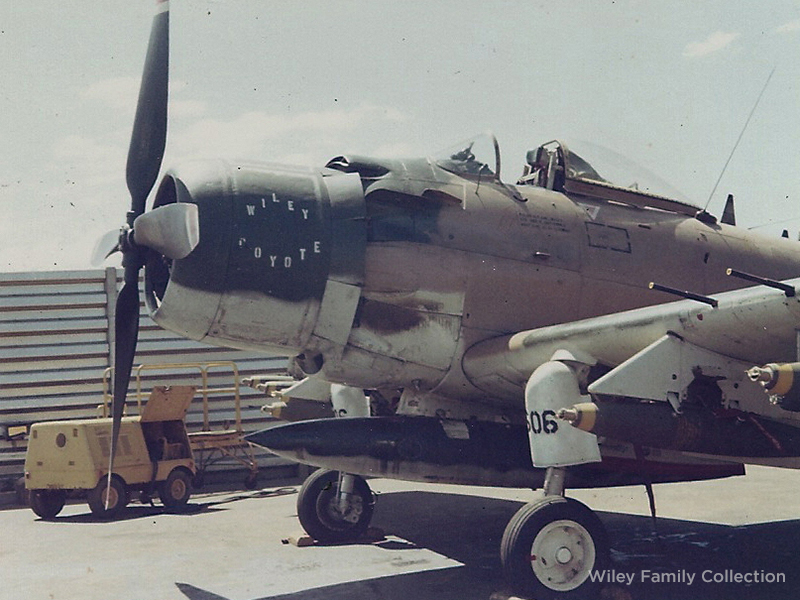
(Image credit: Wiley Family Collection)
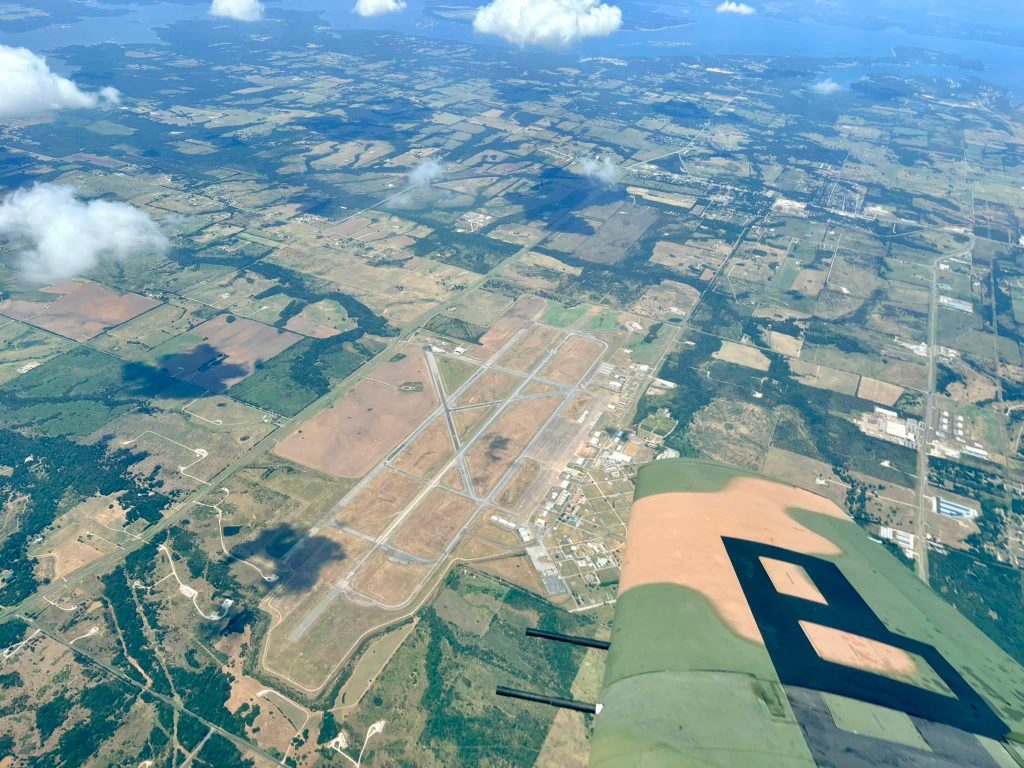
The Cavanaugh Flight Museum announced the closure of its public facility in Addison, Texas, in December 2023, leaving the future of its extensive collection uncertain. Encouragingly, several of its aircraft have continued to appear at airshows throughout Texas and at major national events such as EAA AirVenture Oshkosh and SUN ’n FUN. The successful return of Wiley Coyote represents another positive development for the collection. For more information about the museum’s activities, visit its Facebook page.
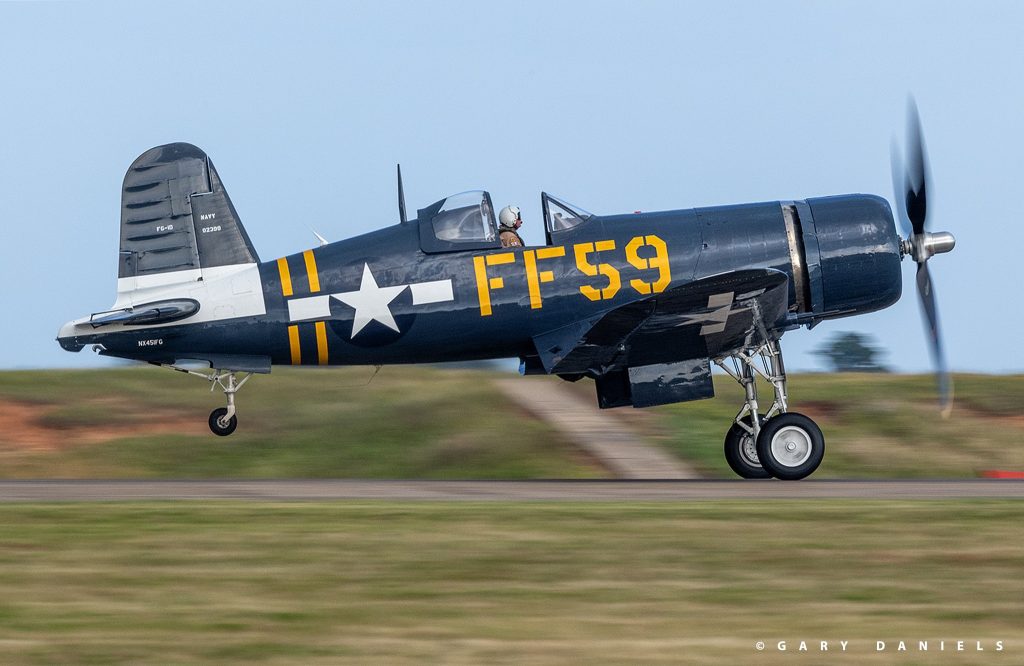
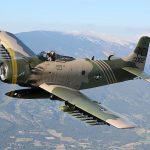
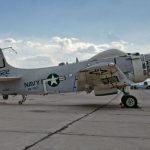
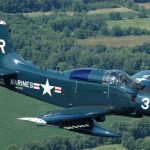







The Skyraider initially had just three hardpoints, the A-1E introduced additional wing hardpoints, and all single seat Skyraiders had three large panel style dive brakes. Now the AD-6/A-1H is an improved AD-4B; the nuclear capable sub variant of the AD-4.