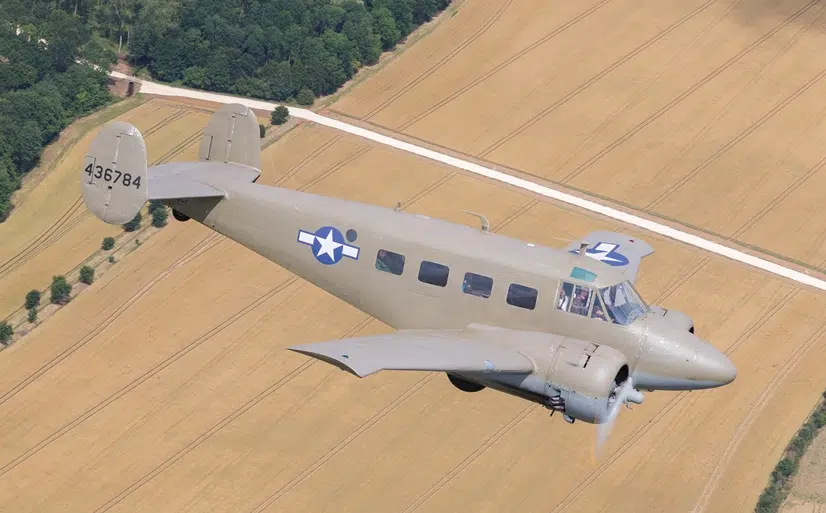

Beechcraft G18S N45CF, whose screen credits include Captain America: The First Avenger and Catch-22, has returned to flight after approximately seven years on the ground. Following several months of mechanical work in Switzerland, the aircraft departed Bressaucourt in September 2026 for a new home in Madrid, where its new owners plan to continue its restoration. The project brought together longtime owner Carlo Ferrari, Stanislav Boiko of Boiko Air Services Ltd., and Spain’s Fundación Aeronáutica Antonio Quintana (FAAQ). For Boiko, finding a buyer meant finding someone prepared to care for the aircraft and preserve its history.
(Image credit: Boiko Air Services Ltd)
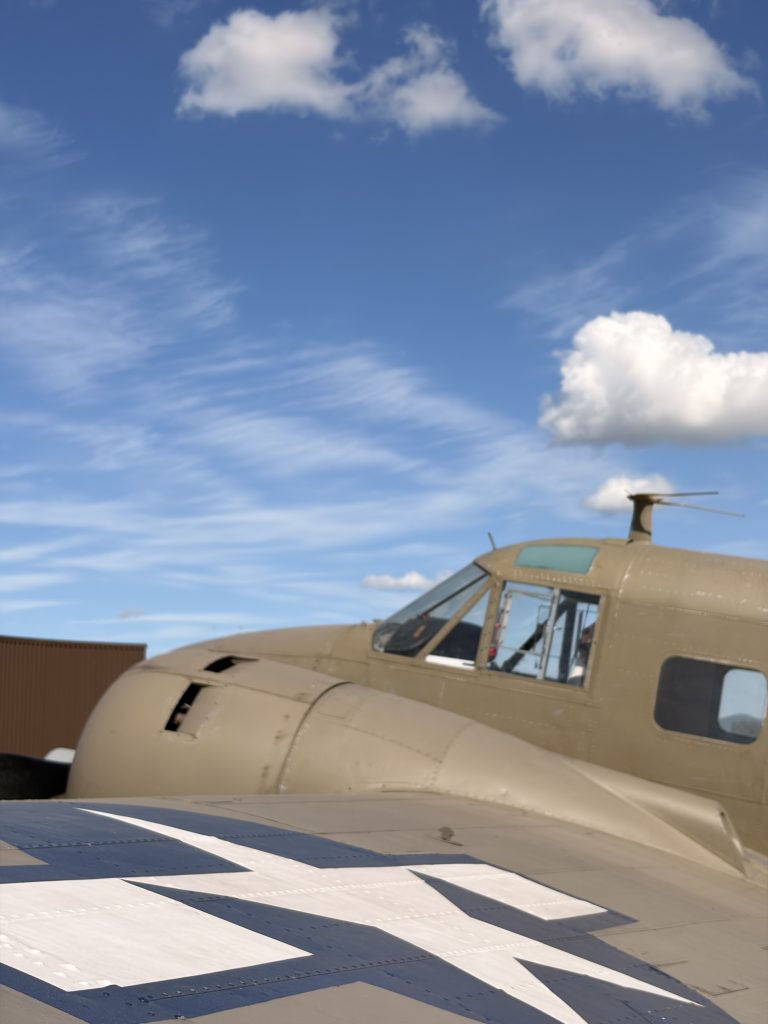
Built in November 1959 as construction number BA-466, N45CF had a long working career before becoming familiar to European airshow audiences. Equipped with a large cargo door, the Super Twin Beech carried freight for North American operators, including Northwest Air Cargo. It later moved to Canada, where it flew as C-GJKA and, according to Boiko, served as a parachute aircraft for Parachutisme Nouvel Air in Quebec. Ferrari acquired the aircraft and brought it to Switzerland in 2008. Its film career began before that move, with an appearance in the 2004 production A Different Loyalty, starring Sharon Stone. A more prominent role followed in Marvel’s 2011 film Captain America: The First Avenger. With its polished finish and movie-specific markings, the Beech portrayed Howard Stark’s aircraft in the mission to carry Captain America behind enemy lines. The aircraft’s former operator also documents both film appearances on its history page. For the television adaptation of Catch-22, the aircraft exchanged its polished appearance for a weathered Olive Drab scheme. Filmed in Sardinia, the production featured George Clooney, who also directed part of the series. N45CF retained the finish for subsequent public appearances, including the Royal International Air Tattoo at Fairford. Although the markings evoke WWII, the aircraft itself was built well after the conflict.
(Image credit: Boiko Air Services Ltd)
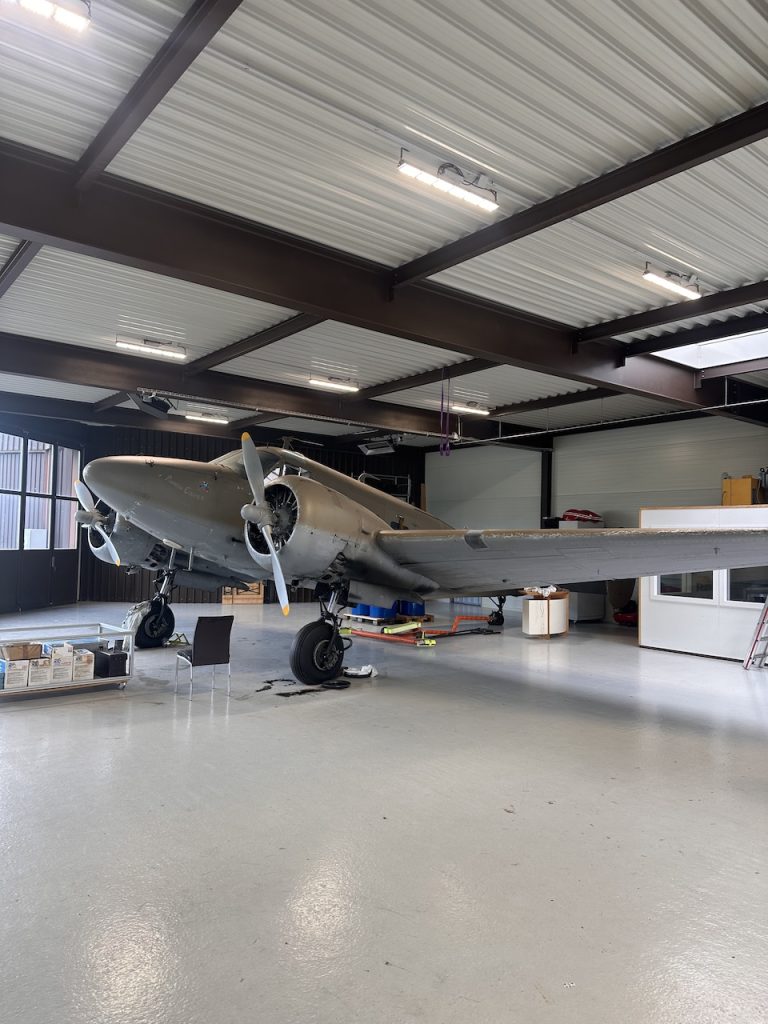
Boiko said disruptions surrounding the COVID-19 pandemic changed the aircraft’s operating circumstances, and it eventually ceased flying. Throughout its time on the ground, Ferrari kept the Beech hangared at Bressaucourt and continued caring for it. When Boiko encountered the aircraft and its owner in 2025, he saw an opportunity to get it flying again. Based in Switzerland, his company handles aircraft restoration, sales, acquisitions, management, and ferry flights across Europe, Africa, and Asia. This project, however, quickly became personal. “I instantly fell in love with this airplane, its glorious past, and the deeply touching story of its owner,” Boiko told Vintage Aviation News. He promised Ferrari that the next owner would have the commitment and resources to maintain the aircraft’s historical character and undertake substantial restoration work if needed. Their shared interest in the Beech developed into a friendship that has continued beyond the sale. A prospective new home emerged in February 2026. During a visit to Spain to inspect a Cessna L-19 Bird Dog for another brokerage project, Boiko connected with FAAQ. The Madrid-based foundation preserves, restores, and exhibits historic aircraft, and now lists N45CF among its restoration projects. Representatives from FAAQ subsequently traveled to Switzerland to inspect the Twin Beech. Together with Boiko’s team, they established the work required before proceeding with the purchase and ferry flight. Priorities included assessing both Pratt & Whitney engines, restoring the landing gear system to proper operation, and completing additional inspections and servicing. The agreement rested on a shared commitment to the aircraft’s future. In describing that relationship, Boiko recalled a saying familiar to him from Eastern Europe: “You can always tear up a piece of paper, but a stained name will never be forgiven.”
(Image credit: Boiko Air Services Ltd)
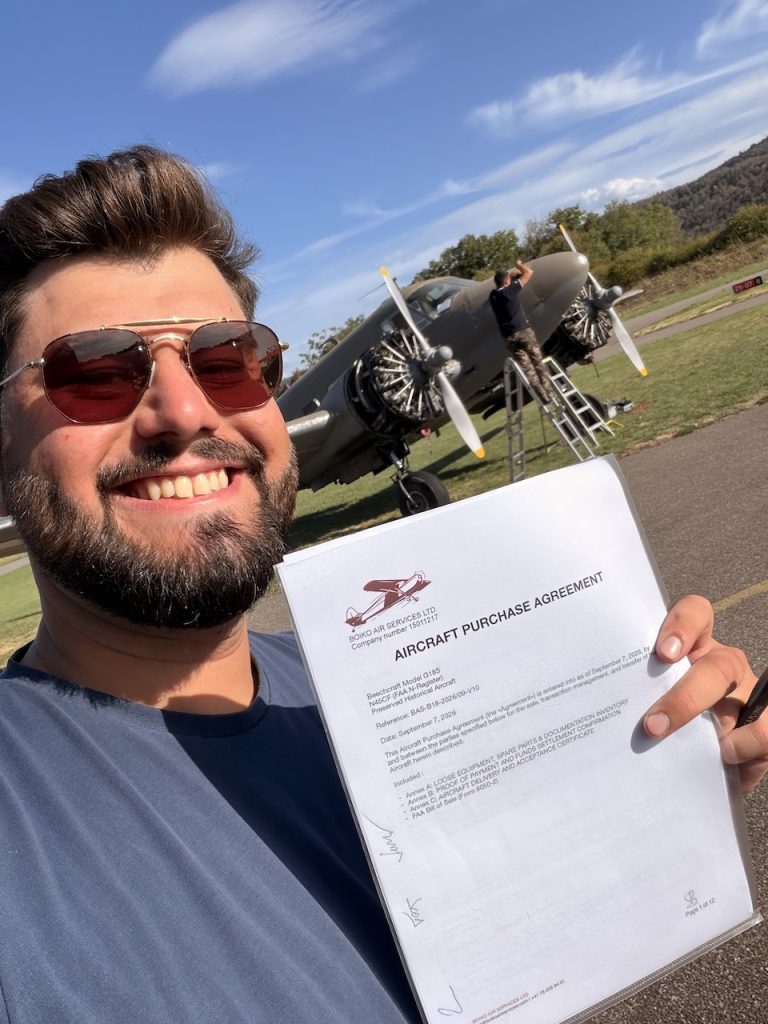
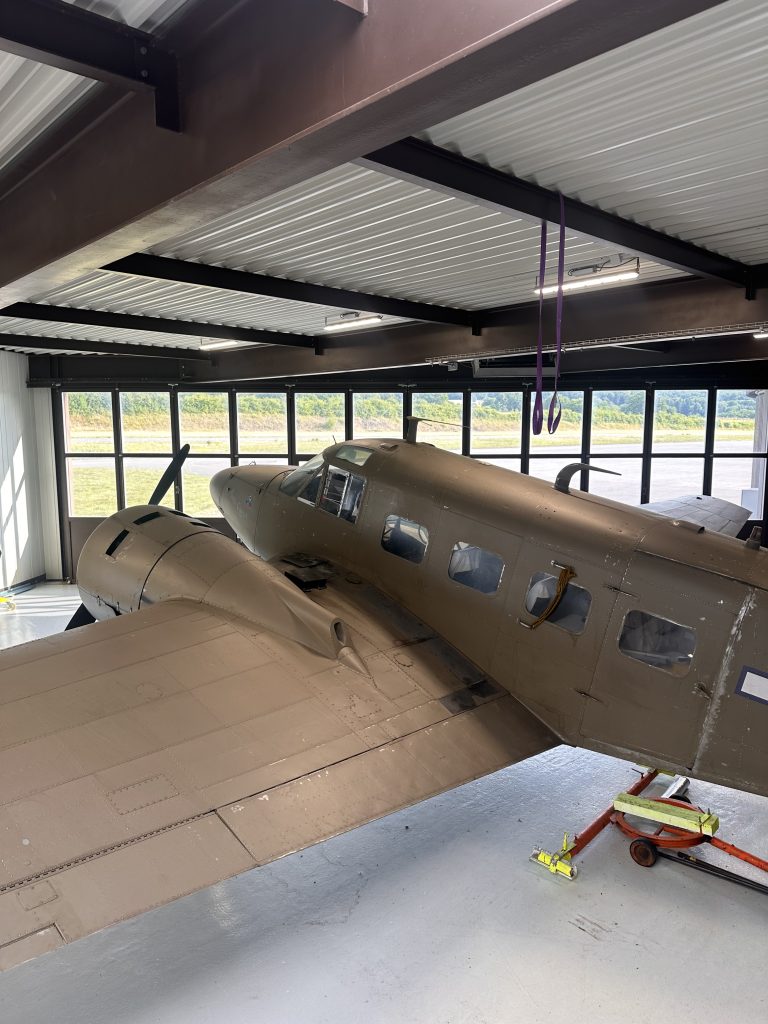
Several months of mechanical work followed. According to Boiko, the team overhauled the landing gear system, inspected the airframe, and cleaned and serviced the engines. Unexpected technical issues complicated the process, but work continued until both engines could be run and evaluated. Boiko reported that the engine runs produced encouraging results, with strong compression readings and no defects identified during the checks. He credited the mechanics and others involved with making the aircraft’s return possible. In September, FAAQ representatives returned to Switzerland to complete the purchase. With the bill of sale signed, preparations moved into their final stage: resolving the remaining technical requirements, obtaining ferry flight permits, and completing the necessary customs formalities. On the Friday of the second week of September, N45CF lifted off from Bressaucourt, ending what Boiko described as a seven-year grounding. Two of FAAQ’s Cessna 337 Skymasters, wearing military liveries, accompanied the Beech in formation as it departed. The aircraft subsequently arrived safely in Madrid, beginning the next stage of its preservation. Boiko said its original cargo door is operational again, while the passenger cabin is undergoing a complete refurbishment. Further restoration work is planned under FAAQ’s ownership, with the goal of returning the aircraft to European airshow appearances. For N45CF, the move adds another chapter to a career spanning freight operations, parachute flying, film work, and public displays. For the people who brought it back into the air, the achievement reflects months of work—and a promise to give a distinctive Twin Beech a future.
(Image credit: Boiko Air Services Ltd)