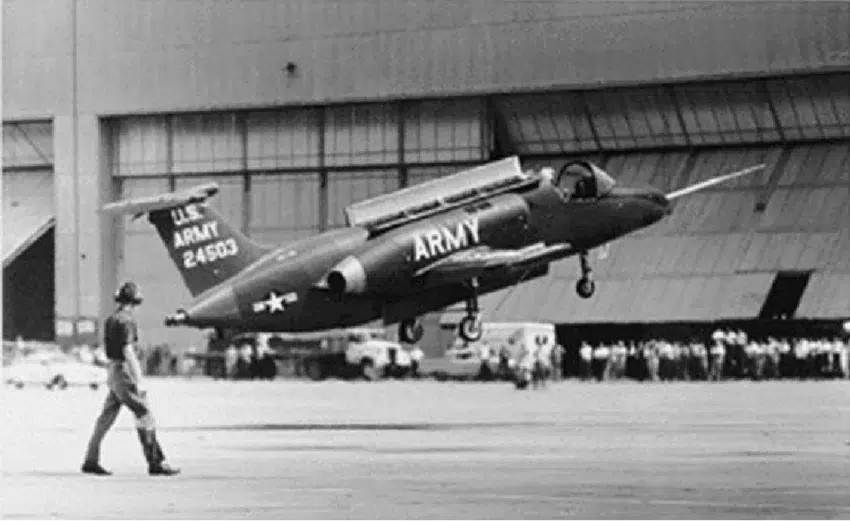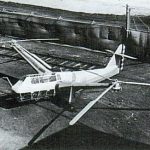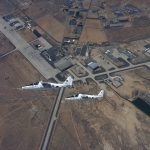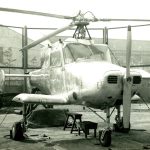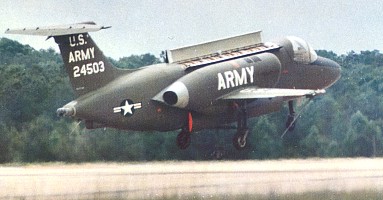



In the 1960s, Lockheed Corporation designed and built the Lockheed XV-4 Hummingbird under a US Army project to show that Vertical Takeoff and Landing (VTOL) could be used for a surveillance aircraft. The aircraft used a method called vertical takeoff and landing, directing engine flow down through several nozzles with extra cold air added. With a crew of two, the Lockheed XV-4 Hummingbird was 32.8 feet long, 11.9 feet high, with a 25.8-foot wingspan and a wing area of 104 square feet. Its empty weight was 4,995 pounds, and the gross weight was 7,200 pounds.
Design of Lockheed XV-4 Hummingbird

The Lockheed XV-4 Hummingbird was powered by two Pratt & Whitney JT12A-3LH turbojet engines, each producing 3,300 pounds of thrust. Its maximum speed was estimated at 518 mph at 10,000 feet, with a cruise speed of 390 mph, a range of 600 miles, and a climb rate of 12,000 feet per minute. The first prototype, XV-4A, had its first conventional takeoff on July 7, 1962. Initial tethered flight tests took place on November 30, 1962. The first free-hovering flight occurred on May 24, 1963. The first flight that moved from hovering to forward flight occurred on November 8, 1963. The aircraft performed much worse than expected, with a thrust-to-weight ratio of only 1.04. The prototype crashed on June 10, 1966, and the pilot was killed. As a result, Lockheed modified the second prototype aircraft from 1966 to 1968 to the XV-4B model.
The Cancellation

The company replaced the two Pratt & Whitney JT12 engines with six General Electric J85 turbojet engines, four of which served as lift jets. This Lockheed XV-4 Hummingbird also crashed in Georgia on March 14, 1969. The pilot, Harlan J. Quamme, used the ejection seat to escape unharmed. Another aircraft in the competition, Rockwell’s XFV-12, also failed to generate lift. It tried to use engine exhaust to pull in cold air through wing flaps. None of the early American vertical/short takeoff and landing (V/STOL) designs led to a production aircraft. The British Hawker Siddeley Harrier used nozzles that could change direction, while the Russian Yakovlev Yak-38 Forger attack jet utilized lift jets along with rotating rear nozzles. Later, the Lockheed F-35 Lightning II used a lift fan powered by a shaft in the fuselage. Read more Grounded Dreams articles HERE.