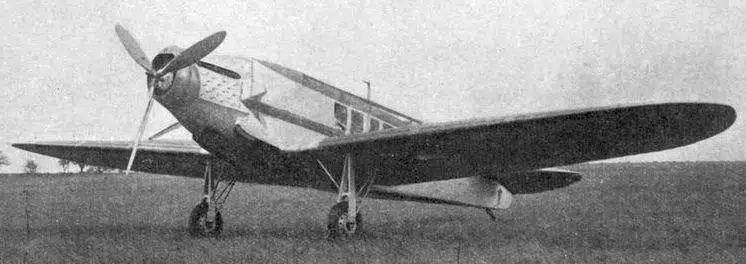


On this day in aviation history, 94 years ago (October 16, 1932), the Blériot 111/5 represented the latest development of France’s unusual Blériot 111 executive transport. Designed by André Herbemont, the four-seat 111 family first flew in 1929 and underwent a succession of modifications as Blériot attempted to improve the aircraft’s performance and commercial prospects. The 111/5 was developed from the earlier 111/4, which itself was a substantially modified version of the original aircraft. The 111/4 featured revised wing bracing, a 400-horsepower Hispano-Suiza engine, and retractable landing gear—making it the first French aircraft fitted with retractable gear. For the 111/5, the pilot’s open cockpit was relocated from ahead of the enclosed passenger cabin to a position behind it, while power increased with the installation of a 500-horsepower Hispano-Suiza 12Mbr engine.
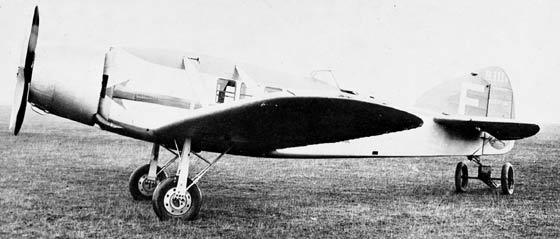
Development continued beyond the 111/5. The aircraft was subsequently fitted with a 500-horsepower Gnome-Rhône radial engine and named Sagittaire. A new wing and a much more powerful 840-horsepower Gnome-Rhône 14Kbrs eventually transformed it into the 111/6, which was entered in the 1934 London-to-Melbourne air race. Damage to its landing gear shortly before the race prevented it from participating, and a lack of commercial interest eventually ended development of the Blériot 111 family. The source does not provide separate performance specifications for the 111/5. The final 111/6 measured 34 feet 11¾ inches in length with a wingspan of 55 feet 9¼ inches and was powered by an 840-horsepower Gnome-Rhône 14Kbrs radial engine. It could reach approximately 230 mph, had a range of 621 miles, and a service ceiling of just over 18,000 feet, with accommodations for one pilot and four passengers.