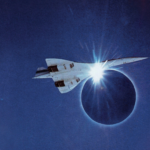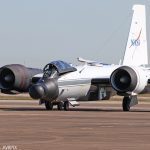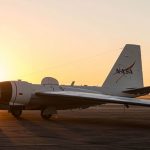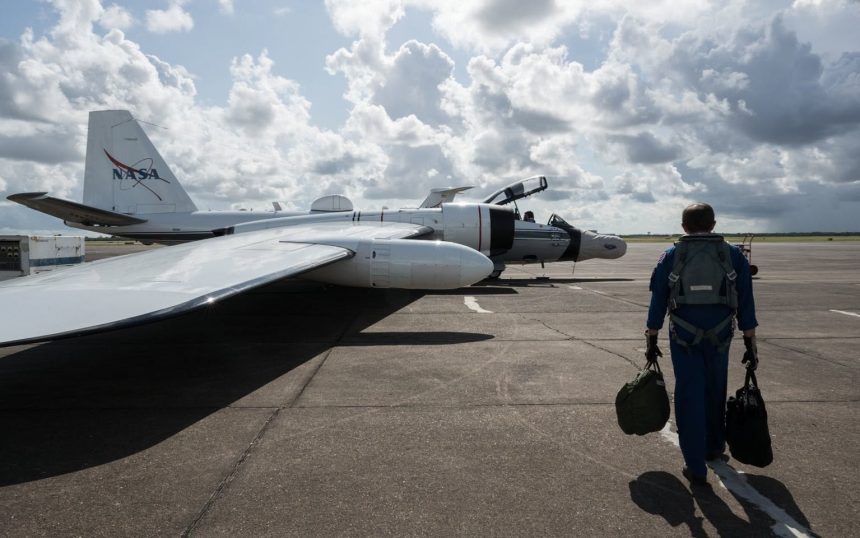

NASA Johnson Space Center, Houston, Texas, has sent one of its WB-57F high-altitude research aircraft to Iceland ahead of the total solar eclipse on August 12, where the specialized Canberra will be used to gather observations of the event from the stratosphere. NASA confirmed on August 10 that the aircraft departed Ellington Field on August 9 and was preparing to operate from Iceland for the eclipse. The WB-57 will fly into the path of the Moon’s shadow on August 12, allowing its research team to collect observations from an altitude of around 50,000 feet.
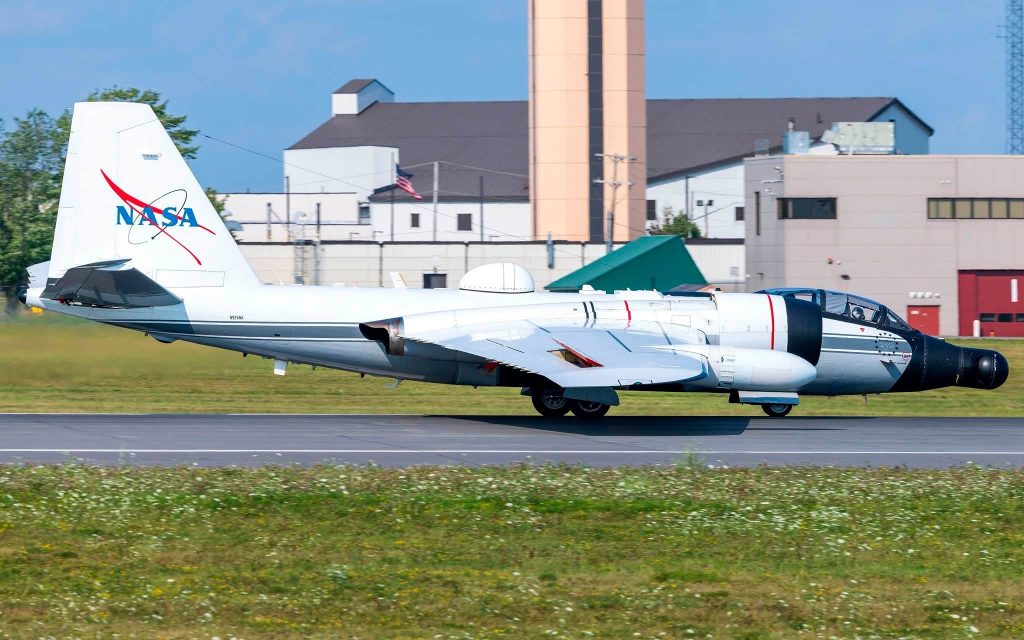
The aircraft arrived at Keflavík Airport on August 10 after stopping in Bangor, Maine, during its journey from Texas. It is scheduled to depart Iceland on August 12 as NASA attempts to capture views of the eclipse from above much of the atmosphere. Operating above most of the water vapor, haze, and turbulence found closer to the ground gives the WB-57 a significant advantage for this type of work. NASA’s aircraft can also carry specialized sensors capable of recording wavelengths that do not readily reach the Earth’s surface.
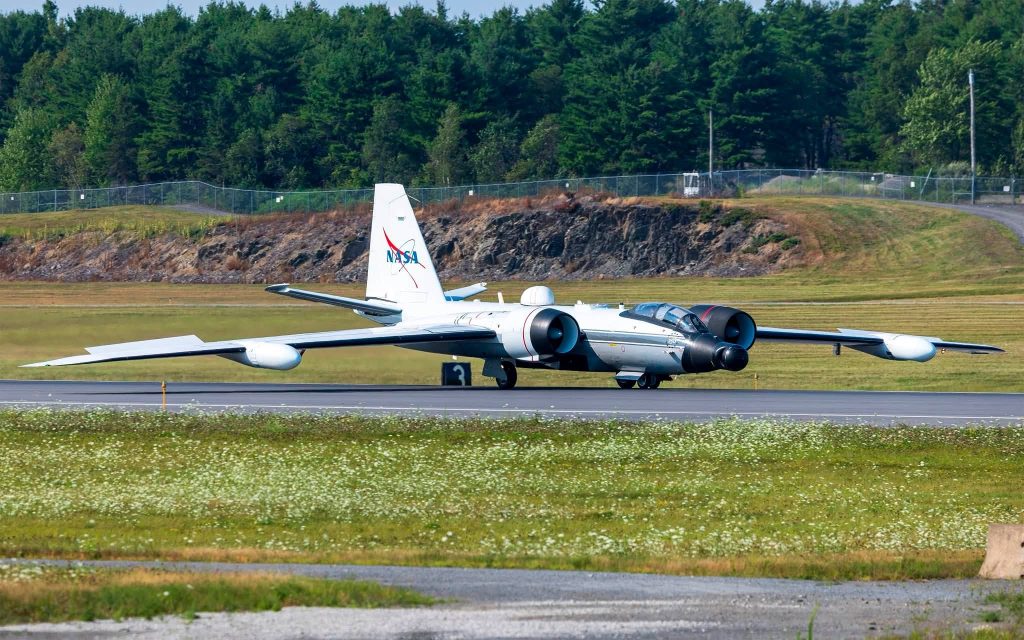
This is not the first time NASA has used its WB-57s to study a solar eclipse. The aircraft supported eclipse research in 2017 and 2024, with previous missions examining the Sun’s corona, ionosphere, and other phenomena associated with eclipses. The WB-57 is a highly modified version of the Martin B-57 Canberra, itself the American-built version of the British English Electric Canberra. NASA’s three aircraft are operated by the Johnson Space Center’s High Altitude Research Program from Ellington Field. The type can operate above 63,000 feet and carry up to 8,800 pounds of scientific and research equipment.
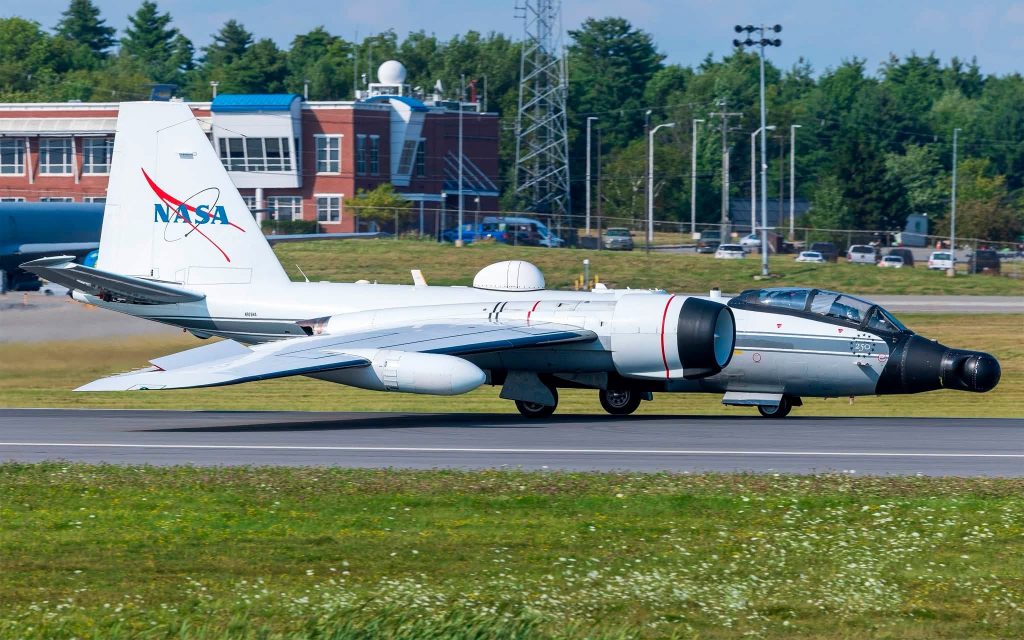
One of NASA’s three Canberras, NASA 927, has a particularly unusual history. The aircraft began life as a Martin B-57B with the U.S. Air Force and was later converted into a high-altitude RB-57F. After being retired to storage at Davis-Monthan Air Force Base in 1972, it remained there for approximately four decades before NASA acquired it in 2011 and returned it to flight in 2013. The aircraft’s return to service was noted by us in 2013, when NASA 927 made its first flight in 41 years. The Canberra was subsequently added to NASA’s WB-57 fleet, which now consists of NASA 926, NASA 927, and NASA 928.
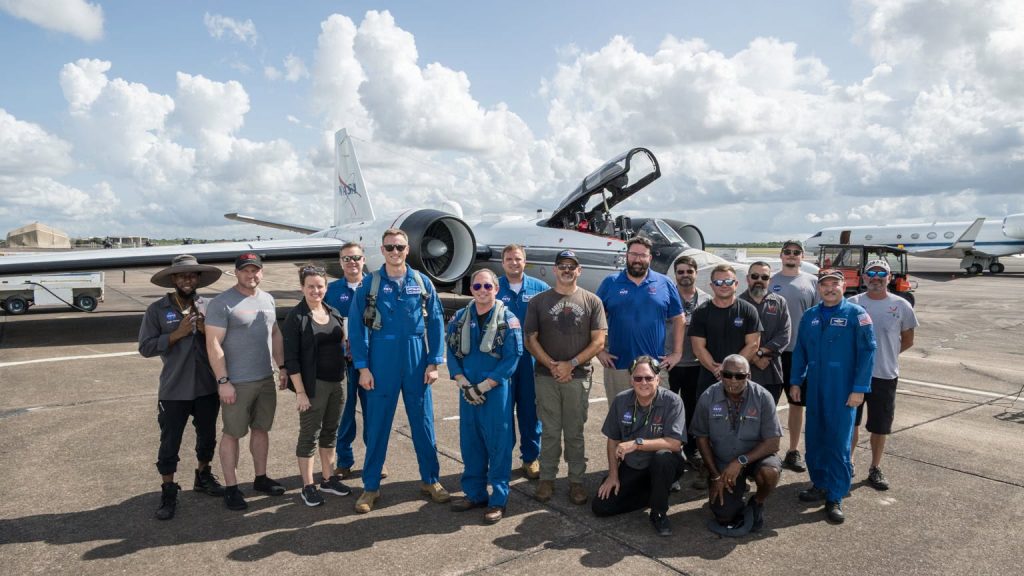
For the August 12 mission, however, NASA’s focus is firmly on the Sun. By operating from Iceland and positioning the WB-57 along the eclipse path, researchers hope to obtain observations that would be difficult to collect from the ground. The total solar eclipse will cross Greenland, Iceland, northern Russia, the Atlantic Ocean, Spain, and a small portion of Portugal.