





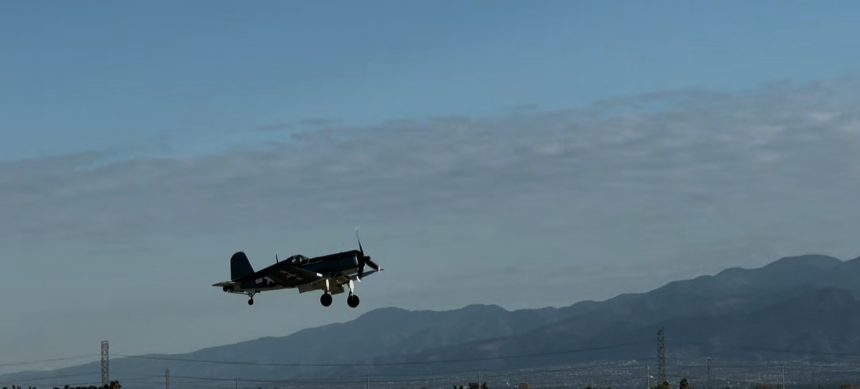

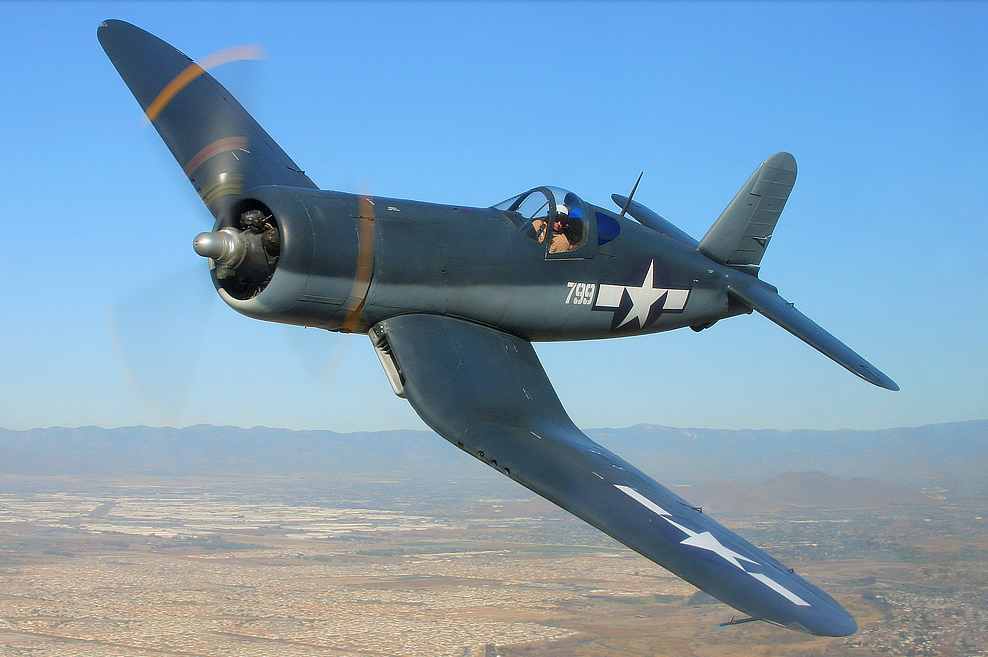
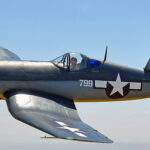
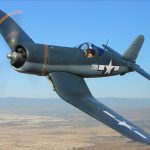
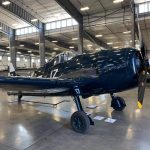
After over two years of refurbishment, the Planes of Fame Air Museum’s Vought F4U-1A Corsair has now completed its first post-restoration flight and is set to make its return to the museum’s Flight Schedule. Having starred in the 2022 Korean War film Devotion and in the 1970s TV show Black Sheep Squadron, the world’s oldest currently flying Corsair now sports a new take on the tri-color paint scheme of dark blue, light blue, and white familiar to the aircraft prior to the film.
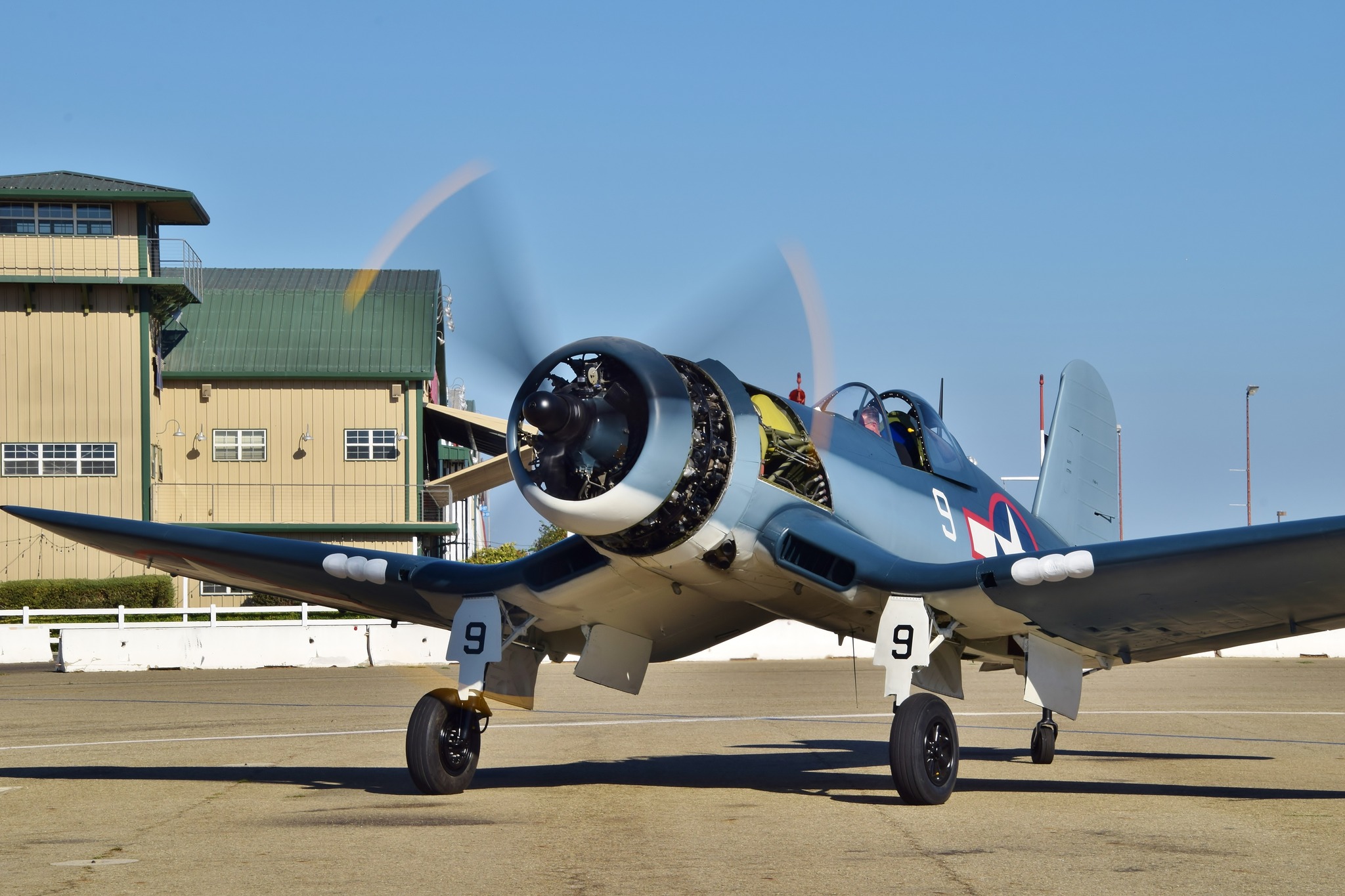
The Corsair at Planes of Fame was manufactured at Vought’s Stratford, Connecticut, plant as manufacturing number 3884 and accepted into the US Navy as Bureau Number (BuNo) 17799 on August 31, 1943, being delivered on September 6. From there it was sent to the Pacific Theater of Operations, but unfortunately, the historical overseas records currently available are murky and often only track aircraft types as opposed to specific bureau numbers.
To add to this confusion, although the last three digits of a plane’s BuNo were often applied to the fuselage sides and landing gear covers, any photographs that show the number 799 on a Corsair may also apply to two other F4U-1As (BuNos 49799 or 55799), but what is certain about 17799 is that the aircraft was often shared with different Marine squadrons during Operation Cartwheel or would sit in aircraft reserve pools that served to reinforce depleted squadrons. One of the other squadrons that has been speculated to have some involvement in 17799’s story is the famous Black Sheep squadron, VMF-214, under Major Gregory “Pappy” Boyington. However, while VMF-214 operated in theater in close proximity to where 17799 was often assigned to, there are unfortunately no definitive records as of yet to prove beyond the shadow of a doubt that 17799 was actually part of VMF-214.
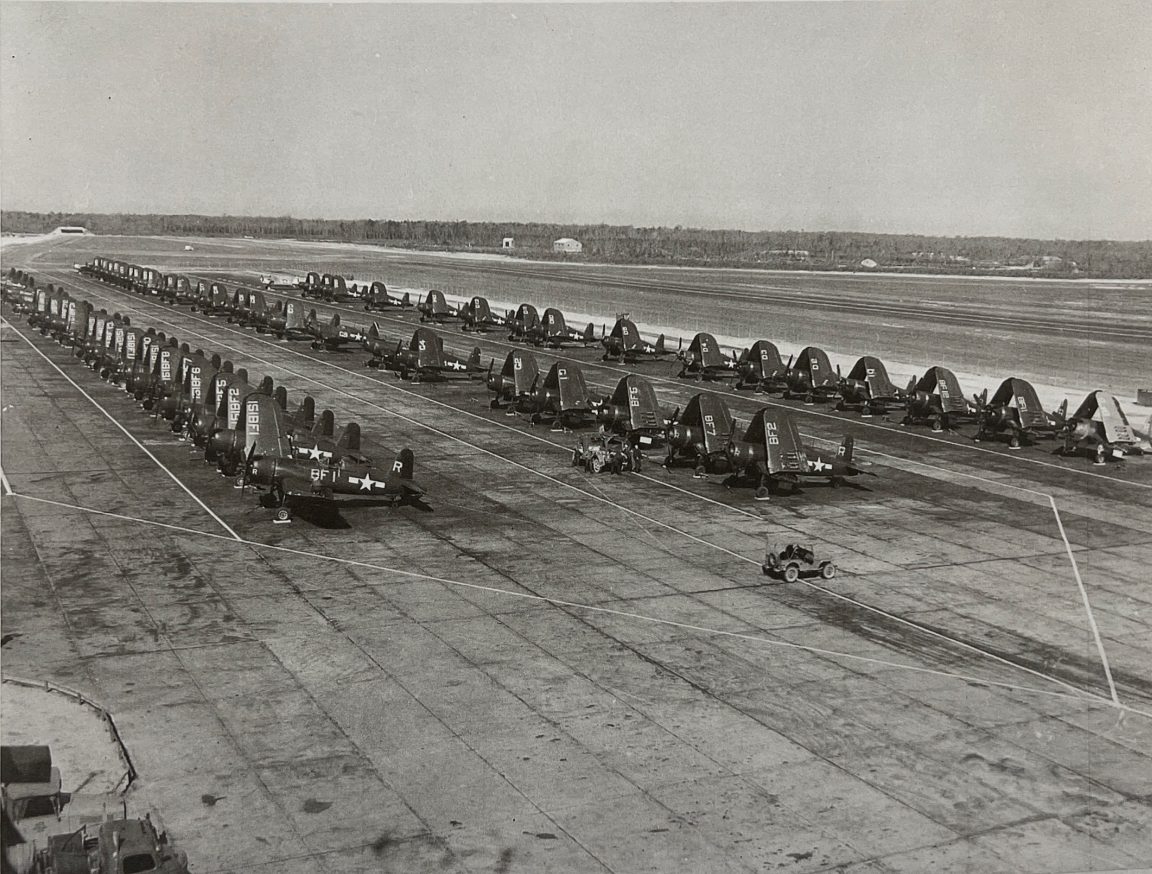
By August 1944, records indicate that BuNo 17799 was rotated back to the continental United States, since it is listed as being at NAS San Diego, where it stayed for an overhaul until October of that year. The period from December 1944 to August 1945 would see the aircraft assigned to several squadrons and units across to southern California, from VF-84 “Wolf Gang” in San Diego, VBF-14 (Bombing Fighting Squadron 14) at Naval Auxiliary Air Station Ream Field (now Naval Outlying Landing Field Imperial Beach), VBF-98, and CASU-33 (Carrier Aircraft Service Unit) at NAS Los Alamitos (now Joint-Base Los Alamitos).
On August 31, 1945, just two years after being accepted into the Navy, BuNo 17799 was stricken from the inventory and declared surplus. Around 1946, MGM Studios purchased the Corsair as a prop for a WWII movie that was never made. In addition to the Corsair, MGM also acquired other surplus aircraft for use as props and as wind generators, with the prop wash being utilized for scenes that called for large amounts of wind. Eventually, though, the aircraft was left derelict, its engine being removed and its fabric wing and tail surfaces rotted away as it sat in the studio backlot.
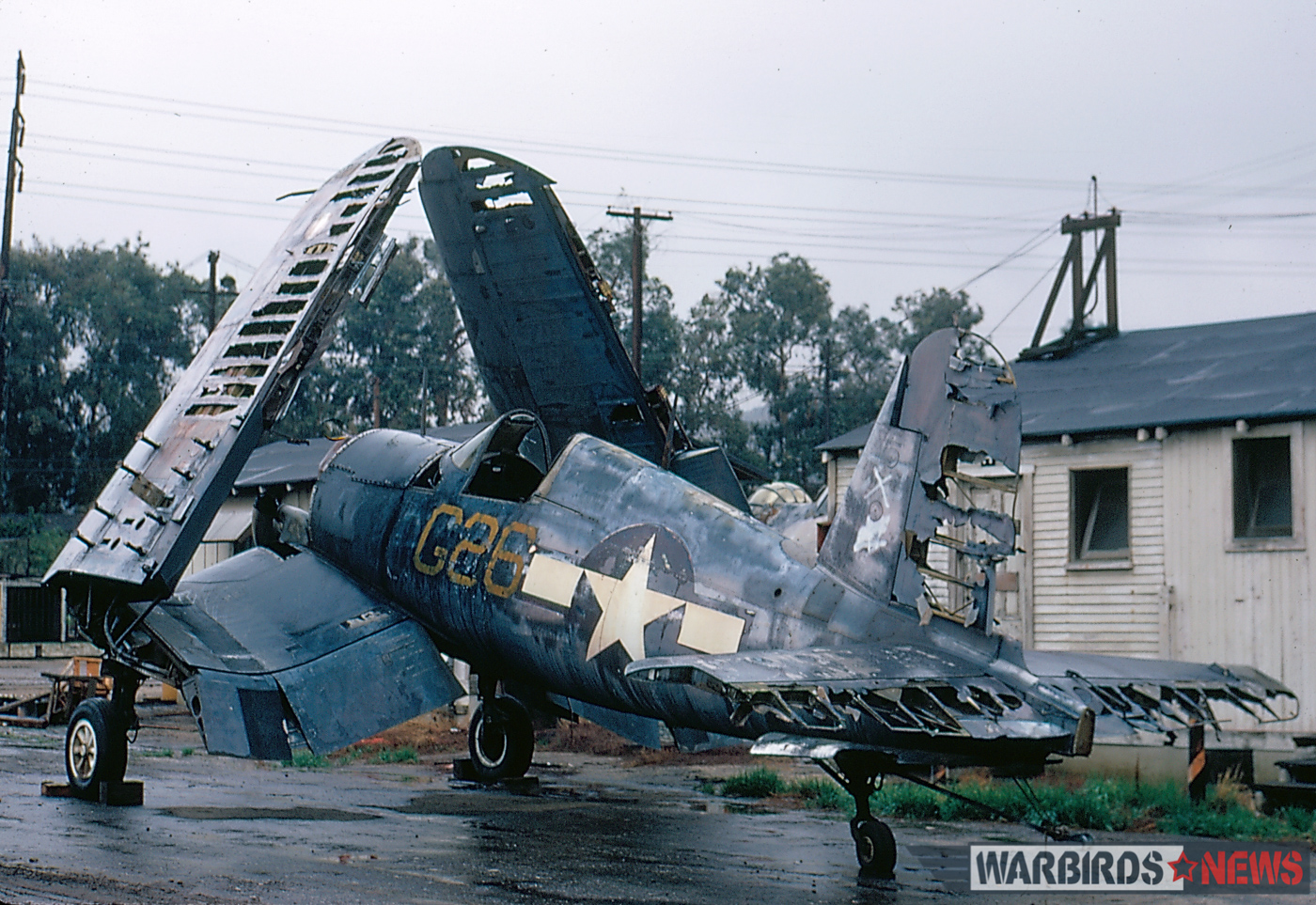
At the beginning of the 1970s, MGM’s new owners began selling the studio’s old backlots for real estate development, and with that came the mass sale of surplus materials on the backlots, including aircraft. In 1970, fortune smiled on 17799 as it was bought by collector Edward T. Maloney, founder of The Air Museum (later the Planes of Fame Air Museum). By 1973, the museum had reestablished itself at its current location at Chino Airport, and in 1974, childhood friends and museum mechanics and pilots Steve Hinton and Jim Maloney (son of Ed Maloney), collected enough parts to begin restoring 17799 back to airworthiness, which was completed in 1975, just in time to join several other Corsairs in the production of the television show Baa Baa Black Sheep (later renamed Black Sheep Squadron for its second season), a fictionalized retelling of the Black Sheep Squadron’s exploits under Pappy Boyington, with the man himself being an early advisor to the show, as well as making the occasional on-screen cameo.
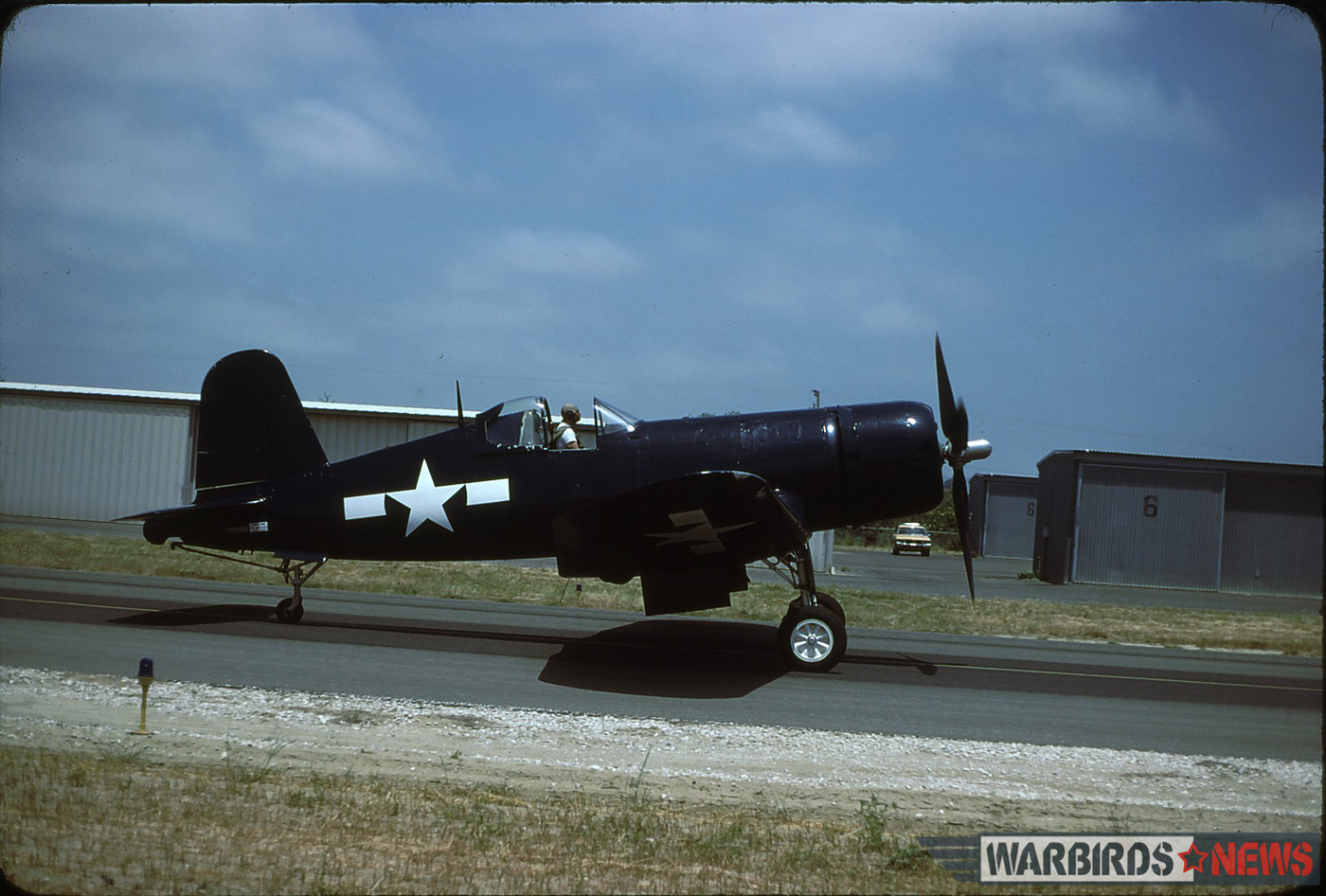
Since then, 17799 has raced at Reno as race #0 under the name “The Chino Kids”, flown in numerous other TV shows, movies and commercials, from Airwolf to Devotion, has been featured at numerous airshows across the western United States, and is usually flown in at least one of the museum’s monthly Flying Demos every year. The aircraft has even been used to record sounds for the developers of combat flight simulators and video games such as War Thunder and served as a reference for animators on the Disney-Pixar film Planes for the character “Skipper”.
For much of its time with the museum, the exact nature of its overseas wartime service was unknown. Much of the archival records that the museum has collected over the years are thanks to the tireless efforts of museum mechanic and researcher Cory O’Bryan and pilot and fellow researcher Chris Fahey, but it was not until 2015 when author Michele Spry of Missouri, who was writing a children’s book called A Trip to Remember, about an Honor Flight to Washington, D.C., had a chance meeting with retired Marine Corps Lt. Col. Ferrill Purdy in the midst of her search for a WWII pilot on which to provide a basis for one of the book’s main characters.
A friendship between the two soon developed, and she would interview Purdy about his wartime service with Marine Fighter Squadron 441 (VMF-441) during WWII. During their time together, Purdy showed Spry his logbook, which happened to include an entry for the Planes of Fame’s Corsair, Bureau Number 17799! Soon, they learned that Purdy’s wingman, Major John Tashjian, was still alive in California. Tashjian flew out to Purdy’s home near Columbia, Missouri, to meet his old wingman for the first time since WWII, and as it turned out, Tashjian’s logbook also confirmed that he had flown 17799 during his time with VMF-441, confirming the museum’s long-time suspicions that 17799 was a combat veteran, which naturally created quite the buzz around the museum!
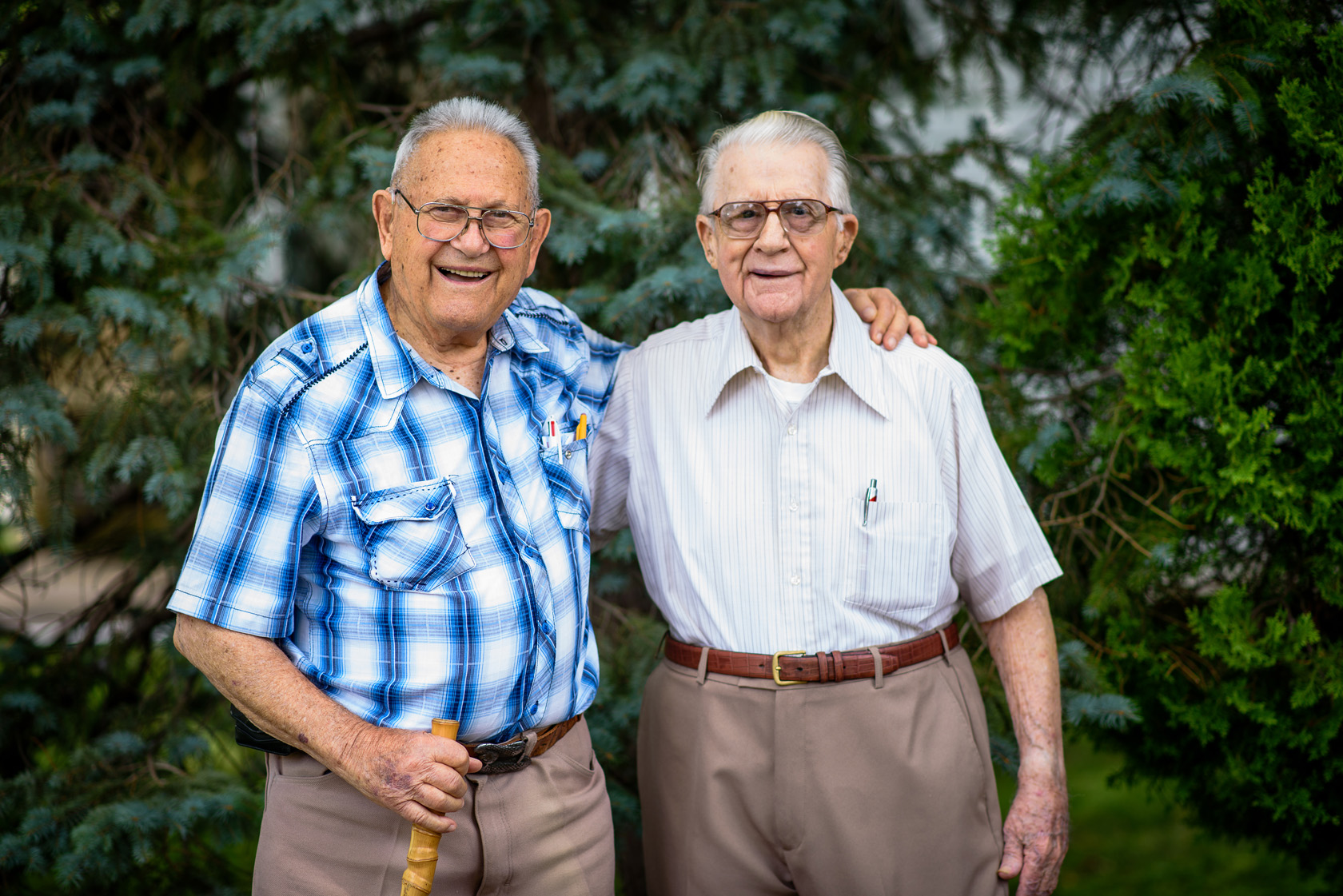
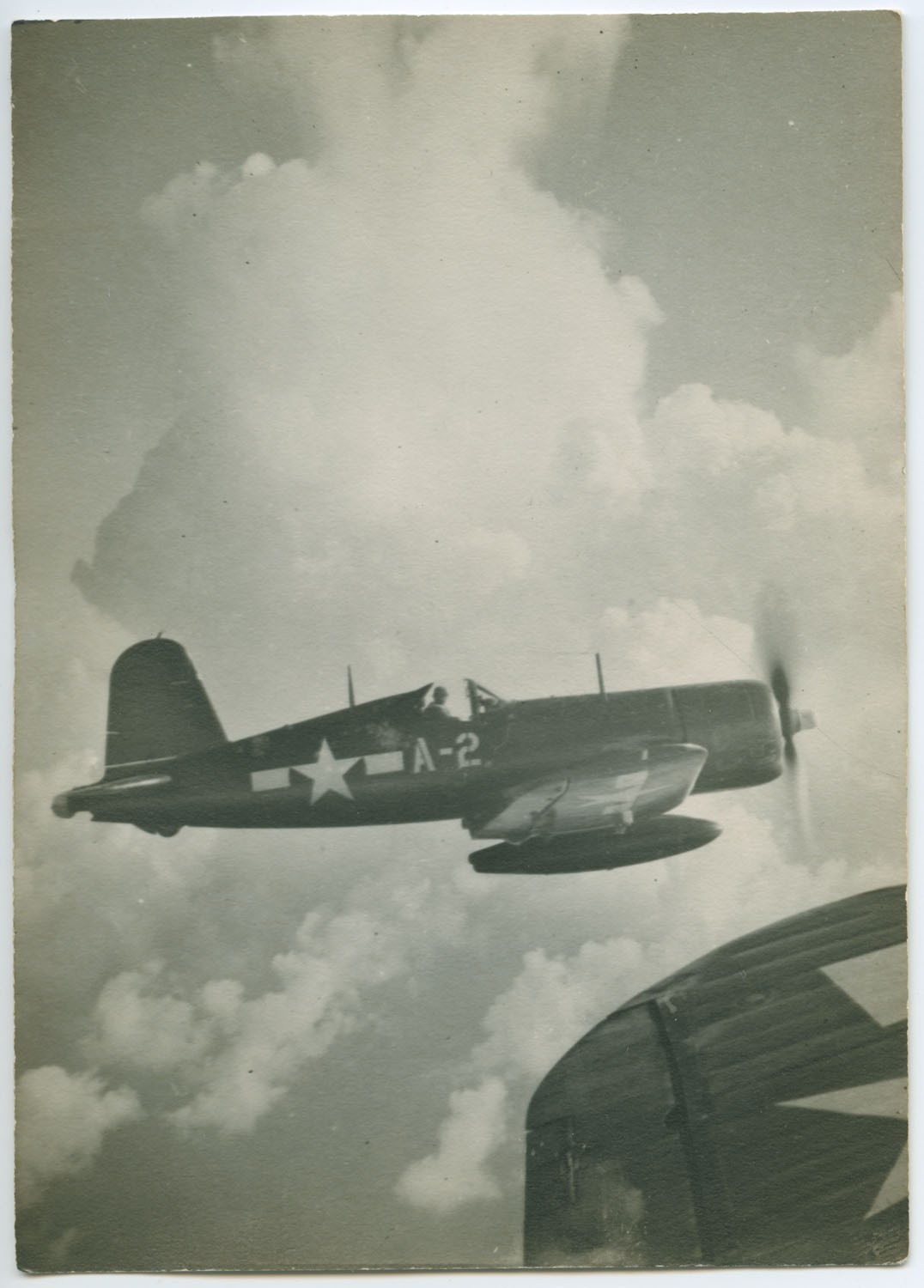
During a Flying Demo held for the Corsair on August 6, 2016, Michele Spry and John Tashjian were invited to talk about the recent discovery and the journey it took to get there, and Tashjian got to see his old mount for the first time since 1944. But one man who couldn’t travel to Chino to see the airplane was Ferrill Purdy, so Spry got the museum’s blessing to help them organize a fundraiser to fly the Corsair to Missouri so that Purdy could see the aircraft one more time. Their efforts were highly successful, having raised the necessary $28,000 in less than 40 days!
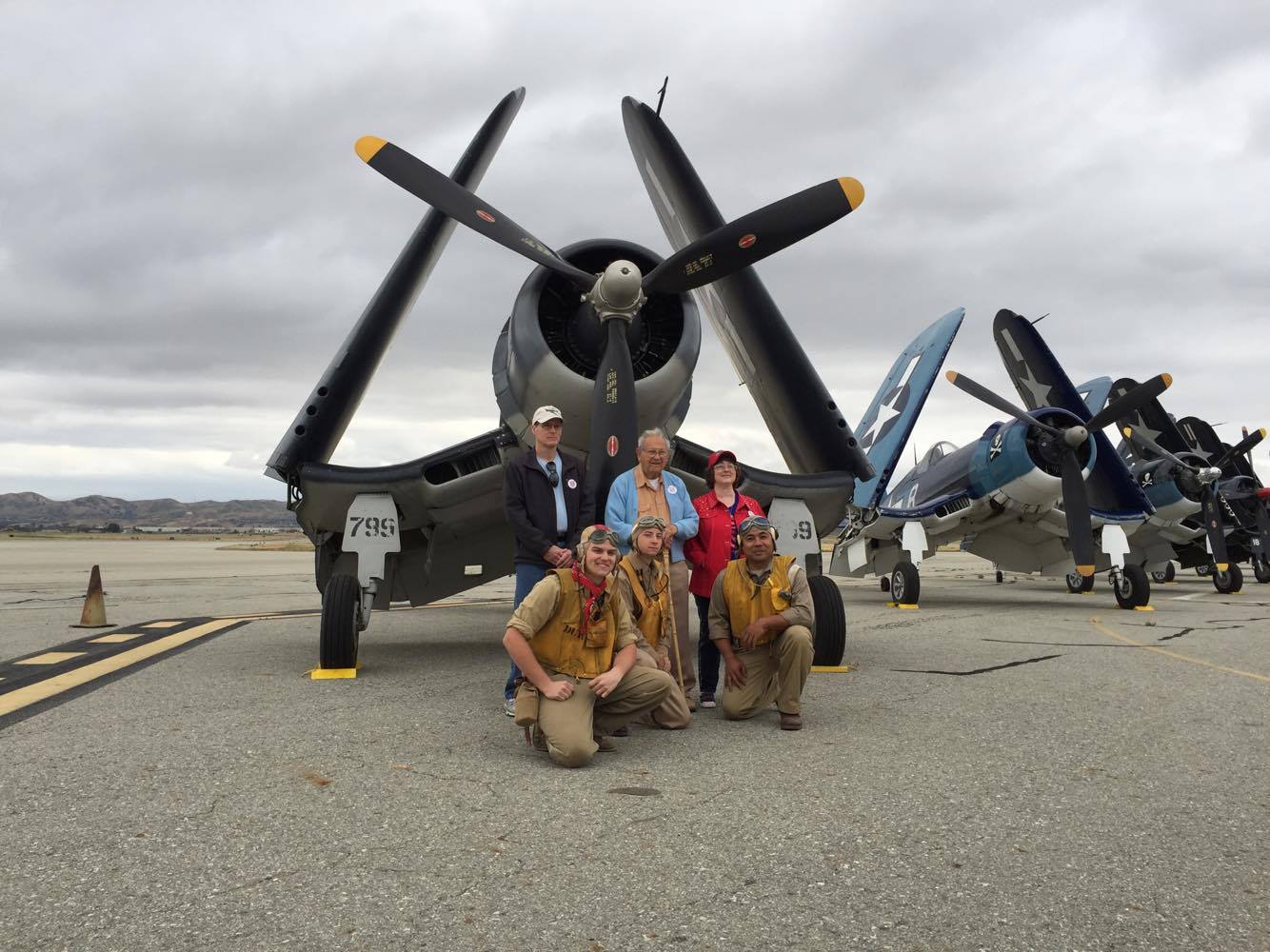
After its cross-country trek to Missouri, the Corsair was the center of a large event at Columbia Regional Airport, where Purdy was overwhelmed by the number of people who came from near and far to see the former pilot back with his aircraft. While Purdy was not able to climb back into the cockpit, he repeated his wartime gesture of patting the belly of the aircraft, to show his respect to the plane. Since 17799 has a jump seat fitted in the small space behind the cockpit, Purdy’s children, Gayla Maier and Greg Purdy, were able to fly in the very same Corsair that their father flew some 70 years prior.
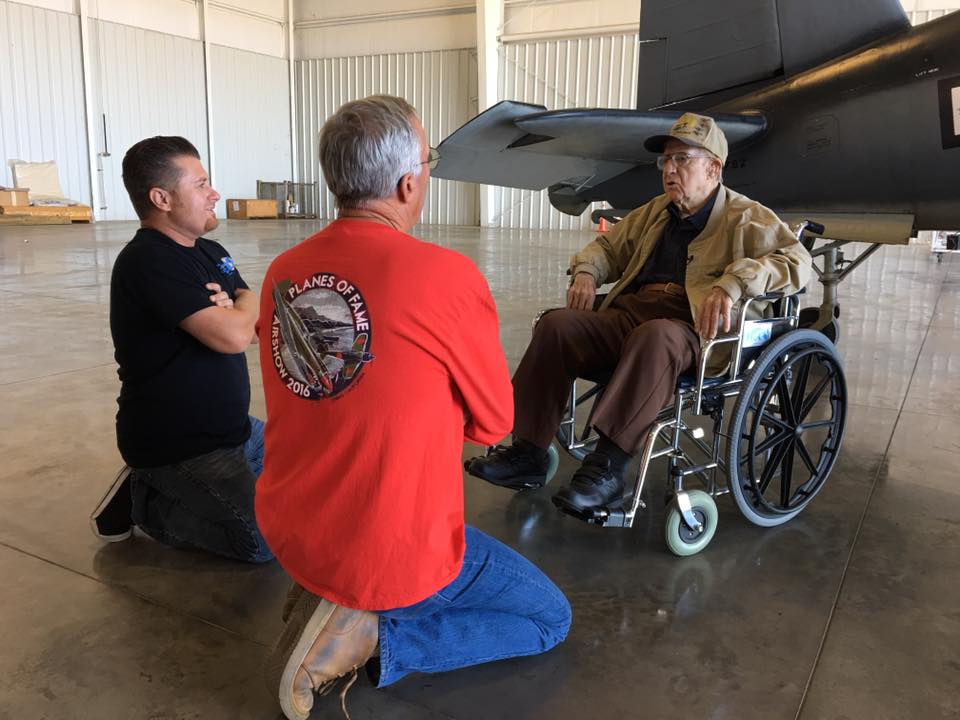
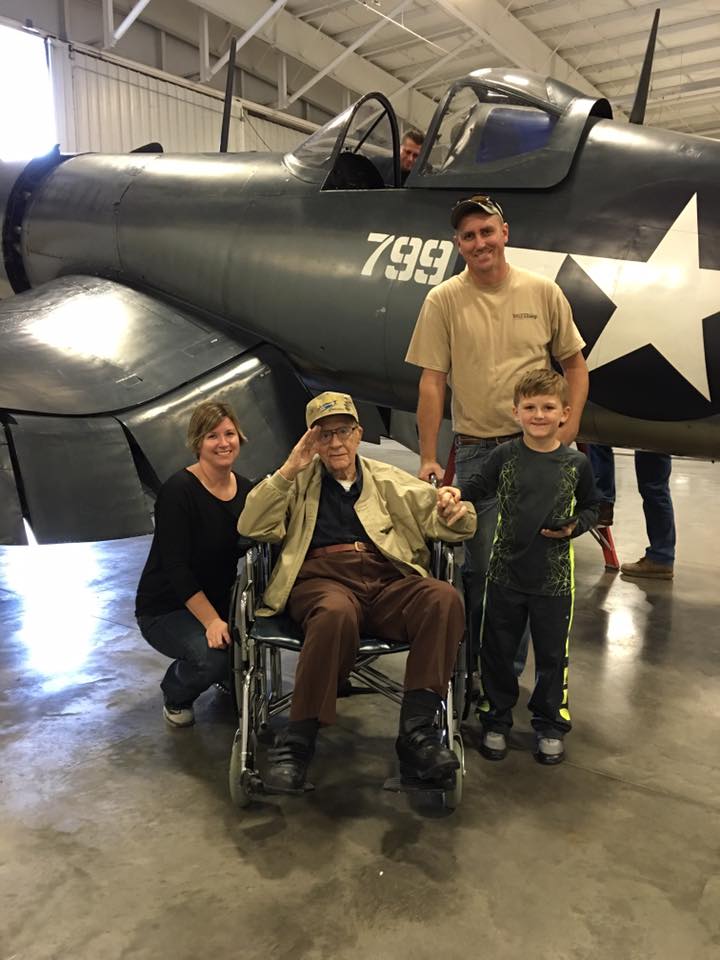
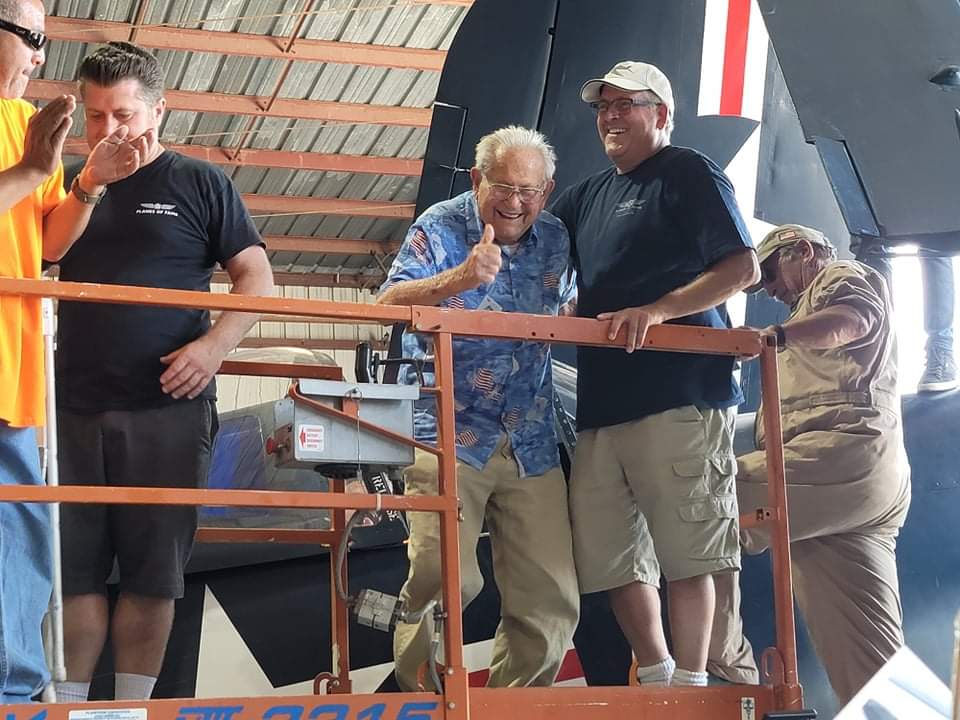
Five years later, in 2021, John Tashjian came to the Planes of Fame Air Museum to celebrate his 100th birthday by flying in the jump seat as well. The smile on his face after the flight did the talking for him, and he was very grateful for all the help in making the flight and the celebrations so special for him. Though both Purdy and Tashjian have since passed away, their memories live on in Corsair 17799, which made a fly-over of Tashjian’s memorial service at Miramar National Cemetery in February of 2023, while Planes of Fame pilot Matt Nightingale had a small urn with some of Tashjian’s ashes placed on the instrument panel during the flyover.
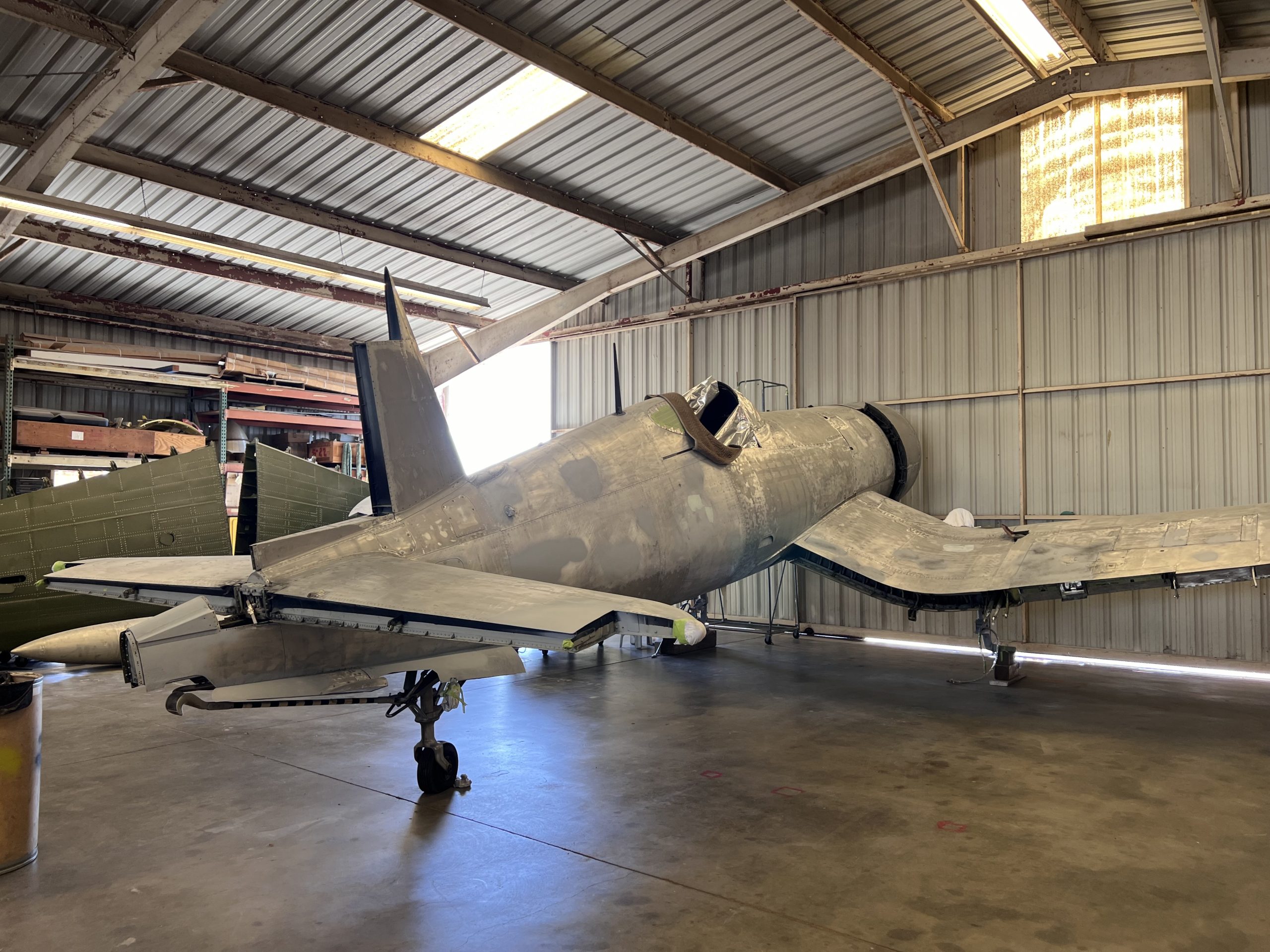
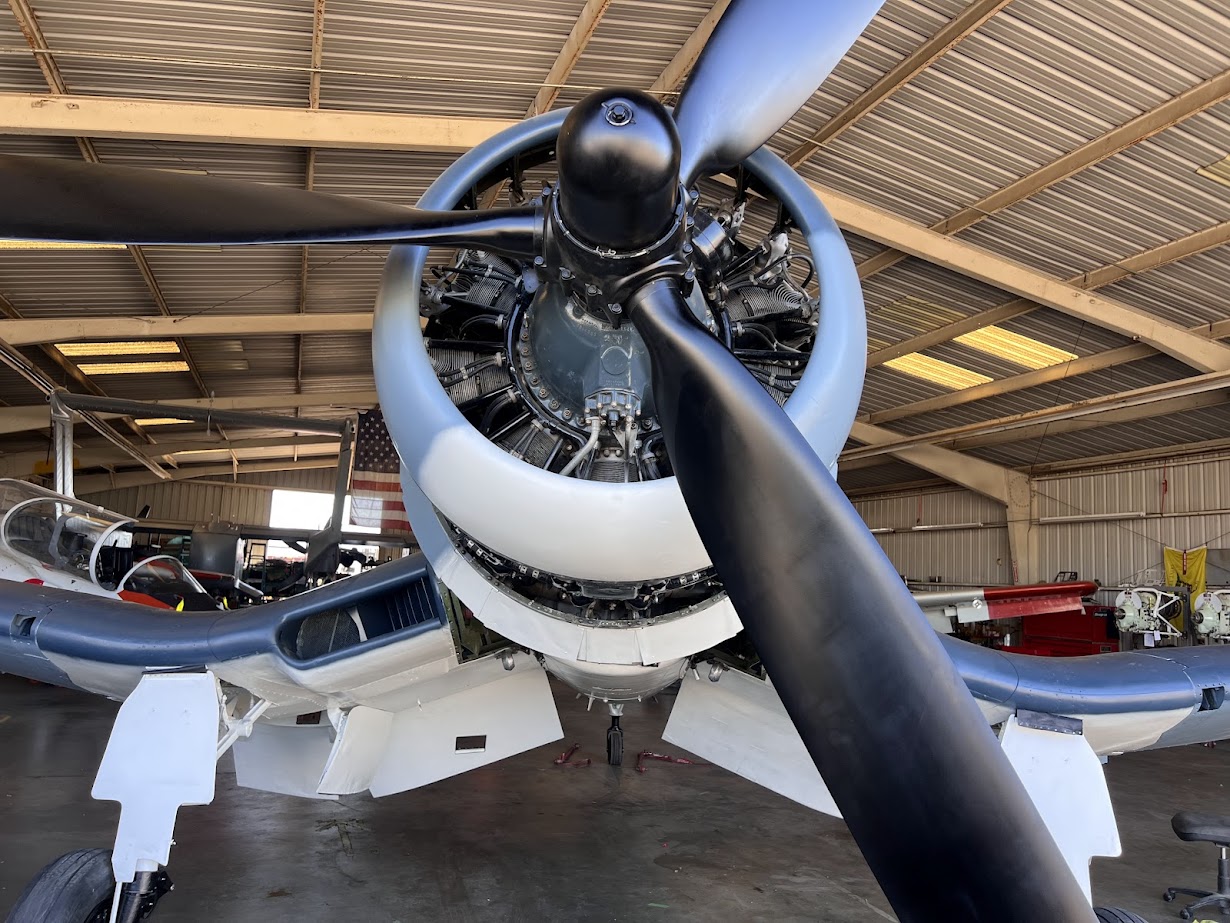
Not long after Tashjian’s honor flight, F4U-1A 17799, still wearing its Devotion paint job, was brought into the hangar of California Aerofab, just across the way from Planes of Fame at Chino. Here, shop owner Matt Nightingale led his team to work on the aircraft for an overhaul. Originally, it was to be a quick turn-around that would involve a new paint scheme being applied and a standard Inspect and Repair As Necessary (IRAN), but like many 80-year-old WWII aircraft, there is always something to fix under the cowling, and consequently, 17799 stayed in the hangar for a more extensive overhaul, with the outer wings being placed in specially-constructed jigs, the horizontal and vertical stabilizers removed for repair and repaint, and the fabric covered control surfaces were removed for inspection and recovering.
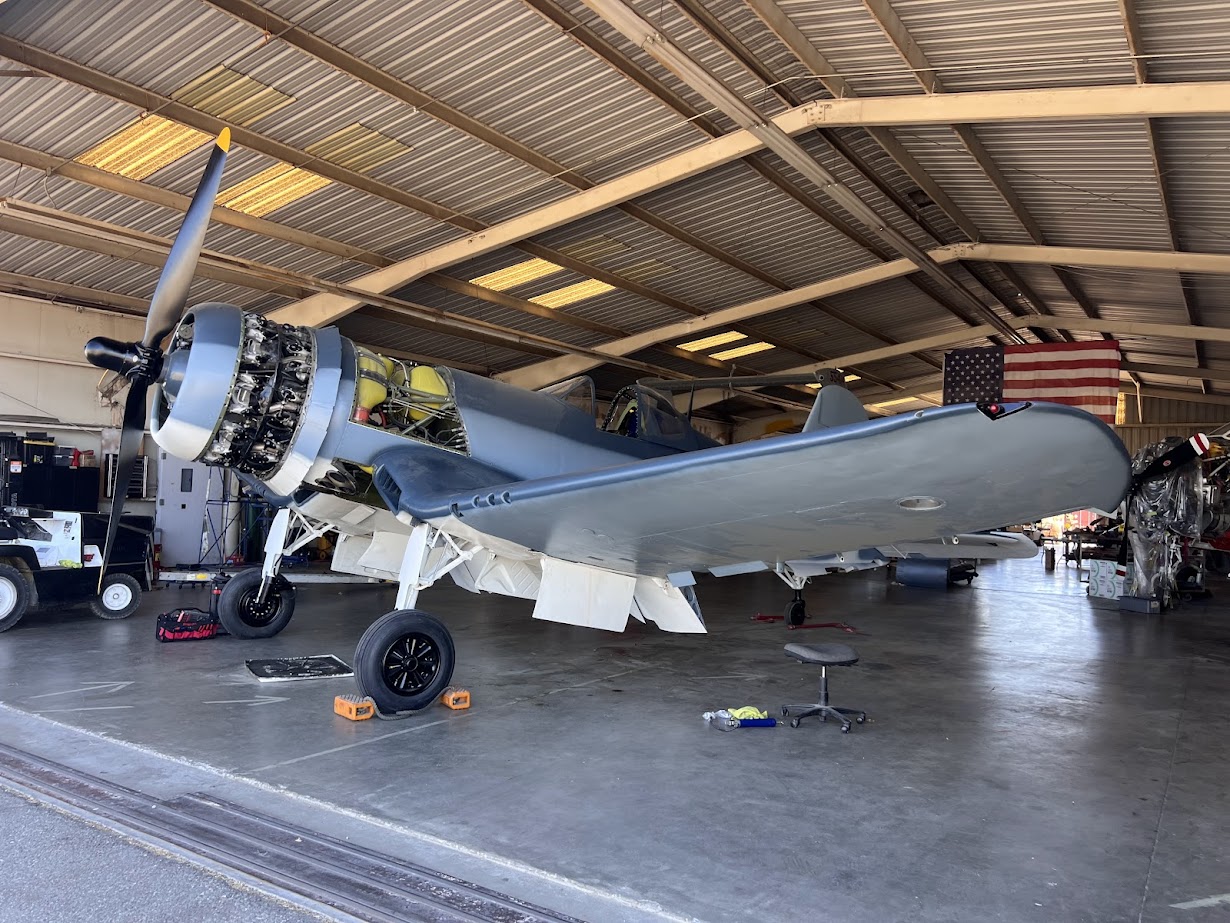
With other projects inside the hangar along with the venerable Corsair, such as the OV-10 Broncos rebuilt for OV-10 Squadron, progress on 17799 was slow but steady. Now, the aircraft has been repainted, wearing a scheme similar to what it wore when it rolled out of the Vought plant at Stratford in August 1943. One feature of the new paint scheme that is sure to attract the attention of warbird aficionados is the newly painted US star and bar emblem with red borders. On June 28, 1943, the US armed forces adopted a new roundel for their aircraft to wear. Observation trials showed that at greater distances, shapes were more easily recognizable than discerning colors between friend or foe, and so the US military added white bars to the sides of the blue circle and white star of their national emblem. Both the circle and the bars featured an Insignia Red border, and it was mandated that all US military aircraft have their insignias updated.
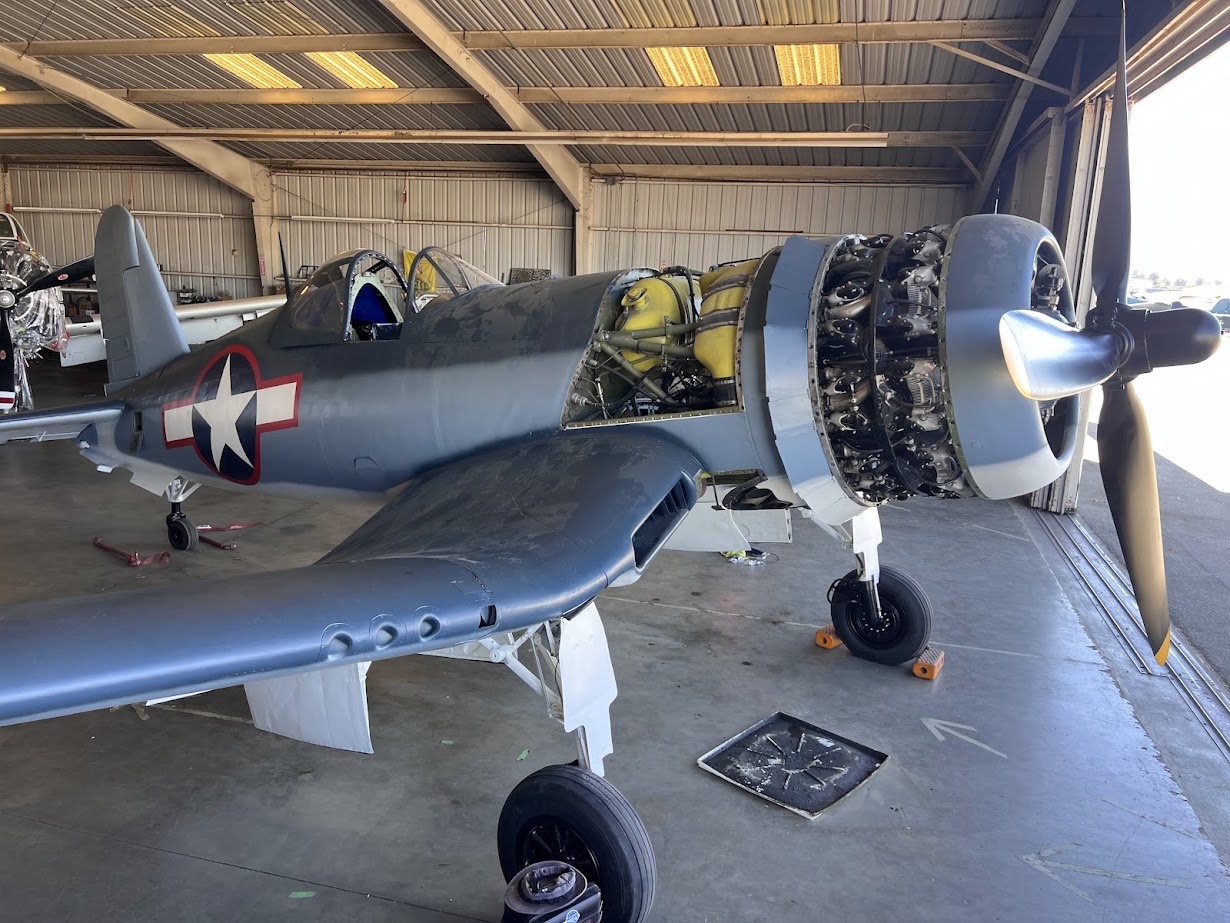
When news of this reached the Pacific Theater, some units refused to paint the red border in order to avoid confusion with the Japanese Hinomaru (rising sun) emblem from long distances. Though these units in the field would paint the white bars onto their existing roundels, the news of this possible source for confusion with the Japanese roundel led to the US armed forces changing the colors of the border from red to blue, which was adopted for the rest of the Second World War. The addition of the summer 1943 emblem will also be a way for the museum to distinguish this new paint scheme from the previous ones that 17799 has worn over the past 50 years.
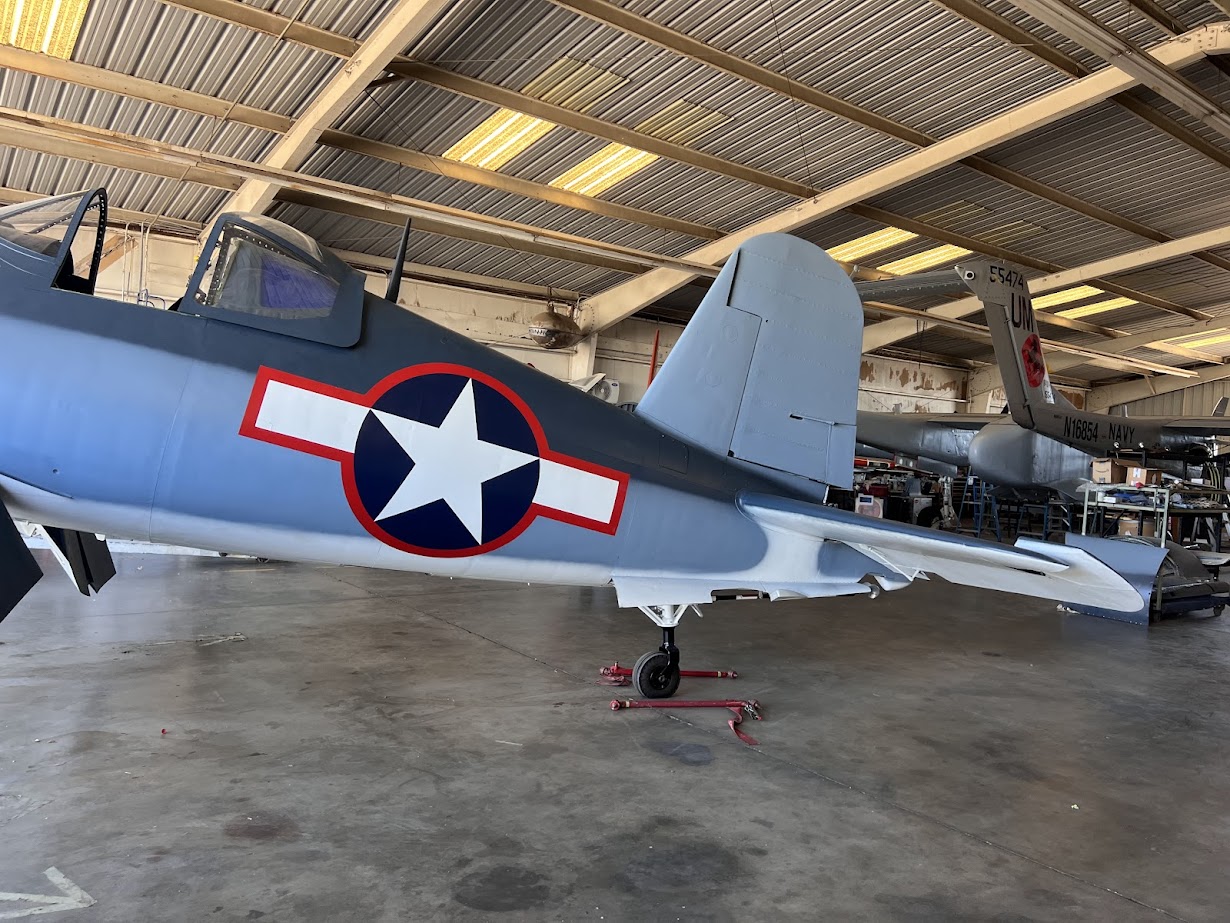
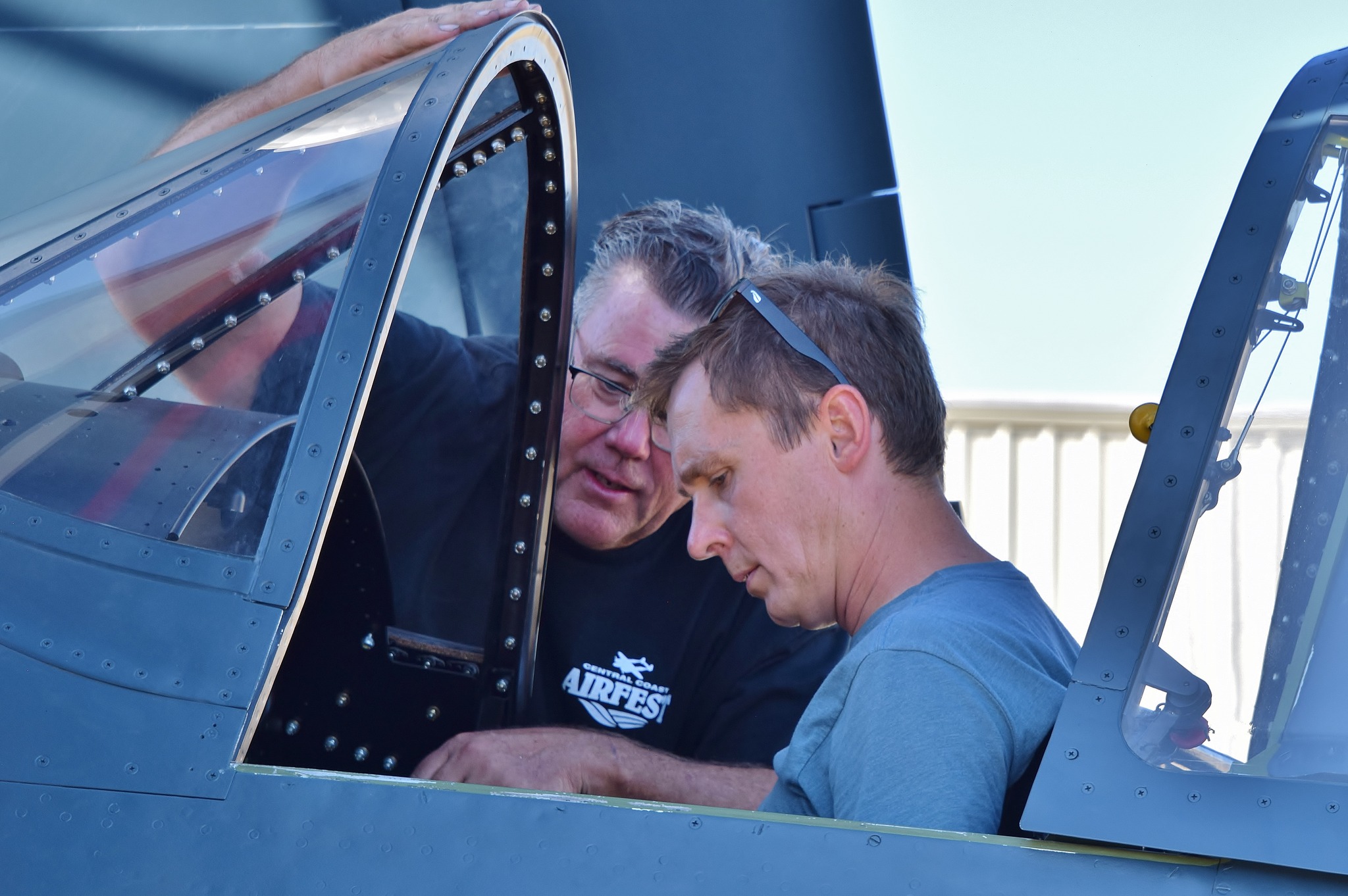
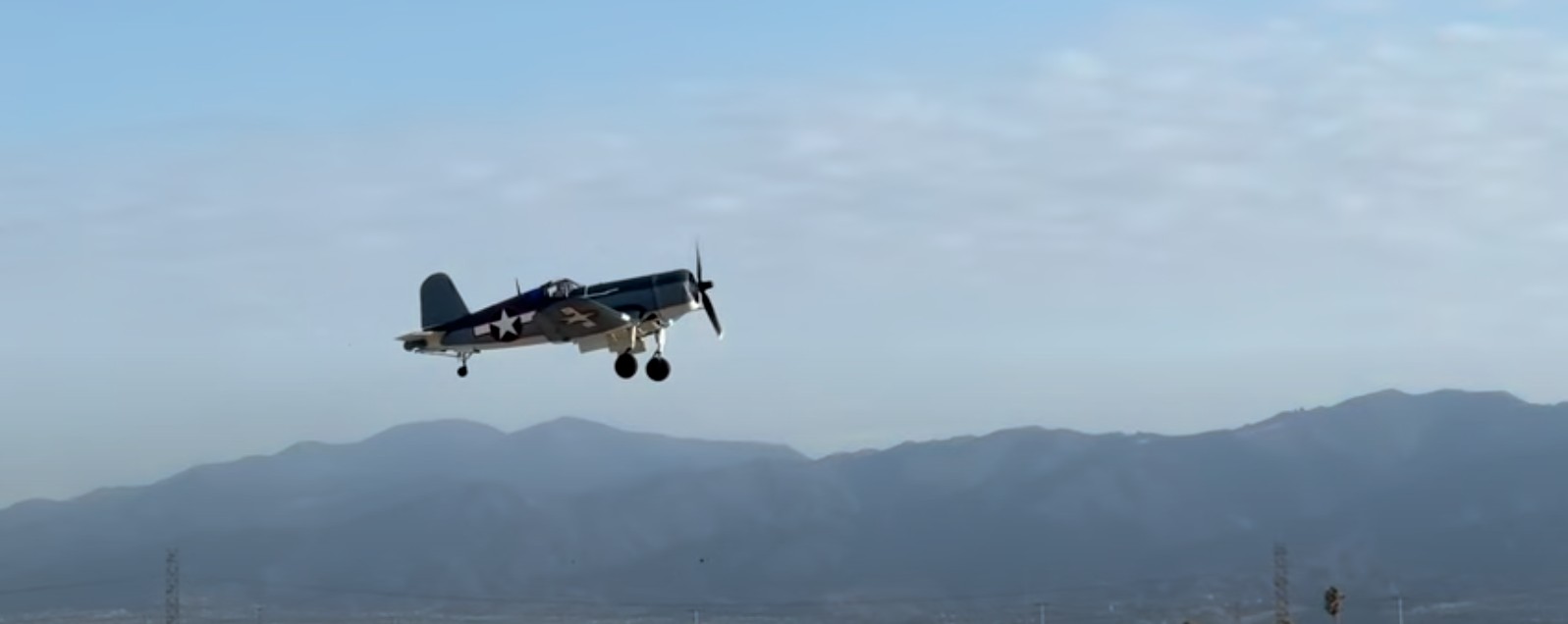
By September 2025, the aircraft had been reassembled and repainted, and after Matt Nightingale and fellow Planes of Fame pilot and mechanic Garren Swager took the aircraft for some engine runs, taxi tests and practiced the wing folding mechanism, Corsair 17799 was seen flying on September 23, and is now set to make its post-restoration debut!
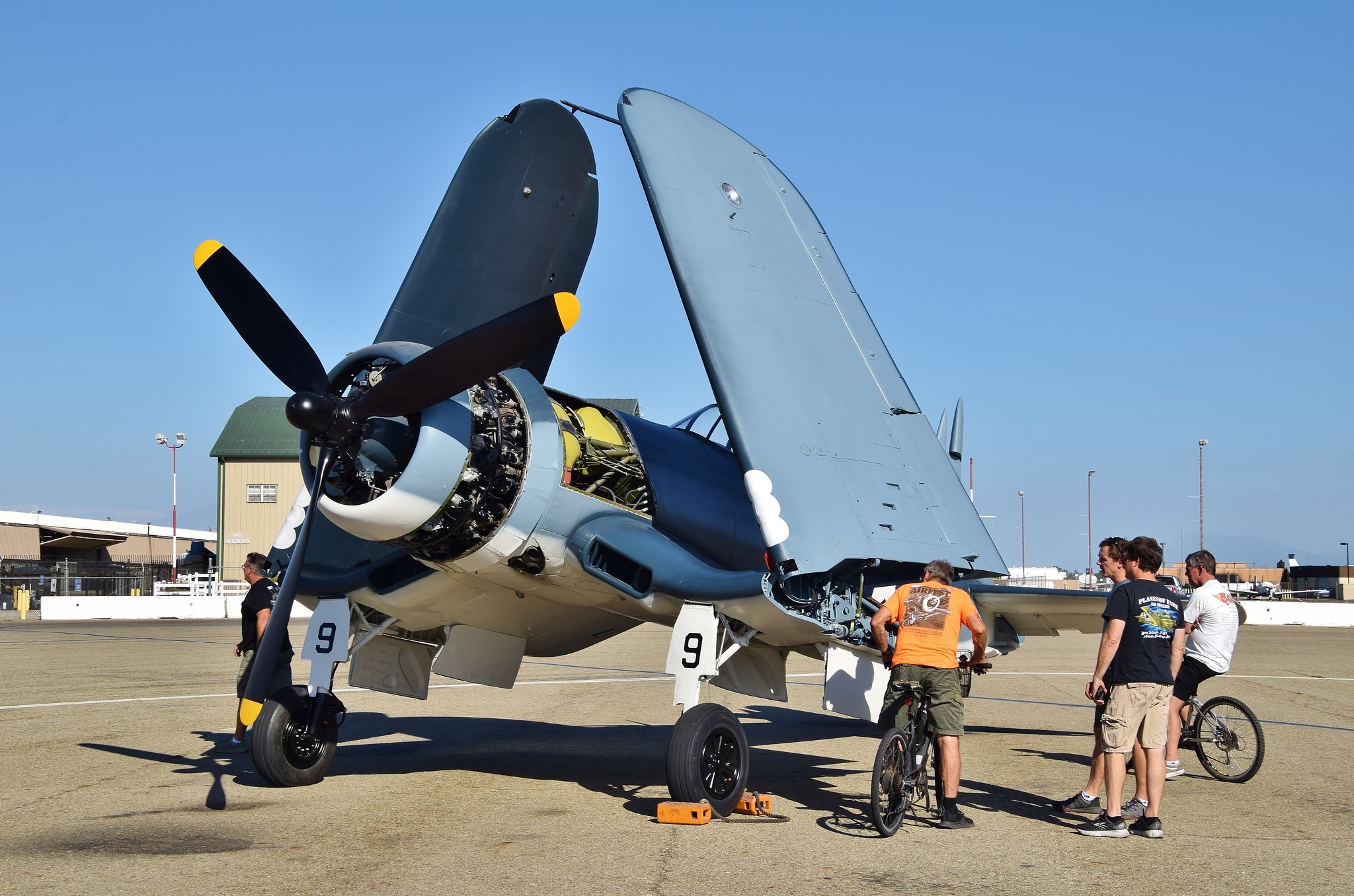
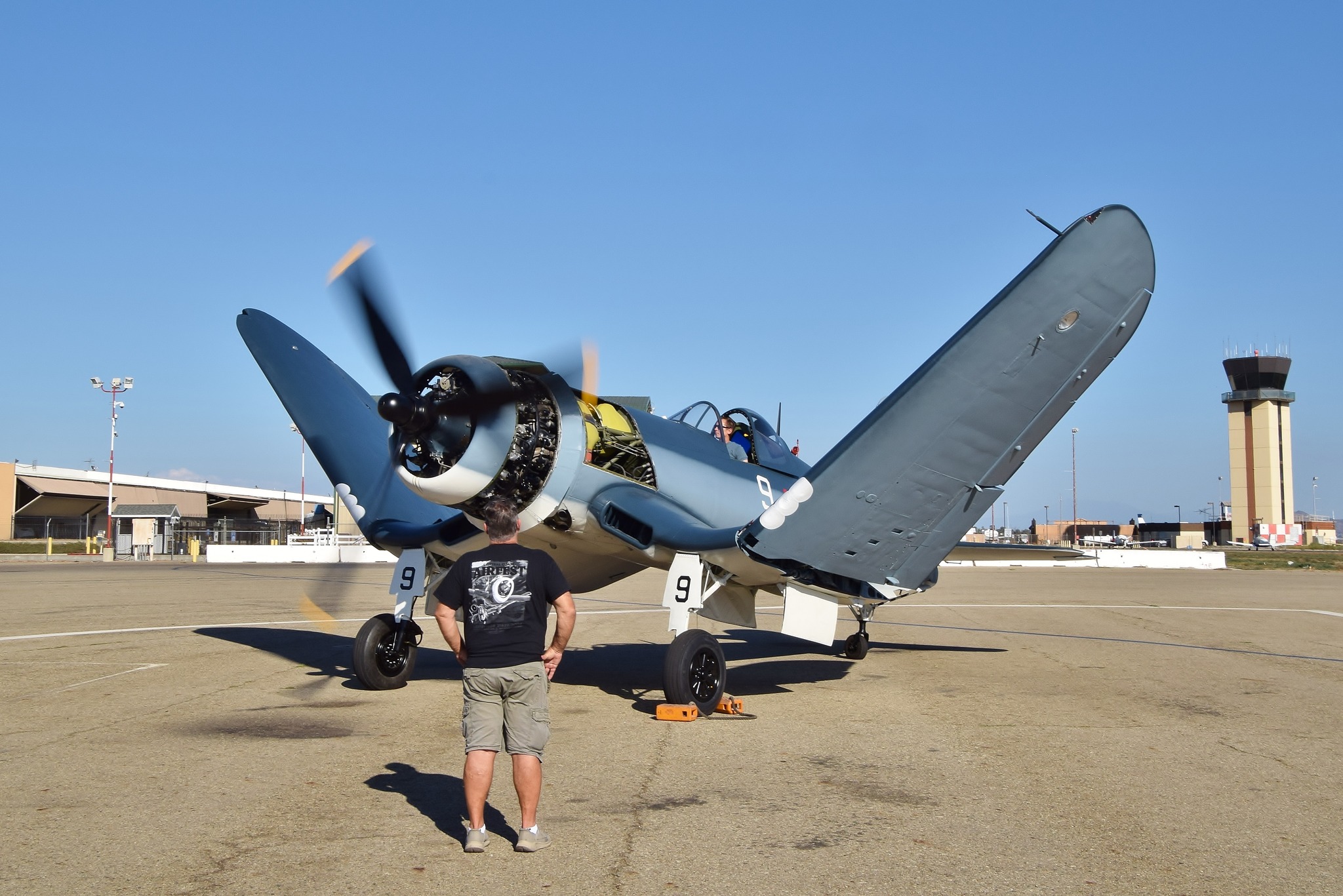
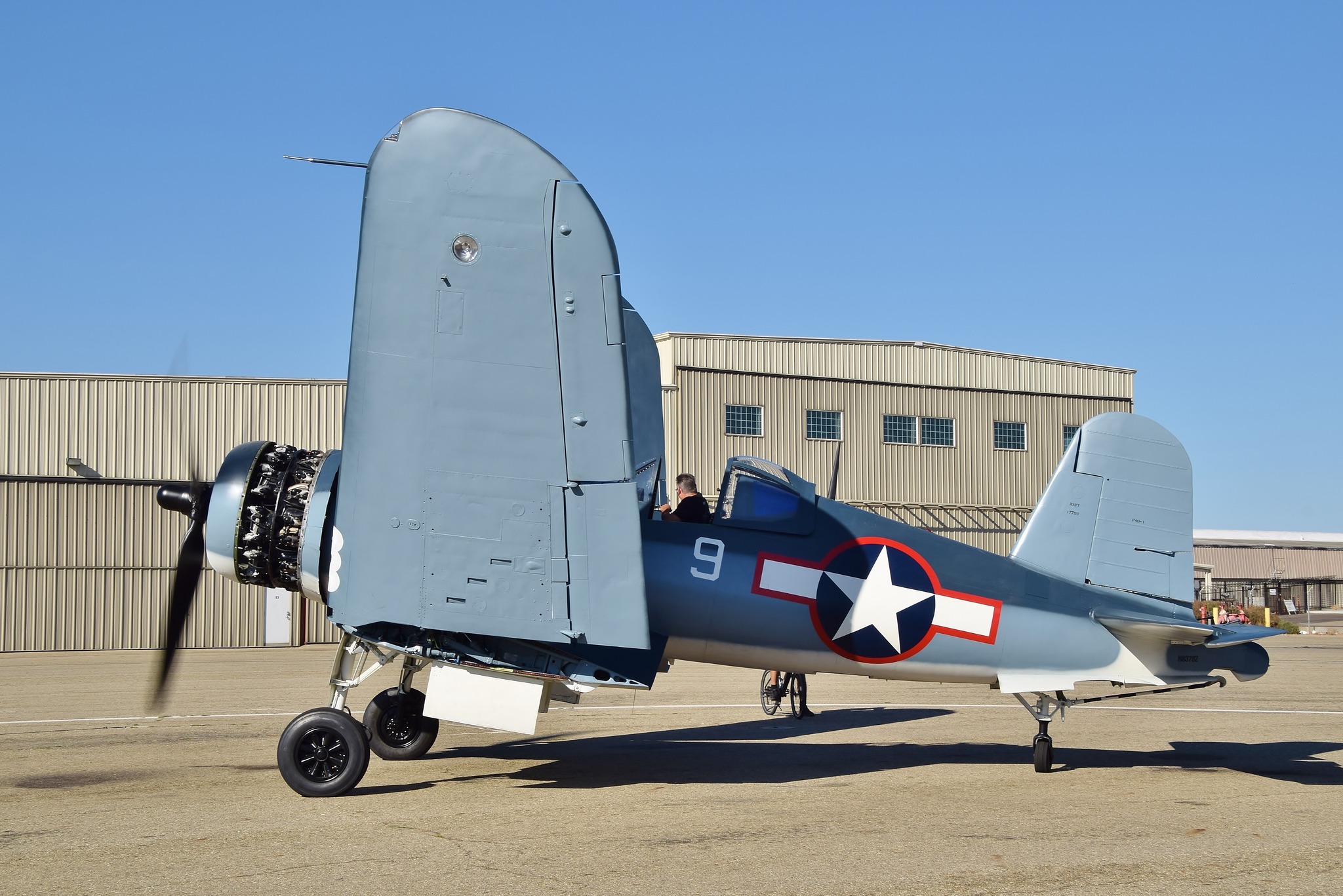
For many Planes of Fame Air Museum members, having the Corsair back on display and flying in museum events is something many have been looking forward to now for nearly three years. Once F4U-1A BuNo 17799 returns from the hangars at California Aerofab to those of the Planes of Fame, the world’s oldest airworthy Corsair will be flown at future Hangar Talk Flying Demos and airshows across the state of California and the western half of the United States. Perhaps it will even make yet another movie or television appearance soon, but now that remains to be seen.
To learn more, visit the Planes of Fame Air Museum’s website HERE.









An outstanding read!! I enjoyed every word of it and what a tribute to the two WWll pilots who were in the same outfit and had not seen each other for over 70 years. I don’t want to give to much away so i will stop here. Anyone who has aviation in their blood as I do will enjoy this article. I can’t compare it to the little Cherokee 140 that i owned in the late 80’s but being a fan of Blacksheep. that 140 gave me much pleasure!!
Really enjoyed reading this article and learning about this 2 great war time Pilots.