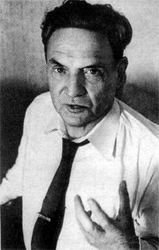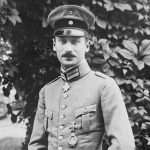
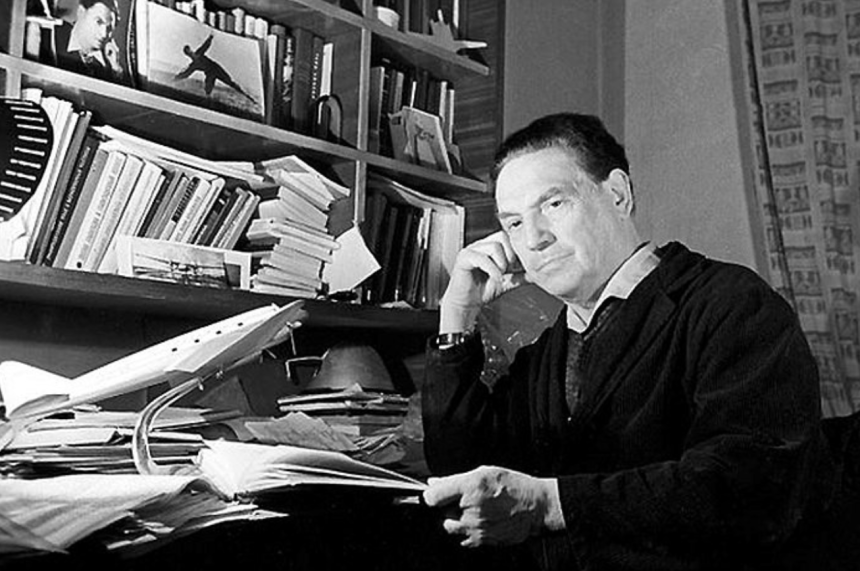

Nicknamed the Red Baron, Robert Bartini was one of the most famous engineers in the Soviet Union. Born on May 14, 1897, Bartini was an aircraft designer and scientist who contributed to many successful and experimental aircraft projects. Bartini finished his secondary education in 1915. When WWI began, he was drafted into the Austro-Hungarian Army and attended an officer reserve school in Besztercebánya. After graduating in 1916, Robert Bartini was sent to the Eastern Front. In June 1916, Russian troops captured him, and he was held in a prisoner of war camp near Khabarovsk in the Russian Far East. He stayed in the camp for the rest of the war and was released in 1920. When Bartini returned home, he found that the administration of Fiume was contested by the local Italian and Croat people, as well as by Italy and the Kingdom of Serbs, Croats, and Slovenes. This led to the creation of the Free State of Fiume. Robert Bartini moved to Italy in 1921, became a citizen, and joined the Italian Communist Party. He started studying aerospace at the Politecnico di Milano in 1922. After the Fascist takeover in Italy in October 1922, the Italian Communist Party (ICP) sent Bartini to the Soviet Union to work as an aviation engineer. He brought the latest Italian designs and advanced technology with him. Robert Bartini became a Soviet citizen and changed his name to Robert Ludvigovich Bartini, following Eastern Slavic naming customs.
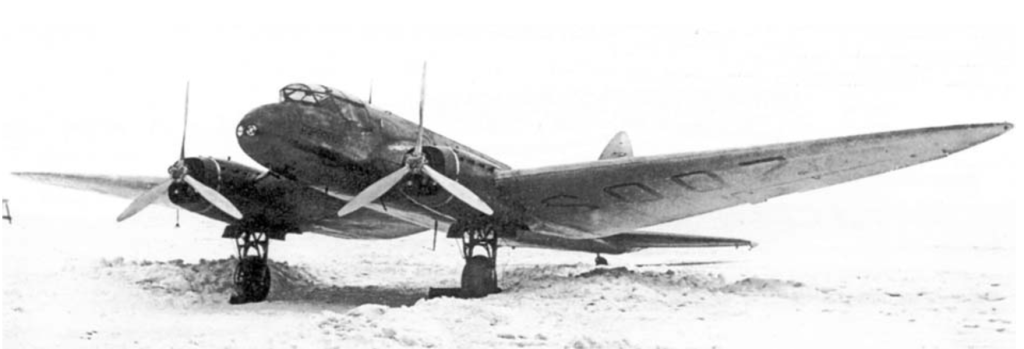
He initially worked at an airport near Khodynka Field in Moscow. Later, Robert Bartini held various engineering and leadership positions in the research division of the Soviet Air Force. In 1928, Bartini began working for the Central Design Bureau, working on seaplane construction near Sevastopol. In 1929, Robert Bartini became head of the department for designing experimental amphibious aircraft. But he was fired in 1930 after he wrote a letter to the Central Committee of the Communist Party criticizing the organization. Despite this, Bartini found a new job with the Red Army’s research division, where he began working on the Stal series of airplanes. In August 1936, the Bartini Stal-7 set a new international speed record at the International Exhibition in Paris. Robert Bartini also published papers about aviation materials, technology, aerodynamics, flight dynamics, and theoretical physics. In 1938, Bartini was arrested by the NKVD, the Soviet secret police, on accusations of being a spy for Fascist Italy and an “enemy of the people.” Robert Bartini was tried and sentenced to 10 years in prison. While locked up, Bartini continued his design work on new aircraft. He first worked at TsKB-29, a secret design bureau in Moscow run by the NKVD, where he collaborated with Andrei Tupolev on the Tupolev Tu-2, an important Soviet plane used in WWII. Bartini’s Stal-7 plane also contributed to the development of the Yermolayev Yer-2 bomber, which the Soviet Air Force used during the war. As German troops advanced toward Moscow, TsKB-29 relocated to Omsk, where Robert Bartini led his own design bureau, OKB-86. His bureau closed in 1943, and he then worked on various transport-plane projects.
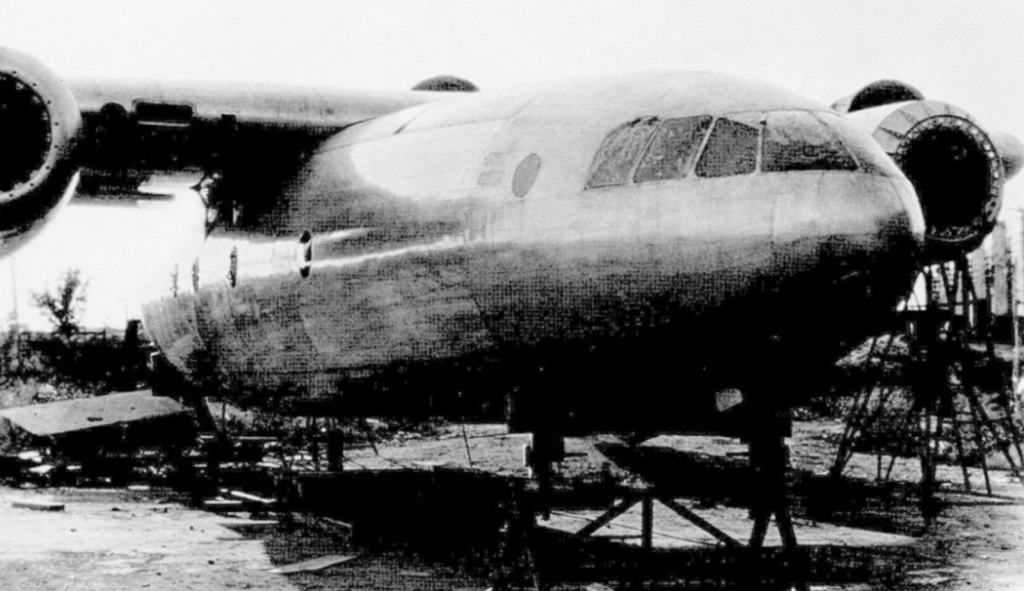
Robert Bartini was released in 1946 and later worked at the Dimitrov Aircraft Factory in Taganrog until 1952, when he became the chief engineer for advanced aircraft designs at a research institute in Novosibirsk. In 1956, under Nikita Khrushchev’s De-Stalinization efforts, Bartini was officially cleared of charges by the Soviet government. The next year, he transferred to the OKBS MAP design bureau in Lyubertsy, working with Pavel Vladimirovich Tsybin and receiving support from Marshal Georgy Zhukov, the Soviet Defense Minister. Zhukov lost his job shortly after, and many of the projects he supported were canceled. In 1961, Bartini proposed a nuclear-powered, supersonic long-range reconnaissance aircraft. The Soviet government highly valued Robert Bartini’s work, and he received the Order of Lenin in 1967. His contributions to defense earned him support from Pontecorvo and Gershtein, who helped him publish his theoretical physics paper in the respected Proceedings of the Soviet Academy of Sciences (Doklady). Gershtein found the paper unusual and was surprised to hear that some leading physicists initially thought “Roberto Oros di Bartini” was a made-up name meant to trick others. Bartini was proud of his paper, signed it, and told Gershtein that it was the most important work of his life. The paper presents the idea of a dynamic dimension of spacetime, which is four only on average, and includes arguments based on numerological connections between physical constants.
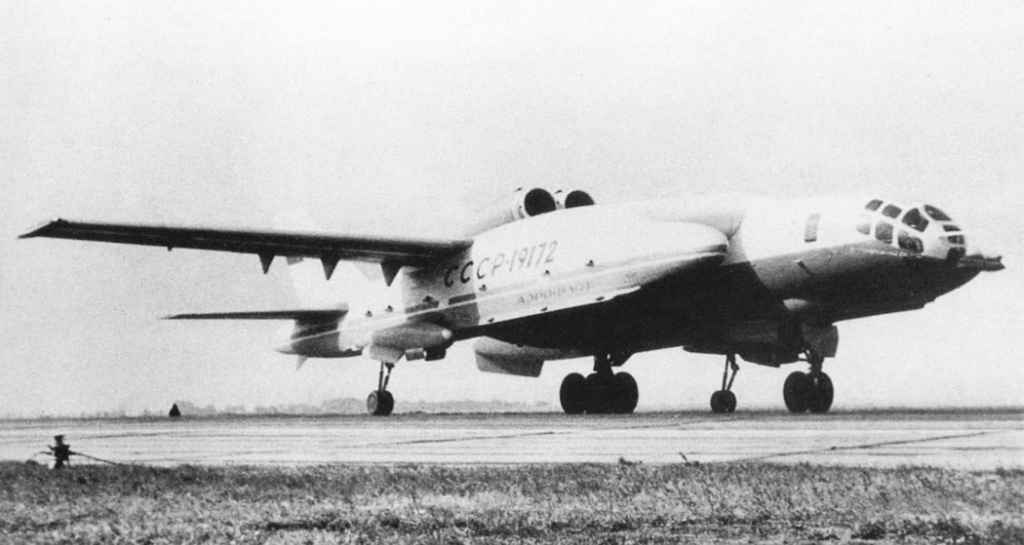
In the mid-1950s, Robert Bartini started working on ground-effect vehicles called ekranoplans. The Soviet government became very interested in these vehicles and helped Bartini develop the Be-1 in 1964, a small prototype ekranoplan made for research by the Beriev Design Bureau. In 1968, Robert Bartini went back to Taganrog to focus on developing seaplanes. He began working on his last known project, the Bartini Beriev VVA-14, an experimental ekranoplan designed for vertical takeoff and intended for anti-submarine warfare against American submarines carrying Polaris missiles. Bartini died on December 6, 1974, in Moscow at the age of 77. He was buried at Vvedenskoye Cemetery, where his grave has a monument that says, “In the land of the Soviets, he kept his oath to devote all his life so that the red planes flew faster than the black ones.” As one of the Pioneers of Aeronautical Engineering, Robert Bartini had a significant impact on Soviet aircraft engineers, including Sergey Pavlovich Korolev, who considered him a mentor. In recognition of his work in aerodynamics, the asteroid 4982 Bartini is named after him. He designed at least 25 aircraft in his life. Read more similar stories HERE.