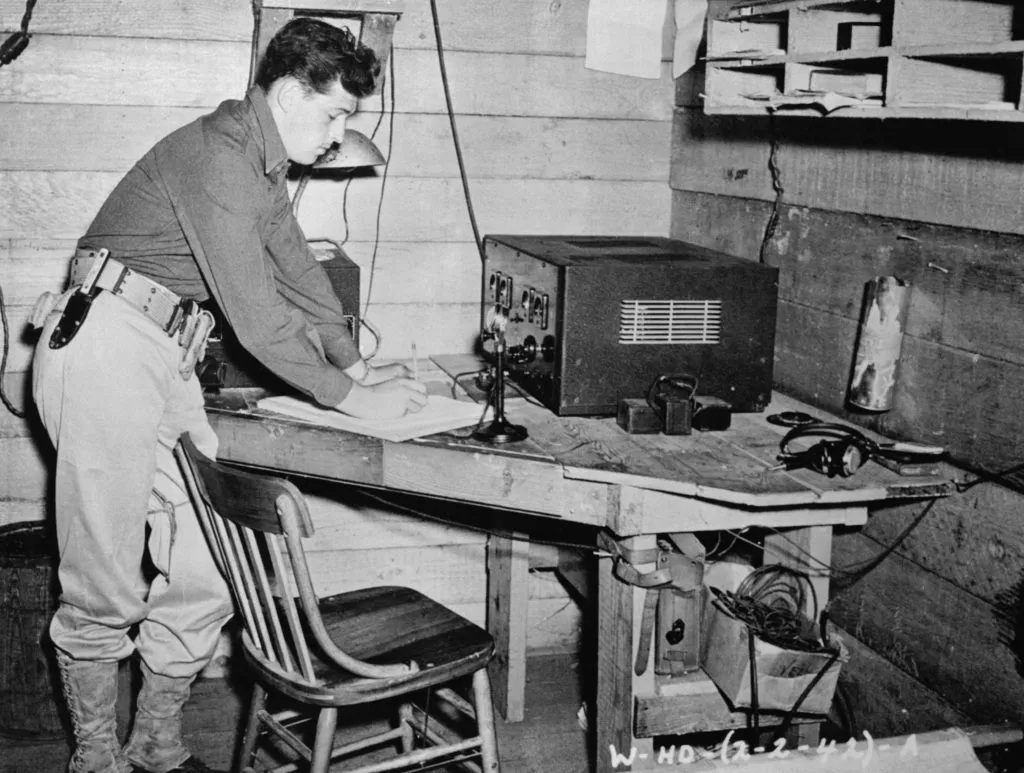
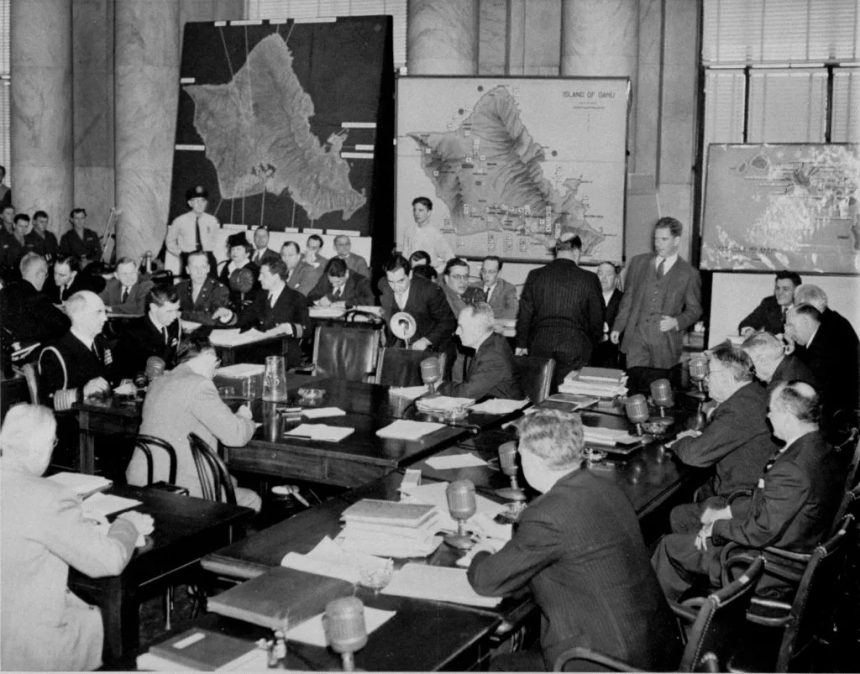

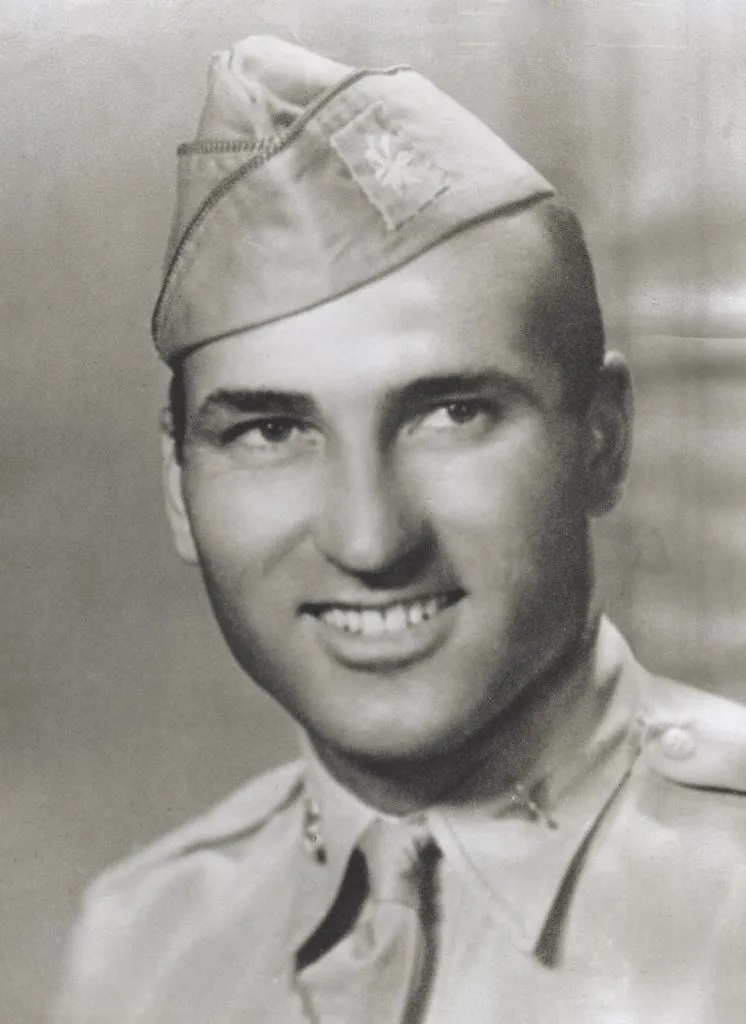
“Don’t worry about it.” – Those words would haunt then-1st Lt. Kermit A. Tyler for the rest of his life. On the morning of December 7, 1941, Tyler, a pilot with the 78th Pursuit Squadron at Pearl Harbor, had been assigned duty as Executive Officer, Officer in Charge of the partly activated Pearl Harbor Intercept Center. As such, his duties were to assist the controller in ordering American planes to intercept unknown aircraft approaching the base. Tyler, who was not only new and untrained for his job but also had no supervision or staff, was given a verbal warning by Private Joseph P. McDonald of a large flight of inbound aircraft from the north. Tyler assumed the spotted formation was the scheduled arrival of six B-17 bombers from the mainland. In fact, what the radar operators were tracking was the first wave of Japanese planes coming to attack the base. However, the operator, working in training mode, failed to make clear the size of the formation even though it was larger than anything they had ever seen, and he did not pass on an alarm of “attack imminent”.
Morning Duty
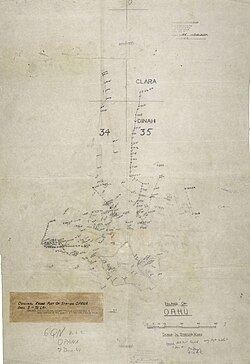
At 5 a.m. on December 6, McDonald reported for duty to relieve his tent mate and fellow staffer, Private Richard Schimmel, at Fort Shafter’s Intercept Center. The center served as the tracking center for the US Army Air Corps’ (USAAC) radar monitoring capability, which was a new technology at the time. The system used a network of five radar sites across the island to triangulate signals of incoming aircraft. Staff of the Intercept Center had been on high alert for several weeks, looking for the position of the Japanese Navy’s fleet. At 4 am on December 7, the radar plotters began their duties as scheduled, the 4 to 7 a.m. shift. At 7 am, the plotters left the Center to eat breakfast. Fortunately, McDonald stayed at his post beyond his scheduled 6 am shift to wait for Schimmel to return from breakfast.
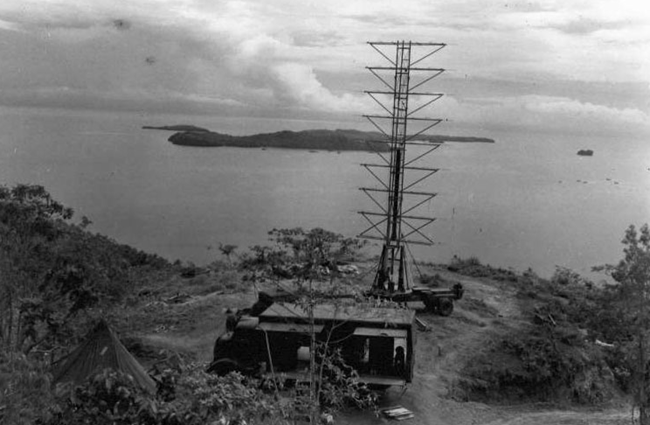
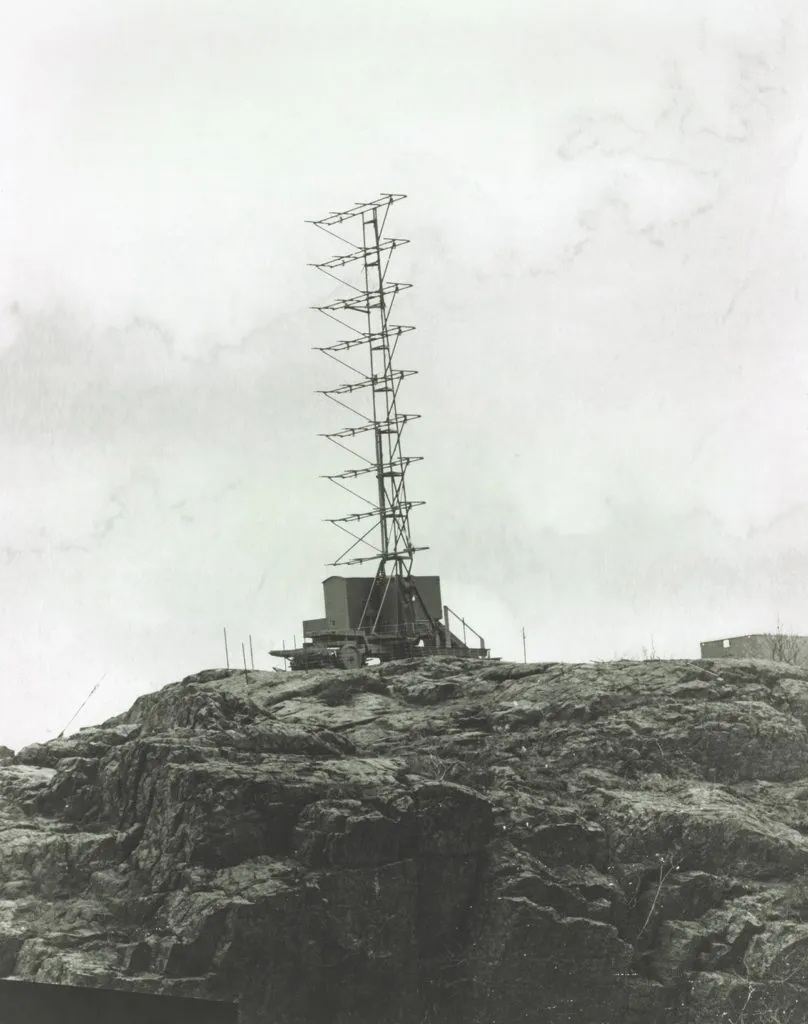
At the same time, 4 am, Private Joseph Lockard, an Army specialist third-class, and his colleague, Private George Elliott, were manning the screen on their truck-mounted SCR-370 radar at the Opana Radar Site, just inland from the north shore of Oahu, Hawaii, south of Kawela Bay. Lockard was serving as the primary radar operator at the station. Elliott was serving as the station’s primary plotter and temporary motorman. A third staffer, scheduled to be off-duty between 4 am and 7 am, served as the station’s regular motorman. Since November 27, 1941, Lockard and Elliot staffed the radar from 4 am to 7 am, a departure from their former schedule, 7 am to 4 pm. The schedule was changed as a result of the War Department’s warning of a pending Japanese attack in the Pacific.
Day Off
Tyler was not scheduled to work on that Sunday, and he had only been to the Center once before. His assignment was vague; he just knew he was supposed to report for duty. The radar system was still in its experimental stages. Tyler knew the equipment was new, and he believed his response to the phone call from the privates at the radar station was, “Don’t worry about it.” Many questioned his decision for years. The movie Tora! Tora! Tora! also portrayed Tyler in an unflattering light, but his actions were vindicated after his circumstances became better known. Following an investigation by a Naval Board of Inquiry in August 1942, it was determined that Tyler had been assigned to the Information Center with little or no training, no supervision, and no staff with which to work. Tyler was subsequently cleared of any wrongdoing by the Board, and no disciplinary action was taken against him.
Later life
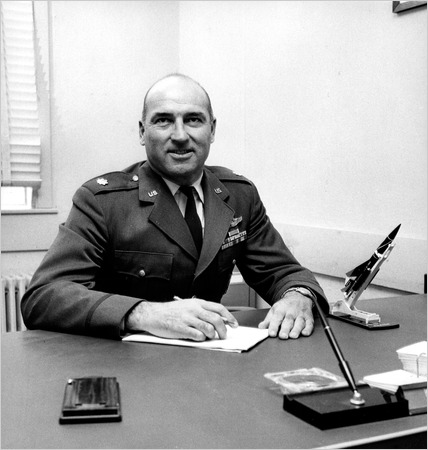
Tyler’s friends say he was a quiet and reserved man, rarely willing to speak about his experience at Pearl Harbor. Most understood, and it was clear that top Army and Navy commanders shouldered much of the blame for the military’s lack of readiness for such an attack. Daniel Martinez, Pearl Harbor historian for the National Park Service, said Mr. Tyler’s role at Pearl Harbor was misunderstood: “Kermit Tyler took the brunt of the criticism, but that was practically his first night on the job, and he was told that if music was playing on the radio all night, it meant the B-17s were coming in.“
The music played all night so the B-17 pilots could home in on the signal, and when he heard the music as he was driving to work, Mr. Tyler assumed the aircraft would be arriving soon. Though the decision he made haunted him, he believed it was the right one at the time. In an interview with The San Diego Union-Tribune in 2000, Tyler said he and a switchboard operator were the only ones at the aircraft information center at Fort Shafter when the call came in from Pvts. Joseph Lockard and George Elliott shortly after 7 a.m. There was no one around with any training in interpreting radar plots or ordering planes into the air.
“I knew the equipment was pretty new. The people were brand-new,” Tyler said in the interview. “In fact, the guy who was on the (radar) scope, who first detected the planes, it was the first time he’d ever sat at the scope. So I figured they were pretty green and had not had any opportunity to view a flight of B-17s coming in. That added to everything else. Common sense said, well, these are the B-17s.”
Tyler and others said that if he had taken action, it would have been to notify his superior officer and that it probably wouldn’t have had a material effect on the outcome. Martinez said he worked hard to persuade Mr. Tyler to speak at the 50th anniversary of Pearl Harbor. “It was difficult to get close to him because he had been ridiculed (over his role), especially in the movie ‘Tora! Tora! Tora!’ There are many who didn’t know the history.” Friend Pat Thompson of El Cajon said Tyler was never bitter about the past. “He was a kind man and had a great sense of humor despite everything.”
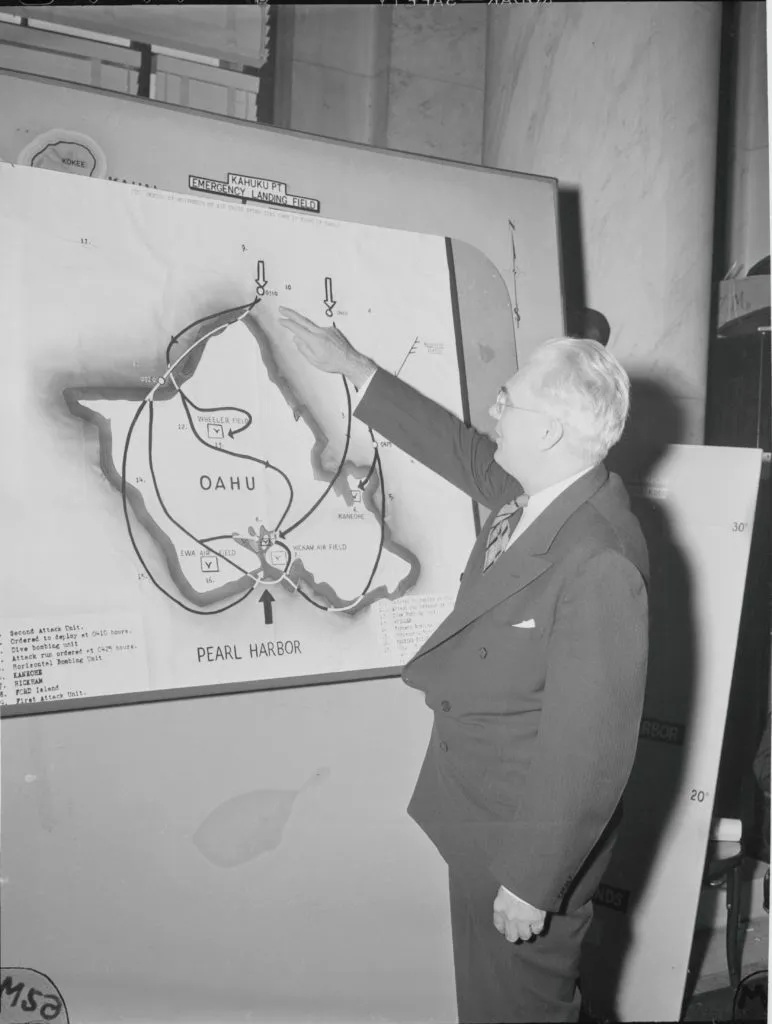
Kermit Arthur Tyler was born April 21, 1913, in Oelwein, Iowa. He grew up in Long Beach and attended Long Beach Junior College. He briefly attended the University of California, Berkeley before being accepted for military flight training. He retired as an Air Force lieutenant colonel in 1961. He and his family settled in San Diego, and he earned a degree from what was then San Diego State College. He had a career in real estate and enjoyed surfing and tennis. Tyler died of pneumonia on Jan. 23, 2010, at his San Diego home. He was 96.