
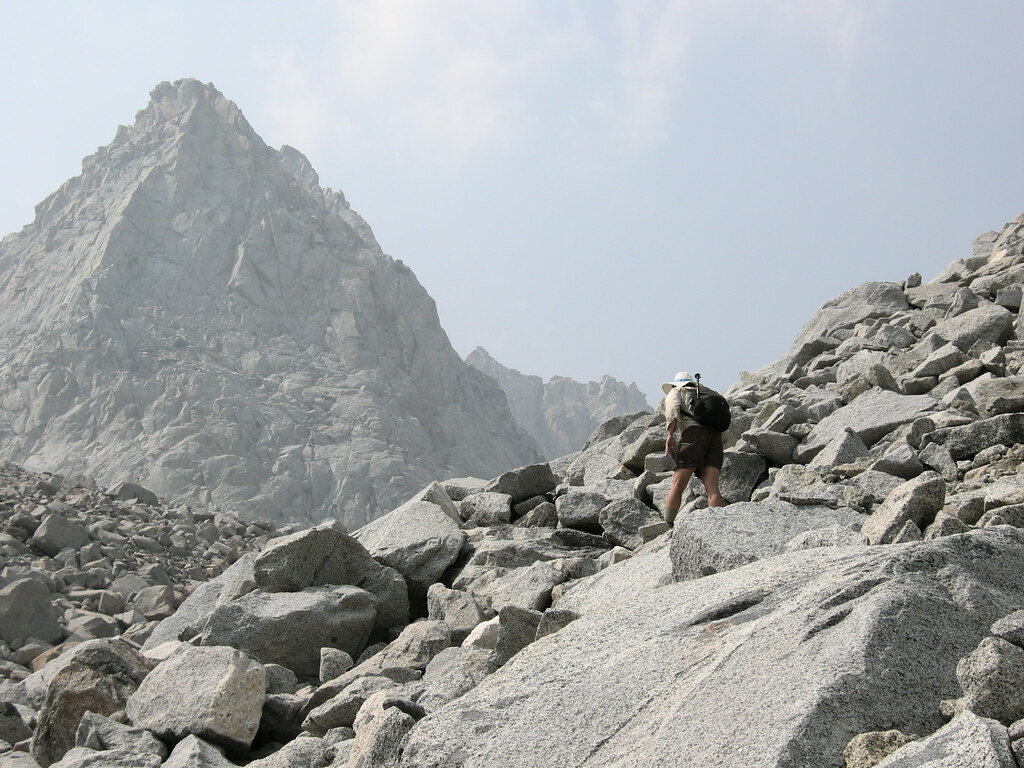
In October 2005, two ice climbers in the King’s Canyon National Park, east of Fresno, stumbled upon a corpse frozen in ice and snow at the base of a remote area known as Mt. Mendel or Mendel Glacier. The body—frozen face-down with the head, arm, and shoulder visible above the snow, was estimated to have been 80 percent encased in ice. Speculation quickly arose that the body could be tied to one of almost 50 aircraft from three nearby bases that crashed into the area during World War II. But if it was, which one was it? The climbers notified the authorities, and within days, a military response team was on site.
Clues Emerge
As soon as the body had been chipped from the ice and taken to an identification lab, clues started to emerge. The body was that of a man with blond, wavy hair, dressed in what appeared to be a World War II uniform. What was initially thought to be a backpack turned out to be an unopened silk parachute with a stenciled “US Army Air Corps,” the predecessor of today’s U.S. Air Force, on the side. His arms were spread, his skull crushed. The man’s dog tags were heavily corroded and unreadable, but with an ultraviolet light, the embossing, “eoam,” could be seen. Unfortunately, the legible letters matched no records of missing airmen. Other possessions in his pockets were a pen and a piece of paper. Investigators were intrigued by the marking on the paper, so spectrum imagery was used to decipher the writing. What it turned out to be was a few lines of a limerick, the nature of which can be imagined, given it was from a soldier on his way to war. Among other clues found on the body were 11 coins, with the latest, a penny minted in 1942, which would be the latest year the crash would have occurred.
Paydirt!
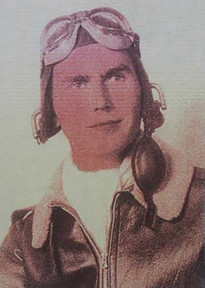
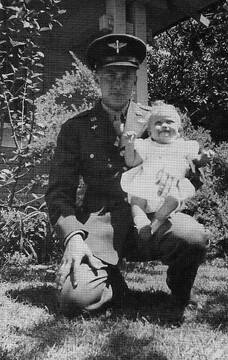
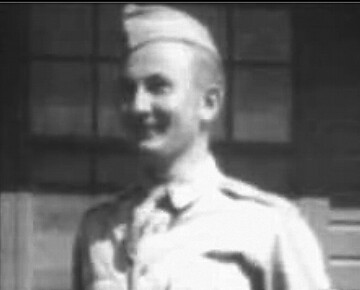
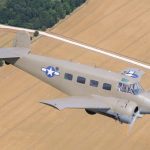
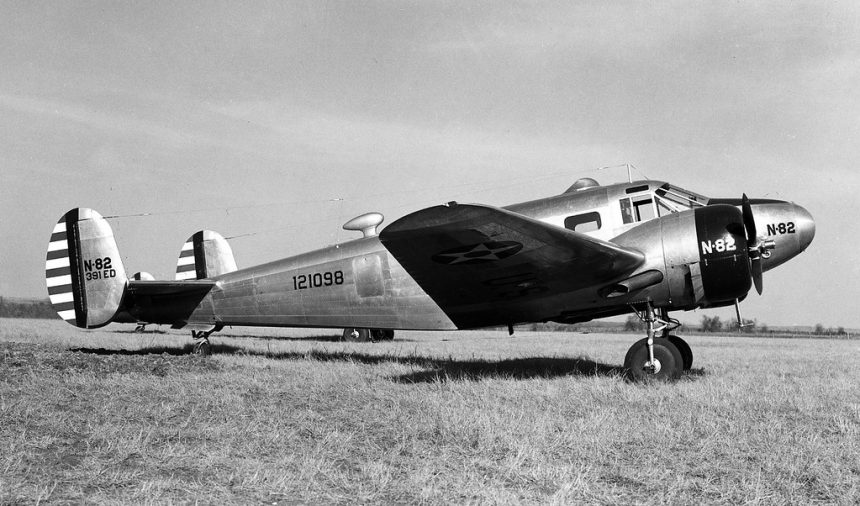
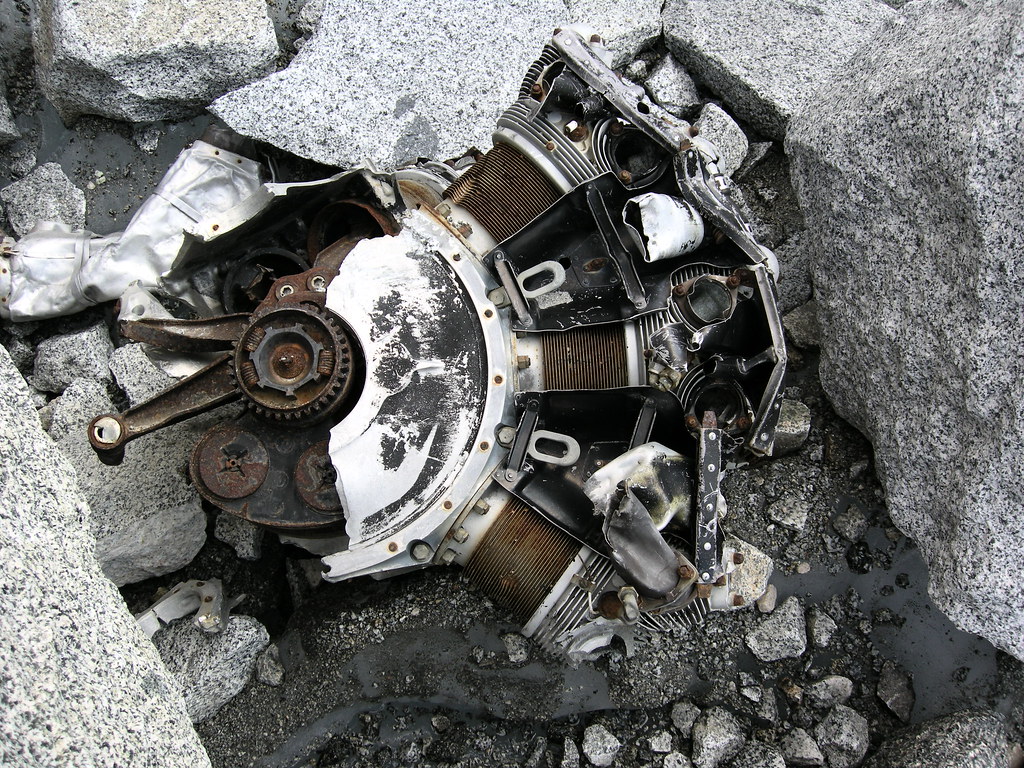
When investigators looked into crashes that had occurred in 1942, they found one that had occurred in that area. The date was November 18, 1942. Seven aircraft took off for training missions from Mather Air Force Base near Sacramento. All but one returned. All of the aircraft on the flight were Beechcraft Model 18s; twin-engine aircraft used for navigational training. Two years after the end of World War II, the aircraft was found in the vicinity of where the airman’s body was found. The aircraft solved one mystery but started another: the men from the crash had been accounted for and buried in Golden Gate National Cemetery in San Bruno, California.
Process of Elimination
So, if the bodies of the airmen were found and buried, who was the recently discovered airman? Investigators caught a break when they came upon the fight manifest from the aircraft, which listed the names of everyone on board the aircraft at the time of the crash. Among them was one name that had the letters embossed on the dog tags: Leo M. Mustonen, an air cadet on the flight. Next, investigators used DNA to help them determine the identity of the airman. They were able to get maternal DNA from all the families except one, Mustonen, and living family members could not be found. Fortunately, none of the other family DNA samples matched the airman, so by process of elimination, it was determined that the airman was Mustonen. A match. Mustonen was 22 years old when he died.
But What About the Dog Tag?
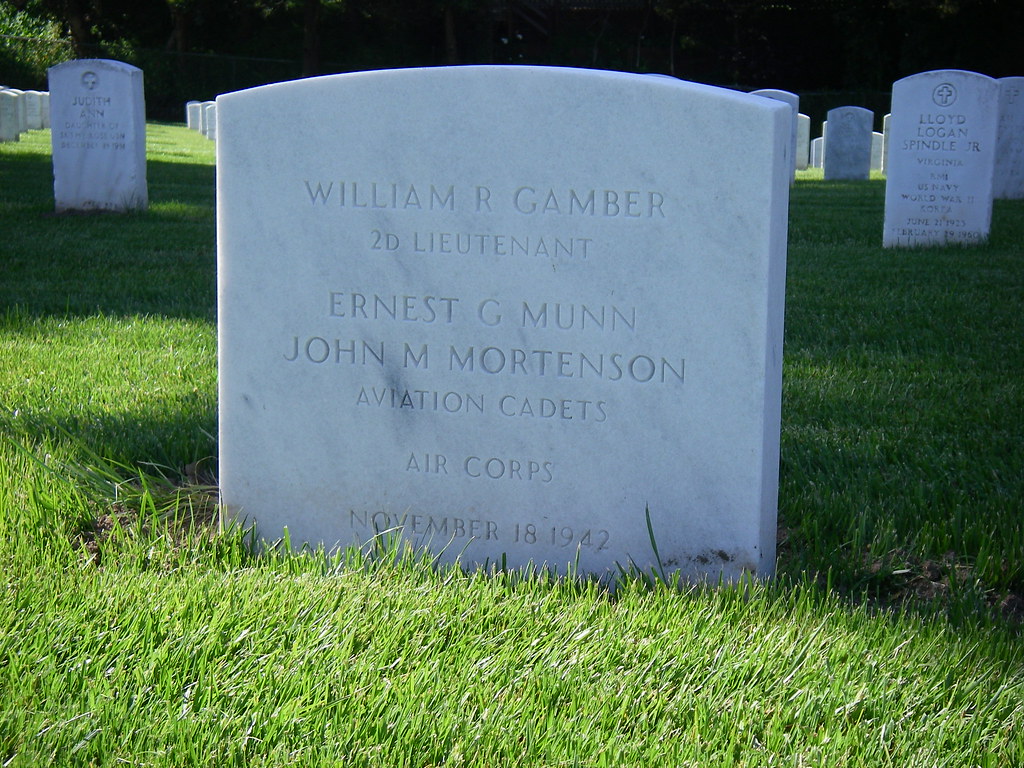
As it turned out, the name on the dog tag was a misprint. Mustonen’s name was Leo A. Mustonen, not Leo M. Mustonen. There was, however, still one thing that didn’t add up: the grave marker listed the names of four bodies buried in the grave. Upon investigation, however, it was determined that when the aircraft was found, there were no bodies found. But in order to provide closure to the families, as well as a place as a memorial, families were told that the bodies were found, just not identifiable, so the government staged a mock burial at that grave, which had all four names listed. Two years after the discovery of Mustonen’s body, searchers found the body of another cadet, Ernest G. Munn. Families took the bodies of Mustonen to Evergreen Cemetery, Brainerd, Crow Wing County, Minnesota. Munn was buried in Holly Memorial Gardens in Pleasant Grove, Ohio. Two more bodies, those of 2nd Lt. William R. Gamber and cadet John M. Mortenson, have not been found. A gravestone that reflects only the names of those who remain missing is in Golden Gate Cemetery.