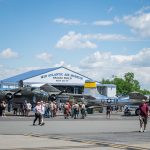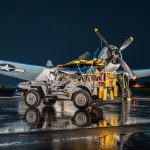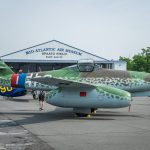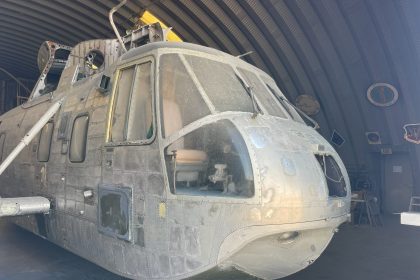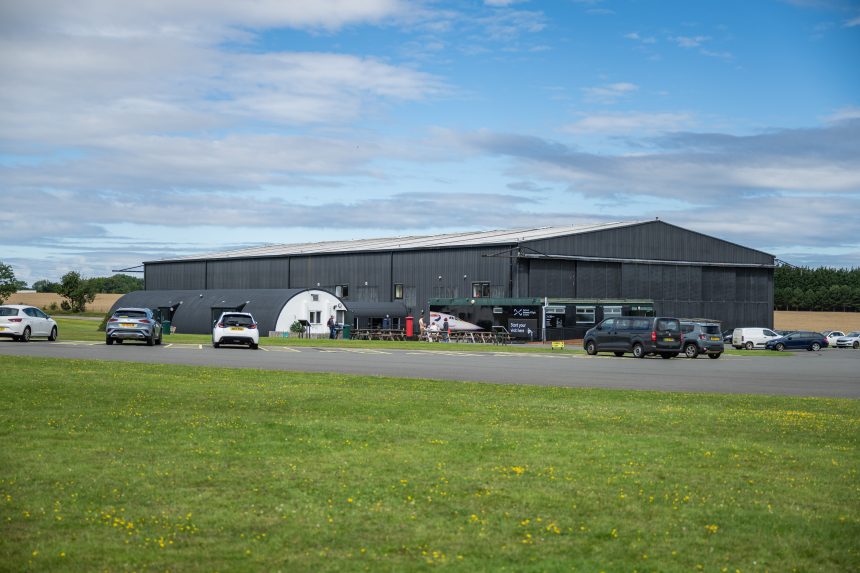

When visiting Scotland, it can be easy to stick to the bustling streets of Edinburgh, taking in the iconic sights around Edinburgh Castle or Arthur’s Seat. Others may find it better to get lost exploring the Cairngorms or the many lochs around the country. Just 35 minutes southeast of Edinburgh, however, is a treasure for aviation enthusiasts and really anyone with an interest in history: the National Museum of Flight. When I found myself in Scotland in July of 2025, the National Museum of Flight immediately found itself on my list of places to visit. Located at the former Royal Air Force Station East Fortune, the museum brings the history of Aviation, both in the UK and around the world, under the cover of several of the former station’s hangars and around its property. During my visit, I was very lucky to have had the chance to sit down with Ian Brown, the museum’s curator, to learn more about the museum, its artifacts, and its future before exploring the vast property on my own.
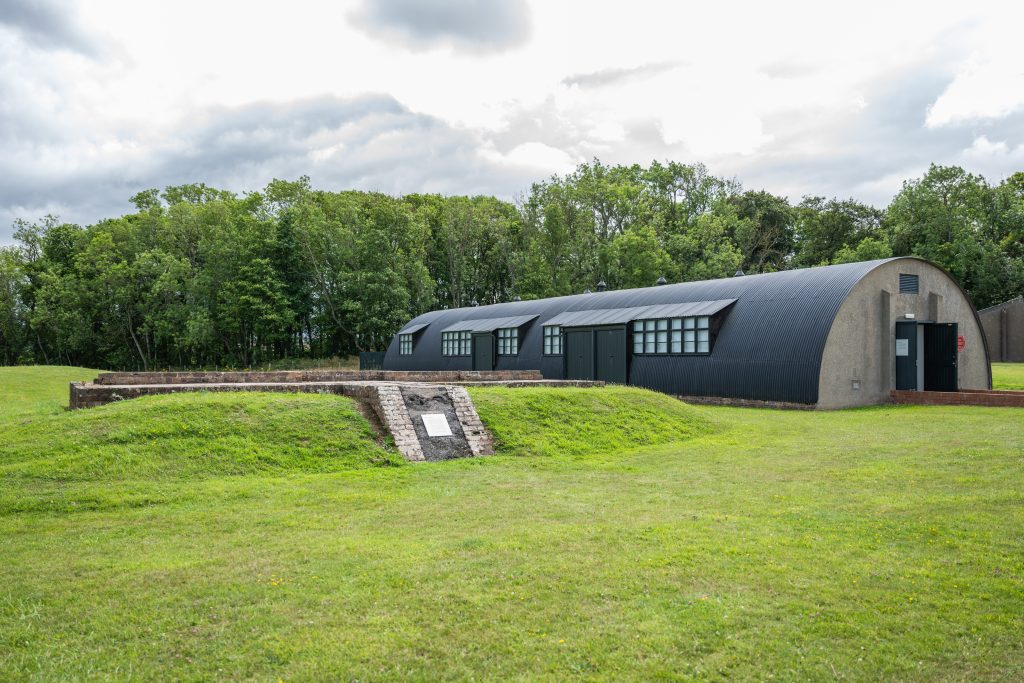
While the museum itself was established in the mid-1970s, the site’s history goes back much further than that. RAF East Fortune first opened in 1915 as a Home Defense Station with a combination of aircraft and airships to defend Edinburgh, the Firth and Forth, and the naval base at Rosyth. As WWI raged on, East Fortune found itself as the home of the new Torpedo Training Squadron. Ian would explain that the plan then had been to develop techniques for dropping torpedoes from aircraft with the goal of striking the German High Seas Fleet at Wilhelmshaven, but the war ended before this could be achieved. The program, however, was secret, with East Fortune chosen for its paved runway, which would allow the aircraft to take off even with the added weight of the torpedoes.
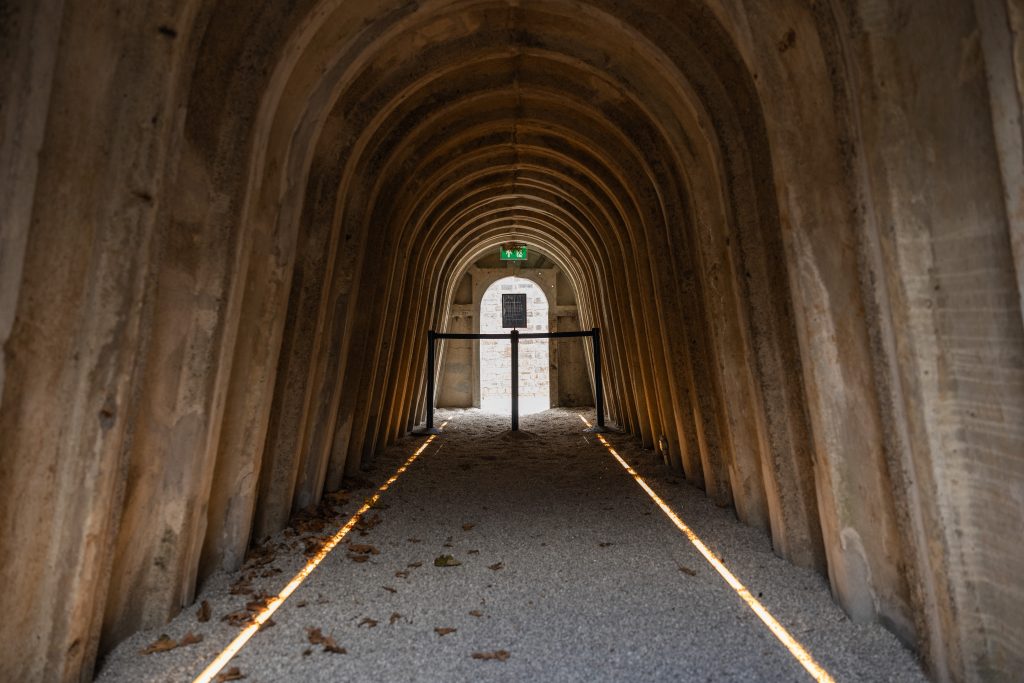
East Fortune also housed airships, with one in particular, the R29, successfully sinking a German U-boat in September of 1918. Another famous airship, R34, later became the first to successfully complete a full round trip from East Fortune to New York. The site would close in 1920 but was reactivated in 1940. The station would be used for Night Fighter training initially, with Boulton Paul Defiants and later Bristol Blenheims as the primary aircraft. Eventually, East Fortune moved to day training for anti-shipping strike crews, continuing with that through the end of the war.
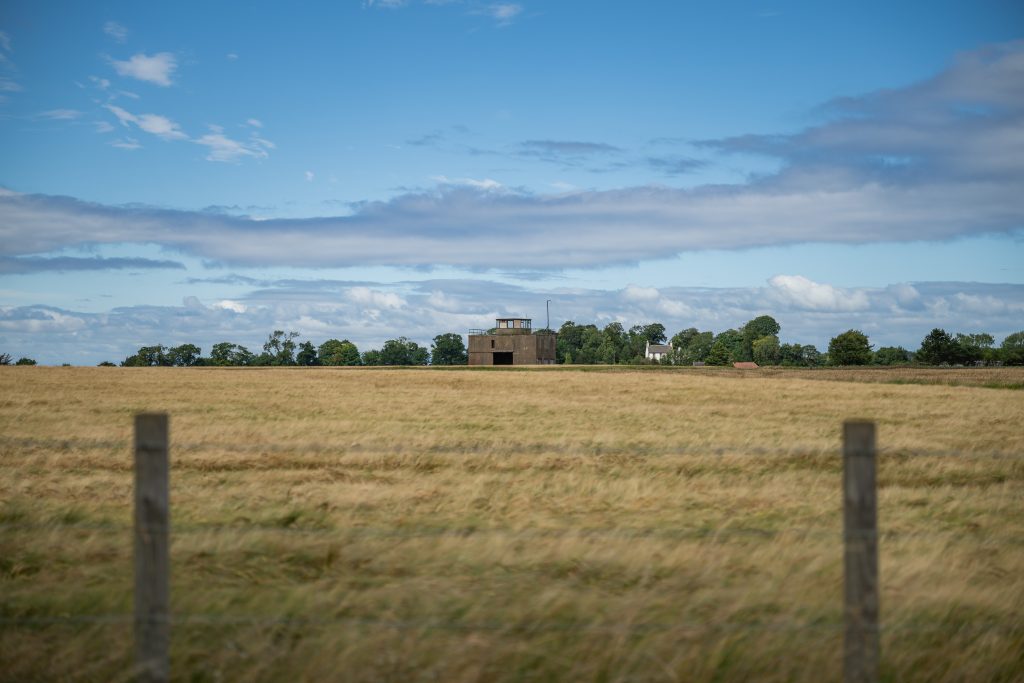
The station would close at the end of the war, with a brief reopening when Edinburgh Airport, then Turnhouse, was redoing their main runways. Outside of use for storage, the airfield itself sat until the museum began to take shape. Ian would tell me, “…in the late 1960s, the museum was offered a Spitfire. It was the result of a weird conversation at a directors’ lunch with a senior member of the RAF. He thought no more about it, then we got a phone call saying, ‘You spoke for a Spitfire. Where do you want it delivered?’ And then it was, ‘Oh my God, what are we going to do?’ They got permission to store it in one of the hangars here temporarily. That came here in 1971.”
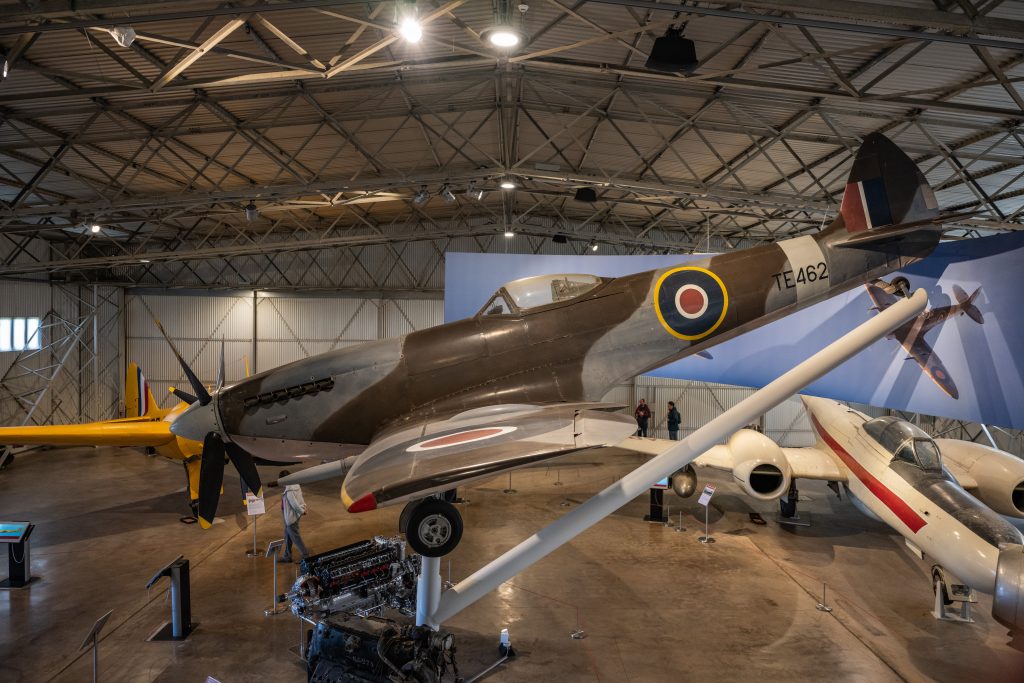
That hangar eventually would gain more artifacts, with a handful of people visiting by appointment to see specific items. Then, though, the decision was made to do something a bit more permanent: “…in 1975 it was decided to do a trial opening of the museum for two weeks. In those two weeks, there were 22,000 visitors, which would probably rival any two weeks we have in the year nowadays. So, it was really busy, and it was quite clear there was a lot of demand from the public.”
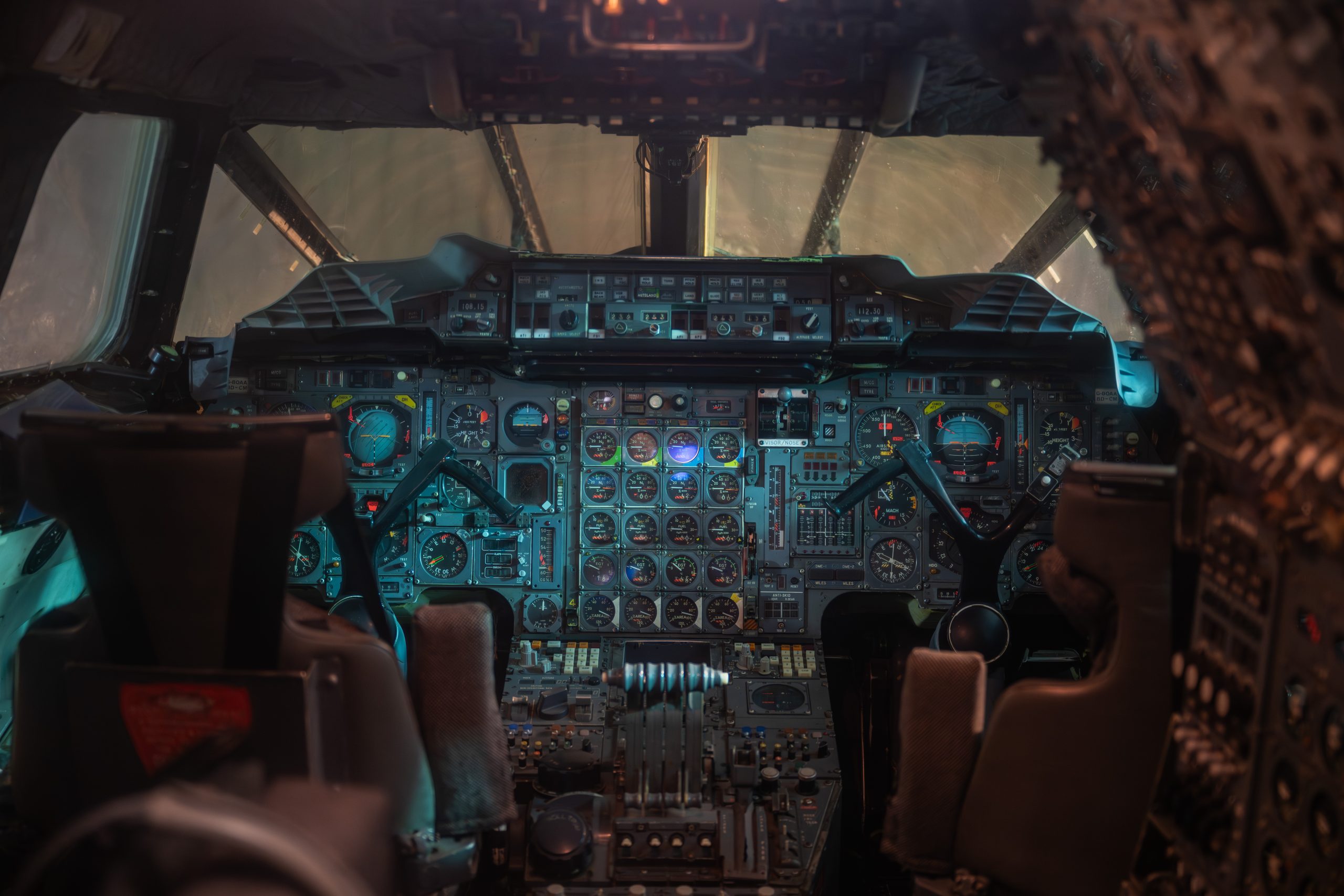
Since then, the museum has slowly expanded and taken over the former East Fortune site. The collection has also grown substantially, which is apparent from the moment you arrive on their sprawling campus. While you can easily get distracted amongst the many structures around the area, starting off in the main hangar, attached to the gift shop and a cafe, is an easy choice. Once inside, you are greeted by arguably two of the most iconic aircraft in aviation history: the cockpit portion of a Boeing 707 and a Concorde. Both of which you can tour inside.
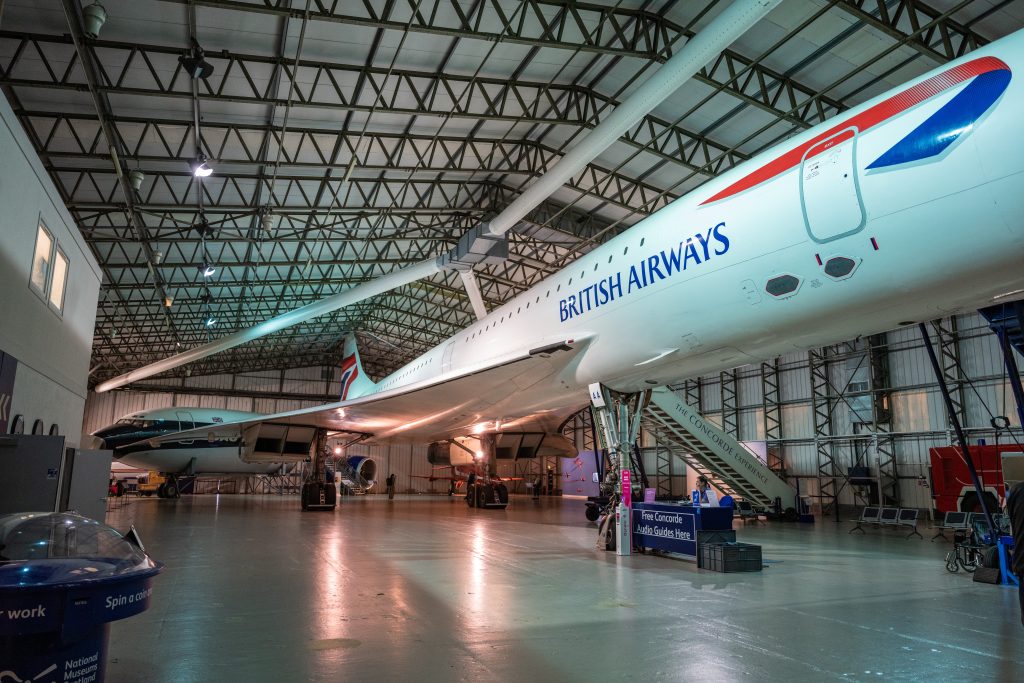
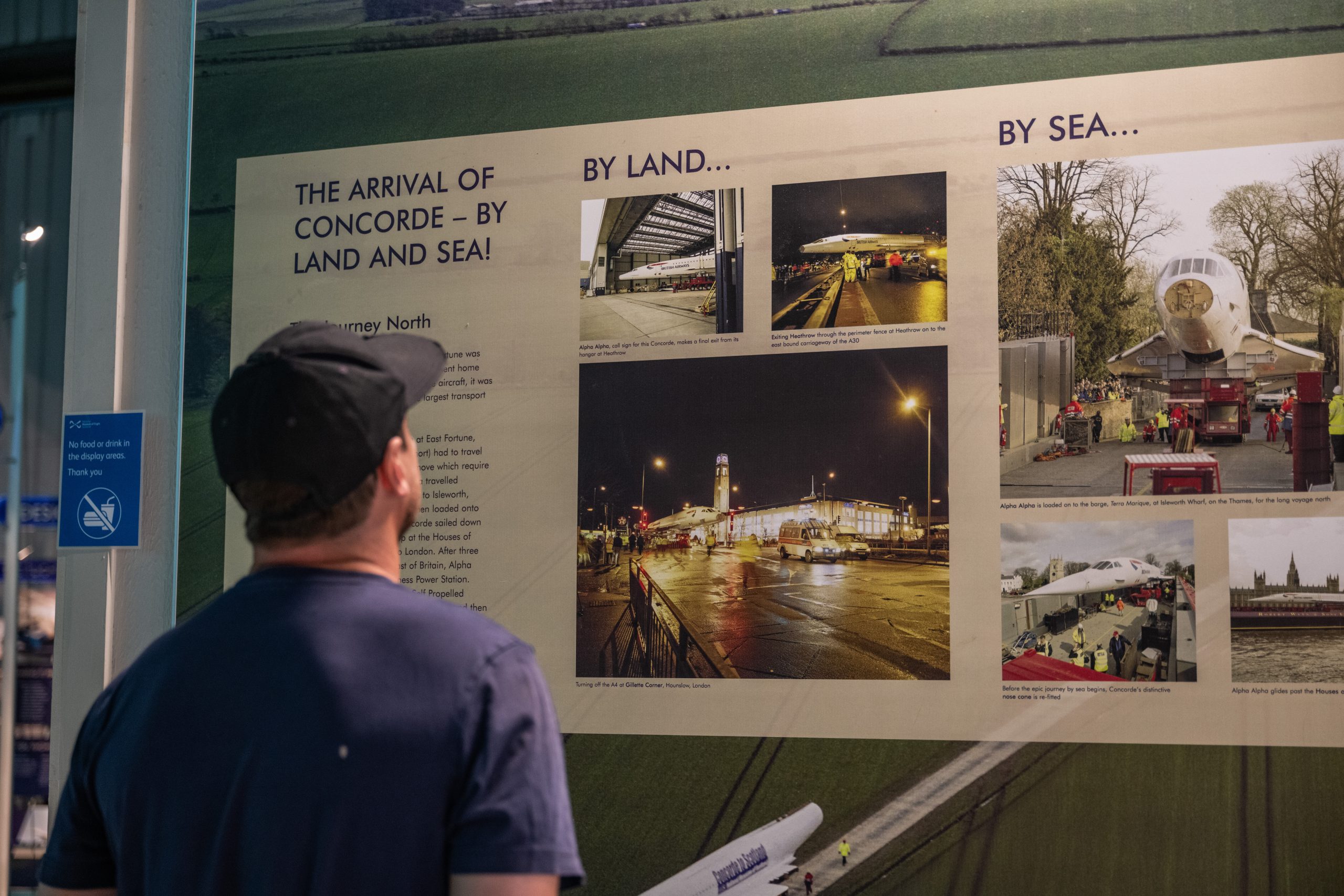
When it comes to aviation museums, having an aircraft as iconic as the Concorde can be an incredible opportunity. For the museum, theirs would come in 2004. Unlike some of the aircraft at the museum, the Concorde did not fly in; instead, it was taken apart. “It had to be transported through London in the dead of night by road, onto a barge down the Thames, up the coast of the UK, and then across fields into the museum. It took nearly a year to reassemble it and prepare it for display. It opened in March 2005, and that year visitor numbers were triple what they’d been the year before. It was about 150,000 visitors. That really transformed the museum.” Ian would go on, “For me, the good thing about it isn’t just the visitor numbers. It changed the demographic. The museum became much more of a family attraction. Before that, it had been very much enthusiasts – what I would call boys and their toys, dads and sons, granddads and grandsons, that sort of thing. But with Concorde, people who wouldn’t normally visit an aviation museum wanted to come and see Concorde. Then they’d go around and say, ‘Oh, you’ve got a Spitfire. I’ve heard of that.’ It introduced whole new audiences to aviation and aviation history who otherwise wouldn’t have been interested. For me, that’s the big thing about Concorde. It attracts visitors who just wouldn’t have come here otherwise.”
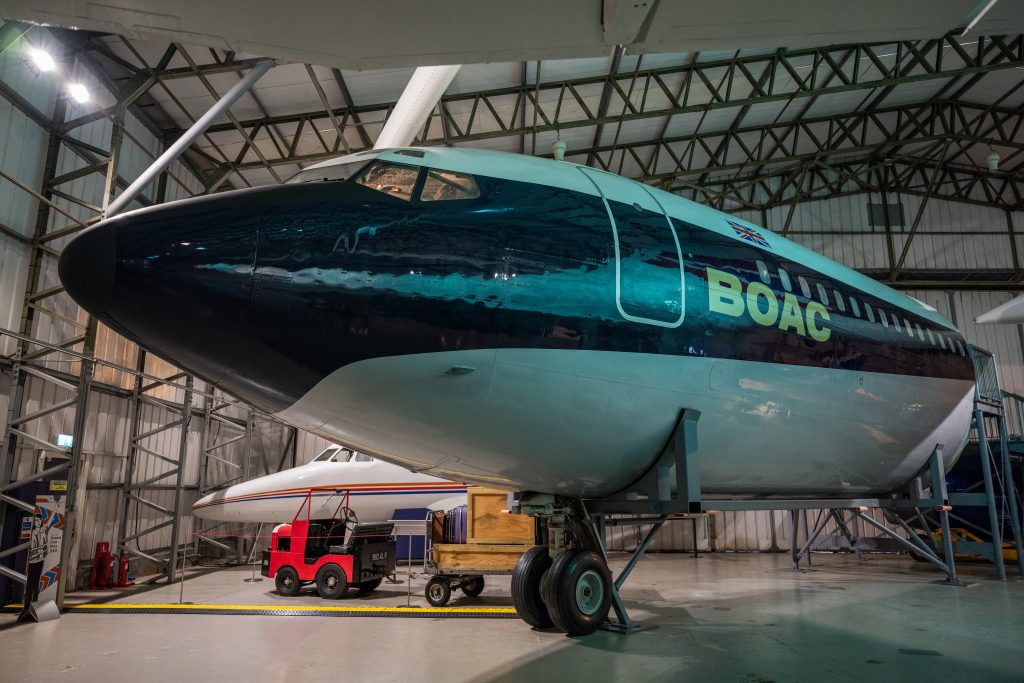
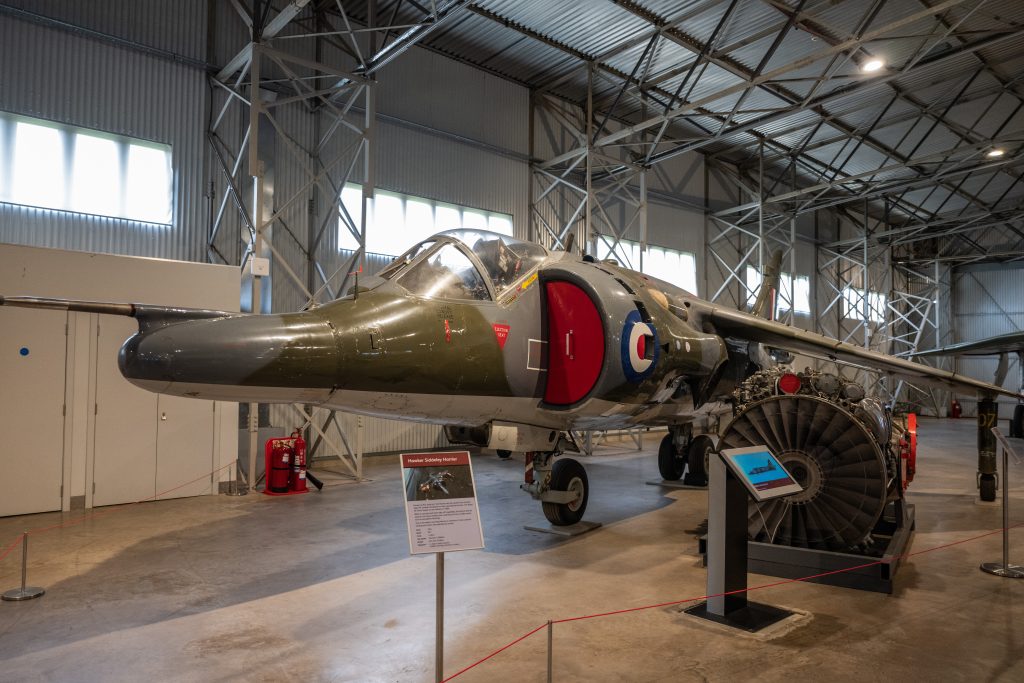
The museum uses three hangars, each with its own distinct theme, to help display its over 50 aircraft. In the military-themed hangar are a few of Ian’s standout aircraft. “There was the P.1127, which became the Kestrel, and then there was the P.1127 (RAF), which was the Harrier before it got the Harrier name. Ours is the third P.1127 (RAF), so it’s a Harrier before they’d actually given it the Harrier name. It was used for development. It’s had, I think, about seven different wings, various engines, and a different tail. It has a Mark III nose. When you look at it, it looks like a GR3 Harrier, but it is actually the equivalent of a GR1. It just doesn’t have the original pointy cone nose. It is the oldest actual Harrier anywhere, because the other two P.1127s both crashed.”
There is another standout in the military hangar, an original Messerschmitt Me-163 “Komet.” Not only is this aircraft notable for being one of the few rocket-powered Me-163s to see combat, but it was also flown by Eric “Winkle” Brown. Often described as Britain’s greatest-ever pilot, Brown flew 487 types of aircraft over his career, held several records, and completed many firsts in aviation.
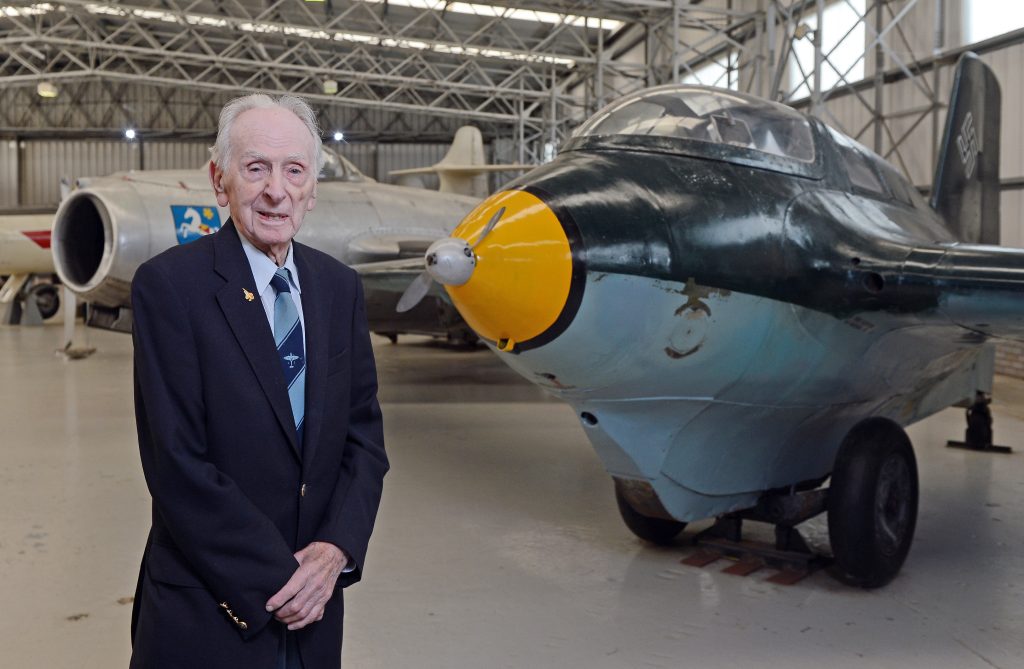
Brown’s aviation career was storied: “He was originally with the Fleet Air Arm and got a couple of kills flying off a carrier. I think one of them was a Focke-Wulf Condor – I’d need to check. He certainly had two kills. The carrier got sunk, and he was one of only five who survived. He then became a test pilot and did a lot of test flights with different aircraft, and a lot of trials with what could and couldn’t be flown off carriers. He was the first person to fly a Mosquito off an aircraft carrier, and the first person to land a jet on an aircraft carrier, various different things.”
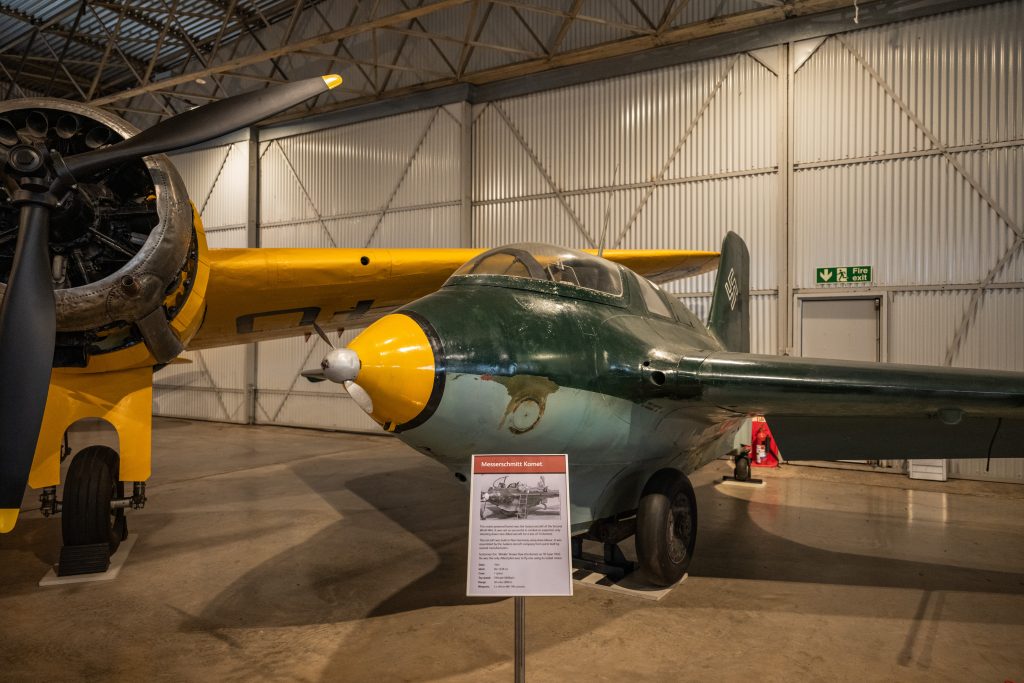
Allied pilots were essentially forbidden from flying Me-163s due to the dangerous hydrogen peroxide-based fuel it used. The pilot sat very close to the peroxide tanks, and if a leak occurred, the pilot was in incredible danger. That did not stop Brown, and as a test pilot he managed to get behind the controls on July 10, 1945. Fluent in German, Brown also flew and tested the Arado Ar 234 and Me 262. The museum also pays homage to the history of East Fortune and the airships that had once been stationed there. A great series of displays walks visitors through this important part of the station’s history, while outside a memorial, identical to one in Mineola, Long Island, stands to commemorate R34’s transatlantic round trip.
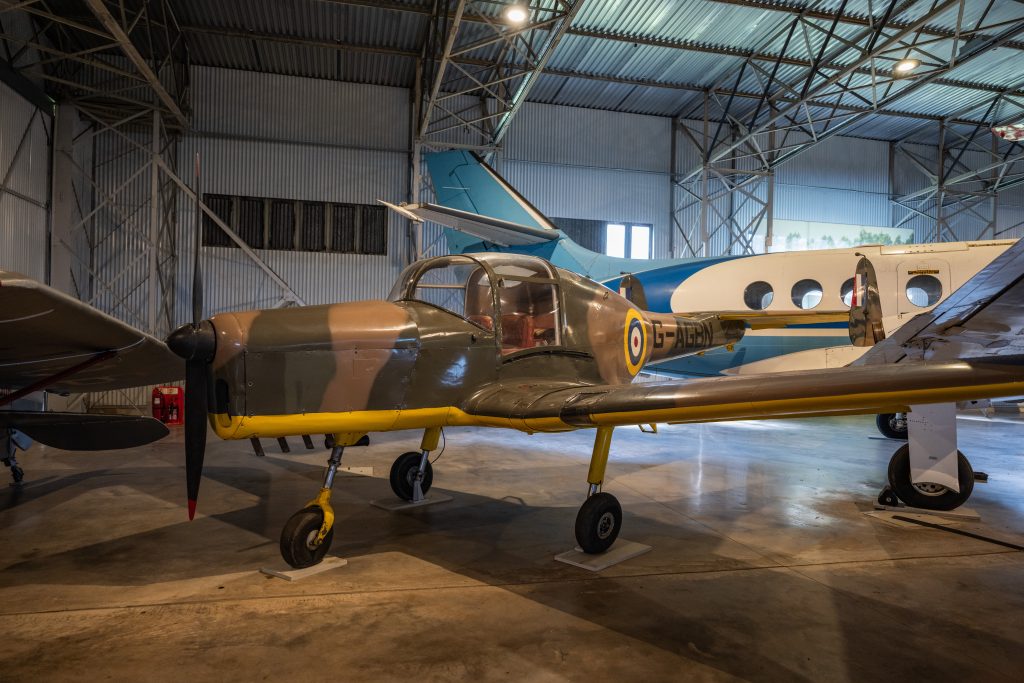
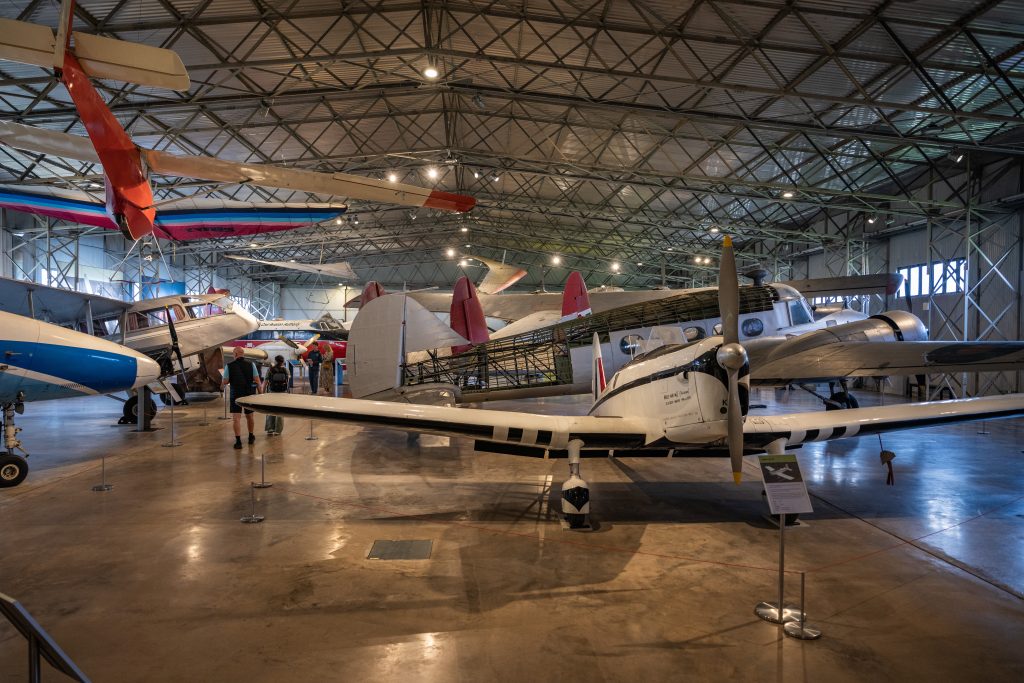
While there are familiar sights like the Harrier, Spitfire, and even a Beech 18, there are some that are rare to see in the United States and deeply tied to UK Aviation History. In the Civil Aviation Hangar, you are immediately greeted by the impressive Scottish Aviation Twin Pioneer. Intended to be a short takeoff and landing transport, this impressive twin-engine aircraft not only saw civilian use, but also spent time in the RAF, seeing extensive use during the Malayan Emergency and in Borneo. Another of Ian’s standouts is also in the civil aviation hangar: “It’s a General Aircraft Cygnet. It’s a little two-seat thing, built in the 1930s, and one of the first all-metal civil aircraft. It looks a bit like a tadpole with wings. Only 12 of them were built. Some of them were impressed into military service during the war, and although ours is in the civil hangar, it’s in RAF camouflage. That particular one was used to train night-fighter crews at another night-fighter Operational Training Unit. At that point in time, they were going to be using the Havoc. What the RAF called the Douglas Boston as a bomber was called the Douglas Havoc as a night fighter, which I think is what it was known as in the U.S. Army Air Forces. They were going to use that as a night fighter because it was big enough to fit radar and had space for enough armament. But the Havoc has a tricycle undercarriage, and obviously most RAF pilots at that stage were used to taildraggers. So they were using the Cygnet to train pilots and familiarize them with how to take off and land with a tricycle undercarriage.”
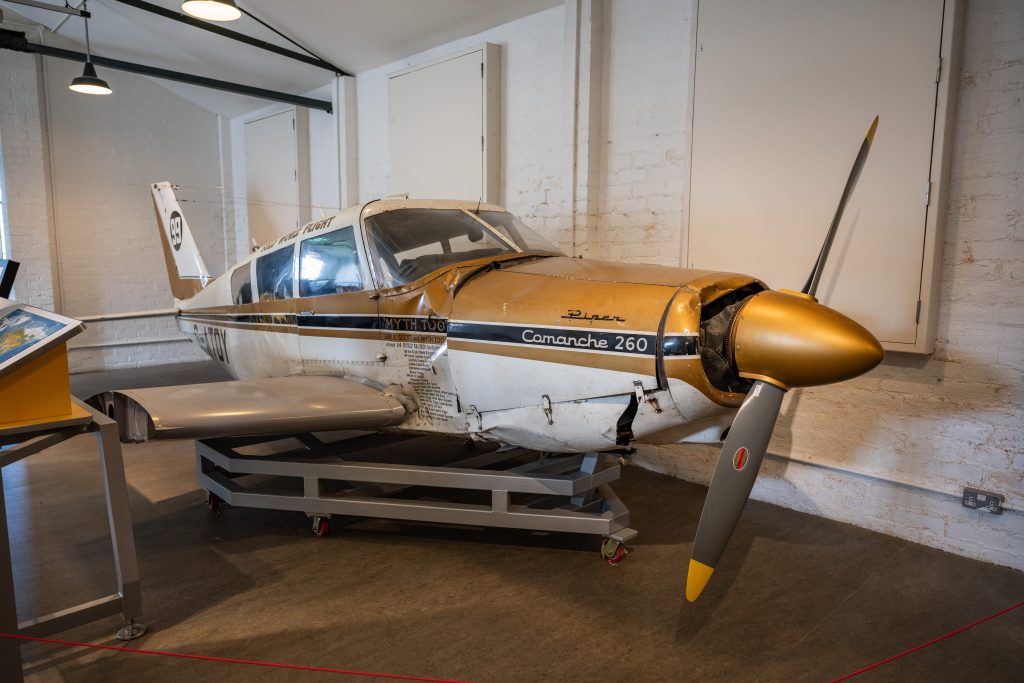
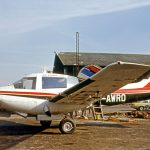
Also on site, though in another building, is the Piper Comanche 260B that Sheila Scott flew around the world, not once, but twice. Outside, however, is what I would consider one of my personal highlights, the Avro Vulcan XM597. XM597 famously flew into East Fortune to become a part of the collection in 1984, but before that it had taken part in the Black Buck 5 and 6, dropping munitions on Argentinian radar installations around Port Stanley. XM597 struck its target and later prepared for aerial refueling; however, during refueling attempts, its probe broke off. Without enough fuel to make it back home, their options were to either ditch in the Atlantic at night or divert to Rio de Janeiro.
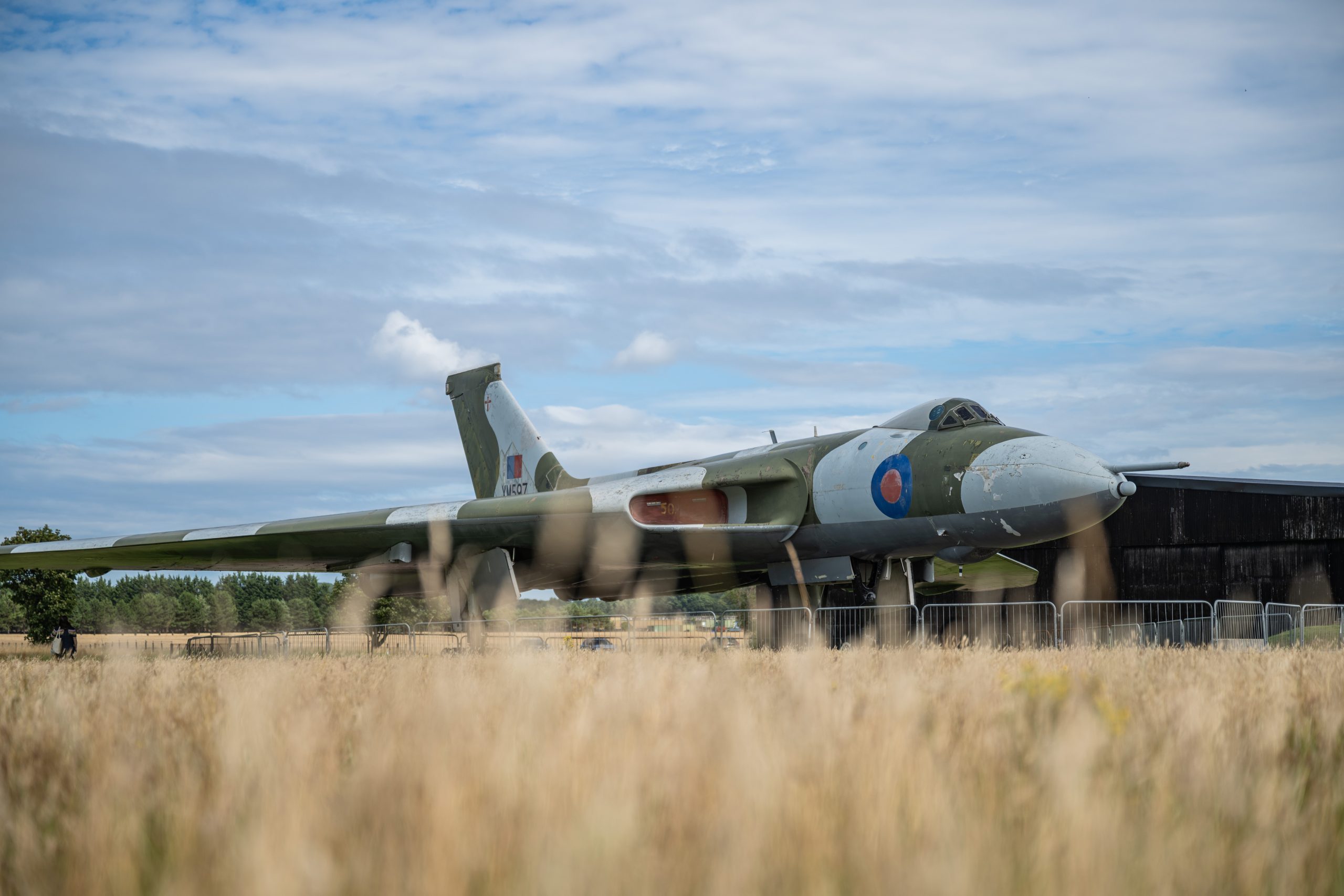
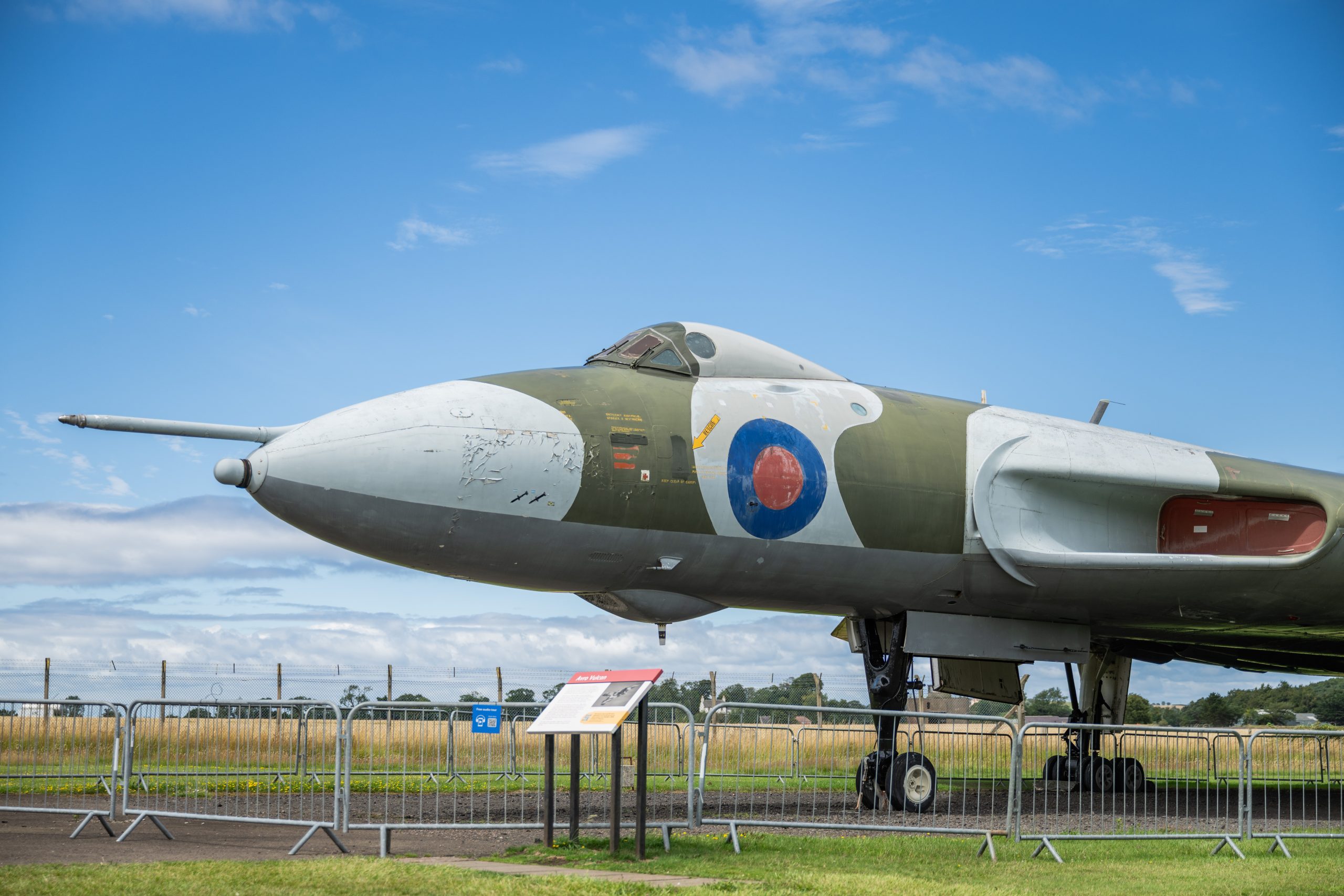
The crew chose the latter, but Brazil was neutral during the Falklands conflict. “They declared a Mayday on the civil frequencies and said they were, I think, a civil four-engine jet, low fuel status, requesting permission to land. There was a lengthy conversation with air traffic control, which demanded to know where they’d come from. They couldn’t say they were RAF and from Ascension, because they wouldn’t have got permission. One of the crew came from Huddersfield, so he said, ‘I’ll just tell them we’re from Huddersfield.’ So they said, ‘We’re from Huddersfield,’ and that was enough. They got permission to land.”
Documents had to be disposed of, so the crew had to open the main hatch to dump them. With the cockpit depressurized, the hatch proved to be extremely difficult to close, prompting one crewmember to be lowered and held on to in order to close it completely. The crew of XM597 famously landed safely in Brazil, with one Shrike missile still onboard. Eventually, the Shrike was confiscated, and the crew and XM597 flew back to the UK. Now, that very aircraft sits outside on the sprawling grounds of East Fortune.
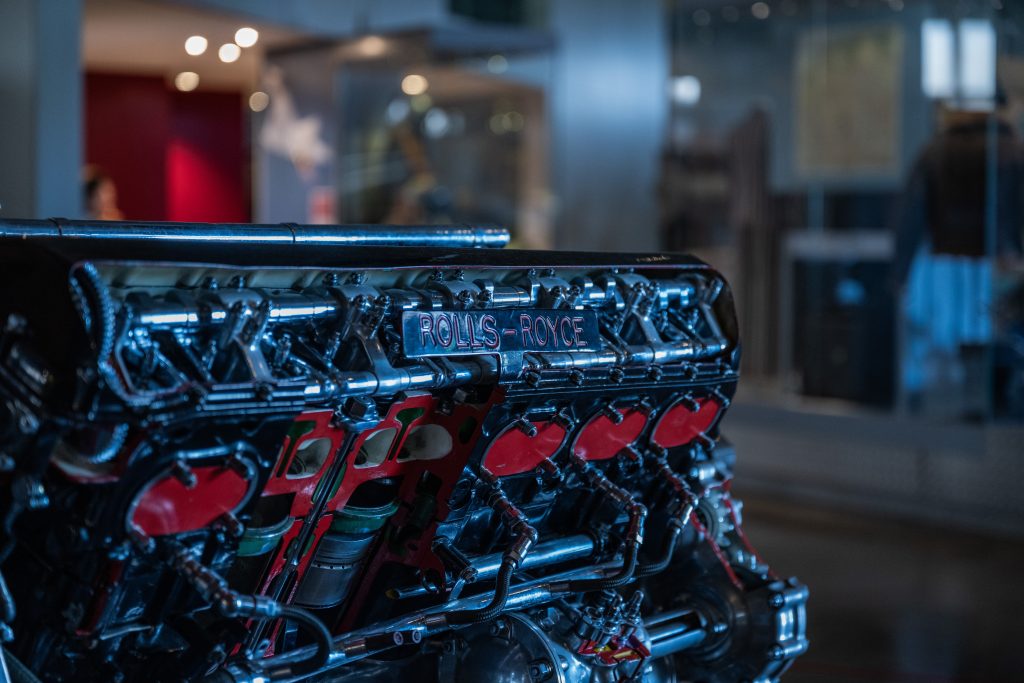
While the museum covers an incredible amount of aviation history, it also looks to the future as well. Back inside the main hangar, just beside the 707 and Concorde, is an RB211 from a British Airways Boeing 747. The engine not only symbolizes the end of the 747 as British Airways retired its fleet, but it also shows the impact that the COVID-19 pandemic had on the airline industry, accelerating retirements and changing how air travel worked. It also symbolizes the move to a greener industry: “…the initial step is moving away from four-engine operations to twin-engine operations. You’re almost halving the number of engines and the amount of fuel you’re using. We’re not quite there with electric-powered flight, but at least you can start to show how aviation is moving in response to the climate emergency. It’s interesting. It was an upgrade for us in terms of telling all these different stories in one object.”
With so much to see at the National Museum of Flight, it is certainly a must-stop for those visiting the Edinburgh area. Tucked away on the sprawling campus of the former RAF East Fortune, the museum and its staff do an incredible job of not just highlighting aviation history, but the history of the site, and the impact the UK had on aviation. The National Museum of Flight is open seven days a week from April 1st through October, and operates on weekends only from November 1st through March. There are plenty of expert talks throughout the year as well as events like 360 Fest on Saturday, August 29, 2026. For more information and to support the National Museum of Flight, click on this link: www.nms.ac.uk/national-museum-of-flight.
Special thanks to Ian Brown and Kirsten Cowie of National Museums Scotland for their incredible hospitality, time, and help throughout my visit.