







By Randy Malmstrom
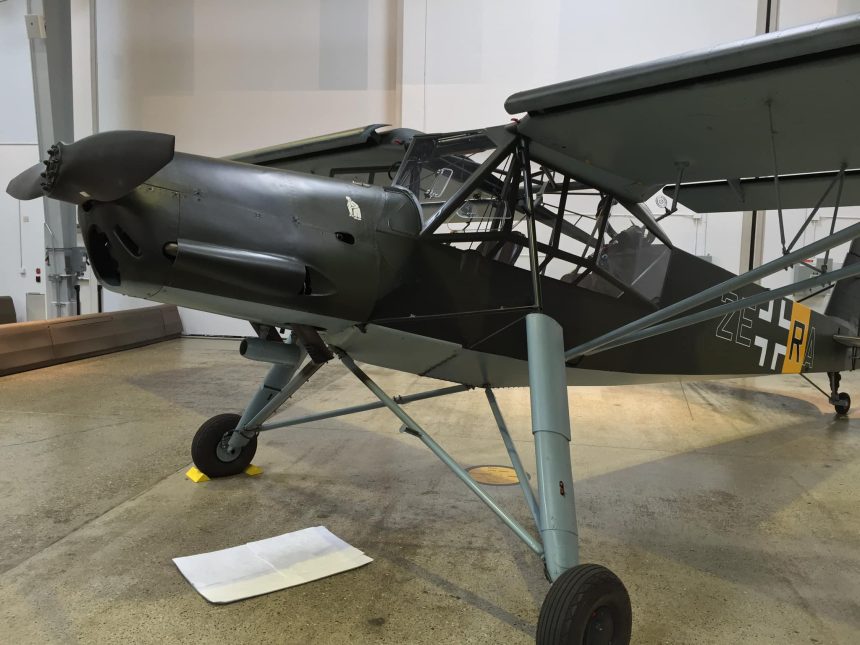
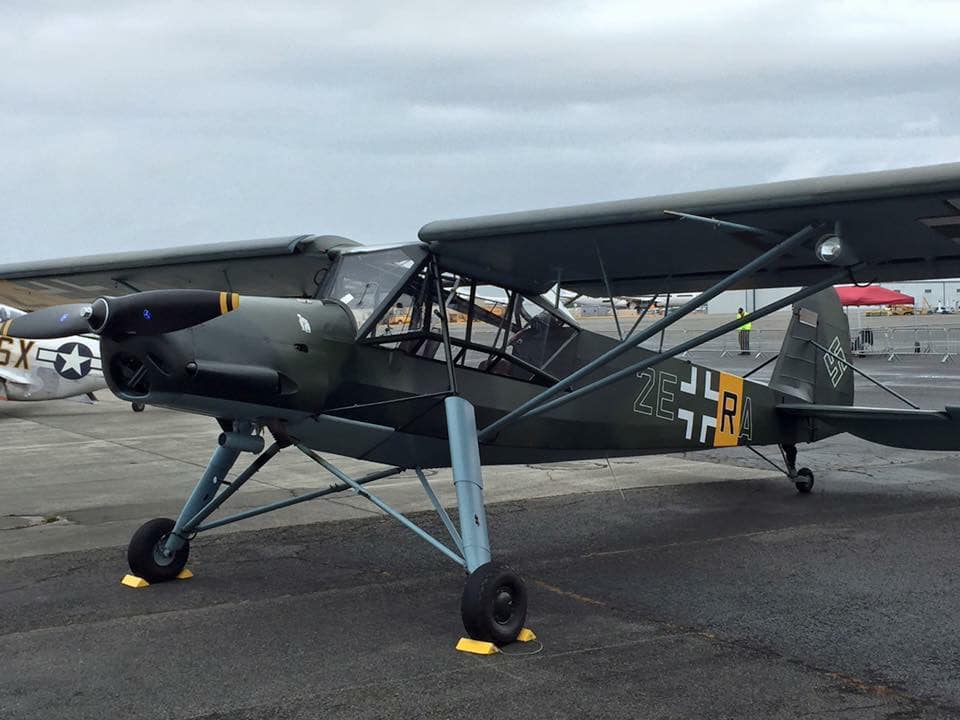
Fieseler Fi 156C-2 Storch (Stork), s/n 4362, N436FS. This is the somewhat elusive history of this particular aircraft that I have been able to reconstruct. It was apparently completed at the Fieseler factory in Kassel, Germany, on November 24, 1939, and flew reconnaissance missions in support of infantry on the Eastern Front. I have seen some records indicating it was assigned to 1. (H) Staffel/Aufklärungsgruppe 31 (Aufklärungsgruppe [H] were units attached to the German Army—Heer, the land component of the Wehrmacht—which provided tactical and photo reconnaissance and were later re-designated Nahaufklärungsgruppe or NAGr). The aircraft was found in a derelict condition in what was then the German Democratic Republic in the late 1980’s. In 1979, Jan Mueller and Kalman Goren incorporated “Northville Aero Leasing Company” in Canton, Michigan and changed its name to “Fieseler Company” in 1985.
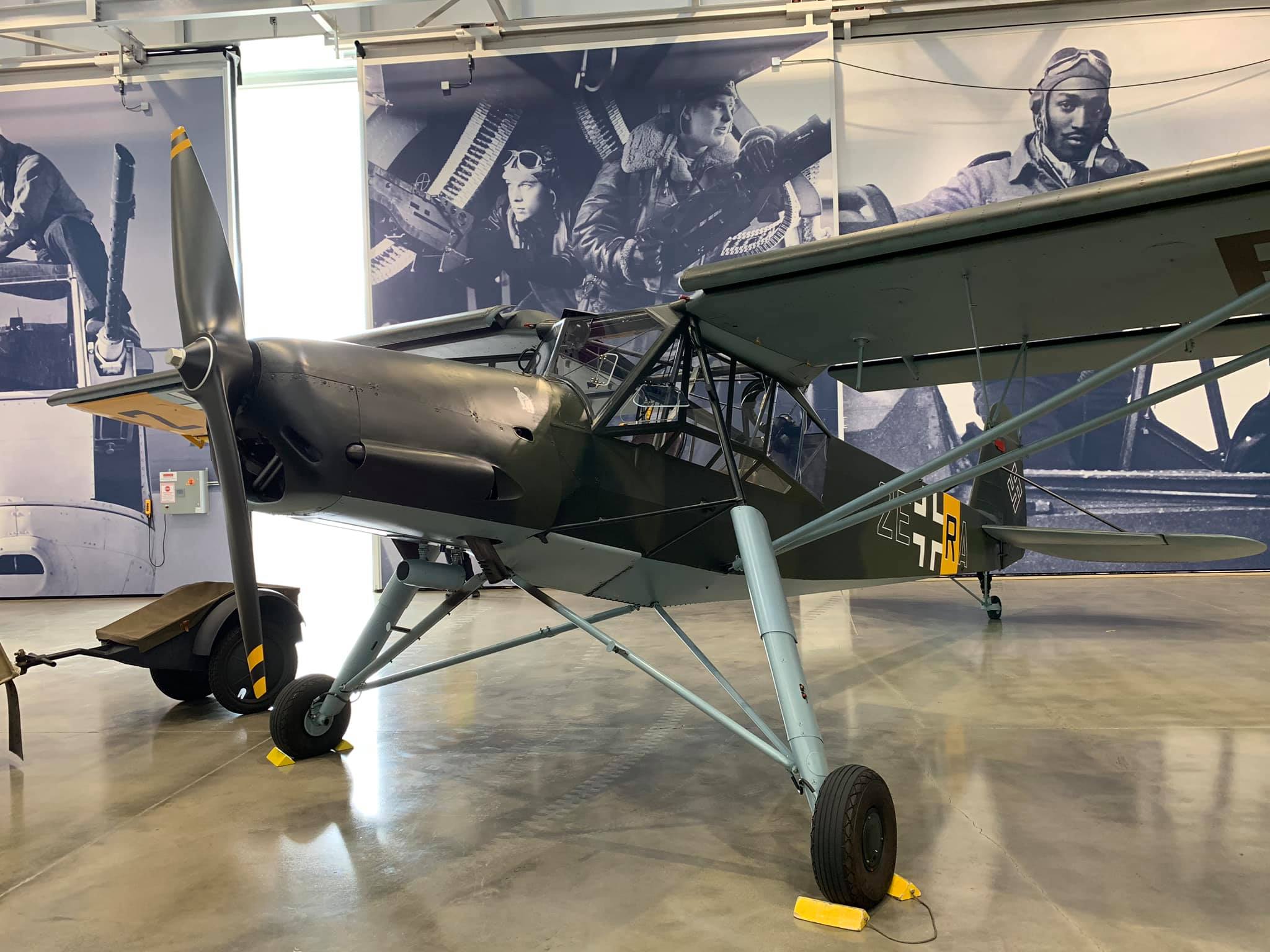
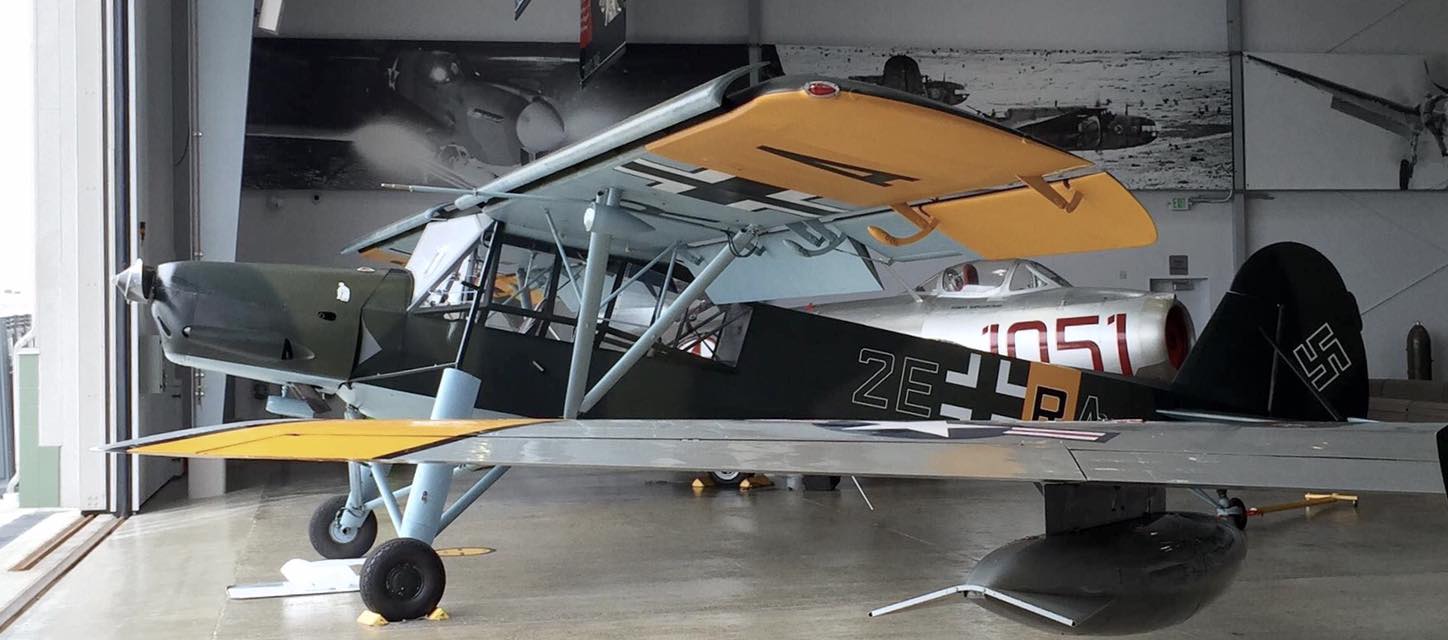
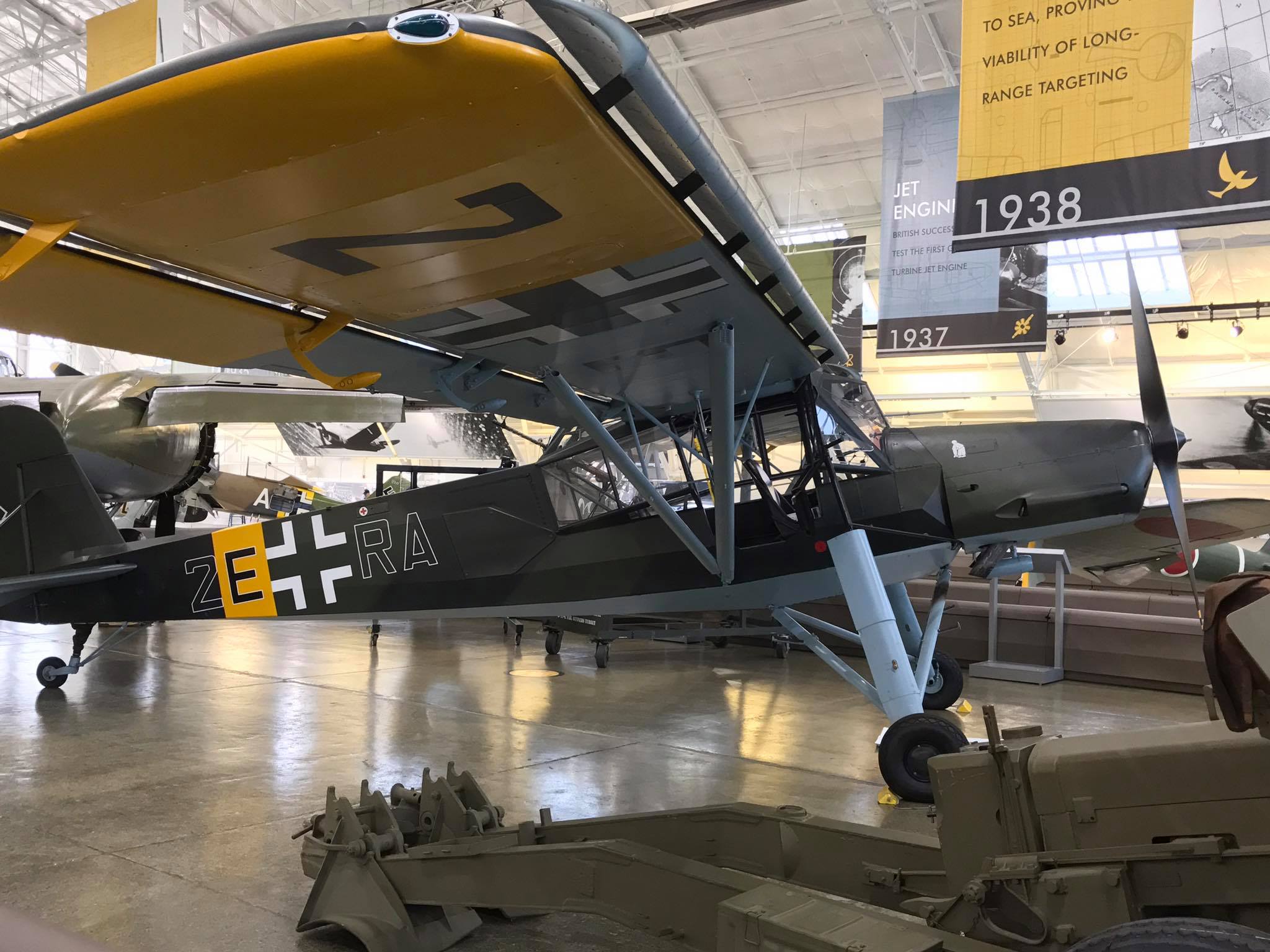
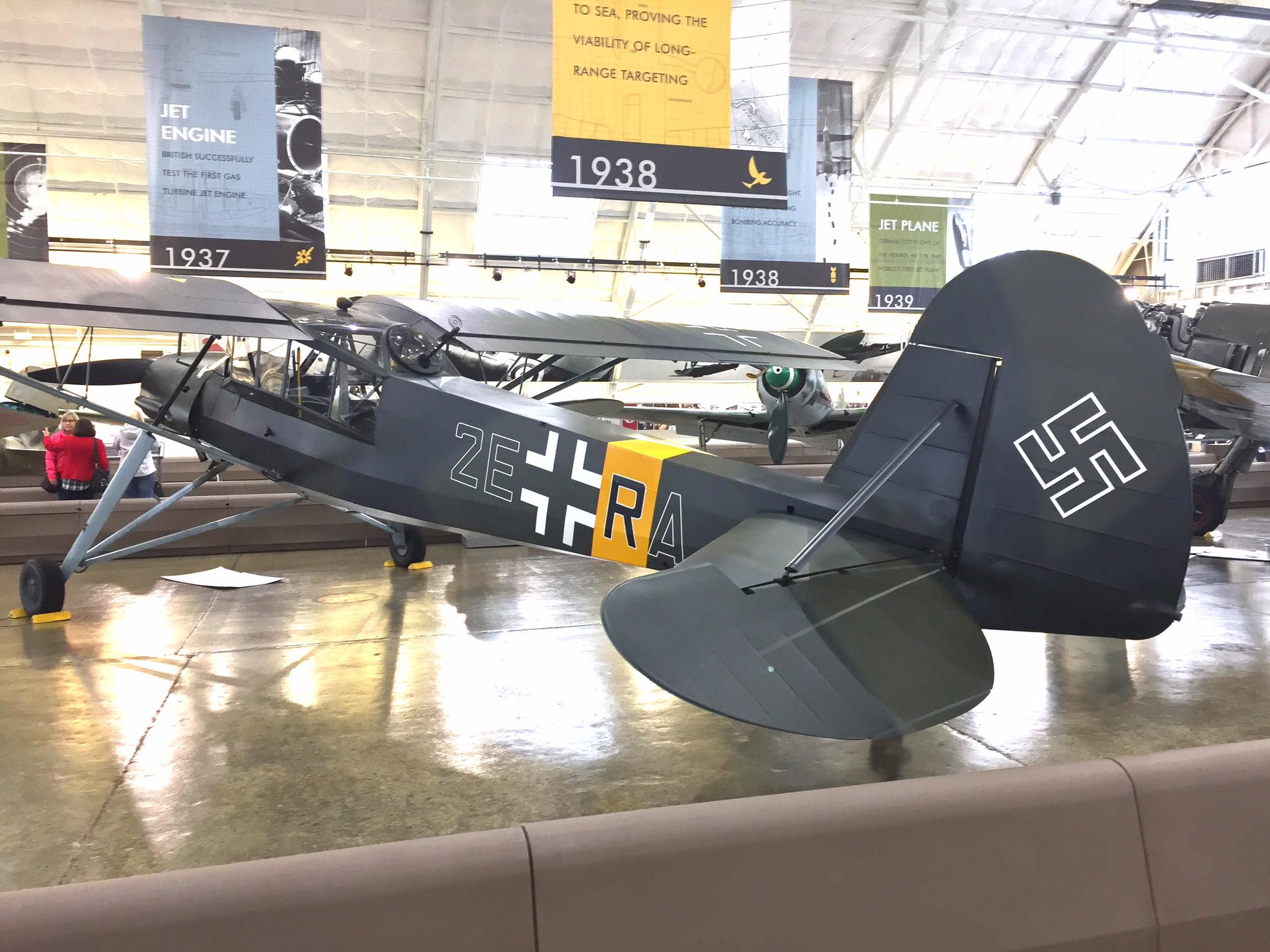
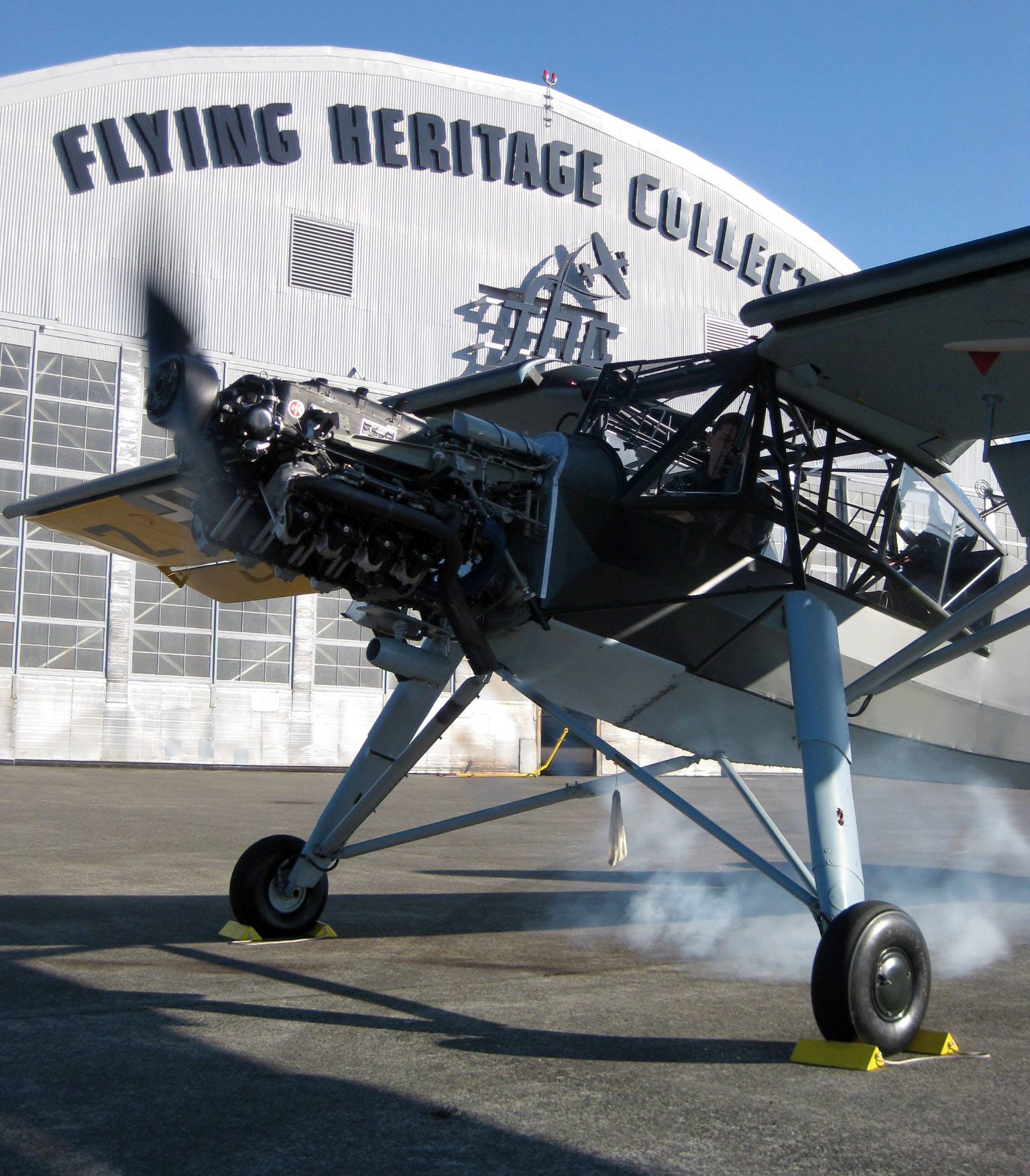
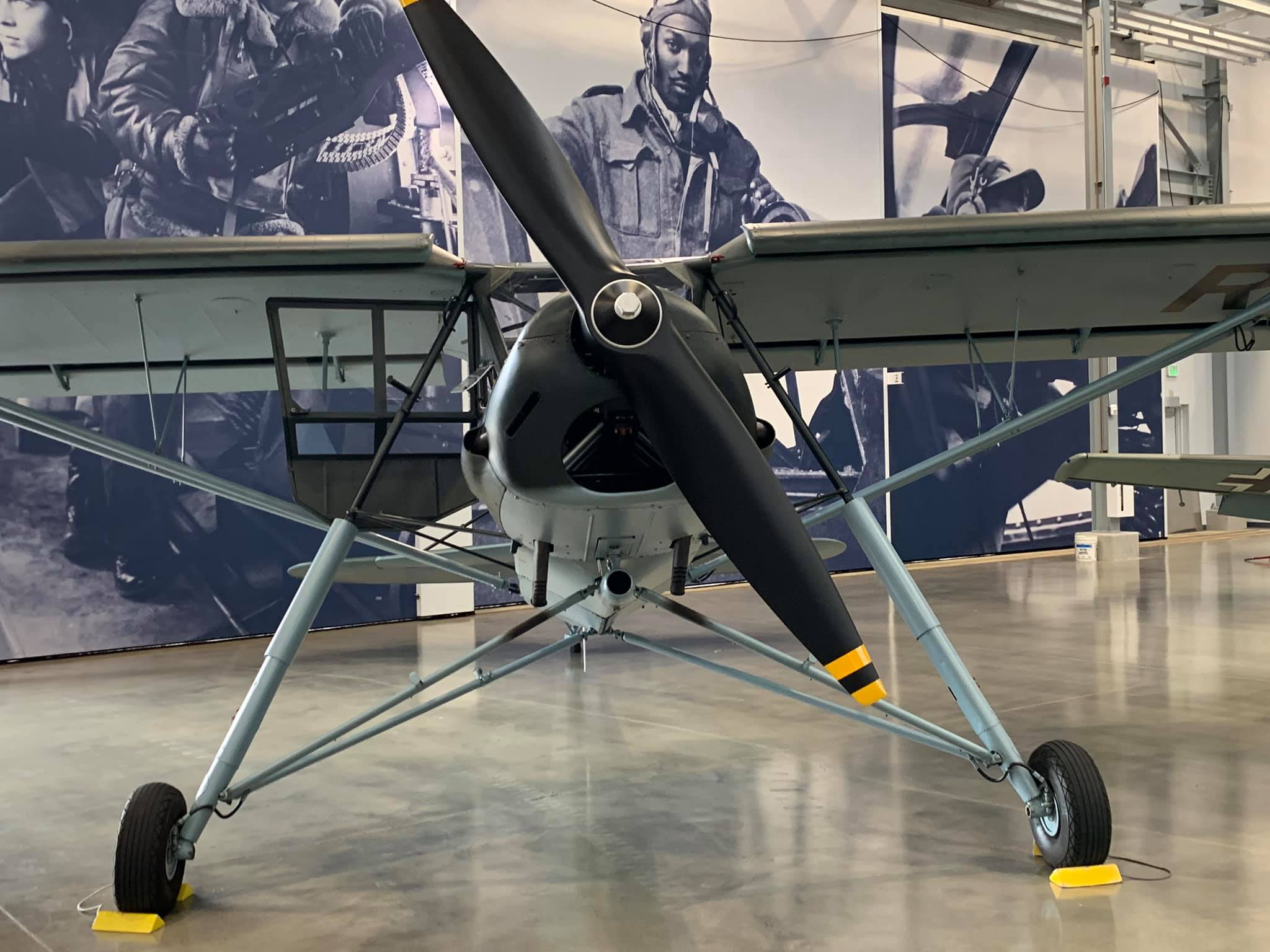
From what I can tell, Goren had acquired Storch aircraft out of France in the late 1970s and collectively their company set up a rebuilding operation at the Canton–Plymouth Mettetal Airport. In total, two Fieseler-built and three Aéroplanes Morane-Saulnier-built aircraft were rebuilt. This one was acquired in 2000 and is owned by Vulcan Warbirds Inc. (Paul Allen incorporated that company in 2004) for the Flying Heritage and Combat Armor Museum on Paine Field in Everett, Washington (FHCAM), which was recently acquired by Steuart Walton (the grandson of Walmart founder), and it will remain on Paine Field under the same name; it will not be changed.
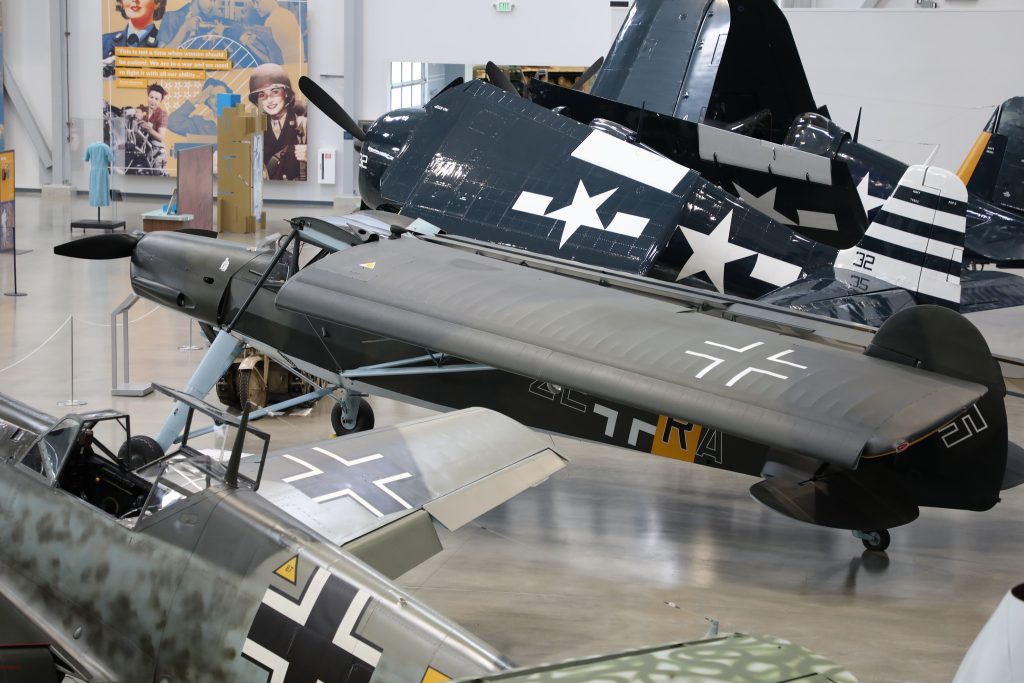
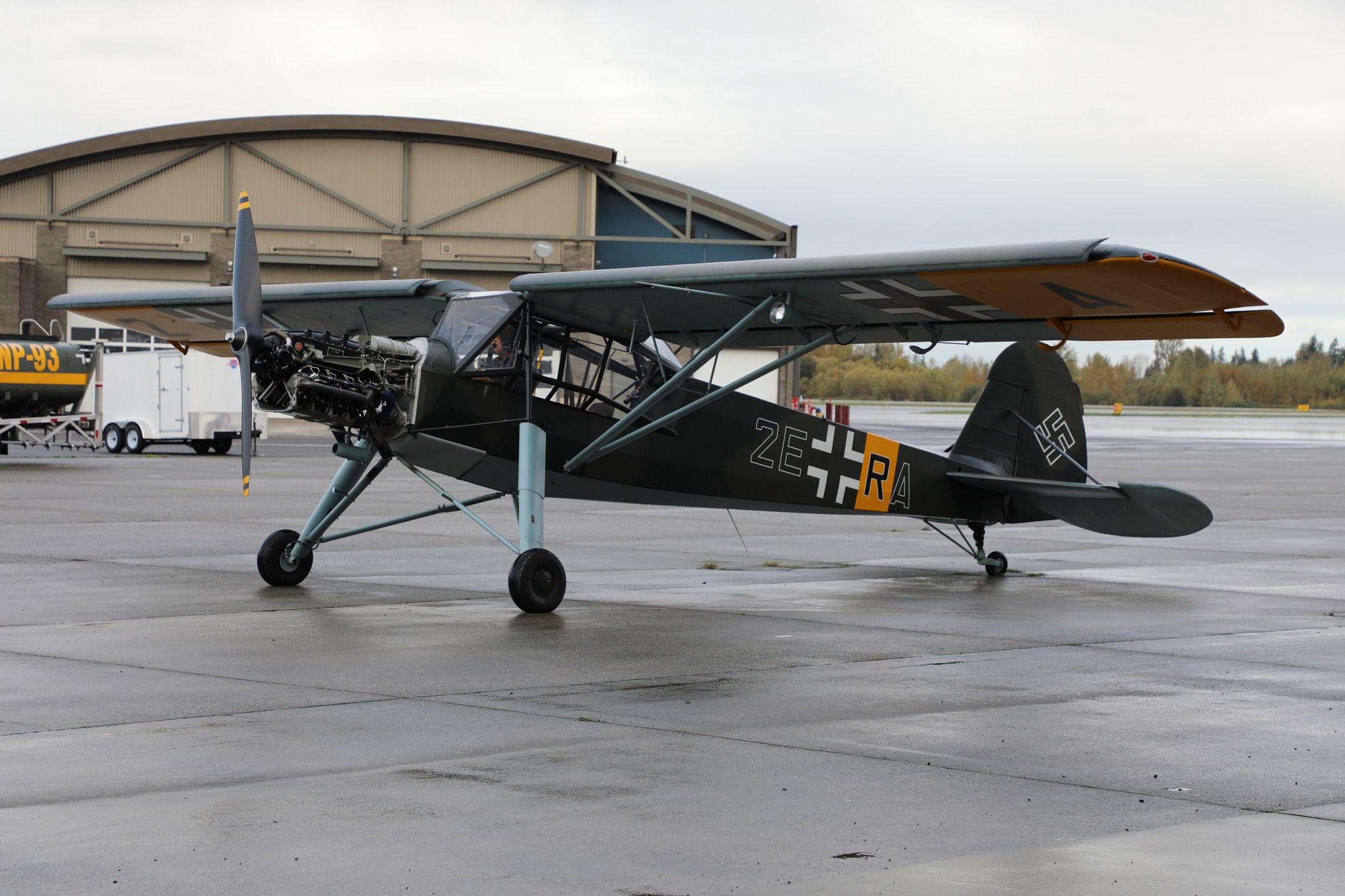
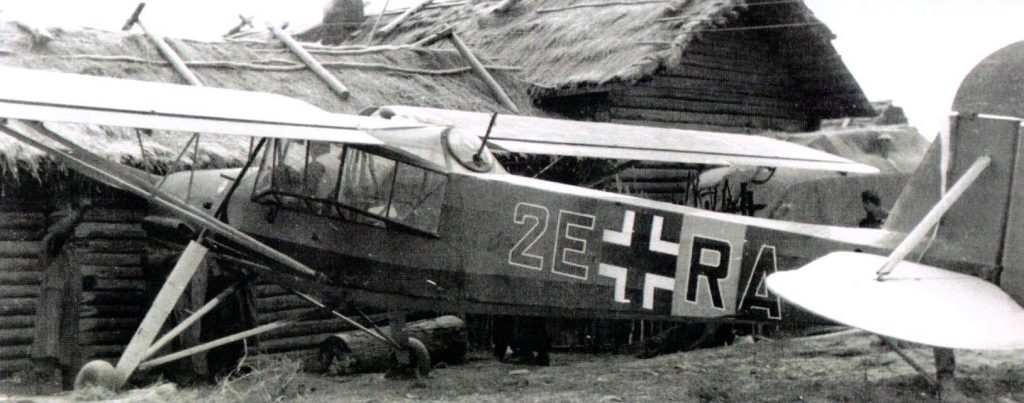
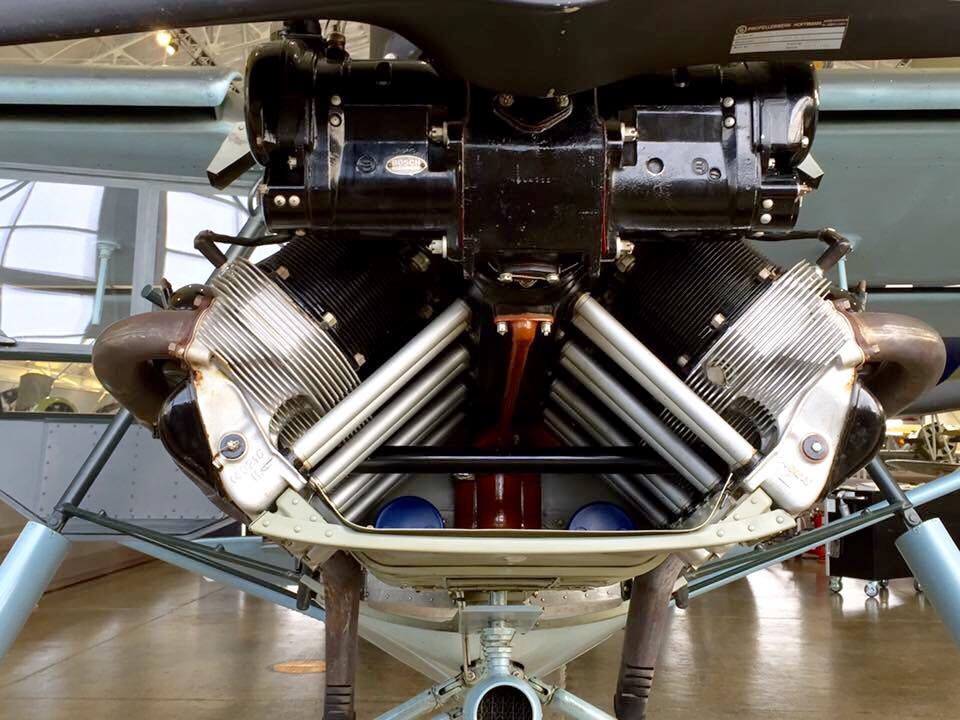
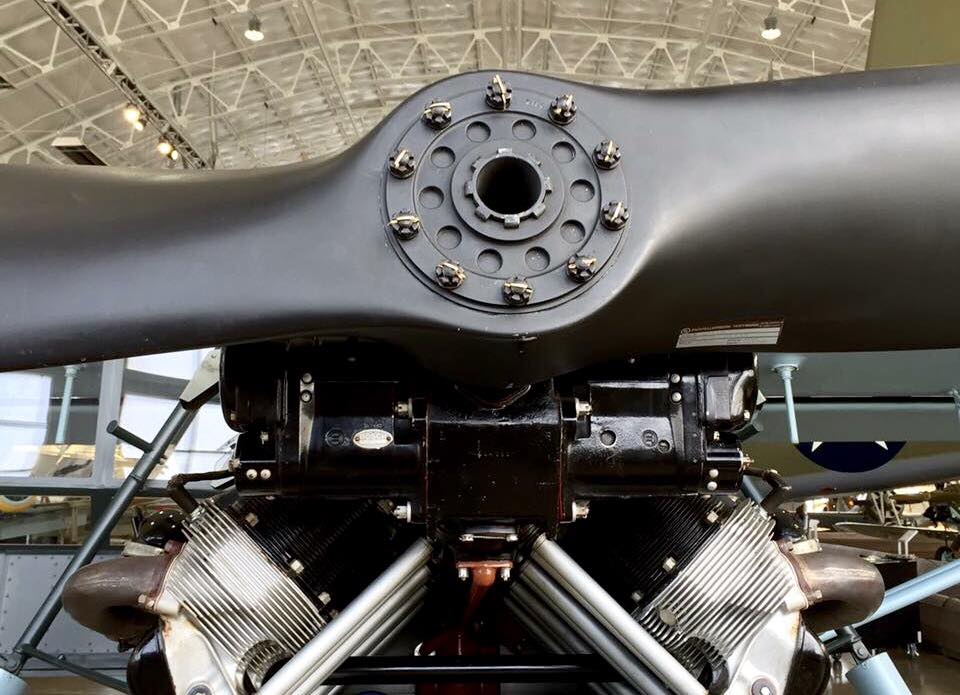
It is restored as code 2E+RA (Verbandskennzeichen or squadron identification code) which, according to some sources, indicates that this is aircraft “R” of the wing headquarters of Kampfgeschwader 54 “Totenkopf” (KG 54, Bomber Wing 54) that participated in Operation Barbarossa (the Nazi invasion of Russia) until it was finally withdrawn from the Eastern campaign on October 13, 1942 (the Luftwaffe archives seem to indicate “2E” is otherwise) As I recall, the markings on the cowling indicate an infantry role. It is fitted with an Argus As 10C-3 inverted V-8 engine. As far as I know, the yellow on the undersides of the wingtips and fuselage band was a common marking on the Eastern Front as an identifying marking to avoid friendly fire. Flight clips and walkaround videos:
Re-enactment of the “dogfight” here:
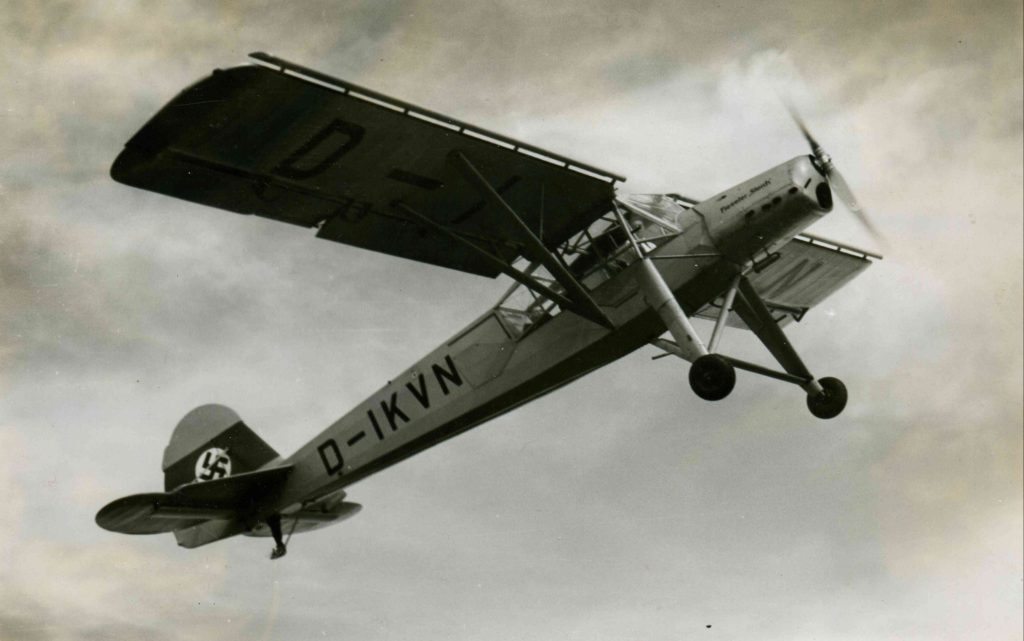
This is by no means a comprehensive accounting of the Storch. In 1935, the Reichsluftfahrtministerium (Reich Ministry of Aviation or RLM) drew up a requirement for a new liaison, forward air control (reconnaissance), and medical evacuation aircraft for the Luftwaffe; it stipulated the use of the Argus As 10 or Hirth HM 508 engine. Messerschmitt tendered its Bf-163 and Siebel-Flugzeugwerke KG presented its Siebel Si-201. Gerhard-Fieseler-Werke GmbH (until April 1939, known as Fieseler Flugzeugbau Kassel and located in Kassel, Germany) offered its design, conceived by its chief designer Reinhold Mewes and technical director Erich Bachem, which had far better short take-off and landing (“STOL”) performance.
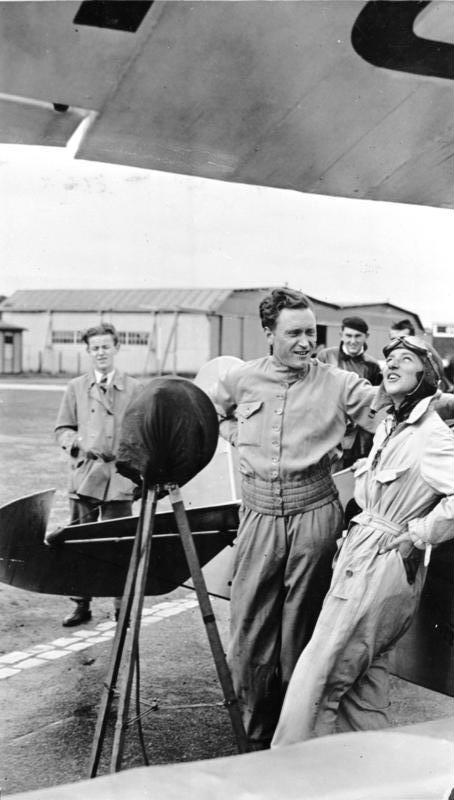
Gerhard Fieseler was a WWI ace who volunteered with the Imperial German Flying Corps. He flew on the Romanian Front and was then transferred to the Macedonian Front in 1917, where he flew with Königlich Preußische Jagdstaffel Nr. 25 (Royal Prussian Jagdstaffel 25) or “Jasta 25” (Fighter Squadron 25) and became known as the “Tiger of Macedonia.” His squadron had become so demoralized that he began flying missions on his own, developing his own aerial tactics, including installing a captured British Lewis gun on his Fokker D.VII that could fire at a 45-degree angle upwards. He was credited with 19 confirmed and 3 unconfirmed victories and decorated with the Iron Cross and the Golden Military Merit Cross. After WWI, Fieseler flew as an aerobatic pilot and in 1927, he developed a successful inverted fuel system that enabled him to perform the first negative loop.
The first Storch aircraft were delivered by 1937. In 1942, production also began by the French aircraft manufacturer Aéroplanes Morane-Saulnier under the name “Morane-Saulnier MS.500 Criquet” (and production continued there post-WWII). When the main Fieseler plant began producing components for the Bf-109 and Fw-190, production of the Fi 156 was transferred to the Leichtbau Budweis and Beneš-Mráz factories in Czechoslovakia (which also continued production post-WWII), and under license in 1942 with the Industria Aeronautică Română plant in Bucharest, Romania. As per the RLM requirements, the Storch was used for light duty liaison/ transport, mobile hospital and observation.
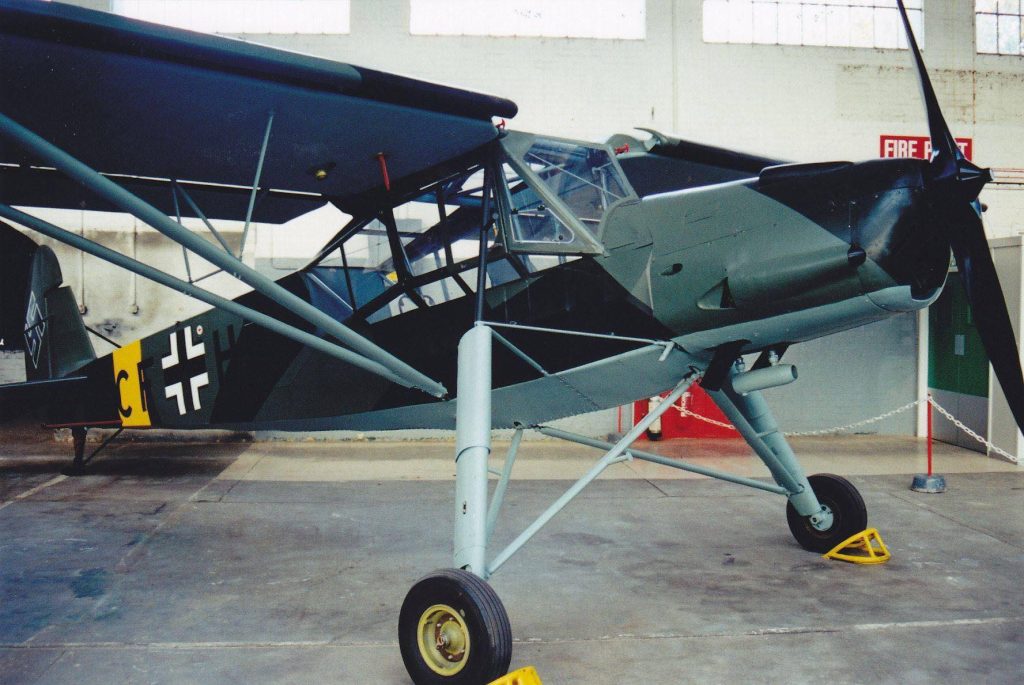
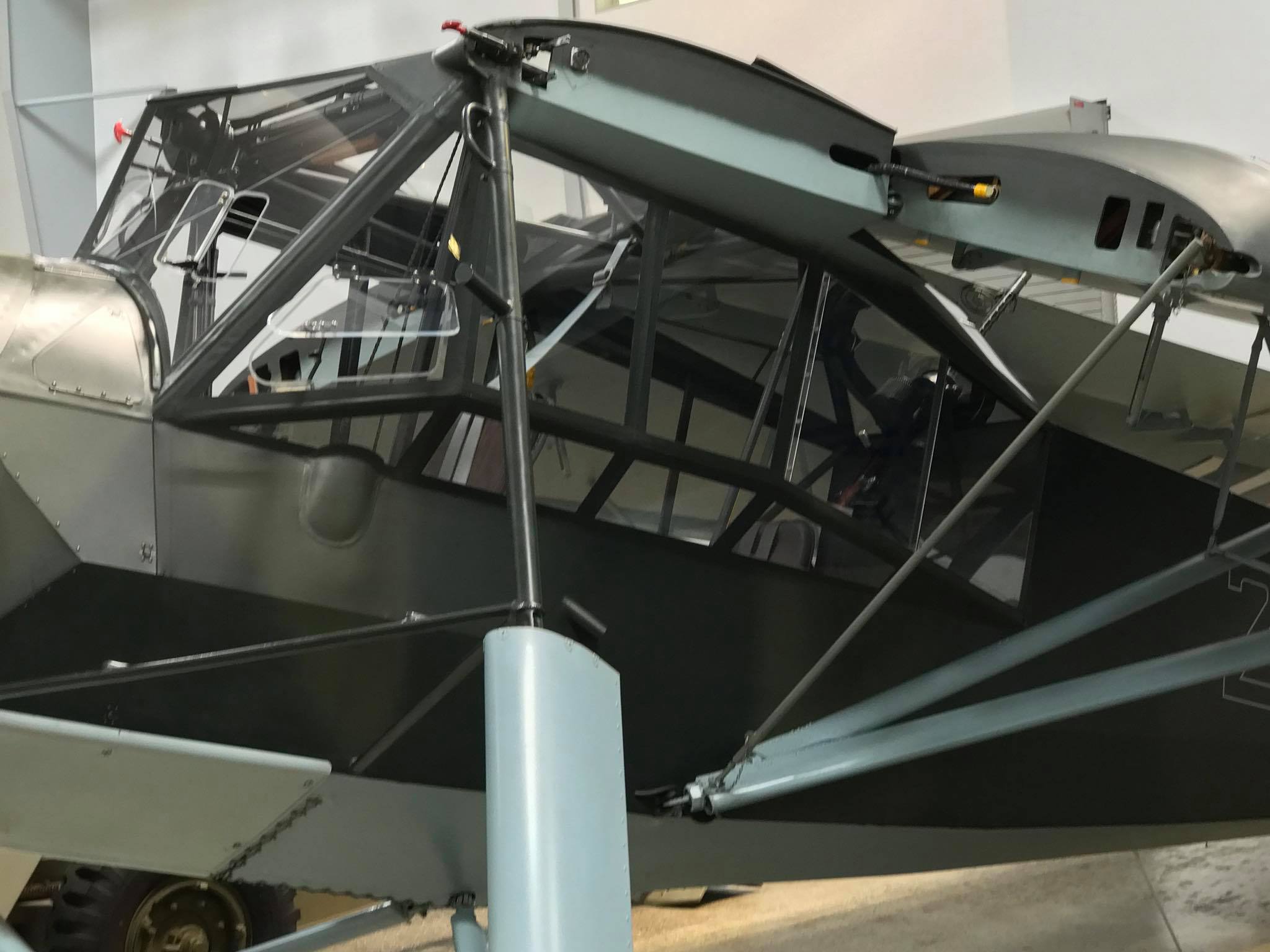
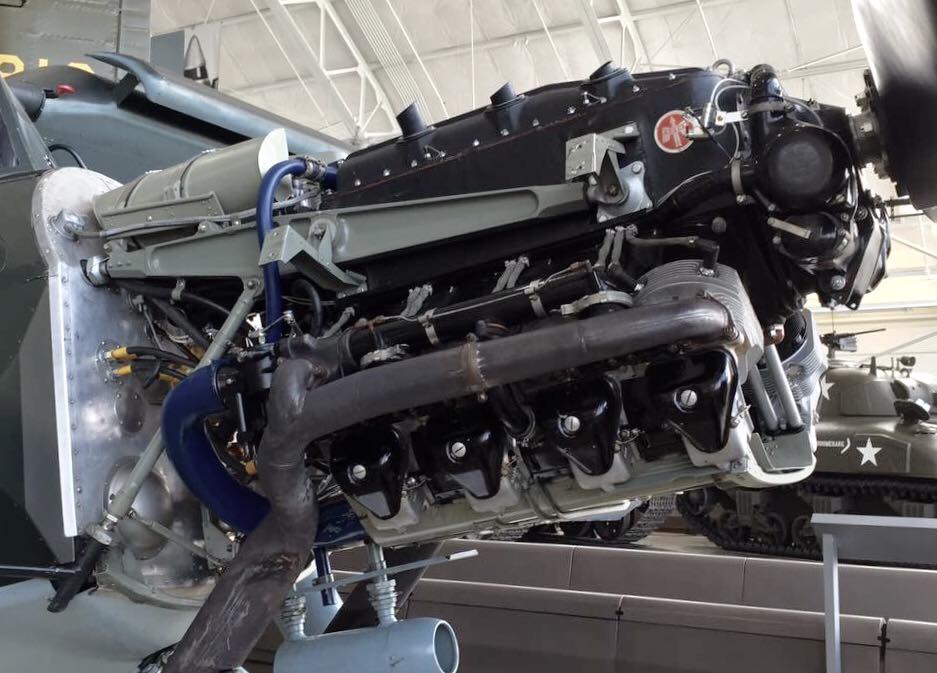
The C-2 variant had 30 thermoplastic panes to maximize visibility and was fitted with an Argus As 10C-3 inverted V-8 air-cooled engine with a large intake to prevent overheating (vintage photos of the Storch often show them flying with their side cowl panels removed). The engine is started by either hand crank or a (Bosch) starter for the 24 volt DC electrical system (and according to the Fieseler-Storch-Kassel website, as of this writing, there are no more than 10 of this engine type that are capable of flight, and this is one of two in an airworthy Storch). Fuel tanks are in the wings above either side of the cockpit (refueling being done by cans that became famously referred to worldwide as “Jerry Cans”); it does not have an electric fuel pump but instead has two engine-driven pumps and a hand-operated wobble pump to manually build pressure for starting.
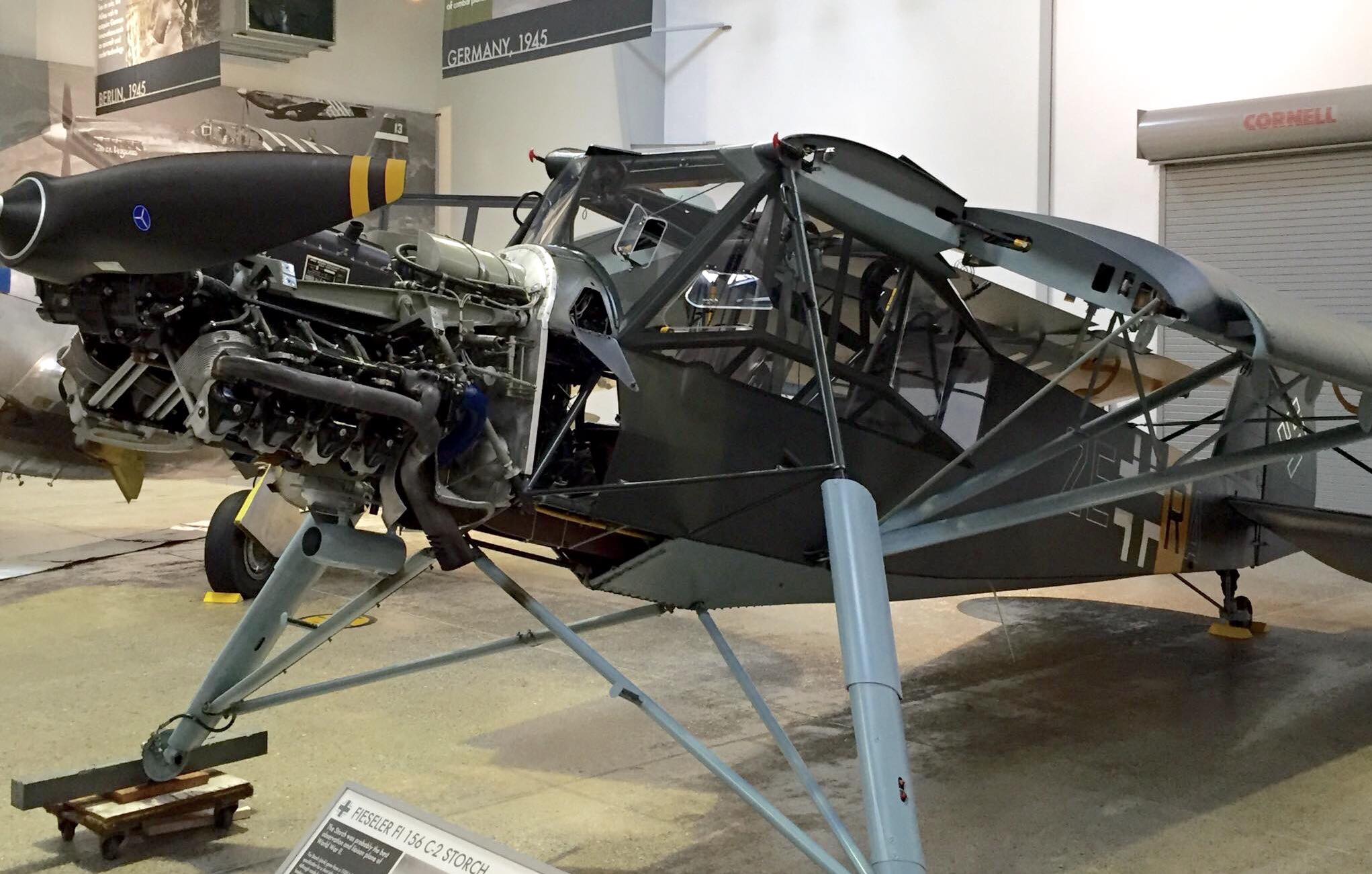
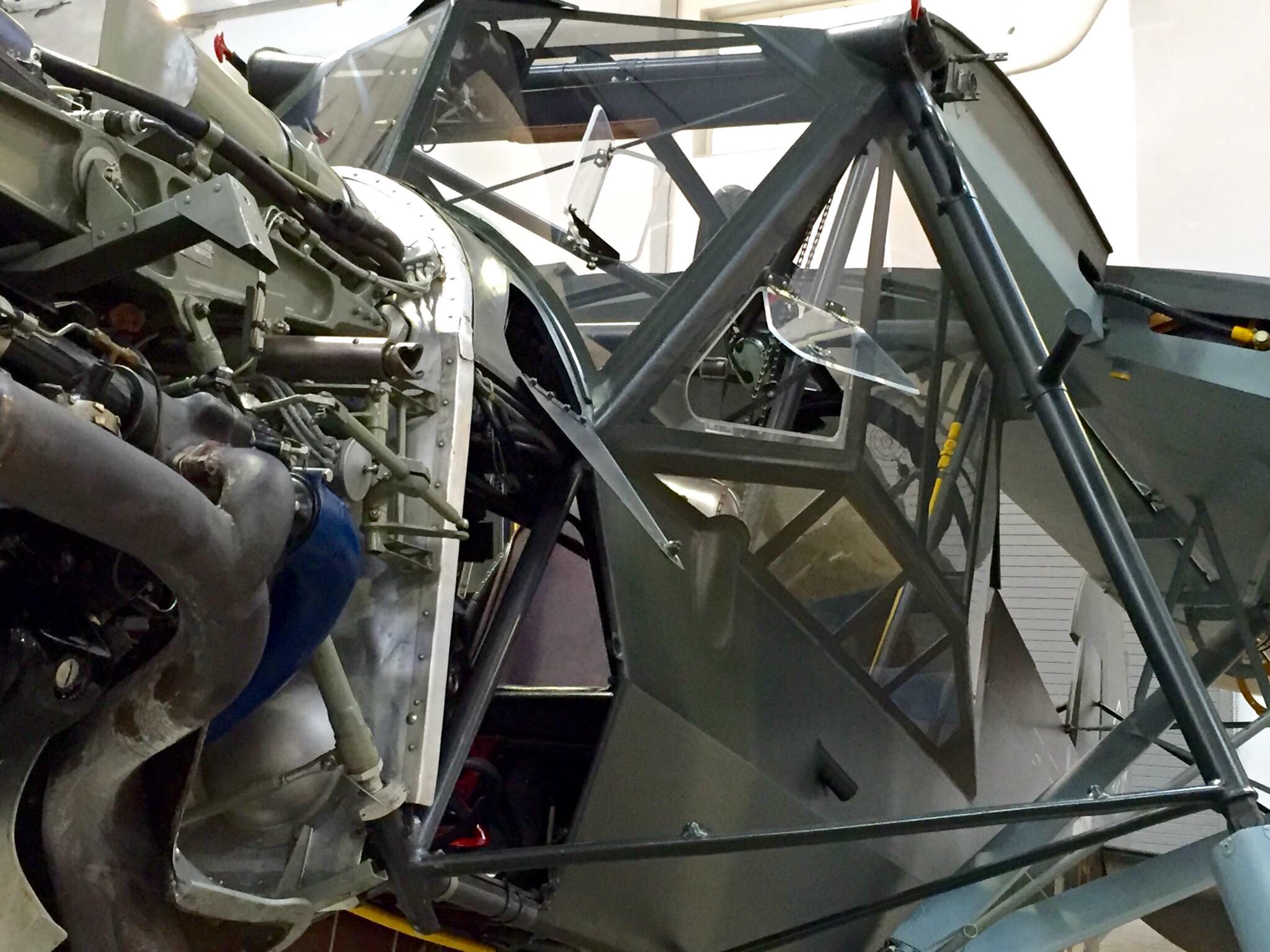
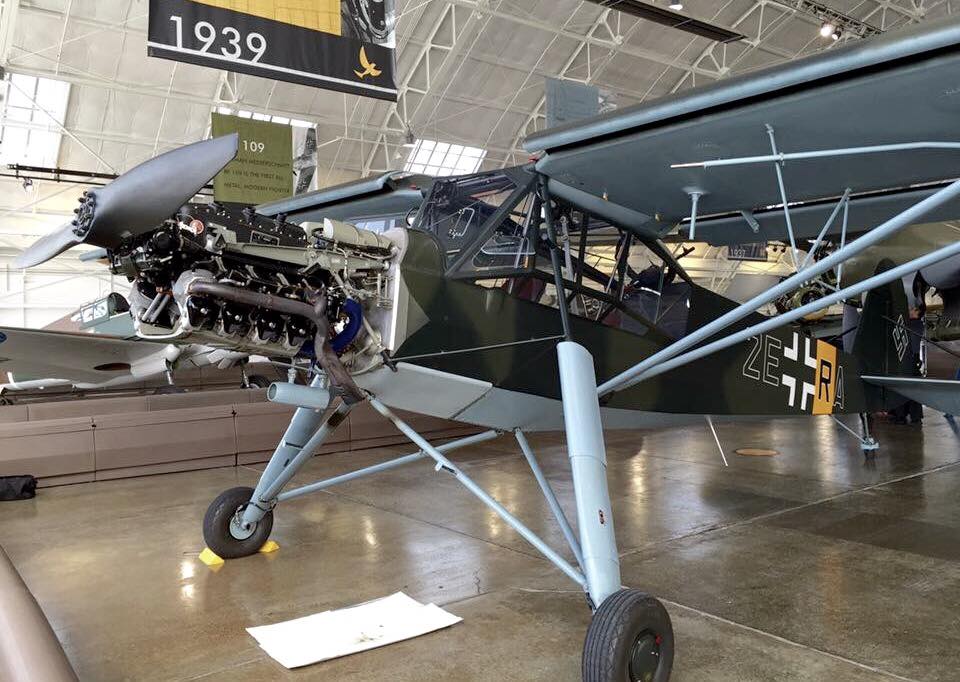
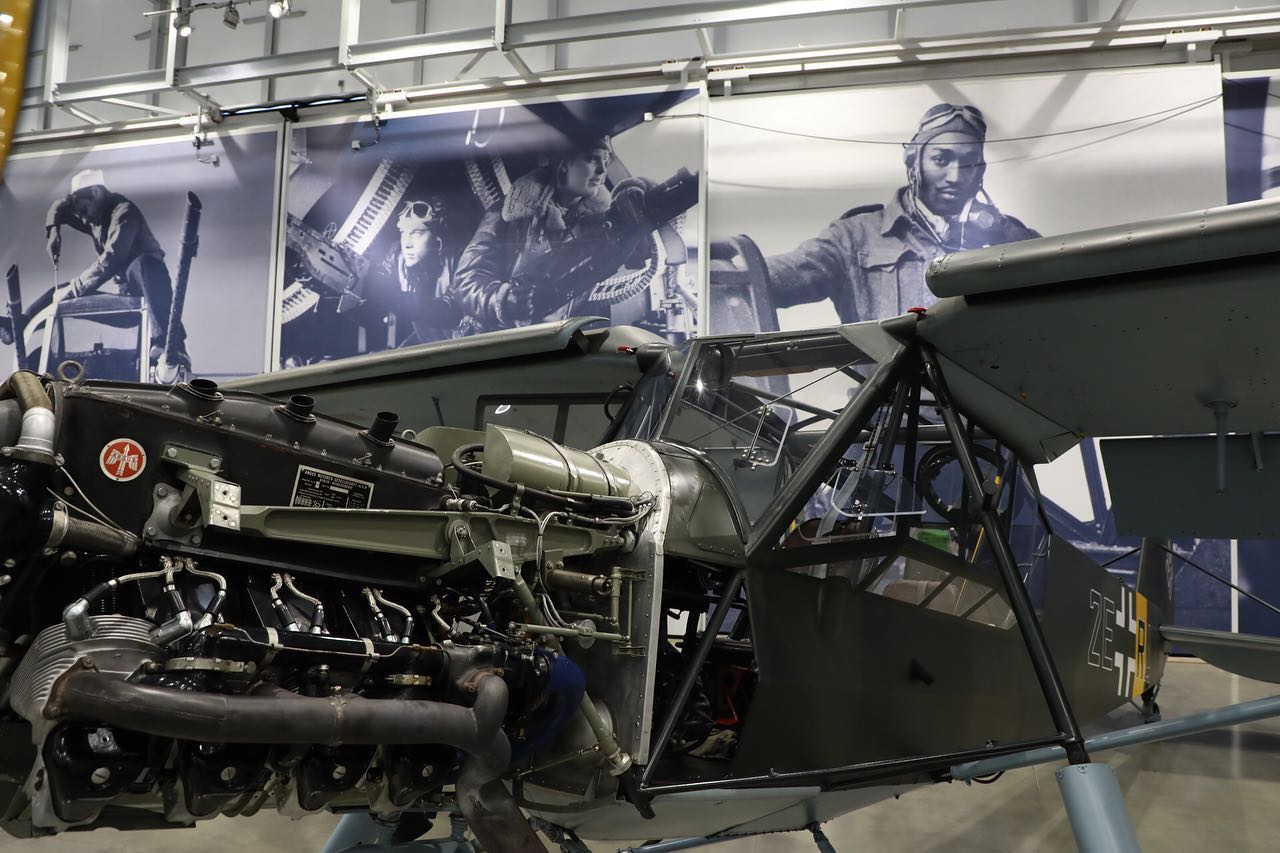
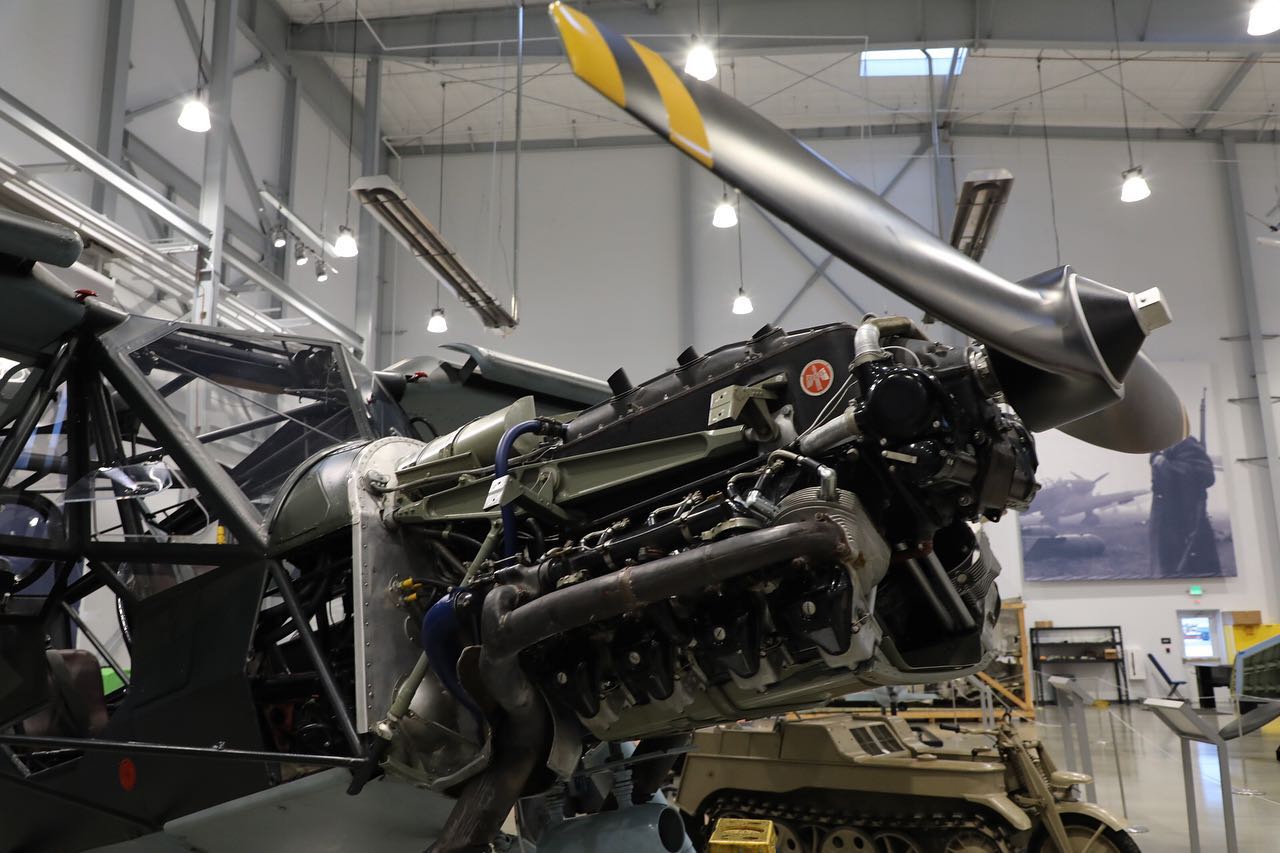
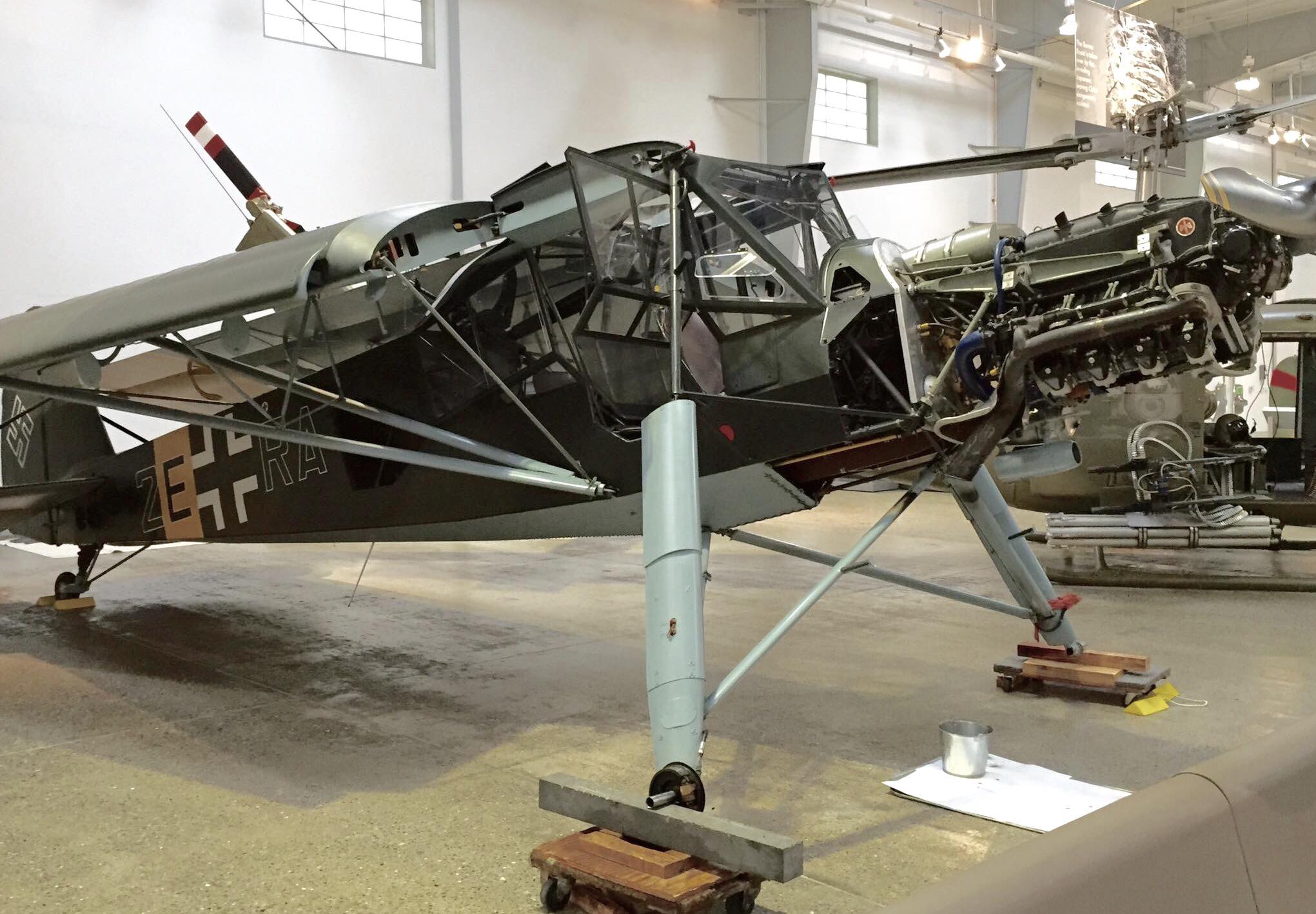
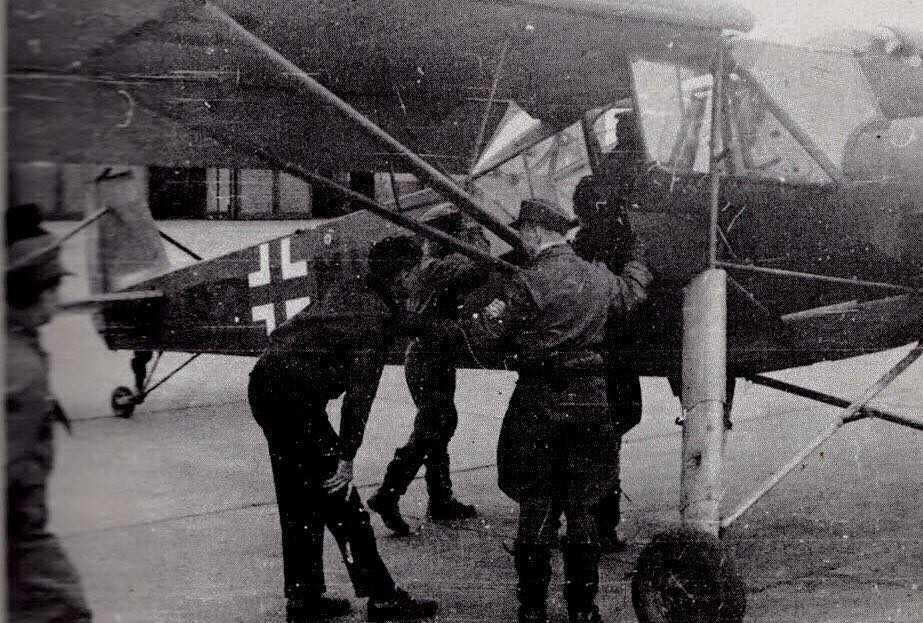
The Storch had a basic crew of two: pilot and observer/gunner sitting in tandem (although some had an emergency third seat, and provision was made for some to carry a vertical reconnaissance camera in place of the third crewman). The C-2 variant was fitted with a bulging cabin roof for a rear-facing Rheinmetall-Borsig 7.92 mm MG 15 machine gun mounted in a circular lens. The rear observer/gunner had a seat that folded and converted to a rear-facing stool. There is an inspection/stowage access panel on the starboard side of the fuselage behind the gunner’s compartment. As a hospital aircraft transporting wounded, an alligator hatch was added behind the observer’s seat (similar to the ones fitted on the Piper HE-1). For operations on snow-covered fields, some aircraft were fitted with skis and a tail skid. The long main landing gear struts have oil-and-spring suspension that had a travel of 450 mm (18 inches).
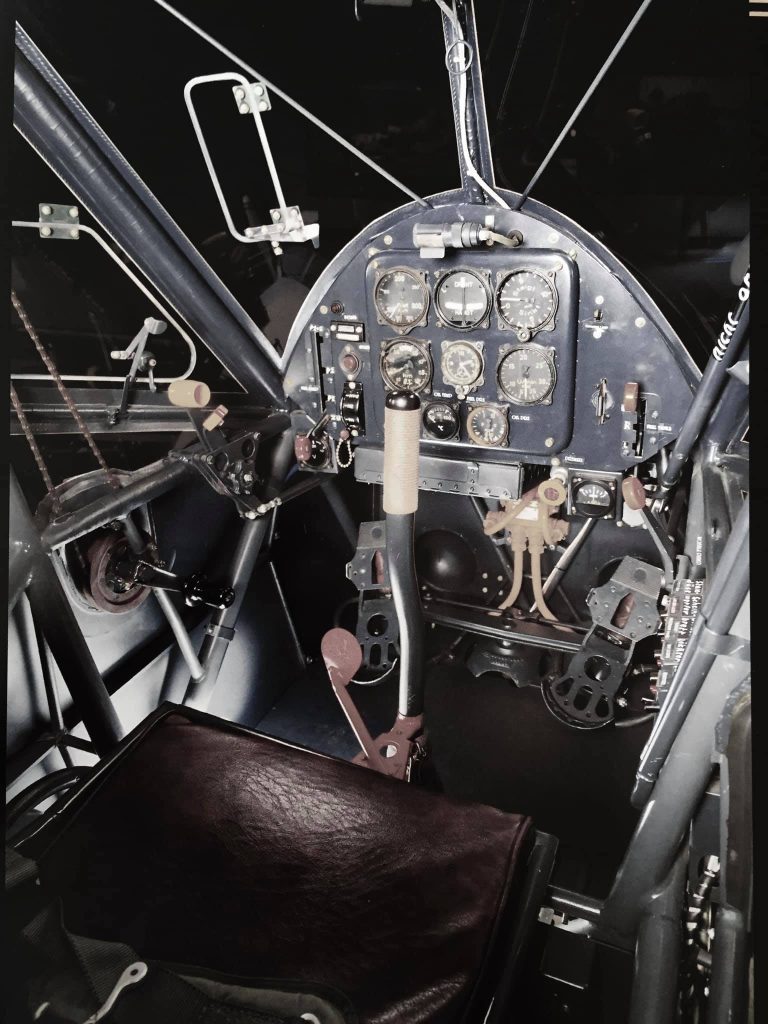
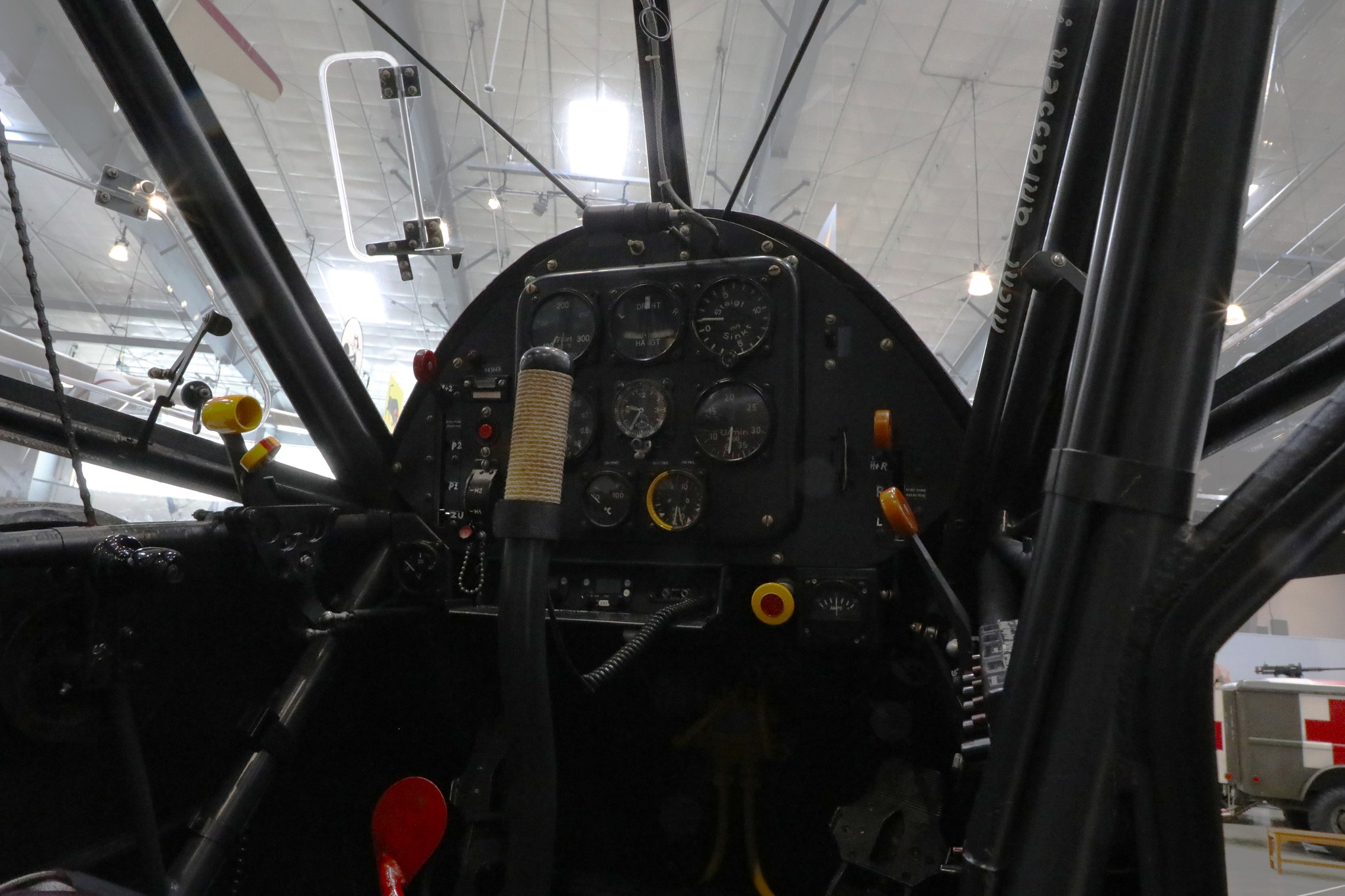
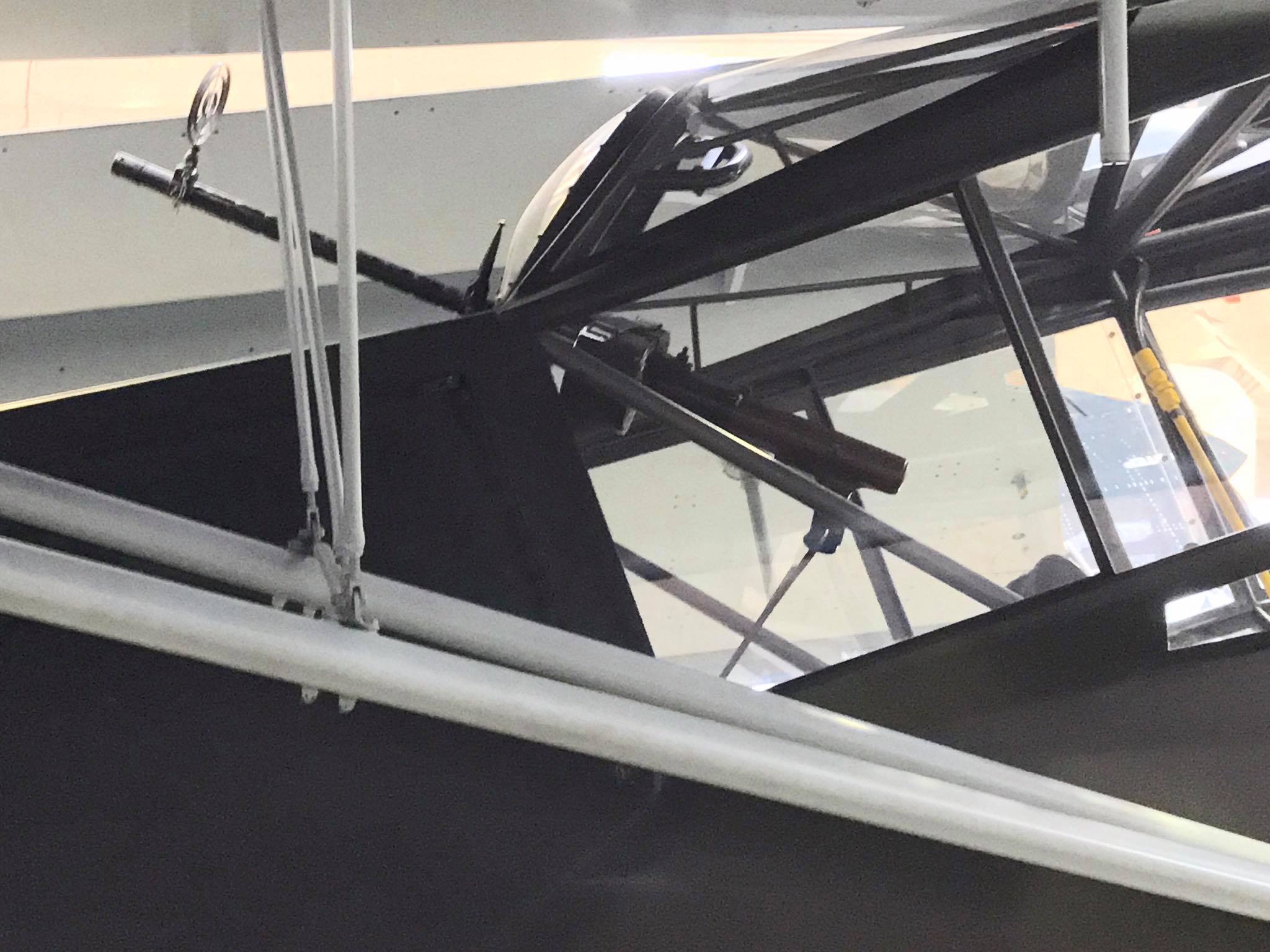
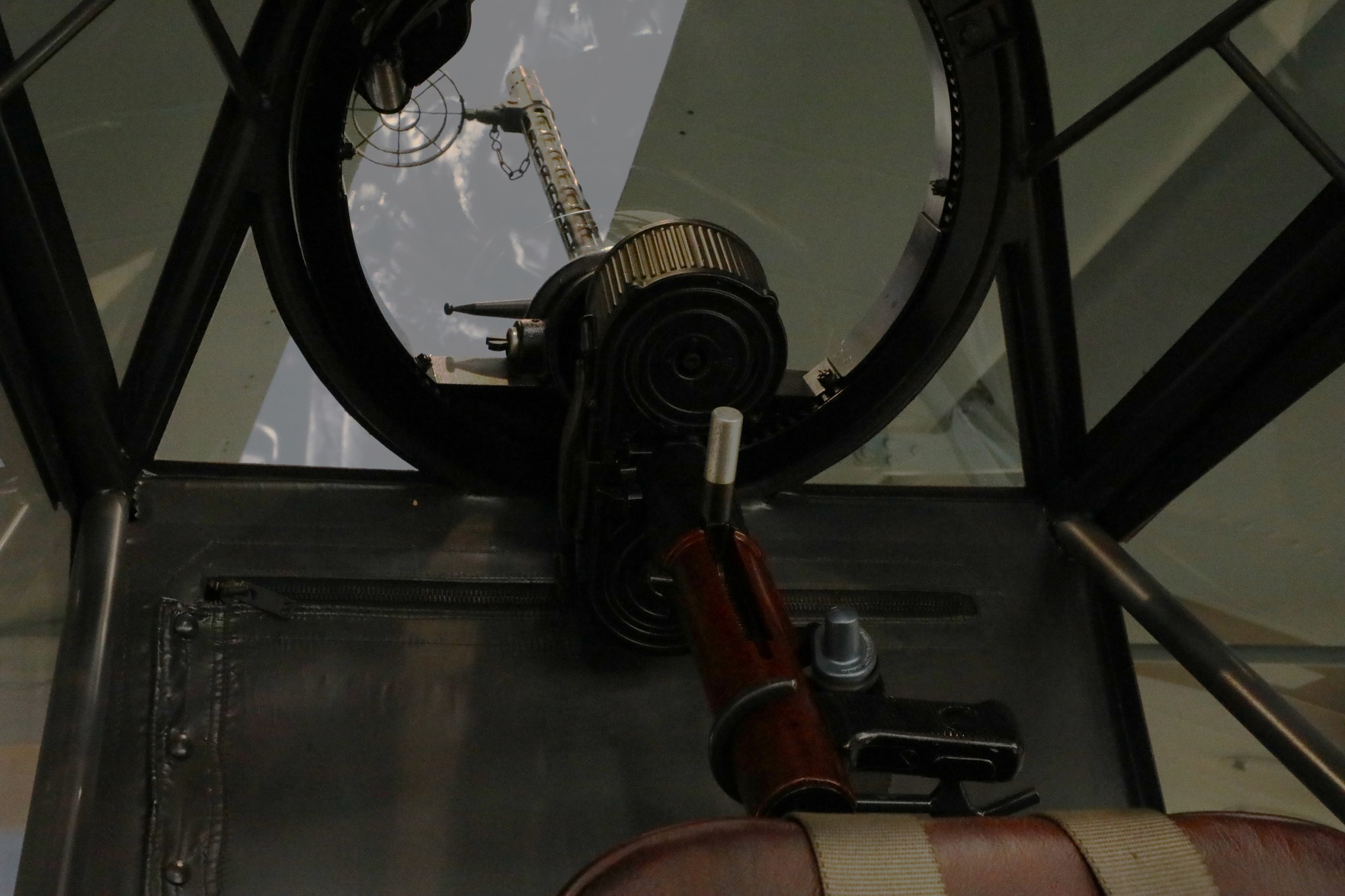
The aircraft’s STOL (short takeoff and landing) characteristics are aided by large wing trailing edge flaps and leading edge fixed “vorflügel” (in front of the wing) “slats” or referred to as “slots” in this case (basically leading edge slotted ailerons, as opposed to automatic, movable “slats” like those on the Bf-109, Me-262 and Antonov AN-2) to reduce stall speed and improve slow-speed handling (this was inspired by earlier 1930s Junkers “doppelflügel” [double wing] aircraft, such as the J 29, wing control surface designs, including the ailerons). The flaps may be fully extended to 40 degrees and are operated by cranking a sprocket wheel on the left cockpit sidewall that drives an exposed bicycle chain, which positions the flaps. The wings fold back for ground transport. It had a stall speed of 50 km/h (31 mph), could take off in less than 45 meters (150 ft.), and land in less than 18 meters (60 ft.) (in fact, the slow landing speed gave the appearance of landing vertically, or even backwards in strong headwinds).
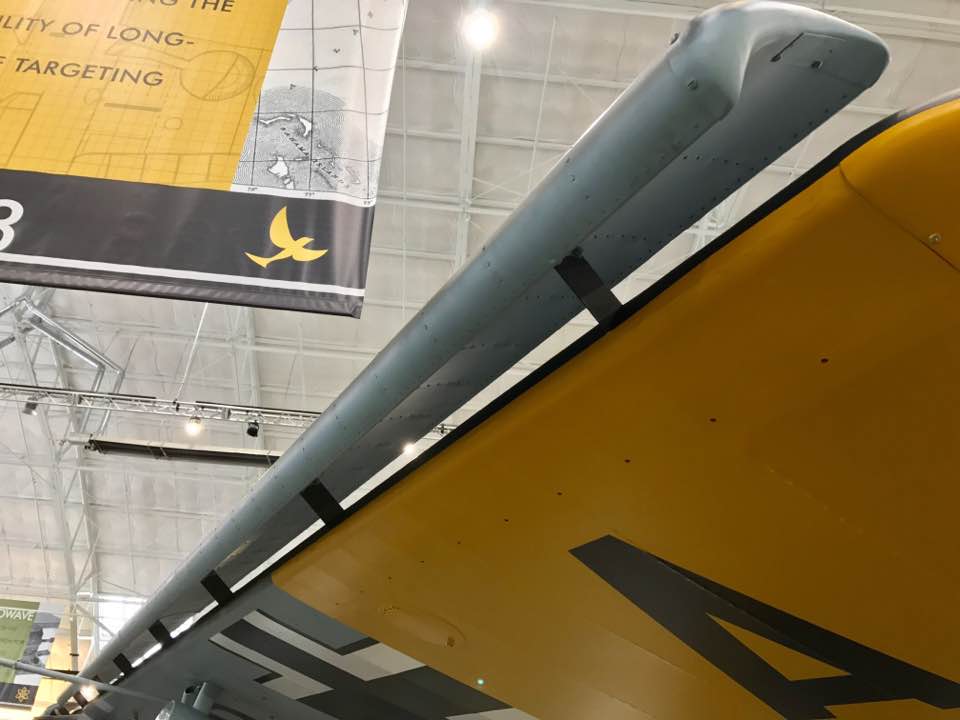
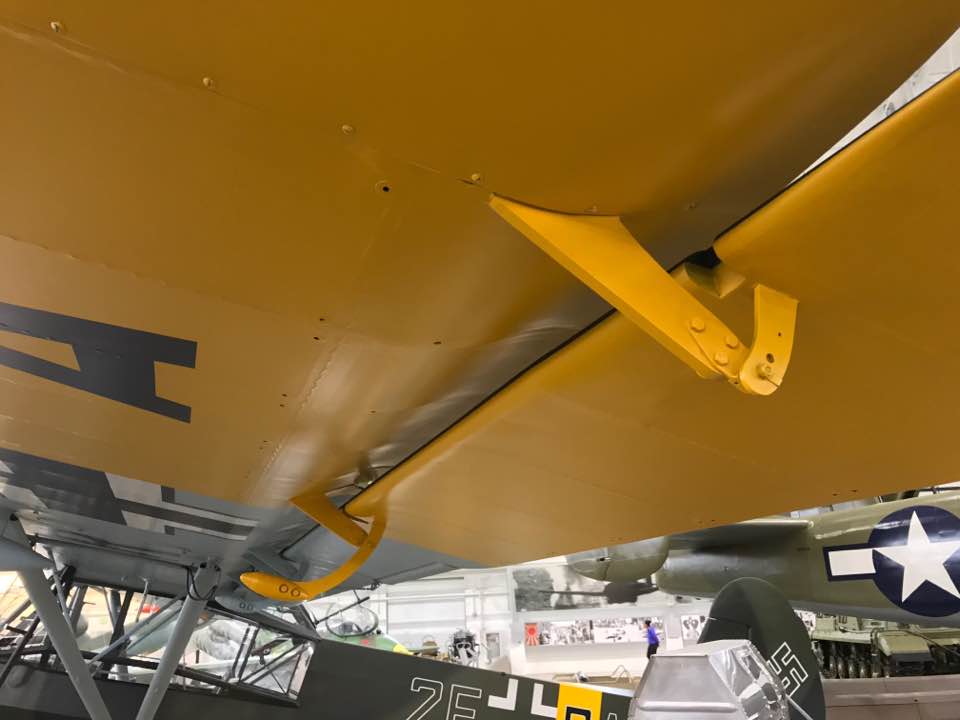
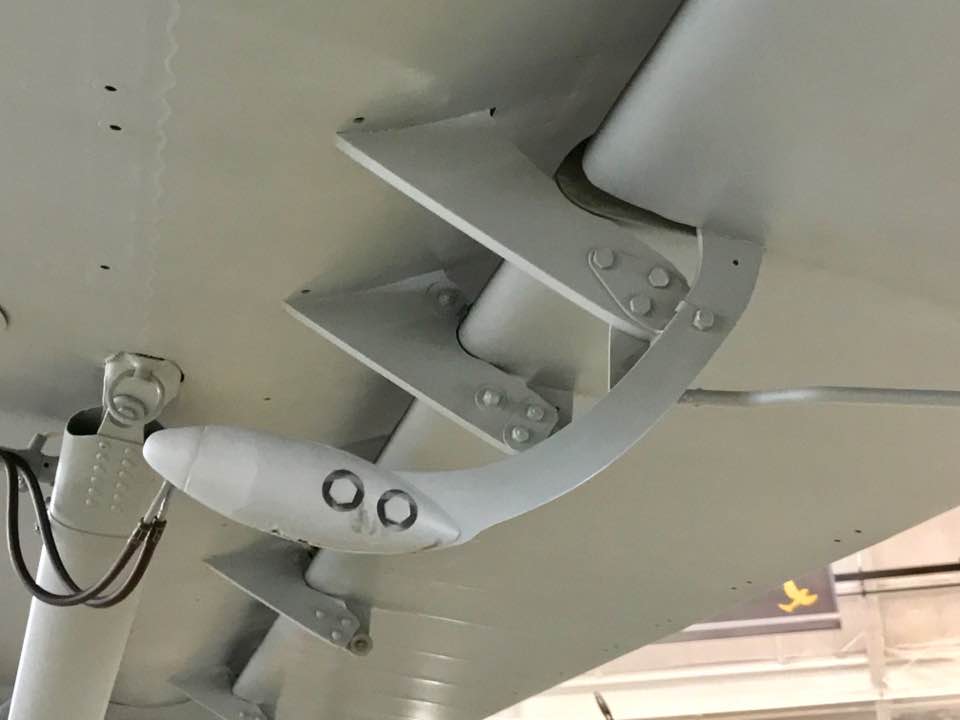
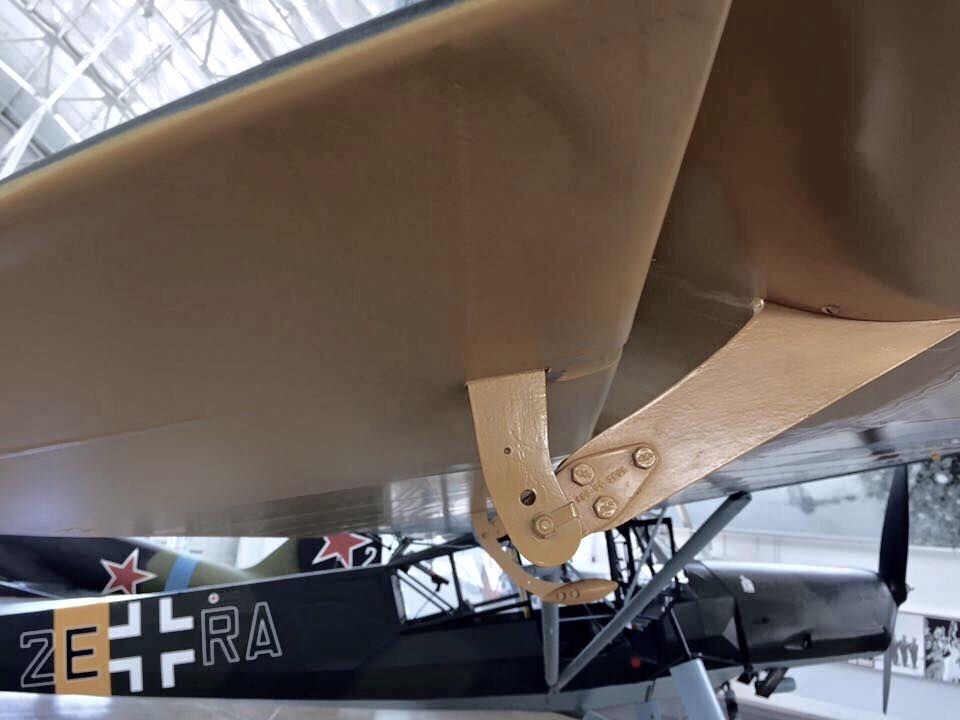
In all, about 2,900 Fi 156 aircraft (mostly C variants) were produced at Kassel from 1937 to the end of WWII, 925 in France including post-war production, at least 64 in Romania, and about 138 in Czechoslovakia. With the liberation of France in 1944, the French Armée de l’Air requested continued production by Morane-Saulnier (and they were flown in French Indochina and during the Algerian War later as well). In addition, after the signing of the Molotov-Ribbentrop Pact of 1939, Germany provided several of the aircraft type to the Soviet Union. Oleg Konstantinovich Antonov, who at the time was working for Yakovlev’s Sportsplane Factory (later the Yakovlev Design Bureau, designer of Yak aircraft), was made responsible for putting the aircraft into production under license, either by designing an equivalent or merely copying the German design, the latter was selected. Two variants were planned: the SS 3-seat liaison and the N-2 air ambulance. A prototype was built in Kaunas, Lithuania, which was flown by the end of 1940, and production was beginning, but the factory was captured during the German advance of Operation Barbarossa, which began in 1941 (after WWII, Antonov was directed to create his own Experimental Design Bureau (OKB) at Novosibirsk, which ultimately led to the well-known Oleg Konstantinovich Antonov Design Bureau No. 153 (OKB-153).
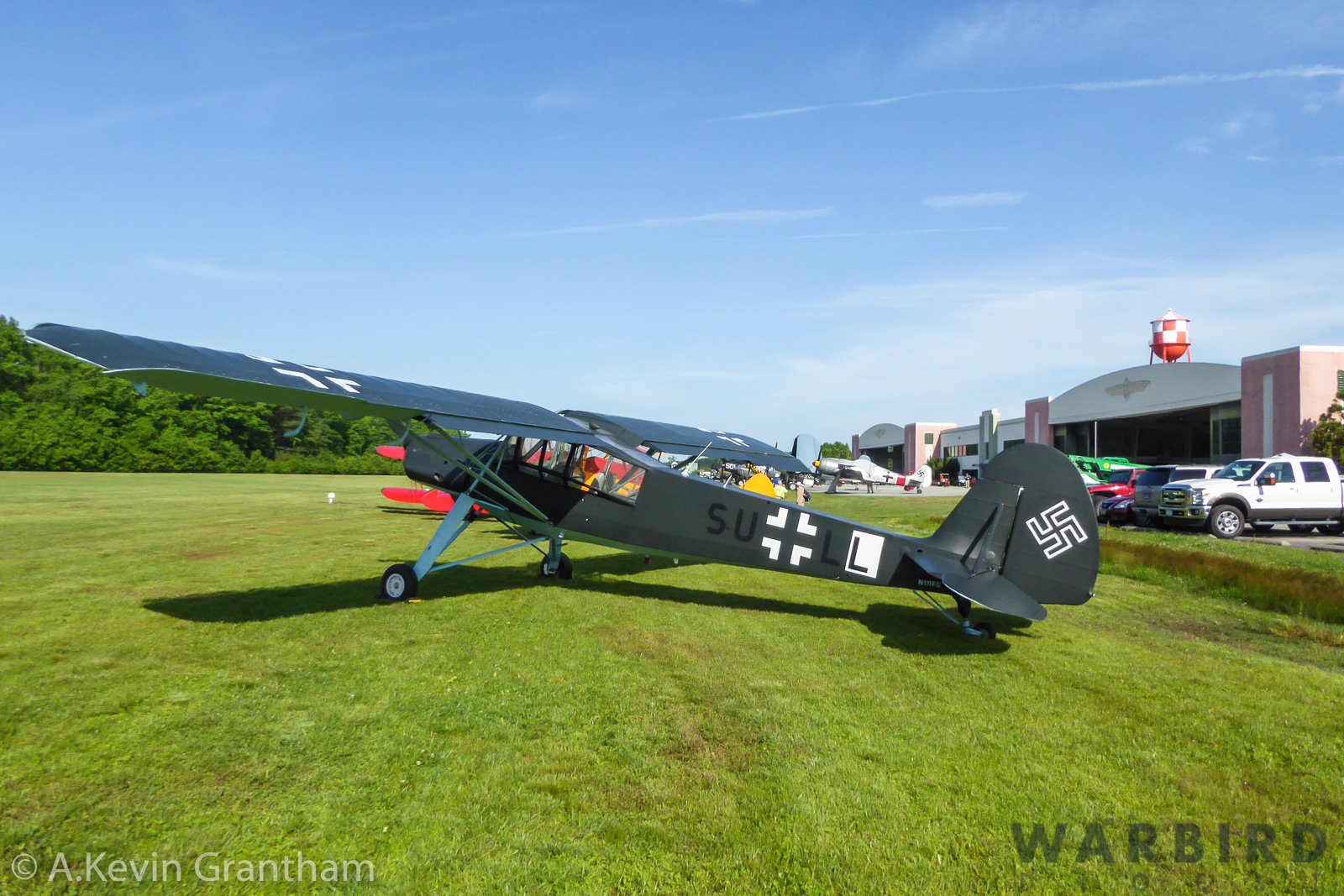
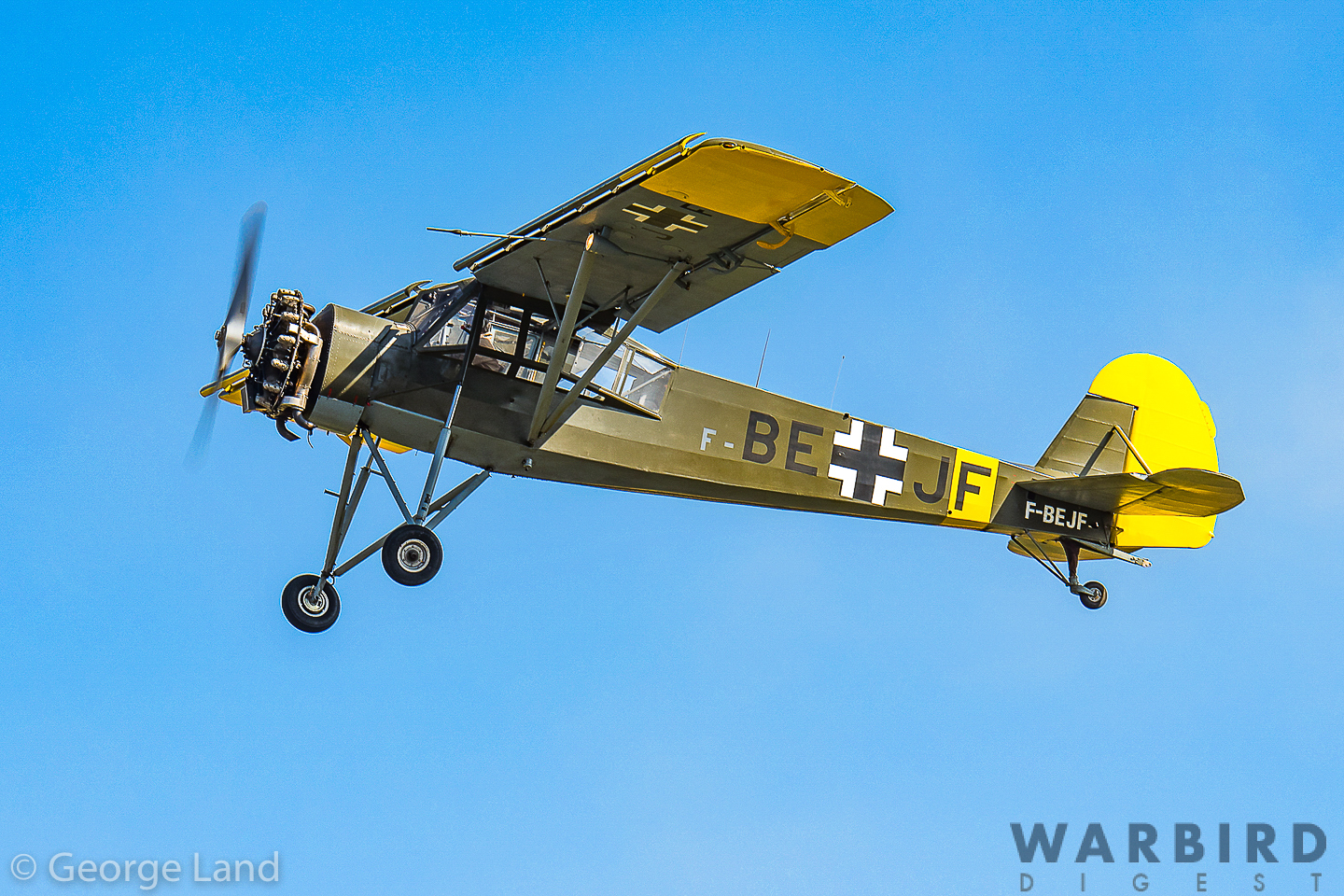

The Storch saw service in all European and North African theaters of WWII (and French Indochina and Algeria as mentioned) and flew for many air forces both during and post-WWII. By Hitler’s orders, on September 12, 1943, in Operation Eiche, led by a special detachment of German paratroopers and Waffen-SS commandos, a Storch flew Italian dictator Benito Mussolini out of the Gran Sasso in Italy. On April 26, 1945, pilot Hanna Reitsch was riding in a Storch piloted by Robert Ritter von Greim on a flight to the Führerbunker in Berlin. Greim was hit in the right foot by Russian ground fire and passed out, so Reitsch took over the controls and landed at a makeshift field at the Tiergarten near the Brandenburg Gate. Hitler would not leave, but appointed Greim as Hermann Göring’s replacement as head of the Luftwaffe (following Göring’s failed peace initiative with the British and his telegram to Hitler suggesting he take over the Reich).
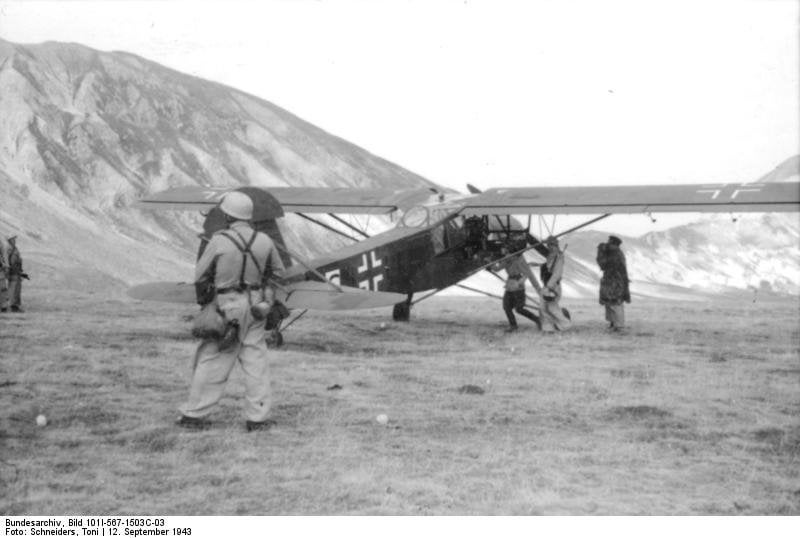
A Storch was the last recorded German aircraft shot down in a “dogfight” in WWII. On April 11, 1945, Lt. Duane Francies and Lt. Bill Martin were flying a U.S. L-4 Grasshopper observation plane near Berlin and, having come upon a Storch, emptied their Colt .45 caliber service revolvers from the doors of the Grasshopper into the windshield, fuel tanks and right wing of the Storch; a wing touched the ground, and they crashed. The Americans landed nearby, captured the wounded Germans, provided first aid, and turned them over to a tank crew. Some Allied commanders and heads of state, such as Field Marshal Bernard Montgomery and Prime Minister Winston Churchill, commandeered Storches as one of their transport aircraft.
About the author 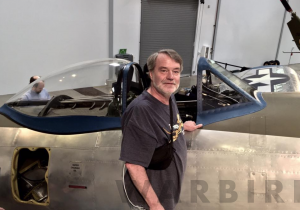
Randy Malmstrom grew up in a family steeped in aviation culture. His father, Bob, was still a cadet in training with the USAAF at the end of WWII, but did serve in Germany during the U.S. occupation in the immediate post-war period, where he had the opportunity to fly in a wide variety of types that flew in WWII. After returning to the States, Bob became a multi-engine aircraft sales manager and, as such, flew a wide variety of aircraft; Randy frequently accompanied him on these flights. Furthermore, Randy’s cousin, Einar Axel Malmstrom, flew P-47 Thunderbolts with the 356th FG from RAF Martlesham Heath. He was commanding this unit at the time he was shot down over France on April 24th, 1944, and spent the rest of the war as a prisoner of war. Following his repatriation at war’s end, Einar continued his military service, attaining the rank of Colonel. He was serving as Deputy Wing Commander of the 407th Strategic Fighter Wing at Great Falls AFB, MT, at the time of his death in a T-33 training accident on August 21, 1954. The base was renamed in his honor in October 1955 and continues to serve in the present USAF as home to the 341st Missile Wing. Randy’s innate interest in history in general, and aviation history in particular, plus his educational background and passion for WWII warbirds, led him down his current path of capturing detailed aircraft walk-around photos and in-depth airframe histories, recording a precise description of a particular aircraft in all aspects.
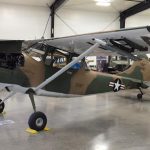








I have visited the Air Museum at Swartkops near Pretoria RSA. The have a Storch there, but it resides in a darkened hangar, not currently open to the public. I had to work hard to get the custodians to allow me to see it.
Just thought you would like to know that it was there.
I could not find a one who knew anything about the plane! They were happy to appoint me “expert” as at least i knew something about it that I could pass on to them. I have some pictures if anyone is interested.
[email protected]