






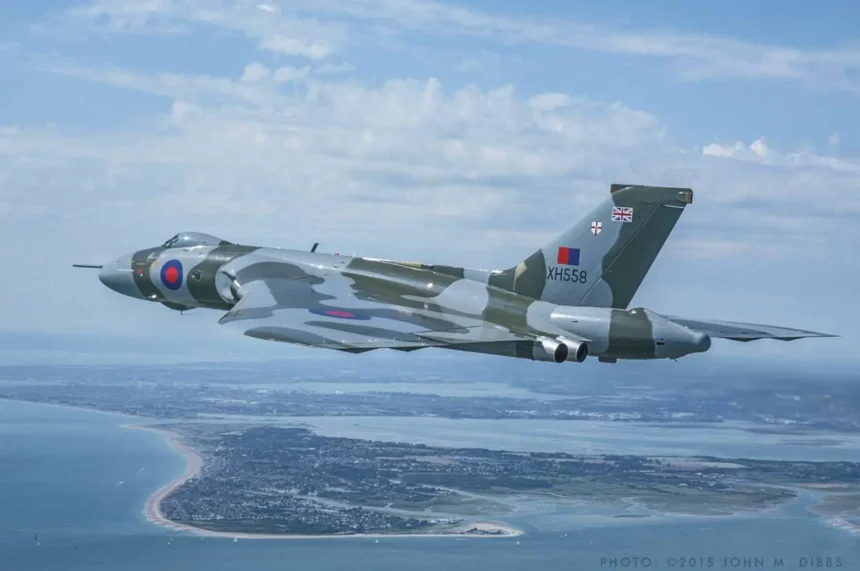

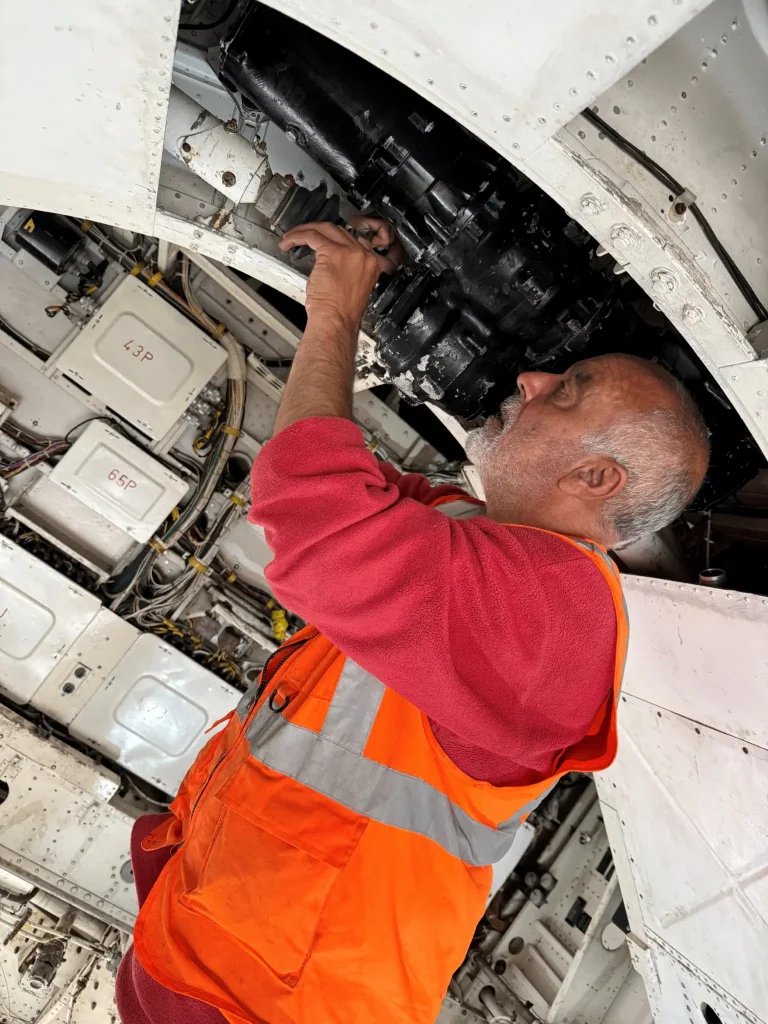
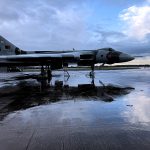
On August 27, the Vulcan to the Sky Trust provided updates on its work to restore Vulcan XH558 for future generations as fundraising continues. In its monthly newsletter, the Trust first updated readers on the starboard landing light. During routine checks earlier this year, the team found that the landing light was not working properly. It could only move to the ‘Land’ position and would not move to the ‘Taxi’ position. According to the Trust, Taxi Position means fully extending the landing lights. In this position, the lights point almost at a right angle to the wing. When the Vulcan is on the ground, its nose is relatively low, and fully extending the landing lights angles them to light up the taxiway right in front of the aircraft, about 50 to 60 feet ahead, similar to how a car’s headlights shine on the road ahead. The ‘Land’ Position means the landing lights are partially extended, tilted less toward the wing. The Vulcan aircraft approaches landing at a steep angle, which is why the lights need this angle. Keeping the lights pointed down ensures they shine directly onto the runway as the aircraft lands. To correct it, Kevin ‘Mouse’ Penfold removed the landing light for maintenance and found that surface corrosion was the cause of the issue. After bench testing, he refitted the light to the aircraft and tested it in place, and it is now working perfectly. The Trust then provided an update on the aircraft’s Airborne Auxiliary Power Plant (AAPP), work that has been ongoing for several months.
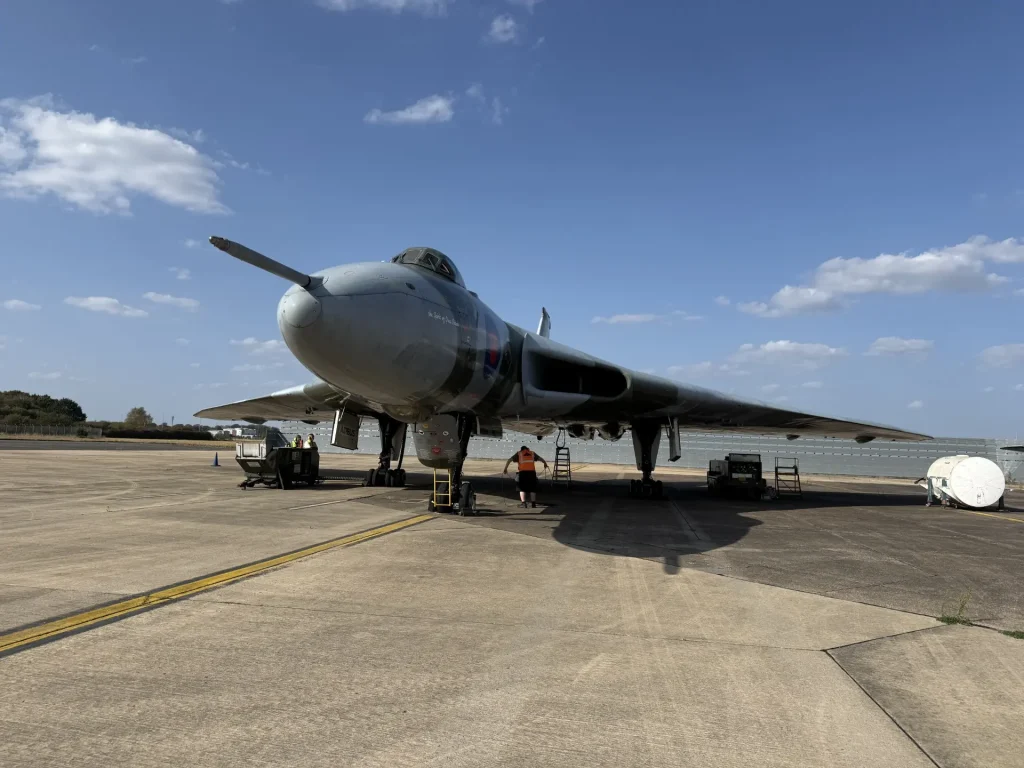
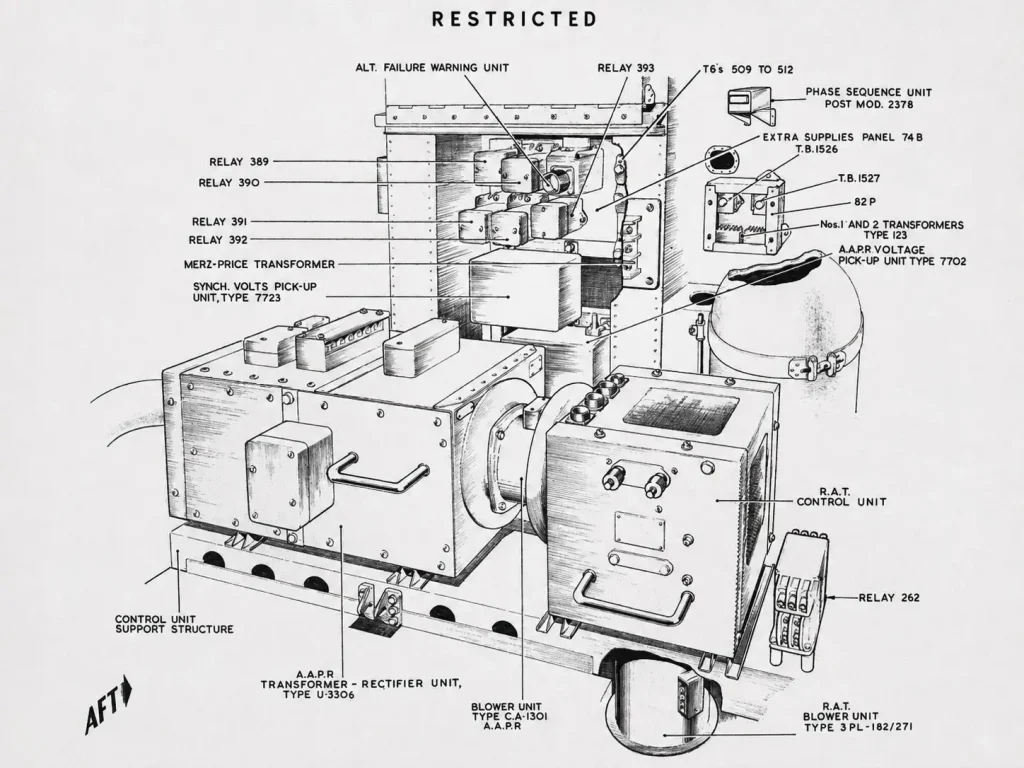
The AAPP investigations continued in August. First, the Trust inspected all fuses and wiring, which were in good condition. The team decided to replace relay 484 to make sure it works properly. However, the relay is located very close to the AAPP’s exhaust, so testing it while the AAPP runs would not be ideal, as it becomes hot, especially on a summer day. Therefore, the engineers removed the old relay, replaced it with a working one, and bench-tested the removed relay. So, why replace Relay 484? The Trust cited the aircraft’s manuals for this, which said, “With the AAPP running, contacts 484/1 will close to energize relay 393 via contacts 2-5 of the AAPP Voltage Pick-Up (VPU). Contacts 393/1 will then close to initiate field flashing of the AAPP alternator.” The manual further added that when starting the alternator, field flashing begins when relay 484 is energized. Power from fuse 955 goes through contacts 484-1 and 2-5 of the VPU to energize relay 393. It closes contacts 393-1, allowing power from fuse 484 to flow to the alternator field windings through pins 10-9-F of the transformer rectifier unit (TRU). When the AAPP is started and running, the alternator will energize the field with rectified output. With the AAPP running, check that the output voltage and frequency are correct before switching the alternator onto the synchronizing busbar. To do this, the manual says to press the button labeled AAPP TEST on 10P. It connects the output to the voltmeter and frequency meter on the synchronizing busbar.
The output connects to the meters via a No. 2 transformer in 82P, allowing the voltmeter to measure voltage to earth; according to the manual, readings should be 115V and 400 c/s. Hence, Relay 484 starts the field-flashing sequence, which helps “recharge” the weak magnets inside an alternator so it can generate power. Here’s how it works: a temporary direct current (DC) is sent to the alternator’s field windings. The short burst of DC power re-magnetizes the rotor’s magnetic field. After the rotor is re-magnetized, the alternator can begin producing the 3-phase, 200-volt, 400Hz power needed by the aircraft. Without field flashing, the AAPP will not generate any voltage. However, after testing, the Trust still did not achieve the 115 V phase-to-ground reading from the AAPP, so it needs to do more work to bring it back online. Another update provided was about airbrakes. The engineers started removing the airbrake motors and gearbox assembly because the airbrake B motor failed during testing earlier this year. First, the team will shut off power to the motors and disconnect two electrical connections, one for each motor. Next, it will remove the driveshafts on either side of the gearbox. Finally, it will take out the eight bolts that hold the unit to the airframe in the bomb bay. The Trust is currently deciding how long this job will take and the safest way to do the work before starting the removal. In addition to larger projects, the team has kept up with regular aircraft maintenance and also conducted several engine runs. For more information, visit www.vulcantothesky.org













“as engineers continue the effort to return the iconic bomber to the air” this article reads as AI and that caption is extremely misleading.
Hello AI expert…not! The article is not AI and comes directly from the Vulcan to the Sky.
Hi have I got this right, is XH558 will fly again after all the work has been done?
It says ‘ engineers continue the effort to return the iconic bomber to the air’. I thought all Vulcans were grounded permanently and will never fly again due to airframe isdues. Has this changed?
Is Kevin Penfold an aircraft electrician
As I remember a similar named person at RAF Marham
When in Malta many years ago now, i along with family, stood in awe at the sight of Vulcans taking off on a night bombing exercise.
Majestic.
Xh558 will never fly again
Great to see that there is a team and a trust to get the Vulcan Flying again.