






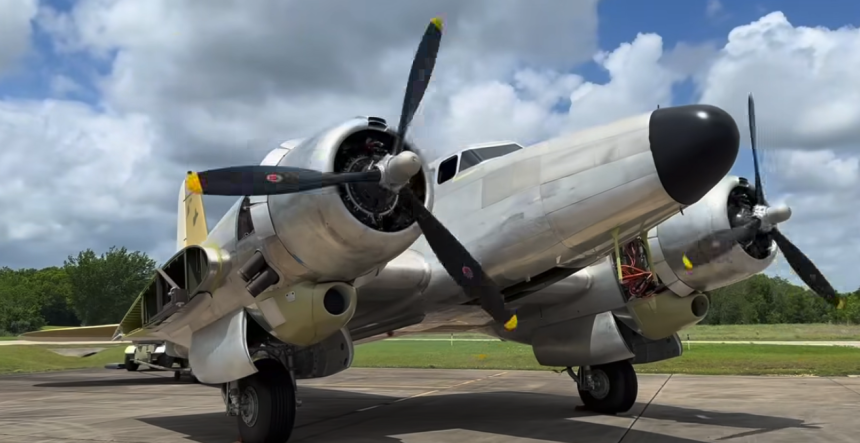

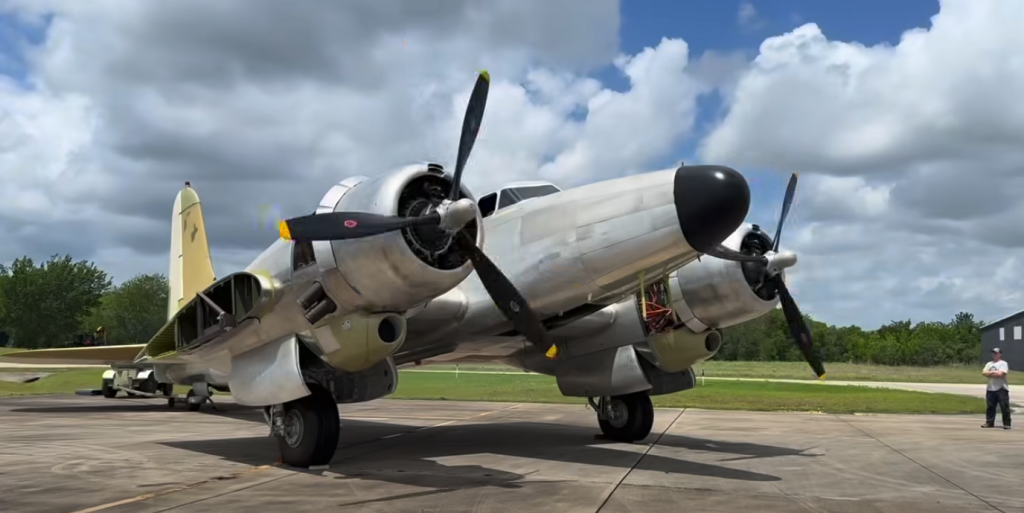
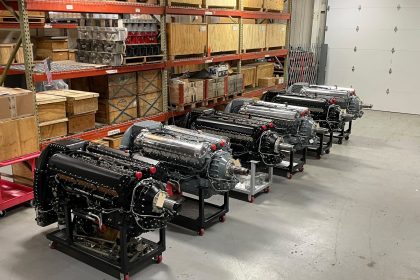
A rare Douglas B-23 Dragon reemerged on April 23, 2026, at Pearland Regional Airport in Texas. The aircraft, once owned by Howard Hughes, has been undergoing restoration for several years and is now in the hands of a private owner. According to a December 2024 Facebook post by the National Museum of World War II Aviation, the aircraft is associated with collector Jim Slattery. Originally developed as a successor to the Douglas B-18, the twin-engine B-23 first flew in July 1939. Warbird Aero Restorations recently published a video showing the aircraft’s freshly rebuilt Wright R-2600-3 engines being run, marking a significant milestone in its return to flight.
A total of 38 B-23s were built, serving initially as U.S. Army Air Forces medium bombers before being relegated to secondary roles during WWII, including reconnaissance, training, transport, and test duties. Several aircraft converted for transport use were redesignated UC-67s. Following the war, all surviving examples were declared surplus, and many entered civilian service as cargo and executive transports. This airplane was a straight B-23 bomber from the beginning to being surplus, and all the modifications to a transport were done after it was a civilian airplane.
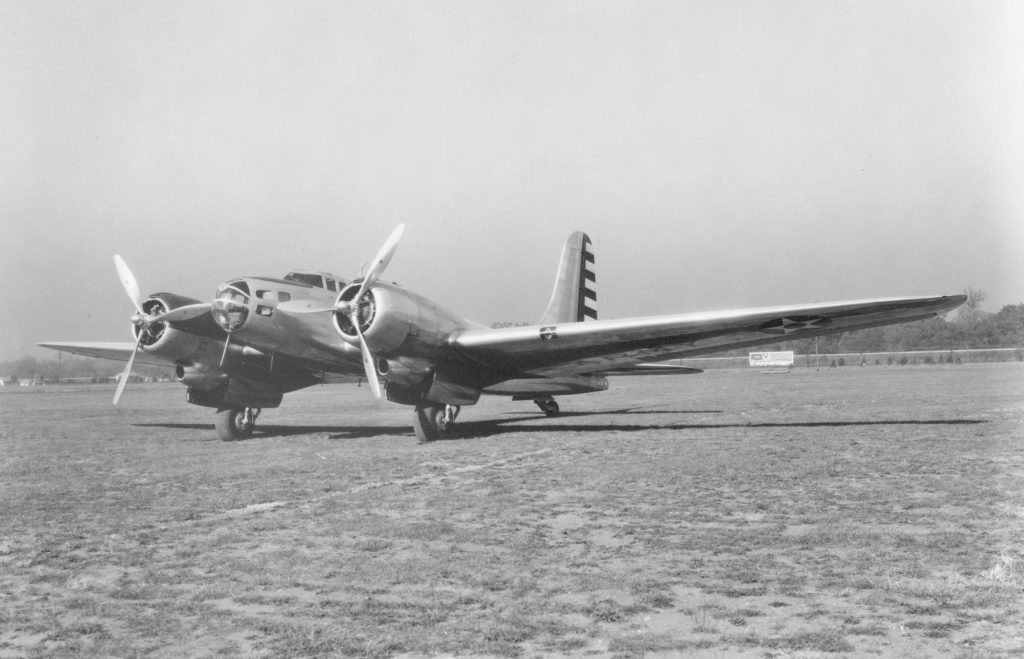
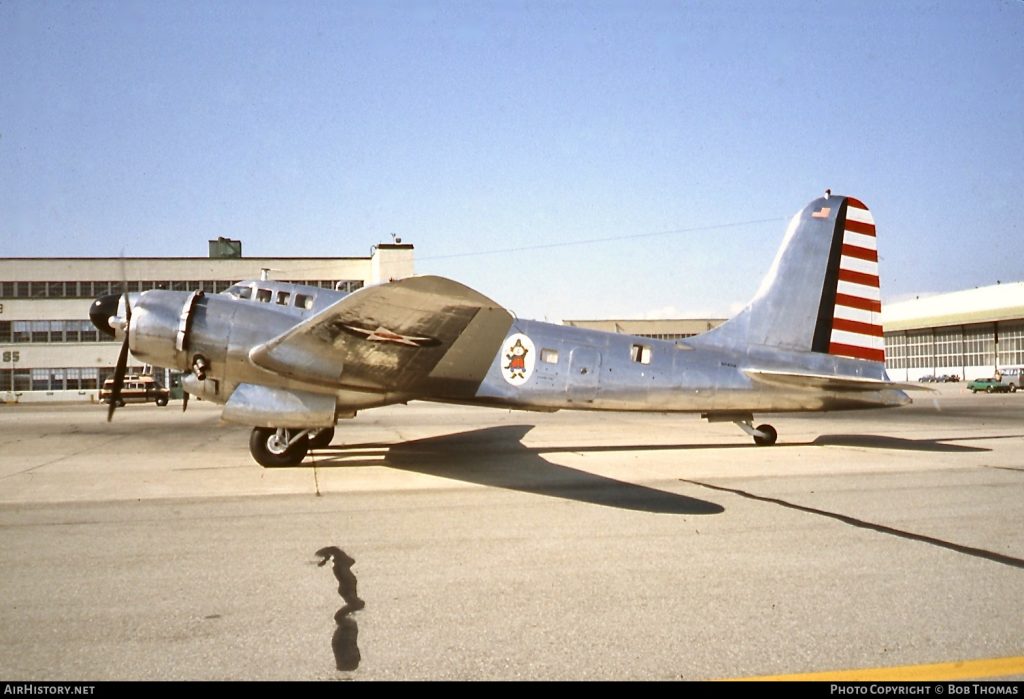
According to Aerial Visuals, B-23 Dragon construction number 2719 (serial 39-0033) was delivered to the U.S. Army Air Forces around 1939. After its military service, it was transferred on December 2, 1944, to the Reconstruction Finance Corporation at McKellar Field, Tennessee, for disposal. Entering civilian ownership in June 1945, the aircraft was acquired by Howard Hughes and registered as NC49548, beginning a long postwar career that included operators such as Gar Wood Industries, Rexall Drug Company, and Food Machinery Chemical Corporation. Later registered as N747M, it received a certificate of airworthiness in 1956 and continued flying in executive service, even appearing at events such as the 1975 Lincoln Air Races. Over subsequent decades, the aircraft passed through several owners, including World Airways and private collector Mike Bogue, and was at times displayed or stored, including a period at the Douglas plant in Long Beach. By the 1990s, it had been withdrawn from use and stored in California, though it retained its registration and even received a renewed airworthiness certificate in 2014.
Of the 38 B-23s built, only a handful survive today. Notably, oilman John Mecom once owned three examples. One was later acquired by the Commemorative Air Force and is now preserved with the National Warplane Museum in Geneseo, New York. A second airframe was exported to Greece for use as a technical training aid before being scrapped in the late 1970s or early 1980s, while the fate of the third remains uncertain, possibly having ended up in Mexico.
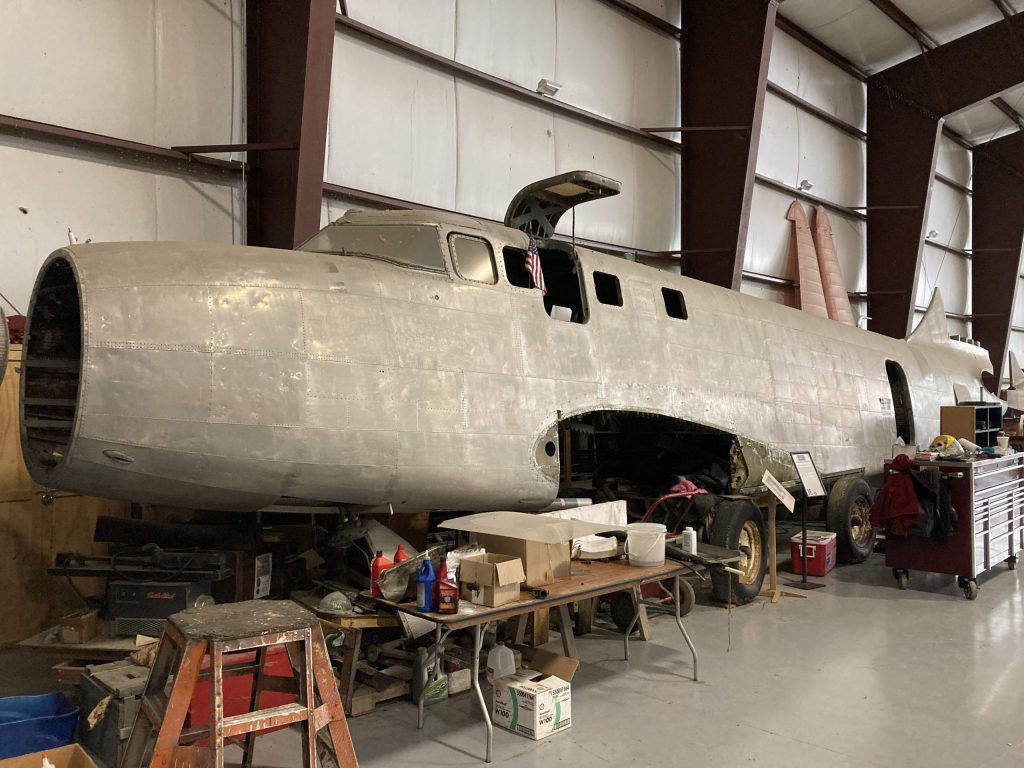
Today, surviving B-23s and UC-67s are scattered across museums and collections. UC-67 serial 39-031 is on display in Quito, Ecuador, while U.S.-based examples include 39-0036 at McChord Air Museum in Washington and 39-0051 at the Pima Air & Space Museum in Arizona. Others remain in storage, such as 39-0037 at the National Museum of the United States Air Force in Ohio and 39-0038 in Geneseo, New York. A particularly notable survivor is 39-0063, which remains airworthy with a private owner in Moses Lake—one of the last flying examples of this seldom-seen bomber. This airplane last flew in 2017 and was just recently sold to a foundation. That will all become public pretty soon. It is encouraging to see such a rare aircraft progressing through restoration. Vintage Aviation News will continue to follow this project and share updates as they become available.





I flew 747M when it was owned by Mike Bogue. With the help of Wayne Cook and other crew members we flew to many west coast airshows, and enjoyed some longer flights to Alabama and Texas.
The B23 is an absolute dream to fly and a very capable short field airplane.
Remember one in a hanger at Hanscom Field in the 80s.
Denny, hope you’re doing well?! Thought of you when I saw this post about the Dragon! Fun times at those West Coast warbird shows ✈️👩✈️
This airplane was flown for University of Washington department of Meteorology.
The one in Greece was serial 39-59/N86E, abandoned there in 1969 along with C-82 44-57780/N127E. They were both taken over by the Delta School of Aviation and scrapped in 1986. This B-23 suffered a particularly nasty fate; long before being scrapped, it was used by various airport workers as a latrine!
At about age 12-13 I had my first flight in the Hughes B-23 out of Burbank in which my dad had done some radio work on it. While circling over LA, one cowling came loose and we had to make a hasty landing back at BUR. About 1946-47. From that first flight, I went on to USAF Fighters, F104 test pilot at Lockheed, SR-71, TWA Captain, Reno racing, combat in Nam, and USAF Retired LTC. A good life started in the B-23.
There a B-23 Dragon south of loon lake that crashed in 1943.