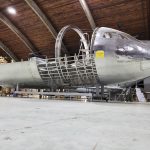
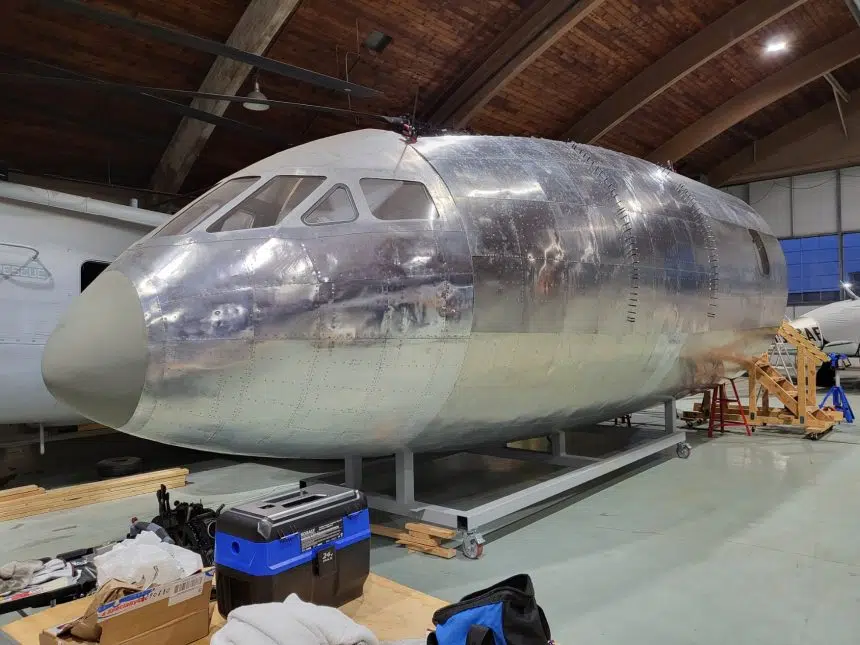

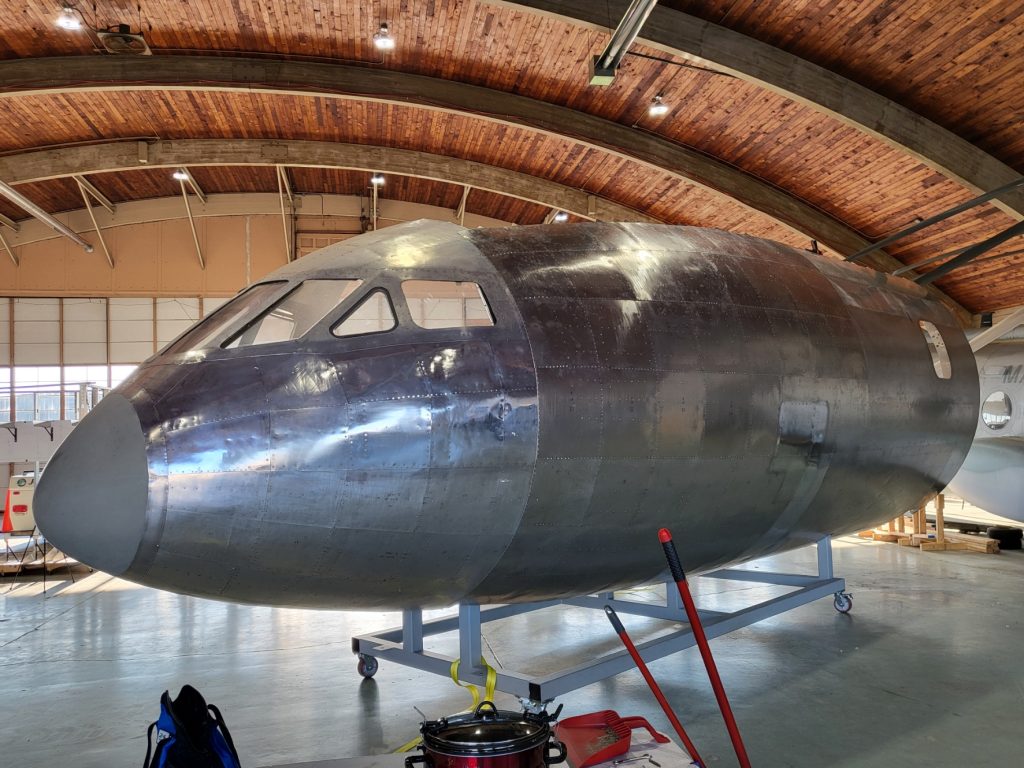
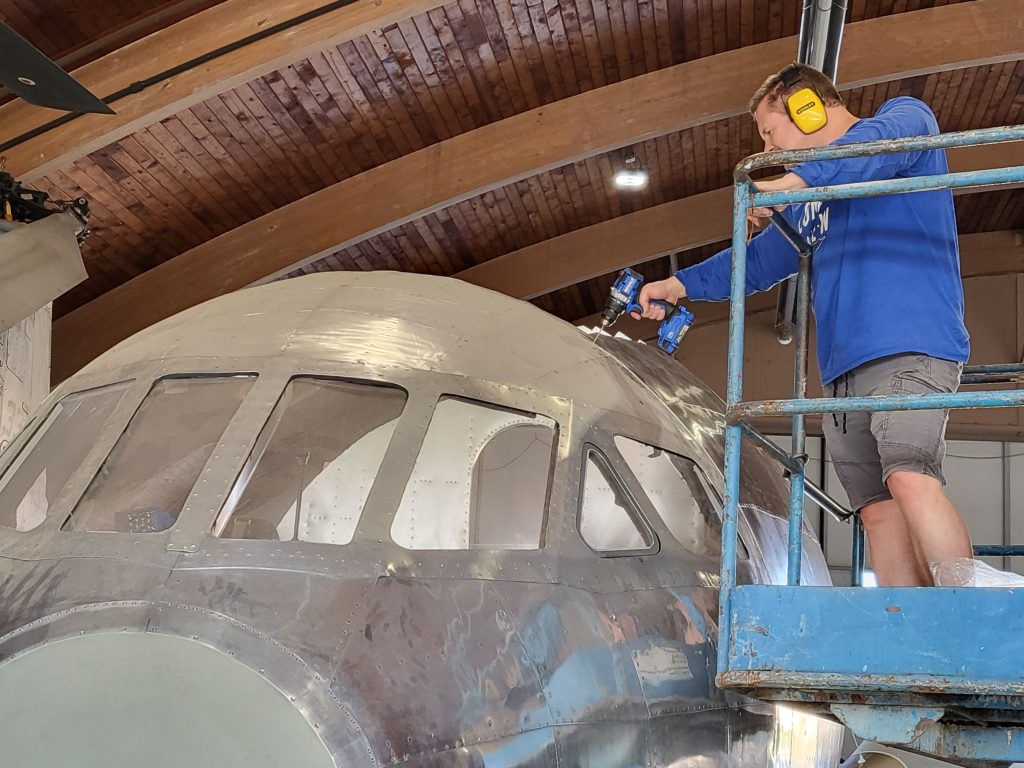
Steve McNeilly and his team have reached another significant milestone in their ambitious effort to recreate the forward fuselage of a de Havilland Comet 1 in southeastern Wisconsin. During a carefully planned operation in mid-August 2026, the three completed panels forming the replica’s left fuselage wall were removed from their construction jigs and permanently attached to the aircraft. As Vintage Aviation News previously reported, McNeilly began the project in May 2022. His goal is to reproduce the first 30 feet of the pioneering British airliner, which entered service with British Overseas Airways Corporation in 1952 as the world’s first commercial jet airliner.
(Image credit: Steve McNeilly/de Havilland Comet Project)
Built almost entirely by hand, the full-scale replica uses aluminum construction and flush riveting to approximate the original de Havilland design as closely as available resources and modern fabrication methods allow. After completing the nose section in May 2024, the team turned its attention to Section 2, encompassing the following 21 feet of fuselage. The newly installed left fuselage wall weighed approximately 275 pounds and was divided into three separate panels. Panels 1 and 2 were light enough for the team to move by hand, while the larger Panel 3 required the use of a Genie lift.
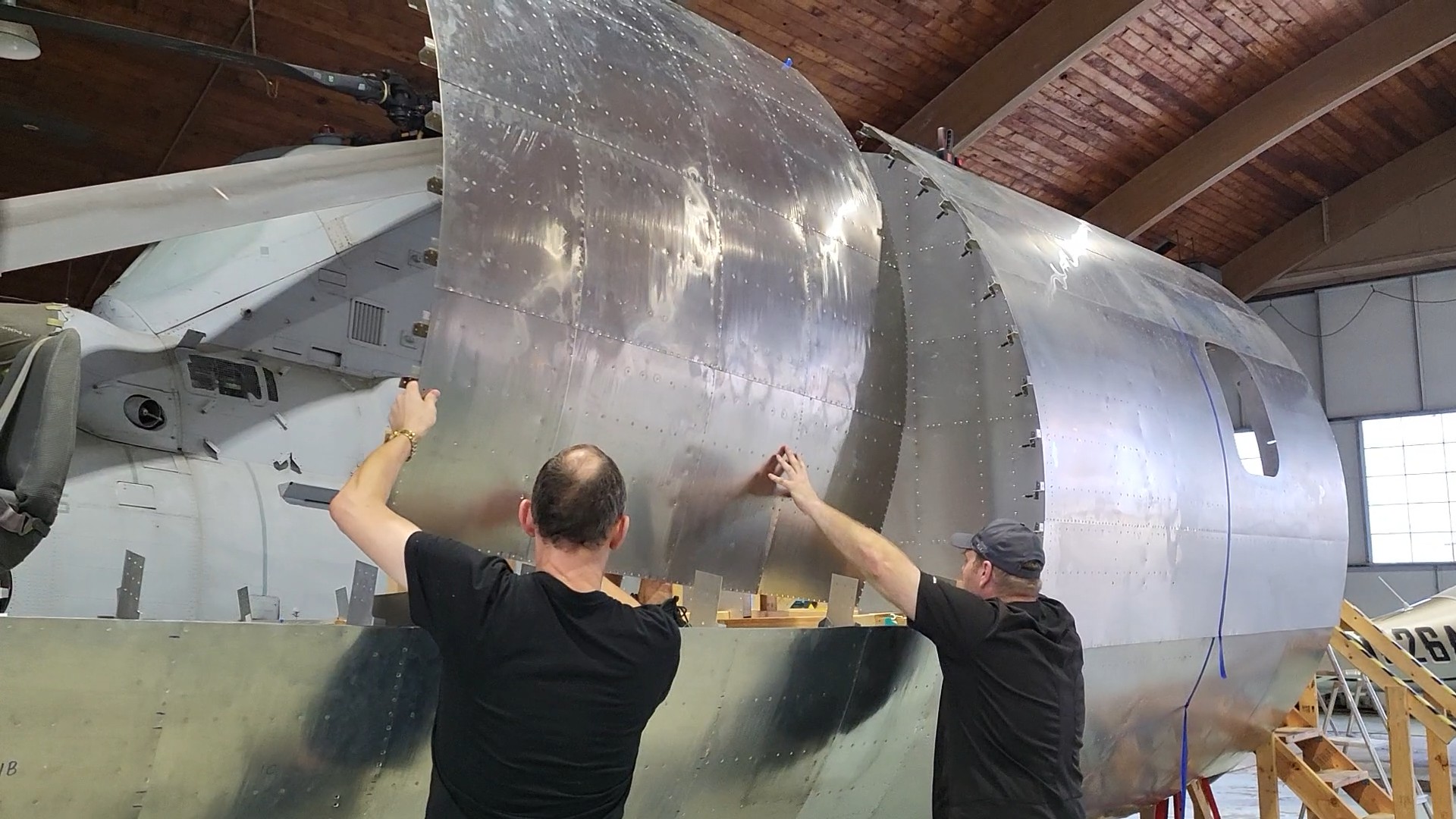
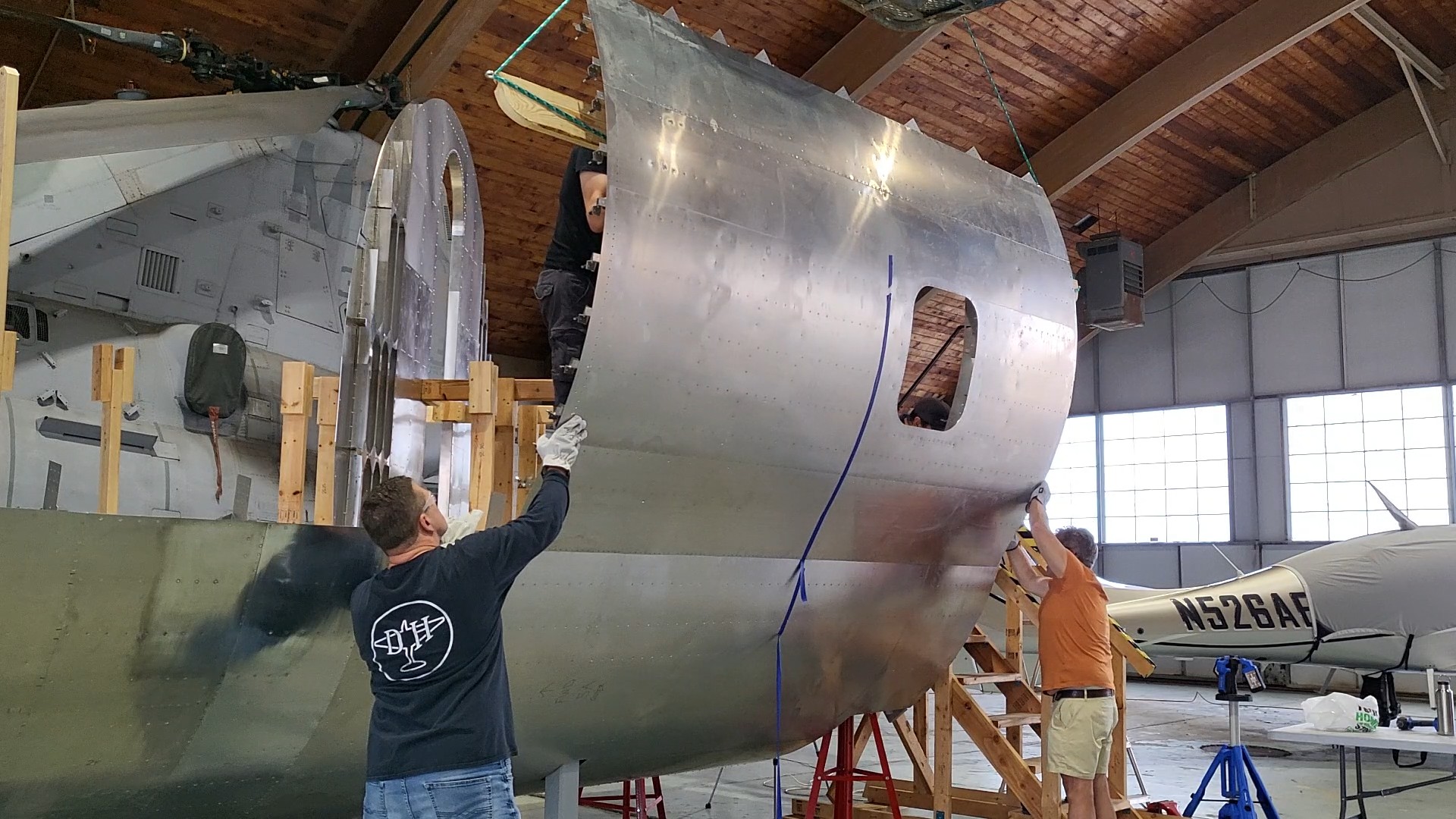
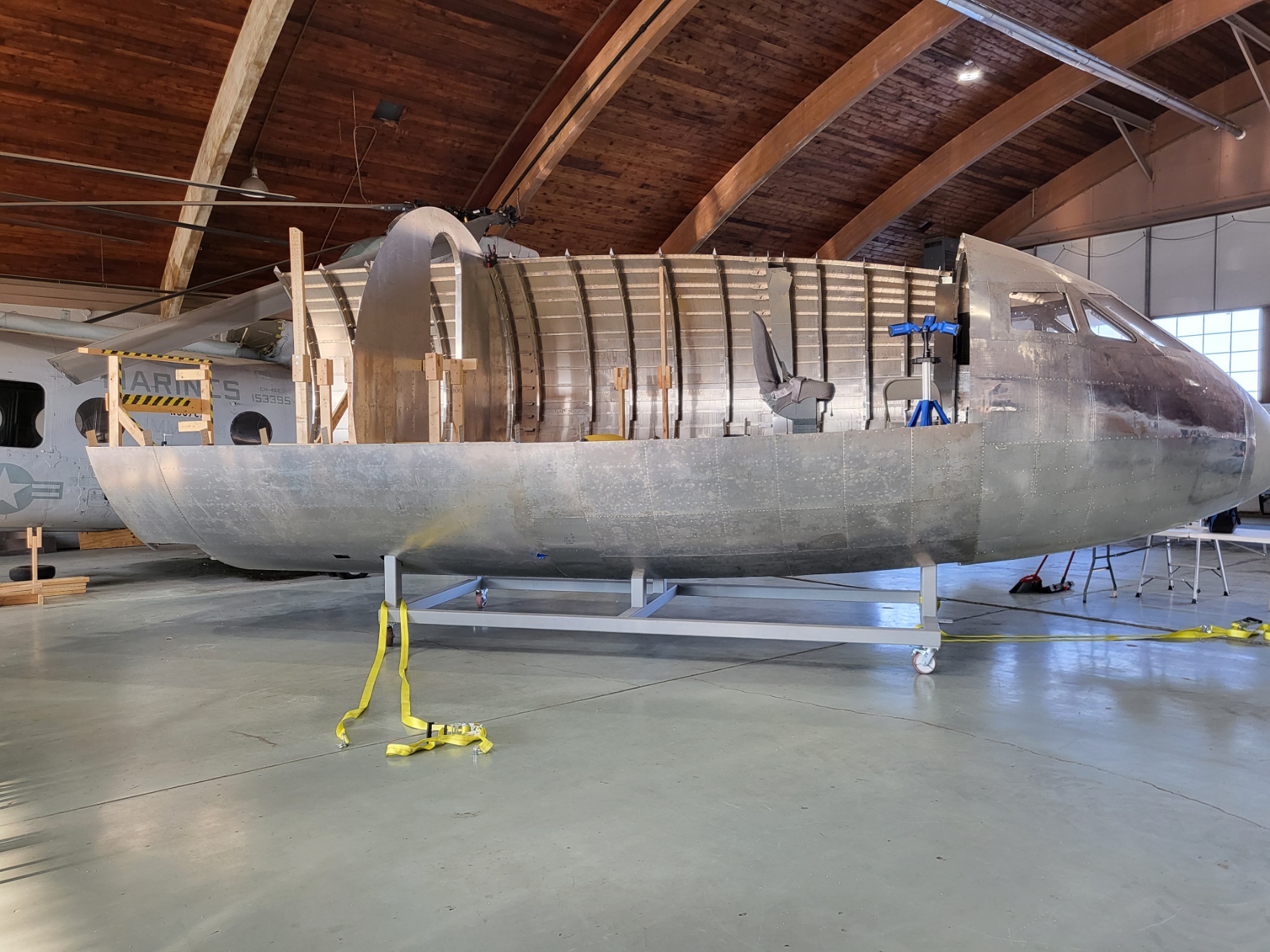
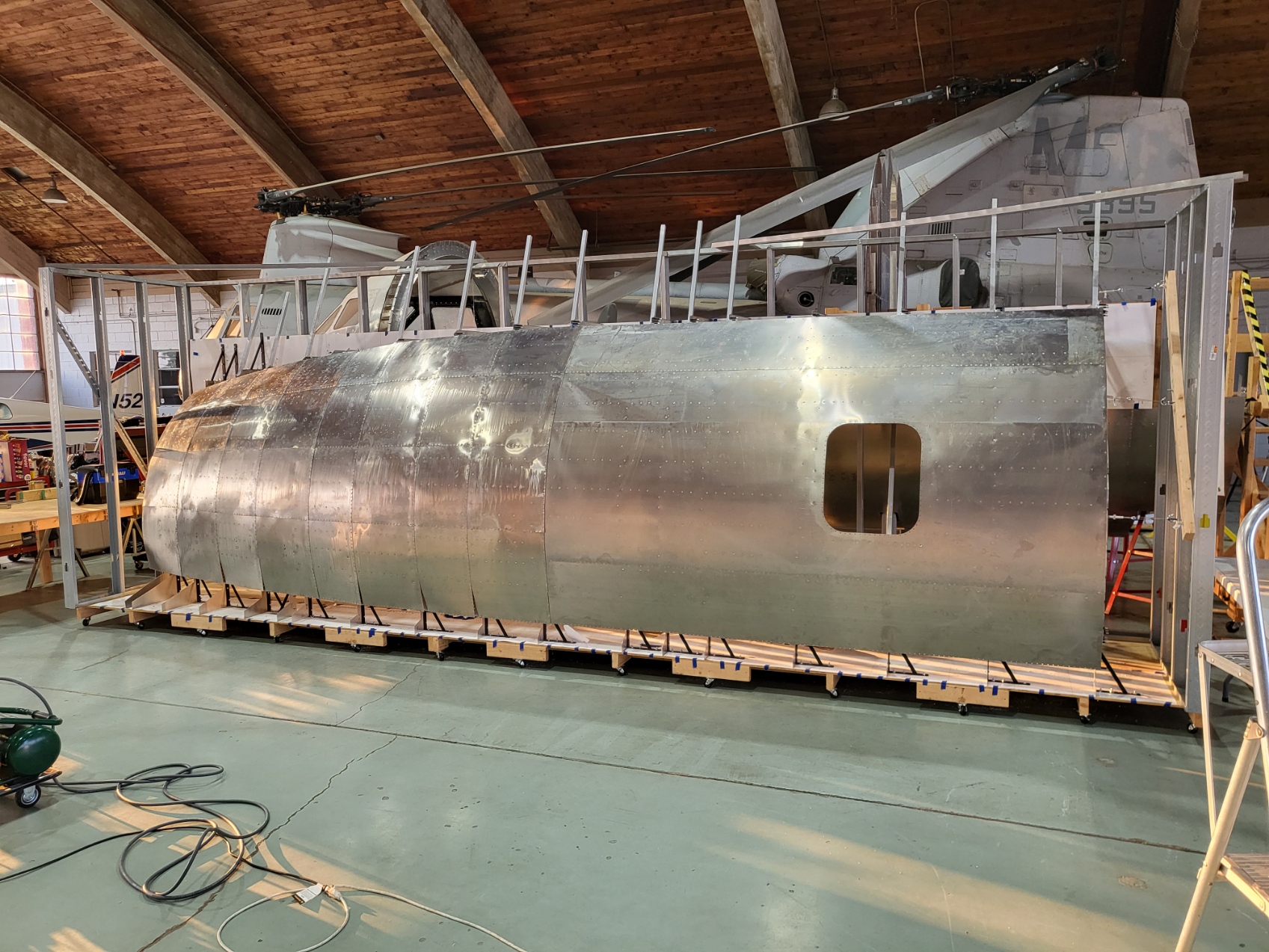
To prepare for the operation, McNeilly created three-dimensional images simulating the lift. These allowed the team to evaluate the panel’s center of gravity and confirm that adequate clearance would be available while maneuvering it into place. Chris, Jay, John, Russ, and Steve began by freeing Panel 1 from its jig, followed by Panel 2. The Genie lift was then positioned beneath Panel 3, which was carefully raised and aligned with the Comet’s existing structure. Once Panel 3 had been successfully attached, the team moved Panels 2 and 1 into position by hand. According to the project, the operation proceeded exactly as planned, with all three panels fitting the fuselage without difficulty. Inspection of the structure’s interior showed that the alignment and fit were equally successful on the inside.
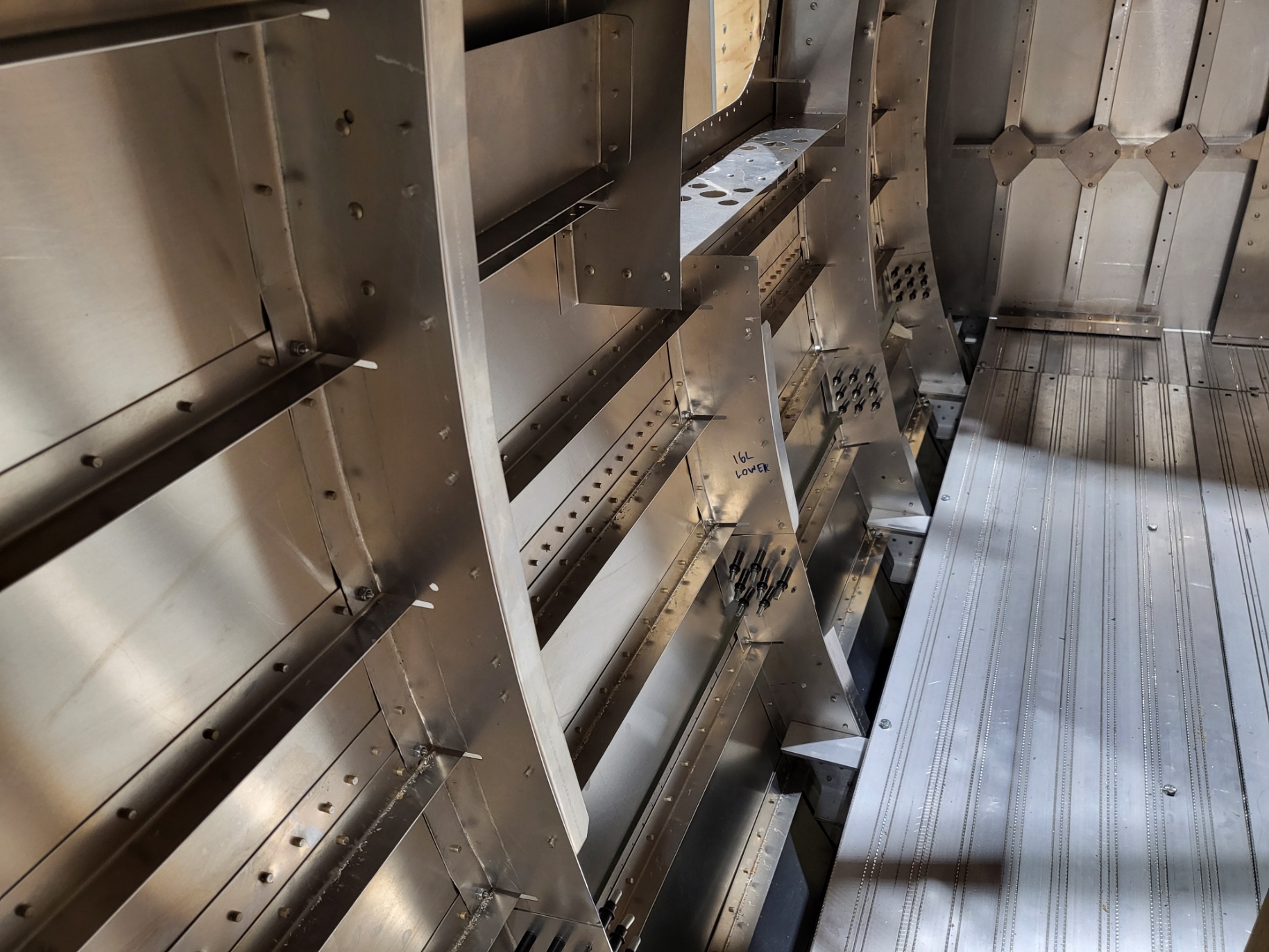
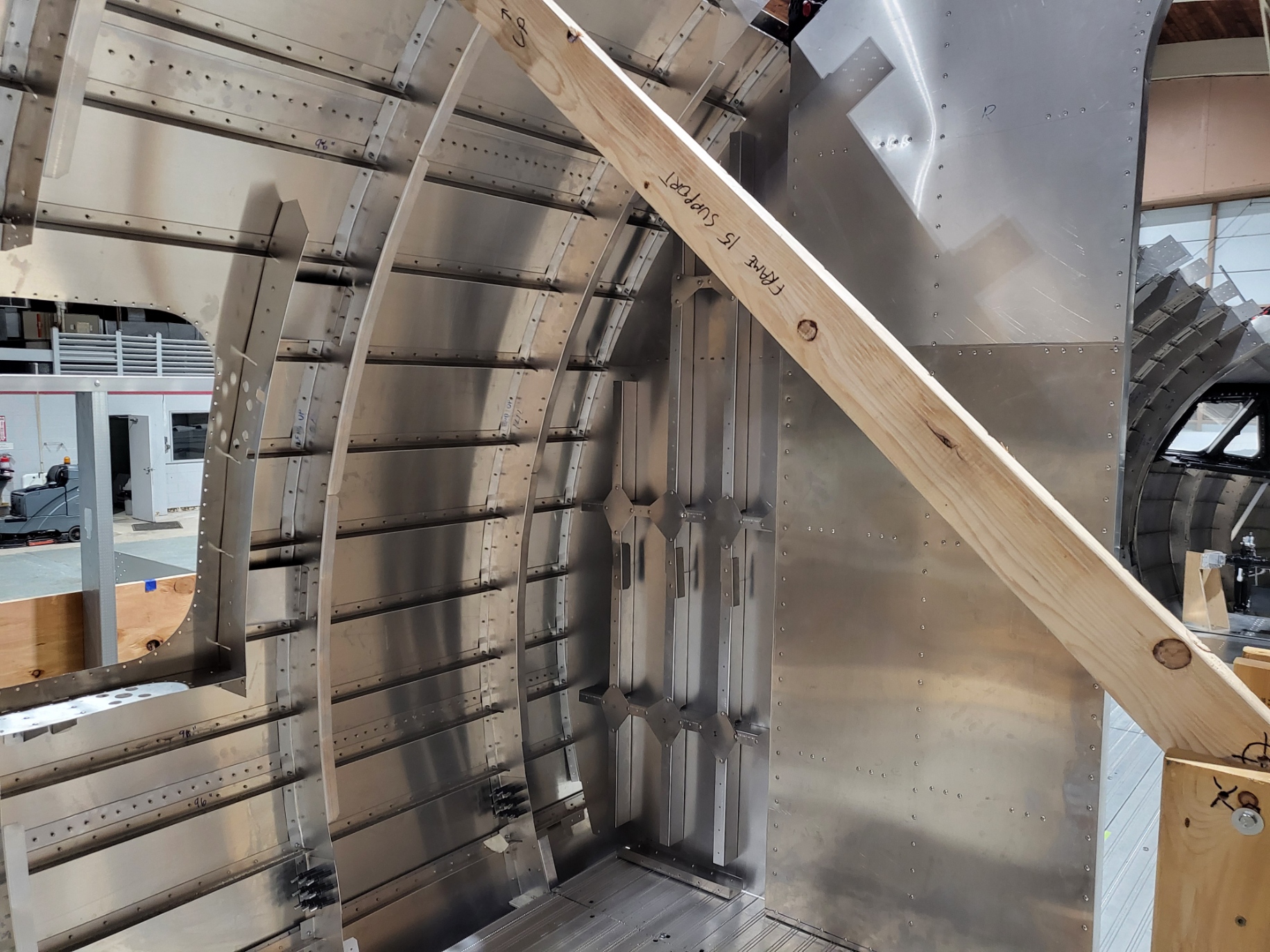
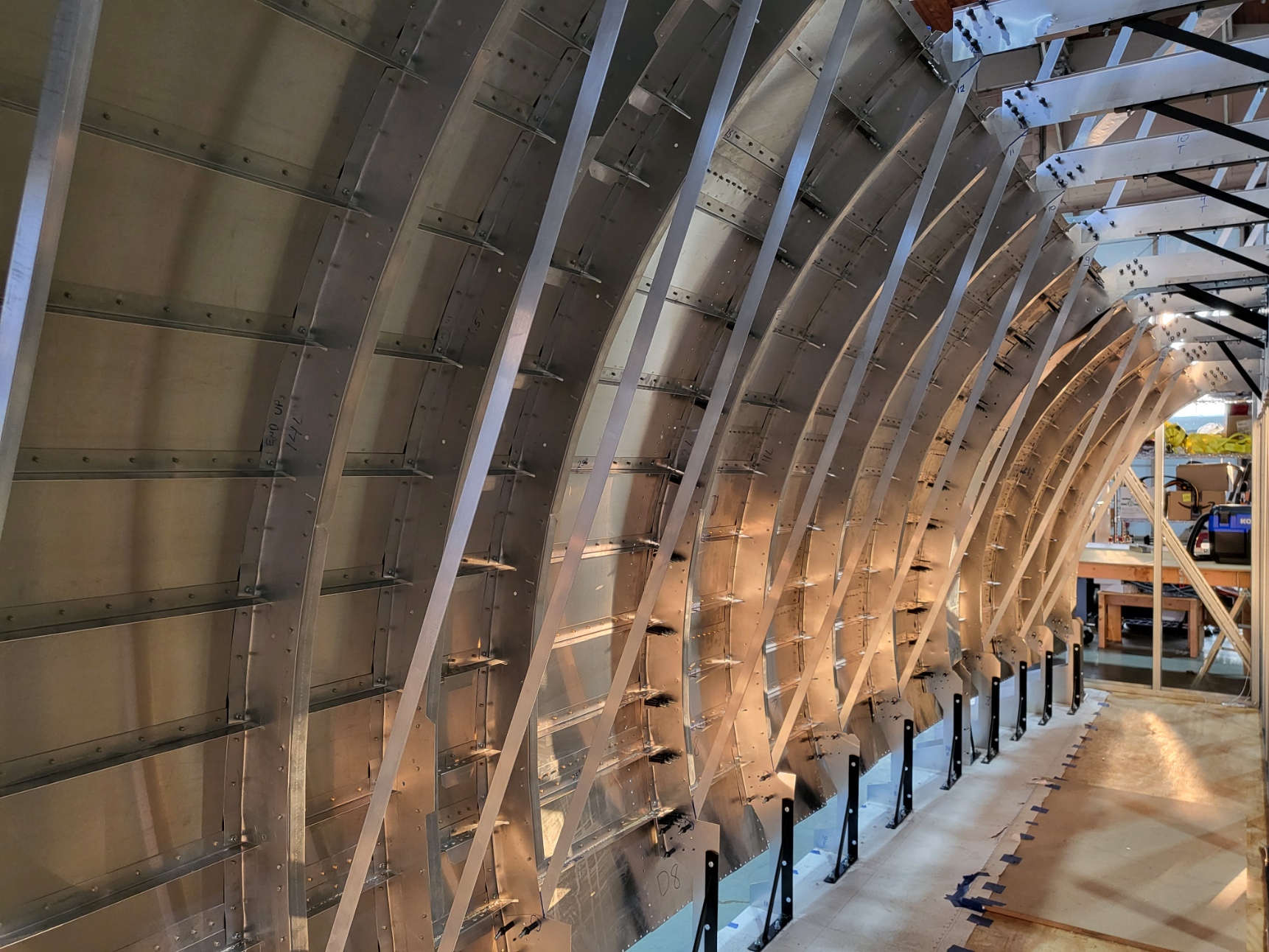
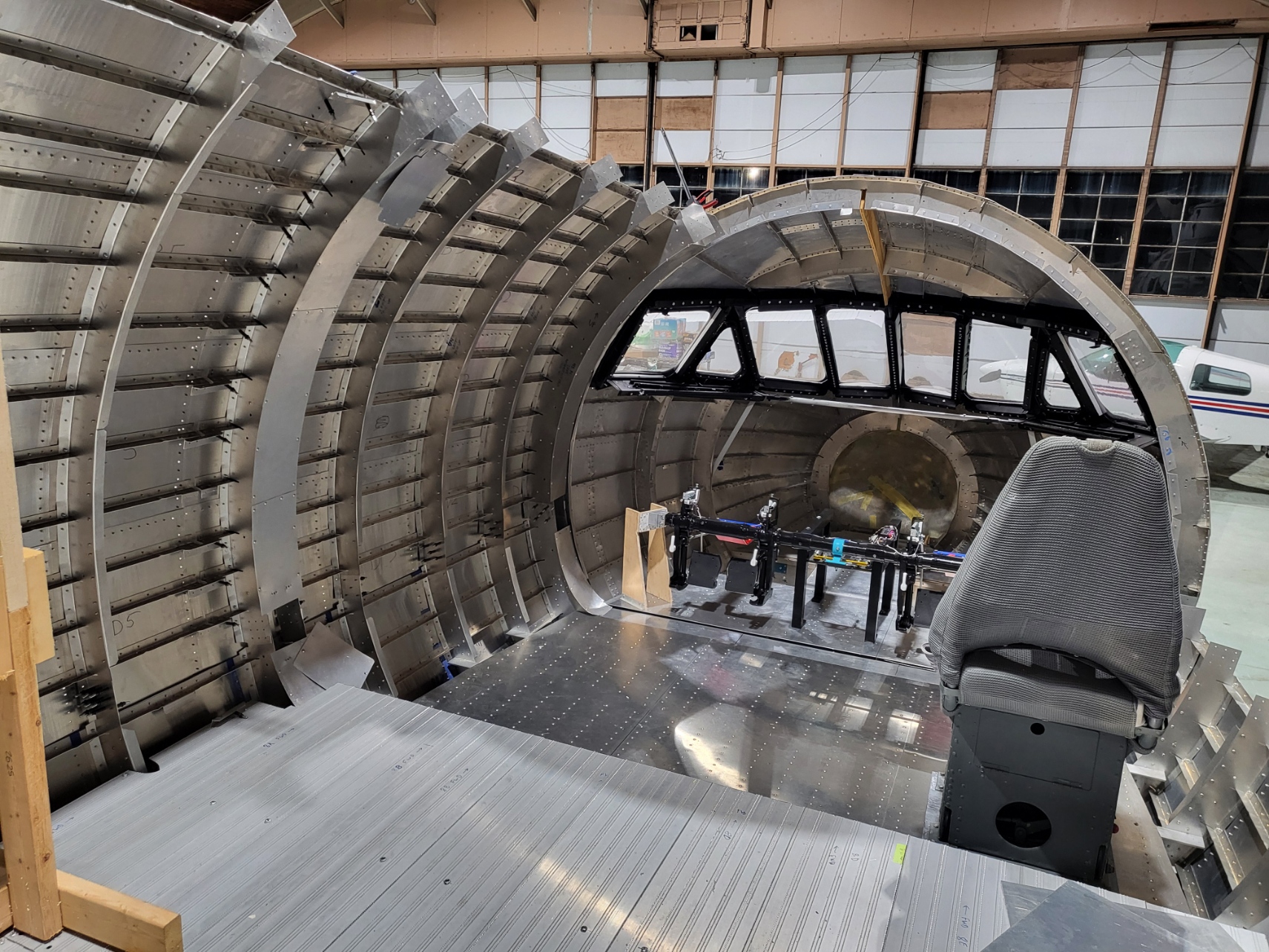
The team subsequently made the internal connections permanent by riveting the new wall sections to the surrounding fuselage structure. The installation represents a major visual and structural step forward, transforming the once-open framework into an increasingly recognizable section of the groundbreaking British jetliner. Work will now shift to constructing the Comet’s right fuselage wall. Once complete, the replica is expected to feature a largely functional cockpit flight simulator, a recreated forward galley, and an eight-seat passenger compartment modeled after a 1952 BOAC Comet 1 interior. The exterior will eventually receive the airline’s classic period livery. For anyone wishing to learn more about his plans, or to contribute to the project in some fashion, please do contact Steve McNeilly via his website www.dehavillandcomet.com
(Image credit: Steve McNeilly/de Havilland Comet Project)