

Floats and hulls sliced through the water, propellers beat the air, and roaring engines drew hundreds of thousands of spectators to watch nations compete for supremacy. In the early decades of powered flight, the Schneider Trophy became one of aviation’s most prestigious and fiercely contested competitions. National pride and the pursuit of technological advantage brought government support to competing teams, producing increasingly sophisticated racing seaplanes that repeatedly challenged the world airspeed record.

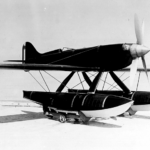
Among the aircraft most closely associated with the competition are Supermarine’s S.5, S.6, and S.6B, which secured British victories in 1927, 1929, and 1931, respectively. The third consecutive victory gave Great Britain permanent possession of the trophy. Today, the winning S.6B and the Schneider Trophy are displayed at London’s Science Museum, while an S.6A survives at Solent Sky in Southampton, near its birthplace. No complete original S.5 survives, but a British charity is working to return the design to the skies. Science Museum Group Collection

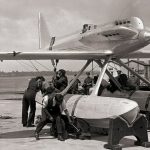
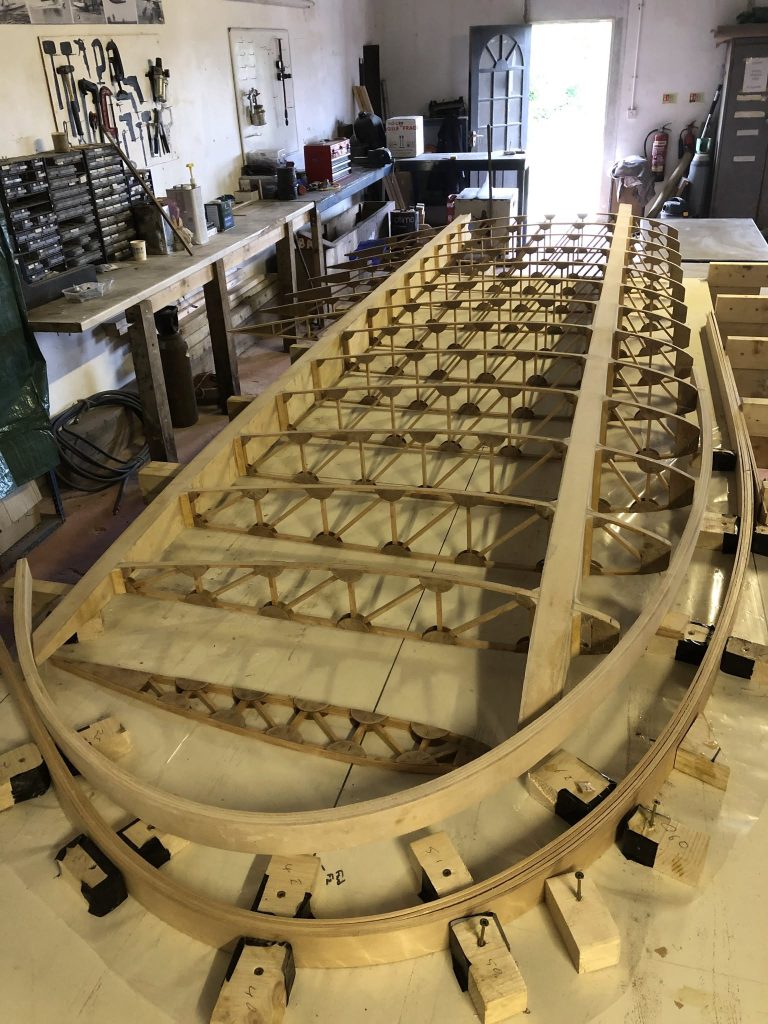
The Supermarine Seaplane Charity, Registered Charity No. 1190836, is building a full-scale, flying reproduction of the Supermarine S.5, the 1927 Schneider Trophy winner. Alongside the aircraft’s construction, the organization aims to introduce new audiences to the competition’s history and the engineering advances it encouraged. The experience gained through Supermarine’s racing program helped inform R.J. Mitchell’s subsequent work on the Spitfire. The reproduction is intended to become the centerpiece of an educational program emphasizing science, technology, engineering, and mathematics, or STEM. Through flying displays and public outreach, the charity hopes to encourage young people to explore careers in aerospace and other engineering disciplines.
(Image credit: Supermarine Seaplane Charity)
Established in August 2020, the project has made substantial progress despite several serious setbacks. Construction initially began in France, but the unexpected retirement of the contracted builder required the return of materials and completed components to Britain. A few months later, a major workshop fire destroyed drawings, materials, and parts. Those setbacks forced the team to abandon its original completion target of 2027, the centenary of the S.5’s victory at Venice. The charity is now working toward 2031, marking 100 years since Britain’s final Schneider Trophy victory.
(Image credit: Supermarine Seaplane Charity)
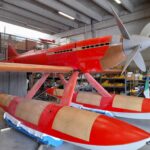
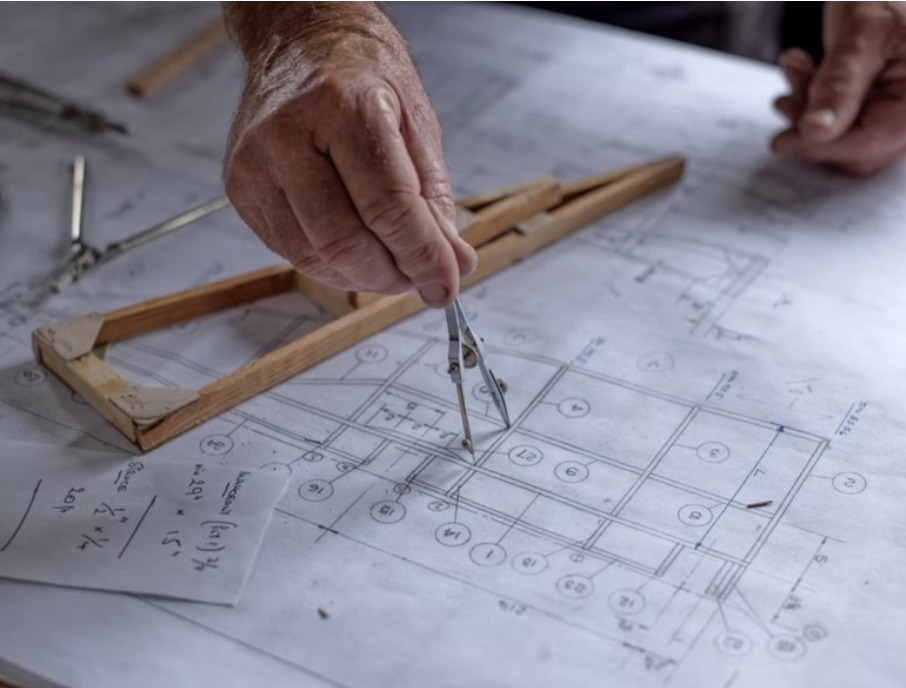
The team’s approach to construction follows a straightforward principle: “as few changes as possible, as many changes as necessary.” Preserving the S.5’s appearance remains a priority, while internal changes and a modern powerplant are intended to make the reproduction practical to operate. Recreating the original Napier Lion installation presents a particular challenge. The S.5’s racing engine was a specially developed version of the 12-cylinder powerplant, with three banks of four cylinders arranged in a broad W configuration. Its reduced frontal area and revised accessory layout allowed it to fit within the racer’s tightly streamlined cowling. Even an available standard Lion would therefore present significant installation difficulties.
(Image credit: Supermarine Seaplane Charity)
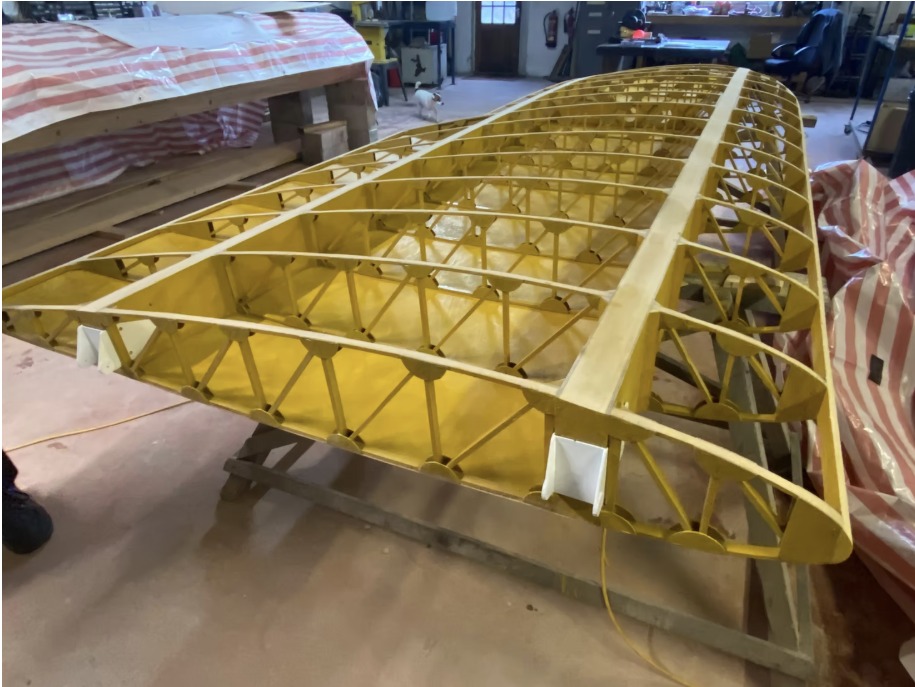
According to the project team, the chosen replacement is an IO-360 air-cooled, horizontally opposed six-cylinder engine. Its configuration allows the cylinders to occupy the cowling bulges originally enclosing the Lion’s outer cylinder banks, helping preserve the aircraft’s distinctive profile. The team also expects the modern engine to offer longer intervals between overhauls and greater flexibility for regular display flying. Since the fire, the volunteers have completed the wings, a significant milestone in the aircraft’s construction. The work attracted interest from the local community and media, including coverage on BBC television. The team reports that the wings have been signed off and placed in climate-controlled storage while preparations continue for the next stages.
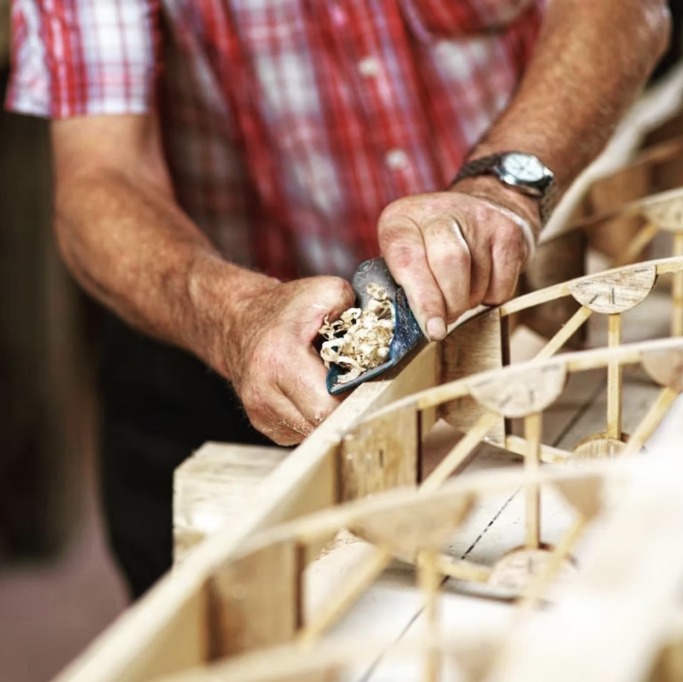
(Image credit: Supermarine Seaplane Charity)
Those remaining construction phases have been planned and costed. The charity estimates the total construction cost at £650,000 and is seeking individual donations and corporate sponsorship to move the project forward. Discussions with several potential sponsors are underway, with additional supporters welcome. The project also needs volunteers, and participation is open to people beyond the aviation industry. Fundraising, public outreach, IT, and social media are among the areas where supporters can contribute. The charity already draws on an international volunteer network, with participants in Australia, North America, and Scandinavia. For more information about the S.5 reproduction, sponsorship opportunities, donations, or volunteering, visit supermarineseaplane.co.uk.
(Image credit: Supermarine Seaplane Charity)