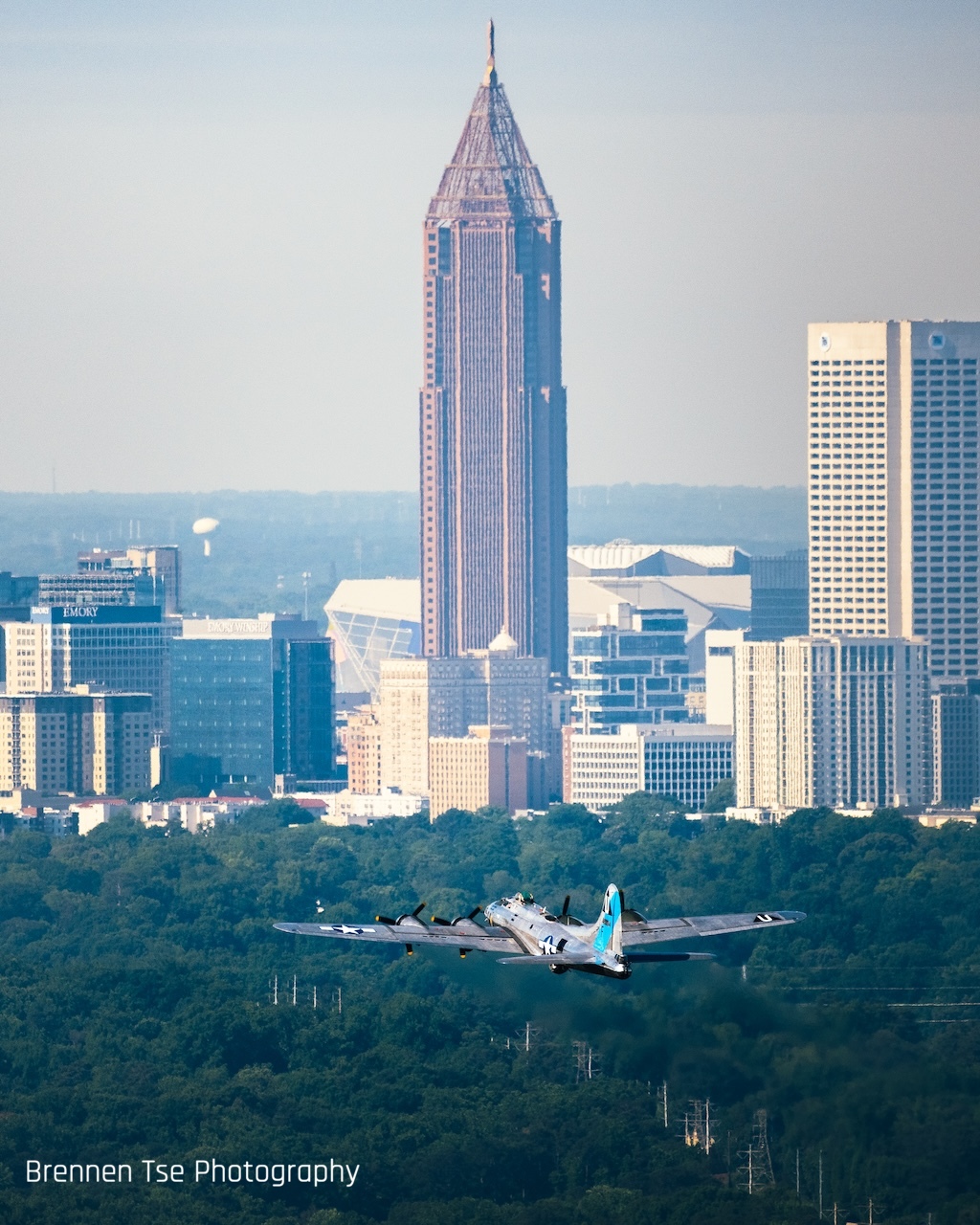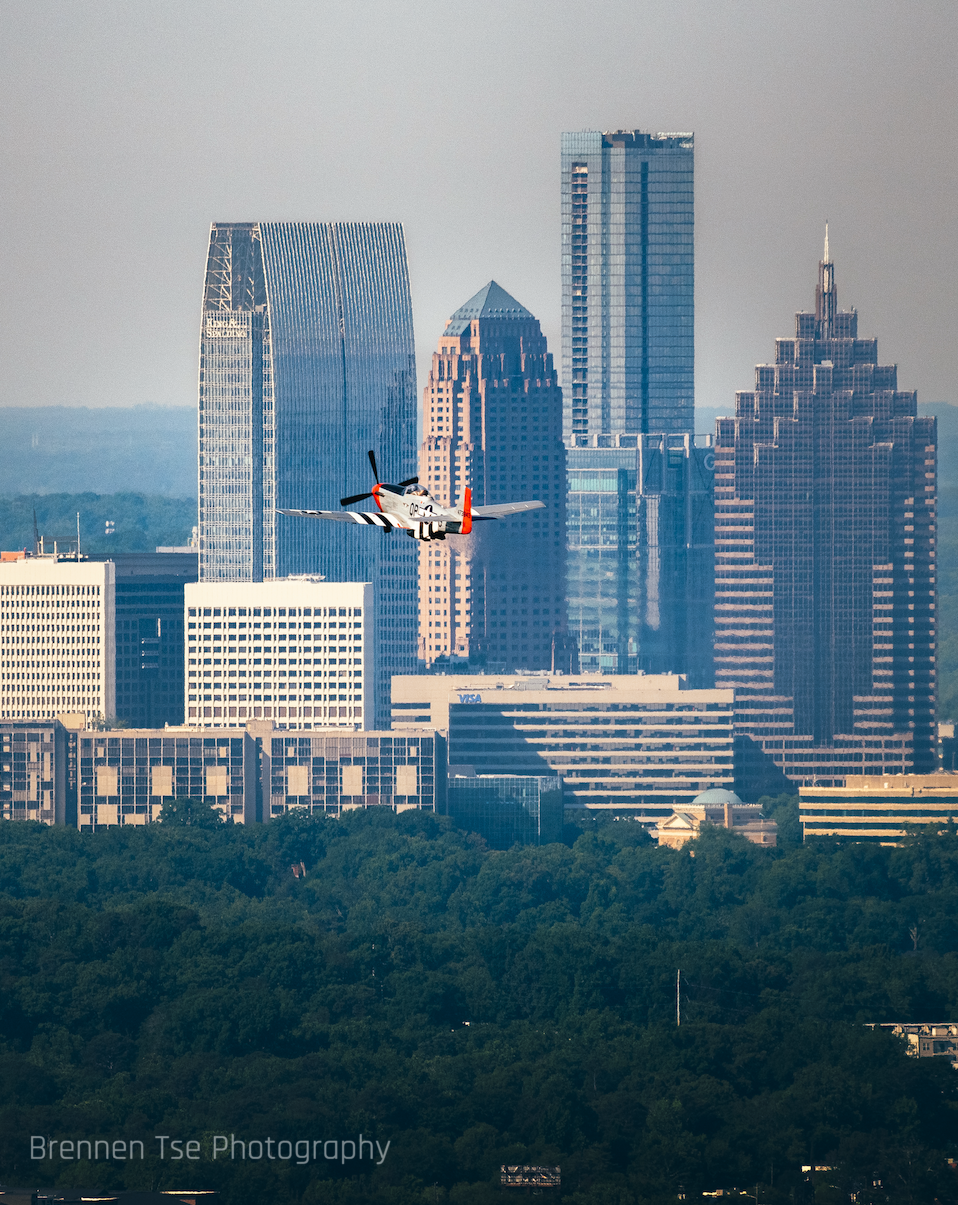
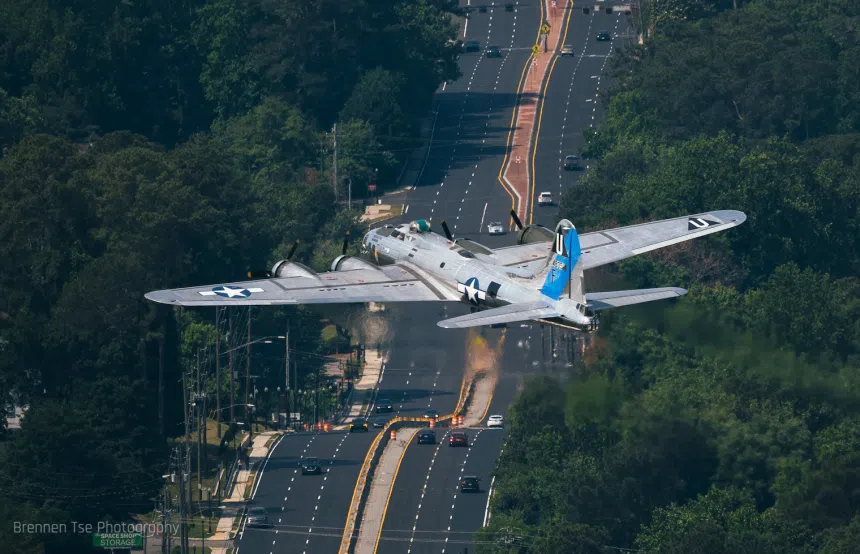

The Boeing B-17 Flying Fortress Sentimental Journey and North American B-25 Mitchell Maid in the Shade are familiar sights to visitors following the Commemorative Air Force Airbase Arizona’s Flying Legends of Victory Tour. During the bombers’ visit to DeKalb–Peachtree Airport, however, photographer Brennen Tse found a way to present these historic aircraft from a different perspective: photographing them from a helicopter, with Atlanta’s skyline providing the backdrop.

For the 21-year-old Atlanta resident behind Brennen Tse Visuals, the project brought together his early interest in cityscape photography and his growing commitment to aviation. The resulting photographs capture the WWII bombers in flight while giving viewers a sense of place. Behind those images was a demanding combination of planning, expense, weather, aircraft availability, and coordination with the crews and air traffic controllers.

His interest in aviation began well before the helicopter mission. Growing up in Washington, where he spent the first 17 years of his life, Tse watched the Blue Angels perform at the Seattle Seafair Airshow each year. When he took up photography in 2019, Seafair was among the first events he wanted to photograph, although pandemic cancellations delayed those plans. Initially, his work centered on landscapes, cityscapes, and astrophotography. Aviation gradually took a larger role, becoming his main focus in 2025 and 2026. Airshow photography and opportunities to photograph the Blue Angels from the air helped him develop both his portfolio and his ambitions. He also began sharing the preparation behind his photographs, using video and social media to show audiences how an idea becomes an image.
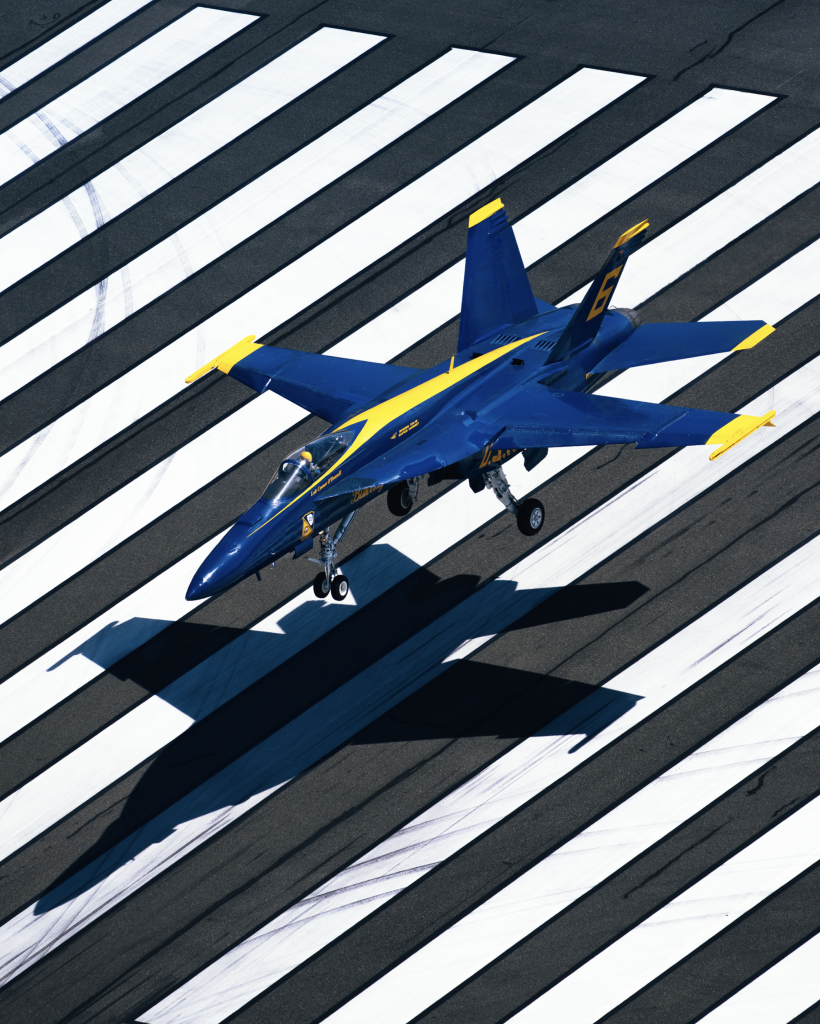
(Image credit: Brennen Tse)
The Atlanta bomber project grew from that same desire to find a fresh angle. Tse had photographed the B-17 and B-25 from the ground during their 2024 visit and wanted to capture them from the air the next time they returned. Photographers Ryan Patterson, Toby Harriman, and Camden Thrasher provided inspiration through their helicopter photography and unusual viewpoints. Atlanta offered a particularly appealing opportunity. The visiting bombers were operating from an airport with a helicopter operator on site, making the logistics more practical. For Tse, photographing them against the skyline of his adopted home was also a personal goal. “It offers unique perspectives, especially during takeoff with the runway as a backdrop, and over cities and nature,” he explained. “They stand out compared to the usual bombers on blue sky backgrounds.”

Turning that concept into a workable flight proved considerably harder than imagining it. Tse rented a Robinson R22 for a three-hour helicopter session. The smaller helicopter helped keep costs down, but its performance and sensitivity to windy conditions added challenges to the shoot. Weather affected both the flying and the photographs themselves. Tse wanted clear skies so the bombers would cast visible shadows during takeoff, adding depth to the runway compositions. He also hoped for winds around five to ten knots to make holding the helicopter’s position more manageable. Wind direction would determine the runway in use, changing which angles were available.
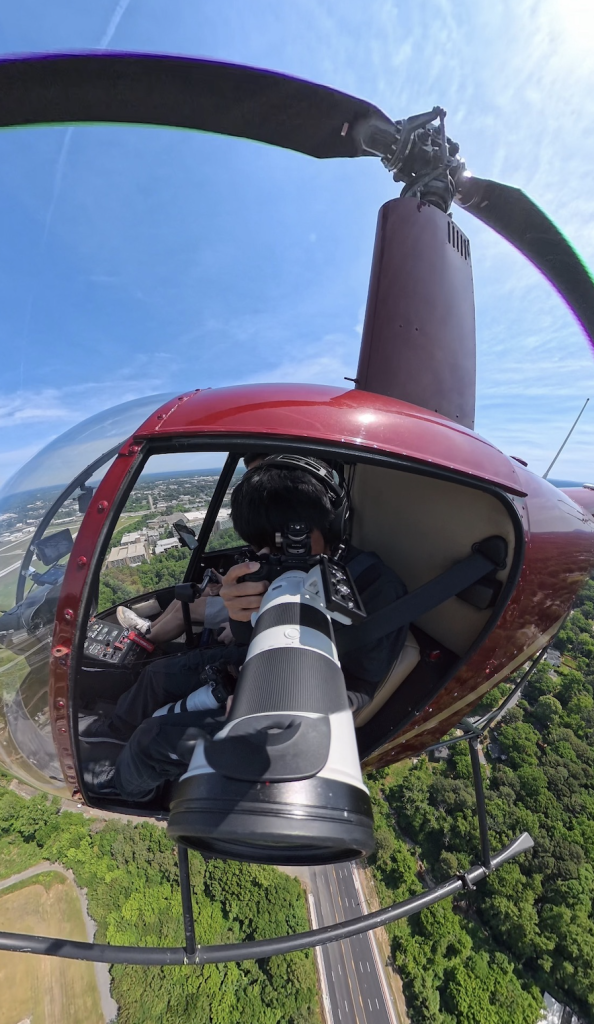
He considered shooting on Thursday, Friday, Saturday, or Sunday, but the options narrowed quickly. Thursday brought winds approaching 15 to 20 knots. The helicopter was unavailable Friday, while the B-17 would be down for maintenance Sunday. Saturday became the opportunity when the necessary conditions aligned. Aircraft availability was an essential part of the equation. Tse emphasized the CAF crews’ attention to maintenance and their willingness to suspend operations when a problem needed to be resolved. For a photographer renting a helicopter to capture specific aircraft, those operational decisions introduce uncertainty, but the aircraft and crews’ requirements set the schedule.
Air traffic control coordination further shaped what was possible. With general aviation traffic using PDK, controllers limited the helicopter’s altitude and shooting positions. Tse obtained approval from the CAF, the bomber pilots, and ATC, working within the positions and separation available to him. The photographs can suggest a closer encounter than the actual distances involved. As Tse explained, lens compression makes the helicopter appear nearer to the bombers than it was. The mission relied on approved positioning around the airport.

“Ideally I would have preferred different runway operations for more unique angles, but you work with what’s possible in the moment, and that’s part of what makes aerial aviation photography so rewarding,” he said. His equipment included a Sony A1 II with a 200–600mm f/5.6–6.3 lens and a Sony A7R IV with a 70–200mm f/2.8 lens. Mounted action cameras allowed him to record additional views of the experience. He generally worked at ISO 250, with shutter speeds ranging from 1/1250 to 1/200 second, adjusting the aperture as needed. One of the central technical decisions involved propeller blur. A slower shutter speed can convey the motion of a propeller-driven aircraft, but keeping the bomber sharp while photographing from a moving helicopter makes that choice more difficult. For the main bomber images, Tse favored faster shutter speeds to improve his chances of capturing a sharp photograph. He experimented with slower speeds while photographing smaller CAF aircraft in the traffic pattern.
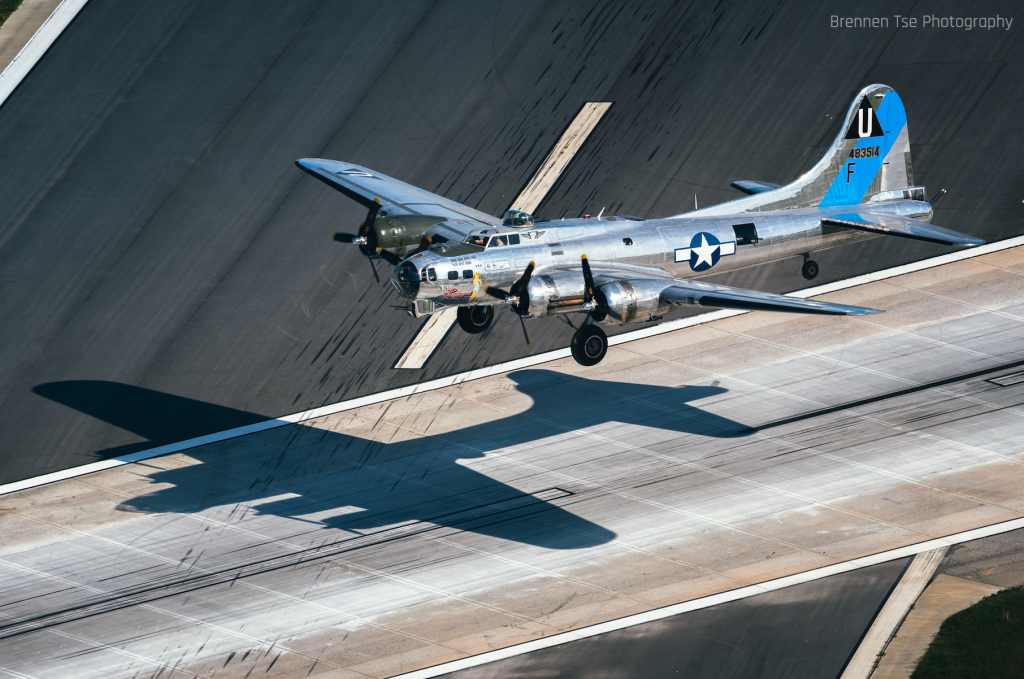
(Image credit: Brennen Tse)
His planned compositions included takeoffs, landings, aircraft crossing the runway threshold, and passes framed against the Atlanta skyline. Once the B-17 began its takeoff roll, the importance of the opportunity became immediate. “I’d say as soon as the B17 started rolling down the runway, I was like, wow, this is a sight that not many people have seen, and I need to capture it perfectly!” he recalled. Seeing the bombers from another aircraft also changed his appreciation of their size. Familiar shapes from the ramp and airshow circuit took on a different presence from the helicopter, where their scale became more apparent. Although the skyline photographs were a major goal, Tse’s favorite image from the session features the B-17 against the runway markings, with a puff of tire smoke at its left wheel. The combination of the aircraft, painted lines, and brief moment of contact made it the standout photograph for him.
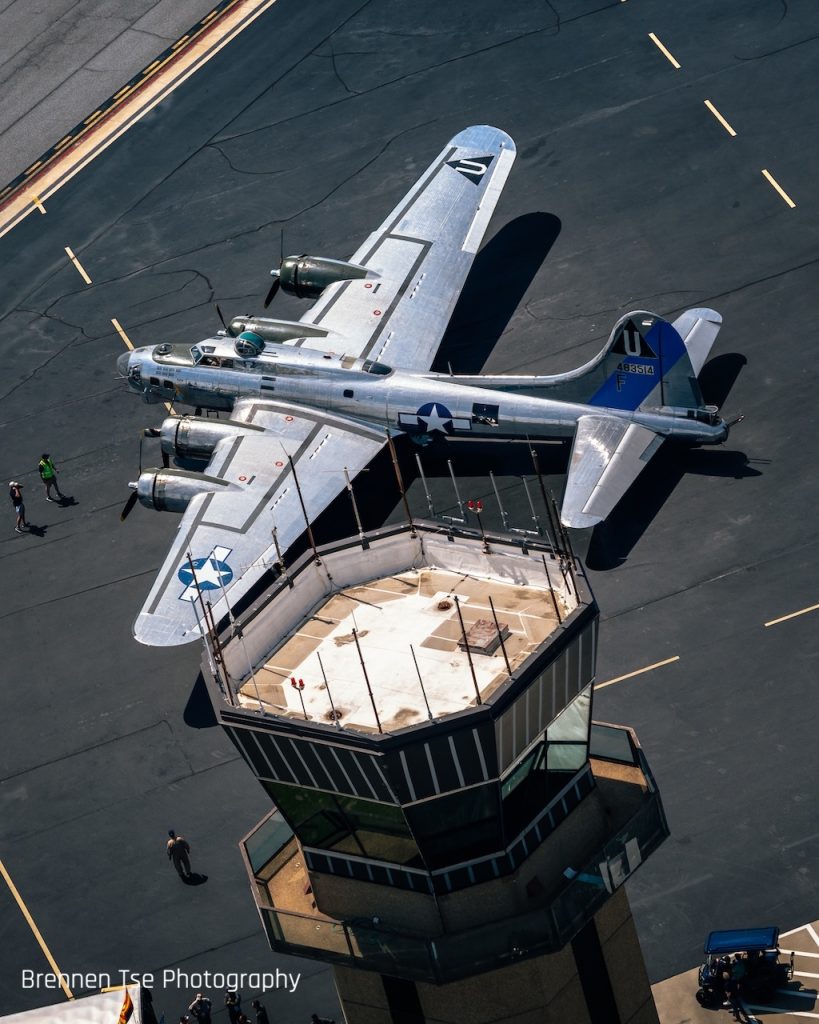
(Image credit: Brennen Tse)
“The composition is perfect with the B17 set in stark contrast against the runway lines,” he said. “Also the rubber smoke is just right on the left wheel!” The skyline images brought their own satisfaction. Tse recalled concentrating on holding the shutter down and making sure he captured the opportunity. Afterward, he looked forward to sharing the photographs with the crews. Their enthusiastic response, along with the images’ wider reception online, added to the reward.

For Tse, that connection is part of the purpose of aviation photography. The Flying Legends of Victory Tour offers Living History Flight Experiences that introduce the public to historic aircraft and the people who operate them. Photographs can extend that introduction to audiences who have yet to visit an airport, attend an airshow, or step inside a bomber. He believes photographers can find compelling perspectives even without a helicopter or special access. Details on a static display, interactions between visitors and crews, and a thoughtful composition at a local airshow can all reveal something others overlook. His advice is to keep looking, build relationships within the aviation community, and collaborate when a larger project would otherwise be too expensive. “Instead of going for the shot everyone else gets, ask yourself, ‘What’s the shot no one else sees?’” he said.

The Atlanta session demonstrates what can come from asking that question. By bringing together historic bombers, a recognizable cityscape, and carefully chosen aerial viewpoints, Tse created photographs that document the tour while inviting a new audience to take an interest in it. “For me, the goal isn’t just to take a technically impressive photo, but to tell the story behind the aircraft, the pilots, and the people who keep aviation alive,” he said. “If someone looks at one of my photos 20 years from now, and can appreciate a moment they never got to experience, then I’ve done my job as both a photographer and a historian.” To learn more about Brennen and see his work, visit www.brennentsevisuals.com.