






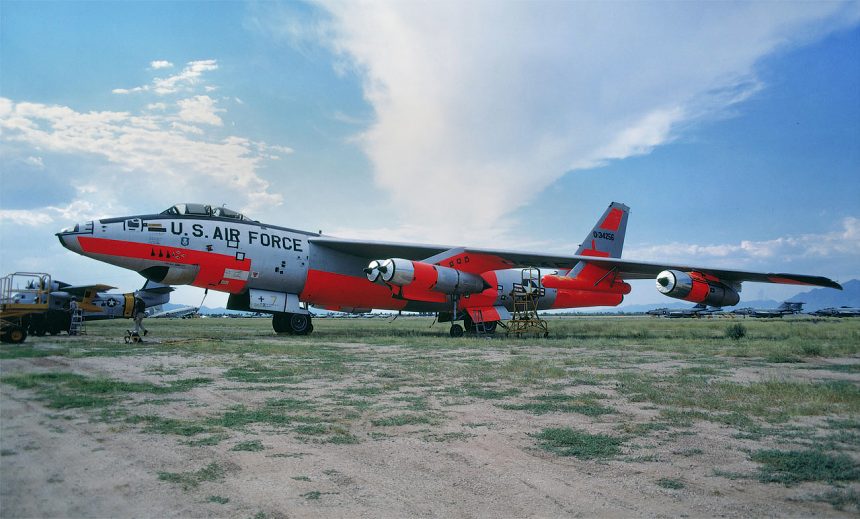

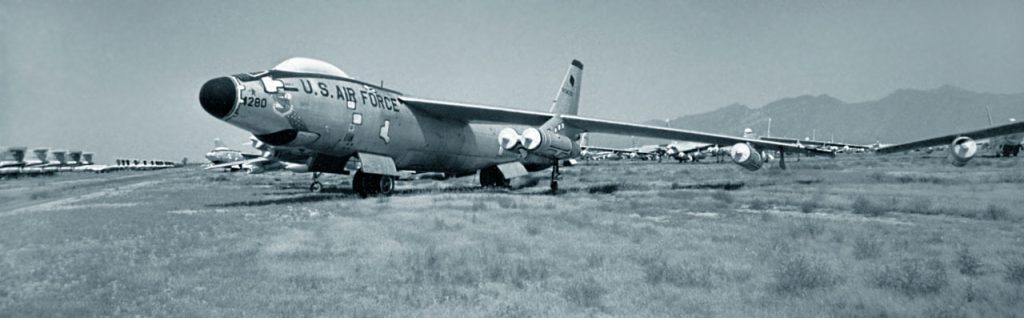
As we continue the Boneyard Files series, which showcases some of the retired aircraft that once rested at Davis-Monthan Air Force Base in Tucson, Arizona, in the late 1960s, today’s story features the Boeing B-47 Stratojet through the lens of Neil Aird and Tom Baillie’s “Monthan Memories” photos. The Boeing B-47 Stratojet was the first jet bomber with swept wings to be produced on a large scale. The B-47 design helped reduce the crew size from 11 in a B-50, which had a similar weight, to just 3. The development of the B-47 started in late 1943, when the U.S. Army Air Force was looking for a new jet bomber. As a result, Boeing began working on several designs and, after studying German aircraft, learned that a swept-wing design could be beneficial. Boeing then developed a jet bomber with thin, swept-back wings at a 35-degree angle. It had six turbojet engines mounted in pairs and in single pods under the wings. To help with takeoff, the company added solid-fuel rockets at the rear of the fuselage.
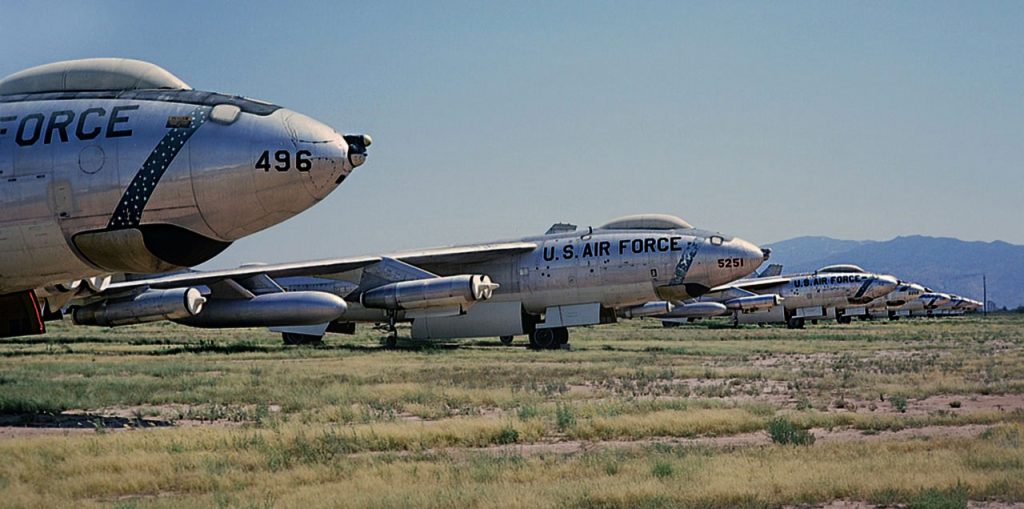
The main landing gear of the Boeing B-47 Stratojet was designed in tandem, extending from the fuselage, while smaller wheels were attached to outriggers from the wings. The jet bomber had a single bomb bay between the landing gear wells, which could hold one nuclear weapon or up to 10,000 pounds of conventional bombs, with a maximum capacity of 22,000 pounds in overload conditions. The aircraft was 107 feet long, 28 feet high, with a wingspan of 116 feet and a wing area of 1,428 square feet. Its empty weight was 80,000 pounds, the gross weight was 133,030 pounds, and the maximum takeoff weight was 221,000 pounds. The aircraft was powered by six General Electric J47-GE-25 turbojet engines, each producing 7,200 pounds of thrust. The maximum speed of the Boeing B-47 Stratojet was 607 mph, with a cruise speed of 557 mph, a combat range of 2,013 miles with a 20,000-pound bomb load, and a ferry range of 4,647 miles with underwing tanks. The service ceiling of the aircraft was 40,500 feet, and it could climb 4,660 feet per minute.
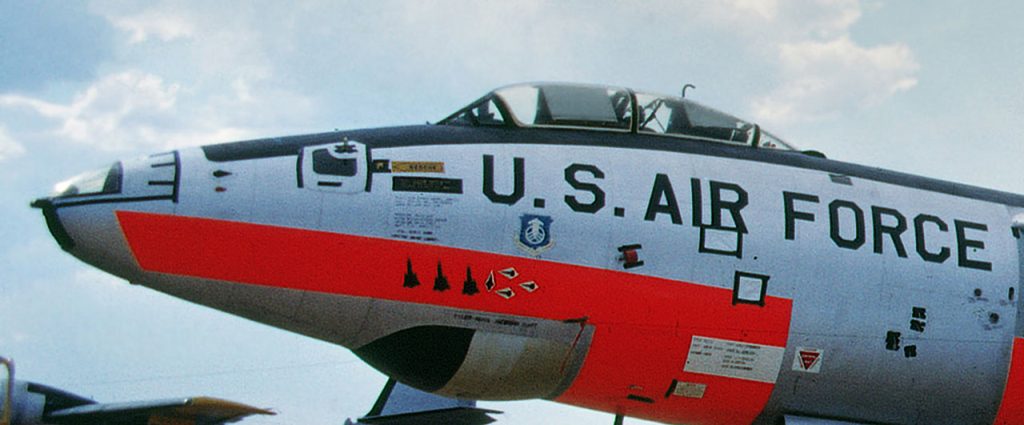
In May 1951, the Boeing B-47 Stratojet began replacing the older B-29 and B-50 bombers in the Strategic Air Command’s (SAC) medium bomber units. The B-47 could carry about the same amount of bombs as the planes it replaced, but it could fly more than 200 mph faster. However, the B-47 did not have the range of heavy bombers like the B-36 and, later, the B-52. To address this, Boeing B-47 Stratojet units regularly flew to forward air bases around the world for temporary duty. These deployments initially lasted three months, but starting in 1957, they were shortened to three weeks under the Reflex Action Program. During the early Cold War, the US Air Force needed an aircraft to collect information on Soviet air defense radar systems, including their locations, ranges, and coverage. To meet this need, Boeing developed the electronic reconnaissance RB-47H from the B-47E, with the first RB-47H completed in 1955. Boeing built 32 new RB-47Hs and converted three B-47Es into ERB-47Hs.
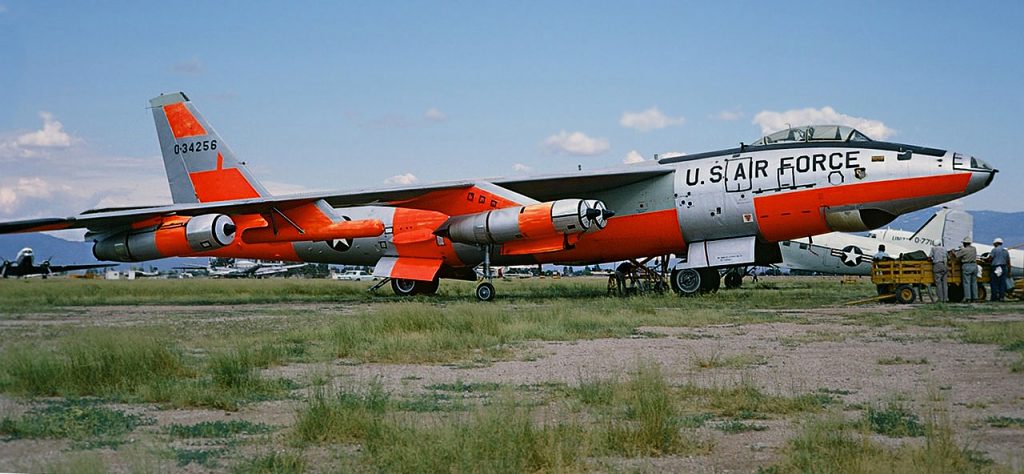
The RB-47H entered service in August 1955. For the next ten years, crews from the 55th Strategic Reconnaissance Wing flew thousands of risky “ferret” missions. The unit operated at night, often in silence, along and sometimes over the borders of the Soviet Union and other communist countries. The RB-47Hs gathered important information about Soviet air defense radar networks. In addition, Stratojets collected information about Soviet air defense systems and their intercontinental ballistic missile program. Weather reconnaissance variants of the B-47 gathered weather data and took air samples from Soviet nuclear explosions. These important RB-47 missions along the Soviet Union’s border were risky as Soviet fighters damaged one reconnaissance Stratojet and shot down two others, resulting in the deaths of seven US Air Force personnel and the temporary imprisonment of two.
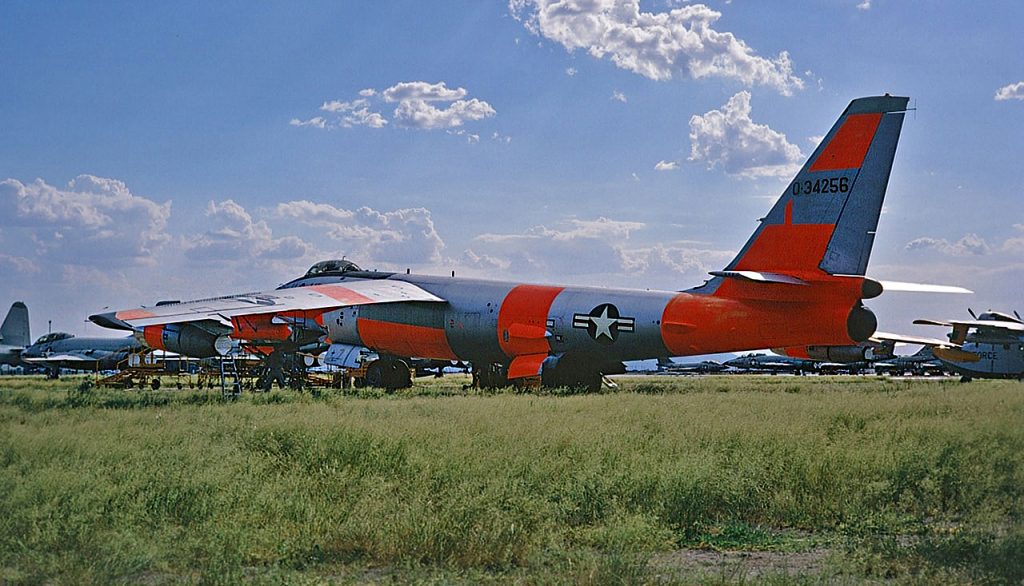
Due to high demand for this intelligence and the limited number of RB-47Hs, crews spent long periods away from their families at Forbes Air Force Base in Kansas. The RB-47H remained in service until the more advanced RC-135 took its place in the mid-1960s. Between 1947 and 1957, Boeing, Douglas, and Lockheed built more than 2,000 B-47 Stratojets. At its peak in 1958, the US Air Force operated 28 B-47 bomb wings and four RB-47 reconnaissance wings, totaling 1,357 B-47s and 175 RB-47s. The US Air Force retired its last Boeing B-47 Stratojet bombers in 1965 and its last Stratojet, a WB-47E, in 1969. After their retirement in the late 1960s, some Boeing B-47 Stratojets were spotted at Davis-Monthan Air Force Base, commonly known as “The Boneyard.” Read more Boneyard Files stories HERE.
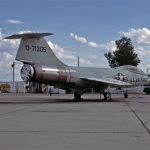
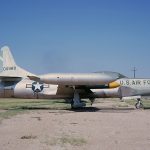
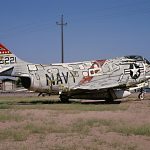
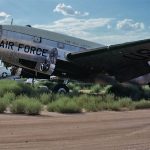






Only one RB-47H was shot down, with four of the crew killed, and two captured. Also, the B-47 with large patches of International Orange, is a QRB-47H, and by the mid 60’s, most of the B-47 fleet were at Davis Monthan, before large scale scrapping.
The last B-47’s operator was the US Navy. One was in Kansas I believe and was used as a test bed for the GE CF35 that went on the S-3A Viking. The other was used by the Navy and operated by McDonnell Douglas at Point Mugu NATC as a test bed for simulated attacks on aircraft carriers. I don’t have my reference book right now, but one flew to Pueblo, Colorado and is on display at the Weisbrod Air Museum and the other is at the Castle AFB Museum in California.
Interesting enough, if you have the right light, you can see US NAVY under the cockpit where the aluminum was etched before the Navy applied their markings. I used to tease my dad about it because he loved flying the B-47 from 55-61. His favorite of all the aircraft he flew as a pilot.