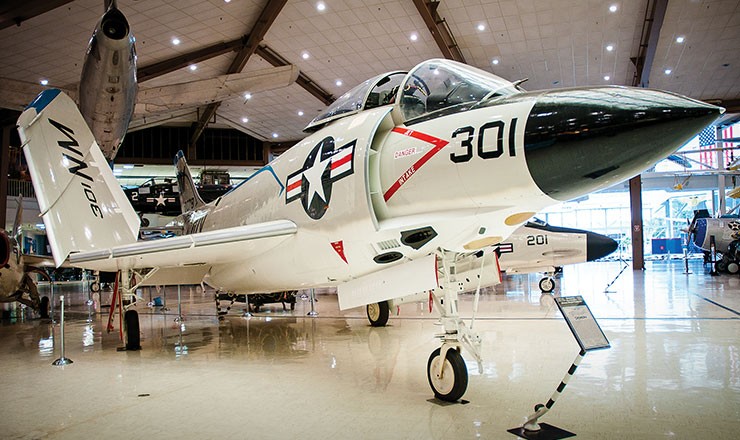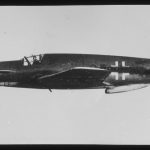
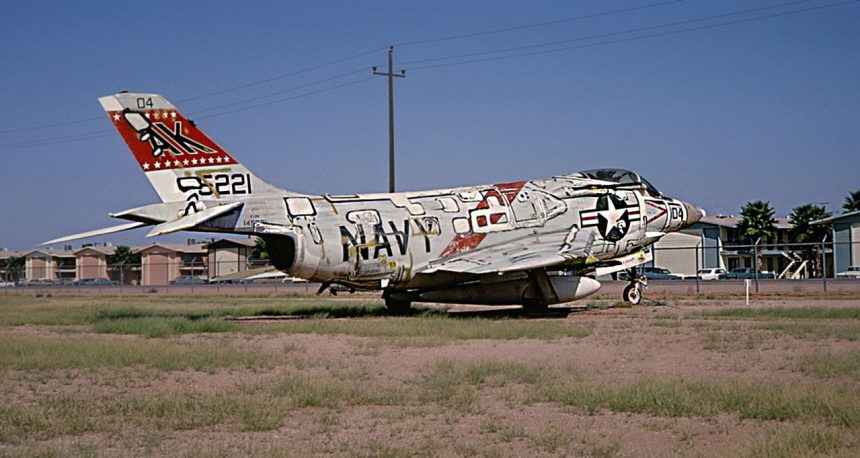

As we continue the Boneyard Files series, which showcases some of the retired aircraft resting at US Davis-Monthan Air Force Base in Tucson, Arizona, in the late 1960s, today’s story features the McDonnell F-3 B Demon through the lens of Neil Aird’s “Monthan Memories” photos. The McDonnell F-3B Demon, initially called the F3H Demon, was developed during the early days of jet aviation when aircraft design was changing rapidly. It was McDonnell Aircraft Corporation’s first fighter with swept wings and was developed as a short-range interceptor for the US Navy. The Navy issued a requirement for this fighter jet in 1949, wanting a plane that could intercept threats in all weather conditions. McDonnell started designing the aircraft soon after, and the prototype, named XF3H-1, first flew in 1951. It was built as a single-seat fighter and was designed to operate from aircraft carriers for short-range interception of enemy planes. The early models focused only on interception and did not have the ability to attack ground targets.
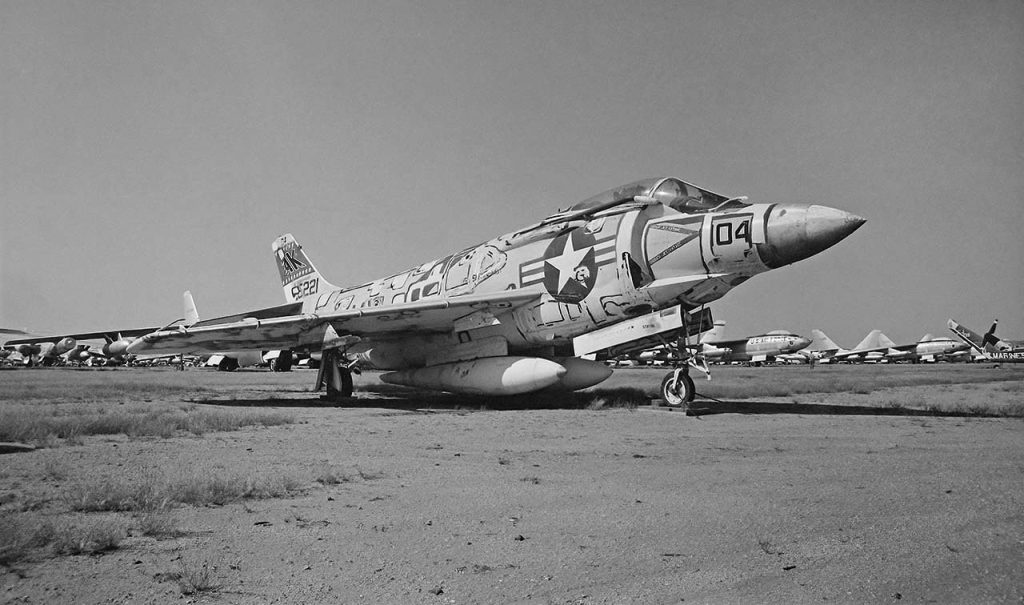
Since the start, the McDonnell F-3B Demon program faced problems due to engine issues. The aircraft was designed to use the Westinghouse J40 turbojet engine, but it did not perform as expected. During testing, there were multiple engine failures, leading to the loss of eleven aircraft and the deaths of four pilots between 1952 and 1955. These incidents triggered a review of the program, and at one point, officials considered canceling it. A Congressional investigation even looked into the Navy’s jet aircraft procurement process. Despite the challenges, McDonnell kept refining the aircraft. The company replaced the original engine with the Allison J71 turbojet, which produced about 10,000 pounds of thrust. The engine change improved reliability and gave the program a second chance. With this new engine, production of the McDonnell F-3B Demon began, and a total of 519 aircraft were built, including improved versions such as the F3H-2 and F3H-2M. The F3H-2M could carry the AIM-7 Sparrow air-to-air missile, making the Demon one of the first Navy fighters designed to use guided missiles in all-weather conditions. The McDonnell F-3B Demon was 59 feet long, 14.7 feet high, with a wingspan of 35 feet.
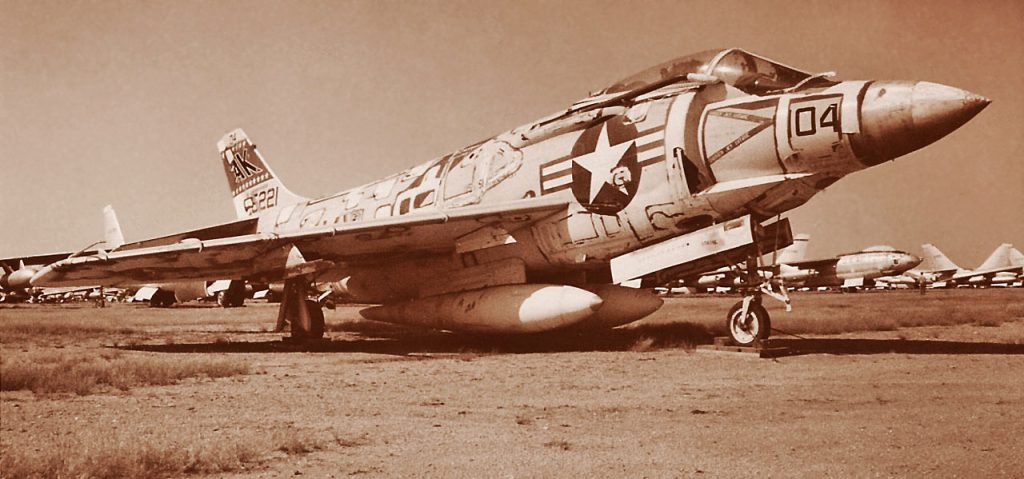
The empty weight of the McDonnell F-3B Demon was 22,133 pounds, with a gross weight of 31,145 pounds. The aircraft could reach speeds of approximately 727 mph at sea level. Its service ceiling was over 42,000 feet, and the range was about 1,180 miles. The Demon entered service with the US Navy in the mid-1950s as an all-weather interceptor for aircraft carriers. The main purpose of the aircraft was to detect and engage incoming threats using radar and guided weapons. Later models of the aircraft included air-to-ground capabilities, enabling it to conduct limited strike missions in addition to interception. Between 1956 and 1964, a total of 23 Navy squadrons flew the F-3B Demon. It flew alongside fighters such as the Vought F-8U Crusader and the Grumman F-11F Tiger. While most aircraft focused on daytime combat, the Demon was designed for all-weather interception. The Demon was retired before it could serve in Vietnam, as newer F-4 Phantom IIs were available by then. However, the F-3B influenced the design of the F-4, and the lessons learned with the former were used to develop the latter. After retirement, the McDonnell F-3B Demon was sent to rest at the Davis-Monthan Air Force Base, commonly known as “The Boneyard.” Read more Boneyard Files articles HERE.