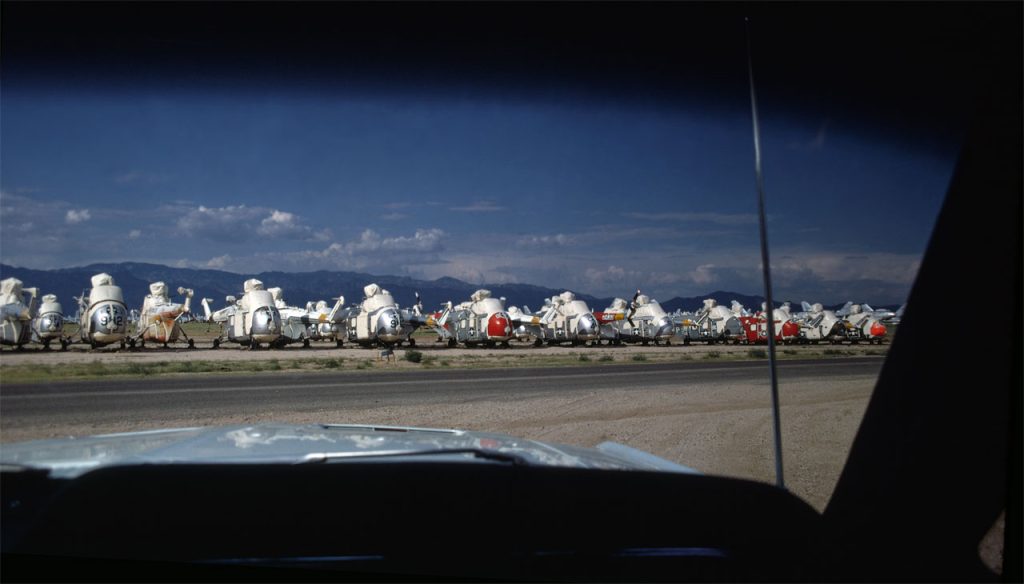
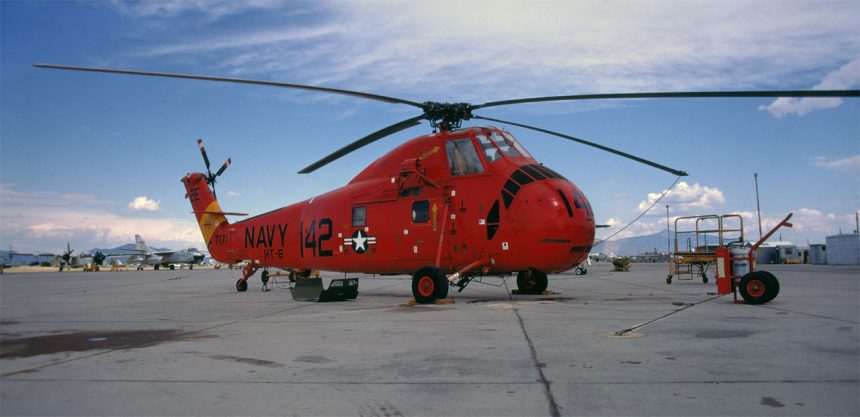

As we continue the Boneyard Files series, which showcases some of the retired aircraft resting at US Davis-Monthan Air Force Base in Tucson, Arizona, in the late 1960s, through the lens of Neil Aird’s “Monthan Memories” photos, today’s story features the Sikorsky H-34. The Sikorsky H-34 was the US military’s multi-purpose helicopter developed in the early 1950s. It was one of the most successful helicopters in the world, even to this day, with operations on every continent and in 25 countries. The U.S. Navy awarded a contract for the Sikorsky H-34 in 1952, with its first flight held on March 8, 1954. By September, the first production helicopter was rolled out and entered U.S. Navy service. The US Army ordered the helicopter in 1955 and the U.S. Marine Cops in 1957. It was used in various roles, including transport to carry 12 to 18 troops, search and rescue, anti-submarine warfare, and VIP transport. The Sikorsky H-34 was 56.8 feet long with the rotor turning. It had a 47.2-foot-long tail-dragger rear fuselage. The aircraft was 14.3 feet high with a rotor diameter of 56 feet and a rotor area of 2,463 square feet. The empty weight of the aircraft was 7,646 pounds, with a gross weight of 11,867 pounds and a maximum takeoff weight of 13,300 pounds.
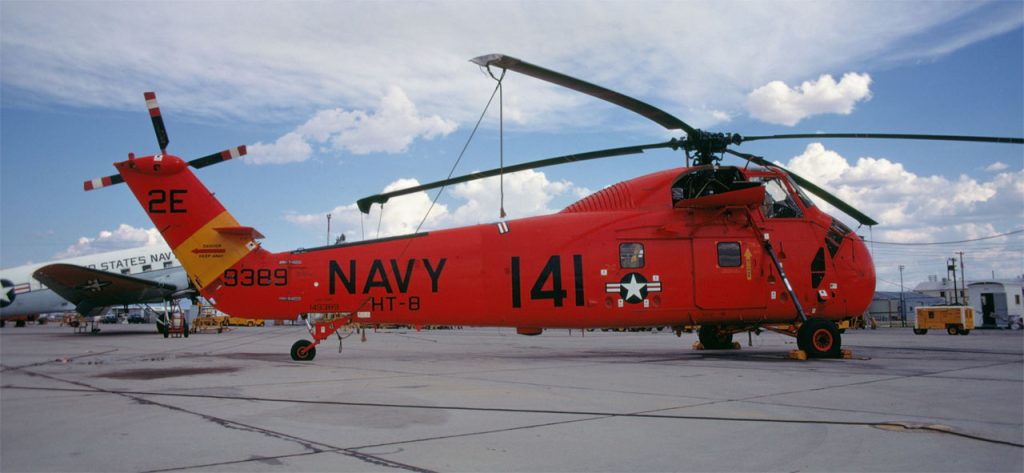
The Sikorsky H-34 was powered by a Wright R-1820-84 Cyclone piston engine, producing 1,525 horsepower for takeoff and 1,275 horsepower for Maximum Except Takeoff (METO). The maximum speed of the aircraft was 122 mph, with a cruise speed of 97 mph. Its range was 190 miles, and the service ceiling was 12,000 feet. The helicopter was equipped with an XM3 armament system, which included two 2.75-inch 24-tube rocket launchers. A total of 2,340 H-34 were built between 1953 and 1970, including licensed production in the UK and France. The Sikorsky H-34 was used in major conflicts, including the Vietnam War and the Algerian War. France initially bought 135 H-34s from the US and assembled them in the country, and later built 166 under license. In the Algerian War, the French Air Force used Sikorsky H-34 for over 87,000 flying hours. The helicopters helped evacuate more than 20,000 French soldiers from combat areas, including nearly 2,200 at night. The H-34 was also used in the early Vietnam War as a combat assault and transport helicopter by the US Marines for medical evacuations. The U.S. Marine Corps H-34 helicopters were some of the first to be tested as armed helicopters during the Vietnam War. They were fitted with a Temporary Kit-1 (TK-1), which included two M60C machine guns and two rocket pods, each holding 19 rockets.
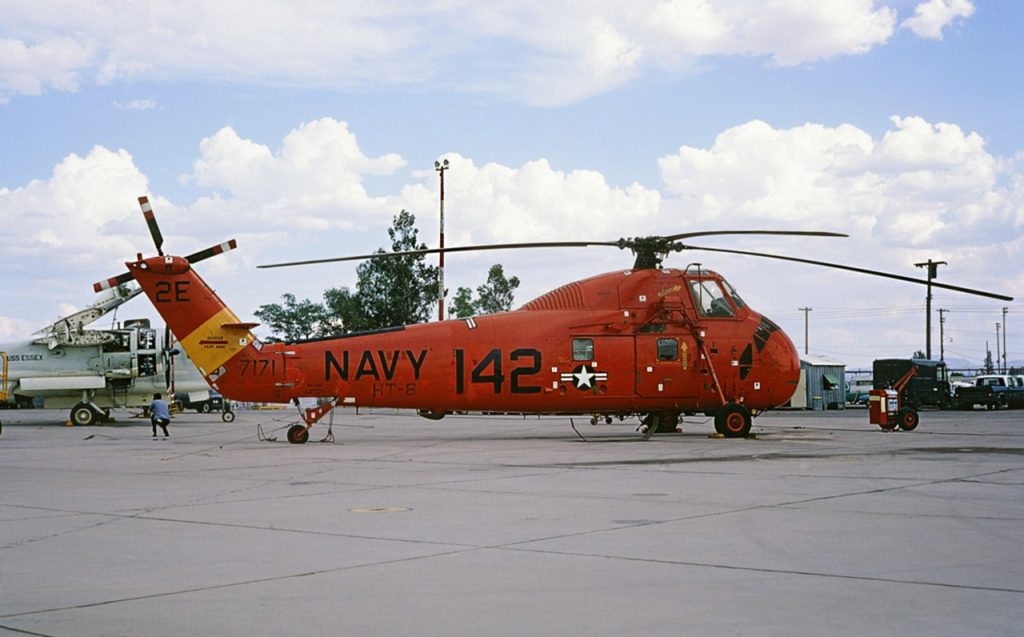
Reactions to these armed H-34s, called “Stingers,” were mixed, and they were soon replaced. The TK-1 kit later influenced the design of the TK-2 kit used on the service’s UH-1E helicopters. In the late 1960s, the US services initiated retiring H-34s in favor of more advanced UH-1 helicopters. It was the US Marines’ last piston-engined helicopter. Israel also used the Sikorsky H-34 helicopter in the Six-Day War to reduce infiltration. The UK’s version of the H-34, Wessex, also saw service in conflicts such as Oman, Aden, the Falklands, and Borneo, in roles including anti-submarine, search and rescue, and transport. The Wessex was the longest-serving H-34 and even served in the 21st century. The Sikorsky H-34 was also used in various civilian roles, including NASA’s effort with the helicopter to lift the Mercury capsule. An updated version of the helicopter was also used as a passenger aircraft. It was also converted into a heli-camper, a campervan-like conversion for a helicopter, including a kitchen and sleeping space for four, by a private company. In all, the Sikorsky H-34 was one of the first truly capable piston-engine helicopters. After retirement, some of them were spotted resting at US Davis-Monthan Air Force Base, also known as “The Boneyard.” Read more Boneyard Files articles HERE.